| ARAF | |||||||||||||||||||||||||||||||||||||||||||||||||||
|---|---|---|---|---|---|---|---|---|---|---|---|---|---|---|---|---|---|---|---|---|---|---|---|---|---|---|---|---|---|---|---|---|---|---|---|---|---|---|---|---|---|---|---|---|---|---|---|---|---|---|---|
 | |||||||||||||||||||||||||||||||||||||||||||||||||||
| Identifiers | |||||||||||||||||||||||||||||||||||||||||||||||||||
| Aliases | ARAF, A-Raf proto-oncogene, serine/threonine kinase, A-RAF, ARAF1, PKS2, RAFA1, Serine/threonine-protein kinase A-Raf | ||||||||||||||||||||||||||||||||||||||||||||||||||
| External IDs | OMIM: 311010; MGI: 88065; HomoloGene: 1249; GeneCards: ARAF; OMA:ARAF - orthologs | ||||||||||||||||||||||||||||||||||||||||||||||||||
| |||||||||||||||||||||||||||||||||||||||||||||||||||
| |||||||||||||||||||||||||||||||||||||||||||||||||||
| |||||||||||||||||||||||||||||||||||||||||||||||||||
| |||||||||||||||||||||||||||||||||||||||||||||||||||
| Wikidata | |||||||||||||||||||||||||||||||||||||||||||||||||||
| |||||||||||||||||||||||||||||||||||||||||||||||||||
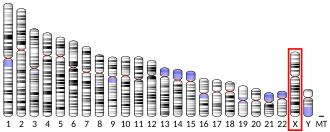





Serine/threonine-protein kinase A-Raf, or simply A-Raf, is an enzyme that in humans is encoded by the ARAF gene.5 It belongs to the Raf kinase family of serine/threonine-specific protein kinases, which also includes Raf-1 and B-Raf.6 A-Raf is involved in the MAPK/ERK pathway, where it contributes to cell signaling processes that regulate proliferation, survival, and differentiation. Compared to Raf-1 and B-Raf, A-Raf is less well studied and exhibits distinct structural and regulatory features, including low kinase activity and alternative splicing in cancer. In addition to its role in MAPK signaling, A-Raf has functions in apoptosis suppression, cancer metabolism, and endocytic trafficking.
Structure
A-Raf, a member of the Raf kinase family, shares a conserved domain architecture with B-Raf and C-Raf, comprising three conserved regions: CR1, CR2, and CR3.
- CR1 (Conserved Region 1): This N-terminal region contains the Ras-binding domain (RBD) and the cysteine-rich domain (CRD). The RBD facilitates interaction with activated Ras-GTP, anchoring A-Raf to the plasma membrane.7 The CRD, characterized by its zinc-binding motif, contributes to membrane association and protein-protein interactions8 Structural studies confirm the RBD and CRD function as a single entity during Ras binding.9
- CR2 (Conserved Region 2): Positioned between CR1 and CR3, CR2 is a serine/threonine-rich regulatory segment containing phosphorylation sites (e.g., Ser259 in Raf-1) that modulate A-Raf's activity and interactions with 14-3-3 proteins.10 This region is critical for autoinhibition and activation dynamics.11
- CR3 (Conserved Region 3): The C-terminal kinase domain exhibits the bilobal architecture characteristic of protein kinases, with an ATP-binding site between the N-terminal and C-terminal lobes.12 Structural analyses reveal similarities to tyrosine kinase-like (TKL) group members13
The RBD adopts a ubiquitin-like fold critical for Ras-GTP interaction.14, while the CRD's zinc-binding motif stabilizes membrane association.15 A-Raf's activity is regulated by phosphorylation-dependent 14-3-3 binding.16 and isoform dimerization, which is essential for MAPK pathway activation.1718
Function
A-Raf shares the canonical role of Raf kinases in the MAPK signaling cascade. Upon activation by Ras, A-Raf translocates from the cytosol to the plasma membrane, where it phosphorylates and activates MEK proteins. This activation leads to downstream ERK signaling and promotes cell cycle progression and proliferation.19
Among the Raf isoforms, A-Raf exhibits the lowest kinase activity toward MEK proteins.20 This may be due to amino acid substitutions in a negatively charged region upstream of the kinase domain (the N-region), which result in low basal activity.21
A-Raf is also the only Raf kinase known to be regulated by steroid hormones.22 In its inactive form, A-Raf is bound to 14-3-3 proteins in the cytosol; activation by Ras causes its translocation to the plasma membrane.
Beyond the MAPK pathway, A-Raf has additional functions. It inhibits MST2, a proapoptotic kinase, thereby suppressing apoptosis. This inhibitory activity is dependent on the expression of full-length A-Raf protein, which is maintained by the splicing factor hnRNP H.23
A-Raf also regulates energy metabolism by interacting with pyruvate kinase M2 (PKM2), a key enzyme in cancer cell glycolysis. By promoting a conformational shift from the dimeric to the tetrameric form of PKM2, A-Raf enhances its enzymatic activity and shifts glucose utilization from biosynthesis toward energy production.24
In addition, A-Raf has been implicated in endocytic membrane trafficking. Upon activation by receptor tyrosine kinases and Ras, A-Raf localizes to phosphatidylinositol 4,5-bisphosphate (PtdIns(4,5)P2)-rich membranes and signals to endosomes, leading to activation of ARF6, a key regulator of endocytosis.25
Clinical significance
A-Raf may contribute to tumorigenesis through multiple mechanisms. In cancer cells, overexpression of hnRNP H enhances the production of full-length A-Raf, which inhibits MST2 and prevents apoptosis. The downregulation of hnRNP H, in contrast, leads to alternative splicing of the ARAF gene and loss of this anti-apoptotic activity.26
A-Raf's regulation of PKM2 activity further links it to cancer metabolism. By promoting glycolytic flux toward pyruvate and lactate production, A-Raf may help sustain the high energy demands of rapidly proliferating tumor cells.27
Because A-Raf modulates both apoptosis and metabolism—two critical hallmarks of cancer—it may represent a potential target for future cancer therapies.
Interactions
ARAF has been shown to interact with:
References
References
- GRCh38: Ensembl release 89: ENSG00000078061 – Ensembl, May 2017
- GRCm38: Ensembl release 89: ENSMUSG00000001127 – Ensembl, May 2017
- "Human PubMed Reference:". National Center for Biotechnology Information, U.S. National Library of Medicine.
- "Mouse PubMed Reference:". National Center for Biotechnology Information, U.S. National Library of Medicine.
- "Entrez Gene: ARAF V-raf murine sarcoma 3611 viral oncogene homolog".
- Mark GE, Seeley TW, Shows TB, Mountz JD (September 1986). "Pks, a raf-related sequence in humans". Proceedings of the National Academy of Sciences of the United States of America. 83 (17): 6312–6316. Bibcode:1986PNAS...83.6312M. doi:10.1073/pnas.83.17.6312. PMC 386493. PMID 3529082.
- Tran TH, Chan AH, Young LC, Bindu L, Neale C, Messing S, et al. (February 2021). "KRAS interaction with RAF1 RAS-binding domain and cysteine-rich domain provides insights into RAS-mediated RAF activation". Nature Communications. 12 (1) 1176. Bibcode:2021NatCo..12.1176T. doi:10.1038/s41467-021-21422-x. PMC 7895934. PMID 33608534.
- Mott HR, Carpenter JW, Zhong S, Ghosh S, Bell RM, Campbell SL (August 1996). "The solution structure of the Raf-1 cysteine-rich domain: a novel ras and phospholipid binding site". Proceedings of the National Academy of Sciences of the United States of America. 93 (16): 8312–8317. Bibcode:1996PNAS...93.8312M. doi:10.1073/pnas.93.16.8312. PMC 38667. PMID 8710867.
- Tran TH, Chan AH, Young LC, Bindu L, Neale C, Messing S, et al. (February 2021). "KRAS interaction with RAF1 RAS-binding domain and cysteine-rich domain provides insights into RAS-mediated RAF activation". Nature Communications. 12 (1) 1176. Bibcode:2021NatCo..12.1176T. doi:10.1038/s41467-021-21422-x. PMC 7895934. PMID 33608534.
- Light Y, Paterson H, Marais R (July 2002). "14-3-3 antagonizes Ras-mediated Raf-1 recruitment to the plasma membrane to maintain signaling fidelity". Molecular and Cellular Biology. 22 (14): 4984–4996. doi:10.1128/MCB.22.14.4984-4996.2002. PMC 139778. PMID 12077328.
- Defrise M, Kinahan PE, Townsend DW, Michel C, Sibomana M, Newport DF (April 1997). "Exact and approximate rebinning algorithms for 3-D PET data". IEEE Transactions on Medical Imaging. 16 (2): 145–158. doi:10.1109/42.563660. PMID 9101324.
- Defrise M, Kinahan PE, Townsend DW, Michel C, Sibomana M, Newport DF (April 1997). "Exact and approximate rebinning algorithms for 3-D PET data". IEEE Transactions on Medical Imaging. 16 (2): 145–158. doi:10.1109/42.563660. PMID 9101324.
- Motegi A, Fujimoto J, Kotani M, Sakuraba H, Yamamoto T (July 2004). "ALK receptor tyrosine kinase promotes cell growth and neurite outgrowth". Journal of Cell Science. 117 (Pt 15): 3319–3329. doi:10.1242/jcs.01183. PMID 15226403.
- Tran TH, Chan AH, Young LC, Bindu L, Neale C, Messing S, et al. (February 2021). "KRAS interaction with RAF1 RAS-binding domain and cysteine-rich domain provides insights into RAS-mediated RAF activation". Nature Communications. 12 (1) 1176. Bibcode:2021NatCo..12.1176T. doi:10.1038/s41467-021-21422-x. PMC 7895934. PMID 33608534.
- Mott HR, Carpenter JW, Zhong S, Ghosh S, Bell RM, Campbell SL (August 1996). "The solution structure of the Raf-1 cysteine-rich domain: a novel ras and phospholipid binding site". Proceedings of the National Academy of Sciences of the United States of America. 93 (16): 8312–8317. Bibcode:1996PNAS...93.8312M. doi:10.1073/pnas.93.16.8312. PMC 38667. PMID 8710867.
- Light Y, Paterson H, Marais R (July 2002). "14-3-3 antagonizes Ras-mediated Raf-1 recruitment to the plasma membrane to maintain signaling fidelity". Molecular and Cellular Biology. 22 (14): 4984–4996. doi:10.1128/MCB.22.14.4984-4996.2002. PMC 139778. PMID 12077328.
- Rimmer A (June 2018). "Overseas doctors must not be used just to fill rota gaps, says leading consultant". BMJ. 361 k2654. doi:10.1136/bmj.k2654. PMID 29907696.
- Rushworth LK, Hindley AD, O'Neill E, Kolch W (March 2006). "Regulation and role of Raf-1/B-Raf heterodimerization". Molecular and Cellular Biology. 26 (6): 2262–2272. doi:10.1128/MCB.26.6.2262-2272.2006. PMC 1430271. PMID 16508002.
- Mercer K, Giblett S, Oakden A, Brown J, Marais R, Pritchard C (2005-04-25). "A-Raf and Raf-1 work together to influence transient ERK phosphorylation and Gl/S cell cycle progression". Oncogene. 24 (33): 5207–5217. doi:10.1038/sj.onc.1208707. ISSN 0950-9232. PMID 15856007.
- Matallanas D, Birtwistle M, Romano D, Zebisch A, Rauch J, von Kriegsheim A, et al. (2011-03-01). "Raf Family Kinases Old Dogs Have Learned New Tricks". Genes & Cancer. 2 (3): 232–260. doi:10.1177/1947601911407323. ISSN 1947-6019. PMC 3128629. PMID 21779496.
- Baljuls A, Mueller T, Drexler HC, Hekman M, Rapp UR (2007-09-07). "Unique N-region determines low basal activity and limited inducibility of A-RAF kinase: the role of N-region in the evolutionary divergence of RAF kinase function in vertebrates". The Journal of Biological Chemistry. 282 (36): 26575–26590. doi:10.1074/jbc.M702429200. ISSN 0021-9258. PMID 17613527.
- Lee JE, Beck TW, Wojnowski L, Rapp UR (1996-04-18). "Regulation of A-raf expression". Oncogene. 12 (8): 1669–1677. ISSN 0950-9232. PMID 8622887.
- Rauch J, O'Neill E, Mack B, Matthias C, Munz M, Kolch W, et al. (2010-02-15). "Heterogeneous Nuclear Ribonucleoprotein H Blocks MST2-Mediated Apoptosis in Cancer Cells by Regulating a-raf Transcription". Cancer Research. 70 (4): 1679–1688. doi:10.1158/0008-5472.CAN-09-2740. ISSN 0008-5472. PMC 2880479. PMID 20145135.
- Mazurek S, Drexler HC, Troppmair J, Eigenbrodt E, Rapp UR (2007-11-01). "Regulation of Pyruvate Kinase Type M2 by A-Raf: A Possible Glycolytic Stop or Go Mechanism". Anticancer Research. 27 (6B): 3963–3971. ISSN 0250-7005. PMID 18225557.
- Nekhoroshkova E, Albert S, Becker M, Rapp UR (2009-02-27). "A-RAF Kinase Functions in ARF6 Regulated Endocytic Membrane Traffic". PLOS ONE. 4 (2) e4647. Bibcode:2009PLoSO...4.4647N. doi:10.1371/journal.pone.0004647. ISSN 1932-6203. PMC 2645234. PMID 19247477.
- Rauch J, O'Neill E, Mack B, Matthias C, Munz M, Kolch W, et al. (2010-02-15). "Heterogeneous Nuclear Ribonucleoprotein H Blocks MST2-Mediated Apoptosis in Cancer Cells by Regulating a-raf Transcription". Cancer Research. 70 (4): 1679–1688. doi:10.1158/0008-5472.CAN-09-2740. ISSN 0008-5472. PMC 2880479. PMID 20145135.
- Christofk HR, Vander Heiden MG, Harris MH, Ramanathan A, Gerszten RE, Wei R, et al. (2008-03-13). "The M2 splice isoform of pyruvate kinase is important for cancer metabolism and tumour growth". Nature. 452 (7184): 230–233. Bibcode:2008Natur.452..230C. doi:10.1038/nature06734. ISSN 0028-0836. PMID 18337823. S2CID 16111842.
- Yuryev A, Wennogle LP (February 2003). "Novel raf kinase protein-protein interactions found by an exhaustive yeast two-hybrid analysis". Genomics. 81 (2): 112–125. doi:10.1016/S0888-7543(02)00008-3. PMID 12620389.
- Yin XL, Chen S, Yan J, Hu Y, Gu JX (February 2002). "Identification of interaction between MEK2 and A-Raf-1". Biochimica et Biophysica Acta (BBA) - Molecular Cell Research. 1589 (1): 71–76. doi:10.1016/S0167-4889(01)00188-4. PMID 11909642.
- Yuryev A, Ono M, Goff SA, Macaluso F, Wennogle LP (July 2000). "Isoform-Specific Localization of A-RAF in Mitochondria". Molecular and Cellular Biology. 20 (13): 4870–4878. doi:10.1128/MCB.20.13.4870-4878.2000. PMC 85938. PMID 10848612.
- Yin XL, Chen S, Gu JX (February 2002). "Identification of TH1 as an interaction partner of A-Raf kinase". Molecular and Cellular Biochemistry. 231 (1–2): 69–74. doi:10.1023/A:1014437024129. PMID 11952167. S2CID 19362635.
Further reading
Further reading
- Belanger BF, Williams WJ, Yin TC (1976). "A flexible renewal process simulator for neural spike trains". IEEE Transactions on Bio-medical Engineering. 23 (3): 262–266. Bibcode:1976ITBE...23..262B. doi:10.1109/TBME.1976.324641. PMID 1262038. S2CID 2411492.
- Popescu NC, Mark GE (1989). "Localization of the pKs gene, a raf related sequence on human chromosomes X and 7". Oncogene. 4 (4): 517–519. PMID 2717185.
- Beck TW, Huleihel M, Gunnell M, Bonner TI, Rapp UR (1987). "The complete coding sequence of the human A-raf-1 oncogene and transforming activity of a human A-raf carrying retrovirus". Nucleic Acids Research. 15 (2): 595–609. doi:10.1093/nar/15.2.595. PMC 340454. PMID 3029685.
- Papin C, Eychène A, Brunet A, Pagès G, Pouysségur J, Calothy G, et al. (1995). "B-Raf protein isoforms interact with and phosphorylate Mek-1 on serine residues 218 and 222". Oncogene. 10 (8): 1647–1651. PMID 7731720.
- Lee JE, Beck TW, Brennscheidt U, DeGennaro LJ, Rapp UR (1994). "The complete sequence and promoter activity of the human A-raf-1 gene (ARAF1)". Genomics. 20 (1): 43–55. doi:10.1006/geno.1994.1125. PMID 8020955.
- Alessi DR, Saito Y, Campbell DG, Cohen P, Sithanandam G, Rapp U, et al. (1994). "Identification of the sites in MAP kinase kinase-1 phosphorylated by p74raf-1". The EMBO Journal. 13 (7): 1610–1619. doi:10.1002/j.1460-2075.1994.tb06424.x. PMC 394991. PMID 8157000.
- Gardner AM, Vaillancourt RR, Johnson GL (1993). "Activation of mitogen-activated protein kinase/extracellular signal-regulated kinase kinase by G protein and tyrosine kinase oncoproteins". Journal of Biological Chemistry. 268 (24): 17896–17901. doi:10.1016/S0021-9258(17)46789-5. PMID 8394352.
- Andersson B, Wentland MA, Ricafrente JY, Liu W, Gibbs RA (1996). "A "double adaptor" method for improved shotgun library construction". Analytical Biochemistry. 236 (1): 107–113. doi:10.1006/abio.1996.0138. PMID 8619474.
- Wu X, Noh SJ, Zhou G, Dixon JE, Guan KL (1996). "Selective activation of MEK1 but not MEK2 by A-Raf from epidermal growth factor-stimulated Hela cells". Journal of Biological Chemistry. 271 (6): 3265–3271. doi:10.1074/jbc.271.6.3265. PMID 8621729.
- Boldyreff B, Issinger OG (1997). "A-Raf kinase is a new interacting partner of protein kinase CK2 beta subunit". FEBS Letters. 403 (2): 197–199. Bibcode:1997FEBSL.403..197B. doi:10.1016/S0014-5793(97)00010-0. PMID 9042965.
- Yu W, Andersson B, Worley KC, Muzny DM, Ding Y, Liu W, et al. (1997). "Large-scale concatenation cDNA sequencing". Genome Research. 7 (4): 353–358. doi:10.1101/gr.7.4.353. PMC 139146. PMID 9110174.
- Yuryev A, Ono M, Goff SA, Macaluso F, Wennogle LP (2000). "Isoform-specific localization of A-RAF in mitochondria". Molecular and Cellular Biology. 20 (13): 4870–4878. doi:10.1128/MCB.20.13.4870-4878.2000. PMC 85938. PMID 10848612.
- King TR, Fang Y, Mahon ES, Anderson DH (2000). "Using a phage display library to identify basic residues in A-Raf required to mediate binding to the Src homology 2 domains of the p85 subunit of phosphatidylinositol 3'-kinase". Journal of Biological Chemistry. 275 (46): 36450–36456. doi:10.1074/jbc.M004720200. PMID 10967104.
- Fang Y, Johnson LM, Mahon ES, Anderson DH (2002). "Two phosphorylation-independent sites on the p85 SH2 domains bind A-Raf kinase". Biochemical and Biophysical Research Communications. 290 (4): 1267–1274. Bibcode:2002BBRC..290.1267F. doi:10.1006/bbrc.2002.6347. PMID 11812000.
- Yin XL, Chen S, Yan J, Hu Y, Gu JX (2002). "Identification of interaction between MEK2 and A-Raf-1". Biochimica et Biophysica Acta (BBA) - Molecular Cell Research. 1589 (1): 71–76. doi:10.1016/S0167-4889(01)00188-4. PMID 11909642.
- Yin XL, Chen S, Gu JX (2002). "Identification of TH1 as an interaction partner of A-Raf kinase". Molecular and Cellular Biochemistry. 231 (1–2): 69–74. doi:10.1023/A:1014437024129. PMID 11952167. S2CID 19362635.
- Yuryev A, Wennogle LP (2003). "Novel raf kinase protein-protein interactions found by an exhaustive yeast two-hybrid analysis". Genomics. 81 (2): 112–125. doi:10.1016/S0888-7543(02)00008-3. PMID 12620389.
- Liu W, Shen X, Yang Y, Yin X, Xie J, Yan J, et al. (2004). "Trihydrophobin 1 is a new negative regulator of A-Raf kinase". Journal of Biological Chemistry. 279 (11): 10167–10175. doi:10.1074/jbc.M307994200. PMID 14684750.
External links
External links
- Human ARAF genome location and ARAF gene details page in the UCSC Genome Browser.
- PDBe-KB provides an overview of all the structure information available in the PDB for Human Serine/threonine-protein kinase A-Raf