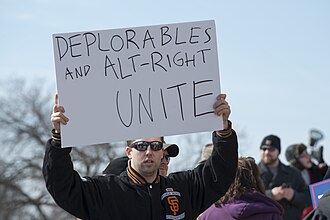
The alt-right (abbreviated from alternative right) is a far-right and white nationalist movement. A largely online phenomenon, the alt-right originated in the United States during the late 2000s before increasing in popularity and establishing a presence in other countries during the mid-2010s. The term is ill-defined and has been used in different ways by academics, journalists, media commentators, and alt-right members themselves.
In 2010, the American white nationalist Richard B. Spencer launched The Alternative Right webzine. His "alternative right" was influenced by earlier forms of American white nationalism, as well as paleoconservatism, the Dark Enlightenment, and the Nouvelle Droite. His term was shortened to "alt-right" and popularized by far-right participants of /pol/, the politics board of the web forum 4chan. It came to be associated with other white nationalist websites and groups, including Andrew Anglin's Daily Stormer, Brad Griffin's Occidental Dissent, and Matthew Heimbach's Traditionalist Worker Party. Following the 2014 Gamergate controversy, the alt-right made increasing use of trolling and online harassment to raise its profile. It attracted broader attention in 2015, particularly through coverage on Steve Bannon's Breitbart News, due to alt-right support for Donald Trump's presidential campaign. Upon being elected, Trump disavowed the movement. Attempting to transform itself from an online-based movement to a physical one, Spencer and other alt-right figures organized the August 2017 Unite the Right rally in Charlottesville, Virginia, which led to violent clashes with counter-demonstrators and resulted in one death when an alt-right member drove his car through the crowd of counter-demonstrators. The fallout from the rally resulted in a decline of the alt-right as a distinct movement within the wider Western far-right.
The alt-right movement espouses the pseudoscientific idea of biological racism and promotes a form of identity politics in favor of European Americans and white people internationally. Anti-egalitarian in nature, it rejects the liberal democratic basis of U.S. governance, and opposes both the conservative and liberal wings of the country's political mainstream. Many of its members seek to replace the U.S. with a white separatist ethnostate. Some alt-rightists seek to make white nationalism socially respectable, while others (known as the "1488" scene) adopt openly white supremacist and neo-Nazi stances to shock and provoke. Some alt-rightists are antisemitic, promoting a conspiracy theory that there is a Jewish plot to bring about white genocide, although other alt-rightists view most Jews as members of the white race. The alt-right is anti-feminist and intersects with the online manosphere. Most adherents to the alt-right are also Islamophobic. The movement distinguished itself from earlier forms of white nationalism through its largely online presence and its heavy use of irony and humor, particularly through the promotion of memes like Pepe the Frog. Individuals who are aligned with many of the alt-right's ideas without espousing its white nationalism have been termed "alt-lite".
The alt-right's membership is overwhelmingly white and male, attracted to the movement by deteriorating living standards and prospects, anxieties about the social role of white masculinity, and anger at left-wing and non-white forms of identity politics such as feminism and Black Lives Matter. Alt-right material has contributed to the radicalization of men responsible for various murders and terrorist attacks in the U.S. since 2014. Critics charge that the term "alt-right" is merely a rebranding of white supremacism.1234
Definitions and terminology
The term "alt-right" is an abbreviation of "alternative right".5 A distinct far-right movement arising in the 2010s, it drew on older far-right ideas while also displaying novelties.6 Efforts to define the alt-right have been complicated by the contradictory ways in which self-described "alt-rightists" have defined the movement, and by the tendency among some of its political opponents to apply the term "alt-right" liberally to a broad range of right-wing groups and viewpoints.7
As the alt-right rose to wider awareness around 2016, media sources struggled to understand it;8 some commentators applied the term as a catch-all for anyone they deemed far-right.9 The scholars Patrik Hermansson, David Lawrence, Joe Mulhall, and Simon Murdoch noted that in the "press and broadcast media", the term had been "used to describe everything from hardcore Nazis and Holocaust deniers, through to mainstream Republicans in the US, and right-wing populists in Europe".10 As the term "alt-right" was devised by a group of white nationalists themselves, as a form of self-description, some journalists avoided it.1112 George Hawley, a political scientist specializing in the U.S. far-right, disagreed with this approach, noting that using terms like "white supremacist" in place of "alt-right" conceals the way that the alt-right differed from other far-right movements.13
Definitions
The 'alt-right' or 'alternative right' is a name currently embraced by some white supremacists and white nationalists to refer to themselves and their ideology, which emphasizes preserving and protecting the white race in the United States in addition to, or over, other traditional conservative positions such as limited government, low taxes and strict law-and-order. The movement has been described as a mix of racism, white nationalism and populism ... criticizes 'multiculturalism' and more rights for non-whites, women, Jews, Muslims, gays, immigrants and other minorities. Its members reject the American democratic ideal that all should have equality under the law regardless of creed, gender, ethnic origin or race.
Hermansson et al defined the alt-right as "a far right, anti-globalist grouping" that operated "primarily online though with offline outlets". They noted that its "core belief is that 'white identity' is under attack from pro-multicultural and liberal elites, and so-called 'social justice warriors' (SJWs), who allegedly use 'political correctness' to undermine Western civilisation and the rights of white males".16 The anti-fascist researcher Matthew N. Lyons defined the alt-right as "a loosely organized far-right movement that shares a contempt for both liberal multiculturalism and mainstream conservatism; a belief that some people are inherently superior to others; a strong Internet presence and embrace of specific elements of online culture; and a self-presentation as being new, hip, and irreverent".17
The Encyclopædia Britannica defined the alt-right as "a loose association of relatively young white nationalists, extreme libertarians, and neo-Nazis" who were "mostly active online".1819 The Southern Poverty Law Center defined the alt-right as "a set of far-right ideologies, groups and individuals whose core belief is that 'white identity' is under attack by multicultural forces using 'political correctness' and 'social justice' to undermine white people and 'their' civilization".20 The Anti-Defamation League states that "alt-right" is a "vague term actually encompass[ing] a range of people on the extreme right who reject mainstream conservatism in favor of forms of conservatism that embrace implicit or explicit racism or white supremacy".21
In the Columbia Journalism Review, the journalist Chava Gourarie labelled it a "rag-tag coalition" operating as a "diffuse online subculture" that had "an inclination for vicious online trolling, with some roots in fringe-right ideologies".8 In The New York Times, journalists Aishvarya Kavi and Alan Feuer defined the alt-right as "a loosely affiliated collection of racists, misogynists and Islamophobes that rose to prominence around the time of Mr. Trump's first campaign."22 BBC journalist Mike Wendling termed it "an incredibly loose set of ideologies held together by what they oppose: feminism, Islam, the Black Lives Matter movement, political correctness, a fuzzy idea they call 'globalism,' and establishment politics of both the left and the right".23
History
Influences
The alt-right had various ideological forebears.24 The idea of white supremacy had been dominant across U.S. political discourse throughout the 19th and early 20th centuries. After World War II, it was increasingly repudiated and relegated to the far-right of the country's political spectrum.25 Far-right groups retaining such ideas—such as George Lincoln Rockwell's American Nazi Party and William Luther Pierce's National Alliance—remained marginal.26 By the 1990s, white supremacism was largely confined to neo-Nazi and Ku Klux Klan (KKK) groups, although its ideologues wanted to return it to the mainstream.25 That decade, several white supremacists reformulated their ideas as white nationalism, through which they presented themselves not as seeking to dominate non-white racial groups but rather as lobbying for the interests of European Americans in a similar way to how civil rights groups lobbied for the rights of African Americans and Hispanic Americans.27 Although white nationalists often distanced themselves from white supremacism, white supremacist sentiment remained prevalent in white nationalist writings.28

American white nationalists believed that the United States had been created as a nation explicitly for white people of European descent and that it should remain that way.30 Many called for the formation of an explicitly white ethnostate.28 Seeking to distance themselves from the violent, skinhead image of neo-Nazi and KKK groups, several white nationalist ideologues—namely Jared Taylor, Peter Brimelow, and Kevin B. MacDonald—sought to cultivate an image of respectability and intellectualism through which to promote their views.31 Hawley later termed their ideology "highbrow white nationalism", and noted its particular influence on the alt-right.32 Taylor, for instance, became a revered figure in alt-right circles.29
Under the Republican presidency of George W. Bush in the 2000s, the white nationalist movement focused largely on criticizing conservatives rather than liberals, accusing them of betraying white Americans.33 In that period, they drew increasingly on the conspiracy theories that had been generated by the Patriot movement since the 1990s; online, the white nationalist and Patriot movements increasingly converged.33 Following the election of Democratic Party candidate Barack Obama to the presidency in 2008—making him the first black president of the country—the world-views of various right-wing movements, including white supremacists, Patriots, and Tea Partiers, increasingly began to coalesce, in part due to a shared racial animus against Obama.34
According to Tait, during the rise of the Tea Party movement and Mitt Romney's 2012 presidential campaign, there were "cultural and economic shifts that created the conditions for a parallel shift in right-wing politics.", including changing demographics, the rise of the Internet and social media giving a significant platform to more extreme right-wing voices that were previously marginalized by "responsible conservative gatekeepers", the perceived failure of the war on terror led by neoconservatives, the Obergefell v. Hodges Supreme Court decision that legalized same-sex marriage and undermined social conservatism, the 2008 Great Recession that undermined conservatives' support of the free market, and men with certain beliefs about gender roles "feeling traditionally male spaces were being eroded." and facing competition in the economy from "highly educated women". All of these factors also lead to "the collapse of intellectual and political guardrails on the right.35
The alt-right drew upon several older currents of right-wing thought. One was the Nouvelle Droite, a far-right movement that originated in 1960s France before spreading elsewhere in Europe.363738 Many alt-rightists adopted the Nouvelle Droite's views on pursuing long-term cultural change through "metapolitical" strategies;39 it thereby shares similarities with European identitarianism, which also draws upon the Nouvelle Droite.40 The alt-right also exhibited similarities with the paleoconservative movement which emerged in the U.S. during the 1980s. Both opposed neoconservatism and expressed similar positions on restricting immigration and supporting an openly nationalistic foreign policy; however, unlike the alt-right, the paleoconservatives were typically closely aligned to Christianity and wanted to reform the conservative movement rather than destroy it.414243 Certain paleoconservatives, such as Samuel T. Francis, became especially close to white nationalism.44
There were also links between the American right-libertarian movement and the alt-right, despite libertarianism's general condemnation of identity politics and collectivism.45 Many senior alt-rightists previously considered themselves libertarians,46 and right-libertarian theorist Murray Rothbard has been cited as a particular link between the two movements due to his staunch anti-egalitarianism and support for ideas about differing IQ levels among racial groups.4748 Also cited in connection with the alt-right was the Dark Enlightenment, or neo-reactionary movement, which emerged online in the 2000s, pursuing an anti-egalitarian message.49 This movement intersected with the alt-right;50 many individuals identified with both movements.51 The Dark Enlightenment however was not white nationalist, deeming the latter insufficiently elitist.52
According to Dean, in the 1990s, there were "alt-right" Usenet groups that consisted of fringe libertarians, anarcho-capitalists, and fans of American writer and philosopher Ayn Rand, who advocated for the abolition of the state in favor of private property and markets.53 According to Winter, during the 1990s and early 2000s, "the American far-right did not harness the Internet quickly, effectively or widely. More recently, however, they have experienced a resurgence and mainstreaming, benefitting greatly from social media."54
2008–2014: Origins
According to Hawley, the alt-right began in 2008.55 In November of that year, the paleoconservative ideologue and academic Paul Gottfried gave a talk at his H. L. Mencken Club in Baltimore. Although the talk was titled "The Decline and Rise of the Alternative Right", it did not contain the phrase "alternative right" itself. Gottfried observed that, as the paleoconservative movement declined, a new cohort of young right-wingers were rising to take its place in challenging the neoconservative ideology then dominant in the Republican Party and broader U.S. conservative movement.5657
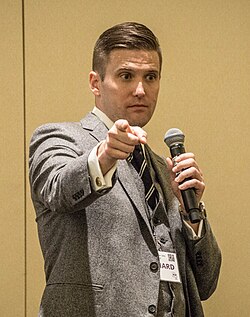
One of those endorsing Gottfried's idea was fellow paleoconservative Richard B. Spencer.58 Born in 1978 to a wealthy family and raised in Dallas, Texas,5960 in 2007, Spencer had dropped out of his PhD programme at Duke University to take up a position at The American Conservative magazine.6162 Spencer claimed he coined the term "alternative right" for the lecture's title, although Gottfried maintained that they were its joint creators.63 As "alternative right" became associated increasingly with white nationalism in subsequent years, Gottfried distanced himself from it.64
After The American Conservative fired Spencer, in 2008 he became managing director of Taki Theodoracopulos's right-wing website Taki's Magazine.6566 The website initially contained contributions largely from paleoconservatives and right-libertarians, but under Spencer also gave space to white nationalists like Taylor.67 In 2009, Spencer used the term "alternative right" in the title of an article by white nationalist Kevin DeAnna.68 By 2010, Spencer had moved fully from paleoconservatism to white nationalism,58 although various later press sources instead called him a white supremacist.697071 Leaving Taki's Magazine, in March 2010, Spencer launched The Alternative Right webzine.7273 Early issues featured articles by white nationalists like Taylor and MacDonald as well as the Heathen Stephen McNallen.74 Spencer noted that "if you look at the initial articles for AlternativeRight.com, that was the first stage of the Alt-Right really coming into its own".74
AlternativeRight.com consisted primarily of short essays,75 covering a range of political and cultural issues.76 Many of these reflected the influence of the French Nouvelle Droite, although this declined as the alt-right grew.77 Spencer later stated that he wanted to create a movement distinct from the white power image of neo-Nazi and KKK groups, noting that their approach to white nationalism was "a total nonstarter. No one outside a hardcore coterie would identify with it".78 In 2011, Spencer became the head of the white nationalist National Policy Institute and launched the Radix Journal to promote his views;79 in 2012, he stepped down from the AlternativeRight website and took it offline in December 2013.80 By that year, Spencer was expressing ambivalence about the "alternative right" label;81 he preferred to be called an "identitarian".60
2014–2017: Rise and peak in popularity
Mainstream emergence
On the Internet, Spencer's term "alternative right" was adopted and abbreviated to "alt-right".68 According to writer Osita Nwanevu, the abbreviation "retains the former phrase's associations—the mix of alienation and optimism embedded in the act of proudly affirming an 'alternative' direction—but compacts them into a snappier package".57 The "alt-right" tag was created with public relations in mind, allowing white nationalists to soften their image and helping to draw in recruits from conservatism.82 Many white nationalists gravitated to the term to escape the negative connotations of the term "white nationalism".83 Spencer thought that by this point, the "Alt-Right" had become "the banner of white identity politics".84
The term gained wider usage on websites like 4chan and Reddit, growing in popularity in 2015.85 Although there had previously been a strong left-libertarian contingent to these online spaces, there was a gradual rightward turn in chan culture centred on 4chan's politics board, /pol/, during the early-mid 2010s,86 with the fundamentalist approach to free speech contributing.87 According to Hawley, the alt-right was "an outgrowth of Internet troll culture",88 with Hermansson et al observing that "Online Antagonistic Communities" were key to the formation of the alt-right as a distinct movement.6
The alt-right's emergence was marked by the online gamergate controversy of 2014, in which some gamers harassed those promoting feminism within the gaming scene and voiced opposition towards progressivism in the video game industry.8990 According to the journalist David Neiwert, Gamergate "heralded the rise of the alt-right and provided an early sketch of its primary features: an Internet presence beset by digital trolls, unbridled conspiracism, angry-white-male-identity victimization culture, and, ultimately, open racism, antisemitism, ethnic hatred, misogyny, and sexual and gender paranoia".91 Gamergate politicized many young people, especially males, in opposition to the perceived culture war being waged by leftists.92 Through their shared opposition to political correctness, feminism, and multiculturalism, chan culture built a link to the alt-right.93 By 2015, the alt-right had gained significant momentum as an online movement,94 attracting support on social media and internet forums.95
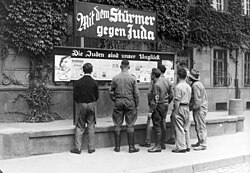
Notable promoters of the alt-right included Spencer,96 Vox Day,97 and Brittany Pettibone.98 Earlier white nationalist thinkers were also characterized as alt-right thinkers, among them Taylor,99 and MacDonald.14 Other prominent alt-rightists included Brad Griffin, a member of the neo-Confederate League of the South who founded the Occidental Dissent blog,100 Matthew Heimbach, who established the Traditionalist Youth Network in 2013,101 and Andrew Anglin, who launched the Daily Stormer website—named after the Der Stürmer newspaper active in Nazi Germany—in 2013.102 By 2016, Anglin called the Daily Stormer "the world's most visited alt-right website".103 While some of the websites associated with the alt-right—like The Daily Stormer and the Traditionalist Youth Network—adopted neo-Nazi approaches, others, such as Occidental Dissent, The Unz Review, Vox Popoli, and Chateau Heartiste, adopted a less extreme form of white nationalism.104
Breitbart News and the alt-lite
Far more widely visited than these alt-right websites was Breitbart News, which between 2016 and 2018 received over 10 million unique visitors a month.105 Launched by the conservative Andrew Breitbart in 2005, it came under the control of Steve Bannon in 2012.106 A right-wing nationalist and populist,107 Bannon was hostile to mainstream conservatism.108 Although much of Breitbart's coverage fed into racially charged narratives, it did not promote white nationalism,107 differing from the mainstream conservative press more in tone than in content.107 Alt-rightists termed Breitbart "alt-lite";105 this term appeared in the alt-right's language in mid-2016, used pejoratively for rightists who shared their contempt for mainstream conservatism but not their white nationalism.109


In July 2016, Bannon claimed that Breitbart had become "the platform for the alt-right";110111 he may have been referring not to the website's official content but to its comments section—which is lightly moderated and contains more extreme views than those of Breitbart itself.112 Several political scientists rejected the characterization of Breitbart as alt-right,113 although press sources repeatedly described it as such,114115116 and the journalist Mike Wendling termed Breitbart "the chief popular media amplifier of alt-right ideas".117
In March 2016, the writers Allum Bokhari and Milo Yiannopoulos published an article in Breitbart discussing the alt-right.118 They downplayed its most extreme elements and championed its counter-cultural value.119 Bokhari and Yiannopoulos' piece was subsequently widely cited in the mainstream press,120 with Hawley describing it as "the most sympathetic portrayal of the movement to appear in a major media venue to date".121 Many alt-rightists responded negatively to Bokhari and Yiannopoulos' article; The Daily Stormer referred to it as "the Product of a Degenerate Homosexual and an Ethnic Mongrel".122
Many press sources subsequently termed Yiannopoulos "alt-right".123124 This was rejected both by Hawley,125 and by alt-rightists; on Occidental Dissent, Griffin asked: "What the hell does Milo Yiannopoulos—a Jewish homosexual who boasts about carrying on interracial relationships with black men—have to do with us?"126 Other observers instead labeled Yiannopoulos "alt-light" or "alt-lite",127 a term also applied to rightists like Mike Cernovich and Gavin McInnes.128 McInnes clarified his understanding of the difference between the alt-right and alt-lite by explaining that while the former focused on the white race, the latter welcomed individuals of any racial background who shared its belief in the superiority of Western culture.129
Donald Trump 2016 presidential campaign and election
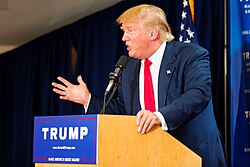
In June 2015, billionaire businessman Donald Trump announced plans to campaign to become the Republican nominee for the 2016 presidential election, attracting the interest of alt-rightists as well as from white nationalists more broadly, neo-Nazis, KKK groups, and the Patriot movement.130 Vocal in their support for Trump's campaign,131132133134 this cause energized the alt-right and gave them the opportunity for a broader audience.135 Niewert observed that "Trump was the gateway drug for the alt-right", with many individuals learning of the movement through their interest in Trump.136
Ideologically, the alt-right remained "far to Trump's right",137 and Trump himself had little understanding of the movement.135 Tait argued that the mainstream media largely "overstate[d] the connection" between Trump and the alt-right.35 Many alt-rightists recognized that Trump did not share their white nationalism and would not bring about all the changes they desired;138 they nevertheless approved of his hard attitude to immigration, his calls for a ban on Muslims entering the U.S., and for a wall to be built along the border with Mexico to curtail illegal immigration.139 They were grateful that he had shifted the national conversation rightward,140 and that he had shown that it was possible to challenge the mainstream conservative movement from the right.137 Griffin called on alt-rightists to "join the Trump campaign... to take down the hated cuckservative establishment".141note 2 A small minority of alt-rightists were against supporting Trump; The Right Stuff contributor "Auschwitz Soccer Ref" complained that two of Trump's children had married Jews.142
A keen Twitter user, in November 2015, Trump retweeted a graphic about African-American crime statistics which included the white nationalist hashtag "#WhiteGenocide".143144 The alt-righter RamZPaul rejoiced, retweeting Trump's piece with the comment: "Trump watches and is influenced by the Alt Right".145 Over coming months, Trump retweeted a second tweet that had "#WhiteGenocide" as a hashtag as well as sharing other tweets issued by white supremacists.146147 The alt-right saw this as further evidence that Trump was their champion.146
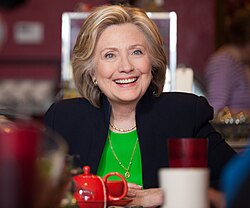
In August 2016, Trump appointed Bannon to lead his election campaign.148110149 This was swiftly condemned in a Reno, Nevada speech given by the Democratic Party's nominee for the presidency, Hillary Clinton.150 She highlighted Bannon's claim that Breitbart was "the platform for the alt-right",110 describing the movement as "an emerging racist ideology" and warning that "a fringe element has effectively taken over the Republican Party".151152153 Attacking the alt-right as "racist ideas[...] anti-Muslim, anti-immigrant, anti-women ideas", she accused Trump of taking them "mainstream".95 Clinton said that while half of Trump's supporters were decent individuals "desperate for change", the other half represented a "basket of deplorables".154
After Clinton's speech, traffic to alt-right websites rose and the mainstream media gave it increasing coverage;155 Spencer and other alt-rightists were pleased, believing her speech gave them greater publicity and helped legitimize them in the public eye.156157 Many Trump supporters adopted the moniker of "deplorables", and the term was widely used on memes that the alt-right promoted online.158 In September, Spencer, Taylor, and Peter Brimelow held a press conference in Washington DC to explain their goals.159160
When Trump won the election in November, the alt-right's response was generally triumphalist and self-congratulatory.161 Anglin stated: "Make no mistake about it: we did this. If it were not for us, it wouldn't have been possible"; Spencer tweeted that "The Alt-Right has been declared the winner... We're the establishment now".162163 Alt-rightists were generally supportive of Trump's decision to appoint Bannon his chief strategist,164165 and Jeff Sessions his attorney general.166167 While aware that Trump would not pursue a white nationalist agenda, the alt-right hoped to pull him further to the right, taking hardline positions that made him look more moderate, and thus shifting mainstream discourse rightward.126
After Trump's election
Wendling suggested that Trump's election signaled "the beginning of the end" for the alt-right,168 with the movement's growth stalling from that point.135 Celebrating Trump's victory, Spencer held a November meeting in Washington D.C. in which he stated that he thought that he had "a psychic connection, a deeper connection with Donald Trump, in a way we simply do not have with most Republicans".169 He ended the conference by declaring "Hail Trump! Hail our people! Hail victory!", to which various attendees responded with Nazi salutes and chanting. This attracted significant press attention. When questioned on the incident, Spencer stated that the salutes were given "in a spirit of irony and exuberance".170171172
Later that month, Trump was asked about the alt-right in an interview with The New York Times. He responded: "I don't want to energize the group, and I disavow the group".173174 This rejection angered many alt-rightists.175 In April 2017, many alt-rightists criticized Trump's order to launch the Shayrat missile strike against Syrian military targets; like many of those who had supported him, they believed he was going back on his promise of a more non-interventionist foreign policy in the Middle East.176177178179
Hawley noted that the alt-right's influence on the Trump administration was "negligible".180 However, press sources alleged that several appointments within the Trump administration were linked to the alt-right, including Senior Advisor to the President Stephen Miller,181 National Security Advisor Michael Flynn,182 Deputy Assistant to the President Sebastian Gorka,183 Special Assistant to the President Julia Hahn,184 and speechwriter Darren Beattie.185 After Trump's election, the alt-right also supported the unsuccessful campaigns of several other Republicans, including Roy Moore.186 Some Republican candidates who were alleged to have alt-right links also ran for office, among them Paul Nehlen,187 Corey Stewart,188189 Josh Mandel, and Joe Arpaio.190191
In 2016, Twitter began closing alt-right accounts it regarded as engaging in abuse or harassment;192 among those closed were the accounts of Spencer and his NPI.193 In February 2017, Reddit then closed down the "r/altright" subreddit after its participants were found to have breached its policy prohibiting doxing.194195196 Facebook followed by shutting down Spencer's pages on its platform in April 2018.197 In January 2017, Spencer launched a new website, Altright.com, which combined the efforts of the Arktos publishing company and the Red Ice video and radio network.198199
Unite the Right rally and its aftermath
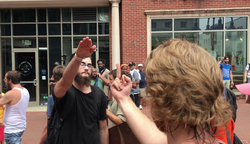
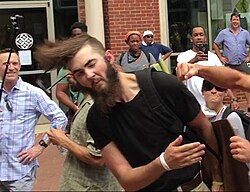
In August 2017, the Unite the Right rally took place in Charlottesville, Virginia, bringing together alt-rightists with members of other far-right movements.200 Many alt-rightists thought that the rally would mark a turning point in the transformation of their movement from an online phenomenon into a street-based one.200 At altright.com, editor Vincent Law for instance predicted before the event took place that "People will talk about Charlottesville as a turning point".200201 However, the event and its aftermath proved demoralizing for many in the movement.202
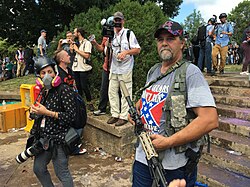
Various violent acts took place at the rally. An African-American man, DeAndre Harris, was assaulted by demonstrators, while Richard W. Preston, an Imperial Wizard for the Maryland-based Confederate White Knights of the Ku Klux Klan, fired a gun towards counter-protesters.203204 One participant in the rally, a 20-year-old from Ohio named James Alex Fields Jr., rammed his car into counter-protesters, killing 32-year old Heather D. Heyer and injuring 35 others.205206207 Although Spencer condemned the killing, other alt-rightists celebrated it.208 Fields was arrested and later sentenced to life in prison.209210 The car ramming incident brought much negative publicity to the event and its participants,211 earning the alt-right a reputation for violence.212
Various commentators and politicians, including Sessions, labelled Fields' ramming attack "domestic terrorism".213214215 Trump claimed that there were "some very fine people on both sides" of the Charlottesville protests, stating that what he called the "alt-left" bore some responsibility for the violence. Spencer stated that he was "really proud" of the president for those comments.216 Amid criticism of his comments, Trump added his view that "racism is evil" and that "those who cause violence in its name are criminals and thugs".217
Various alt-rightists who attended the rally experienced personal and legal repercussions for their involvement;218 one attendee, the U.S. Marine Vasillios Pistolis, was for instance court-martialled.219 Internet service providers and social media websites subsequently terminated many alt-right accounts and sites.218 Prominent figures like Spencer became reticent about organizing further public protests.202 He experimented with the use of flash demonstrations, returning to Charlottesville with a much smaller group for an unannounced protest in October.78220 Unite the Right exacerbated tensions between the alt-right and the alt-lite;221 Breitbart distanced itself from the alt-right,222 as did Yiannopoulos, who insisted he had "nothing in common" with Spencer.223
2017–2018: Decline
The alt-right significantly declined in 2017 and 2018. This happened for multiple reasons, including the backlash of the Unite the Right rally, the fracturing of the movement, more effective banishment of hate speech and harassment from major social media websites and widespread opposition by the American population.224 In 2018, Heidi Beirich of the Southern Poverty Law Center described it as "imploding", while Marilyn Mayo of the Anti-Defamation League stated that the alt-right was in "a downward spiral, but it doesn't mean they're going to disappear".225 That year, Heimbach was arrested for the battery of his wife and father-in-law, resulting in the dissolution of his Traditionalist Workers Party,226225 while Anglin went into hiding to avoid a harassment lawsuit, and Spencer canceled his speaking tour.225 Writing for The Guardian, Jason Wilson stated that "the alt-right looks like it is crumbling".227 Tait stated that after the Unite the Right rally, "it was clear that the alt-right brand had been oversaturated, diluted, and damaged.", but added that the alt-right "managed to reintroduce racist and antisemitic discourse into the mainstream of the right via the overlapping circles of the hardcore alt-right, the alt-lite, and the nebulous world of online anti-progressivism. The story of the alt-right, then, is one of how the American right, or any modern ideological movement, can—and cannot—police itself without guardrails.35
There has been widespread concern that as the chance of a large-scale political movement dies out, lone-wolf terrorist attacks from members will become common.224 In 2017, terrorist attacks and violence affiliated with the alt-right and white supremacy were the leading cause of extremist violence in the United States.228229 Zack Beauchamp of Vox suggested that "other, more nakedly violent far-right movements have risen in its wake".230 Several alt-right candidates ran as Republican candidates in the 2018 elections. The neo-Nazi and Holocaust denier Arthur Jones ran for an Illinois congressional seat, the white supremacist Paul Nehlen for the Wisconsin seat of Paul Ryan, the Republican Speaker of the House,231 and the neo-Nazi Patrick Little for the United States Senate election in California, 2018.232233
According to Tait, "Leading figures associated with the alt-right have disappeared into obscurity, self-immolated, and reinvented themselves as centrists. Meanwhile, the ideology's ideas have diffused across the political landscape."35
2018–present: Resurgence
Groups like the terrorist group Atomwaffen Division grew after the Unite the Right rally, recruiting those radicalized by its events and aftermath.234235 New groups were also former in the aftermath, like the Patriot Front and the National Socialist Legion, which both split from Vanguard America.236 The accelerationist tome Siege spread rapidly in the post-Unite the Right landscape as radicalized alt-right adherents pushed one another to commit violence, and "read Siege" was posted on /pol/ over 5,500 times between 2017 and 2022.237
During October and November 2019, Turning Point USA's "Culture War" college tour was frequently targeted by a group known as "the Groyper army", led by Nick Fuentes, who consider some groups to be not sufficiently conservative on issues of race and ethnicity, immigration, and LGBTQ rights.238239
In 2020, several alt-right organizations were formed outside of the United States including the Australian National Socialist Network,240 and the Canadian Diagolon group.241 Diagolon would go on to participate in the Canada convoy protest in 2022.242
In 2024, the Canadian alt-right organization Second Sons was founded by Canadian podcaster and military veteran Jeremy MacKenzie, the same person who founded Diagolon.243
On 16 November 2024, 11 days after Trump had been re-elected as president, the alt-right neo-Nazi group Hate Club 1488 marched through Columbus, Ohio while multiple groups held roadside demonstration in Decatur, Alabama.244 American magazine Wired compiled all reported instances of similar neo-Nazi demonstrations and found that alt-right neo-Nazi rallies were on the rise with 4 demonstrations in 2021, 22 in 2022, 30 in 2023, and 34 in 2024.244
Academic Laura K. Field, in her 2025 book titled The Making of the MAGA New Right, argued that the activities of alt-right movements have largely merged into the far-right movement as of 2020–2021, as discussed in chapter six of her book, "From Alt-Right to Hard Right".245
Beliefs
The alt-right is situated on the far-right of the left-right political spectrum.246 It has no unifying manifesto and those who describe themselves as "alt-rightists" express varying views about what they want to achieve.247 There are nevertheless recurring attitudes within the movement.247 The alt-right's views are profoundly anti-egalitarian.248 It rejects many of the basic premises of the Age of Enlightenment and classical liberalism,249 including the liberal democracy which underpins the U.S. political system.250 For this reason, Hawley thought that "the Alt-Right seems like a poor fit for the United States, where both the left and right have roots in classical liberalism and the Enlightenment."251 Similarly, the academic Thomas J. Main stated that the alt-right sought "a root-and-branch rejection of American political principles".252
The key division within the alt-right is between those who explicitly embrace neo-Nazi and white supremacist stances, and those white nationalists who present a more moderate image.253 Wendling suggested that this was "a distinction lacking a hugely significant difference".254 The white supremacist and neo-Nazi alt-rightists are sometimes termed "1488s", a combination of the white supremacist fourteen words slogan with 88, a coded reference to "HH", or "Heil Hitler".255 These neo-Nazi elements represent a minority within the alt-right.256 Many on the less extreme end of the movement are critical of them, believing that they "go too far" or generate bad publicity for it.257 Some of the latter mock the neo-Nazi and explicitly white supremacist elements as "Stormfags", a reference to the white supremacist website Stormfront.258
According to Tait, the alt-right engages in a realm of politics that they call "metapolitics". Swedish alt-right publisher Daniel Friberg says that metapolitics aims to "ultimately ... redefine the conditions under which politics is conceived." Metapolitics also involves shifting the overton window, the range of ideas considered politically acceptable at a given time.35
White nationalism
The alt-right is a white nationalist movement, and is fundamentally concerned with white identity.2592 It views all political issues through the framework of race.260 Spencer described the alt-right as "identity politics for white Americans and for Europeans around the world",261 while the alt-rightist Greg Johnson of CounterCurrents Publishing stated that "The Alternative Right means White Nationalism".262 Not all alt-rightists actively embrace the term "white nationalist";247 Spencer is among those who prefer to call themselves "identitarians".208 Main described the alt-right as promoting "white racialism",250 while Hawley commented that the alt-right is, "at its core, a racist movement".13 Similarly, historian David Atkinson stated that the alt-right was "a racist movement steeped in white supremacist ideas".78 Attitudes to non-white people vary within the alt-right, from those who desire tighter restrictions on non-white immigration into the U.S., to those who call for a violent ethnic cleansing of the country.263
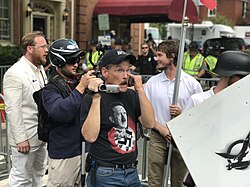
Rejecting the idea that race is a socio-cultural construct, the alt-right promotes scientific racism, claiming that racial categories demarcate biologically distinct groups. They call this belief "race realism".264 A recurring tendency among alt-rightists is to rank these races on a hierarchy, according to perceived IQ. This hierarchy has Asians and Ashkenazi Jews at the top, followed by non-Jewish whites, then Arabs, and finally, black Africans.265 Several prominent alt-rightists, including Anglin and Spencer, have been romantically involved with women of Asian heritage.266 Unlike earlier racist worldviews, such as those of the interwar fascists, the alt-right emphasizes the idea of racial difference above that of racial superiority, leaving the latter either implicit, or secondary, in its discourse.267 Most alt-rightists reject the label of "white supremacist".258
Having analyzed alt-right posts online, the political scientists Joe Phillips and Joseph Yi noted that a pervasive underlying theme was the belief that white people were victims, and that white Americans had been disadvantaged by government policies, such as affirmative action for non-white groups, assistance to illegal immigrants, and the perceived denigration of "white history", like Christopher Columbus and the Confederate States of America.258 Alt-right online discourse also expressed much anger at the idea of white privilege, widely promoted by the American Left in the 2010s, with members citing job insecurity, under employment or unemployment, and growing mortality rates among whites as evidence that they do not lead privileged lives.258
Many alt-rightists have expressed the desire to push white nationalist ideas into the Overton window—the range of ideas tolerated in public discourse.268 The alt-right has served as a bridge between white nationalism and traditional conservatism, and as a tool used by white nationalists to push their rhetoric into the mainstream.269 On Twitter, alt-rightists, for instance, combined their white nationalist hashtags with others used by Trump supporters more broadly, notably #MakeAmericaGreatAgain, so as to spread their message across the broader political right.270
White separatism and ethnostates
The alt-right is typically white separatist, with its members desiring autonomy in their own white communities.271 Some envision breaking up the United States into multiple states, each inhabited by a different ethnic or racial group,271 one or more of which would represent white ethnostates.260 Writing in the Pacific Standard, journalist Jared Keller commented that this desire for an independent ethnostate was similar to anarcho-fascist ideas promoted by the British National Anarchist Movement.272 Spencer compared his campaign for a white ethnostate with the early days of Zionism, which began in the 19th century with calls for the formation of a Jewish ethnostate, and resulted in the formation of Israel in the mid-20th century.273
Many alt-rightists are unclear as to how a white ethnostate would emerge, but are content instead to promote the idea.274 Spencer commented "I don't know how we're going to get there, because the thing is, history will decide that for us... You have to wait for a revolutionary opportunity to present itself, and history will present that opportunity".273 He suggested that it could be achieved through "peaceful ethnic cleansing", with non-whites given financial incentives to leave.275 The prominent alt-rightist Greg Johnson suggested that it would come about after white nationalists became the dominant force in U.S. politics, at which point they would deport all illegal migrants, before encouraging all other people of color to emigrate.263
Other alt-rightists are critical of the idea of breaking up the U.S. into ethnostates, arguing that this would mean destroying the country that their Euro-American ancestors built.271 They instead argue for restrictive immigration policies, to ensure that the U.S. retains its white majority.276 Some alt-rightists promote a pan-white empire spanning Europe and North America.277 Spencer noted that wanted his white ethnostate in North America to eventually form part of "a global empire" that could provide "a homeland for all white people", expanding its territory into the Middle East by conquering Istanbul, which in his words was "such a profoundly symbolic city. Retaking it, that would be a statement to the world".278
Antisemitism and the white genocide conspiracy theory
Some elements of the alt-right are antisemitic, but others are tolerant of Jews.2797 Many in the alt-right believe that there is a Jewish conspiracy within the United States to achieve "white genocide", the elimination of white people as a racial group, and their replacement with non-whites.280 They believe that a Jewish cabal controls the U.S. government, media, and universities, and is pursuing its aim of white genocide by spreading anti-white tropes, and encouraging African-American civil rights groups.202 As evidence for this supposed white genocide, these far-right figures point to the depiction of inter-racial couples or mixed-race children on television, and the publication of articles discouraging women from having children early in life.281 They also cite apparent instances of white self-hatred, including Rachel Dolezal, an American woman of European descent who identifies as black.282
This antisemitic conspiracy theory is not new to the alt-right, but has recurred among far-right groups in Western countries since the 19th century; it was the reason for the Holocaust and various antisemitic pogroms in European history.202 Andrew Anglin, one of the most prominent alt-right ideologues and a member of its neo-Nazi wing, stated "the core concept of the movement, upon which all else is based, is that Whites are undergoing an extermination, via mass immigration into White countries which was enabled by a corrosive liberal ideology of White self-hatred, and that the Jews are at the center of this agenda".283 Anglin stated that in the alt-right, "Many people also believe that the Jews should be exterminated".284285286 Other alt-rightists, like Spencer, welcome the involvement of Jews within their movement.287
Opposition to neoconservatism and political correctness
The alt-right sought to hasten the downfall of U.S. conservatism,288 and conservatives were often the main target of alt-right wrath.289 The prominent alt-right ideologue Brad Griffin stated "Alt Right is presenting itself as a sleek new challenger to mainstream conservatism and libertarianism... Alt Right was designed to appeal to a younger audience who reject the Left, but who don't fit in on the stuffy or banal Right either".290 The alt-right places little emphasis on economic issues.291 Unlike mainstream U.S. conservatives, alt-rightists do not tend to favor laissez-faire economics, and most appear to support President Trump's protectionist economic measures.292
The alt-right also rejects what it regards as the left-wing dominance of modern Western society.16 Phillips and Yi noted that alongside "white identity politics", the alt-right promotes "a message of expressive transgression against left-wing orthodoxy ('political correctness')".293 Political correctness has been characterized as one of the alt-right's "bugbears";294 Nicole Hemmer stated on NPR that political correctness is seen by the alt-right as "the greatest threat to their liberty".95 Alt-rightists often employ the term "Cultural Marxism"—originally coined in reference to a specific form of Marxist thought, popularised among the U.S. right-wing in the 1990s—in reference to a perceived leftist conspiracy to alter society. They apply the term "Cultural Marxism" to a broad range of left movements.295
Governance, isolationism, and anti-interventionism
Anglin claimed that the goal of the alt-right was to form an authoritarian government.284285286 Writing in The New Yorker, the journalist Andrew Marantz claimed that neo-monarchists were among the alt-right.296 The alt-right has no specific platform on U.S. foreign policy,297 although it has been characterized as being non-interventionist,298 as well as isolationist.299 Generally, it opposes established Republican Party views on foreign policy issues.297 Alt-rightists typically opposed President Bush's war on terror policies,297 and spoke against the 2017 Shayrat missile strike.298299 The alt-right has no interest in spreading democracy abroad and opposes the United States' close relationship with Israel.297
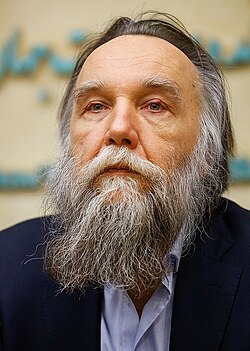
The alt-right often looks favorably on Russian President Vladimir Putin, viewing him as a strong, nationalistic white leader who defends his country from both radical Islam, and Western liberalism.300 Spencer praised Putin's Russia as the "most powerful white power in the world",59 while prominent alt-rightist Matthew Heimbach called Putin "the leader of the free world".301 Although during the Cold War, the American Right often presented the Soviet Union as the main threat to the U.S., links between the American far-right and Russia grew during the 2000s, when prominent far-right activists like David Duke visited the country; the latter described Russia as being "key to White survival".302 The far-right Russian political theorist Aleksandr Dugin is also viewed positively by the alt-right.303304 Dugin has written for Spencer's websites,101 and Spencer's estranged wife, the ethnically Russian Nina Kouprianova, has translated some of Dugin's work into English.305 Many alt-rightists also regard Syrian president Bashar al-Assad as a heroic figure for standing up to rebel groups in the Syrian Civil War.306 Heimbach has endorsed a Shi'ite axis between al-Assad's Syria, Iran, and Hezbollah in Lebanon, seeing them as allies in the global struggle against Zionism.301
Anti-feminism and misogyny
Favoring a more patriarchal society, the alt-right is anti-feminist.307 Unlike many U.S. conservatives, the alt-right does not argue its anti-feminist position from traditional Christian perspectives. Instead, the alt-right claims that it is rooted in what it calls "sex realism", arguing that as a result of their biological differences, men and women are suited to different tasks in society.297 Lyons commented that the alt-right was misogynistic and presented women as irrational and vindictive.308 Although a minority in the movement, the alt-right has female members who support its anti-feminist stance;309310311 some prominent alt-right women, such as Lauren Southern, have experienced harassment and abuse from within the movement.310309 The Daily Stormer, for instance, banned female contributors, and called for reduced female involvement in the white nationalist movement, producing an angry response from various white nationalist women.308 Within feminist circles, the alt-right's desired future was repeatedly compared to the Republic of Gilead, the fictional dystopia in Margaret Atwood's The Handmaid's Tale (1985) and its 2017 television adaptation.312
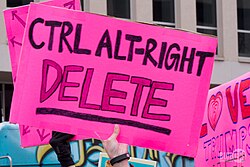
The alt-right intersects with the manosphere, an online anti-feminist subculture,313 including the men's rights movement, which believes that men face more oppression in Western society than women.297 It adopts the movement's view that feminism has undermined and emasculated men, and believes that men should aggressively reassert their masculinity so as not to become "beta males" or "cucks".264 There has been some clear influence between the two movements; prominent manosphere ideologue Roosh V, for instance, attended an NPI conference, and quoted antisemitic material from white nationalist sources in his articles.314 Some alt-right figures have distanced themselves from the manosphere and its proponents; Greg Johnson of Counter-Currents Publishing was of the view that "the manosphere morally corrupts men", because it does not promote "the resurgence of traditional and biologically based sexual norms".315
The alt-right displays far less interest in homosexuality and abortion than the U.S. conservative movement, with alt-rightists taking varying perspectives on these topics.316 Hawley suggested that the alt-right was more broadly sympathetic to legal abortion access than the conservative movement;317 many alt-rightists support abortion access, because of its disproportionate use by African-American and Hispanic-American women.317 Some on the alt-right consider homosexuality to be immoral and a threat to the survival of the white race,318 with alt-right trolls having employed homophobic terminology like "faggot".319 A combination of homophobia and anti-globalism have produced the concept of "globohomo",320 a variant of the "Cultural Marxism" conspiracy theory.321 Others adopt a more tolerant stance, and have praised gay white nationalists.322 This reflects a broader trend among white nationalists to denigrate gay culture, while being more tolerant of gay writers and musicians whose views they sympathize with, like James O'Meara, and Douglas Pearce.318
Religion
The alt-right is broadly secular.323 Many of its members are atheists,324325 or highly skeptical of organized religion326 and God.325 Some alt-rightists identify as Christians;327 The Right Stuff, for instance, hosted an alt-right Christian podcast called "The Godcast".328 There are also individuals in the movement who do not believe in Christian teachings but identify as cultural Christians, admiring the Christian heritage of Western society.324 Others on the alt-right oppose Christianity entirely, criticizing it for its Jewish roots, for being a universal religion that seeks to cross racial boundaries, and for encouraging what they see as a "slave morality" that they contrast with perceived ancient aristocratic values.329 Some elements pursue modern Paganism.324330 White evangelical leaders of the Southern Baptist Church have angered the alt-right by expressing support for refugees entering the U.S., calling for measures to help undocumented migrants gain legal status, and urging members not to display the Confederate Battle Flag.331 Despite this, alt-right hostility to Christianity has waned over time, with many alt-right commentators identifying as Christian, while rejecting mainstream Christian politics and most mainstream Christian religious leaders, especially Pope Francis.332 The Mormon-related hashtag #DezNat – which targets pornography, the LGBTQ community, Mormon apostates and progressives, sometimes violently (see blood atonement) – has also been linked to the alt-right.333
Several press sources have linked the alt-right to Islamophobia,22334335 and Wendling stated that alt-rightists view Islam as a fundamental threat to Western society.324 Hawley expressed the view that "ironically, people on the Alt-Right are less Islamophobic than many mainstream conservatives".336 He observed that many U.S. conservatives criticized Muslim migration to the United States, because they regarded Islam as a threat to liberty; the alt-right has made little use of this argument. For alt-rightists, migration from Islamic-majority countries is undesirable not because the migrants are Muslims, but because most of them are non-white; it is equally opposed to non-white migrants who are Christian or non-religious.337
Structure
Alt-right groups live, recruit and coordinate (and hence evolve) online. And from what we can already see, they do so pretty much exactly like the pro-ISIS groups evolve and coordinate, but Facebook has so far been less quick to shut them down.
The academic Timothy J. Main characterized it as an "ideological movement" interested more in spreading its ideas, rather than operating as a social movement or political party,339 while according to Hawley, the alt-right was "a disorganized mob that broadly shares a number of goals and beliefs".340 The alt-right is not an organized movement, and has no formal institutions or leading elite.341 It is a predominantly online phenomenon,342 lacking print newspapers, and has little radio or television presence.343 It had no think tanks that influenced government policy, and could not command the open allegiance of any major politicians or mainstream pundits.343 Unlike many counter-cultural movements, it lacked soft power in the form of original bands, songs, films, and other cultural artifacts, of which it produced very few.344 According to Hawley, it was the movement's success in using the Internet that allowed it "to punch above its weight in the political arena".75
The alt-right made use of a large number of blogs, podcasts, forums, and webzines, in which it discussed far-right political and cultural ideas.75 The use of the Internet by the far-right was not pioneered by the alt-right; the white supremacist web forum Stormfront had, for instance, been active since 1996.345 Where the alt-right differed was in its members willingness to leave far-right websites, and engage in trolling on other parts of the Internet, such as the comments sections of major news websites, as well as popular social media applications, such as YouTube, and Twitter.345 According to Hawley, it was the alt-right's use of trolling which put it "into the national conversation".75 The movement's online structure had strengths, in that it allowed members to say things anonymously online, that they would not be willing to say on the street, or any other public place.32 The lack of any formal organization also meant that nobody could be kicked out of the alt-right.32
As the alt-right developed, a number of formal, real world events were held, particularly through the National Policy Institute.345 Members of the alt-right have also attended events organized by an older far-right white nationalist group, American Renaissance.345 These events have gained a more limited audience than the alt-right's online activities.345 This may be because operating online allows members of the alt-right to operate anonymously, while to attend events they must often expose themselves to journalists and protesters, thus making it more likely that their views will become publicly known.345 U.S. alt-rightists have also sought to build links with other far-right and white nationalist groups elsewhere in the world. Heimbach, for instance, addressed meetings of the Golden Dawn in Greece and the National Democratic Party of Germany.301 Various U.S.-based alt-rightists used social media to encourage support for the Alternative for Germany party in that country's 2017 federal election.346 The scholar Sitara Thobani argued for a convergence between the U.S. alt-right and Hindu nationalism in India.347
Tactics
Main argued that a characteristic of the alt-right was its use of vitriolic language, including "race-baiting, coarse ethnic humor, prejudicial stereotyping, vituperative criticism, and the flaunting of extremist symbols".250 In The New Yorker, the journalist Benjamin Wallace-Wells noted that the alt-right sought to test "the strength of the speech taboos that revolve around conventional politics—of what can be said, and how directly";131 members often made reference to freedom of speech when calling for their views to be heard in public discourse.348 Alt-rightists promoted their messages through Twitter hashtags such as "#WhiteGenocide", "#WhiteLivesMatter" and "#StandUpForEurope".349 A recurrent tactic of alt-rightists is to present themselves—as white men—as victims of oppression and prejudice; this subverts many leftist arguments about other social groupings being victims and is designed to infuriate leftist opponents.350
The alt-right also make heavy use of imagery drawn from popular culture for its own purposes.351 For instance, the American singer Taylor Swift is often held up as an idealized example of "Aryan" beauty.352 When describing their own conversion to the movement, alt-rightists refer to themselves as having been "getting red pilled", a reference to a scene in the 1999 film The Matrix in which Neo, the protagonist, chooses to discover the truth behind reality by consuming a red pill.353 On alt-right blogs and message boards, members often discuss how they were "red-pilled" originally.354 Members that encourage others to conceal their actual beliefs to more easily spread their messages refer to this tactic as "hiding one's power levels", in reference to a scene from the anime Dragon Ball Z.355356 Alt-rightists have also adopted milk as a symbol of their views; various members have used the words "Heil Milk" in their online posts while Spencer included an emoji of a glass of milk on his Twitter profile along with the statement that he was "very tolerant... lactose tolerant!"357 The animal studies scholar Vasile Stănescu suggested that this notion drew upon the 19th-century pseudoscientific idea that Northern Europeans had become biologically superior to many other human populations, because they consumed high quantities of milk and meat products.358
Use of humor and irony
The alt-right makes strong use of humor and irony.359 As noted by Nagle, the alt-right's use of humor renders it difficult to tell "what political views were genuinely held and what were merely, as they used to say, for the lulz".360 By presenting an image which was much less threatening than that of earlier white nationalist groups, the alt-right was able to attract people who would be willing to visit its websites but who would not have considered attending neo-Nazi or KKK events.26 As noted by Hawley, "whereas older white nationalists came across as bitter, reactionary, and antisocial, much of the Alt-Right comes across as youthful, light-hearted, and jovial—even as it says the most abhorrent things about racial and religious minorities".345 Members of the alt-right sometimes mocked the earnestness and seriousness of earlier white nationalists such as William Pierce.361
Another of the tactics employed online by alt-rightists is to parody their leftist opponents. One American alt-rightist, for instance, created a Twitter account for a fictional individual whom they described as an "LGBTQ+ pansexual nonbinary POC transwoman" who was a "Journalist for BLM [Black Lives Matter]. Always stayin woke".362 Alt-rightists also orchestrated pranks, again, to cause alarm among opponents. For instance, during the 2016 presidential campaign, alt-rightists presented claims that they were plotting to send representatives posing as officials to voting booths, where they would suppress ethnic minority turnout. There was no such plot, but press sources like Politico presented these claims as fact.363 This tendency toward trolling rendered it difficult for journalists to learn more about the alt-right, because any members they talked to were willing to deceive them for their own amusement.364 Nagle argued that the alt-right had inherited a transgressive style descending from the Marquis de Sade in the 18th century,365 but that with the alt-right this "the transgressive anti-moral style" reached "its final detachment from any egalitarian philosophy of the left or Christian morality of the right".366 Tait argued that many viewed alt-right content "for the politically transgressive content without embracing the political or philosophical vision of the alt-right."35
Use of memes


The alt-right makes heavy use of memes,369370371 which became a defining trend of the movement in 2016,95 adopting much of its "image- and humor-based culture", including its heavy use of memes, from the online subcultures active at 4chan, and later 8chan.86 The prevalence of such memes in alt-right circles has led some commentators to question whether the alt-right is a serious movement rather than just an alternative way to express traditionally conservative beliefs,370131 with Chava Gourarie of the Columbia Journalism Review stating that provoking a media reaction to these memes is for some creators an end in itself.8
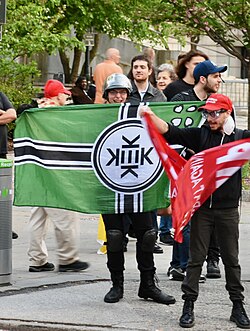
One of the most commonly used memes within the alt-right is Pepe the Frog.372373374 The Pepe meme was created by artist Matt Furie in 2005 and over following years spread through the Internet, being shared by pop stars like Nicki Minaj and Katy Perry.375 By 2014, Pepe was one of the most popular online memes, used among far-right trolls on 4chan and from there adopted by the alt-right.376 After Trump tweeted a meme of Pepe as himself, and his son Donald Trump Jr. posted a Pepe meme shortly after, alt-righters and 4channers began spreading the meme with political intent.377 According to writer Gary Lachman, Pepe became "the unofficial mascot of the alt-right movement".377 The use of Pepe spawned the satirical worship of the Ancient Egyptian frog-headed deity Kek, as well as satirical nationalism of the nonexistent nation of "Kekistan".378379 "Clown World", a phrase used by the alt-right to express their distaste towards societies perceived to be too liberal or multiracial, is often used in conjunction with images of Pepe dressed like a clown, who they dub "Honkler".380 Another alt-right mascot was Moon Man, an unofficial parody of McDonald's 1980s Mac Tonight character.381382383 Alt-rightists posted videos to YouTube, in which Moon Man rapped to songs they had composed like "Black Lives Don't Matter" by a text-to-speech synthesizer.381
The alt-right used specific terms for individuals outside the movement. Whites who were not part of the movement were called "normies";384 homosexuals, and whites who socialized with people of color, were referred to as "degenerates".385 An alt-right acronym was "WEIRD", for "Western, educated, industrialised, rich and democratic people".386 Mainstream conservatives were denigrated as "cuckservatives", a portmanteau of "cuckold" and "conservative".387388389 The term "cuckold" pertains to a man with an unfaithful wife; the alt-right saw this as analogous to the role of the U.S. conservative movement in assisting non-whites in the U.S.390note 3 Various terms were used for leftists. Those who expressed progressive views, particularly online, were characterized as "social justice warriors" (SJWs).392 Individuals who expressed leftist opinions on Tumblr—and who alt-rightists often stereotyped as fat, ugly feminists—were called "Tumblrinas".393 The term "snowflake", short for "special snowflake", was used as a pejorative for such individuals,394 and in reference to leftist uses of "trigger warnings", alt-rightists expressed a desire to "trigger" leftists by upsetting them.393 Leftists who professed victim status while harassing or bullying others were labeled "crybullies",395 while leftists who were perceived to be stupid were labeled "libtards", a portmanteau of "liberal" and "retard".396 "NPC", derived from "Non-player characters" which are ubiquitous in video games, is used to disparage opponents of the alt-right by implying they are incapable of independent thought, and can only mindlessly repeat the same arguments and accusations against the alt-right.397
When referring to African-Americans, alt-rightists regularly employed the meme "dindu nuffin"—a bastardization of "didn't do nothing"—in reference to claims of innocence by arrested African-Americans. On this basis, alt-rightists referred to black people as "dindus".385398 Events involving black people were called "chimpouts", rhetorically linking them with chimpanzees.399 Alt-rightists also used memes to ironically support the Black Egyptian hypothesis, often using stereotypical African-American vernacular such as "We wuz kangz n shieet" ("We was kings and shit").398 Following the murder of Ahmaud Arbery in 2020, "jogger" was adopted by some members as a euphemism for "nigger" in reference to how Arbery was killed while jogging, and because both words sounded similar.400 Refugees were often referred to as "rapefugees", a reference to incidents like the 2015–16 New Year's Eve sexual assaults in Germany, in which non-white refugees were reported to have sexually assaulted white women.401 Another meme the alt-right employed was to place triple parentheses around Jewish names; this started at The Right Stuff to highlight the presence of Jewish Americans in the media and academia.402403398 One alt-rightist created a Google Chrome plug in that would highlight Jewish names online.402
Alt-rightists often utilized older white nationalist slogans, such as the Fourteen Words: "We must secure the existence of our people and a future for white children",404 that "Anti-racist is a code for anti-white",405 and that "Diversity is a code word for white genocide".406 From the latter, alt-rightists produced the hashtag reduction "#WhiteGenocide" for use on Twitter, highway billboards, and flyers.407 Also used was the slogan "It's OK to be white" as a way of expressing a supposed reverse racism towards white people by minorities.408 The use of "Deus Vult!" and various other crusader iconography was employed to express Islamophobic sentiment.398409410 Also apparent were "helicopter ride" memes, which endorse documented cases of leftists being dropped from helicopters by Chilean and Argentine juntas. Similarly, the term "Right-Wing Death Squad" (usually abbreviated as RWDS) also callbacks to the "helicopter ride" meme and to refer to far-right, fascist death squads.398411 Additional online features of the alt-right included references to Fashwave, a neo-fascist subgenre of electronic music microgenre vaporwave.412413
Harassment
Wendling noted that campaigns of abuse for political ends were "a classic alt-right tactic",414 while Hawley called the alt-right "a subset of the larger Internet troll culture".415 This trolling both contributed to creating racial discord, and generated press attention for the movement.135 Those most regularly targeted were Jewish journalists, mainstream conservative journalists, and celebrities who publicly criticized Trump.416 Such harassment was usually spontaneous rather than pre-planned, but in various cases, many alt-right trolls piled on once the harassment had begun.417 After criticizing Trump and the alt-right, the conservative journalist David A. French—who is white—received much abuse referencing his white wife and adopted black daughter. Alt-right trolls sent him images of his daughter in a gas chamber, and repeatedly claimed that he liked to watch his wife have sex with "black bucks".418 As a result of the Pizzagate conspiracy theory, the artist Arrington de Dionyso, whose murals are frequently displayed at the Comet Ping Pong pizzeria, also experienced abuse from the alt-right.419420 In 2017, a wave of threats began being made to Jewish Community Centers which some press sources attributed to the alt-right.421 Another Jewish target was the conservative commentator Ben Shapiro, who was sent messages stating that he and his children "will go to the ovens".8
Not all targets were U.S. citizens. In what it called "Operation: Filthy Jew Bitch",422 The Daily Stormer encouraged its followers to send abuse to the British Member of Parliament (MP) Luciana Berger, who is Jewish; images sent to her featured a yellow star on her head, accompanied by the hashtag "Hitlerwasright".414 One UK-based alt-rightist was convicted for his involvement in the campaign.423 In another instance, Anglin commented on the June 2016 murder of the British MP Jo Cox by a far-right activist, by saying that "Jo Cox was evil and she deserved to die. Her death was not a tragedy, it was justice".424 While celebrating violence, The Daily Stormer is cautious to remain on the legal side of U.S. incitement laws.424
Demographics
Geographical distribution
The alt-right's anonymized and decentralized nature makes it difficult to determine how many individuals are involved in it, or the demographic attributes of this membership.425 The movement's members are concentrated in the United States, but with participants present in other Anglophone countries, such as Canada, Britain, and Australia, as well as in parts of continental Europe.426 While acknowledging that the U.S. was "central" to the alt-right, Hermansson et al stressed that it was an "international phenomenon".9
Statistics
Alt-rightists have provided their own opinions on its numbers; in 2016, Anglin thought it had a "cohesive constituency" of between 4 million and 6 million people, while Griffin believed it had a core membership in the hundreds of thousands, with a larger range of sympathizers.427 Main determined that, between September 2016 and February 2018, alt-right websites received a combined average of 1.1 million unique visitors per month, compared to 46.9 million unique visitors to broader right-wing sites, and 94.3 million for left-wing sites.428 He deemed the size of the alt-right to be "miniscule [sic]".429 Thomas Main estimated through web traffic that alt-right websites, excluding Breitbart News, had a readership the size of small magazines such as Commentary or Dissent.35
In 2017, following the Charlottesville car attack, an ABC News/Washington Post poll found out that 10% of all Americans supported the alt-right.430 In their 2020 study on the matter, researchers Patrick Forscher and Nour Kteily estimated the support for the alt-right at 6% among the general American population, a number which rises to 10% among Trump supporters.431
Age and gender
The alt-right is majority male,432309 although Hawley suggested that about 20% of its support might be female.309 From the nature of the online discourse as well as the attendees of events organized by NPI and American Renaissance, Hawley believed that the majority of alt-right participants are younger on average than the participants of most previous American far-right groups.425 Wendling believed that a large portion of the alt-right were university students or recent graduates, many bearing a particular grudge against the political correctness encountered on campus;426 the alt-right ideologue Greg Johnson believed that the movement was attracting a higher percentage of better-educated Americans than prior white nationalist groups, due to declining opportunities and standards of living for graduates during the 2010s.433 Wendling also thought that alt-rightists tried to position themselves as "a cool posse of young intelligent kids", but that this was misleading.434 He determined that many of those active on alt-right forums were middle-aged men from working-class backgrounds.435 Tait said that younger members of the alt-right "recognized that the internet let them make an end run around the systems that marginalized their forebears. It's this younger cohort in particular that formed the [movement]". Tait also said "that a large segment of the movement was composed of young, male YouTubers and memelords who advanced misogynistic, anti-liberal, antisemitic, and often racist ideas as they shitposted pro-Trump or anti-progressive memes under absurd pseudonyms".35
Casual factors
On interviewing young alt-rightists, Hawley noted that many revealed that they embraced far-right politics in response to the growing racial polarization of the Obama era; in particular, the public debates around the shootings of Trayvon Martin and Michael Brown, and the rise of the Black Lives Matter movement.436 Hawley suggested that many of these young people were willing to embrace the idea of dismantling the United States in favor of a new, white ethnostate, because they had grown up in the U.S. during the post-civil rights era. In contrast, he thought, older white nationalists were keener to retain links to patriotic American imagery, because they nostalgically recalled a period of U.S. history when segregation and overt white dominance were a part of life, and believed that this system could be reinstated.437 The psychologists Patrick S. Forscher and Nour S. Kteily conducted a study of 447 self-identified alt-right members, and found that they had higher rates of dark triad traits than non-Trump supporters.438439 Forscher and Kteily also noted that the alt-rightists' psychological profiles bore similarities to those of Trump supporters more broadly, although displayed greater optimism about the economy, a higher bias against black people, and a higher rate of support for white collective action than other Trump supporters.438
The political scientist Philip W. Gray cited several reasons for the alt-right's emergence. In his analysis, new online media had reduced the conservative movement's ability to enforce its boundaries against the far-right, while the growing distance of World War II meant that pride in the U.S. victory over Nazi Germany and Fascist Italy provided less of a barrier to the American far-right, than it had when large numbers of people still remembered the conflict.440 Gray also argued that the alt-right was a reaction against the left-wing racial and social agitation of the 2010s, in particular the Black Lives Matter movement, and the popularization of concepts like white privilege and male privilege, as well as events like the racial unrest in Baltimore and Ferguson, and the shooting of police officers in Dallas and Baton Rouge.441
The scholar of American studies Annie Kelly argued that the alt-right was influenced by a pervasive "discourse of anxiety about traditional white masculinity" in mainstream U.S. culture. In her view, much of the "groundwork" for this discourse was set forth by the conservative movement, in the years following the September 11 attacks in 2001.442 Hawley concurred that some U.S. conservatives, such as Ann Coulter, had contributed to the alt-right's rise through their attacks on political correctness, as part of which they had "effectively delegitimized complaints about hate speech and racism".443 Some conservatives, like columnist Matt K. Lewis, have agreed with this assessment.444
Drawing comparisons with the tale of The Boy Who Cried Wolf, the commentator Angela Nagle also suggested that "the hysterical liberal call-out" culture of the 2010s, in which "everyone from saccharine pop stars to Justin Trudeau [was called] a 'white supremacist' and everyone who wasn't With Her a sexist" made it more difficult for people to recognize when a far-right movement really emerged online.445 Disagreeing with Nagle's view that the alt-right was primarily a "response to the stupidity of marginal Internet liberalism", the anti-fascist reporter Jay Firestone—who had spent three months undercover in New York's alt-right community—instead argued that it was a "response to decades of decline in standards of living for working people, amid the proliferation of unemployment and meaningless, dead-end jobs".446
Links to violence and terrorism
"The sprawling networks the alt-right has built around its poisonous, racist ideology have violence at its core in its pursuit of a white ethnostate. The white, male grievance culture that the leaders of the alt-right are incubating has already inspired more than 40 deaths and left more than 60 people injured.
And unfortunately, the alt-right seems likely to inspire more, as it moves further into the real world. Its leaders continue to abdicate all responsibility for the violence their ideology inspires and are becoming increasingly recalcitrant in the face of widespread condemnation.
... After a year [2017] of escalating alt-right violence, we are probably in for more".
In 2017, Hawley noted that the alt-right was not a violent movement, but that this could potentially change.448 From their analysis of online discourse, Phillips and Yi concluded that "rather than violence, most Alt-Right members focus on discussing and peacefully advocating their values".271 They added that presenting the alt-right as a violent, revolutionary movement, or equating all alt-rightists with the 1488 scene—which was a "rhetorical tactic" for progressives—was "an intellectual failure akin to treating all Muslims or black nationalists as radicals and terrorists".271
Conversely, Wending noted that there were individuals on the extreme end of the alt-right willing to use violence.449 He stated that "the culture of the alt-right is breeding its own brand of terrorists: socially isolated young men who are willing to kill".450 The alt-right movement has been considered by some political researchers a terrorist movement and the process of alt-right radicalization has been compared to Islamic terrorism by political scientists and leaders.451452453454455 A paper on the subject stated that it clearly fell under an extremist movement, saying that "alt-right adherents also expressed hostility that could be considered extremist: they were quite willing to blatantly dehumanize both religious/national outgroups and political opposition groups".456
Violent incidents
In February 2018, the Southern Poverty Law Center assembled a list of 13 violent incidents between 2014 and 2018 perpetrated by alt-right influenced people, in which 43 people died and 67 people were injured. The perpetrators of these events were all male between the ages of 17 and 37, with an average age of just over 25 years old (only three of them were over 30). All but one was American; the other was Canadian.447 Dylann Roof spent much time reading alt-right websites before carrying out the 2015 Charleston church shooting.457 However, he took greater interest in older white nationalist writers and groups, like the Council of Conservative Citizens and the Northwest Front.458 In December 2017, the 21-year old William Edward Atchison shot dead two students at Aztec High School in Aztec, New Mexico before killing himself. Atchison's online activity had included posting pro-Hitler and pro-Trump thoughts on alt-right websites like The Daily Stormer, under such usernames as "Future Mass Shooter" and "Adam Lanza", and joking about school shootings, in particular the Columbine High School massacre.459460
An alt-righter named Taylor Wilson, who had attended the Unite the Right Rally, was charged with attempting a terror attack on an Amtrak train in October 2017. It was reported that he held a business card from the American-based neo-Nazi political party National Socialist Movement.461 In October 2018, Robert Bowers opened fire on a synagogue in Pittsburgh, killing 11 and injuring 6. He was a member of a fringe social network called Gab, where he posted a message indicating an immediate intent to harm just prior to the shooting; Bowers had a history of extreme antisemitic postings on Gab.462 The website is a favorite of alt-right users who are banned or suspended from other social networks.463464 In August 2019, the self-described alt-right member James Patrick Reardon of New Middleton, Ohio was arrested, accused of threatening violence against local Jewish communities; an arsenal, or weaponry, was found in his home.465466
Various far-right militant groups have been linked with the alt-right. The Rise Above Movement (RAM), based in Southern California, has been linked to various violent acts, including participation in the Unite the Right rally. According to Oren Segal, director of the Anti-Defamation League's Center on Extremism, RAM constituted "an alt-right street-fighting club".467 Several press sources also described the Atomwaffen Division, a militant neo-Nazi group founded in the U.S. in 2013, as being part of the alt-right.468469 The group was responsible for five murders, several of which were of other alleged group members.470 Far-right groups outside the U.S. have also been influenced by the alt-right. The Stawell-Times News noted that Antipodean Resistance, an Australian neo-Nazi group, had links to the alt-right online subculture.471 The group, which makes use of Nazi symbols such as the swastika and the Nazi salute, has explicitly called for the legalization of the murder of Jews.472473 The group was initially involved in vandalism and organizing training camps, although various commentators warned that it might turn to terrorism, and should be proscribed.474
Reactions
Hawley thought that, because of its use of novel tactics not previously used by the far-right, "the Alt-Right represents something genuinely new on the American political scene",247 while Main believed that the alt-right represented "the first new philosophical competitor in the West" to the liberal democratic system since the fall of the Soviet Union.250 Lyons stated that the alt-right "helped revitalize White nationalist and male supremacist politics in the United States",475 while according to Niewert, the alt-right gave white nationalism "a fresh new life, rewired for the twenty-first century".25 Kelly noted that while it was "important not to overstate" the size of the alt-right, its success lay primarily in its dissemination of far-right ideas and in making anti-leftist rhetoric more acceptable in mainstream discourse.476
A December 2016 Pew Research Center survey found 54% of U.S. adults had heard "nothing at all" about the alt-right, 28% had heard "a little", and 17% "a lot".477 A poll by ABC News and The Washington Post found that 10% of respondents supported the alt-right, to 50% who opposed it.268 An Ipsos and Reuters poll found 6% of respondents supported the movement.268 Such polls indicate that while millions of Americans are supportive of the alt-right's message, they remain a clear minority.268
Trump's election precipitated the publication of various books on the alt-right.478 In 2018, the documentary film Alt-Right: Age of Rage was released. Directed by Adam Bhala Lough, it included interviews with Spencer and Taylor as well as with anti-fascist activists devoted to combatting the alt-right.479480
Opposition to the alt-right
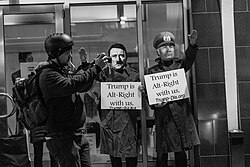
The alt-right presented "a unique set of challenges" to journalists, progressives, and conservatives.23 Its opponents failed to agree on how to respond to it,481 with there being much discussion in U.S. public discourse on how to avoid its normalization.442 Some opponents emphasized "calling out" tactics, labeling the alt-right with terms like "racist", "sexist", "homophobic", and "white supremacist" in the belief that doing so would scare people away from it.482 Many commentators urged journalists not to refer to the alt-right by its chosen name, but rather with terms like "neo-Nazi";11 in 2017, the Associated Press for instance advised journalists to avoid the term.483 The activist group Stop Normalizing developed the "Stop Normalizing Alt Right" Chrome extension, which changes the term "alt-right" on webpages to "white supremacy".484485486
Some on the political right, including Yiannopoulos, argued that the alt-right's appeal would be diffused if society accepted many of its less extreme demands, including curbing political correctness and ending mass immigration.481 Commentators like the conservative David Frum suggested that if issues like immigration policy were discussed more openly in public discourse, then the alt-right would no longer be able to monopolize them.487 Commentators have also highlighted the theoretical commonalities between the white identity politics of the alt-right and the forms of identity politics widely embraced on the American Left in the 2010s,488 with Yiannopoulos commenting that if the American Left wanted to continue using identity politics as the basis of much of its mobilization, it would have to accept white identity politics as a permanent fixture of the political landscape.481
Some opponents sought to undermine the alt-right's stereotype of leftists as being devoid of humor and joy, by using its own tactics of humor and irony against it; for instance, by labelling angry alt-rightists as "snowflakes" who were being "triggered".489 Anti-fascists also adopted the alt-right's use of pranks. On several occasions, they publicized meet-ups to destroy Confederate monuments or gravestones. Alt-rightists mobilized to stop them, only to find that no such anti-fascist event was happening at all.490

Various opponents employed doxing, publicly revealing the identities and addresses of alt-rightists, many of whom had previously acted anonymously.491 This discourages individuals from involving themselves in alt-right activities, as they fear that being outed as alt-rightists might result in job loss, social ostracization, or violence.492 From 2016 onward, some anti-fascists also resorted to physical confrontation and violence against the movement.493 On Trump's inauguration day, for example, a masked anti-fascist punched Spencer in the face when he was talking to reporters; the footage was widely shared online.494 Hawley noted that this tactic could be counter-productive to the alt-right's opponents, as it reinforces the narrative that alt-rightists peacefully engaging in their constitutionally protected right to free speech were being victimized.495
Other commentators called for more vigorous policing of the web by governments and companies to deal with the alt-right.496 If denied access to mainstream social media outlets, the alt-right would be restricted to far-right websites like Stormfront, and thus, isolated from those not already committed to its cause.497 Many alt-rightists concur that denying it access to social media would devastate its ability to proselytize.496 However, it has also been suggested that such censorship could backfire and aid alt-right recruitment, as it would play into the alt-right narrative that the establishment was marginalizing those campaigning for white interests.487 Suppressing the alt-right in this manner would also set a precedent which could be repeated for other groups in future, including leftist ones.194 Phillips and Yi argued that such leftist attempts to prevent alt-right speech reflected a growing "authoritarian shift" within the American Left, among whom "limiting or preventing the public speech" of white males was increasingly seen as an acceptable method for equalizing "power relations" between racial and gender groups.276
"Alt-left"
In the 1990s, a loose group of left-wing online activists based on Usenet groups referred to themselves as "alternative left" or "alt-left" to distinguish their ideas from those of more mainstream leftist thought.53 Ideas promoted by "alt-left" activists at the time included universal basic income and anti-work sentiment.53 The popularisation of the term "alt-right" in the 2010s saw the increasing use of "alt-left" to describe far-left groups; among the press sources that did so were Fox News in December 2016,498 and Vanity Fair in March 2017.499 After the Unite the Right Rally later that year, Trump commented that some counter-protesters were part of the "very, very violent ... alt-left".500501502 Commentator Brian Dean believed that Trump was essentially conflating the term "alt-left" with "anti-fascist".53 Responding to Trump's use of the term, various commentators criticised the use of "alt-left", claiming that it was neither created nor adopted by leftists but had been designed by right-wingers and/or centrist liberals to smear left-wing protesters by suggesting a false equivalence between the alt-right and their opponents.note 4 The historian Timothy D. Snyder stated that "'alt-right' is a term ... meant to provide a fresh label that would sound more attractive than 'Nazi,' 'neo-Nazi,' 'white supremacist,' or 'white nationalist.' With 'alt-left' it's a different story. There is no group that labels itself that way".508 The term "alt-left" has also been used to describe anti-liberal leftists who use conspiratorial framing.53
Non-Western counterparts
Alt-right memes, slang, and imagery have been adopted by some people outside the Western world in order to promote different extremist ideologies from white nationalism. Examples include the "akh-right", which is Islamist, promoting similar policies to traditional Islamist groups like the Taliban but with a different aesthetic. Akh-right and alt-right supporters have bonded online over shared support for antisemitism, misogyny, homophobia, and the Taliban itself.509 Andrew Tate, a former kickboxer and social media influencer who converted to Islam, is popular with this subculture as well.510
Trads, an Indian alt-right subculture, promote Hindutva, Brahmanical supremacy, and Islamophobia. They use a saffron-recolored version of Pepe the Frog, in order to avoid the original green color's association with Islam. Trads believe mainstream Hindu rightists such as Narendra Modi are insufficiently committed to true Hinduism.511
See also
See also
- Alt-right pipeline
- Alternative media
- The Alt-Right Playbook
- Angry white male
- Authoritarian conservatism
- Blood and soil
- Neo-integralism
- Groypers
- Incitement to ethnic or racial hatred
- Neo-nationalism
- Netto-uyoku
- Racism in the United States
- Right-wing authoritarianism
- Right-wing terrorism
- Trads (Hindutva)
- Uyoku dantai
- Ultraconservatism
Notes
Notes
- Pepe the Frog is an Internet meme which has been appropriated by the alt-right as a symbol of the movement ().
- The term "cuckservative" is a portmanteau of "cuckold" and "conservative" ().
- The derivative term "cuck" also refers to a genre of pornography in which men watch their wives or girlfriends have sex with another man.391
- Attributed to multiple sources:53503504505506507
References
References
Citations
- CQ Researcher (2017). Issues in Race and Ethnicity: Selections from CQ Researcher. SAGE Publications. pp. 4–6. ISBN 978-1-5443-1635-2. Archived from the original on March 9, 2024. Retrieved July 21, 2019.
- Betty A Dobratz; Lisa K Waldner; Timothy Buzzell (2019). Power, Politics, and Society: An Introduction to Political Sociology. Taylor & Francis. p. 427. ISBN 978-1-351-37296-1. Archived from the original on March 9, 2024. Retrieved September 3, 2020.
- Carlos de la Torre, ed. (October 10, 2018). Routledge Handbook of Global Populism. Routledge. ISBN 978-1-351-85014-8.
- Cameron D. Lippard; J. Scott Carter; David G. Embrick, eds. (November 25, 2020). Protecting Whiteness: Whitelash and the Rejection of Racial Equality. University of Washington Press. pp. 198–. ISBN 978-0-295-74800-9. OCLC 1150788649. Archived from the original on March 9, 2024. Retrieved August 8, 2022.
- Hawley 2019, p. 4; Forscher & Kteily 2020, p. 90.
- Hermansson et al. 2020, p. 3.
- Gray, Phillip W. (December 19, 2018b). "The Alt-Right: An Introduction (Part I)". Oxford Research Group. Archived from the original on January 17, 2021. Retrieved March 19, 2019.
- Gourarie, Chava (August 30, 2016). "How the 'alt-right' checkmated the media". Columbia Journalism Review. Archived from the original on August 14, 2017. Retrieved June 4, 2021.
- Hermansson et al. 2020, p. 6.
- Hermansson et al. 2020, p. 1.
- Kelly 2017, p. 68.
- Mohajer, Shaya Tayefe (August 14, 2017). "It Is Time to Stop Using the Term Alt-Right". Columbia Journalism Review. Archived from the original on March 1, 2021. Retrieved April 9, 2019.
- Hawley 2017, p. 3.
- Daniszewski, John (November 26, 2016). "Writing about the 'alt-right'". Associated Press. Archived from the original on January 31, 2017. Retrieved June 4, 2021.
- Wendling, Mike (August 26, 2016). "Trump's shock troops: Who are the 'alt-right'?". BBC News. Archived from the original on March 22, 2019. Retrieved April 9, 2019.
- Hermansson et al. 2020, p. 2.
- Lyons 2017, p. 2.
- Volle, Adam. "Alt-right". Encyclopædia Britannica.
- Jenkins, John Philip (March 17, 2005). "White supremacy". Encyclopædia Britannica. Archived from the original on April 27, 2022. Retrieved May 16, 2022.
Other Trump admirers included members of the "alt-right" (alternative right) movement, a loose association of relatively young white supremacists, white nationalists, extreme libertarians, and neo-Nazis.
- "Alt-Right". Southern Poverty Law Center. Archived from the original on July 11, 2018. Retrieved December 27, 2017.
- "Alt Right: A Primer about the New White Supremacy". Anti-Defamation League. Retrieved April 9, 2019.
{{cite news}}: CS1 maint: deprecated archival service (link) - Kavi, Aishvarya; Feuer, Alan (July 22, 2022). "Bannon Found Guilty of Contempt in Case Related to Capitol Riot Inquiry". The New York Times. ISSN 0362-4331. Archived from the original on July 23, 2022. Retrieved September 12, 2022.
- Wendling 2018, p. 3.
- Hawley 2017, p. 21; Wendling 2018, p. 6; Hermansson et al. 2020, p. 3.
- Niewert 2017, p. 220.
- Hawley 2017, p. 25.
- Niewert 2017, pp. 220–221.
- Niewert 2017, p. 221.
- Hawley 2017, p. 27.
- Niewert 2017, pp. 221–222.
- Hawley 2017, pp. 26–28; Niewert 2017, p. 221.
- Hawley 2017, p. 26.
- Niewert 2017, p. 229.
- Niewert 2017, p. 231.
- Tait, Joshua (August 10, 2023). "What Was the Alt-Right?". Tablet. Archived from the original on September 1, 2023. Retrieved August 16, 2023.
- Main 2018, p. 12; Hermansson et al. 2020, p. 3.
- Wilson, Jason (August 23, 2016). "'A sense that white identity is under attack': making sense of the alt-right". The Guardian. Archived from the original on August 30, 2016. Retrieved September 7, 2016.
- Parton, Heather Digby (August 25, 2016). "The disturbing dawn of the alt-right: Donald Trump's the leader of a dark movement in America". Salon. Archived from the original on November 9, 2016. Retrieved August 28, 2018.
- Lyons 2017, p. 13; Main 2018, p. 12.
- Teitelbaum 2017, p. 46.
- Hawley 2017, pp. 21, 29–32.
- Heer, Jeet (January 22, 2016). "National Review Fails to Kill Its Monster". The New Republic. Archived from the original on November 15, 2016. Retrieved April 8, 2019.
- Weigel, David (August 24, 2016). "What's the alt-right? A primer". The Washington Post. Archived from the original on November 19, 2016. Retrieved April 12, 2019.
- Hawley 2017, pp. 32–33.
- Hawley 2017, pp. 21, 33; Hermansson et al. 2020, p. 4.
- Hawley 2017, p. 35.
- Hawley 2017, p. 34.
- Sheffield, Matthew (September 2, 2016). "Where did Donald Trump get his racialized rhetoric? From libertarians". The Washington Post. Archived from the original on October 12, 2016. Retrieved August 28, 2018.
- Hawley 2017, p. 46; Nagle 2017, pp. 12–13; Hermansson et al. 2020, p. 4.
- Lyons 2017, p. 12.
- Hawley 2017, p. 46; Lyons 2017, p. 12.
- Hawley 2017, p. 46; Lyons 2017, p. 12; Wendling 2018, p. 34.
- Dean, Brian (August 22, 2017). "I was in the original 'alt-left' and this is what we really stood for". The Independent. Archived from the original on November 12, 2020. Retrieved January 25, 2021.
- Winter, Aaron (April 24, 2019), Lumsden, Karen; Harmer, Emily (eds.), "Online Hate: From the Far-Right to the 'Alt-Right' and from the Margins to the Mainstream", Online Othering: Exploring Digital Violence and Discrimination on the Web, Cham: Springer International Publishing, pp. 39–63, doi:10.1007/978-3-030-12633-9_2, ISBN 978-3-030-12633-9, S2CID 159264406, archived from the original on March 24, 2022, retrieved October 21, 2022
{{citation}}: CS1 maint: work parameter with ISBN (link) - Hawley 2017, p. 50.
- Hawley 2017, p. 51; Wendling 2018, pp. 17–20.
- Nwanevu, Osita (August 31, 2016). "Is the Term Alt-Right a Euphemism?". Slate. Archived from the original on September 28, 2018. Retrieved September 7, 2018.
- Niewert 2017, p. 237.
- Lachman 2018, p. 80.
- Cox, John Woodrow (November 22, 2016). "'Let's party like it's 1933': Inside the alt-right world of Richard Spencer". The Washington Post. Archived from the original on January 28, 2020. Retrieved September 7, 2018.
- Hawley 2017, p. 53; Nagle 2017, p. 52; Lachman 2018, p. 81.
- "Richard Spencer rose as foremost voice in alt-right movement". ABC News. October 19, 2017. Archived from the original on January 28, 2021. Retrieved September 7, 2018.
- Wendling 2018, p. 20.
- Hawley 2017, p. 52; Wendling 2018, p. 19.
- Hawley 2017, p. 54; Lachman 2018, p. 81.
- Alm, David (May 28, 2017). "I See a Darkness". The Point. Archived from the original on June 16, 2019. Retrieved September 7, 2018.
- Hawley 2017, p. 55.
- Niewert 2017, p. 236.
- Welch, Chris; Ganim, Sara (December 6, 2016). "White Supremacist Richard Spencer: 'We reached tens of millions of people' with video". CNN. Archived from the original on November 27, 2020.
Now Spencer, a 38-year-old white supremacist and founder of the so-called alt-right movement, is taking his rhetoric on the road ...
- Ehrenfreund, Max (November 21, 2016). "What the alt-right really wants, according to a professor writing a book about them". The Washington Post. Archived from the original on March 8, 2018. Retrieved November 24, 2016.
- Lombroso, Daniel; Appelbaum, Yoni (November 21, 2016). "'Hail Trump!': White Nationalists Salute the President-Elect" (Includes excerpted video). The Atlantic. Archived from the original on May 21, 2019. Retrieved January 23, 2017.
- Hawley 2017, pp. 56, 57; Niewert 2017, p. 236; Wendling 2018, p. 20; Lachman 2018, p. 81.
- "Paleocon Starts New Extreme-Right Magazine". Southern Poverty Law Center. March 15, 2010. Archived from the original on March 14, 2021. Retrieved September 7, 2018.
- Hawley 2017, p. 57.
- Hawley 2017, p. 19.
- Wendling 2018, p. 21.
- Hawley 2017, pp. 36–37.
- Atkinson 2018, p. 312.
- Niewert 2017, p. 238; Lyons 2017, p. 4.
- Hawley 2017, pp. 63, 64; Lyons 2017, p. 4.
- Hawley 2017, p. 65.
- Niewert 2017, p. 243.
- Hawley 2017, p. 69.
- Hawley 2017, p. 68.
- Hawley 2017, p. 67.
- Nagle 2017, p. 13.
- Colley, Thomas; Moore, Martin (2022). "The challenges of studying 4chan and the Alt-Right: 'Come on in the water's fine'". New Media & Society. 24 (1): 5–30. doi:10.1177/1461444820948803. ISSN 1461-4448. S2CID 224920047.
- Hawley 2017, p. 4.
- Hawley 2017, p. 47; Niewert 2017, pp. 215, 233; Wilson 2018, p. 27.
- Lees, Matt (December 1, 2016). "What Gamergate should have taught us about the 'alt-right'". The Guardian. Archived from the original on December 25, 2016. Retrieved September 12, 2018.
- Niewert 2017, p. 215.
- Nagle 2017, p. 24.
- Nagle 2017, p. 16.
- Niewert 2017, p. 261.
- "What You Need To Know About The Alt-Right Movement". NPR. August 26, 2016. Archived from the original on June 17, 2019. Retrieved April 5, 2018.
- Porter, Tom (May 22, 2017). "Richard Spencer was expelled from a gym after a professor confronted him over his white nationalist views". Newsweek. Archived from the original on February 24, 2021. Retrieved May 29, 2017.
- Herrman, John (February 16, 2017). "YouTube's Monster: PewDiePie and His Populist Revolt". The New York Times. ISSN 0362-4331. Archived from the original on August 1, 2018. Retrieved May 29, 2017.
- Bonazzo, John (January 30, 2017). "Alt-Right 'PizzaGate Expert' Starts GoFundMe for Her Podcast, Internet Revolts". Observer. Archived from the original on February 25, 2021. Retrieved May 28, 2017.
- Tuttle, Ian (April 5, 2016). "The Racist Moral Rot at the Heart of the Alt-Right". National Review. Archived from the original on December 28, 2017. Retrieved April 18, 2016.
- Niewert 2017, pp. 238–240.
- Michael 2019, p. 73.
- Niewert 2017, pp. 248–249; Wendling 2018, p. 130.
- Niewert 2017, p. 249.
- Lyons 2017, p. 4.
- Main 2018, p. 27.
- Wendling 2018, pp. 105–107.
- Hawley 2017, p. 129.
- Hawley 2017, p. 127.
- Hawley 2017, p. 143.
- Posner, Sarah (August 22, 2016). "How Donald Trump's New Campaign Chief Created an Online Haven for White Nationalists". Mother Jones. Archived from the original on April 4, 2019. Retrieved November 13, 2016.
- Hawley 2017, p. 129; Lyons 2017, p. 17; Wendling 2018, p. 105; Main 2018, p. 3.
- Wendling 2018, p. 109.
- Hawley 2017, p. 129; Main 2018, pp. 27, 29.
- Stokols, Eli (October 13, 2016). "Trump fires up the alt-right". Politico. Archived from the original on October 13, 2016. Retrieved April 12, 2019.
- "The Rise of the alt-right". The Week. October 1, 2016. Archived from the original on January 26, 2017. Retrieved April 12, 2018.
- Rahn, Will (August 19, 2016). "Steve Bannon and the Alt-Right: A Primer". CBS News. Archived from the original on January 26, 2017. Retrieved April 12, 2018.
- Wendling 2018, p. 2.
- Niewert 2017, p. 247; Lyons 2017, p. 16; Wendling 2018, p. 118.
- Wendling 2018, p. 119.
- Wendling 2018, p. 118.
- Hawley 2017, p. 145.
- Wendling 2018, p. 129.
- "Milo Yiannopoulos: Who is the alt-right writer and provocateur?". BBC News. February 21, 2017. Archived from the original on September 22, 2018. Retrieved September 7, 2018.
- Luckhurst, Phoebe (November 25, 2016). "Who is Milo Yiannopoulos? Everything you need to know about Donald Trump's alt-Right poster boy". The Evening Standard. Archived from the original on February 6, 2017. Retrieved September 7, 2018.
- Hawley 2017, p. 48.
- Lyons 2017, p. 16.
- Hawley 2017, p. 144; Nagle 2017, p. 7.
- Nagle 2017, pp. 18–19.
- Hermansson et al. 2020, pp. 2–3.
- Niewert 2017, p. 268.
- Wallace-Wells, Benjamin (May 5, 2016). "Is the Alt-Right for Real?". The New Yorker. Archived from the original on July 4, 2018. Retrieved June 4, 2021.
- Roy, Jessica (November 21, 2016). "Neo-Nazi 'alt-right' crowd cheers the president-elect with 'Hail Trump'". Los Angeles Times. Archived from the original on March 27, 2019. Retrieved April 19, 2017.
- Sullivan, Kevin (November 10, 2016). "The alt-right supported Trump. Now its members want him to satisfy their demands". The Washington Post. Archived from the original on November 13, 2016. Retrieved April 19, 2017.
- Rosen, Armin (April 1, 2016). "Who Are Trump's Alt-Right Supporters?". Tablet. Archived from the original on October 23, 2019. Retrieved April 19, 2017.
- Hawley 2019, p. 5.
- Niewert 2017, p. 292.
- Hawley 2017, p. 116.
- Hawley 2017, pp. 118–119; Lyons 2017, p. 14; Hawley 2019, p. 5.
- Wendling 2018, p. 198.
- Hawley 2017, pp. 118–119.
- Niewert 2017, p. 272.
- Lyons 2017, pp. 14–15.
- Hawley 2017, p. 121; Niewert 2017, p. 278.
- Greenberg, Jon (November 23, 2015). "Trump's Pants on Fire tweet that blacks killed 81% of white homicide victims". PolitiFact. Archived from the original on July 9, 2018. Retrieved September 10, 2018.
- Niewert 2017, p. 278.
- Niewert 2017, p. 279.
- Kopan, Tal (January 22, 2016). "Donald Trump retweets 'White Genocide' Twitter user". CNN. Archived from the original on January 31, 2021. Retrieved September 10, 2018.
- Niewert 2017, p. 289; Wendling 2018, p. 107.
- Martin, Jonathan; Rutenberg, Jim; Haberman, Maggie (August 17, 2016). "Donald Trump Appoints Media Firebrand to Run Campaign". The New York Times. Archived from the original on May 8, 2021. Retrieved September 7, 2018.
- Hawley 2017, pp. 121–122; Niewert 2017, p. 299; Wendling 2018, p. 196.
- Hawley 2017, p. 122; Niewert 2017, p. 299; Wendling 2018, p. 197; Main 2018, p. 3.
- Ohlheiser, Abby; Dewey, Caitlin (August 25, 2016). "Hillary Clinton's alt-right speech, annotated". The Washington Post. Archived from the original on January 25, 2017. Retrieved September 7, 2018.
- Flegenheimer, Matt (August 25, 2016). "Hillary Clinton Says 'Radical Fringe' Is Taking Over G.O.P. Under Donald Trump". The New York Times. Archived from the original on February 28, 2021. Retrieved September 17, 2016.
- Niewert 2017, p. 300.
- Hawley 2017, p. 125; Wendling 2018, p. 198; Main 2018, pp. 3–4.
- Niewert 2017, p. 299; Wendling 2018, p. 197; Lachman 2018, pp. 79–80.
- Harrington, Rebecca (August 26, 2016). "The alt-right movement was practically giddy that Hillary Clinton attacked them in a major speech". Business Insider. Archived from the original on September 22, 2020. Retrieved September 17, 2016.
- Niewert 2017, p. 301.
- Weigel, David (September 10, 2016). "Four lessons from the alt-right's D.C. coming-out party". The Washington Post. Archived from the original on November 16, 2016. Retrieved September 17, 2016.
- Levy, Pema (September 9, 2016). "Alt-Right Movement Presents Its Vision for an All-White Society With Trump Paving the Way". Mother Jones. Archived from the original on September 17, 2016. Retrieved September 17, 2016.
- Hawley 2017, p. 126; Niewert 2017, p. 320; Lyons 2017, p. 16.
- Niewert 2017, p. 321.
- "White Nationalists of the World Congratulate President-elect Trump". The Jerusalem Post. November 12, 2016. Archived from the original on March 10, 2021. Retrieved September 7, 2018.
- Hawley 2017, p. 127; Niewert 2017, p. 325.
- Buncombe, Andrew (November 14, 2016). "Steve Bannon: White supremacists celebrate Donald Trump's appointment of far-right Breitbart boss". The Independent. Archived from the original on November 15, 2016. Retrieved September 11, 2018.
- Niewert 2017, pp. 326–237.
- Weigel, David (November 19, 2016). "Alt-right leaders praise Sessions as attorney general pick". The Washington Post. Archived from the original on November 8, 2020. Retrieved September 11, 2018.
- Wendling 2018, p. 207.
- Niewert 2017, pp. 327–328.
- Hawley 2017, pp. 133–134; Niewert 2017, p. 328; Lyons 2017, p. 17; Wendling 2018, pp. 13–14.
- Barajas, Joshua (November 22, 2016). "Nazi salutes 'done in a spirit of irony and exuberance', alt-right leader says". PBS NewsHour. Archived from the original on September 19, 2017. Retrieved November 25, 2016.
- Goldstein, Joseph (November 20, 2016). "Alt-Right Exults in Donald Trump's Election With a Salute: 'Heil Victory'". The New York Times. Archived from the original on May 25, 2019. Retrieved November 21, 2016.
- Hawley 2017, p. 134; Niewert 2017, p. 328.
- "Trump disavows 'alt-right' supporters". BBC News. November 22, 2016. Archived from the original on April 17, 2020. Retrieved November 22, 2016.
- Woolf, Nicky (November 23, 2016). "Donald Trump's 'alt-right' supporters express dismay at disavowal". The Guardian. Archived from the original on December 16, 2016. Retrieved November 23, 2016.
- Labott, Elise; Gaouette, Nicole (April 8, 2017). "After Syria strike, populist supporters abandon Trump at home and abroad". CNN. Archived from the original on April 8, 2017. Retrieved April 8, 2017.
- Anthony, Charles (April 7, 2017). "Trump supporters are not happy about missile strikes on Syria". Middle East Eye. Archived from the original on April 9, 2017. Retrieved April 9, 2017.
- Haag, Matthew (April 7, 2017). "Trump's Far-Right Supporters Turn on Him Over Syria Strike". The New York Times. Archived from the original on April 11, 2017. Retrieved April 10, 2017.
- Gray, Rosie (April 7, 2017). "Trump's Disillusioned Supporters". The Atlantic. Archived from the original on February 13, 2021. Retrieved April 10, 2017.
- Hawley 2019, p. 6.
- Maltz, Judy (December 15, 2016). "Alt-right Ally and Christmas Campaigner: Who Is Stephen Miller, Trump's Jewish Policy Adviser?". Haaretz. Archived from the original on March 27, 2019. Retrieved June 4, 2021.
- Schmidle, Nicholas (February 27, 2017). "Michael Flynn, General Chaos". The New Yorker. Archived from the original on July 5, 2019. Retrieved June 6, 2021.
- Paton, Callum (September 6, 2017). "Sebastian Gorka: Former Trump Aide Accused Of Ties to Nazi Group Heads to Israel". Newsweek. Archived from the original on July 4, 2019. Retrieved June 4, 2021.
- "Birth Of A Radical". The Intercept. May 7, 2017. Archived from the original on April 14, 2019. Retrieved March 18, 2018.
- "Matt Gaetz Hires Speechwriter Fired From White House Over White Nationalist Conference". The Daily Beast. April 19, 2019. Archived from the original on November 1, 2020. Retrieved March 26, 2020.
- Hayden, Michael Edison (December 13, 2017). "Alt-Right Movement Despairs After Roy Moore's Loss, Blames 'Cuckservatives'". Newsweek. Archived from the original on January 23, 2021. Retrieved June 4, 2021.
- Kestenbaum, Sam (December 30, 2017). "Jew-Hating Politician's Campaign Shows Spread Of 'Alt-Right' Culture". The Forward. Archived from the original on December 23, 2020. Retrieved December 31, 2017.
- Merica, Dan (August 16, 2017). "Trump says both sides to blame amid Charlottesville backlash". CNN. Archived from the original on March 11, 2021. Retrieved June 4, 2021.
- Vozzella, Laura (May 6, 2017). "Do Corey Stewart's Confederate antics help Ed Gillespie or hurt the GOP brand?". The Washington Post. Archived from the original on October 26, 2020. Retrieved March 20, 2018.
- "Democratic Sen. Chris Murphy raises money off Arpaio Senate bid". The Washington Times. January 9, 2018. Archived from the original on November 9, 2020. Retrieved March 18, 2018.
- "Why Is This Jewish Politician First In Line For Money From 'Alt-Right' Conspiracy Theorists?". The Forward. October 15, 2017. Archived from the original on January 17, 2021. Retrieved March 20, 2018.
- Hawley 2017, pp. 162–163.
- Guynn, Jessica (November 17, 2016). "Twitter suspends alt-right accounts". USA Today. Archived from the original on March 9, 2021. Retrieved September 10, 2018.
- Hawley 2017, p. 165.
- Lancaster, Luke (February 1, 2017). "Reddit shuts down 'alt-right' subreddit". CNET. Archived from the original on February 15, 2017. Retrieved February 14, 2017.
- Hern, Alex (February 2, 2017). "Reddit bans far-right groups altright and alternativeright". The Guardian. ISSN 0261-3077. Archived from the original on February 15, 2017. Retrieved February 14, 2017.
- Oppenheim, Maya (April 17, 2018). "Facebook shuts down white supremacist Richard Spencer's pages". The Independent. Archived from the original on April 15, 2018. Retrieved September 10, 2018.
- Hawley 2017, p. 173; Lachman 2018, p. 83.
- Viets, Sarah (January 17, 2017). "Richard Spencer Launches 'Alt-Right' Website on Martin Luther King, Jr.'s Birthday". Southern Poverty Law Center. Archived from the original on March 23, 2021. Retrieved September 10, 2018.
- Atkinson 2018, p. 309.
- Sunshine, Spencer (August 10, 2017). "A Guide to Who's Coming to the Largest White Nationalist Rally in a Decade". Political Research Associates. Archived from the original on March 17, 2021. Retrieved September 19, 2018.
- Atkinson 2018, p. 310.
- "Black man beaten in Charlottesville far-right rally charged". BBC News. October 12, 2017. Archived from the original on October 13, 2017. Retrieved October 13, 2017.
- Shapira, Ian (May 8, 2018). "Ku Klux Klan leader found guilty for firing gun at Charlottesville rally". The Washington Post. Archived from the original on October 31, 2020. Retrieved June 22, 2018.
- Mickolus, Edward (2019). Terrorism Worldwide, 2018. Jefferson, N.C.: McFarland. p. 170. ISBN 978-1-4766-3747-1.
- Ruiz, Joe (August 13, 2017). "Ohio Man Charged With Murder In Fatal Car Attack On Anti-White Nationalist March". NPR. Archived from the original on August 17, 2017. Retrieved August 16, 2017.
- "Heather Heyer, Charlottesville Victim, Is Recalled as a 'Strong Woman'". The New York Times. August 13, 2017. Archived from the original on August 16, 2017.
- Phillips & Yi 2018, p. 223.
- "Charlottesville attacker apologises as he is jailed for life". BBC News. June 28, 2019. Archived from the original on April 15, 2021. Retrieved June 4, 2021.
- Ingber, Sasha (July 15, 2019). "Neo-Nazi James Fields Gets 2nd Life Sentence For Charlottesville Attack". NPR. Archived from the original on May 17, 2021. Retrieved June 4, 2021.
- Atkinson 2018, p. 310; Wendling 2018, p. 174.
- Hawley 2017, p. 6.
- Politi, Daniel (August 13, 2017). "National Security Adviser McMaster on Charlottesville: "Of Course it Was Terrorism"". Slate. Archived from the original on August 14, 2017. Retrieved August 13, 2017.
- Romo, Vanessa (August 12, 2017). "Trump Saw 'Many Sides' While Some Republicans Saw White Supremacy, Domestic Terrorism". NPR. Archived from the original on August 14, 2017. Retrieved June 4, 2021.
- "Sessions defends Trump on Charlottesville, says car ramming fits 'domestic terrorism'". ABC News. August 14, 2017. Archived from the original on August 14, 2017. Retrieved August 14, 2017.
- Wendling 2018, p. 175.
- Kelsey, Adam (August 14, 2017). "Trump calls out KKK and neo-Nazis after backlash to Charlottesville remarks". ABC News. Archived from the original on June 4, 2021. Retrieved June 4, 2021.
- Atkinson 2018, p. 310; Phillips & Yi 2018, p. 227.
- Thompson, A.C.; Winston, Ali (June 20, 2018). "U.S. Marine to Be Imprisoned Over Involvement With Hate Groups". Propublica. Archived from the original on March 22, 2021. Retrieved June 22, 2018.
- Svrluga, Susan (October 9, 2017). "'We will keep coming back:' Richard Spencer leads another torchlight march in Charlottesville". The Washington Post. ISSN 0190-8286. Archived from the original on February 17, 2022. Retrieved May 19, 2022.
- Hawley 2017, p. 152; Atkinson 2018, p. 310.
- Wendling 2018, p. 215.
- Wendling 2018, p. 214.
- Hayden, Michael Edison (January 21, 2018). "The alt-right is fractured, more violent headed into Trump's second year". Newsweek. Archived from the original on March 12, 2021. Retrieved January 21, 2018.
- McCoy, Terrence (April 20, 2018). "'Imploding': Financial troubles. Lawsuits. Trailer park brawls. Has the alt-right peaked?". The Washington Post. Archived from the original on February 13, 2021. Retrieved March 22, 2019.
- "When the big tent collapses: private Discord posts offer an honest look at a perpetually dishonest movement". Southern Poverty Law Center. April 2, 2018. Archived from the original on November 9, 2020. Retrieved March 22, 2019.
- Wilson, Jason (March 19, 2018). "The alt-right is in decline. Has antifascist activism worked?". The Guardian. Archived from the original on October 27, 2020. Retrieved October 24, 2020.
- "ADL Report: White Supremacist Murders More Than Doubled in 2017". Archived from the original on November 30, 2021. Retrieved January 26, 2018.
- Mohdin, Aamna (January 18, 2018). "The far-right was responsible for the majority of extremist killings in 2017". Quartz. Archived from the original on July 30, 2021. Retrieved March 22, 2019.
- Beauchamp, Zack (June 8, 2020). "Antifa, explained". Vox. Archived from the original on June 11, 2020. Retrieved June 12, 2020.
- Strickland, Patrick (February 9, 2018). "Alarm over white supremacist candidates in US". Al Jazeera. Archived from the original on August 30, 2020. Retrieved March 22, 2018.
- Strickland, Patrick (May 11, 2018). "Another Holocaust denier is running for US Congress". Al Jazeera. Archived from the original on August 15, 2020. Retrieved March 22, 2019.
- "Is a Neo-Nazi Running as a Republican for the U.S. Senate in California?". Snopes. May 2018. Archived from the original on November 24, 2021. Retrieved March 22, 2019.
- "'THERE IS NO POLITICAL SOLUTION': ACCELERATIONISM IN THE WHITE POWER MOVEMENT". Southern Poverty Law Centre. October 30, 2023. Archived from the original on February 8, 2021. Retrieved October 31, 2023.
- "THE ATOMWAFFEN DIVISION: The Evolution of the White Supremacy Threat" (PDF). Soufan Center. October 30, 2023. Archived (PDF) from the original on October 11, 2023. Retrieved October 31, 2023.
Overall, AWD's popularity swelled following the 'Unite the Right' rally in Charlottesville, VA, in August 2017
- "Police say men linked to a White supremacist group planned to riot. Here's what we know about Patriot Front, its young leader and how it's different". CNN News. October 30, 2023. Archived from the original on October 31, 2023. Retrieved October 31, 2023.
- Monika Hübscher; Sabine von Mering, eds. (December 14, 2023). Antisemitism on Social Media. Taylor & Francis. pp. 99–100. ISBN 9781000554298. Archived from the original on March 9, 2024. Retrieved December 14, 2023.
- Coaston, Jane (November 11, 2019). "Why alt-right trolls shouted down Donald Trump Jr". Vox. Archived from the original on November 12, 2019. Retrieved November 13, 2019.
- Tanner, Charles; Burghart, Devin (2020). From Alt-Right to Groyper: White Nationalists Rebrand for 2020 and Beyond (PDF) (Report). Institute for Research & Education on Human Rights. p. 3. Archived from the original on October 22, 2020. Retrieved May 19, 2020.
- McKenzie, Nick; Tozer, Joel (January 27, 2021). "Neo-Nazis go bush: Grampians gathering highlights rise of Australia's far right". The Sydney Morning Herald. Archived from the original on March 3, 2021. Retrieved February 19, 2022.
According to extremist experts, two right-wing groups, the Lads Society and Antipodean Resistance, recently helped form a new Australian extremist outfit, the National Socialist Network, which in turn helped organise the 38 young white men to assemble in the Grampians over the Australia Day weekend.
- Smith, Peter; Kriner, Matthew (June 8, 2022). "The Diagolon Movement And Militant Accelerationism". Canadian Anti-Hate Network. Archived from the original on September 3, 2022. Retrieved March 9, 2023.
- Ho, Solarina (March 1, 2022). "Honking, fumes and anger: Mental toll from trucker protest lingers for Ottawa residents". CTV News. Archived from the original on July 26, 2022. Retrieved July 26, 2022.
- Chandler, Justin (September 10, 2025). "Niagara rally by masked members of men's 'nationalist club' raises fears of growing extremism". CBC.ca. Retrieved October 6, 2025.
- "Neo-Nazis Are on the March Across America". Wired. November 16, 2024. Retrieved February 23, 2026.
- Laura K. Field. The Making of the MAGA New Right. Princeton Univ. Press. 2025. Pages 124-146.
- Lyons 2017, p. 2; Mudde 2019, pp. 60–61; Nagle 2017, p. 9; Hawley 2019, p. 4; Hermansson et al. 2020, p. 3.
- Hawley 2017, p. 11.
- Wendling 2018, p. 4.
- Hawley 2017, p. 92.
- Main 2018, p. 8.
- Hawley 2017, p. 36.
- Main 2018, p. 7.
- Wendling 2018, p. 135.
- Wendling 2018, p. 124.
- Hawley 2017, p. 68; Atkinson 2018, p. 312; Phillips & Yi 2018, p. 222.
- Hawley 2017, p. 14; Wendling 2018, p. 124; Phillips & Yi 2018, p. 222.
- Hawley 2017, p. 14; Wendling 2018, p. 136; Phillips & Yi 2018, p. 222.
- Phillips & Yi 2018, p. 222.
- Hawley 2017, p. 11; Lyons 2017, p. 2; Nagle 2017, p. 8; Hawley 2019, p. 2.
- Hawley 2019, p. 4.
- Oppenheim, Maya (January 23, 2017). "Alt-right leader Richard Spencer worries getting punched will become 'meme to end all memes'". The Independent. Archived from the original on January 23, 2017. Retrieved February 25, 2017.
- Main 2018, p. 5.
- Hawley 2017, p. 16.
- Atkinson 2018, p. 311.
- Wendling 2018, p. 85.
- Lim, Audrea (January 6, 2018). "The Alt-Right's Asian Fetish". The New York Times. Archived from the original on March 22, 2021. Retrieved March 11, 2019.
- Gray 2018, p. 148.
- Atkinson 2018, p. 313.
- Hartzell, Stephanie L. (2018). "Alt-White: Conceptualizing the "Alt-Right" as a Rhetorical Bridge between White Nationalism and Mainstream Public Discourse". Journal of Contemporary Rhetoric. 8 (1/2): 6–25. Archived from the original on September 25, 2018. Retrieved April 13, 2018.
- Wilson 2018, pp. 35–36.
- Phillips & Yi 2018, p. 224.
- Keller, Jared (August 25, 2017). "Welcome to the New Age of Anarcho-Fascism". Pacific Standard. Archived from the original on February 25, 2021. Retrieved May 25, 2021.
- Hawley 2017, p. 15.
- Hawley 2017, pp. 15–16.
- Wendling 2018, p. 22.
- Phillips & Yi 2018, p. 226.
- Hawley 2017, p. 172.
- Wendling 2018, p. 25.
- Barkun 2017, p. 439; Wendling 2018, p. 10.
- Atkinson 2018, pp. 310–311; Wendling 2018, p. 44.
- Kelly 2017, p. 73.
- Wendling 2018, p. 42.
- Niewert 2017, p. 250.
- Niewert 2017, p. 254.
- Nesbit, Jeff (September 12, 2016). "What Is the Alt-Right?". U.S. News & World Report. Archived from the original on November 21, 2016.
- Hankes, Keegan (August 25, 2016). "Whose Alt-Right Is It Anyway?". Southern Poverty Law Center. Archived from the original on June 16, 2018. Retrieved April 8, 2019.
- Lyons 2017, p. 7.
- Hawley 2017, p. 7.
- Hawley 2017, p. 91.
- Niewert 2017, p. 239.
- Hawley 2017, p. 17; Wendling 2018, p. 10.
- Hawley 2017, p. 17; Main 2018, p. 4.
- Phillips & Yi 2018, p. 225.
- Wilson 2018, p. 27.
- Wendling 2018, pp. 81–82.
- Marantz, Andrew (October 31, 2016). "Trolls for Trump". The New Yorker. Archived from the original on December 2, 2019. Retrieved November 4, 2016.
- Hawley 2017, p. 17.
- Hemmer, Nicole (April 15, 2017). "After the Syria strikes, right-wing non-interventionists are back in the wilderness". Vox. Archived from the original on March 8, 2021. Retrieved September 4, 2018.
- Nwanevu, Osita (April 7, 2017). "Why the Alt-Right Hates Trump's Syria Strike". Slate. Archived from the original on October 10, 2018. Retrieved September 4, 2018.
- Hawley 2017, p. 17; Wendling 2018, p. 202.
- Michael 2019, p. 74.
- Michael 2019, pp. 65, 72–73.
- Gray 2018, p. 143; Wendling 2018, p. 202.
- Goldhill, Olivia (December 24, 2016). "The philosopher known as "Putin's brain" is a big fan of Trump". Quartz. Archived from the original on September 17, 2021. Retrieved September 17, 2021.
- Wendling 2018, p. 202; Lachman 2018, p. 80; Michael 2019, p. 73.
- Hawley 2017, p. 17; Wendling 2018, p. 213.
- Hawley 2017, p. 17; Wendling 2018, p. 7.
- Lyons 2017, p. 8.
- Kitchener, Caroline (August 18, 2017). "The Women Behind the 'Alt-Right'". The Atlantic. Archived from the original on January 26, 2021. Retrieved August 29, 2018.
- Darby, Seyward (September 2017). "The Rise of the Valkyries". Harper's Magazine. Archived from the original on November 1, 2017. Retrieved July 11, 2018.
- "Why are women joining the 'alt-right'". PBS. August 19, 2017. Archived from the original on March 9, 2021. Retrieved July 11, 2018.
- Marghitu & Johnson 2018, p. 184.
- Lyons 2017, p. 8; Wendling 2018, pp. 59, 63.
- Lyons 2017, p. 9; Nagle 2017, p. 89.
- Lyons 2017, p. 9.
- Hawley 2017, pp. 17–18.
- Hawley 2017, p. 103.
- Lyons 2017, p. 10.
- Signorile, Michelangelo (September 21, 2016). "Donald Trump's Hate-Fueled, Alt-Right Army Hates 'Faggots' Too". The Huffington Post. Archived from the original on November 19, 2016. Retrieved October 30, 2016.
- Mihailovic, Alexandar (2023). Illiberal Vanguard: Populist Elitism in the United States and Russia. Madison: University of Wisconsin Press. p. 139. ISBN 978-0-299-34050-6.
- Lawrence, David; Simhony-Philpott, Limor; Stone, Danny (September 2021). Antisemitism and Misogyny: Overlap and Interplay (PDF) (Report). Antisemitism Policy Trust. pp. 4, 13. Archived (PDF) from the original on October 7, 2023. Retrieved June 3, 2023.
- Lyons 2017, pp. 9–10.
- Hawley 2017, p. 100.
- Wendling 2018, p. 7.
- Fraser, Giles (August 25, 2016). "The alt right is old racism for the tech-savvy generation". The Guardian. Archived from the original on June 23, 2022. Retrieved June 23, 2022.
- Wendling 2018, p. 44.
- Hawley 2017, p. 102.
- Hawley 2017, p. 104.
- Hawley 2017, pp. 100, 101.
- Beinart, Peter (April 2017). "Breaking Faith". The Atlantic. Archived from the original on December 8, 2018. Retrieved February 8, 2018.
- Hawley 2017, pp. 101–102.
- Hawley 2017, pp. 103–104.
- Hitt, Tarpley (January 24, 2019). "The Cult of #DezNat: Alt-Right Mormons Targeting Porn and the LGBTQ Community". The Daily Beast. Archived from the original on January 7, 2021. Retrieved January 9, 2021.
- Walsh, Joan (July 20, 2016). "Islamophobes, White Supremacists, and Gays for Trump–the Alt-Right Arrives at the RNC". The Nation. Archived from the original on November 10, 2016. Retrieved October 1, 2016.
- Lynch, Conor (June 14, 2016). "With their Orlando response, Trump and the alt-right are playing directly into the hands of ISIS". Salon. Archived from the original on August 1, 2017. Retrieved June 4, 2021.
- Hawley 2017, p. 42.
- Hawley 2017, pp. 40–42.
- Wolchover, Natalie (August 23, 2017). "A Physicist Who Models ISIS and the Alt-Right". Quanta. Archived from the original on December 1, 2020. Retrieved January 15, 2018.
- Main 2018, p. 28.
- Hawley 2017, p. 70.
- Hawley 2017, p. 11; Lyons 2017, p. 2; Wendling 2018, p. 5.
- Hawley 2017, p. 18; Wendling 2018, p. 3; Hawley 2019, p. 4; Forscher & Kteily 2020, p. 90; Hermansson et al. 2020, p. 2.
- Hawley 2017, p. 18.
- Wendling 2018, p. 9.
- Hawley 2017, p. 20.
- Morstatter et al. 2018, p. 621.
- Thobani 2018, p. 747.
- Hofmann-Kuroda 2017, p. 369.
- Wilson 2018, pp. 29, 34–35.
- Wendling 2018, p. 73.
- Niewert 2017, pp. 256–257.
- Niewert 2017, p. 257.
- Hawley 2017, p. 83; Kelly 2017, p. 74; Niewert 2017, p. 257.
- Hawley 2017, pp. 83–84.
- Evans, Robert (October 11, 2018). "From Memes to Infowars: How 75 Fascist Activists Were "Red-Pilled"". Bellingcat. Archived from the original on November 21, 2018. Retrieved July 8, 2022.
- Zhou, Steven (April 5, 2018). "Make sure to "hide your power level"". The Islamic Monthly. Archived from the original on June 29, 2022. Retrieved July 8, 2022.
- Stănescu 2018, p. 104.
- Stănescu 2018, pp. 104–105.
- Hawley 2017, p. 20; Niewert 2017, p. 256; Hawley 2019, p. 5.
- Nagle 2017, p. 2.
- Hawley 2017, p. 76.
- Wendling 2018, pp. 49–50.
- Hawley 2017, pp. 75–76.
- Hawley 2017, p. 74.
- Nagle 2017, pp. 28–29.
- Nagle 2017, p. 39.
- Hawley 2017, p. 2; Lachman 2018, p. 89.
- Charity, Justin (August 9, 2016). "Why Do Anonymous Twitter Trolls Use Anime Avatars? Blame 4chan". The Ringer. Retrieved May 11, 2023.
- Hawley 2017, p. 81.
- Hess, Amanda (June 10, 2016). "For the Alt-Right, the Message Is in the Punctuation". The New York Times. Archived from the original on January 16, 2021. Retrieved April 12, 2019.
- Kivanç, Jake (June 15, 2016). "Nero, Nazis, and the New Far Right: The Phenomena of the Professional Troll". Vice. Archived from the original on November 30, 2016. Retrieved July 14, 2016.
- Niewert 2017, p. 255.
- Nuzzi, Olivia (May 25, 2016). "How Pepe the Frog Became a Nazi Trump Supporter and Alt-Right Symbol". The Daily Beast. Archived from the original on May 30, 2017. Retrieved September 17, 2016.
- Suebsaeng, Asawin (November 19, 2016). "White Nationalists and Nazi-Saluting Tila Tequila Toast 'Emperor Trump' in Washington, DC". The Daily Beast. Archived from the original on May 13, 2017. Retrieved November 22, 2016.
- Lachman 2018, p. 85.
- Hawley 2017, p. 2; Niewert 2017, p. 255.
- Lachman 2018, p. 89.
- Neiwert, David (May 8, 2017). "What the Kek: Explaining the Alt-Right 'Deity' Behind Their 'Meme Magic'". Southern Poverty Law Center. Archived from the original on May 19, 2017. Retrieved June 10, 2017.
- Mardell, Mark (September 22, 2016). "Naked Nigel, the God Kek and modern politics". BBC News. Archived from the original on November 12, 2020. Retrieved June 4, 2021.
- Pink, Aiden (May 6, 2019). "No Joke: White Nationalists Are Now Using Clowns To Spread Hatred". Forward. Archived from the original on February 22, 2022. Retrieved March 28, 2022.
- Hawley 2017, p. 84.
- Sheffield, Matthew (October 25, 2016). "Meet Moon Man: The alt-right's racist rap sensation borrowed from 1980s McDonald's ads". Salon. Archived from the original on January 29, 2019. Retrieved March 31, 2019.
- Kavanaugh, Shane Dixon (October 6, 2016). "Trump-Inspired Pepe The Frog Billboards To Hit Battleground State". Vocativ. Archived from the original on November 27, 2016. Retrieved November 26, 2016.
- Hawley 2017, p. 74; Wendling 2018, p. 90.
- Wendling 2018, p. 82.
- Salazar 2018, p. 138.
- Hawley 2017, p. 94; Niewert 2017, p. 257; Lyons 2017, p. 15.
- Weigel, David (July 29, 2015). "'Cuckservative' – the conservative insult of the month, explained". The Washington Post. Archived from the original on April 29, 2016. Retrieved April 12, 2019.
- Schwartz, Dana (August 1, 2016). "Why Angry White Men Love Calling People "Cucks"". GQ. Retrieved June 10, 2017.
{{cite web}}: CS1 maint: deprecated archival service (link) - Hawley 2017, p. 94.
- Kelly 2017, pp. 74–75; Lyons 2017, p. 15.
- Wendling 2018, p. 95; Salazar 2018, p. 138.
- Wendling 2018, p. 97.
- Roy, Jessica (November 16, 2016). "'Cuck,' 'snowflake,' 'masculinist': A guide to the language of the 'alt-right'". Los Angeles Times. Archived from the original on June 14, 2017. Retrieved April 12, 2019.
- Wendling 2018, p. 80.
- Wendling 2018, p. 87.
- D'Anastasio, Cecilia (October 5, 2018). "How The 'NPC' Meme Tries To Dehumanize 'SJWs'". Kotaku. Archived from the original on October 6, 2018. Retrieved August 23, 2022.
- Caffier, Justin (January 25, 2017). "Get to Know the Memes of the Alt-Right and Never Miss a Dog-Whistle Again". Vice. Archived from the original on June 24, 2017. Retrieved June 5, 2017.
- Wendling 2018, pp. 79–80.
- Lavin 2020, pp. 51–52.
- Wendling 2018, pp. 98–99.
- Hawley 2017, p. 83.
- Ohlheiser, Abby (June 3, 2016). "Anti-Semitic Trump supporters made a giant list of people to target with a racist meme". The Washington Post. Archived from the original on May 14, 2019. Retrieved April 12, 2019.
- Wendling 2018, p. 76.
- Wendling 2018, p. 77.
- Wendling 2018, p. 78.
- Niewert 2017, p. 256.
- Hayden, Michael Edison (November 19, 2017). "The 'It's Okay to Be White' meme was backed by neo-Nazis and David Duke". Newsweek. Archived from the original on March 2, 2021. Retrieved April 12, 2019.
- Frank, Allegra (February 10, 2017). "For Honor's accidental alt-right connection". Polygon. Retrieved June 10, 2017.
{{cite web}}: CS1 maint: deprecated archival service (link) - S.N. (January 2, 2017). "The far right's new fascination with the Middle Ages". The Economist. Retrieved June 10, 2017.
{{cite news}}: CS1 maint: deprecated archival service (link) - Stan, Adele M. (April 20, 2016). "As GOP Reconsiders Trump as Standard Bearer". The American Prospect. Archived from the original on March 27, 2019. Retrieved April 12, 2019.
- Love 2017, p. 268.
- Bullock, Penn; Kerry, Eli (January 30, 2017). "Trumpwave and Fashwave Are Just the Latest Disturbing Examples of the Far-Right Appropriating Electronic Music". Vice. Archived from the original on September 4, 2020. Retrieved April 9, 2019.
- Wendling 2018, p. 131.
- Hawley 2017, p. 73.
- Hawley 2017, p. 88.
- Hawley 2017, p. 87.
- Lyons 2017, p. 15.
- de Dionyso, Arrington (December 13, 2016). "How I became a target of the alt-right: What it's like to be targeted by Neo-Nazis and supporters of Donald Trump online—and what I learned from it". Medium. Archived from the original on July 11, 2017. Retrieved March 20, 2019.
- Murphy, Blair (December 22, 2016). "Artist Targeted by #Pizzagate Conspiracy Theory Speaks: After being dragged into one of 2016's strangest news stories over a mural he made six years ago, Arrington de Dionyso took a public stand against far-right extremists' mob censorship". Hyperallergic. Archived from the original on December 25, 2016. Retrieved March 20, 2019.
- Strauss, Elissa (January 19, 2017). "The JCC Bomb Threats Confirm That Jewish Parents Are Right to Be Afraid". Slate. Archived from the original on October 21, 2018. Retrieved March 23, 2017.
- Wendling 2018, p. 132.
- "Racist troll guilty of harassing Labour MP with antisemitic posts". The Guardian. December 7, 2016. Archived from the original on November 8, 2020. Retrieved September 20, 2018.
- Wendling 2018, p. 138.
- Hawley 2017, p. 77.
- Wendling 2018, p. 8.
- Main 2018, pp. 11–12.
- Main 2018, p. 21.
- Main 2018, p. 11.
- "1 in 10 say it's acceptable to hold neo-Nazi views (POLL)". ABC News/Washington Post. August 21, 2017. Archived from the original on September 27, 2024.
(...) 10 percent, say they support the so-called alt-right movement (...)
- Forscher, Patrick S, and Nour S Kteily. "A Psychological Profile of the Alt-Right." Perspectives on psychological science : a journal of the Association for Psychological Science vol. 15,1 (2020): 90-116. doi:10.1177/1745691619868208
- Wendling 2018, p. 149.
- Hawley 2017, pp. 78–79.
- Wendling 2018, pp. 131, 146.
- Wendling 2018, p. 146.
- Hawley 2017, p. 78.
- Hawley 2017, pp. 80–81.
- Forscher & Kteily 2020, p. 106.
- Resnick, Brian (August 12, 2018). "Psychologists surveyed hundreds of alt-right supporters. The results are unsettling". Vox. Archived from the original on July 27, 2020. Retrieved January 15, 2018.
- Gray 2018, pp. 151–152.
- Gray 2018, pp. 152–153.
- Kelly 2017, p. 69.
- Hawley 2017, p. 44.
- Hawley 2017, pp. 44–45.
- Nagle 2017, pp. 8–9.
- Firestone, Jay (Spring 2019). "Three Months Inside Alt-Right New York". Commune. Archived from the original on January 28, 2021. Retrieved March 24, 2019.
- "The Alt-Right is Killing People". Southern Poverty Law Center. February 5, 2018. Archived from the original on May 11, 2018. Retrieved June 15, 2019.
- Hawley 2017, p. 170.
- Wendling 2018, p. 12.
- Wendling 2018, p. 173.
- "What U.Va. Students Saw in Charlottesville". The New York Times. August 13, 2017. ISSN 0362-4331. Archived from the original on February 25, 2021. Retrieved January 14, 2018.
- Forman, Carmen. "Blue Ridge Caucus: Mark Warner calls members of Alt-Right 'domestic terrorists' after Charlottesville rally". Roanoke Times. Archived from the original on July 29, 2020. Retrieved January 14, 2018.
- Howard, Kyle J. (August 12, 2017). "Unite the Right Hate Rally in Charlottesville Is an Act of Terrorism". Faithfully Magazine. Archived from the original on February 24, 2021. Retrieved January 14, 2018.
- Scott Atran (November 6, 2017). "Alt-Right or jihad?". Aeon. Archived from the original on February 20, 2021. Retrieved January 14, 2018.
- Illing, Sean (December 19, 2017). "Reciprocal rage: why Islamist extremists and the far right need each other". Vox. Archived from the original on January 13, 2021. Retrieved January 14, 2018.
- Ingraham, Christopher (August 16, 2017). "Analysis | The 'alt-right' is just another word for white supremacy, study finds". The Washington Post. ISSN 0190-8286. Archived from the original on January 16, 2018. Retrieved January 15, 2018.
- Niewert 2017, p. 258.
- Hawley 2017, p. 12.
- Dupuy, Beatrice (December 15, 2017). "White Man Behind School Shooting Was Obsessed With Trump and Hitler". Newsweek. Archived from the original on November 17, 2020. Retrieved December 16, 2017.
- Preza, Elizabeth (December 15, 2017). "New Mexico school shooter was radicalized on white supremacist pro-Trump websites". Raw Story. Archived from the original on January 25, 2021. Retrieved December 16, 2017.
- Hayden, Michael Edison (January 4, 2018). "Amtrak terror suspect also attended "alt-right" event in Charlottesville, according to FBI". Newsweek. Archived from the original on February 5, 2021. Retrieved January 14, 2018.
- Roose, Kevin (October 28, 2018). "On Gab, an Extremist-Friendly Site, Pittsburgh Shooting Suspect Aired His Hatred in Full". The New York Times. Archived from the original on October 28, 2018. Retrieved October 28, 2018.
- Neidig, Harper (August 18, 2017). "Citing hate speech, Google suspends social media site favored by alt-right from app store". The Hill. Archived from the original on November 22, 2018. Retrieved November 21, 2018.
- Liptak, Andrew (October 27, 2018). "Paypal bans Gab following Pittsburgh shooting". The Verge. Archived from the original on October 28, 2018. Retrieved October 27, 2018.
- Andone, Dakin; Vera, Amir; McLaughlin, Eliott C. (August 19, 2019). "Man accused of threatening an Ohio Jewish Center declared himself a white nationalist in a documentary, police say". CNN. Archived from the original on March 15, 2021. Retrieved June 4, 2021.
- Krakow, Morgan (August 18, 2019). "Self-described white nationalist with large arsenal arrested for threatening a Jewish center, police say". The Washington Post. Archived from the original on July 30, 2020. Retrieved June 4, 2021.
- Thompson, A. C.; Winston, Ali; Bond-Graham, Darwin (October 19, 2017). "Racist, violent, unpunished: A white hate group's campaign of menace". ProPublica. Archived from the original on March 22, 2021. Retrieved January 15, 2018.
- "Report: Suspect in Penn Student's Murder Has Neo-Nazi Ties". Philadelphia Magazine. January 29, 2018. Archived from the original on June 19, 2019. Retrieved February 15, 2018.
- Mathias, Christopher (November 21, 2017). "The Maniac Neo-Nazis Keeping Charles Manson's Race War Alive". The Huffington Post. Archived from the original on September 17, 2019. Retrieved October 28, 2018.
- Mathias, Christopher (January 23, 2018). "1 Neo-Nazi Group. 5 Murders In 8 Months". The Huffington Post. Archived from the original on March 26, 2019. Retrieved February 15, 2018.
- Martinich, Rex (October 6, 2017). "Neo-Nazi Grampians camp used for recruitment". The Stawell Times-News. Archived from the original on March 23, 2021. Retrieved December 27, 2017.
- Faithfull, Eden (April 20, 2017). "White Supremacist Neo-Nazi Propaganda Found on Sydney University Campus". usu.edu.au. University of Sydney Union. Archived from the original on September 5, 2017. Retrieved September 5, 2017.
- "Hatred on our doorsteps". Australian Jewish News. August 17, 2017. Archived from the original on September 5, 2017. Retrieved September 5, 2017.
- Tran, Danny (September 5, 2017). "Antipodean Resistance Neo-Nazi group trying to sway Australia's same-sex marriage postal vote". ABC News. Sydney, Australia. Archived from the original on January 28, 2021. Retrieved September 5, 2017.
- Lyons 2017, p. 17.
- Kelly 2017, p. 76.
- Main 2018, p. 14.
- Hermansson et al. 2020, p. 4.
- DeFore, John (March 9, 2018). "'Alt-Right: Age of Rage': Film Review". The Hollywood Reporter. Archived from the original on February 11, 2021. Retrieved March 24, 2019.
- Robertson, Adi (March 14, 2018). "Alt-Right: Age of Rage is a snapshot of one of 2017's darkest moments". The Verge. Archived from the original on March 18, 2021. Retrieved March 24, 2019.
- Hawley 2017, p. 160.
- Wendling 2018, pp. 3–4.
- Montgomery, Sarah Jasmine (August 16, 2017). "Associated Press just laid down the law on why 'alt-right' is a bad term". The Daily Dot. Archived from the original on January 16, 2023. Retrieved March 7, 2020.
- Hinchliffe, Emma (November 22, 2016). "Timely browser extension replaces 'alt-right' with 'white supremacy'". Mashable. Archived from the original on February 28, 2021. Retrieved November 30, 2016.
- Helsel, Phil (November 29, 2016). "Chrome extension changes 'alt-right' to 'white supremacy'". NBC News. Archived from the original on November 27, 2020. Retrieved November 30, 2016.
- Revesz, Rachael (November 29, 2016). "Chrome extension changes 'alt-right' to 'white supremacy'". The Independent. Archived from the original on November 29, 2016. Retrieved November 30, 2016.
- Hawley 2017, p. 164.
- Gray 2018, p. 153.
- Wendling 2018, pp. 221–222.
- Wendling 2018, p. 221.
- Hawley 2017, p. 166.
- Hawley 2017, p. 168.
- Hawley 2017, p. 169.
- Hawley 2017, p. 169; Wendling 2018, pp. 2–3.
- Hawley 2017, pp. 169–170.
- Hawley 2017, p. 161.
- Hawley 2017, p. 163.
- "How the term 'alt-left' came to be". PBS NewsHour. August 16, 2017. Archived from the original on January 26, 2021. Retrieved March 9, 2019.
- Wolcott, James (March 2017). "Why the Alt-Left Is a Problem, Too". Vanity Fair. Archived from the original on February 16, 2021. Retrieved March 9, 2019.
- Shear, Michael D.; Haberman, Maggie (August 15, 2017). "A Combative Trump Criticizes 'Alt-Left' Groups in Charlottesville". The New York Times. Archived from the original on August 16, 2017. Retrieved June 4, 2021.
- Keneally, Meghan (August 15, 2017). "Trump lashes out at 'alt-left' in Charlottesville, says 'fine people on both sides'". ABC News. Archived from the original on August 15, 2017. Retrieved June 4, 2021.
- Rafferty, Andrew (August 15, 2017). "Trump Says 'Alt-Left' Shares Blame for Charlottesville Rally Violence". NBC News. Archived from the original on August 15, 2017. Retrieved June 4, 2021.
- Stack, Liam (August 15, 2017). "Alt-Right, Alt-Left, Antifa: A Glossary of Extremist Language". The New York Times. Archived from the original on December 17, 2019. Retrieved September 13, 2017.
- Sterling, Joe; Chavez, Nicole (August 16, 2017). "What's the 'alt-left'? Experts say it's a 'made-up term'". CNN. Archived from the original on September 17, 2020. Retrieved June 4, 2021.
- Tognotti, Chris (August 15, 2017). "What Is The Alt-Left? Trump Pinned The Charlottesville Violence On Them, Too". Bustle. Archived from the original on July 25, 2020. Retrieved June 4, 2021.
- Levitz, Eric (March 3, 2017). "Why the Alt-Center Is a Problem, Too". Intelligencer. New York Intelligencer. New York Media, LLC. Archived from the original on May 19, 2021.
- Blake, Aaron (December 1, 2016). "Introducing the 'alt-left': The GOP's response to its alt-right problem". The Washington Post. Nash Holdings LLC. Archived from the original on August 24, 2017. Retrieved August 16, 2017.
- Lee, Kurtis (August 6, 2017). "President Trump says the 'alt-left' was partly to blame for the violence at Charlottesville. Wait: What's the alt-left?". Los Angeles Times. Archived from the original on January 11, 2021. Retrieved August 17, 2017.
- Ayad, Moustafa (August 20, 2021). "Gen Z's Alt-Right Declares New Hero: the Taliban". The Daily Beast. Archived from the original on February 8, 2023. Retrieved February 8, 2023.
- "Andrew Tate's Muslim fanbase is growing. Some say he's exploiting Islam for internet popularity". CNN. February 16, 2023. Archived from the original on February 18, 2023. Retrieved February 18, 2023.
- "Explained: 'Trads' vs 'Raitas' and the Inner Workings of India's Alt-Right". The Wire. Archived from the original on February 8, 2023. Retrieved February 8, 2023.
Works cited
- Atkinson, David C. (2018). "Charlottesville and the Alt-Right: A Turning Point?". Politics, Groups, and Identities. 6 (2): 309–315. doi:10.1080/21565503.2018.1454330. S2CID 158189264.
- Barkun, Michael (2017). "President Trump and the "Fringe"". Terrorism and Political Violence. 29 (3): 437–443. doi:10.1080/09546553.2017.1313649. S2CID 152199771.
- Forscher, Patrick S.; Kteily, Nour S. (January 2020). "A Psychological Profile of the Alt-Right". Perspectives on Psychological Science. 15 (1). SAGE Publications on behalf of the Association for Psychological Science: 90–116. doi:10.1177/1745691619868208. ISSN 1745-6924. PMC 6980479. PMID 31747343. S2CID 208214721.
- Gray, Phillip W. (2018). "'The Fire Rises': Identity, the Alt-Right and Intersectionality". Journal of Political Ideologies. 23 (2): 141–156. doi:10.1080/13569317.2018.1451228.
- Hawley, George (2016). Right-Wing Critics of American Conservatism. Lawrence: University Press of Kansas. ISBN 978-0-7006-2193-4.
- Hawley, George (2017). Making Sense of the Alt-Right. New York: Columbia University Press. ISBN 978-0-231-18512-7.
- Hawley, George (2019). The Alt-Right: What Everyone Needs to Know. Oxford and New York: Oxford University Press. ISBN 978-0-19-090519-4.
- Hermansson, Patrik; Lawrence, David; Mulhall, Joe; Murdoch, Simon (2020). "Introduction". The International Alt-Right: Fascism for the 21st-Century?. London and New York: Routledge. pp. 1–8.
- Hofmann-Kuroda, Lisa (2017). "Free Speech and the Alt-Right". Qui Parle: Critical Humanities and Social Sciences. 26 (2): 369–382.
- Kelly, Annie (2017). "The Alt-Right: Reactionary Rehabilitation for White Masculinity: US Alt-Right Extremism is a Logical Consequence of Mainstream Neo-conservatism". Soundings: A Journal of Politics and Culture. 66: 68–78.
- Lachman, Gary (2018). Dark Star Rising: Magick and Power in the Age of Trump. New York: TarcherPerigee. ISBN 978-0-14-313206-6.
- Lavin, Tal (2020). Culture Warlords: My Journey into the Dark Web of White Supremacy. New York: Hachette Books. ISBN 978-0-306-84643-4.
- Love, Nancy S. (2017). "Back to the Future: Trendy Fascism, the Trump Effect, and the Alt-Right". New Political Science. 39 (2): 263–268. doi:10.1080/07393148.2017.1301321. S2CID 152136843.
- Lyons, Matthew N. (2017). CTRL-ALT-DELETE: An Antifascist Report on the Alternative Right (Report). Political Research Associates. Archived from the original on December 22, 2017. Retrieved August 27, 2018.
- Main, Thomas J. (2018). The Rise of the Alt-Right. Washington DC: Brookings Institution Press. ISBN 978-0-8157-3288-4.
- Marghitu, Stefania; Johnson, Kelsey Moore (2018). "Feminist Online Responses Against the U.S. Alt-Right: Using The Handmaid's Tale as a Symbol and Catalyst of Resistance". Communication, Culture & Critique. 11: 183–185. doi:10.1093/ccc/tcx008.
- Michael, George (2019). "Useful Idiots or Fellow Travelers? The Relationship between the American Far Right and Russia". Terrorism and Political Violence. 31 (1): 64–83. doi:10.1080/09546553.2018.1555996. S2CID 150938479.
- Morstatter, Fred; Galstyan, Aram; Shao, Yunqiu; Karunasekera, Shanika (2018). "From Alt-Right to Alt-Rechts: Twitter Analysis of the 2017 German Federal Election". WWW '18: Companion Proceedings of The Web Conference 2018. Geneva: International World Wide Web Conferences Steering Committee. pp. 621–628. ISBN 978-1-4503-5640-4.
- Mudde, Cas (2019). The Far Right Today. Cambridge: Polity Press. ISBN 978-1-5095-3683-2.
- Nagle, Angela (2017). Kill All Normies: Online Culture Wars from 4chan and Tumblr to Trump and the Alt-Right. Winchester and Washington: Zero Books. ISBN 978-1-78535-543-1.
- Niewert, David (2017). Alt-America: The Rise of the Radical Right in the Age of Trump. London: Verso Books. ISBN 978-1-78663-423-8.
- Phillips, Joe; Yi, Joseph (2018). "Charlottesville Paradox: The 'Liberalizing' Alt-Right, 'Authoritarian' Left, and Politics of Dialogue". Society. 55 (3): 221–228. doi:10.1007/s12115-018-0243-0. S2CID 149799366.
- Salazar, Philippe-Joseph (2018). "The Alt-Right as a Community of Discourse". Javnost - the Public: Journal of the European Institute for Communication and Culture. 25 (1–2): 135–143. doi:10.1080/13183222.2018.1423947. S2CID 150344125.
- Stănescu, Vasile (2018). "'White Power Milk': Milk, Dietary Racism, and the 'Alt-Right'". Animal Studies Journal. 7 (2): 103–128.
- Teitelbaum, Benjamin R. (2017). Lions of the North: Sounds of the New Nordic Radical Nationalism. Oxford: Oxford University Press. ISBN 978-0-19-021260-5.
- Thobani, Sitara (2018). "Alt-Right with the Hindu-Right: Long-Distance Nationalism and the Perfection of Hindutva". Ethnic and Racial Studies. 42 (5): 745–762. doi:10.1080/01419870.2018.1468567. S2CID 149990403.
- Wendling, Mike (2018). Alt-Right: From 4chan to the White House. London: Pluto Press. ISBN 978-0-7453-3745-6.
- Wilson, Andrew Fergus (2018). "#whitegenocide, the Alt-Right and Conspiracy Theory: How Secrecy and Suspicion Contributed to the Mainstreaming of Hate". Secrecy and Society. 1 (2): 1–47. doi:10.31979/2377-6188.2018.010201.