| AFF1 | |||||||||||||||||||||||||||||||||||||||||||||||||||
|---|---|---|---|---|---|---|---|---|---|---|---|---|---|---|---|---|---|---|---|---|---|---|---|---|---|---|---|---|---|---|---|---|---|---|---|---|---|---|---|---|---|---|---|---|---|---|---|---|---|---|---|
 | |||||||||||||||||||||||||||||||||||||||||||||||||||
| Identifiers | |||||||||||||||||||||||||||||||||||||||||||||||||||
| Aliases | AFF1, AF4, MLLT2, PBM1, AF4/FMR2 family member 1 | ||||||||||||||||||||||||||||||||||||||||||||||||||
| External IDs | OMIM: 159557; MGI: 1100819; HomoloGene: 4340; GeneCards: AFF1; OMA:AFF1 - orthologs | ||||||||||||||||||||||||||||||||||||||||||||||||||
| |||||||||||||||||||||||||||||||||||||||||||||||||||
| |||||||||||||||||||||||||||||||||||||||||||||||||||
| |||||||||||||||||||||||||||||||||||||||||||||||||||
| |||||||||||||||||||||||||||||||||||||||||||||||||||
| |||||||||||||||||||||||||||||||||||||||||||||||||||
| Wikidata | |||||||||||||||||||||||||||||||||||||||||||||||||||
| |||||||||||||||||||||||||||||||||||||||||||||||||||
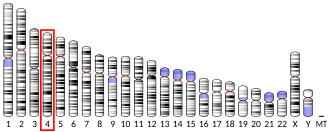




AF4/FMR2 family member 1 is a protein that in humans is encoded by the AFF1 gene.5678 At its same location was a record for a separate PBM1 gene, which has since been withdrawn and considered an alias. It was previously known as AF4 (ALL1-fused gene from chromosome 4).8
The gene is a member of the AF4/FMR2 (AFF) family, a group of nuclear transcriptional activators which encourage RNA elongation. It is a component of the super elongation complex.9 The AFF1 protein, and to the same extent AFF4, has multiple functions but is primarily used to assemble the components of the super elongation complex by creating binding surfaces.1011 It is recognized as a proto-oncogene: chromosomal translocations associated with leukemia can fuse this gene with others like KMT2A, producing an uncontrolled activator protein.5 Translocation creates the fusion protein KMT2A-AFF1 which is the primary oncogenic fusion that sets up the pre-leukemic conditions responsible for driving acute lymphoblastic leukemia.12
Function
AFF1 is a multi functional transcriptional regulator protein capable of promoting transcription elongation13 as well as assembling the super elongation complex. RNA Polymerase II synthesizes mRNA using the DNA template strand during the elongation step of transcription with the support of AFF1 and the super elongation complex. In this complex AFF1 brings with it the P-TEFb protein, which stimulates RNA Polymerase II into transitioning from promoter-proximal pausing to productive elongation. AFF1 also brings the ELL elongation factor enzyme which increases the catalytic rate of RNA Polymerase II transcription, helping produce rapid gene expression. In this way AFF1 acts as a scaffold protein by assembling and stabilizing the super elongation complex to promote efficient transcription elongation.10
Structure and bonding
Gene
The AFF1 gene has 23 exons and is located on the human chromosome 4 at q21 spanning approximately 206,028 base pairs long. 24 transcript variants have been identified.14 These variants arise through alternative splicing with each variant encoding distinct protein isoforms. These protein isoforms vary in shape and length with the most stable canonical structure being AFF1-201.15
Isoforms
-
 Image of AFF1-201 that consists of 1210 amino acids
 -
 Image of AFF1-202 that consists of 1218 amino acids
 -
 Image of AFF1-206 that consists of 406 amino acids
 -
 Image of AFF1-207 that consists of 52 amino acids
 -
 Image of AFF1-208 that consists of 137 amino acids
 -
 Image of AFF1-210 that consists of 194 amino acids
Protein
The AFF1 protein consists of approximately 1210 amino acids and contains multiple regions for protein-protein interactions. Direct, one-on-one interactions have been shown experimentally with both MLLT3 and ARFRP1 proteins, while broader datasets suggest association with numerous additional factors similarly involved in transcriptional regulation.15
-
 This is an image of the AFF1-MLLT3 interaction
 -
 This is an illustration of the AFF1 and ARFIP1 protein–protein interaction, one of two binary interactions observed through experimentation.
Role in disease
AFF family proteins like AFF1 are critical for the stability and function of the super elongation complex.16 Chromosomal translocation with Histone-lysine N-methyltransferase 2A, also known as mixed-lineage leukemia 1 (MLL1), is associated with acute lymphoblastic leukemia. KMT2A–AFF1, or MLL-AFF1, is one of the fused proteins responsible for misregulation of transcription elongation.17 The most common translocations of these proteins are KMT2A-AFF1 and its reciprocal AFF1-KMT2A18, however AFF1-KMT2A is not the main driver of acute lymphoblastic leukemia. Although AFF1-KMT2A is capable of setting up pre-leukemic conditions, this reciprocal protein fusion later becomes dispensable. The canonical oncogenic protein fusion is KMT2A-AFF1 which has been shown through gene-knockdown experimentation.12
The dangerous pre-leukemic state caused by the KMT2A-AFF1 fusion is dependent on age because this fusion can lead to the misregulation of transcription elongation in fetal and embryonic hematopoietic stem cells. In contrast, the same fusion when induced in adult mice caused less hematopoietic stem cell proliferation.19

AFF1 is also implicated in the transcriptional regulation of HIV and other viruses because its role in the super elongation complex is exploitable, enhancing viral gene expression through transcription elongation. In order to hijack the super elongation complex, HIV produces the Tat protein to recruit P-TEFb which ends up significantly boosting viral gene expression.11 Tat also has an affinity for super elongation complexes containing AFF1 and AFF4 proteins. AFF1 and AFF4 scaffolding proteins create more stable binding surface for both Tat and P-TEFb proteins, because AFF family proteins reshape the surface of P-TEFb when present in the super elongation complex.1120
References
References
- GRCh38: Ensembl release 89: ENSG00000172493 – Ensembl, May 2017
- GRCm38: Ensembl release 89: ENSMUSG00000029313 – Ensembl, May 2017
- "Human PubMed Reference:". National Center for Biotechnology Information, U.S. National Library of Medicine.
- "Mouse PubMed Reference:". National Center for Biotechnology Information, U.S. National Library of Medicine.
- Domer PH, Fakharzadeh SS, Chen CS, Jockel J, Johansen L, Silverman GA, Kersey JH, Korsmeyer SJ (August 1993). "Acute mixed-lineage leukemia t(4;11)(q21;q23) generates an MLL-AF4 fusion product". Proceedings of the National Academy of Sciences of the United States of America. 90 (16): 7884–8. Bibcode:1993PNAS...90.7884D. doi:10.1073/pnas.90.16.7884. PMC 47247. PMID 7689231.
- Gu Y, Nakamura T, Alder H, Prasad R, Canaani O, Cimino G, Croce CM, Canaani E (November 1992). "The t(4;11) chromosome translocation of human acute leukemias fuses the ALL-1 gene, related to Drosophila trithorax, to the AF-4 gene". Cell. 71 (4): 701–8. doi:10.1016/0092-8674(92)90603-A. PMID 1423625. S2CID 6257922.
- Chen CS, Hilden JM, Frestedt J, Domer PH, Moore R, Korsmeyer SJ, Kersey JH (August 1993). "The chromosome 4q21 gene (AF-4/FEL) is widely expressed in normal tissues and shows breakpoint diversity in t(4;11)(q21;q23) acute leukemia". Blood. 82 (4): 1080–5. doi:10.1182/blood.V82.4.1080.bloodjournal8241080. PMID 8353274.
- "Entrez Gene: AFF1 AF4/FMR2 family, member 1".
- Melko M, Douguet D, Bensaid M, Zongaro S, Verheggen C, Gecz J, Bardoni B (May 2011). "Functional characterization of the AFF (AF4/FMR2) family of RNA-binding proteins: insights into the molecular pathology of FRAXE intellectual disability". Human Molecular Genetics. 20 (10): 1873–85. doi:10.1093/hmg/ddr069. PMID 21330300.
- Zheng B, Aoi Y, Shah AP, Iwanaszko M, Das S, Rendleman EJ, Zha D, Khan N, Smith ER, Shilatifard A (2021-02-01). "Acute perturbation strategies in interrogating RNA polymerase II elongation factor function in gene expression". Genes & Development. 35 (3–4): 273–285. doi:10.1101/gad.346106.120. ISSN 0890-9369. PMC 7849361. PMID 33446572.
- Schulze-Gahmen U, Upton H, Birnberg A, Bao K, Chou S, Krogan NJ, Zhou Q, Alber T (2013-03-05). "The AFF4 scaffold binds human P-TEFb adjacent to HIV Tat". eLife. 2 e00327. doi:10.7554/eLife.00327. ISSN 2050-084X. PMC 3589825. PMID 23471103.
- Kumar AR, Yao Q, Li Q, Sam TA, Kersey JH (2011-03-01). "t(4;11) leukemias display addiction to MLL-AF4 but not to AF4-MLL". Leukemia Research. 35 (3): 305–309. doi:10.1016/j.leukres.2010.08.011. ISSN 0145-2126. PMC 3011030. PMID 20869771.
- Wang D, Yin Z, Wang H, Wang L, Li T, Xiao R, Xie T, Han R, Dong R, Liu H, Liang K, Qing G (2023-03-29). "The super elongation complex drives transcriptional addiction in MYCN-amplified neuroblastoma". Science Advances. 9 (13) eadf0005. Bibcode:2023SciA....9F...5W. doi:10.1126/sciadv.adf0005. PMC 10058231. PMID 36989355.
- "AFF1 ALF transcription elongation factor 1 [Homo sapiens (human)] - Gene - NCBI". www.ncbi.nlm.nih.gov. Retrieved 2026-04-20.
- "UniProt". UniProt. Retrieved 2026-04-20.
- Liang K, Smith ER, Aoi Y, Stoltz KL, Katagi H, Woodfin AR, Rendleman EJ, Marshall SA, Murray DC, Wang L, Ozark PA, Mishra RK, Hashizume R, Schiltz GE, Shilatifard A (October 2018). "Targeting Processive Transcription Elongation via SEC Disruption for MYC-Induced Cancer Therapy". Cell. 175 (3): 766–779.e17. doi:10.1016/j.cell.2018.09.027. ISSN 0092-8674. PMC 6422358. PMID 30340042.
- Lin C, Smith ER, Takahashi H, Lai KC, Martin-Brown S, Florens L, Washburn MP, Conaway JW, Conaway RC, Shilatifard A (February 2010). "AFF4, a Component of the ELL/P-TEFb Elongation Complex and a Shared Subunit of MLL Chimeras, Can Link Transcription Elongation to Leukemia". Molecular Cell. 37 (3): 429–437. doi:10.1016/j.molcel.2010.01.026. ISSN 1097-2765. PMC 2872029. PMID 20159561.
- Smith E, Lin C, Shilatifard A (2011-04-01). "The super elongation complex (SEC) and MLL in development and disease". Genes & Development. 25 (7): 661–672. doi:10.1101/gad.2015411. ISSN 0890-9369. PMC 3070929. PMID 21460034.
- Calderón AS, Ghazanfari R, Masoumi Z, Kharazi S, Palo S, Lang S, Žemaitis K, Eldeeb M, Subramaniam A, Soneji S, Stam RW, Bryder D, Böiers C (July 2025). "Ontogeny-specific induction of the KMT2A::AFF1-fusion drives development of a distinct CD24 positive pre-leukemic state". Leukemia. 39 (9): 2099–2111. doi:10.1038/s41375-025-02665-9. ISSN 1476-5551. PMC 12380613. PMID 40646135.
- Sobhian B, Laguette N, Yatim A, Nakamura M, Levy Y, Kiernan R, Benkirane M (May 2010). "HIV-1 Tat Assembles a Multifunctional Transcription Elongation Complex and Stably Associates with the 7SK snRNP". Molecular Cell. 38 (3): 439–451. doi:10.1016/j.molcel.2010.04.012. ISSN 1097-2765. PMC 3595998. PMID 20471949.
External links
External links
- Human AFF1 genome location and AFF1 gene details page in the UCSC Genome Browser.
Further reading
Further reading
- Morrissey J, Tkachuk DC, Milatovich A, Francke U, Link M, Cleary ML (March 1993). "A serine/proline-rich protein is fused to HRX in t(4;11) acute leukemias". Blood. 81 (5): 1124–31. doi:10.1182/blood.V81.5.1124.1124. PMID 8443374.
- Nakamura T, Alder H, Gu Y, Prasad R, Canaani O, Kamada N, Gale RP, Lange B, Crist WM, Nowell PC (May 1993). "Genes on chromosomes 4, 9, and 19 involved in 11q23 abnormalities in acute leukemia share sequence homology and/or common motifs". Proceedings of the National Academy of Sciences of the United States of America. 90 (10): 4631–5. Bibcode:1993PNAS...90.4631N. doi:10.1073/pnas.90.10.4631. PMC 46566. PMID 8506309.
- Frestedt JL, Hilden JM, Kersey JH (August 1996). "AF4/FEL, a gene involved in infant leukemia: sequence variations, gene structure, and possible homology with a genomic sequence on 5q31". DNA and Cell Biology. 15 (8): 669–78. doi:10.1089/dna.1996.15.669. PMID 8769569.
- Nilson I, Reichel M, Ennas MG, Greim R, Knörr C, Siegler G, Greil J, Fey GH, Marschalek R (July 1997). "Exon/intron structure of the human AF-4 gene, a member of the AF-4/LAF-4/FMR-2 gene family coding for a nuclear protein with structural alterations in acute leukaemia". British Journal of Haematology. 98 (1): 157–69. doi:10.1046/j.1365-2141.1997.1522966.x. PMID 9233580. S2CID 25176760.
- Megonigal MD, Rappaport EF, Jones DH, Kim CS, Nowell PC, Lange BJ, Felix CA (October 1997). "Panhandle PCR strategy to amplify MLL genomic breakpoints in treatment-related leukemias". Proceedings of the National Academy of Sciences of the United States of America. 94 (21): 11583–8. Bibcode:1997PNAS...9411583M. doi:10.1073/pnas.94.21.11583. PMC 23546. PMID 9326653.
- Felix CA, Kim CS, Megonigal MD, Slater DJ, Jones DH, Spinner NB, Stump T, Hosler MR, Nowell PC, Lange BJ, Rappaport EF (December 1997). "Panhandle polymerase chain reaction amplifies MLL genomic translocation breakpoint involving unknown partner gene". Blood. 90 (12): 4679–86. doi:10.1182/blood.V90.12.4679. PMID 9389682.
- Isnard P, Depetris D, Mattei MG, Ferrier P, Djabali M (December 1998). "cDNA cloning, expression and chromosomal localization of the murine AF-4 gene involved in human leukemia". Mammalian Genome. 9 (12): 1065–8. doi:10.1007/s003359900927. PMID 9880680. S2CID 29956410.
- Felix CA, Hosler MR, Slater DJ, Megonigal MD, Lovett BD, Williams TM, Nowell PC, Spinner NB, Owens NL, Hoxie J, Croce CM, Lange BJ, Rappaport EF (December 1999). "Duplicated regions of AF-4 intron 4 at t(4;11) translocation breakpoints". Molecular Diagnosis. 4 (4): 269–83. doi:10.1016/S1084-8592(99)80002-2. PMID 10671636.
- Reichel M, Gillert E, Breitenlohner I, Angermüller S, Fey GH, Marschalek R, Repp R, Greil J, Beck JD (February 2001). "Rapid isolation of chromosomal breakpoints from patients with t(4;11) acute lymphoblastic leukemia: implications for basic and clinical research". Leukemia. 15 (2): 286–8. doi:10.1038/sj.leu.2402018. PMID 11236948. S2CID 42706811.
- Raffini LJ, Slater DJ, Rappaport EF, Lo Nigro L, Cheung NK, Biegel JA, Nowell PC, Lange BJ, Felix CA (April 2002). "Panhandle and reverse-panhandle PCR enable cloning of der(11) and der(other) genomic breakpoint junctions of MLL translocations and identify complex translocation of MLL, AF-4, and CDK6". Proceedings of the National Academy of Sciences of the United States of America. 99 (7): 4568–73. Bibcode:2002PNAS...99.4568R. doi:10.1073/pnas.062066799. PMC 123688. PMID 11930009.
- Bertrand FE, Spengeman JD, Shah N, LeBien TW (December 2003). "B-cell development in the presence of the MLL/AF4 oncoprotein proceeds in the absence of HOX A7 and HOX A9 expression". Leukemia. 17 (12): 2454–9. doi:10.1038/sj.leu.2403178. PMID 14562113. S2CID 10639425.
- Caslini C, Serna A, Rossi V, Introna M, Biondi A (June 2004). "Modulation of cell cycle by graded expression of MLL-AF4 fusion oncoprotein". Leukemia. 18 (6): 1064–71. doi:10.1038/sj.leu.2403321. PMID 14990976. S2CID 19189264.
- Bursen A, Moritz S, Gaussmann A, Moritz S, Dingermann T, Marschalek R (August 2004). "Interaction of AF4 wild-type and AF4.MLL fusion protein with SIAH proteins: indication for t(4;11) pathobiology?". Oncogene. 23 (37): 6237–49. doi:10.1038/sj.onc.1207837. PMID 15221006. S2CID 9645787.
- Colland F, Jacq X, Trouplin V, Mougin C, Groizeleau C, Hamburger A, Meil A, Wojcik J, Legrain P, Gauthier JM (July 2004). "Functional proteomics mapping of a human signaling pathway". Genome Research. 14 (7): 1324–32. doi:10.1101/gr.2334104. PMC 442148. PMID 15231748.
- Beausoleil SA, Jedrychowski M, Schwartz D, Elias JE, Villén J, Li J, Cohn MA, Cantley LC, Gygi SP (August 2004). "Large-scale characterization of HeLa cell nuclear phosphoproteins". Proceedings of the National Academy of Sciences of the United States of America. 101 (33): 12130–5. Bibcode:2004PNAS..10112130B. doi:10.1073/pnas.0404720101. PMC 514446. PMID 15302935.
- Xia ZB, Popovic R, Chen J, Theisler C, Stuart T, Santillan DA, Erfurth F, Diaz MO, Zeleznik-Le NJ (September 2005). "The MLL fusion gene, MLL-AF4, regulates cyclin-dependent kinase inhibitor CDKN1B (p27kip1) expression". Proceedings of the National Academy of Sciences of the United States of America. 102 (39): 14028–33. doi:10.1073/pnas.0506464102. PMC 1236570. PMID 16169901.