| WDFY3 | |||||||||||||||||||||||||||||||||||||||||||||||||||
|---|---|---|---|---|---|---|---|---|---|---|---|---|---|---|---|---|---|---|---|---|---|---|---|---|---|---|---|---|---|---|---|---|---|---|---|---|---|---|---|---|---|---|---|---|---|---|---|---|---|---|---|
| |||||||||||||||||||||||||||||||||||||||||||||||||||
| Identifiers | |||||||||||||||||||||||||||||||||||||||||||||||||||
| Aliases | WDFY3, ALFY, ZFYVE25, WD repeat and FYVE domain containing 3, BCHS, MCPH18 | ||||||||||||||||||||||||||||||||||||||||||||||||||
| External IDs | OMIM: 617485; MGI: 1096875; HomoloGene: 22855; GeneCards: WDFY3; OMA:WDFY3 - orthologs | ||||||||||||||||||||||||||||||||||||||||||||||||||
| |||||||||||||||||||||||||||||||||||||||||||||||||||
| |||||||||||||||||||||||||||||||||||||||||||||||||||
| |||||||||||||||||||||||||||||||||||||||||||||||||||
| |||||||||||||||||||||||||||||||||||||||||||||||||||
| |||||||||||||||||||||||||||||||||||||||||||||||||||
| Wikidata | |||||||||||||||||||||||||||||||||||||||||||||||||||
| |||||||||||||||||||||||||||||||||||||||||||||||||||
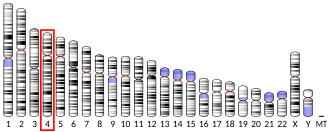



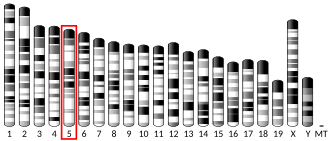



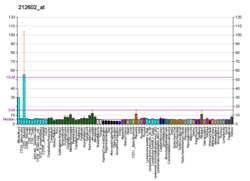
WD repeat and FYVE domain-containing protein 3 (WDFY3), also known as Autophagy-linked FYVE protein (ALFY), is a large protein encoded by the WDFY3 gene located on human chromosome 4.567
Structure
WDFY3 encodes a protein with a N-terminal PH-BEACH domain, 5 WD40 repeats and a C-terminal FYVE domain. Multiple alternatively spliced transcript variants have been found for this gene, but the full-length nature of some variants has not been defined.6
Biochemistry and function
Localization
The C-terminal FYVE domain binds phosphatidylinositol-3-phosphate, a nuclear membrane lipid, localizing WDFY3 to the nuclear membrane under normal conditions8.
A unique glutamic acid with the FYVE domain reduces membrane binding affinity, allowing WDFY3 to more easily enter the cytosol.9
Autophagy
WDFY3 is recruited from the nuclear membrane to cytoplasmic ubiquitin-rich protein aggregates marked by SQSTM1.101112.
It connects these aggregates to macroautophagic proteins such as Atg5, Atg12, Atg16L, and LC3.131415
LC3 is specifically bound by a LC3-interacting region (LCI) within the WD40 repeat domain of WDFY3.1516
not necessary for starvation-induced autophagy
Neural development pathways
Establishing neuronal connectivity17
directional cell migration18
Interaction with neurodegenerative disease pathways
In vitro ALS pathway modification19
Huntington's Disease Pathogenesis Is Modified In Vivo by Alfy/Wdfy3 and Selective Macroautophagy20
PD-like proteome and histology with age21
Clinical
Mutations in WDFY3 have been associated with neurodevelopmental delay, intellectual disability, macrocephaly, microcephaly, and neurodevelopmental conditions such as autism spectrum disorder (ASD) and attention deficit hyperactivity disorder (ADHD).1322
Homology
Drosphila: bchs23
Research in Animal Models
References
References
- GRCh38: Ensembl release 89: ENSG00000163625 – Ensembl, May 2017
- GRCm38: Ensembl release 89: ENSMUSG00000043940 – Ensembl, May 2017
- "Human PubMed Reference:". National Center for Biotechnology Information, U.S. National Library of Medicine.
- "Mouse PubMed Reference:". National Center for Biotechnology Information, U.S. National Library of Medicine.
- Nagase T, Ishikawa K, Suyama M, Kikuno R, Hirosawa M, Miyajima N, Tanaka A, Kotani H, Nomura N, Ohara O (Jul 1999). "Prediction of the coding sequences of unidentified human genes. XIII. The complete sequences of 100 new cDNA clones from brain which code for large proteins in vitro". DNA Res. 6 (1): 63–70. doi:10.1093/dnares/6.1.63. PMID 10231032.
- "Entrez Gene: WDFY3 WD repeat and FYVE domain containing 3".
- "Protein structure - WDFY3 - The Human Protein Atlas". www.proteinatlas.org. Retrieved 2026-04-15.
- Simonsen, Anne; Birkeland, Hanne C. G.; Gillooly, David J.; Mizushima, Noboru; Kuma, Akiko; Yoshimori, Tamotsu; Slagsvold, Thomas; Brech, Andreas; Stenmark, Harald (2004-08-15). "Alfy, a novel FYVE-domain-containing protein associated with protein granules and autophagic membranes". Journal of Cell Science. 117 (18): 4239–4251. doi:10.1242/jcs.01287. ISSN 1477-9137. PMID 15292400.
- Reinhart, Erin F.; Litt, Nicole A.; Katzenell, Sarah; Pellegrini, Maria; Yamamoto, Ai; Ragusa, Michael J. (January 2021). "A highly conserved glutamic acid in ALFY inhibits membrane binding to aid in aggregate clearance". Traffic (Copenhagen, Denmark). 22 (1–2): 23–37. doi:10.1111/tra.12771. ISSN 1600-0854. PMC 7902475. PMID 33225481.
- Hocking, Lynne J.; Mellis, David J.; McCabe, Paul S.; Helfrich, Miep H.; Rogers, Michael J. (2010-11-19). "Functional interaction between Sequestosome-1/p62 and Autophagy-Linked FYVE-containing protein WDFY3 in human osteoclasts". Biochemical and Biophysical Research Communications. 402 (3): 543–548. Bibcode:2010BBRC..402..543H. doi:10.1016/j.bbrc.2010.10.076. ISSN 0006-291X. PMID 20971078.
- Bjørkøy, Geir; Lamark, Trond; Brech, Andreas; Outzen, Heidi; Perander, Maria; Øvervatn, Aud; Stenmark, Harald; Johansen, Terje (2005-11-21). "p62/SQSTM1 forms protein aggregates degraded by autophagy and has a protective effect on huntingtin-induced cell death". The Journal of Cell Biology. 171 (4): 603–614. doi:10.1083/jcb.200507002. ISSN 1540-8140. PMC 2171557. PMID 16286508.
- Clausen, Terje Høyvarde; Lamark, Trond; Isakson, Pauline; Finley, Kim; Larsen, Kenneth Bowitz; Brech, Andreas; Øvervatn, Aud; Stenmark, Harald; Bjørkøy, Geir; Simonsen, Anne; Johansen, Terje (April 2010). "p62/SQSTM1 and ALFY interact to facilitate the formation of p62 bodies/ALIS and their degradation by autophagy". Autophagy. 6 (3): 330–344. doi:10.4161/auto.6.3.11226. ISSN 1554-8635. PMID 20168092.
- Le Duc D, Giulivi C, Hiatt SM, Napoli E, Panoutsopoulos A, Harlan De Crescenzo A, Kotzaeridou U, Syrbe S, Anagnostou E, Azage M, Bend R, Begtrup A, Brown NJ, Büttner B, Cho MT, Cooper GM, Doering JH, Dubourg C, Everman DB10, Hildebrand MS12,17, Santos FJR, Kellam B, Keller-Ramey J, Lemke JR, Liu S11, Niyazov D, Payne K, Person R, Quélin C, Schnur RE, Smith BT, Strober J, Walker S, Wallis M, Walsh L, Yang S, Yuen RKC, Ziegler A, Sticht H, Pride MC, Orosco L, Martínez-Cerdeño V, Silverman JL, Crawley JN, Scherer SW, Zarbalis KS, Jamra R (2019) Pathogenic WDFY3 variants cause neurodevelopmental disorders and opposing effects on brain size. Brain
- Yamamoto, Ai; Simonsen, Anne (2011). "Alfy-dependent elimination of aggregated proteins by macroautophagy". Autophagy. 7 (3): 346–350. doi:10.4161/auto.7.3.14234. PMC 3060415. PMID 21150266.
- Lystad, Alf Håkon; Ichimura, Yoshinobu; Takagi, Kenji; Yang, Yinjie; Pankiv, Serhiy; Kanegae, Yumi; Kageyama, Shun; Suzuki, Mariko; Saito, Izumu; Mizushima, Tsunehiro; Komatsu, Masaaki; Simonsen, Anne (2014-05-01). "Structural determinants in GABARAP required for the selective binding and recruitment of ALFY to LC3B-positive structures". The EMBO Reports. 15 (5): 557–565. doi:10.1002/embr.201338003. ISSN 1469-3178. PMC 4210083. PMID 24668264.
- Shi, Jianting; Wu, Xun; Wang, Ziyi; Li, Fang; Meng, Yujiao; Moore, Rebecca M.; Cui, Jian; Xue, Chenyi; Croce, Katherine R.; Yurdagul, Arif; Doench, John G.; Li, Wei; Zarbalis, Konstantinos S.; Tabas, Ira; Yamamoto, Ai (2022-12-24). "A genome-wide CRISPR screen identifies WDFY3 as a regulator of macrophage efferocytosis". Nature Communications. 13 (1): 7929. Bibcode:2022NatCo..13.7929S. doi:10.1038/s41467-022-35604-8. ISSN 2041-1723. PMC 9789999. PMID 36566259.
- Dragich, Joanna M.; Kuwajima, Takaaki; Hirose-Ikeda, Megumi; Yoon, Michael S.; Eenjes, Evelien; Bosco, Joan R.; Fox, Leora M.; Lystad, Alf H.; Oo, Tinmarla F.; Yarygina, Olga; Mita, Tomohiro; Waguri, Satoshi; Ichimura, Yoshinobu; Komatsu, Masaaki; Simonsen, Anne (2016-09-20). "Autophagy linked FYVE (Alfy/WDFY3) is required for establishing neuronal connectivity in the mammalian brain". eLife. 5 e14810. doi:10.7554/eLife.14810. ISSN 2050-084X. PMC 5030082. PMID 27648578.
- Søreng, Kristiane; Pankiv, Serhiy; Bergsmark, Camilla; Haugsten, Ellen M.; Dahl, Anette K.; de la Ballina, Laura R.; Yamamoto, Ai; Lystad, Alf H.; Simonsen, Anne (2022-02-15). "ALFY localizes to early endosomes and cellular protrusions to facilitate directional cell migration". Journal of Cell Science. 135 (4): jcs259138. doi:10.1242/jcs.259138. ISSN 1477-9137. PMC 8919339. PMID 35099014.
- Han, Huihui; Wei, Wanyi; Duan, Weisong; Guo, Yansu; Li, Yi; Wang, Jie; Bi, Yue; Li, Chunyan (2015-03-01). "Autophagy-linked FYVE protein (Alfy) promotes autophagic removal of misfolded proteins involved in amyotrophic lateral sclerosis (ALS)". In Vitro Cellular & Developmental Biology - Animal. 51 (3): 249–263. doi:10.1007/s11626-014-9832-4. ISSN 1543-706X. PMID 25385288.
- Fox, Leora M.; Kim, Kiryung; Johnson, Christopher W.; Chen, Shawei; Croce, Katherine R.; Victor, Matheus B.; Eenjes, Evelien; Bosco, Joan R.; Randolph, Lisa K.; Dragatsis, Ioannis; Dragich, Joanna M.; Yoo, Andrew S.; Yamamoto, Ai (2020-03-04). "Huntington's Disease Pathogenesis Is Modified In Vivo by Alfy/Wdfy3 and Selective Macroautophagy". Neuron. 105 (5): 813–821.e6. doi:10.1016/j.neuron.2019.12.003. ISSN 1097-4199. PMC 7060123. PMID 31899071.
- Vorkapich, Aldo; Mustafa, Arshi; Flores-Torres, Amanda L.; Zarbalis, Konstantinos S.; Giulivi, Cecilia (2026-04-04). "Wdfy3-dependent autophagy impairment recapitulates presymptomatic neurodegenerative signatures in mice". Scientific Reports. doi:10.1038/s41598-026-43314-0. ISSN 2045-2322. PMID 41935068.
- Kadir, Rotem; Harel, Tamar; Markus, Barak; Perez, Yonatan; Bakhrat, Anna; Cohen, Idan; Volodarsky, Michael; Feintsein-Linial, Miora; Chervinski, Elana; Zlotogora, Joel; Sivan, Sara; Birnbaum, Ramon Y.; Abdu, Uri; Shalev, Stavit; Birk, Ohad S. (2016-03-23). "ALFY-Controlled DVL3 Autophagy Regulates Wnt Signaling, Determining Human Brain Size". PLOS Genetics. 12 (3) e1005919. doi:10.1371/journal.pgen.1005919. ISSN 1553-7404. PMC 4805177. PMID 27008544.
- Finley, Kim D.; Edeen, Philip T.; Cumming, Robert C.; Mardahl-Dumesnil, Michelle D.; Taylor, Barbara J.; Rodriguez, Maria H.; Hwang, Calvin E.; Benedetti, Michael; McKeown, Michael (2003-02-15). "blue cheese mutations define a novel, conserved gene involved in progressive neural degeneration". The Journal of Neuroscience: The Official Journal of the Society for Neuroscience. 23 (4): 1254–1264. doi:10.1523/JNEUROSCI.23-04-01254.2003. ISSN 1529-2401. PMC 1975817. PMID 12598614.
Further reading
Further reading
- Nakajima D, Okazaki N, Yamakawa H, et al. (2003). "Construction of expression-ready cDNA clones for KIAA genes: manual curation of 330 KIAA cDNA clones". DNA Res. 9 (3): 99–106. doi:10.1093/dnares/9.3.99. PMID 12168954.
- Andersson B, Wentland MA, Ricafrente JY, et al. (1996). "A "double adaptor" method for improved shotgun library construction". Anal. Biochem. 236 (1): 107–13. doi:10.1006/abio.1996.0138. PMID 8619474.
- Yu W, Andersson B, Worley KC, et al. (1997). "Large-scale concatenation cDNA sequencing". Genome Res. 7 (4): 353–8. doi:10.1101/gr.7.4.353. PMC 139146. PMID 9110174.
- Sanger Centre, The; Washington University Genome Sequencing Cente, The (1999). "Toward a complete human genome sequence". Genome Res. 8 (11): 1097–108. doi:10.1101/gr.8.11.1097. PMID 9847074.
- Strausberg RL, Feingold EA, Grouse LH, et al. (2003). "Generation and initial analysis of more than 15,000 full-length human and mouse cDNA sequences". Proc. Natl. Acad. Sci. U.S.A. 99 (26): 16899–903. Bibcode:2002PNAS...9916899M. doi:10.1073/pnas.242603899. PMC 139241. PMID 12477932.
- Ota T, Suzuki Y, Nishikawa T, et al. (2004). "Complete sequencing and characterization of 21,243 full-length human cDNAs". Nat. Genet. 36 (1): 40–5. Bibcode:2004NaGen..36...40O. doi:10.1038/ng1285. PMID 14702039.
- Simonsen A, Birkeland HC, Gillooly DJ, et al. (2005). "Alfy, a novel FYVE-domain-containing protein associated with protein granules and autophagic membranes". J. Cell Sci. 117 (Pt 18): 4239–51. doi:10.1242/jcs.01287. PMID 15292400.
- Gerhard DS, Wagner L, Feingold EA, et al. (2004). "The status, quality, and expansion of the NIH full-length cDNA project: the Mammalian Gene Collection (MGC)". Genome Res. 14 (10B): 2121–7. doi:10.1101/gr.2596504. PMC 528928. PMID 15489334.
- Hillier LW, Graves TA, Fulton RS, et al. (2005). "Generation and annotation of the DNA sequences of human chromosomes 2 and 4". Nature. 434 (7034): 724–31. Bibcode:2005Natur.434..724H. doi:10.1038/nature03466. PMID 15815621.