Vern Stokes | |
|---|---|
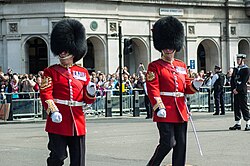 The Garrison Sergeant Major, Billy Mott (left), alongside his successor-to-be Vern Stokes (right)at the State Opening of Parliament 2015. | |
| Nickname | Vern |
| Born | 1972 (age 53–54) |
| Allegiance | United Kingdom |
Branch |  British Army British Army |
Service years | 1988–present |
Rank | Warrant Officer Class 1 Major (Deferred)2 |
| Unit | Coldstream Guards |
Conflicts | The Troubles Operation Grapple (Yugoslavia) Operation Telic Operation Herrick |
| Awards | Officer of the Most Excellent Order of the British Empire Member of the Royal Victorian Order Deputy Lieutenant of Shropshire3 |
Warrant Officer Class 1 Andrew "Vern" Stokes, OBE, MVO, DL (born 1972) is a British Army soldier who has served as one of the army's most senior warrant officers since 2015.
Military service
Born in Shropshire, England, in 1972, Stokes enlisted in the British Army in June 1988. After passing out from the Guards Depot, he was posted to 2nd Battalion, Coldstream Guards. He saw operational tours in Northern Ireland, Belize, Kenya and Bosnia. After spending time as a section commander instructor at the Infantry Battle School, he saw further operations in Northern Ireland, Iraq and Afghanistan as well as exercises in Canada. He was later posted to the Royal Military Academy Sandhurst as both a colour sergeant instructor and later as the company sergeant major. He was promoted to the highest other rank within the Coldstream Guards, Regimental Sergeant Major of the 1st Battalion, Coldstream Guards, in 2010. He was appointed the Academy Sergeant Major of Sandhurst in 2011. In 2014 he began shadowing then GSM Bill Mott, in preparation for his appointment as the GSM of the London District.2
In his role as the GSM, Stokes has been involved with the planning and execution of the annual Trooping the Colour, the funeral of The Duke of Edinburgh, the state funeral of Queen Elizabeth II, and the coronation of King Charles III and Queen Camilla.4
References
References
- Martin, Ruth (19 May 2025). "GSM Andrew 'Vern' Stokes takes on patron role with Shropshire charity". Shropshire Community Foundation.
- "WO1 (GSM) Andrew 'Vern' Stokes OBE MVO DL, Coldstream Guards." Trooping the Colour. 2026-06-13.
- Rogers-Coltman, Fiona (16 April 2024). "New Deputy Lieutenant appointment for Shropshire".
- "Andrew 'Vern' Stokes | Champions Speakers". champions-speakers.co.uk.