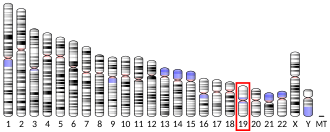
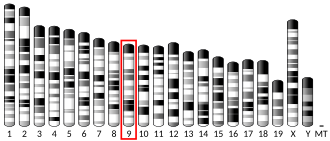
Ubiquitin-like protein 5 is a protein that in humans is encoded by the UBL5 gene.5
It has been shown that in C. elegans mitochondria treated to lower expression of certain electron transport chain proteins during the L3/L4 stage, its expression levels is higher leading to increased lifespans.6
Ubiquitin-like proteins (UBLs) are thought to be reversible modulators of protein function rather than protein degraders like ubiquitin (MIM 191339).[supplied by OMIM]5
References
References
Further reading
Further reading
- Friedman JS, Koop BF, Raymond V, Walter MA (2001). "Isolation of a ubiquitin-like (UBL5) gene from a screen identifying highly expressed and conserved iris genes". Genomics. 71 (2): 252–5. doi:10.1006/geno.2000.6439. PMID 11161819.
- Strausberg RL, Feingold EA, Grouse LH, et al. (2003). "Generation and initial analysis of more than 15,000 full-length human and mouse cDNA sequences". Proc. Natl. Acad. Sci. U.S.A. 99 (26): 16899–903. Bibcode:2002PNAS...9916899M. doi:10.1073/pnas.242603899. PMC 139241. PMID 12477932.
- Kantham L, Kerr-Bayles L, Godde N, et al. (2003). "Beacon interacts with cdc2/cdc28-like kinases". Biochem. Biophys. Res. Commun. 304 (1): 125–9. doi:10.1016/S0006-291X(03)00549-7. PMID 12705895.
- McNally T, Huang Q, Janis RS, et al. (2004). "Structural analysis of UBL5, a novel ubiquitin-like modifier". Protein Sci. 12 (7): 1562–6. doi:10.1110/ps.0382803. PMC 2323916. PMID 12824502.
- Ota T, Suzuki Y, Nishikawa T, et al. (2004). "Complete sequencing and characterization of 21,243 full-length human cDNAs". Nat. Genet. 36 (1): 40–5. doi:10.1038/ng1285. PMID 14702039.
- Suzuki Y, Yamashita R, Shirota M, et al. (2004). "Sequence comparison of human and mouse genes reveals a homologous block structure in the promoter regions". Genome Res. 14 (9): 1711–8. doi:10.1101/gr.2435604. PMC 515316. PMID 15342556.
- Gerhard DS, Wagner L, Feingold EA, et al. (2004). "The status, quality, and expansion of the NIH full-length cDNA project: the Mammalian Gene Collection (MGC)". Genome Res. 14 (10B): 2121–7. doi:10.1101/gr.2596504. PMC 528928. PMID 15489334.
- Wilkinson CR, Dittmar GA, Ohi MD, et al. (2005). "Ubiquitin-like protein Hub1 is required for pre-mRNA splicing and localization of an essential splicing factor in fission yeast". Curr. Biol. 14 (24): 2283–8. doi:10.1016/j.cub.2004.11.058. PMID 15620657.
- Rual JF, Venkatesan K, Hao T, et al. (2005). "Towards a proteome-scale map of the human protein-protein interaction network". Nature. 437 (7062): 1173–8. Bibcode:2005Natur.437.1173R. doi:10.1038/nature04209. PMID 16189514. S2CID 4427026.
External links
External links
- Overview of all the structural information available in the PDB for UniProt: Q9BZL1 (Human Ubiquitin-like protein 5) at the PDBe-KB.
- Overview of all the structural information available in the PDB for UniProt: Q9EPV8 (Mouse Ubiquitin-like protein 5) at the PDBe-KB.