| Tramea limbata | |
|---|---|

| |
| male, Madagascar | |

| |
| female | |
Scientific classification 
| |
| Kingdom: | Animalia |
| Phylum: | Arthropoda |
| Clade: | Pancrustacea |
| Class: | Insecta |
| Order: | Odonata |
| Infraorder: | Anisoptera |
| Superfamily: | Libelluloidea |
| Family: | Libellulidae |
| Genus: | Tramea |
| Species: | T. limbata
|
| Binomial name | |
| Tramea limbata (Desjardins, 1832)
| |
| Synonyms | |
| |
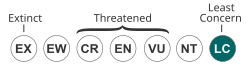
Tramea limbata2 is a species of dragonfly in the family Libellulidae. Its common names include black marsh trotter,345 ferruginous glider1 and voyaging glider.1
Distribution
This migrant is widespread in sub-Saharan Africa, including Madagascar, southern Arabian Peninsula, southern Asia and nearby islands.16
Description and habitat
It is a medium-sized red dragonfly with extremely long anal appendages. It can be distinguished from other species of this genus by the dark-brown hind-wing patch, not surrounded by a golden yellow areola, in the base. Female is similar to male; but may be red as the male or yellowish in color.7
This species reproduces in open pools, ponds and in grassy marshes. Adults are often found in bushy areas and around woodlands around them. This dragonfly is commonly seen patrolling over water bodies and open space in sunny days. Pairs in copula or in tandem can also sometimes be seen flying low above water bodies.7834
-
 Female
 -
 male, India
 -
 Pair in tandem flying over water bodies
 -
 male, Madagascar
References
References
- Clausnitzer, V. (2016). "Tramea limbata". IUCN Red List of Threatened Species. 2016 e.T60050A83381971. doi:10.2305/IUCN.UK.2016-3.RLTS.T60050A83381971.en. Retrieved 12 November 2021.
- Paulson, D.; Schorr, M.; Abbott, J.; Bota-Sierra, C.; Deliry, C.; Dijkstra, K.-D.; Lozano, F. "World Odonata List". OdonataCentral. University of Alabama.
- "Tramea limbata Desjardins, 1835". India Biodiversity Portal. Retrieved 2017-02-17.
- "Tramea limbata Desjardins, 1835". Odonata of India, v. 1.00. Indian Foundation for Butterflies. Retrieved 2017-02-17.
- Subramanian, K. A. (2005). Dragonflies and Damselflies of Peninsular India (PDF).
- K.A., Subramanian; K.G., Emiliyamma; R., Babu; C., Radhakrishnan; S.S., Talmale (2018). Atlas of Odonata (Insecta) of the Western Ghats, India. Zoological Survey of India. pp. 385–386. ISBN 978-81-8171-495-4.
- C FC Lt. Fraser (1936). The Fauna of British India, including Ceylon and Burma, Odonata Vol. III. Red Lion Court, Fleet Street, London: Taylor and Francis. pp. 436–438.
- C FC Lt. Fraser (1924). A Survey of the Odonate (Dragonfly) Fauna of Western India and Descriptions of Thirty New Species (PDF). p. 445.
External links
External links
Data related to Tramea limbata at Wikispecies
Media related to Tramea limbata at Wikimedia Commons