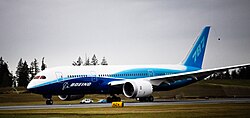
A trailing cone (also a trailing static cone or, incorrectly, a trailing wire) is an aviation calibration tool first developed and tested in the 1950s and 1960s as a simple means of determining or calibrating the static pressure (altitude reporting) of an aircraft's pitot-static system.1 It does this by giving an accurate measurement of the ambient atmospheric pressure (static pressure) well clear of the aircraft's fuselage.2 The trailing cone system typically trails at least one fuselage length behind the aircraft via a high-strength cable containing a tube or attached to a tube to cone or similar stabilizing device at the end. Static pressure is measured forward of the cone by several static ports.3 The cone stabilizes and aligns the ports relative to the freestream airflow.4
Other precision static pressure measurement methods in test flight
As stated in FAA Advisory Circular AC 91-85A:
- Precision tracking radar in conjunction with pressure calibration of atmosphere at test altitude
- Chase aircraft
- Any other method acceptable to the approving authority
References
References
External links
External links
- Guidance Material on the Approval of Operators/Aircraft for RVSM Operations
- Trailing Cones for RVSM Certification and Flight Test
- NASA TM-104316
- SpaceAge Control - Trailing Cones for RVSM Certification and Flight Test
- Trailing Cone Static Source (Bede Design No. 28)
- Position Error Calibration of a Pressure Survey Aircraft Using a Trailing Cone
- 100101 Trailing Cone
- B-21 Raider trailing cone
- [1]
- [2]
- [3]
- [4]
- [5]
- [6]
- [7]
- [8]
- [9]
- [10]