| The Legend of Zelda | |
|---|---|
 | |
| Genre | Action-adventure |
| Developers |
|
| Publisher | Nintendo |
| Creators | |
| Producer | Eiji Aonuma |
| Artist | Takaya Imamura |
| Writer | Kensuke Tanabe |
| Composer | Koji Kondo |
| Platforms | |
| First release | The Legend of Zelda February 21, 1986 |
| Latest release | Hyrule Warriors: Age of Imprisonment November 6, 2025 |
| Spin-offs | List of spin-offs |
The Legend of Zeldaa is a video game series created by Japanese game designers Shigeru Miyamoto and Takashi Tezuka. It is primarily developed and published by Nintendo, but some installments and re-releases have been outsourced to Flagship, Grezzo, and Tantalus Media.
The series centers on the various incarnations of Link, a courageous young man of the elf-like Hylian race, and Princess Zelda, a princess within the bloodline of the goddess Hylia. They fight to save the land of Hyrule from Ganon, an evil warlord turned demon king who wishes to use the Triforce, a sacred relic that can grant any wish its user desires when complete, to remake the world in his own dark image. Zelda's role has often been that of a damsel in distress or donor who assists Link. If someone with a heart that does not possess a balance of Power, Courage, and Wisdom, attempts to touch the Triforce, it will split into three triangles and bond with three people whose hearts embody the required virtue. While the conflict with Ganon serves as a backbone for the series, some games have featured other settings and antagonists, with Link traveling or being sent to these other lands in their time of need.
Since The Legend of Zelda was released in 1986, the series has expanded to include 21 entries on all of Nintendo's major game consoles, as well as a number of spin-offs. An American animated TV series based on the games aired in 1989 and manga adaptations commissioned by Nintendo have been produced in Japan since 1997. The Legend of Zelda is one of Nintendo's most successful franchises, and several of its entries are considered among the greatest video games of all time.
Gameplay

Gameplay of The Legend of Zelda games feature a mix of puzzles, action-adventure, and exploration. These elements used to be constantb throughout the series, with small refinements and additions in each new game. Later installments include stealth gameplay, where the player must avoid enemies while proceeding through a level, as well as racing elements. Depending on the game, players control Link or Princess Zelda from a fixed top-down perspective,c89 or in a 3D game world with a free-roaming camera.710
Zelda games can be beaten with a minimal amount of exploration and side quests, but the player is frequently rewarded with helpful items or increased abilities for solving puzzles, or exploring hidden areas. Some items are consistent and appear many times throughout the series, while others are unique to a single game. Staples of the series include bombs that can both act as weapons and open blocked or hidden doorways; boomerangs, which can kill or paralyze enemies; keys for locked doors; shields; bows and arrows; light sources; magical rods, hammers, musical instruments; digging tools; and a grappling hook-like device named the hookshot. Items can be bought, rented, or found as a puzzle-solving reward, depending on the game. In 2017's Breath of the Wild and its 2023 sequel, Tears of the Kingdom, swords and other weapons originally found in dungeons or purchased from shops are now found in the game world and stolen from defeated enemies.1112 These are generally used through by swapping out to one or more selected button prompts through a menu, while the sword is usually fixed.d Echoes copied by Zelda in Echoes of Wisdom also attack or clear paths with bombs.20 Early in certain Zelda games, swords are given to Link and/or found in a secluded area.21 More powerful swords, or special sword abilities, can be discovered by Link or taught to him in the games. Existing weapons can also receive upgrades.2223246
The motion controls of 2011's Skyward Sword, using either the Wii's Wii MotionPlus or the Nintendo Switch's Joy-Con, simulate sword fighting by swinging the controller in specific directions to attack enemies, or counter an enemy's attempt to block.2526 Breath of the Wild introduced a physics engine—allowing for physics-based solutions such as crushing an enemy via rolling a boulder onto it27—and what was called a chemistry engine, a rule-based state calculator in which various elements (fire, water, wind, etc.) interact with other objects and elements in different ways.e291112 Echoes of Wisdom is also a departure from other games' style of combat, as the playable Zelda is primarily unable to directly hit enemies on her own.f Instead, she uses an item called the Tri Rod to create echoes via coping objects and enemies and recreating them to solve puzzles and defeat enemies, even if the object or enemy in question is not in the area or region her current situation is.31 Another physics-based technique in newer Zelda titles involves using certain abilities to allow Link or Zelda to remotely move or drop objects on top of enemies, drop enemies down holes, or propel themselves across gaps.g
Although the games contain role-playing elements (Zelda II: The Adventure of Link is the only one to include an experience system), they emphasize straightforward hack-and-slash-style combat. This has led to much debate over whether or not Zelda games should be classified as action RPGs, a genre on which the series has had a strong influence.42 In 1992, series co-creator Shigeru Miyamoto disagreed with the label, classifying Zelda as "a real-time adventure game". He said that he was "not interested in systems where everything in the game is decided by stats and numbers" but wanted "to preserve as much of that 'live' feeling as possible", and felt that action games are better suited to convey to players.43 In 2012, Dark Souls director Hidetaka Miyazaki listed A Link to the Past as one of his top RPGs, alongside video games such as Dragon Quest III, Wizardry, and The Elder Scrolls IV: Oblivion, and the collectable card game, Magic: The Gathering.44
The games pioneered a number of features that were to become industry standards. The original Zelda was the first console game with a save function that enabled players to stop playing and then resume later. Ocarina of Time introduced a targeting system that let the player lock the camera on to enemy or friendly non-player characters which simplified 3D combat.45
Overworld and dungeons
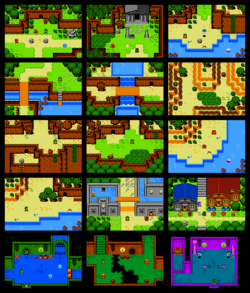
Many mainline Zelda game consist of three key areas: an overworld which connects all other areas and allows multidirectional movement, giving players some degree of freedom;46 areas of interaction with other characters (like caves, towns, or hidden rooms) in which the player can purchase equipment, gain special items or advice, or complete side quests;4748 and dungeons (or temples, towers, etc.), labyrinthine areas found underground495051 (with some exceptions),525354 comprising a wide range of difficult enemies, bosses, and items.5556 Each usually has one major item that can be essential for solving its puzzles8 and often plays a crucial role in defeating its boss5758 and/or progressing through the game.817 In 2013, A Link Between Worlds introduced a more open-ended progression system by allowing Link to rent items to reach and beat the last seven dungeons.8 Following this, every main dungeon in Breath of the Wild and Tears of the Kingdom can be accessed in any order before reaching the final boss in their open world setting. Neither game has items hidden inside dungeons for progression, but the latter involves the help of specific companions to solve tasks in their respective Temples.159
Navigating a dungeon is usually aided by locating a map, which reveals its layout, and a magic compass, which reveals the location of significant and smaller items such as keys and equipment.60 In games released after the NES, dungeons include a special "big key" or "boss key" that unlocks the door to fight its boss.61 In place of a big key, Breath of the Wild has Link use his Sheikah Slate to activate all the control terminals inside the dungeon before its boss attacks him,62 and Tears of the Kingdom has companions reach and interact with the locations of multiple locks in the relevant Temple to open the door to the boss.5359 The original Zelda on the NES had its dungeons known as "the underworld" in contrast to the overworld,49 but later games had broad sections located underground or behind rifts that were not dungeons in of themselves, but connected to the overworld or other dungeons, such as Subrosia in Oracle of Seasons,63 the Depths in Tears of the Kingdom,64 and the Still World in Echoes of Wisdom.65 Some games, like Four Swords, Four Swords Adventures and Tri Force Heroes, have no broadly-connecting overworld, and use randomly picked levels,66 a linear progression of numbered levels,67 or a hub world like Hytopia Castle Town.68
Sailing and gliding
While a raft first appeared in the first game, they had limited use and can only be boarded from a dock.69 Sailing is—by design—the only way to traverse the island-dotted overworlds of The Wind Waker in 2002 and Phantom Hourglass in 2007.70 By Breath of the Wild, rafts' sails could be propelled by wind using the chemistry engine, and logs could also be used as makeshift boats.71 The introduction of Ultrahand and Zonai machine parts in Tears of the Kingdom gave players the ability to build a raft or a flying machine out of parts.672 While gliding had previously been used for puzzles and minigames with the guidance of chickens known as Cuccos,73 and an item to help scale cliff faces appeared in 2004's The Minish Cap,74 Breath of the Wild and Tears of the Kingdom use both elements more prominently. In the games' open world, climbing walls and gliding off them on a paraglider makes it possible for the player to plot out multiple routes; in contrast to the way some players had been "glitching" up mountains players while controlling Geralt in The Witcher seriesh and Dovahkiin in The Elder Scrolls V: Skyrim (2011), here it is not considered unintentional climbing. Instead of mountains being impassable walls they are fully climbable for the players by design.767778 Tears of the Kingdom also allows Link to be launched into the sky and travel further with either Zonai machines or gliding.6 The Reverse Bond ability in Echoes of Wisdom also has Zelda attach herself to a climbing spider or flying bird monster to progress through the game world.41
Health and fairies
In most Zelda games, the player's HP or life meter is represented by a line of hearts. The player usually starts with three hearts;79 their max health can be increased by finding heart-shaped crystals called heart containers. Full heart containers are usually received at the end of dungeons and dropped by dungeon bosses. Smaller "Pieces of Heart" are awarded for completing side quests or found hidden throughout the game world, and require a certain number (commonly four) to form a full heart container.80 Health can be replenished by picking up hearts left by defeated enemies or destroyed objects, consuming items such as potions or food, or going to a Great Fairy Fountain to have the Great Fairy heal Link completely.8182 Breath of the Wild and Tears of the Kingdom broke from this tradition, and had Link hunt and cook his food or find potion ingredients in cut grass rather than freely be given hearts to pick up.838485 Occasionally, the player will find fairies hidden in specific locations; they can either heal Link immediately86 or be kept in empty bottles, and will revive him the next time he dies.87
Conception and production
Inspiration
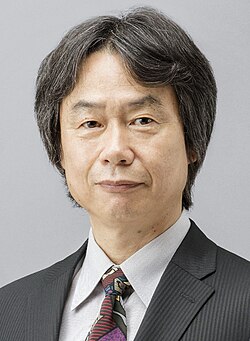
The Legend of Zelda was principally inspired by Shigeru Miyamoto's "explorations" as a young boy in the hillsides and forests surrounding his childhood home in Sonobe, Japan. According to Miyamoto, one of his most memorable experiences was finding a cave entrance in the middle of the woods.88 After some hesitation, he entered the cave and explored its depths with the aid of a lantern. Miyamoto has referred to the creation of the Zelda games as an attempt to bring to life a "miniature garden" for players to play with in each game of the series.89
The story and setting were developed by Takashi Tezuka. Seeking to create a fairytale adventure game, Tezuka drew inspirations from fantasy books such as J. R. R. Tolkien's The Lord of the Rings.909192 According to Keiji Terui, who wrote the backstory in the first game's manual, the location named Death Mountain was initially a working title for the legend of the Triforce which was written with inspirations from the battles of medieval Europe.9394 The Master Sword was introduced as Excalibur in the French version of A Link to the Past,9596 which is regarded as reminiscent to the legend of King Arthur.9792 Link's steed, was named after Epona, Celtic goddess of fertility.9899
Princess Zelda was named after American novelist, socialite and painter Zelda Fitzgerald, as Miyamoto thought the name sounded "pleasant and significant".100 Tezuka modeled Link's appearance after the eponymous character of Walt Disney's Peter Pan (1953).101102 When the series made the transition to 3D, the combat system of Ocarina of Time was based on the chanbara (samurai) style of Japanese sword fighting.10
Audio

Games in The Legend of Zelda series frequently feature in-game musical instruments, particularly in musical puzzles, which are widespread.103 Often, instruments trigger game events: for example, the recorder in The Legend of Zelda can reveal secret areas, as well as warp Link to the dungeon entrances. This warping with music feature has also been used in A Link to the Past and Link's Awakening. In Ocarina of Time, playing instruments is a core part of the game, with the player needing to play the instrument through the use of the game controller to succeed.104 Ocarina of Time is "[one of the] first contemporary non-dance title[s] to feature music-making as part of its gameplay",105 using music as a heuristic device and requiring the player to utilise songs to progress in the game106 – a game mechanic that is also present in Majora's Mask.107
"The Legend of Zelda Theme" is a recurring piece of music that was created for the first game. The composer and sound director of the series, Koji Kondo, initially planned to use Maurice Ravel's Boléro as the game's title theme, but was forced to change it after learning the orchestral piece had not yet entered the public domain late in production. As a result, Kondo wrote a new arrangement of the overworld theme within one day.108
Up until Breath of the Wild, the Legend of Zelda series avoided using voice acting in speaking roles, relying instead on written dialogue. Series producer Eiji Aonuma previously stated that having the other characters speak while Link remains silent "would be off-putting".109
Plot
Setting
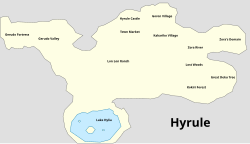

The Legend of Zelda takes place predominantly in a medieval Western Europe-inspired fantasy world called Hyrule,110111 which has developed a deep history and wide geography over the series's many releases. Hyrule's principal inhabitants are pointy-eared, elf-like humanoids called Hylians, which include the protagonists Link and Zelda.i
The fictional universe established by the Zelda games sets the stage for each adventure. Some games take place in different lands with their own back-stories. Labrynna (from Oracle of Ages), Holodrum (from Oracle of Seasons), and Hytopia (from Tri Force Heroes) are different countries separate from the Kingdom of Hyrule,113 Termina (from Majora's Mask), the World of the Ocean King (from Phantom Hourglass), and Lorule (from A Link Between Worlds) serve as parallel worlds,114115 and Koholint is an island far away from Hyrule that appears to be part of a dream.116
Story
The world of Hyrule was created by three golden goddesses: Din, Farore, and Nayru.117 They created the world to trap Null, which absorbed all life that appeared in an endless void created by it. Before departing, the three goddesses left the Triforce, a sacred artifact which could grant any wish to its user. It manifests as three golden triangles, each embodying one of the goddesses' virtues: Power, Courage, and Wisdom.118 However, as the Triforce has no will of its own and it can not judge between good and evil, it will grant any wish indiscriminately.119120 Because of this, it was placed within an alternate world called the "Sacred Realm" until one worthy of its power and has the balanced virtues of Power, Courage, and Wisdom in their heart could obtain it in its entirety. If a person does not possess balanced heart and tries to use the Triforce, it will split into three parts; the virtue that the user mostly believes in will stay with that person and the remainding two will seek out others. In order to master and control the triforce as a whole, the user must get the other parts found in other individuals and bring them together to reunite them. The Sacred Realm can itself be affected by the heart of those who enter it: a pure heart will make it a paradise while evil will transform it into a dark realm.121
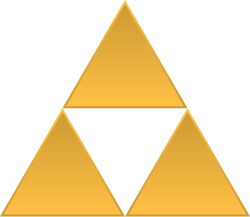
In Skyward Sword, the Triforce was sought by the demon king Demise,122 an eternal being that had conquered time itself.123 After a long battle against the goddess Hylia, guardian of the Triforce, Demise was sealed away within her temple.118124 Hylia, placing the world's inhabitants known as Hylians on a floating island in the sky called Skyloft to protect them, orchestrated a means to stop the demon from escaping: creating the Goddess Sword (later becoming the Master Sword) for her chosen hero125 and discarding her divinity to be reborn among the people of Skyloft.126 In time, Zelda and Link (the reborn Hylia and her predestined warrior) enacted the goddess's plan and Demise was destroyed, but he vowed that his rage would be reborn and forever plague those descended from Link and Zelda.127 Following the establishment of Hyrule Kingdom, Demise's prophecy came to fruition in Ocarina of Time, when Ganondorf's attempt to get the Triforce scattered it with him gaining the Triforce of Power. The Triforce of Wisdom ended up with the Hylian princesses descended from Zelda, each named after her, while the Triforce of Courage is passed to a youth named Link across generations. While the Triforces of Power and Wisdom have been part of the series since the original The Legend of Zelda, it was in Zelda II: The Adventure of Link that the Triforce of Courage was introduced, being obtained by Link at the end of his quest. The Triforce, or even a piece of it, is not always distributed as a whole. Such as in The Wind Waker, Link must find all the pieces (called Triforce Shards) of the Triforce of Courage before he can return to Hyrule. Even in the original The Legend of Zelda, Zelda breaks her Triforce of Wisdom into eight pieces for Link to find, before she was captured by Ganon.
Fictional chronology
| The Hero is Defeated | The Hero is Victorious | |
|---|---|---|
| Child Era | Adult Era | |
The chronology of the Legend of Zelda series was a subject of much debate among fans until an official timeline was released within the Hyrule Historia collector's book, first released in Japan in December 2011.130131 Prior to its release, in a 2003 interview, series creator Shigeru Miyamoto confirmed the existence of an internal document which connected all the games, with series producer Eiji Aonuma later revealing in 2010 the confidential nature of this document, which only Miyamoto himself and the director of each game had access to.132133
In-game content, marketing material, and developer statements once partially established a timeline of the released installments: the original The Legend of Zelda was followed by Zelda II: The Adventure of Link, which takes place several years later;134135 A Link to the Past is a prequel to the previous two games,136137138 and is followed by Link's Awakening;139140 the events of Ocarina of Time occur many centuries before A Link to the Past (according to character designer Satoru Takizawa, it was meant to implicitly tell the story of the Imprisoning War),141142 and was followed by Majora's Mask;143 Four Swords predates Ocarina of Time;144 The Wind Waker takes place in one of the parallel timelines that emerged from Ocarina of Time, more than a century later;145146 Four Swords Adventures, upon its release, was considered to be a direct sequel to Four Swords, set sometime after its events;144 The Minish Cap is a prequel to Four Swords, telling of the origins of the villain Vaati and the creation of the Four Sword;147 Twilight Princess takes place after Majora's Mask;145146 Phantom Hourglass is a sequel to The Wind Waker,148 and is followed by Spirit Tracks, which is set about a century later on a land far away from the setting of The Wind Waker;149 and Skyward Sword precedes The Minish Cap, telling the story of the creation of the Master Sword.150151
In the early 2000s, Nintendo of America released a timeline on the official website of the series as one of the possible interpretation of the events from all entries released up to that point, featuring a single protagonist named Link, the "Hero of Time" from its first adventure in Ocarina of Time. It was followed by Majora's Mask, A Link to the Past, Oracle of Seasons, Oracle of Ages, the original The Legend of Zelda, Zelda II: The Adventure of Link, and finally Link's Awakening.152 In 2011, series translator Daniel Owsen revealed that, at one point, his coworkers at Nintendo of America and him conceived another complete timeline and intended to make it available online, but the Japanese series developers rejected the idea so that the placement of each game would be kept open to the imagination of the players.153
On December 21, 2011, to celebrate the 25th anniversary of the series, The Legend of Zelda: Hyrule Historia art book was published by Shogakukan, which contained an official timeline of the fictional chronology of the series up to that point.130 This timeline subsequently posits that following Ocarina of Time, it splits into three alternate routes: in one, Link is defeated by Ganon, leading into the Imprisoning War and A Link to the Past, Oracle of Seasons and Oracle of Ages, Link's Awakening, The Legend of Zelda and The Adventure of Link. The second and third, where Link successfully defeats Ganon, lead to a split timeline between his childhood (where Zelda sends him back in time so he can use the wisdom he has gained to warn young Zelda of the horrifying fate of Hyrule) and adulthood (where adult Zelda lives on to try and rebuild her kingdom). His childhood continues with Majora's Mask, followed by Twilight Princess and Four Swords Adventures. The timeline from his adult life continues into Wind Waker, Phantom Hourglass and Spirit Tracks.130
Released in 2013, A Link Between Worlds takes place six generations after A Link to the Past, and features the Triforce being reunited, and Ganon being resurrected,154 while 2015's Tri Force Heroes is a direct sequel to A Link Between Worlds, which takes place several years later.155156
In 2018, Nintendo revealed the placement of the timeline of the previous year's Breath of the Wild was after all previous games in the series, without specifying a connection to any of the three timeline branches. Aonuma and Breath of the Wild director Hidemaro Fujibayashi justified the vague placement with the previous idea of keeping it open to players' imaginations.129 Nintendo moved Link's Awakening to take place before Oracle of Seasons and Oracle of Ages.129 In 2020, Nintendo released Hyrule Warriors: Age of Calamity, a follow-up to the 2014 spin-off game Hyrule Warriors, set 100 years before Breath of the Wild,157 but with the events of Age of Calamity diverging from the backstory established in Breath of the Wild, ostensibly creating an alternate timeline separate from it. Events depicted within Age of Calamity unrelated to its use of time travel, however, differ from events established in Breath of the Wild and its supplementary art book, Creating a Champion - such as Link pulling the Master Sword during the events of Age of Calamity, when he was previously established to have obtained it in his youth - rendering Age of Calamity wholly non-canonical.158 In 2023 Tears of the Kingdom, a direct sequel to Breath of the Wild, was released;159 it depicts the Imprisoning War as taking place shortly after Hyrule's founding by the Zonai king, Rauru.160 In 2025 Echoes of Wisdom was added to the timeline after Tri Force Heroes and before The Legend of Zelda.128 Hyrule Warriors: Age of Imprisonment takes place during the events of Tears of the Kingdom, where Zelda was sent back in time to when Hyrule was founded and fights in the Imprisoning War. To date, it is the only canonical Hyrule Warriors game.
Characters
Link
The central protagonist of The Legend of Zelda series, and the primary player character of every individual game except for Echoes of Wisdom, Link is the name of various Hylian young men or boys who characteristically wear a green tunic and a pointed cap, and are the bearers of the Triforce of Courage. In most games, the player can give Link a different name before the start of the adventure, and he will be referred by that given name throughout by the non-player characters (NPCs). Miyamoto said in a 2002 interview that he named the protagonist "Link" because the character is/was supposed to be the "link" between the player and the game world. The various Links each have a special title, such as "Hero of Time", "Hero of Winds" or "Hero of the Wild". Like many silent protagonists in video games, Link does not speak and only produces grunts, yells, and similar sounds, but he is not mute – dialogue from him is referenced second-hand by in-game characters, despite not being seen or heard by the player. Link is depicted as a silent protagonist so that the audience is able to have their own thoughts as to how their Link would answer the characters instead of him having scripted responses.
Princess Zelda
Princess Zelda is the princess of Hyrule and the guardian of the Triforce of Wisdom. Her name is present in many of her ancestors and descendants. She sometimes plays a supporting role in battle, using magical powers and weapons such as Light Arrows to aid Link. She was not playable in the main series until Spirit Tracks, where she becomes a spirit and can possess a Phantom Knight that can be controlled by the player, and becomes the primary playable character in Echoes of Wisdom, in which Link is largely absent and Zelda does not speak. Zelda appears under various other aliases and alter egos, including Sheik (in Ocarina of Time) and Tetra (in The Wind Waker and Phantom Hourglass). In Skyward Sword, it is revealed that the Zelda of that game is a reincarnation of the goddess Hylia, whose power flows through the royal bloodline. The name "Zelda" derives from the American novelist Zelda Fitzgerald.161
Ganon
Ganon, also known as Ganondorf in his Gerudo form, is the main antagonist of the series and serves as the final boss for many of the games. In the series, Ganondorf is the leader of a race of desert brigands called the Gerudo, which consists entirely of women save for one man born every one hundred years. He is significantly taller than other human NPCs, but his looks vary between games, often taking the form of a monstrous anthropomorphic boar. His specific motives vary from game to game, but most often, he seeks the complete Triforce, a powerful magical relic, part of it often in the possession of Link and Zelda. He often possesses a portion of the Triforce called the Triforce of Power, which gives him great strength, but it is often not enough to accomplish his ends, leading him to hunt the remaining Triforce pieces. Unlike Link, Zelda, and most other recurring characters, he is actually the same person in every game, with the exception of Four Swords Adventures, where he is a reincarnation of the original. In each game the battles with him are different and he fights using different styles. The game Skyward Sword indicates that Ganon is a reincarnation of a Demon King known as Demise.
Main series

| 1986 | The Legend of Zelda |
|---|---|
| 1987 | The Adventure of Link |
| 1988–1990 | |
| 1991 | A Link to the Past |
| 1992 | |
| 1993 | Link's Awakening |
| 1994–1997 | |
| 1998 | Ocarina of Time |
| Link's Awakening DX | |
| 1999 | |
| 2000 | Majora's Mask |
| 2001 | Oracle of Seasons and Oracle of Ages |
| 2002 | Four Swords |
| The Wind Waker | |
| 2003 | |
| 2004 | Four Swords Adventures |
| The Minish Cap | |
| 2005 | |
| 2006 | Twilight Princess |
| 2007 | Phantom Hourglass |
| 2008 | |
| 2009 | Spirit Tracks |
| 2010 | |
| 2011 | Ocarina of Time 3D |
| Four Swords Anniversary Edition | |
| Skyward Sword | |
| 2012 | |
| 2013 | The Wind Waker HD |
| A Link Between Worlds | |
| 2014 | |
| 2015 | Majora's Mask 3D |
| Tri Force Heroes | |
| 2016 | Twilight Princess HD |
| 2017 | Breath of the Wild |
| 2018 | |
| 2019 | Link's Awakening |
| 2020 | |
| 2021 | Skyward Sword HD |
| 2022 | |
| 2023 | Tears of the Kingdom |
| 2024 | Echoes of Wisdom |
| 2025 | Breath of the Wild - Nintendo Switch 2 Edition |
| Tears of the Kingdom - Nintendo Switch 2 Edition |
1986–1997: 2D origins
The Legend of Zelda, the first game of the series, was first released in Japan in February 1986, on the Famicom Disk System.163 A cartridge version for the Nintendo Entertainment System, using battery-backed memory, was released in 1987 in the United States on August 22, and in Europe on November 27. The game features a "Second Quest", accessible either upon completing the game, or by registering one's name as "ZELDA" when starting a new quest. The "Second Quest" features different dungeons and item placement, and more difficult enemies.164
The second game, Zelda II: The Adventure of Link, was released for the Famicom Disk System in Japan in January 1987,163 and for the Nintendo Entertainment System in Europe in September 1988 and North America in December 1988. The game exchanged the top-down perspective for side-scrolling (though the top-down point of view was retained for overworld areas), and introduced RPG elements (such as experience points) not used previously or thereafter in the series.165
A Link to the Past returned to the top-down view and added the concept of an alternate dimension, the Dark World. The game was released for the Super NES in November 1991.163 A Link to the Past was re-released for the Game Boy Advance in 2002. The SNES version was later re-released on the Wii Virtual Console in January 2007, on the Wii U Virtual Console, and on Nintendo Classics.
The next game, Link's Awakening, for Nintendo's Game Boy, is the first Zelda for a handheld, and the first set outside Hyrule and to exclude Princess Zelda. Link's Awakening was re-released, in full color, as a launch game for the Game Boy Color in 1998 as Link's Awakening DX. This remaster features additions such as an extra color-based dungeon and a photo shop that allows interaction with the Game Boy Printer. Link's Awakening DX was released on the Nintendo 3DS Virtual Console in June 2011. An HD remake of Link's Awakening was released for the Nintendo Switch in 2019.166167
1998–2001: Transition to 3D
The series made the transition to 3D with Ocarina of Time for the Nintendo 64, which was released in November 1998. This game, initially known as Zelda 64 and in development for the Japanese-only 64DD before converting to cartridge format when the hardware was delayed,168 retains the core gameplay of the previous 2D games. A new gameplay mechanic, lock-on targeting, enables more precise sword fighting in a 3D space by focusing the camera on a nearby target and alters the player's actions relative to that target.169 The game heavily uses context-sensitive button play, having the player control various actions, each handled slightly differently, using only one button on the controller (e.g. standing next to a block and pressing A would make Link grab it, enabling him to push orpull it, but moving forwards into a block and tapping A has Link climb the block). The game debuted Link's horse, Epona, allowing Link to travel quickly across land and fire arrows from horseback. Widely acclaimed as one of the greatest video games ever made, Ocarina of Time achieved massive commercial success and universal critical praise, earning numerous perfect scores and consistent top rankings on definitive "best of all time" lists from publications such as IGN and Electronic Gaming Monthly.170 In February 2006, it was ranked by Nintendo Power as the best game released for a Nintendo console.171 The cancelled 64DD expansion for Ocarina of Time, known as Ura Zelda during development, was re-released on the GameCube in 2002 as a pre-order incentive for The Wind Waker in the U.S., Canada and Japan.172 Named Ocarina of Time Master Quest, the game was given reorganized dungeon layouts for greater difficulty.172173 Europe would receive this "Two-Game Bonus Disc" free in every copy of The Wind Waker, except for the discounted Player's Choice version. Ocarina of Time was available through the Wii174 and Wii U's respective Virtual Console services and Ocarina of Time has been made available through Nintendo Classics in HD resolution on Nintendo Switch and Nintendo Switch 2. Ocarina of Time 3D for the Nintendo 3DS, featuring remade graphics and stereoscopic 3D, was released in June 2011.
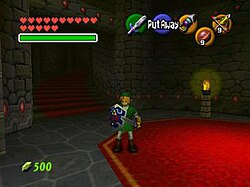
Ocarina of Time's follow-up, Majora's Mask, was released in April 2000. It uses the same 3D game engine as the previous game,175 and added a time-based concept, in which Link relives the events of three days as many times as needed to complete the game's objectives. It was originally called Zelda Gaiden,176 a Japanese title that translates as Zelda Side story. Gameplay changed significantly; in addition to the time-limit, Link can use masks to transform into creatures with unique abilities. While Majora's Mask retains the graphical style of Ocarina of Time, it is also a departure, particularly in its atmosphere. It features motion-blur, unlike its predecessor. The game is darker in tone,175 dealing with death and tragedy in a manner not previously seen in the series, and has a sense of impending doom, as a large moon slowly descends upon the land of Termina to destroy all life. Majora's Mask was available on the Wii and Wii U Virtual Console catalogues. The Legend of Zelda: Majora's Mask 3D was released for 3DS in North America, Europe, Japan, and Australia in February 2015. The Nintendo 64 version was added to Nintendo Classics in February 2022.
Oracle of Seasons and Oracle of Ages were released simultaneously for the Game Boy Color in 2001, and interact using passwords177 or a Game Link Cable.178 After one game has been completed, the player is given a password that allows the other game to be played as a sequel.177 They were developed by Flagship in conjunction with Nintendo, with supervision from Miyamoto. After the team experimented with porting the original The Legend of Zelda to the Game Boy Color, they decided to make an original trilogy179 to be called the "Triforce Series".180 When the password system linking the three games proved too troublesome, the concept was reduced to two games at Miyamoto's suggestion.181 These two games became Oracle of Ages, which is more puzzle-based, and Oracle of Seasons, which is more action-oriented.182 Both titles were later released on the 3DS Virtual Console and Nintendo Classics.
2002–2005: Introduction of Toon Link and multiplayer
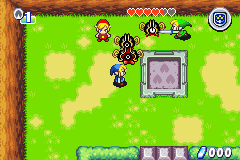
The Game Boy Advance release of A Link to the Past in 2002 featured a new game, Four Swords,163 the first multiplayer Zelda. This game introduced Toon Link, a name first used in Super Smash Bros. Brawl to refer to cartoon-based visual designs of Link. Four Swords Anniversary Edition183 was released in September 2011, as free DSiWare available until February 20, 2012.
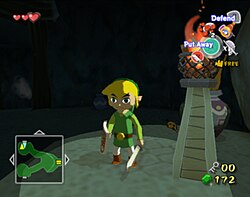
The Wind Waker, a 3D cel-shaded game also featuring Toon Link, was released in Japan in December 2002, and the US and Europe in 2003. The gameplay centers on controlling wind with a baton called the Wind Waker and sailing a small boat around an island-filled ocean, retaining similar gameplay mechanics as the previous 3D games in the series. The Legend of Zelda: Collector's Edition, released for the GameCube in 2003,184 included the original The Legend of Zelda, Zelda II, Ocarina of Time, Majora's Mask, and a demo of The Wind Waker. The Legend of Zelda: The Wind Waker HD was released for Wii U in 2013.
Four Swords Adventures was released for the GameCube in early 2004 in Japan and America, and January 2005 in Europe. Based on the handheld Four Swords, Four Swords Adventures was another deviation from previous Zelda gameplay, focusing on level-based and multiplayer gameplay. The game contains 24 levels and a map screen; there is no connecting overworld. For multiplayer features, each player must use a Game Boy Advance system linked to the GameCube via a Nintendo GameCube – Game Boy Advance link cable. The game features a single-player campaign, in which using a Game Boy Advance is optional. Four Swords Adventures includes two gameplay modes: "Hyrulean Adventure", with a plot and gameplay similar to other Zelda games, and "Shadow Battle", in which multiple Links, played by multiple players, battle each other. The Japanese and Korean versions include an exclusive third segment, "Navi Trackers", which contains spoken dialogue for most of the characters.
In November 2004 in Japan and Europe, and January 2005 in America, Nintendo released The Minish Cap for the Game Boy Advance. In The Minish Cap Link can shrink in size using a mystical, sentient hat named Ezlo. While shrunk, he can see previously explored parts of a dungeon from a different perspective, and enter areas through otherwise-impassable openings. It was later released on the Wii U Virtual Console and Nintendo Classics.
2006–2011: Motion and touch-based swordplay
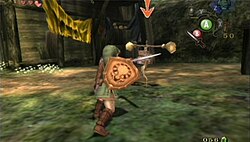
In November 2006, Twilight Princess was released as the first Zelda game on the Wii. It was later released in December as the last Nintendo-published game for the GameCube, the console for which it was originally developed. The Wii version features motion controls and a reversed world where everything that is in the west on the GameCube is in the east on the Wii. The display is mirrored in order to make Link right-handed to make use of the Wii Remote feel more natural for the majority of players. The game chronicles the struggle of a young adult Link to confront the troubles of the "Twilight Realm", a mysterious force that appears around and interacts with Hyrule. When he enters this realm, he is transformed into a wolf, and loses the ability to use his sword, shield or other items, but gains other abilities such as sharpened senses from his new form. Twilight Princess includes an incarnation of Link's horse, Epona, for fast transportation, and features mounted battle scenarios including boss battles that were not seen in previous games. Twilight Princess diverted from the cel-shading of Wind Waker, integrating graphics featuring more detailed textures, giving the game a darker atmosphere. The Legend of Zelda: Twilight Princess HD was released for Wii U in 2016.185
Phantom Hourglass was released in June 2007 in Japan and October in North America and Europe for the Nintendo DS. It had a cel-shaded 3D graphical design with top-down gameplay and gameplay optimised for the DS' touch screen. It was later released on the Wii U Virtual Console.
The next Legend of Zelda game for the DS, Spirit Tracks, was released in December 2009. In this game, the "spirit tracks", railroads which chain an ancient evil, are disappearing from Hyrule. Zelda and Link go to the Spirit Tower (the ethereal point of convergence for the tracks) to find out why, but villains Cole and Byrnek steal Zelda's body for the resurrection of the Demon King. Rendered disembodied, Zelda is left a spirit, and only Link (and a certain few sages) can see her. Together they go on a quest to restore the spirit tracks, defeat the Demon King, and return Zelda to her body. Developed using a modified version of the Phantom Hourglass engine, the game's most significant new mechanic allows Zelda to possess and periodically control Phantom Guardians—a recurring enemy type from the previous title. It was later released on the Wii U Virtual Console.
Skyward Sword for the Wii was in development since the end of 2000s.186 The game, the earliest in the Legend of Zelda timeline, reveals the origins of Hyrule, Ganon (here known as Demise), and many elements featured in previous games; it uses Wii's MotionPlus feature as well. It was released in November 2011. An HD remaster, with optional button-only controls, was released for Nintendo Switch in 2021.187
2013–present: Open-world emphasis
In 2013, Nintendo released A Link Between Worlds for the Nintendo 3DS, a sequel to A Link to the Past.188189 Progression is more open-ended than previous titles, with the possibility of completing many of the game's dungeons in any order. Certain dungeon obstacles require the use of rented or purchased items.8
Tri Force Heroes, a cooperative multiplayer game, was released for the 3DS in October 2015.190
Breath of the Wild was released in March 2017, as the last Nintendo-published game for the Wii U and a launch title for the Nintendo Switch.191 Similar to the original The Legend of Zelda, players are given little instruction and can explore the world freely. The world is designed to encourage exploration and experimentation and the main story quest can be completed in a nonlinear fashion.1192 An enhanced port was released as a launch title for the Nintendo Switch 2 worldwide in June 2025.
A Breath of the Wild sequel, Tears of the Kingdom, was released on the Switch in May 2023.193194 New to Tears of the Kingdom are the battery-powered Zonai devices, which the player can use for combat, propulsion, and exploration. The game also features the new abilities to fuse materials together, ascend through ceilings, reverse objects' movement through time, and autobuild structures.6 An enhanced port was released as a launch title for the Nintendo Switch 2 worldwide in June 2025.
Echoes of Wisdom, which features Zelda as the main protagonist, was released in September 2024 for the Switch.195
Spin-off games
As the franchise has grown in popularity, several games have been released that are set within or star a minor character from the universe of The Legend of Zelda but are not directly connected to the main The Legend of Zelda series or its core timeline.128196
Three Zelda-themed LCD games were created between 1989 and 1992.l The Game & Watch game Zelda was released first in August 1989 as a dual-screen handheld electronic game. It was re-released in 1998 as a Toymax, Inc. Mini Classic and was later included as an unlockable extra in Game & Watch Gallery 4, a 2002 compilation for the Game Boy Advance. While the Game & Watch Zelda was developed in-house by Nintendo, the subsequent two LCD games were developed by third parties under license by Nintendo. In October 1989, The Legend of Zelda was developed by Nelsonic as part of its Game Watch line. This game was an actual digital watch with primitive gameplay based on the original Legend of Zelda. In 1992, Epoch Co. developed Zelda no Densetsu: Kamigami no Triforce for its Barcode Battler II console. The game employed card-scanning technology similar to the later-released Nintendo e-Reader.
Three video games were developed and released on CD-i in the early 1990s as a product of a compromise between Philips and Nintendo, after the companies failed to develop a CD-ROM peripheral for the Super NES. Created independently with no observation by or influence from Nintendo, the games are Link: The Faces of Evil, Zelda: The Wand of Gamelon, and later, Zelda's Adventure. Nintendo never acknowledged them in the Zelda timeline,m and they are considered to be in a separate, self-contained canon. These games are widely acknowledged to be the worst installments in the series, though have since gained a cult following in the form of internet memes.197
The Satellaview games from The Legend of Zelda series (1995–1997) are spin-offs, not listed on core timelines of the franchise.128196
Other spin-off games include RPG Freshly-Picked Tingle's Rosy Rupeeland, its sequel Ripened Tingle's Balloon Trip of Love, and Balloon Fight rerelease Tingle's Balloon Fight for the Nintendo DS. All of these star Tingle.198
Though also stated to be in the world of Twilight Princess, The Legend of Zelda Encyclopedia considers the rail shooter game Link's Crossbow Training for the Wii to be a spin-off.199
Hyrule Warriors is a spin-off198 and a crossover game developed by Omega Force and Team Ninja which combined the setting of Nintendo's The Legend of Zelda series and the gameplay of Koei Tecmo's Dynasty Warriors series. It was released in North America in September 2014 for Wii U. Hyrule Warriors Legends, a version for the Nintendo 3DS containing more content and gameplay modifications, was released in March 2016. The Nintendo Switch game Hyrule Warriors: Definitive Edition was released on the Nintendo Switch in 2018 and contained content from both the Wii U and 3DS versions.
To commemorate the launch of the My Nintendo loyalty program in March 2016, Nintendo released My Nintendo Picross: The Legend of Zelda: Twilight Princess, a nonogram puzzle game in the Picross series developed by Jupiter for download to the Nintendo 3DS.200201
Cadence of Hyrule, developed by Brace Yourself Games and released in June 2019 for the Nintendo Switch, is an officially licensed crossover of Zelda with Crypt of the NecroDancer.202
Hyrule Warriors: Age of Calamity, developed by Omega Force, shares the hack-and-slash style of the spin-off game Hyrule Warriors.n203 Age of Calamity was released in November 2020.204157
A Zelda-themed variant of Vermin was included on the limited edition Game & Watch: The Legend of Zelda unit, released in 2021. This special edition of the Game & Watch also included The Legend of Zelda, The Adventure of Link, and Link's Awakening.
A third Hyrule Warriors game, Hyrule Warriors: Age of Imprisonment takes place during the events of Tears of the Kingdom, where Zelda was sent back in time to when Hyrule was founded and fights in the Imprisoning War. Age of Imprisonment was released in November 2025.
Cancelled games
In 2001, Nintendo partnered with Capcom subsidiary Flagship to concurrently release The Legend of Zelda: Oracle of Seasons and The Legend of Zelda: Oracle of Ages for the Game Boy Color. The original plan, however, was to release three titles concurrently, but one title, The Legend of Zelda: Mystical Seed of Courage, had to be cancelled due to technical issues arising from complications related to the interconnected nature of the titles.205206207208209
Close Nintendo collaborator Retro Studios did preliminary work on two separate Zelda pitches. Heroes of Hyrule would have been a Nintendo DS game that would have combined the traditional gameplay of the series with that of tactical role-playing games like Final Fantasy Tactics. They additionally proposed an action game for the Wii starring Sheik that would have explored the origins of the Master Sword. Both were cancelled after being rejected by Nintendo.210211212
Reception
| Game | Year | Units sold (in millions) |
GameRankings | Metacritic (out of 100) |
|---|---|---|---|---|
| The Legend of Zelda | 1986 | 6.51213 |
| |
| The Adventure of Link | 1987 | 4.38213 |
| |
| A Link to the Past | 1991 | 7.43o |
| |
| Link's Awakening | 1993 | 10.29 p |
| |
| Ocarina of Time | 1998 | 14.04 q | N64: 98%229 GC: 90%230 3DS: 94%231 |
N64: 99232 GC: 91233 3DS: 94234 |
| Majora's Mask | 2000 | 6.80r | N64: 92%235 3DS: 90%236 |
N64: 95237 3DS: 89238 |
| Oracle of Seasons and Ages | 2001 | 3.96213 | GBC: (Seasons) 91%239 GBC: (Ages) 92%240 |
– |
| Four Swords | 2002 | 2.82220 | GBA: 92%241 DS: 85%242 |
GBA: 95243 DS: 85244 |
| The Wind Waker | 2002 | 6.80s | GC: 94%247 Wii U: 91%248 |
GC: 96249 Wii U: 90250 |
| Four Swords Adventures | 2004 | – | GC: 85%251 | GC: 86252 |
| The Minish Cap | 2004 | 1.76220 | GBA: 90%253 | GBA: 89254 |
| Twilight Princess | 2006 | 10t | GC: 95%256 Wii: 95%257 Wii U: 86%258 |
GC: 96259 Wii: 95260 Wii U: 86261 |
| Phantom Hourglass | 2007 | 4.76245 | DS: 89%262 | DS: 90263 |
| Spirit Tracks | 2009 | 2.96245 | DS: 87%264 | DS: 87265 |
| Skyward Sword | 2011 | 7.82u | Wii: 93%267 | Wii: 93268 NS: 81269 |
| A Link Between Worlds | 2013 | 4.26224 | 3DS: 91%270 | 3DS: 91271 |
| Tri Force Heroes | 2015 | 1.36220 | 3DS: 72%272 | 3DS: 73273 |
| Breath of the Wild | 2017 | 34.51v | ||
| Tears of the Kingdom | 2023 | 22.15274 |
|
|
| Echoes of Wisdom | 2024 | 4.09282 |
|
|
The Legend of Zelda series has received outstanding levels of acclaim from critics and the public. Ocarina of Time, Skyward Sword, Breath of the Wild and Tears of the Kingdom have each received a perfect 10/10 score by Edge magazine.284 All four plus Wind Waker also received a 40/40 score (10/10 by four reviewers) by Famitsu magazine,285286 making Zelda one of the few series with multiple perfect scores. Ocarina of Time was listed by Guinness World Records as the highest-rated video game in history, citing its Metacritic score of 99 out of 100.287 Individual games in the Zelda series were also recognized as the most critically acclaimed games on the Nintendo 64,288 Game Boy Advance,289 and 3DS,290 and in the open-world genre.291 With Link appearing in nine of the 100 highest-rated games on Metacritic as of June 2025 (all of them in the Zelda series), he is listed by Guinness World Records as the "most critically acclaimed videogame playable character".292 Computer and Video Games awarded The Wind Waker and Twilight Princess a score of 10/10.293294 A Link to the Past has won Gold Award from Electronic Gaming Monthly. In Nintendo Power's Top 200 countdown in 2004, Ocarina of Time took first place, and seven other Zelda games placed in the top 40.295 Twilight Princess was named Game of the Year by X-Play, GameTrailers, 1UP, Electronic Gaming Monthly, Spacey Awards, Game Informer, GameSpy, Nintendo Power, IGN, and many other websites. The editors of review aggregator website GameRankings gave Ocarina of Time its highest aggregate score.296 Game Informer has awarded The Wind Waker, Twilight Princess, Skyward Sword, A Link Between Worlds and Breath of the Wild with scores of 10/10. Phantom Hourglass was named DS Game of the Year by IGN and GameSpy.297298 Airing in December 2011, Spike TV's annual Video Game Awards gave the series the first ever "Hall of Fame Award", which Miyamoto accepted in person.299 Ocarina of Time and its use of melodic themes to identify different game regions has been called a reverse of Richard Wagner's use of leitmotifs to identify characters and themes.300 Ocarina of Time was so well received that sales increased for real ocarinas.301 IGN praised the music of Majora's Mask for its brilliance despite its heavy use of MIDI.302 It has been ranked the seventh-greatest game by Electronic Gaming Monthly, whereas Ocarina of Time was ranked eighth.303 The series won GameFAQs Best Series Ever competition.304
As of March 2025, The Legend of Zelda franchise has sold 156.28 million copies, with the original The Legend of Zelda being the fourth best-selling NES game of all time.305306 The series was ranked as the 64th top game (collectively) by Next Generation in 1996.307 In 1999, Next Generation listed the Zelda series as number 1 on their "Top 50 Games of All Time", commenting that Zelda series had always more gameplay and innovations than most other titles in their series.308 According to Empire magazine, with "the most vividly-realised world and the most varied game-play of any game on any console, Zelda is a solid bet for the best game series ever".309
The Legend of Zelda franchise has garnered the most Game of the Year nominations in the history of the Academy of Interactive Arts & Sciences' D.I.C.E. Awards with eight (Ocarina of Time,310 Majora's Mask,311 The Wind Waker,312 Twilight Princess,313 Skyward Sword,314 A Link Between Worlds,315 Breath of the Wild,316 and Tears of the Kingdom317); two of them, Ocarina of Time310 and Breath of the Wild,318 would go on to win the top honor during their respective awards ceremonies.
Legacy
Multiple members of the game industry have expressed how Zelda games have impacted them, including Rockstar Games founder and Grand Theft Auto director, Dan Houser, who said that Zelda and Mario games on Nintendo 64 greatly influenced them in developing Grand Theft Auto series, as well in other 3D games in general.319 Rockstar founder and Grand Theft Auto director Sam Houser also cited the influence of Zelda, describing Grand Theft Auto III as "Zelda meets Goodfellas".320 Ōkami director and PlatinumGames founder Hideki Kamiya said that he has been influenced by The Legend of Zelda series in developing the game, citing A Link to the Past as his favorite game of all time.321 Soul Reaver and Uncharted director, Amy Hennig (formerly of Crystal Dynamics and Naughty Dog), cited Zelda as inspiration for the Legacy of Kain series, noting A Link to the Past's influence on Blood Omen and Ocarina of Time's influence on Soul Reaver.322 Soul Reaver and Uncharted creator, Richard Lemarchand, also cited A Link to the Past's approach to combining gameplay with storytelling as inspiration for Soul Reaver.323 Wing Commander and Star Citizen director, Chris Roberts (Origin Systems and Cloud Imperium Games), cited Zelda as an influence on his action role-playing game, Times of Lore.324
Dark Souls series creator Hidetaka Miyazaki named A Link To The Past as one of his favorite role-playing video games.44 Ico director Fumito Ueda cited Zelda as an influence on Shadow of the Colossus.325 Miyazaki also described The Legend of Zelda as a sort of textbook for 3D action games.326 Lionhead Studios founder Peter Molyneux stated that the Twilight Princess is one of his favorite games and an influence for the Fable series.327 Darksiders director David Adams (Vigil Games) cited Zelda as an influence on his work.328 Prince of Persia and Assassin's Creed director Raphael Lacoste cited The Wind Waker as an influence on Assassin's Creed IV: Black Flag.329 CD Projekt Red cited the Zelda series as an influence on The Witcher 3: Wild Hunt.330 Majora's Mask served as the primary influence on Alex Hall's web series Ben Drowned.331 Final Fantasy and The 3rd Birthday director Hajime Tabata cited Ocarina of Time as inspiration for the open world of Final Fantasy XV.332
Crossovers
The Legend of Zelda series has crossed over into other Nintendo and third-party video games, most prominently in the Super Smash Bros. series of fighting games published by Nintendo. Link appears as a fighter in Super Smash Bros. for the Nintendo 64, the first entry in the series, and is part of the roster in all subsequent releases in the series as well. Zelda (who can transform into Sheik), Ganondorf, and Young Link (the child version of Link from Ocarina of Time) were added to the player roster for Super Smash Bros. Melee, and appeared in all subsequent releases except for "Young Link" (who is later replaced by "Toon Link" from The Wind Waker, in subsequent releases Super Smash Bros. Brawl and Super Smash Bros. for Nintendo 3DS and Wii U). Sheik becomes a separate playable character from Super Smash Bros. for Nintendo 3DS and Wii U onwards.333334 Both Young Link and Toon Link appear in the fifth installment, Super Smash Bros. Ultimate. Other elements from the series, such as locations and items, are also included throughout the Smash Bros. series, including Assist Trophies, where computer-controlled versions of characters in the Zelda series including Tingle, Skull Kid, Midna, and Skyward Sword antagonist Ghirahim can fight as an ally.334 Outside of the series, Nintendo allowed for the use of Link as a playable character exclusively in the GameCube release of Namco's fighting game Soulcalibur II.335
Link, using a design based on Skyward Sword, appears as a playable character in Mario Kart 8 via downloadable content (DLC), along with a Hyrule Circuit racetrack themed on The Legend of Zelda series.336 The first pack is named after the series. In a post-launch update for Mario Kart 8 Deluxe, Link and his vehicle received alternate styles based on Breath of the Wild.337
In the Wii U version of Sonic Lost World, a DLC stage based on The Legend of Zelda series was released in March 2014, named "The Legend of Zelda Zone". It was built around the core gameplay mechanics of Sonic Lost World, with some elements from the Zelda series, including a heart-based vitality meter, rupee collection, and a miniature dungeon to explore.338
In other media
TV series
A 13-episode American animated TV series, adapted by DiC and distributed by Viacom Enterprises, aired in 1989.339 The animated Zelda shorts were broadcast each Friday, instead of the usual Super Mario Bros. cartoon which was aired during the rest of the week.340341 The series loosely follows the two NES Zelda games (the original The Legend of Zelda and The Adventure of Link), mixing settings and characters from those games with original creations.342 The show's older incarnations of both Link and Zelda appeared in various episodes of Captain N: The Game Master during its second season.343
A live-action television series had been in development around 2015, as reported from an anonymous Netflix employee to The Wall Street Journal. The program was a joint effort between Netflix and Nintendo, and was said to be aimed as a family-friendly version of Game of Thrones.344 Further details of this series went sparse until 2021 when Adam Conover gave an interview regarding his College Humor period. There, the College Humor team had been planning a skit that would have combined Star Fox with Fantastic Mr. Fox and had even talked to Miyamoto on the project. Conover said that they were told about a month into the project that Nintendo had requested they stop all work on the project as a result of the leak related to the live-action Zelda show; Nintendo, already protective of its IP, had pulled many external projects including the live-action show.345
Print media
Valiant Comics released a short series of comics featuring characters and settings from the Zelda cartoon as part of their Nintendo Comics System line. Manga adaptations of many entries in the series, including as of February 2022 A Link to the Past, Ocarina of Time, Majora's Mask, Oracle of Seasons and Oracle of Ages, Four Swords Adventures, The Minish Cap, Phantom Hourglass, and Twilight Princess have been produced under license from Nintendo, primarily written and drawn by Japanese artist duo Akira Himekawa. These adaptations do not strictly follow the plot of the games from which they are based and may contain additional story elements.
A number of official books, novels, and gamebooks have been released based on the series as well. The earliest was Moblin's Magic Spear, published in 1989 by Western Publishing under their Golden Books Family Entertainment division and written by Jack C. Harris. It took place sometime during the first game. Two gamebooks were published as part of the Nintendo Adventure Books series by Archway, both of which were written by Matt Wayne. The first was The Crystal Trap (which focuses more on Zelda) and the second was The Shadow Prince. Both were released in 1992. A novel based on Ocarina of Time was released in 1999, written by Jason R. Rich and published by Sybex Inc. under their Pathways to Adventure series. Another two gamebooks were released as part of the You Decide on the Adventure series published by Scholastic. The first book was based on Oracle of Seasons and was released in 2001. The second, based on Oracle of Ages, was released in 2002. Both were written by Craig Wessel. In 2006, Scholastic released a novel as part of their Nintendo Heroes series, Link and the Portal of Doom. It was written by Tracey West and was set shortly after the events of Ocarina of Time.
In 2011, to coincide with the 25th anniversary of the series, an art book, Hyrule Historia, was published in Japan by Shogakukan. It was followed by an international release by Dark Horse Books in 2013. It contains concept art from the series's conception to the release of Skyward Sword in 2011 and multiple essays about the production of the games, as well as an overarching timeline of the series. It also includes a prequel manga to Skyward Sword by Akira Himekawa.346 The English-language release took the number one spot on Amazon's sales chart, taking the spot away from E. L. James's 50 Shades of Grey trilogy.347 Dark Horse released The Legend of Zelda: Art & Artifacts, a follow-up art book to Hyrule Historia containing additional artwork and interviews,348349 in North America and Europe in February 2017.350
Music
Taking place in Cologne, Germany, on September 23, 2010, the video game music concert Symphonic Legends focused on music from Nintendo and, among others, featured games such as The Legend of Zelda. Following an intermission, the second half of the concert was entirely dedicated to an expansive symphonic poem dedicated to the series. The 35-minute epic tells the story of Link's evolution from child to hero.351352
To celebrate the 25th anniversary of the series in 2011, Nintendo commissioned an original symphony, The Legend of Zelda: Symphony of the Goddesses. The show was originally performed in the fall of 2011 in Los Angeles and consists of live performances of much of the music from the series.353 It has since been scheduled for 18 shows so far throughout the United States and Canada.353354 Nintendo released a CD, The Legend of Zelda 25th Anniversary Special Orchestra CD. Featuring eight tracks from live performances of the symphony, the CD is included alongside the special edition of The Legend of Zelda: Skyward Sword for the Wii. Nintendo later celebrated The Legend of Zelda's 30th anniversary with an album which was released in Japan in February 2017.355
The Nintendo Music streaming service included soundtracks from eight Zelda games as of June 2025 for subscribers to Nintendo Switch Online to stream and listen to, including The Legend of Zelda, A Link to the Past, Ocarina of Time, The Wind Waker, Ocarina of Time 3D, Skyward Sword, Breath of the Wild, and Tears of the Kingdom.356
Merchandise
The Legend of Zelda-themed Monopoly board game was released in the United States in September 2014.357 A Clue board game in the style of The Legend of Zelda series was released in June 2017.358 A UNO-styled The Legend of Zelda game was released in February 2018, exclusively at GameStop in North America.359 A limited edition Zelda 25th anniversary 3DS was released in December 2011, in Australia.360
Film
In 2007, Imagi Animation Studios, which had provided the animation for TMNT and Astro Boy, created a pitch reel for a computer-animated The Legend of Zelda film. Nintendo did not accept the studio's offer due to the memory of the failure of the 1993 live-action film adaptation of Super Mario Bros.361 In 2013, Aonuma said that, if the development of a film began, the company would want to use the opportunity to embrace audience interaction in some capacity.362363 In June 2023, it was said that Nintendo was close to closing a deal with Illumination and Universal Pictures to produce a film adaptation of the franchise following the success of their film, The Super Mario Bros. Movie,364 but Illumination CEO Chris Meledandri denied these reports later that month.365
By November 2023, Nintendo was developing a live-action Legend of Zelda film with Sony Pictures, which will co-finance and distribute it worldwide.366 Wes Ball has been attached to direct, with Derek Connolly writing the script, and Miyamoto and Avi Arad will be producing alongside Ball and his producing partner Joe Hartwick Jr. through their Oddball Entertainment company.367 In July 2025, Bo Bragason and Benjamin Evan Ainsworth had been cast as Zelda and Link respectively.368 The film was scheduled for worldwide release on March 26, 2027,369 which was later changed to May 7.370 Filming began in New Zealand in November 2025 and ended in April 2026.371
Notes
Notes
- Japanese: ゼルダの伝説, Hepburn: Zeruda no Densetsu; usually romanized as Zelda no Densetsu
- Attributed to multiple sources since Breath of the Wild began development in 2011:
- Eiji Aonuma, 2013: "Our mission in developing this new game for Wii U is quite plainly to rethink the conventions of Zelda. I'm referring to things such as the player is supposed to complete dungeons in a certain order. That you are supposed to play by yourself. We want to set aside these 'conventions', get back to basics to create a newborn Zelda so players today can enjoy the real essence of the franchise."1
- Eurogamer, 2016: "[Until Breath of the Wild, i]t's hard to think of many entries since [the original The Legend of Zelda] which have refreshed the series so completely, and with so much style."2
- GamesRadar+, 2017: "Well, Breath of the Wild doesn't want to play by the rules. The rulebook isn't just torn up. It's crushed beneath boulders, burned in a forest inferno and struck by lightning. Science has arrived in Hyrule, a rush of freeform simulation that brings with it a spark of life that could never quite ignite in the hand-crafted worlds of old... As a long-term fan, it's a treat to see Nintendo take its gift for problem solving outside of the Zelda comfort zone - a place the series has arguably inhabited since Ocarina of Time. Not since that game's leap to 3D and introduction of lock-on targeting has a Zelda game made this many breakthroughs."3
- Hidemaro Fujibayashi, 2017: "[W]e chose March 3, 2017 as the release date [of Breath of the Wild] because we wanted more time to make the game as interesting as possible. We were thinking about breaking the conventions of the Zelda series from the very start of development. Specifically, our process was to think of all kinds of different mechanics, and to try to distinguish between the unchanging, universal traits of the Zelda franchise and things that had simply become conventions of the series."4
- The Guardian, 2017: "The greens of the open plains contrast with the dark black of Death Mountain, which is streaked with orange lava on the distant horizon. As the sweeping orchestral soundtrack swells, you realise that you can go anywhere and that this is not like any Zelda you've played before. Released on Wii U and Switch in March, The Legend of Zelda: Breath of the Wild (BotW) is the biggest Zelda title ever made. One-and-a-half times the size of open-world trailblazer Skyrim and 12 times the size of Twilight Princess, it provides a vast terrain to explore with barely any restrictions beyond a few hours of subtly enclosed preparation."5
- GameSpot, 2023: "[Tears of the Kingdom] builds upon the foundation so thoroughly and transformationally that it feels like a revelation. This is The Legend of Zelda at its finest, borrowing the best pieces and qualities from across the franchise's history and creating something new that is emotionally resonant, captivating, and endlessly rewarding... Breath of the Wild upended the Zelda formula by presenting a vast and lush open world to explore--a reenvisioning of the unguided experience of the original Legend of Zelda for the Nintendo Entertainment System... These tools, and the sprawling world they inhabit, give Tears of the Kingdom a particular flow that feels unique to the Zelda franchise. You aren't simply solving puzzles or fighting battles--you're engineering solutions."6
- Top-down games in the series have been released with both 2D and fixed 3D computer graphics.7
- Attributed to multiple sources:
- Technical director Takuhiro Dohta explained that wind and electricity are not elements in a textbook, but they are in Breath of the Wild for the sake of how the chemistry engine is built.28
- With the exception of a swordfighter form that requires charging after a short period of combat.30
- Attributed to multiple sources:
- Players controlled Geralt in the first three installments of the series and their downloadable content, released from 2007 to 2016.75
- Satoru Takizawa, the art director of Twilight Princess, Breath of the Wild, and Tears of the Kingdom, described Zelda as the heroine.112
- With the exception of Four Swords Anniversary Edition, everything through Breath of the Wild for Wii U and Nintendo Switch is considered a main series title by The Legend of Zelda Encyclopedia, including the remakes.162
- Staven in European English-language releases.
- One of these three, 1989's Zelda, is specifically listed as a spin-off title in The Legend of Zelda Encyclopedia. None of them are listed on core timelines.128196
- Self evidenced from their absence from timelines in The Legend of Zelda Encyclopedia and the official Zelda website.128196
- Released in English in 2018, The Legend of Zelda Encyclopedia does not provide a statement on whether later Hyrule Warriors games from 2020 and 2025 are mainline Zelda games. It does consider the Wii U and 3DS games to be spin-offs.198
- A Link to the Past sales breakdown:
- Super Nintendo Entertainment System version: 4.61 million213
- Game Boy Advance version: 2.82 million220
- Link's Awakening sales breakdown:
- Game Boy/Game Boy Color version: 3.83 million213
- Nintendo Switch version: 6.46 million224
- Ocarina of Time sales breakdown:
- Nintendo 64 version: 7.6 million213
- Nintendo 3DS version: 6.44 million224
- Majora's Mask sales breakdown:
- Nintendo 64 version: 3.36 million213
- Nintendo 3DS version: 3.44 million224
- The Wind Waker sales breakdown:
- GameCube version: 4.43 million245
- Wii U version: 2.37 million246
- Twilight Princess sales breakdown:
- GameCube version: 1.43 million245
- Wii version: 7.50 million255
- Wii U version: 1.15 million220
- Skyward Sword sales breakdown:
- Wii version: 3.67 million266
- Nintendo Switch version: 4.15 million224
- Breath of the Wild sales breakdown:
References
References
- Aonuma, Eiji (January 23, 2013). "Wii U Direct - Nintendo Games 1.23.2013". Nintendo of America. Event occurs at 30:13–30:38. Retrieved August 18, 2025 – via YouTube.
- Phillips, Tom (July 15, 2016). "The Legend of Zelda: Breath of the Wild is the most ambitious Nintendo game in years". Eurogamer. Retrieved August 18, 2025.
- Castle, Matthew (March 2, 2017). "The Legend of Zelda: Breath of the Wild review: 'It's taken 18 years, but Nintendo has done it again: this is the adventure game to beat'". GamesRadar+. Retrieved August 18, 2025.
- Fujibayashi, Hidemaro (March 14, 2017). "The Making of The Legend of Zelda: Breath of the Wild Video – The Beginning". Nintendo of America. Event occurs at 0:51–1:21. Retrieved August 18, 2025 – via YouTube.
- Gray, Kate (May 30, 2017). "Is The Legend of Zelda: Breath of the Wild the best-designed game ever?". The Guardian. Retrieved August 18, 2025.
- Watts, Steve (May 11, 2023). "The Legend Of Zelda: Tears Of The Kingdom Review". GameSpot. Retrieved August 18, 2025.
- Oddo, Marco Vitto (June 18, 2021). "How Ocarina of Time Defined The Legend of Zelda Franchise". Collider. Retrieved August 22, 2025.
Let's start with the basics: Ocarina of Time is the first 3D Zelda game ever. We've had a lot of 2D Zelda games since Ocarina of Time and even more 3D Zelda games that used a fixed top-down camera to limit the field of vision of the player. Even so, every main title of the franchise — the ones Nintendo focused on for a [home] console release [as of 2021] — features a 3D camera that can be moved around freely by the player.
- Shikata, Hiromasa; Aonuma, Eiji. "6. 'Rethinking the Unquestioned'". Iwata Asks: The Legend of Zelda: A Link Between Worlds (Interview). Interviewed by Iwata, Satoru. Nintendo. Retrieved August 18, 2025.
- Aonuma, Eiji (September 23, 2024). "Vol. 13, The Legend of Zelda: Echoes of Wisdom — Part 1". Ask the Developer (Interview). Nintendo. Retrieved August 22, 2025.
- Miyamoto, Shigeru. "Iwata Asks: The Legend of Zelda: Ocarina of Time 3D: Mr. Shigeru Miyamoto" (Interview). Interviewed by Iwata, Satoru. Nintendo of America. Archived from the original on July 29, 2025. Retrieved August 22, 2025.
- Mitra, Ritwik (February 4, 2025). "The Best Weapons In Zelda: Breath Of The Wild, Ranked". Game Rant. Retrieved August 22, 2025.
- Mitra, Ritwik (September 14, 2023). "Best Bows In Zelda: Breath Of The Wild". Game Rant. Retrieved August 22, 2025.
- Nintendo Entertainment Analysis & Development (February 21, 1986). The Legend of Zelda instruction booklet (PDF). pp. 17, 19–20, 22, 24–26. Retrieved August 19, 2025 – via Nintendo of Japan website.
- Nintendo Entertainment Analysis & Development (November 21, 1991). The Legend of Zelda: A Link to the Past instruction booklet (PDF). pp. 11, 19, 23, 35, 37–41. Retrieved August 18, 2025 – via Nintendo of Japan website.
- Sao, Akinori; Tatsumi, Ginko; Mikame, Chisato; Gelinas, Ben (writers) (2018). The Legend of Zelda Encyclopedia. Milwaukie, Oregon: Dark Horse Books. pp. 84–93, 96–97. ISBN 978-1-5067-0638-2.
- Nintendo Entertainment Analysis & Development (February 21, 1986). The Legend of Zelda instruction booklet (PDF). p. 34. Retrieved August 19, 2025 – via Nintendo of Japan website.
- Nintendo Entertainment Analysis & Development (November 21, 1991). The Legend of Zelda: A Link to the Past instruction booklet (PDF). p. 32. Retrieved August 18, 2025 – via Nintendo of Japan website.
- Nintendo Entertainment Analysis & Development (February 21, 1986). The Legend of Zelda instruction booklet (PDF). p. 28. Retrieved August 19, 2025 – via Nintendo of Japan website.
- Sao, Akinori; Tatsumi, Ginko; Mikame, Chisato; Gelinas, Ben (writers) (2018). The Legend of Zelda Encyclopedia. Milwaukie, Oregon: Dark Horse Books. pp. 33, 84–85, 90–91. ISBN 978-1-5067-0638-2.
- Worcester, Christopher Norman (October 3, 2024). "How to Get Bombs Early Echoes of Wisdom". Game Rant. Retrieved August 18, 2025.
- Nintendo Entertainment Analysis & Development (February 21, 1986). The Legend of Zelda instruction booklet (PDF). p. 41. Retrieved August 19, 2025 – via Nintendo of Japan website.
- Nintendo Entertainment Analysis & Development (February 21, 1986). The Legend of Zelda instruction booklet (PDF). p. 19. Retrieved August 19, 2025 – via Nintendo of Japan website.
- Nintendo Entertainment Analysis & Development (January 14, 1987). Zelda II: The Adventure of Link instruction booklet (PDF). p. 33. Retrieved August 19, 2025 – via Nintendo of Japan website.
- Nintendo Entertainment Analysis & Development (November 21, 1991). The Legend of Zelda: A Link to the Past instruction booklet (PDF). pp. 23, 30. Retrieved August 18, 2025 – via Nintendo of Japan website.
- Aonuma, Eiji. "2. 'Have it Stop.'". Iwata Asks: The Legend of Zelda: Skyward Sword Vol. 1: Wii MotionPlus Inspires New Controls (Interview). Interviewed by Iwata, Satoru. Nintendo. Retrieved August 18, 2025.
Aonuma: But there's a really tough boss named Ghirahim who can read your movements. Iwata: What he actually does is determine which direction he can be hit from. Aonuma: Yes. Ghirahim fights barehanded. You'll think, "All right, I'll strike at him from this angle," but he expects that and stops Link's sword with his hands... Iwata: You can beat him by tricking him. Aonuma: Right, you can. Ghirahim moves his hands wherever Link's sword is, so you trick him.
- Tominaga, Kentaro; Kiuchi, Takafumi. "3. Fight with Your Eyes on Your Opponent". Iwata Asks: The Legend of Zelda: Skyward Sword Vol. 3: The Dense Volcano and Enemy Monsters (Interview). Interviewed by Iwata, Satoru. Nintendo. Retrieved August 18, 2025.
Kiuchi: You keep a certain distance, watch your opponent's movement closely, and then you think, "Is this it?!" That's when you lunge. When that works, it's rewarding and exhilarating. Iwata: It's like the enemy's movement contains hints. Tominaga: That's right. Of course, you can defeat some enemies by swinging wildly, but first you observe the enemy's movement and form, and you seek an opening. Judging distance is also important. If you get too close, the enemy might strike first, but if you stay too far away, your sword won't reach. And you have to stab some enemies, so this game is like a challenge from us to a sword duel using Wii MotionPlus.
- Dohta, Takuhiro (March 14, 2017). "The Making of The Legend of Zelda: Breath of the Wild Video – Open-Air Concept". Nintendo of America. Event occurs at 4:26–5:31. Retrieved August 17, 2025 – via YouTube.
- Dohta, Takuhiro (March 10, 2017). "Breaking Conventions with The Legend of Zelda: Breath of the Wild". Game Developers Conference. Event occurs at 42:45–43:51. Retrieved August 18, 2025 – via YouTube.
- Dohta, Takuhiro (March 10, 2017). "Breaking Conventions with The Legend of Zelda: Breath of the Wild". Game Developers Conference. Event occurs at 38:13–45:41. Retrieved August 18, 2025 – via YouTube.
- "The Legend of Zelda: Echoes of Wisdom — Into the Still World, a Journey Continued — Nintendo Switch". Nintendo of America. August 30, 2024. Event occurs at 2:49-3:43. Retrieved August 23, 2025 – via YouTube.
- Aonuma, Eiji; Sano, Tomomi; Terada, Satoshi (September 23, 2024). "Vol. 13, The Legend of Zelda: Echoes of Wisdom – Chapter 2". Ask the Developer (Interview). Nintendo. Retrieved August 18, 2025.
- Phillips, Tom (July 15, 2016). "The Legend of Zelda: Breath of the Wild is the most ambitious Nintendo game in years". Eurogamer. Retrieved August 18, 2025.
An even larger change sees multiple items and abilities tied to a new iPad-like gadget, the Sheikah Slate, which lets you scroll through and activate a diverse range of uses... A magnetic function allows you to pick up or manipulate metallic objects from doors to giant slabs, letting you manipulate the environment around you.
- Dohta, Takuhiro (March 10, 2017). "Breaking Conventions with The Legend of Zelda: Breath of the Wild". Game Developers Conference. Event occurs at 31:41–33:21; 35:25–35:45. Retrieved August 18, 2025 – via YouTube.
- "The Legend of Zelda: Echoes of Wisdom – Traversing Hyrule Trailer – Nintendo Switch". Nintendo of America. August 5, 2024. Event occurs at 4:00–5:10. Retrieved August 19, 2025 – via YouTube.
- Dohta, Takuhiro (March 10, 2017). "Breaking Conventions with The Legend of Zelda: Breath of the Wild". Game Developers Conference. Event occurs at 35:25–35:45. Retrieved August 18, 2025 – via YouTube.
- Aonuma, Eiji; Sano, Tomomi (September 25, 2024). "Vol. 13, The Legend of Zelda: Echoes of Wisdom – Chapter 4". Ask the Developer (Interview). Nintendo. Retrieved August 18, 2025.
- "The Legend of Zelda: Echoes of Wisdom – Traversing Hyrule Trailer – Nintendo Switch". Nintendo of America. August 5, 2024. Event occurs at 4:15–4:23. Retrieved August 19, 2025 – via YouTube.
- Phillips, Tom (July 15, 2016). "The Legend of Zelda: Breath of the Wild is the most ambitious Nintendo game in years". Eurogamer. Retrieved August 18, 2025.
An even larger change sees multiple items and abilities tied to a new iPad-like gadget, the Sheikah Slate, which lets you scroll through and activate a diverse range of uses... A magnetic function allows you to pick up or manipulate metallic objects from doors to giant slabs, letting you manipulate the environment around you.
- "The Legend of Zelda: Echoes of Wisdom – Traversing Hyrule Trailer – Nintendo Switch". Nintendo of America. August 5, 2024. Event occurs at 4:00–4:30. Retrieved August 19, 2025 – via YouTube.
- Dohta, Takuhiro (March 10, 2017). "Breaking Conventions with The Legend of Zelda: Breath of the Wild". Game Developers Conference. Event occurs at 50:15–51:01. Retrieved August 18, 2025 – via YouTube.
- "The Legend of Zelda: Echoes of Wisdom – Traversing Hyrule Trailer – Nintendo Switch". Nintendo of America. August 5, 2024. Event occurs at 4:30–5:00. Retrieved August 19, 2025 – via YouTube.
- Barton, Matt (2008). Dungeons & Desktops: The History of Computer Role-Playing Games. A K Peters, Ltd. pp. 209–10, 216, 385. ISBN 978-1-56881-411-7. Archived from the original on August 17, 2024. Retrieved September 8, 2010.
- "The Future of RPGs – Developer Interviews". The Super Famicom (in Japanese). Vol. 3, no. 22. November 27, 1992. pp. 89–97. Retrieved October 14, 2021.
- "Dark Souls' grand vision". Edge. Archived from the original on February 4, 2012. Retrieved July 13, 2016.
- Koizumi, Yoshiaki; Osawa, Toru. "3. 'Let's Go to Toei Kyoto Studio Park!'". Iwata Asks: The Legend of Zelda: Ocarina of Time 3D Vol. 2: Original Development Staff - Part 1 (Interview). Interviewed by Iwata, Satoru. Nintendo. Retrieved August 22, 2025.
- Nintendo Entertainment Analysis & Development (February 21, 1986). The Legend of Zelda instruction booklet (PDF). pp. 7, 18. Retrieved August 18, 2025 – via Nintendo of Japan website.
- Nintendo Entertainment Analysis & Development (February 21, 1986). The Legend of Zelda instruction booklet (PDF). p. 11–12; 26. Retrieved August 20, 2025 – via Nintendo of Japan website.
- Nintendo Entertainment Analysis & Development (January 14, 1987). Zelda II: The Adventure of Link instruction booklet (PDF). pp. 33–34. Retrieved August 18, 2025 – via Nintendo of Japan website.
- Nintendo Entertainment Analysis & Development (February 21, 1986). The Legend of Zelda instruction booklet (PDF). p. 18. Retrieved August 18, 2025 – via Nintendo of Japan website.
- Nintendo Entertainment Analysis & Development (January 14, 1987). Zelda II: The Adventure of Link instruction booklet (PDF). pp. 37–38. Retrieved August 18, 2025 – via Nintendo of Japan website.
- Sao, Akinori; Tatsumi, Ginko; Mikame, Chisato; Gelinas, Ben (writers) (2018). The Legend of Zelda Encyclopedia. Milwaukie, Oregon: Dark Horse Books. p. 144. ISBN 978-1-5067-0638-2.
- Sao, Akinori; Tatsumi, Ginko; Mikame, Chisato; Gelinas, Ben (writers) (2018). The Legend of Zelda Encyclopedia. Milwaukie, Oregon: Dark Horse Books. pp. 147, 149, 152–155, 158–159, 161. ISBN 978-1-5067-0638-2.
- Lee, Julia (August 2, 2023). "Wind Temple walkthrough in Zelda: Tears of the Kingdom". Polygon. Retrieved August 18, 2025.
- Lee, Julia (September 25, 2024). "Null's Body walkthrough in Zelda: Echoes of Wisdom". Polygon. Retrieved August 18, 2025.
- Nintendo Entertainment Analysis & Development (February 21, 1986). The Legend of Zelda instruction booklet (PDF). pp. 18, 21–26. Retrieved August 18, 2025 – via Nintendo of Japan website.
- Nintendo Entertainment Analysis & Development (November 21, 1991). The Legend of Zelda: A Link to the Past instruction booklet (PDF). pp. 31–32, 37. Retrieved August 18, 2025 – via Nintendo of Japan website.
- Nintendo Entertainment Analysis & Development (February 21, 1986). The Legend of Zelda instruction booklet (PDF). pp. 5–6. Retrieved August 20, 2025 – via Nintendo of Japan website.
The big enemies often have weak points. Try using various items of treasure to attack them in a number of ways. That way you're bound to hit the right combination.
- Aonuma, Eiji (2018). "Revising Expectations in The Legend of Zelda". The Legend of Zelda Encyclopedia (Interview). Milwaukie, Oregon: Dark Horse Books. p. 323.
A main structure of a Zelda title is to start from a village and then dive into the dungeons. Clearing them means increasing what you do as the player, enabling you to go to the next area, where a new dungeon will be waiting for you... Then, inside the dungeon is a miniboss, and defeating them yields an item. You then use that to do something you couldn't before, and also to beat the boss. That's the basic setup.
- Watts, Steve (May 11, 2023). "The Legend Of Zelda: Tears Of The Kingdom Review". GameSpot. Retrieved August 18, 2025.
Instead, each dungeon features a companion specific to one of the diverse races in Zelda lore, like the Goron or Zora. Your companion effectively grants you their own power on demand for puzzle-solving and combat, making it feel like you've found a special item while also imbuing it with character.
- Sao, Akinori; Tatsumi, Ginko; Mikame, Chisato; Gelinas, Ben (writers) (2018). The Legend of Zelda Encyclopedia. Milwaukie, Oregon: Dark Horse Books. pp. 120, 122. ISBN 978-1-5067-0638-2.
- Sao, Akinori; Tatsumi, Ginko; Mikame, Chisato; Gelinas, Ben (writers) (2018). The Legend of Zelda Encyclopedia. Milwaukie, Oregon: Dark Horse Books. p. 118. ISBN 978-1-5067-0638-2.
- Tach, Dave (July 8, 2021). "Vah Ruta and Waterblight Gannon – Zelda: Breath of the Wild Divine Beast guide". Polygon. Retrieved August 18, 2025.
- Sao, Akinori; Tatsumi, Ginko; Mikame, Chisato; Gelinas, Ben (writers) (2018). The Legend of Zelda Encyclopedia. Milwaukie, Oregon: Dark Horse Books. p. 251. ISBN 978-1-5067-0638-2.
- Lee, Julia (August 2, 2023). "Fire Temple walkthrough in Zelda: Tears of the Kingdom". Polygon. Retrieved August 18, 2025.
- "The Legend of Zelda: Echoes of Wisdom — Into the Still World, a Journey Continued — Nintendo Switch". Nintendo of America. August 30, 2024. Event occurs at 0:35–2:49. Retrieved August 23, 2025 – via YouTube.
- Sao, Akinori; Tatsumi, Ginko; Mikame, Chisato; Gelinas, Ben (writers) (2018). The Legend of Zelda Encyclopedia. Milwaukie, Oregon: Dark Horse Books. pp. 262–263. ISBN 978-1-5067-0638-2.
- Sao, Akinori; Tatsumi, Ginko; Mikame, Chisato; Gelinas, Ben (writers) (2018). The Legend of Zelda Encyclopedia. Milwaukie, Oregon: Dark Horse Books. pp. 265–267. ISBN 978-1-5067-0638-2.
- Sao, Akinori; Tatsumi, Ginko; Mikame, Chisato; Gelinas, Ben (writers) (2018). The Legend of Zelda Encyclopedia. Milwaukie, Oregon: Dark Horse Books. pp. 43, 306. ISBN 978-1-5067-0638-2.
- Nintendo Entertainment Analysis & Development (February 21, 1986). The Legend of Zelda instruction booklet (PDF). pp. 21–22. Retrieved August 21, 2025 – via Nintendo of Japan website.
- Sao, Akinori; Tatsumi, Ginko; Mikame, Chisato; Gelinas, Ben (writers) (2018). The Legend of Zelda Encyclopedia. Milwaukie, Oregon: Dark Horse Books. pp. 260–261, 284. ISBN 978-1-5067-0638-2.
- Dohta, Takuhiro (March 10, 2017). "Breaking Conventions with The Legend of Zelda: Breath of the Wild". Game Developers Conference. Event occurs at 44:28–44:51. Retrieved August 18, 2025 – via YouTube.
- Aonuma, Eiji (March 28, 2023). "The Legend of Zelda: Tears of the Kingdom – Mr. Aonuma Gameplay Demonstration". Nintendo of America. Event occurs at 7:07–9:35. Retrieved August 23, 2025 – via YouTube.
- Sao, Akinori; Tatsumi, Ginko; Mikame, Chisato; Gelinas, Ben (writers) (2018). The Legend of Zelda Encyclopedia. Milwaukie, Oregon: Dark Horse Books. p. 63. ISBN 978-1-5067-0638-2.
- Sao, Akinori; Tatsumi, Ginko; Mikame, Chisato; Gelinas, Ben (writers) (2018). The Legend of Zelda Encyclopedia. Milwaukie, Oregon: Dark Horse Books. p. 126. ISBN 978-1-5067-0638-2.
- Williams, Demi (June 3, 2025). "Five things we learned from The Witcher 4's technical demo". TechRadar. Archived from the original on June 4, 2025. Retrieved August 21, 2025.
- Castle, Matthew (March 2, 2017). "The Legend of Zelda: Breath of the Wild review: 'It's taken 18 years, but Nintendo has done it again: this is the adventure game to beat'". GamesRadar+. Retrieved August 18, 2025.
In a delightful touch there are hundreds of Koroks - Wind Waker's forest people - hiding across the world, many on lonely peaks who exist just to let you know that yes, Nintendo knew you wouldn't be able to resist climbing up. Here's a reward. Nice view, isn't it? ... After years of glitching Geralt and Dovahkiin up mountains they were never meant to climb, Link's flexibility is a revelation.
- Aonuma, Eiji (2018). "Revising Expectations in The Legend of Zelda". The Legend of Zelda Encyclopedia (Interview). Milwaukie, Oregon: Dark Horse Books. p. 324–325.
- Aonuma, Eiji (March 28, 2023). "The Legend of Zelda: Tears of the Kingdom – Mr. Aonuma Gameplay Demonstration". Nintendo of America. Event occurs at 1:40–2:26. Retrieved August 23, 2025 – via YouTube.
- Nintendo Entertainment Analysis & Development (November 21, 1991). The Legend of Zelda: A Link to the Past instruction booklet (PDF). p. 28. Retrieved August 18, 2025 – via Nintendo of Japan website.
- Sao, Akinori; Tatsumi, Ginko; Mikame, Chisato; Gelinas, Ben (writers) (2018). The Legend of Zelda Encyclopedia. Milwaukie, Oregon: Dark Horse Books. p. 127. ISBN 978-1-5067-0638-2.
- Nintendo Entertainment Analysis & Development (February 21, 1986). The Legend of Zelda instruction booklet (PDF). pp. 22, 25, 31, 34. Retrieved August 17, 2025 – via Nintendo of Japan website.
- Sao, Akinori; Tatsumi, Ginko; Mikame, Chisato; Gelinas, Ben (writers) (2018). The Legend of Zelda Encyclopedia. Milwaukie, Oregon: Dark Horse Books. p. 23. ISBN 978-1-5067-0638-2.
- Fujibayashi, Hidemaro (March 14, 2017). "The Making of The Legend of Zelda: Breath of the Wild Video – Open-Air Concept". Nintendo of America. Event occurs at 3:39–4:24. Retrieved August 17, 2025 – via YouTube.
- Evans-Thirlwell, Edwin (May 11, 2023). "The Legend of Zelda: Tears of the Kingdom review - Hyrule reborn bigger and busier". Eurogamer. Retrieved August 17, 2025.
- Aonuma, Eiji (2018). "Revising Expectations in The Legend of Zelda". The Legend of Zelda Encyclopedia (Interview). Milwaukie, Oregon: Dark Horse Books. p. 325.
- Nintendo Entertainment Analysis & Development (February 21, 1986). The Legend of Zelda instruction booklet (PDF). p. 22. Retrieved August 17, 2025 – via Nintendo of Japan website.
- Nintendo Entertainment Analysis & Development (November 21, 1991). The Legend of Zelda: A Link to the Past instruction booklet (PDF). p. 27. Retrieved August 17, 2025 – via Nintendo of Japan website.
- Andrew Vestal (June 19, 2015). "Q&A: Shigeru Miyamoto On The Origins Of Nintendo's Famous Characters". NPR: National Public Radio. NPR. Archived from the original on June 19, 2015. Retrieved May 18, 2019.
And I drew on that inspiration when we were working on the Legend of Zelda game and we were creating this grand outdoor adventure where you go through these narrowed confined spaces and come upon this great lake.
- Andrew Vestal (September 14, 2000). "The History of Zelda". GameSpot. Archived from the original on August 31, 2011. Retrieved September 25, 2006.
- "Classic: Zelda und Link" [Classic: Zelda and Link]. Club Nintendo (in German). Vol. 1996, no. 2. Nintendo of Europe. April 1996. p. 72.
[The two program designers Shigeru Miyamoto and Takashi Tezuka were responsible for the game, who set themselves the goal of developing a fairytale adventure game with action elements [...] Takashi Tezuka, a great lover of fantasy novels such as Tolkien's Lord of the Rings, wrote the script for the first two games in the Zelda series].
- "Shigeru Miyamoto Interview". Super PLAY (in Swedish) (4/03). Medströms Dataförlag AB. March 2003. Archived from the original on September 7, 2006. Retrieved September 24, 2006.
All ideas for The Legend of Zelda were mine and Takashi Tezukas... ...Books, movies and our own lives.
- Stanton, Richard (April 6, 2023). "How an 'Adventure Mario' project evolved to become The Legend Of Zelda". GamesRadar+. Archived from the original on April 6, 2023. Retrieved December 7, 2023.
- "照井啓司さんのコメントコーナー" [Keiji Terui's Comment Corner] (in Japanese). Archived from the original on September 25, 2004. Retrieved January 7, 2016.
[He wrote a story similar to the battle for hegemony in medieval Europe (which he called "Death Mountain" at the time) and created the legend of Triforce].
- Mauritsz, Jolien (November 22, 2021). "The Way of: The Legend of Zelda - Deel 1 het begin". GameLiner (in Dutch). Archived from the original on December 7, 2023. Retrieved December 7, 2023.
- Nintendo Entertainment Analysis & Development (September 24, 1992). The Legend of Zelda: A Link to the Past (Super Nintendo Entertainment System). Nintendo.
Excalibur retrouvera, préservant la pureté de la lignée des Chevaliers.
- Benoit-Gonin, Corentin (July 23, 2021). ""Zelda: A Link to the Past" a déjà 30 ans! Voici nos 5 moments marquants de ce jeu vidéo culte". Ouest-France (in French). Archived from the original on December 7, 2023. Retrieved December 7, 2023.
- Littlechild, Chris (April 19, 2019). "Zelda: 10 Best Weapons That Aren't The Master Sword". TheGamer. Archived from the original on June 3, 2023. Retrieved December 7, 2023.
- Iwata, Satoru; Koizumi, Yoshiaki (2011). "Iwata Asks: What We Couldn't Do with Ocarina of Time". Nintendo.co.uk. Nintendo. Archived from the original on February 1, 2021. Retrieved September 28, 2021.
Epona is the goddess of horses and fertility in Celtic mythology, so I used that.
- Bonfiglio, Nahila (September 10, 2017). "10 facts about Epona from The Legend of Zelda, gaming's most famous horse". The Daily Dot.
- Mowatt, Todd. "In the Game: Nintendo's Shigeru Miyamoto". Amazon. Archived from the original on December 20, 2007. Retrieved September 25, 2006.
- Madden, Orla (November 5, 2012). "The Legend of Zelda's Link Was Inspired By Walt Disney's Peter Pan". Nintendo Life. Archived from the original on June 4, 2016. Retrieved June 13, 2016.
- "Link design inspired by Peter Pan, name explained". Nintendo Everything. November 3, 2012. Archived from the original on August 6, 2016. Retrieved June 13, 2016.
- Pichlmair, Martin; Kayali, Fares (2007). "Levels of Sound: On the Principles of Interactivity in Music Video Games" (PDF). Situated Play, Proceedings of DiGRA 2007 Conference. Archived (PDF) from the original on July 25, 2008. Retrieved March 11, 2008.
- Lane, Pete (February 26, 1999). "Review: Legend of Zelda". BBC News. Archived from the original on September 21, 2013. Retrieved April 6, 2008.
- McDonald, Glenn (February 26, 1999). "A Brief Timeline of Video Game Music". GameSpot. Archived from the original on October 18, 2007. Retrieved April 6, 2008.
- Whalen, Zach (2007). "Play Along – An Approach to Videogame Music". Game Studies. 4 (1). Archived from the original on October 3, 2006. Retrieved April 6, 2008.
- Mirabella, Fran (October 26, 2000). "Legend of Zelda: Majora's Mask". IGN. Archived from the original on November 28, 2012. Retrieved April 6, 2008.
- MacDonald, Mark (May 3, 2005). "Zelda Exposed from 1UP.com". 1UP.com. IGN. Archived from the original on October 16, 2015. Retrieved October 2, 2015.
- "Zelda producer says Link may never talk". GamesRadar. August 14, 2010. Archived from the original on March 12, 2012. Retrieved July 22, 2011.
- Iwata, Satoru; Miyamoto, Shigeru (2011). "Iwata Asks: A Sword & Sorcery Tale Admired Worldwide". Nintendo.co.uk. Nintendo. Archived from the original on February 1, 2021. Retrieved May 18, 2019.
And I was really happy that we here in Japan could make a medieval tale of sword and sorcery liked by the people of the world.
- Linden, Jacob (October 13, 2022). "Is Link wearing pajamas in A Link to the Past? An investigation". Polygon. Archived from the original on December 7, 2023. Retrieved December 7, 2023.
- Takizawa, Satoru (March 14, 2017). "The Making of The Legend of Zelda: Breath of the Wild Video – Story and Characters". Nintendo of America. Event occurs at 8:43–8:49. Retrieved August 15, 2025 – via YouTube.
- Sao, Akinori; Tatsumi, Ginko; Mikame, Chisato; Gelinas, Ben (writers) (2018). The Legend of Zelda Encyclopedia. Milwaukie, Oregon: Dark Horse Books. pp. 34–35, 42. ISBN 978-1-5067-0638-2.
- Nintendo, ed. (2000). The Legend of Zelda: Majora's Mask manual. Nintendo. p. 6.
- Sao, Akinori; Tatsumi, Ginko; Mikame, Chisato; Gelinas, Ben (writers) (2018). The Legend of Zelda Encyclopedia. Milwaukie, Oregon: Dark Horse Books. pp. 32, 36, 39. ISBN 978-1-5067-0638-2.
- "The Great Hyrule Encyclopedia (K)". Nintendo. Archived from the original on March 26, 2009. Retrieved June 7, 2009.
- Nintendo (November 21, 1998). The Legend of Zelda: Ocarina of Time (Nintendo 64). Nintendo.
Great Deku Tree: Before time began, before spirits and life existed... Three golden goddesses descended upon the chaos that was Hyrule... Din, the Goddess of Power... Nayru, the Goddess of Wisdom... Farore, the Goddess of Courage... Din... With her strong flaming arms, she cultivated the land and created the red earth. Nayru... Poured her wisdom onto the earth and gave the spirit of law to the world. Farore... With her rich soul, produced all life forms who would uphold the law.
- Shigeru Miyamoto, Eiji Aonuma (January 29, 2013). The Legend of Zelda: Hyrule Historia. Milwaukie, Oregon: Dark Horse. p. 76. ISBN 978-1-61655-041-7.
- Nintendo (November 21, 1998). The Legend of Zelda: Ocarina of Time (Nintendo 64). Nintendo.
Zelda: If someone with a righteous heart makes a wish, it will lead Hyrule into a golden age of prosperity. If one with an evil mind has his wish granted, the world will be consumed by evil... That is what is foretold...
- Shigeru Miyamoto, Eiji Aonuma (January 29, 2013). The Legend of Zelda: Hyrule Historia. Milwaukie, Oregon: Dark Horse. p. 70. ISBN 978-1-61655-041-7.
- Nintendo (November 21, 1998). The Legend of Zelda: Ocarina of Time (Nintendo 64). Nintendo.
Sheik: The resting place of the sacred triangle, the Sacred Realm, is a mirror that reflects what is in the heart...the heart of one who enters it... If an evil heart, the Realm will become full of evil; if pure, the Realm will become a paradise.
- Nintendo (November 18, 2011). The Legend of Zelda: Skyward Sword (Wii). Nintendo.
Zelda: In his thirst to make the world his own, Demise readied a massive army of monsters for war. He sought to take the Triforce for himself by force.
- Nintendo (November 18, 2011). The Legend of Zelda: Skyward Sword (Wii). Nintendo.
Fi: This eternal being has conquered time itself. It is the source of all monsters.
- Nintendo (November 21, 1998). The Legend of Zelda: Ocarina of Time (Nintendo 64). Nintendo.
Introduction: Handed down by the gods of old, this power gave its holder the means to make any desire a reality. Such was the might of the ultimate power that the old ones placed it in the care of the goddess.
- Nintendo (November 18, 2011). The Legend of Zelda: Skyward Sword (Wii). Nintendo.
Zelda: She made the spirit that resides in your sword to serve a single purpose: to assist her chosen hero on his mission.
- Nintendo (November 18, 2011). The Legend of Zelda: Skyward Sword (Wii). Nintendo.
Zelda: Knowing this power was her last and only hope, the goddess gave up her divine powers and her immortal form.
- Nintendo (November 18, 2011). The Legend of Zelda: Skyward Sword (Wii). Nintendo.
Demise: I will rise again. Those like you... Those who share the blood of the goddess and the spirit of the hero... They are eternally bound to this curse. An incarnation of my hatred shall ever follow your kind, dooming them to wander a blood-soaked sea of darkness for all time!
- "About". The official home for The Legend of Zelda. Nintendo of America. Archived from the original on July 23, 2025. Retrieved August 24, 2025.
- Wong, Alistair (August 5, 2018). "The Legend of Zelda: Breath of the Wild Has Been Added To The Series' Official Timeline". Siliconera. Archived from the original on December 8, 2022. Retrieved August 20, 2025.
- "Official Legend of Zelda Timeline Revealed". December 22, 2011. Archived from the original on April 26, 2012.
- Fred Dutton (May 3, 2010). "Zelda Timeline Explained". Official Nintendo Magazine. Future Publishing Limited. Archived from the original on October 31, 2014. Retrieved March 2, 2015.
- "Shigeru Miyamoto Interview". Super PLAY (in Swedish) (4/03). Medströms Dataförlag AB. March 2003. Archived from the original on February 8, 2012. Retrieved September 24, 2006.
- Long, Neil; Scullion, Chris. "Game On – The Legend of Zelda: Skyward Sword". Official Nintendo Magazine (July 2010). Future Publishing Limited: 51.
- Nintendo EAD (January 14, 1987). The Legend of Zelda 2: Link no Bōken (Famicom Disk System). Nintendo Co., Ltd.
Several years after Gannon was destroyed, Link learns from Impa about another sleeping Princess Zelda.
- Nintendo EAD (December 1988). Zelda II: The Adventure of Link (Nintendo Entertainment System). Nintendo of America, Inc.
After Ganon was destroyed, Impa told Link a sleeping spell was cast on Princess Zelda.
- "Zelda no Densetsu: Kamigami no Triforce – Back Cover" (in Japanese). Nintendo Co., Ltd. (via MobyGames). November 21, 1991. Archived from the original on January 11, 2012. Retrieved June 10, 2010.
今度の舞台はリンクが活躍した頃よりも遥か昔、ハイラルが、まだ一つの王国であった時代。/ This time, the stage is set a long time before Link's exploits, an era when Hyrule was still one kingdom.
- "The Legend of Zelda: A Link to the Past – Back Cover". Nintendo of America, Inc. (via MobyGames). April 13, 1992. Archived from the original on August 13, 2009. Retrieved June 10, 2010.
The predecessors of Link and Zelda face monsters on the march when a menacing magician takes over the kingdom.
- "Dengeki Nintendo 64". Dengeki Nintendo 64. MediaWorks, Inc. January 1999.
Shigeru Miyamoto: (時オカ→神トラ)それから初代ときてリンクの冒険という順番になる。/ Ocarina of Time, A Link to the Past, then comes the original one and The Adventure of Link in turn.
- Nintendo, ed (1993). The Legend of Zelda: Link's Awakening instruction manual. Nintendo. pp. 3–4. "Though you fulfilled the Hyrulian prophecy of the Legendary Hero and destroyed the evil tyrant Ganon, the land of Hyrule enjoyed only a precarious peace. "Who knows what threats may arise from Ganon's ashes?" the restless people murmured as they knitted their brows and shook their heads. Ever vigilant, you decided to journey away from Hyrule on a quest for enlightenment, in search of wisdom that would make you better able to withstand the next threat to your homeland".
- "Zeldaの伝説 プロローグ". Nintendo Co., Ltd. Archived from the original on May 11, 2011. Retrieved June 10, 2010.
- The Legend of Zelda: A Link to the Past Instruction Booklet. Nintendo of America, Inc. April 13, 1992. pp. 5–6.
Many centuries have passed since the Imprisoning War.
- "「ゼルダの伝説時のオカリナ」の情報・産地直送!" [The story this time is not truly original, it is from the previous SNES version and tells of the "Seal War of the Seven Sages".]. Hobo Nikkan Itoi Shinbun. November 26, 1998. Archived from the original on October 29, 2010. Retrieved June 9, 2010.
Satoru Takizawa: 今回のストーリーは本当のオリジナルではなくって、前作のスーパーファミコンに出てきた「七賢者の封印戦争」を扱っているんだ
- "新しい「ゼルダ」の世界" [The new world of Zelda]. Nintendo (in Japanese). Archived from the original on January 16, 2023. Retrieved January 16, 2023.
"舞台は、前作『時のオカリナ』での活躍から数ヶ月後の世界。" ["The setting is a few months after his success in the previous work 'Ocarina of Time'."]
- Billy Berghammer (May 17, 2004). "A Legend Of Zelda: The Eiji Aonuma Interview". Game Informer Online. Game Informer Magazine. Archived from the original on May 7, 2008. Retrieved November 11, 2009.
- "Long interview with Eiji Aonuma". nindori.com. Nintendo DREAM. February 2007. Archived from the original on January 27, 2007. Retrieved June 4, 2010.
『時のオカリナ』から百数年後の世界です。 ... 『風のタクト』はパラレルなんですよ。『時のオカリナ』でリンクが7年後の世界に飛んで、ガノンを倒すと、子ども時代に戻るじゃないですか。『トワイライトプリンセス』は、平和になった子ども時代から百数年後の世界なんです。/ It is a world 100 and something years after Ocarina of Time. ... The Wind Waker is parallel. In Ocarina of Time, Link leaps to a world seven years later, defeats Ganon, and then returns to the child era, right? Twilight Princess is the world 100 and something years after peace is restored in the child era.
- Fennec Fox (December 6, 2002). "Interview With Nintendo's Shigeru Miyamoto and Eiji Aonuma". GamePro. GamePro Media. Archived from the original on July 28, 2010. Retrieved May 30, 2010.
- "Zelda: The interview!". Nintendo of Europe GmbH. November 17, 2004. Archived from the original on October 12, 2007. Retrieved May 30, 2010.
NoE: How does the Minish Cap fit into the Zelda chronology? Is it a prequel to the upcoming The Legend of Zelda: Four Swords Adventures on GameCube? Aonuma: Yes, this title takes place prior to The Legend of Zelda: Four Swords Adventures, and tells the secret of the birth of the Four Sword.
- "The Legend of Zelda: Phantom Hourglass". Zelda Universe. Nintendo of America, Inc. Archived from the original on April 30, 2010. Retrieved June 10, 2010.
- Walton, Mark (November 20, 2009). "The Legend of Zelda: Spirit Tracks Eiji Aonuma Interview". GameSpot. CBS Interactive. Archived from the original on July 5, 2015. Retrieved May 30, 2010.
Eiji Aonuma: Yes, it is actually a sequel and it is taking place about 100 years after the world of the game Phantom Hourglass.
- Neil Long, Chris Scullion. "Game On – The Legend of Zelda: Skyward Sword". Official Nintendo Magazine (July 2010). Future Publishing Limited: 51.
Eiji Aonuma: I have already talked to Mr. Miyamoto about this so I am comfortable in releasing this information – this title [Skyward Sword] takes place before Ocarina of Time.
- Kaplan, Zach (July 23, 2011). "Aonuma Opens a Treasure Chest of Skyward Sword Details". Nintendo Life. Archived from the original on January 16, 2023. Retrieved January 16, 2023.
- "The Library: Hall of Time". Nintendo of America, Inc. Archived from the original on October 2, 2002.
- East, Thomas (May 23, 2011). "Ocarina writer wanted to put Zelda timeline online". Official Nintendo Magazine. Future Publishing Limited. Archived from the original on October 9, 2014. Retrieved March 2, 2015.
- Jose Otero (August 7, 2013). "New Details for The Legend of Zelda: A Link Between Worlds". IGN. Archived from the original on February 17, 2020. Retrieved August 7, 2013.
- Carter, Chris (October 23, 2015). "Zelda: Tri Force Heroes is in the same timeline as A Link Between Worlds". Destructoid. Archived from the original on January 16, 2023. Retrieved January 16, 2023.
- Nintendo of America [@nintendoamerica] (October 23, 2015). "Fans asked the developers of #Zelda: Tri Force Heroes: "Where does the game fall in the series timeline?"" (Tweet). Archived from the original on March 15, 2023. Retrieved January 16, 2023 – via Twitter.
The game takes place several years after A Link Between Worlds and features the same hero.
- "Shred monsters as Zelda and others in 'Breath of the Wild' prequel 'Hyrule Warriors: Age of Calamity'". TechCrunch. September 8, 2020. Archived from the original on February 25, 2024. Retrieved September 8, 2020.
- "Hyrule Warriors Has Split The Zelda Timeline (Again)". ScreenRant. November 21, 2020. Archived from the original on April 25, 2021. Retrieved April 27, 2021.
- Aonuma, Eiji (May 9, 2023). "Vol. 9, The Legend of Zelda: Tears of the Kingdom—Part 1". Ask the Developer (Interview). Nintendo. Retrieved August 14, 2025.
Yes, [Tears of the Kingdom] is set in Hyrule shortly after the end of the previous game [Breath of the Wild].
- Nintendo Entertainment Planning & Development (May 12, 2023). The Legend of Zelda: Tears of the Kingdom (Nintendo Switch). Nintendo. Level/area: Beneath Hyrule Castle (prologue).
Princess Zelda: Look at these murals... The written histories of the royal family... include stories of a great war fought long ago. It was a conflict fought between allied tribes and someone only ever referred to as the Demon King. Is it possible? Do these murals depict the same legend? This is similar to the statues we saw earlier—a Zonai. And these figures look like Hylians. This depiction certain suggests that the Zonai descended from the heavens. It is that that my ancestors—the first of Hyrule's royal family... were born from a union with gods who had descended from the heavens. These murals tell a similar story, and if they are accurate, then the gods mentioned were the Zonai... They must have forged a relationship with the Hylians of that time, working together to establish... the kingdom of Hyrule! This figure... He seems to be stealing something of incredible power from the young kingdom. This all aligns with what I've read during my studies. And then this... It shows the Demon King! And a fierce battle against him. If the creature depicted here really does represent the Demon King, then... Incredible! This mural must be the great war recorded in the royal histories! This must be the Imprisoning War, and all the events that let up to it!
- Mowatt, Todd. "In the Game: Nintendo's Shigeru Miyamoto". Amazon.com. Archived from the original on July 5, 2019. Retrieved September 7, 2015.
- Sao, Akinori; Tatsumi, Ginko; Mikame, Chisato; Gelinas, Ben (writers) (2018). The Legend of Zelda Encyclopedia. Milwaukie, Oregon: Dark Horse Books. pp. 7, 322–327. ISBN 978-1-5067-0638-2.
- Eiji Aonuma (ed.). Hyrule Historia. Dark Horse Books.
- "ZELDA: The Second Quest Begins". Nintendo Power. Vol. 1. July–August 1988. pp. 27–28.
- "The Legend of Zelda". NinDB. Archived from the original on June 19, 2010. Retrieved February 20, 2008.
- Dornbush, Jonathon (February 14, 2019). "The Legend of Zelda: Link's Awakening Remake for Nintendo Switch Announced". IGN. Archived from the original on February 17, 2019. Retrieved April 22, 2019.
- Thier, Dave. "'The Legend Of Zelda: Link's Awakening' Release Date And Why You Should Care". Forbes. Archived from the original on November 5, 2019. Retrieved November 5, 2019.
- "Gaiden and Ura Zelda Split". IGN. August 20, 1999. Archived from the original on February 20, 2015. Retrieved April 10, 2007.
- * The Legend of Zelda: Ocarina of Time instruction booklet. Nintendo. 1998. pp. 11–12. U/NUS-NZLE-USA.
- "The Best Video Games in the History of Humanity". filibustercartoons.com. 2006. Archived from the original on September 21, 2010. Retrieved November 16, 2009.
- "NP Top 200". Nintendo Power. Vol. 200. February 2006. p. 66.
- "Zelda Bonus Disc Coming to US". IGN. December 4, 2002. Archived from the original on October 25, 2014. Retrieved January 22, 2006.
- Ronaghan, Neal (July 2, 2015). "This Week in the Nintendo Downloads". IGN. Ziff Davis. Archived from the original on July 3, 2015. Retrieved July 19, 2015.
- Hatfield, Daemon (February 23, 2007). "VC Getting (Arguably) Greatest Game Ever". IGN. Archived from the original on November 4, 2012. Retrieved September 24, 2007.
- Mirabella III, Fran (October 25, 2000). "Legend of Zelda: Majora's Mask". IGN. Archived from the original on November 28, 2012. Retrieved December 3, 2005.
- "Zelda Sequel Invades Spaceworld". IGN. June 16, 1999. Archived from the original on September 21, 2013. Retrieved January 10, 2006.
- Pelland, Scott, ed. (2001). The Legend of Zelda: Oracle of Seasons/The Legend of Zelda: Oracle of Ages Player's Guide. Redmond, Washington: Nintendo of America, Inc. p. 124. ISBN 1-930206-10-0.
- Pelland, Scott, ed. (2001). The Legend of Zelda: Oracle of Seasons/The Legend of Zelda: Oracle of Ages Player's Guide. Redmond, Washington: Nintendo of America, Inc. p. 120. ISBN 1-930206-10-0.
- "Miyamoto Speaks on Zelda GBC". IGN. August 23, 1999. Archived from the original on February 6, 2007. Retrieved March 30, 2007.
- "The Legend of Zelda: The Third Oracle profile". IGN. Archived from the original on October 8, 2012. Retrieved March 30, 2007.
- "The Legend of Zelda: Oracle of Seasons Interview". Nintendo. 2001. Archived from the original on September 30, 2007. Retrieved March 30, 2007.
- Brad Shoemaker (2004). "The Legend of Zelda: Oracle of Ages for Game Boy Color Review". GameSpot. Archived from the original on February 2, 2012. Retrieved September 25, 2006.
- "Iwata Asks: The Legend of Zelda: Ocarina of Time 3D: One Year Steeped in The Legend of Zelda". Nintendo. p. 6. Archived from the original on July 25, 2015. Retrieved June 29, 2011.
Miyamoto: [...] and The Legend of Zelda: Four Swords, scheduled for free download as the Nintendo DSiWare software starting in September.
- "The Legend of Zelda Collector's Edition". IGN. Archived from the original on September 29, 2012. Retrieved March 19, 2007.
- McWhertor, Michael (November 12, 2015). "The Legend of Zelda: Twilight Princess HD coming to Wii U in 2016". Polygon. Vox Media. Archived from the original on November 12, 2015. Retrieved November 12, 2015.
- Casamassina, Matt (July 15, 2008). "E3 2008: Miyamoto Says New Zelda for Wii Progressing". IGN Wii. IGN Entertainment, Inc. Archived from the original on February 22, 2014. Retrieved July 16, 2008.
- McWhertor, Michael (February 17, 2021). "The Legend of Zelda: Skyward Sword coming to Nintendo Switch". Polygon. Archived from the original on February 17, 2021. Retrieved February 17, 2021.
- Aonuma, Eiji (November 4, 2011). "Interview with Eiji Aonuma and Koji Kondo". MyGames (Interview) (in Portuguese). Interviewed by Daniel Silvestre. Archived from the original on November 6, 2011. Retrieved March 2, 2015.
- Ashcraft, Brian (April 17, 2013). "The Next 3DS Zelda Is Set In The World Of Link To The Past". Kotaku. Archived from the original on April 20, 2013. Retrieved April 17, 2013.
- Otero, Jose (June 16, 2015). "E3 2015: The Legend of Zelda: Triforce Heroes Revealed for 3DS". IGN. Ziff Davis. Archived from the original on June 16, 2015. Retrieved June 16, 2015.
- Vogel, Mitch (April 27, 2016). "The Legend of Zelda Wii U Has Been Pushed Back to 2017, Will Release on NX As Well". Nintendo Life. Gamer Network. Archived from the original on April 27, 2016. Retrieved April 27, 2016.
- Aonuma, Eiji; Fujibayashi, Hidemaro (March 14, 2017). "The Making of The Legend of Zelda: Breath of the Wild Video – Open-Air Concept". Nintendo of America. Event occurs at 1:03–2:33. Retrieved August 30, 2025 – via YouTube.
- Notis, Ari (March 29, 2022). "Breath Of The Wild Sequel Delayed To 2023, Nintendo Apologizes". Kotaku. Archived from the original on April 10, 2022. Retrieved April 11, 2022.
- Robinson, Andy (September 13, 2022). "Zelda: BoTW's sequel is officially releasing in May 2023 as 'Tears of the Kingdom'". Video Games Chronicle. Archived from the original on September 13, 2022. Retrieved September 14, 2022.
- Dinsdale, Ryan (June 18, 2024). "The Legend of Zelda: Echoes of Wisdom Announced for Nintendo Switch With Zelda as Protagonist". IGN. Archived from the original on June 18, 2024. Retrieved June 18, 2024.
- Sao, Akinori; Tatsumi, Ginko; Mikame, Chisato; Gelinas, Ben (writers) (2018). The Legend of Zelda Encyclopedia. Milwaukie, Oregon: Dark Horse Books. pp. 7, 10–11, 308–312. ISBN 978-1-5067-0638-2.
- "The 6 Worst Games Ever Farted Out by Beloved Franchises". Cracked.com. Archived from the original on October 31, 2015. Retrieved October 22, 2015.
- Sao, Akinori; Tatsumi, Ginko; Mikame, Chisato; Gelinas, Ben (writers) (2018). The Legend of Zelda Encyclopedia. Milwaukie, Oregon: Dark Horse Books. p. 312. ISBN 978-1-5067-0638-2.
- Sao, Akinori; Tatsumi, Ginko; Mikame, Chisato; Gelinas, Ben (writers) (2018). The Legend of Zelda Encyclopedia. Milwaukie, Oregon: Dark Horse Books. p. 309. ISBN 978-1-5067-0638-2.
- Makuch, Eddie (March 7, 2016). "Legend of Zelda Picross Revealed As "My Nintendo" Bonus - Report". GameSpot. CBS Interactive. Archived from the original on April 4, 2016. Retrieved April 4, 2016.
- "My Nintendo Picross: The Legend of Zelda: Twilight Princess". My Nintendo. 2016. Archived from the original on April 16, 2016. Retrieved April 16, 2016.
- Webster, Andrew (March 20, 2019). "Cadence of Hyrule is an indie-developed Zelda spinoff for the Switch". The Verge. Archived from the original on March 21, 2019. Retrieved March 20, 2019.
- Hilliard, Kyle (June 11, 2014). "Eiji Aonuma Addresses Hyrule Warriors' Place In The Zelda Timeline". Game Informer. Archived from the original on October 12, 2014. Retrieved November 17, 2014.
The universe of Hyrule Warriors really is sort of a different universe and it is connected to the timeline of the Zelda series, but it is connected to several different games throughout the series.
- Webster, Andrew (September 8, 2020). "Hyrule Warriors: Age of Calamity is a new Zelda action game for the Switch". The Verge. Archived from the original on October 18, 2020. Retrieved September 8, 2020.
- "Miyamoto Speaks on Zelda GBC". IGN. August 23, 1999. Archived from the original on February 6, 2007. Retrieved January 2, 2008.
- "The Legend of Zelda: The Third Oracle profile". IGN. Archived from the original on October 8, 2012. Retrieved January 2, 2008.
- "Okamoto on Zelda". IGN. November 16, 1999. Archived from the original on October 15, 2012. Retrieved January 2, 2008.
- "Official US Names for Tri-Force series". IGN. May 13, 2000. Archived from the original on October 12, 2013. Retrieved January 2, 2008.
- "Zelda's Tri-Force Down To Two". IGN. July 24, 2000. Archived from the original on June 14, 2013. Retrieved January 2, 2008.
- Phillips, Tom (May 6, 2020). "Artwork reveals Retro Studios' cancelled The Legend of Zelda project". Eurogamer. Gamer Network. Archived from the original on September 5, 2022. Retrieved September 5, 2022.
- Nightingale, Ed (September 5, 2022). "Retro Studios' unreleased Zelda project was "an experiment gone wrong"". Eurogamer. Gamer Network. Archived from the original on September 5, 2022. Retrieved September 5, 2022.
- Doolan, Liam (September 4, 2022). "Metroid Prime Dev Retro Studios Pitched A Zelda Game Called 'Heroes Of Hyrule'". Nintendo Life. Gamer Network. Archived from the original on September 5, 2022. Retrieved September 5, 2022.
- "Breath of the Wild now the second highest-selling Zelda game". Nintendo Everything. January 31, 2018. Archived from the original on August 2, 2018. Retrieved August 1, 2018.
- "The Legend of Zelda Reviews". GameRankings. Archived from the original on January 3, 2014. Retrieved January 4, 2014.
- "Classic NES Series: The Legend of Zelda Reviews". GameRankings. Archived from the original on January 29, 2011. Retrieved April 30, 2011.
- "Classic NES Series: The Legend of Zelda". Metacritic. Archived from the original on January 30, 2023. Retrieved January 30, 2023.
- "Zelda II: The Adventure of Link Reviews". GameRankings. Archived from the original on October 25, 2013. Retrieved April 30, 2011.
- "Classic NES Series: Zelda II: The Adventure of Link Reviews". GameRankings. Archived from the original on June 5, 2011. Retrieved April 30, 2011.
- "Classic NES Series: Zelda II: The Adventure of Link". Metacritic. Archived from the original on January 30, 2023. Retrieved January 30, 2023.
- 2021 CESAゲーム白書 (2021 CESA Games White Paper) (in Japanese). Japan: Computer Entertainment Supplier's Association. 2022. ISBN 978-4-902346-43-5.
- "The Legend of Zelda: A Link to the Past Reviews". GameRankings. Archived from the original on December 30, 2014. Retrieved April 30, 2011.
- "The Legend of Zelda: A Link to the Past & Four Swords Reviews". GameRankings. Archived from the original on April 13, 2010. Retrieved April 30, 2011.
- "The Legend of Zelda: A Link to the Past". Metacritic. Archived from the original on January 30, 2023. Retrieved January 30, 2023.
- 2023CESAゲーム白書 (2023 CESA Games White Papers). Computer Entertainment Supplier's Association. 2023. p. 196. ISBN 978-4-902346-47-3.
- "The Legend of Zelda: Link's Awakening Reviews". GameRankings. Archived from the original on May 26, 2011. Retrieved April 30, 2011.
- "The Legend of Zelda: Link's Awakening DX Reviews". GameRankings. Archived from the original on May 26, 2011. Retrieved April 30, 2011.
- "The Legend of Zelda: Link's Awakening Reviews". GameRankings. CBS Interactive. Archived from the original on September 21, 2019. Retrieved September 21, 2019.
- "The Legend of Zelda: Link's Awakening Reviews". Metacritic. CBS Interactive. Archived from the original on December 15, 2019. Retrieved September 21, 2019.
- "The Legend of Zelda: Ocarina of Time Reviews". GameRankings. Archived from the original on March 6, 2009. Retrieved April 30, 2011.
- "The Legend of Zelda: Ocarina of Time / Master Quest Reviews". GameRankings. Archived from the original on March 9, 2009. Retrieved April 30, 2011.
- "The Legend of Zelda: Ocarina of Time 3D Reviews". GameRankings. Archived from the original on January 29, 2017. Retrieved April 30, 2011.
- "The Legend of Zelda: Ocarina of Time Reviews". Metacritic. Archived from the original on November 21, 2010. Retrieved April 30, 2011.
- "The Legend of Zelda: Ocarina of Time / Master Quest Reviews". Metacritic. Archived from the original on December 19, 2010. Retrieved April 30, 2011.
- "The Legend of Zelda: Ocarina of Time 3D Reviews". Metacritic. Archived from the original on February 4, 2017. Retrieved April 30, 2011.
- "The Legend of Zelda: Majora's Mask Reviews". GameRankings. Archived from the original on May 8, 2011. Retrieved April 30, 2011.
- "The Legend of Zelda: Majora's Mask 3D Reviews". GameRankings. Archived from the original on March 15, 2015. Retrieved March 12, 2015.
- "The Legend of Zelda: Majora's Mask Reviews". Metacritic. Archived from the original on May 9, 2017. Retrieved April 30, 2011.
- "The Legend of Zelda: Majora's Mask 3D Reviews". Metacritic. Archived from the original on November 11, 2020. Retrieved March 12, 2015.
- "The Legend of Zelda: Oracle of Seasons Reviews". GameRankings. Archived from the original on September 19, 2018. Retrieved April 30, 2011.
- "The Legend of Zelda: Oracle of Ages Reviews". GameRankings. Archived from the original on March 8, 2017. Retrieved April 30, 2011.
- "The Legend of Zelda: A Link to the Past & Four Swords Reviews". GameRankings. Archived from the original on April 13, 2010. Retrieved December 21, 2010.
- "The Legend of Zelda: Four Swords Anniversary Edition Reviews". GameRankings. Archived from the original on January 3, 2014. Retrieved April 30, 2011.
- "Legend Of Zelda: A Link to the Past, The (gba: 2002): Reviews". Metacritic. Archived from the original on June 4, 2008. Retrieved January 20, 2011.
- "The Legend of Zelda: Four Swords Anniversary Edition Reviews". Metacritic. Archived from the original on April 18, 2014. Retrieved January 2, 2014.
- 2020CESAゲーム白書 (2020 CESA Games White Papers). Computer Entertainment Supplier's Association. 2020. ISBN 978-4-902346-42-8.
- "Top Selling Title Sales Unit (Wii U)". Nintendo. Nintendo Co., Ltd. Archived from the original on May 9, 2023. Retrieved May 9, 2023.
- "The Legend of Zelda: The Wind Waker Reviews". GameRankings. Archived from the original on January 29, 2017. Retrieved April 30, 2011.
- "The Legend of Zelda: The Wind Waker HD Reviews". GameRankings. Archived from the original on January 29, 2017. Retrieved December 5, 2013.
- "The Legend of Zelda: The Wind Waker Reviews". Metacritic. Archived from the original on August 11, 2017. Retrieved April 30, 2011.
- "The Legend of Zelda: The Wind Waker HD Reviews". Metacritic. Archived from the original on August 12, 2017. Retrieved October 5, 2013.
- "The Legend of Zelda: Four Swords Adventures Reviews". GameRankings. Archived from the original on June 6, 2011. Retrieved April 30, 2011.
- "The Legend of Zelda: Four Swords Adventures Reviews". Metacritic. Archived from the original on April 1, 2011. Retrieved April 30, 2011.
- "The Legend of Zelda: The Minish Cap Reviews". GameRankings. Archived from the original on June 6, 2011. Retrieved April 30, 2011.
- "The Legend of Zelda: The Minish Cap Reviews". Metacritic. Archived from the original on June 26, 2012. Retrieved April 30, 2011.
- "Six Months Financial Results Briefing/ Corporate Management Policy Briefing for the Fiscal Year Ending March 2024 (Online) - Presentation Material" (PDF). Nintendo. Retrieved February 26, 2026.
- "The Legend of Zelda: Twilight Princess Reviews". GameRankings. Archived from the original on April 14, 2011. Retrieved April 30, 2011.
- "The Legend of Zelda: Twilight Princess Reviews". GameRankings. Archived from the original on April 14, 2017. Retrieved April 30, 2011.
- "The Legend of Zelda: Twilight Princess HD Reviews". GameRankings. CBS Interactive. Archived from the original on April 8, 2016. Retrieved April 6, 2016.
- "The Legend of Zelda: Twilight Princess Reviews". Metacritic. Archived from the original on November 23, 2010. Retrieved April 30, 2011.
- "The Legend of Zelda: Twilight Princess Reviews". Metacritic. Archived from the original on March 20, 2015. Retrieved April 30, 2011.
- "The Legend of Zelda: Twilight Princess HD for Wii U Reviews". Metacritic. CBS Interactive. Archived from the original on September 29, 2020. Retrieved April 29, 2016.
- "The Legend of Zelda: Phantom Hourglass Reviews". GameRankings. Archived from the original on May 14, 2011. Retrieved April 30, 2011.
- "The Legend of Zelda: Phantom Hourglass Reviews". Metacritic. Archived from the original on May 10, 2011. Retrieved April 30, 2011.
- "The Legend of Zelda: Spirit Tracks Reviews". GameRankings. Archived from the original on July 18, 2011. Retrieved April 30, 2011.
- "The Legend of Zelda: Spirit Tracks Reviews". Metacritic. Archived from the original on March 15, 2012. Retrieved April 30, 2011.
- 2022CESAゲーム白書 (2022 CESA Games White Papers). Computer Entertainment Supplier's Association. 2022. ISBN 978-4-902346-45-9.
- "The Legend of Zelda: Skyward Sword Reviews". GameRankings. Archived from the original on August 6, 2012. Retrieved April 30, 2011.
- "The Legend of Zelda: Skyward Sword Reviews". Metacritic. Archived from the original on April 4, 2016. Retrieved April 30, 2011.
- "The Legend of Zelda: Skyward Sword Reviews". Metacritic. Archived from the original on November 4, 2021. Retrieved November 4, 2021.
- "The Legend of Zelda: A Link Between Worlds Reviews". GameRankings. Archived from the original on January 13, 2014. Retrieved January 4, 2014.
- "The Legend of Zelda: A Link Between Worlds Reviews". Metacritic. Archived from the original on December 26, 2015. Retrieved October 26, 2013.
- "The Legend of Zelda: Tri Force Heroes Reviews". GameRankings. CBS Interactive. Archived from the original on January 1, 2016. Retrieved December 28, 2015.
- "The Legend of Zelda: Tri Force Heroes Reviews". Metacritic. CBS Interactive. Archived from the original on October 26, 2015. Retrieved December 28, 2015.
- "Top Selling Title Sales Unit (Nintendo Switch)". Nintendo. Nintendo Co., Ltd. Archived from the original on August 3, 2023. Retrieved June 3, 2025.
- "The Legend of Zelda: Breath of the Wild Reviews". GameRankings. CBS Interactive. Archived from the original on December 9, 2019. Retrieved March 3, 2017.
- "The Legend of Zelda: Breath of the Wild Reviews". GameRankings. CBS Interactive. Archived from the original on March 3, 2017. Retrieved March 3, 2017.
- "The Legend of Zelda: Breath of the Wild". Metacritic. Archived from the original on January 30, 2023. Retrieved January 30, 2023.
- "The Legend of Zelda: Breath of the Wild". Metacritic. Archived from the original on January 30, 2023. Retrieved January 30, 2023.
- "The Legend of Zelda: Breath of the Wild - Nintendo Switch 2 Edition Reviews". Metacritic. Retrieved June 19, 2025.
{{cite web}}: CS1 maint: deprecated archival service (link) - "The Legend of Zelda: Tears of the Kingdom". Metacritic. Archived from the original on May 11, 2023. Retrieved May 17, 2023.
- "The Legend of Zelda: Tears of the Kingdom - Nintendo Switch 2 Edition Reviews". Metacritic. Retrieved June 19, 2025.
{{cite web}}: CS1 maint: deprecated archival service (link) - "Financial Results Explanatory Material" (PDF). Nintendo. May 8, 2025. Archived (PDF) from the original on May 8, 2025. Retrieved June 3, 2025.
- "The Legend of Zelda: Echoes of Wisdom Reviews". Metacritic. Archived from the original on September 25, 2024. Retrieved September 25, 2024.
- "Zelda: TotK is only the 6th game in 30 years to get both a 'Famitsu 40' and 'Edge 10'". VGC. May 17, 2023. Archived from the original on May 24, 2023. Retrieved May 23, 2023.
- "Legend of Zelda: Ocarina of Time (n64: 1998): Reviews". Metacritic. November 25, 1998. Archived from the original on January 15, 2015. Retrieved May 5, 2007.
- "Zelda Scores Big". IGN. December 11, 2002. Archived from the original on June 30, 2013. Retrieved January 24, 2006.
- "Most critically acclaimed videogame ever". Guinness World Records. May 28, 2025. Archived from the original on September 1, 2025. Retrieved September 1, 2025.
- "Most critically acclaimed N64 videogame". Guinness World Records. July 8, 2014. Retrieved September 1, 2025.
- "Most critically acclaimed Game Boy Advance videogame". Guinness World Records. March 19, 2013. Retrieved September 1, 2025.
- "Most critically acclaimed Nintendo 3DS videogame". Guinness World Records. July 8, 2014. Retrieved September 1, 2025.
- "Most critically acclaimed open-world videogame". Guinness World Records. May 8, 2017. Archived from the original on September 1, 2025. Retrieved September 1, 2025.
- "Most critically acclaimed videogame playable character". Guinness World Records. June 3, 2025. Archived from the original on September 1, 2025. Retrieved September 1, 2025.
- "Zelda The Wind Waker". CVG. Archived from the original on November 2, 2012. Retrieved October 2, 2008.
- "Legend of Zelda: Twilight Princess". CVG. Archived from the original on May 28, 2013. Retrieved October 2, 2008.
- "NP Top 200". Nintendo Power. Vol. 200. pp. 58–66.
- "Game Rankings – Rankings". Archived from the original on May 29, 2007. Retrieved May 18, 2008.
- "IGN Best of 2007: Best Nintendo DS Game". IGN. Archived from the original on April 25, 2009. Retrieved October 2, 2008.
- "GameSpy's Game of the Year 2007: DS Top 10". GameSpy. Archived from the original on January 29, 2009. Retrieved January 1, 2008.
- "Video Game Awards: Mr. Miyamoto Accepts The Legend Of Zelda's Hall Of Fame Award". Spike TV. Archived from the original on January 8, 2012. Retrieved November 15, 2011.
- Zach Whalen (November 1, 2004). "Play Along – An Approach to Videogame Music". Game Studies. Archived from the original on October 3, 2006. Retrieved March 29, 2008.
- Sharon R. King (February 15, 1999). "Compressed Data; Can You Play 'Feelings' On the Ocarina?". 1UP.com. Archived from the original on April 18, 2008. Retrieved March 28, 2008.
- Fran Mirabella III (October 25, 2000). "Legend of Zelda: Majora's Mask". IGN. Archived from the original on November 28, 2012. Retrieved March 29, 2008.
- "Top 100 games of all time". Gamers.com. GX Media. Archived from the original on June 19, 2004.
- "Summer 2006: Best. Series. Ever". GameFAQs. Archived from the original on June 6, 2009. Retrieved September 23, 2007.
- Nintendo of America (July 2, 2007). "Like Sands Through the Hourglass, Zelda's Debut on Nintendo DS Approaches" (Press release). Redmond, WA: PR Newswire. Archived from the original on April 2, 2015. Retrieved March 2, 2015.
- "Top Selling Old Nintendo Games". Old Nintendo Games. Archived from the original on July 3, 2010. Retrieved October 6, 2010.
- Next Generation. United States: Imagine Media. September 1996. p. 48.
- "Top 50 Games of All Time". Next Generation. No. 50. Imagine Media. February 1999. p. 81.
- Kennedy, Colin, "The Legend of Zelda: The Wind Waker Review" Archived September 21, 2013, at the Wayback Machine, Empire.
- "2nd Annual Interactive Achievement Awards". Academy of Interactive Arts & Sciences. Archived from the original on April 9, 2002. Retrieved July 17, 2023.
{{cite web}}: CS1 maint: bot: original URL status unknown (link) - "4th Annual Interactive Achievement Awards". Academy of Interactive Arts & Sciences. Archived from the original on April 9, 2002. Retrieved July 17, 2023.
{{cite web}}: CS1 maint: bot: original URL status unknown (link) - "7th Annual Interactive Achievement Awards". Academy of Interactive Arts & Sciences. Archived from the original on June 3, 2004. Retrieved July 7, 2023.
- "2007 Awards Category Details Overall Game of the Year". Academy of Interactive Arts & Sciences. Archived from the original on April 12, 2022. Retrieved July 17, 2023.
- "2012 Awards Category Details Game of the Year". Academy of Interactive Arts & Sciences. Archived from the original on April 13, 2022. Retrieved July 17, 2023.
- "2014 Awards Category Details Game of the Year". Academy of Interactive Arts & Sciences. Archived from the original on May 31, 2022. Retrieved July 17, 2023.
- "2018 Awards Category Details Game of the Year". Academy of Interactive Arts & Sciences. Archived from the original on May 31, 2022. Retrieved July 17, 2023.
- "27th Annual D.I.C.E. Awards Finalists Revealed". interactive.org. Academy of Interactive Arts & Sciences. Archived from the original on January 10, 2024. Retrieved February 2, 2024.
- "2018 Awards Category Details Game of the Year". Academy of Interactive Arts & Sciences. Archived from the original on May 31, 2022. Retrieved July 17, 2023.
- Houser, Dan (November 9, 2012). "Americana at Its Most Felonious: Q. and A.: Rockstar's Dan Houser on Grand Theft Auto V". The New York Times (Interview). Interviewed by Chris Suellentrop. Archived from the original on November 10, 2012. Retrieved July 30, 2015.
- "Rockstar's Sam Houser Mouths Off". September 10, 2001. Archived from the original on November 8, 2012. Retrieved February 3, 2017.
- Jonti Davies (March 2007). "Okami creator 'disappointed' by Twilight Princess". joystiq.com. Archived from the original on November 15, 2013. Retrieved July 2, 2013.
- Brandon, Alexander. "Interactive Composition Column 1.2". IASIG. Archived from the original on February 14, 2012. Retrieved October 31, 2012.
- Consalvo, Mia (April 8, 2016). Atari to Zelda: Japan's Videogames in Global Contexts. MIT Press. ISBN 978-0-262-03439-5. Archived from the original on August 17, 2024. Retrieved April 7, 2020 – via Google Books.
- Barton, Matt (2008). Dungeons & Desktops: The History of Computer Role-Playing Games. A K Peters, Ltd. pp. 181–182, 212. ISBN 978-1-56881-411-7. Retrieved September 8, 2010.
- Tim Rogers (October 25, 2005). "Shadow of the Colossus". Insert Credit. Archived from the original on February 21, 2017. Retrieved February 24, 2022.
- Mielke, James. "'Dark Souls' Creator Miyazaki on 'Zelda', Sequels and Starting Out". Rolling Stone. Archived from the original on October 5, 2016. Retrieved October 6, 2016.
- Hugh Langley. "Peter Molyneux's top five games of all time". TechRadar. Archived from the original on October 31, 2013. Retrieved November 1, 2013.
- Mahardy, Mike (February 19, 2016). "The Legacy of Zelda". Archived from the original on October 24, 2021. Retrieved February 3, 2017.
- Totilo, Stephen (March 4, 2013). "Yes, The New Assassin's Creed Is Like That Lovely Zelda Game". Kotaku. Archived from the original on February 14, 2017. Retrieved February 14, 2017.
- Episode #478 – The Witcher 3: Wild Hunt Interview with CD Projekt Red Deprecated link archived June 11, 2017, at archive.today (48:45)
- Van Allen, Eric (October 26, 2017). "The Zelda Ghost Story That Helped Define Creepypasta". Kotaku. Archived from the original on August 9, 2020. Retrieved May 1, 2020.
- "Final Fantasy XV inspired by Zelda: Ocarina of Time". PlayStation Universe. April 2016. Archived from the original on August 15, 2022. Retrieved May 9, 2021.
- Sato (October 1, 2014). "Why Zelda and Sheik Are Different Characters In Super Smash Bros. For 3DS". Silconera. Retrieved August 24, 2025.
- Sao, Akinori; Tatsumi, Ginko; Mikame, Chisato; Gelinas, Ben (writers) (2018). The Legend of Zelda Encyclopedia. Milwaukie, Oregon: Dark Horse Books. pp. 84–93, 96–97. ISBN 978-1-5067-0638-2.
- Hawkins, Matthew. "So Maybe We'll Get Link In 'SoulCalibur 2 HD Online' After All". MTV News. Archived from the original on February 23, 2017. Retrieved February 22, 2017.
- Plunkett, Luke (August 26, 2014). "Zelda, Animal Crossing Coming to Mario Kart 8". Kotaku. Archived from the original on August 27, 2014. Retrieved August 26, 2014.
- McWhertor, Michael (July 19, 2018). "Mario Kart 8 Deluxe update adds Link from Breath of the Wild". Polygon. Archived from the original on October 20, 2022. Retrieved December 29, 2020.
- Otero, Jose (March 26, 2014). "Sonic Lost World's Zelda Crossover". IGN. Archived from the original on March 26, 2014. Retrieved March 26, 2013.
- Mackey, Bob (June 20, 2016). "The Legend of Zelda's Only Cartoon Aspired to Competence in a Landscape of Trash". USGamer. Archived from the original on October 3, 2020. Retrieved December 16, 2020.
- Burge, Braeden (July 23, 2020). "The Legend of Zelda Cartoon's Link Is the BEST Link". CBR. Archived from the original on December 1, 2020. Retrieved December 16, 2020.
- "We Need a New 'Legend of Zelda' Cartoon". Wired. July 3, 2020. Archived from the original on November 15, 2020. Retrieved December 16, 2020.
- Plunkett, Luke (February 22, 2011). "Remembering Possibly The Worst Thing Zelda Ever Did". Kotaku. Archived from the original on September 27, 2020. Retrieved December 16, 2020.
- Scullion, Chris (September 21, 2019). "Feature: 10 Strangest Moments In Captain N: The Game Master". Nintendo Life. Archived from the original on November 8, 2020. Retrieved December 16, 2020.
- Fritz, Ben (February 6, 2015). "Netflix Is Developing a Live-Action 'Legend of Zelda' Series". The Wall Street Journal. Archived from the original on February 8, 2015. Retrieved February 2, 2021.
- Conditt, Jessica (February 2, 2021). "A Netflix employee accidentally killed Nintendo's live-action Zelda series". Engadget. Archived from the original on February 2, 2021. Retrieved February 2, 2021.
- Max, Josh. "Dark Horse Comics Localizing Hyrule Historia". Nintendo World Report. Archived from the original on August 18, 2012. Retrieved August 19, 2012.
- McMillan, Graeme. "Amazon suffers 'Hyrule Historia' hysteria". Digital Trends. Archived from the original on August 18, 2012. Retrieved August 19, 2012.
- McWhertor, Michael (August 22, 2016). "Dark Horse publishing new The Legend of Zelda art book in 2017". Polygon. Vox Media. Archived from the original on August 22, 2016. Retrieved August 22, 2016.
- Casey (December 18, 2016). "The Legend of Zelda's Hyrule Encyclopedia Revealed For The Series' 30th Anniversary". Siliconera. Archived from the original on December 20, 2016. Retrieved December 18, 2016.
- "The Legend of Zelda: Art and Artifacts Art Book Is Getting A Limited Edition". Siliconera. January 10, 2017. Archived from the original on January 11, 2017. Retrieved January 10, 2017.
- "Interview with WDR Radio Orchestra Manager Winfried Fechner Part 1". Square Enix Music Online. March 2010. Archived from the original on June 27, 2013. Retrieved March 2, 2015.
- "Symphonic Legends Program Announcement". Square Enix Music Online. September 2010. Archived from the original on July 27, 2011. Retrieved September 14, 2010.
- "More dates revealed for 'Legend of Zelda' symphony tour". USA Today. January 5, 2012. Archived from the original on March 3, 2012. Retrieved April 18, 2012.
- "Zelda Symphony". zelda-symphony.com. Archived from the original on April 19, 2012. Retrieved April 18, 2012.
- Dennison, Kara (December 16, 2016). "Legend of Zelda" 30th Anniversary Concert Coming to DVD and CD". Crunchyroll. Archived from the original on December 17, 2016. Retrieved December 16, 2016.
- Doolan, Liam (June 3, 2025). "Nintendo Music Update Adds Over 340 Zelda: Tears Of The Kingdom Tracks". Nintendo Life. Retrieved August 24, 2025.
- Whitehead, Thomas (August 3, 2014). "The Legend of Zelda Monopoly Dated for 15th September in US". Nintendo Life. Archived from the original on August 6, 2014. Retrieved August 4, 2014.
- "The Legend of Zelda Clue Board Game Is Now Available for Pre-Order". Dual Shockers. Archived from the original on April 30, 2017. Retrieved April 28, 2017.
- Craddock, Ryan (February 12, 2018). "An Official Legend of Zelda Uno Set Is Coming To North America This Week". Nintendo Life. Archived from the original on February 12, 2018. Retrieved February 12, 2018.
- "Limited Edition The Legend of Zelda 25th Anniversary 3DS". Archived from the original on January 9, 2012. Retrieved March 2, 2015.
- Vejvoda, Jim (August 4, 2013). "Footage From the Unproduced Legend of Zelda CG-Animated Movie". IGN. Archived from the original on August 6, 2019. Retrieved August 6, 2019.
- Narcisse, Evan (October 15, 2013). "You Might Need Your 3DS If There's Ever A Legend of Zelda Movie". Kotaku. Archived from the original on November 8, 2013. Retrieved November 1, 2013.
- "Nintendo wants to "change movies" with an interactive Zelda film". GamesIndustry. October 16, 2013. Archived from the original on November 2, 2013. Retrieved November 1, 2013.
- Bonomolo, Cameron (June 8, 2023). "Legend of Zelda Movie: Universal Reportedly Nearing Deal for Next Nintendo Project". ComicBook. Archived from the original on June 14, 2023. Retrieved June 13, 2023.
- Hagues, Alana (June 15, 2023). "Mario Movie Producer Denies Legend Of Zelda Film Rumours". Nintendo Life. Archived from the original on November 8, 2023. Retrieved June 15, 2023.
- D'Alessandro, Anthony (November 7, 2023). "'Legend Of Zelda' Live-Action Pic In Works At Sony With Wes Ball Directing, Nintendo Co-Financing". Deadline Hollywood. Archived from the original on November 7, 2023. Retrieved November 7, 2023.
- Shanfeld, Ethan (November 7, 2023). "'Legend of Zelda' Live-Action Film in Development From Nintendo and 'Maze Runner' Director Wes Ball". Variety. Archived from the original on November 7, 2023. Retrieved November 7, 2023.
- Yin-Poole, Wesley (July 16, 2025). "Nintendo Confirms Actors Set to Play Link and Zelda in Live-Action The Legend of Zelda Film". IGN. Archived from the original on July 16, 2025. Retrieved July 16, 2025.
- Yin-Poole, Wesley (March 28, 2025). "Nintendo Uses Its New App to Announce the Release Date of the Live-Action the Legend of Zelda Movie". IGN. Archived from the original on March 28, 2025. Retrieved March 28, 2025.
- D'Alessandro, Anthony (June 9, 2025). "'Legend Of Zelda' Live-Action Pic From Nintendo, Wes Ball & Sony Now Kicking Off Summer 2027 – Update". Deadline. Retrieved June 9, 2025.
- Norman, Jim (November 6, 2025). "The Legend of Zelda Movie Is Now "In Production" In New Zealand". Nintendo Life. Archived from the original on November 7, 2025. Retrieved November 7, 2025.