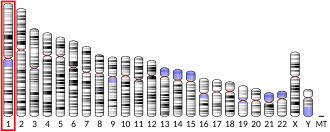
| SLC50A1 |
|---|
|
| Identifiers |
|---|
| Aliases | SLC50A1, HsSWEET1, RAG1AP1, SCP, SWEET1, slv, solute carrier family 50 member 1 |
|---|
| External IDs | OMIM: 613683; MGI: 107417; HomoloGene: 40647; GeneCards: SLC50A1; OMA:SLC50A1 - orthologs |
|---|
|
| Gene location (Mouse) |
|---|
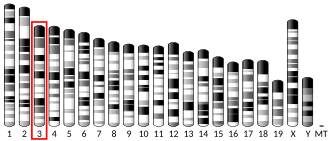 | | Chr. | Chromosome 3 (mouse)2 |
|---|
| | Band | 3 F1|3 39.04 cM | Start | 89,175,553 bp2 |
|---|
| End | 89,177,877 bp2 |
|---|
|
|
|
|
| Wikidata |
|
Sugar transporter SWEET1, also known as RAG1-activating protein 1 and stromal cell protein (SCP), is a membrane protein that in humans is encoded by the SLC50A1 gene.5 SWEET1 is the sole transporter from the SLC50 (SWEET) gene family present in the genomes of most animal species, with the exception of the nematode Caenorhabditis elegans, which has seven.6
SWEET1 is a broadly-expressed glucose transporter.6 As the SWEET family has been identified relatively recently, the full range of its functions in animals is not yet clear.7 However, the bovine SLC50A1 homologue is associated with lactose concentration in milk,8 and the CiRGA homologue in the sea squirt Ciona intestinalis is essential for tissue differentiation during embryogenesis, especially the development of the notochord.9
SWEET genes are common in plant genomes, with around twenty paralogues 6 functioning as both sucrose and hexose transporters, and are also associated with pathogen susceptibility.610
References
References
- GRCh38: Ensembl release 89: ENSG00000169241 – Ensembl, May 2017
- GRCm38: Ensembl release 89: ENSMUSG00000027953 – Ensembl, May 2017
- "Human PubMed Reference:". National Center for Biotechnology Information, U.S. National Library of Medicine.
- "Mouse PubMed Reference:". National Center for Biotechnology Information, U.S. National Library of Medicine.
- "Entrez Gene: Solute carrier family 50 (sugar efflux transporter), member 1".
- Feng L, Frommer WB (2015). "Structure and function of SemiSWEET and SWEET sugar transporters". Trends in Biochemical Sciences. 40 (8): 480–486. doi:10.1016/j.tibs.2015.05.005. PMID 26071195.
- Deng D, Yan N (2016). "GLUT, SGLT, and SWEET: Structural and mechanistic investigations of the glucose transporters". Protein Science. 25 (3): 546–558. doi:10.1002/pro.2858. PMC 4815417. PMID 26650681.
- Lopdell TJ, Tiplady K, Struchalin M, Johnson TJ, Keehan M, Sherlock R, Couldrey C, Davis SR, Snell RG, Spelman RJ, Littlejohn MD (2017). "DNA and RNA-sequence based GWAS highlights membrane-transport genes as key modulators of milk lactose content". BMC Genomics. 18 (1): 968. doi:10.1186/s12864-017-4320-3. PMC 5731188. PMID 29246110.
- Hamada M, Wada S, Kobayashi K, Satoh N (2005). "Ci-Rga, a gene encoding an MtN3/saliva family transmembrane protein, is essential for tissue differentiation during embryogenesis of the ascidian Ciona intestinalis". Differentiation. 73 (7): 364–376. doi:10.1111/j.1432-0436.2005.00037.x. PMID 16219040.
- Wright EM (2013). "Glucose transport families SLC5 and SLC50". Molecular Aspects of Medicine. 34 (2–3): 183–196. doi:10.1016/j.mam.2012.11.002. PMID 23506865.
Further reading
Further reading
- Barnhill JC, Stokes AJ, Koblan-Huberson M, Shimoda LM, Muraguchi A, Adra CN, Turner H (Mar 2004). "RGA protein associates with a TRPV ion channel during biosynthesis and trafficking". Journal of Cellular Biochemistry. 91 (4): 808–20. doi:10.1002/jcb.10775. PMID 14991772. S2CID 44629547.
- Pankratz N, Beecham GW, DeStefano AL, Dawson TM, Doheny KF, Factor SA, Hamza TH, Hung AY, Hyman BT, Ivinson AJ, Krainc D, Latourelle JC, Clark LN, Marder K, Martin ER, Mayeux R, Ross OA, Scherzer CR, Simon DK, Tanner C, Vance JM, Wszolek ZK, Zabetian CP, Myers RH, Payami H, Scott WK, Foroud T (Mar 2012). "Meta-analysis of Parkinson's disease: identification of a novel locus, RIT2". Annals of Neurology. 71 (3): 370–84. doi:10.1002/ana.22687. PMC 3354734. PMID 22451204.
- Chen LQ, Hou BH, Lalonde S, Takanaga H, Hartung ML, Qu XQ, Guo WJ, Kim JG, Underwood W, Chaudhuri B, Chermak D, Antony G, White FF, Somerville SC, Mudgett MB, Frommer WB (Nov 2010). "Sugar transporters for intercellular exchange and nutrition of pathogens". Nature. 468 (7323): 527–32. Bibcode:2010Natur.468..527C. doi:10.1038/nature09606. PMC 3000469. PMID 21107422.
- Tagoh H, Kishi H, Muraguchi A (Apr 1996). "Molecular cloning and characterization of a novel stromal cell-derived cDNA encoding a protein that facilitates gene activation of recombination activating gene (RAG)-1 in human lymphoid progenitors". Biochemical and Biophysical Research Communications. 221 (3): 744–9. doi:10.1006/bbrc.1996.0667. PMID 8630032.