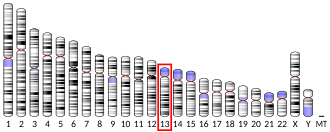
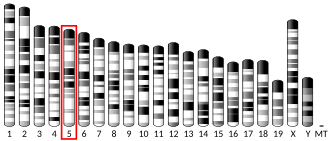
StAR-related lipid transfer domain protein 13 (STARD13) also known as deleted in liver cancer 2 protein (DLC-2) is a protein that in humans is encoded by the STARD13 gene and a member of the DLC family of proteins.56
Function and structure
STARD13 serves as a Rho GTPase-activating protein (GAP), a type of protein that regulates members of the Rho family of GTPases.7 It selectively activates RhoA and CDC42 and suppresses cell growth by inhibiting actin stress fiber assembly.7
The protein consists of an N-terminal sterile alpha motif (SAM) domain,8 a serine-rich domain, a RhoGAP domain and at the C-terminus, a StAR-related lipid-transfer domain (START).
Tissue distribution and pathology
The protein was identified in part through its differential expression in cancers. A low level of STARD13 was observed in less differentiated hepatocellular carcinoma tissue with higher RhoA expression. A small patient study finds that the absence of STARD13 in hepatocellular carcinomas correlates with higher levels of RhoA and a poorer prognosis than patients with carcinomas that were STARD13-positive.9
References
References
- GRCh38: Ensembl release 89: ENSG00000133121 – Ensembl, May 2017
- GRCm38: Ensembl release 89: ENSMUSG00000016128 – Ensembl, May 2017
- "Human PubMed Reference:". National Center for Biotechnology Information, U.S. National Library of Medicine.
- "Mouse PubMed Reference:". National Center for Biotechnology Information, U.S. National Library of Medicine.
- Couch FJ, Rommens JM, Neuhausen SL, Bélanger C, Dumont M, Abel K, Bell R, Berry S, Bogden R, Cannon-Albright L, Farid L, Frye C, Hattier T, Janecki T, Jiang P, Kehrer R, Leblanc JF, McArthur-Morrison J, Meney D, Miki Y, Peng Y, Samson C, Schroeder M, Snyder SC, Simard J (August 1996). "Generation of an integrated transcription map of the BRCA2 region on chromosome 13q12-q13". Genomics. 36 (1): 86–99. doi:10.1006/geno.1996.0428. PMID 8812419.
- "Entrez Gene: STARD13 START domain containing 13".
- Ching YP, Wong CM, Chan SF, Leung TH, Ng DC, Jin DY, Ng IO (March 2003). "Deleted in liver cancer (DLC) 2 encodes a RhoGAP protein with growth suppressor function and is underexpressed in hepatocellular carcinoma". The Journal of Biological Chemistry. 278 (12): 10824–30. doi:10.1074/jbc.M208310200. PMID 12531887.
- Li, Hongyan; Fung, King-Leung; Jin, Dong-Yan; Chung, Stephen S. M.; Ching, Yick-Pang; Ng, Irene Oi-lin; Sze, Kong-Hung; Ko, Ben C. B.; Sun, Hongzhe (2007-06-01). "Solution structures, dynamics, and lipid-binding of the sterile alpha-motif domain of the deleted in liver cancer 2". Proteins. 67 (4): 1154–1166. doi:10.1002/prot.21361. ISSN 1097-0134. PMID 17380510. S2CID 20407564.
- Xiaorong L, Wei W, Liyuan Q, Kaiyan Y (2008). "Underexpression of deleted in liver cancer 2 (DLC2) is associated with overexpression of RhoA and poor prognosis in hepatocellular carcinoma". BMC Cancer. 8 205. doi:10.1186/1471-2407-8-205. PMC 2496915. PMID 18651974.
Further reading
Further reading
- Ching YP, Wong CM, Chan SF, Leung TH, Ng DC, Jin DY, Ng IO (March 2003). "Deleted in liver cancer (DLC) 2 encodes a RhoGAP protein with growth suppressor function and is underexpressed in hepatocellular carcinoma". The Journal of Biological Chemistry. 278 (12): 10824–30. doi:10.1074/jbc.M208310200. PMID 12531887.
- Day CL, Puthalakath H, Skea G, Strasser A, Barsukov I, Lian LY, Huang DC, Hinds MG (February 2004). "Localization of dynein light chains 1 and 2 and their pro-apoptotic ligands". The Biochemical Journal. 377 (Pt 3): 597–605. doi:10.1042/BJ20031251. PMC 1223895. PMID 14561217.
- Nagaraja GM, Kandpal RP (January 2004). "Chromosome 13q12 encoded Rho GTPase activating protein suppresses growth of breast carcinoma cells, and yeast two-hybrid screen shows its interaction with several proteins". Biochemical and Biophysical Research Communications. 313 (3): 654–65. Bibcode:2004BBRC..313..654N. doi:10.1016/j.bbrc.2003.12.001. PMID 14697242.
- Colland F, Jacq X, Trouplin V, Mougin C, Groizeleau C, Hamburger A, Meil A, Wojcik J, Legrain P, Gauthier JM (July 2004). "Functional proteomics mapping of a human signaling pathway". Genome Research. 14 (7): 1324–32. doi:10.1101/gr.2334104. PMC 442148. PMID 15231748.
- Leung TH, Ching YP, Yam JW, Wong CM, Yau TO, Jin DY, Ng IO (October 2005). "Deleted in liver cancer 2 (DLC2) suppresses cell transformation by means of inhibition of RhoA activity". Proceedings of the National Academy of Sciences of the United States of America. 102 (42): 15207–12. Bibcode:2005PNAS..10215207L. doi:10.1073/pnas.0504501102. PMC 1250229. PMID 16217026.