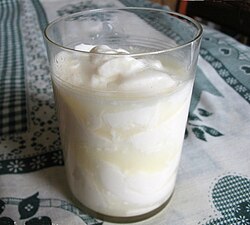
 Russian prostokvasha and Ukrainian kysliak, traditional fermented milk | |
| Main ingredients | Milk |
|---|---|
Soured milk, sour milk, spontaneously soured milk, or naturally soured milk is the milk product fermented with indigenous microorganisms (chiefly mesophilic lactic acid bacteria), as opposed to cultured milk of which the production involves controlled fermentation with starter cultures.1 Lactic acid produced by the bacteria causes milk to coagulate and thicken, inhibiting the growth of harmful bacteria and improving the product's shelf life.
Examples include amasi from southern Africa, clabber from Ireland, aludttej from Hungary, Dickmilch (thick milk) and Herbstmilch (autumn milk) from Germany, gruševina from Yugoslavia, rūgpienis from Lithuania, prostokvasha from Russia, laban rayeb from Egypt, maziwa lala from Kenya.
In recipes
Raw milk that has not gone sour is sometimes referred to as "sweet milk", because it contains the sugar lactose and lacks lactic acid. Fermentation converts the lactose to lactic acid, which has a sour flavor. Before the invention of refrigeration, raw milk commonly became sour before it could be consumed, and various recipes incorporate such leftover milk as an ingredient.
See also
See also
- Filmjölk – Traditional Swedish fermented milk product
- Acid-set cheese – Cheese set by souring
References
References
- Kurmann, Joseph A.; Rašić, Jeremija Lj; Manfred, Kroger (1992). Encyclopedia of Fermented Fresh Milk Products: An International Inventory of Fermented Milk, Cream, Buttermilk, Whey, and Related Products. New York: AVI Book. pp. 6, 271–273. ISBN 978-0-442-00869-7.