| SNCAIP | |||||||||||||||||||||||||||||||||||||||||||||||||||
|---|---|---|---|---|---|---|---|---|---|---|---|---|---|---|---|---|---|---|---|---|---|---|---|---|---|---|---|---|---|---|---|---|---|---|---|---|---|---|---|---|---|---|---|---|---|---|---|---|---|---|---|
| |||||||||||||||||||||||||||||||||||||||||||||||||||
| Identifiers | |||||||||||||||||||||||||||||||||||||||||||||||||||
| Aliases | SNCAIP, SYPH1, Sph1, synuclein alpha interacting protein | ||||||||||||||||||||||||||||||||||||||||||||||||||
| External IDs | OMIM: 603779; MGI: 1915097; HomoloGene: 3987; GeneCards: SNCAIP; OMA:SNCAIP - orthologs | ||||||||||||||||||||||||||||||||||||||||||||||||||
| |||||||||||||||||||||||||||||||||||||||||||||||||||
| |||||||||||||||||||||||||||||||||||||||||||||||||||
| |||||||||||||||||||||||||||||||||||||||||||||||||||
| |||||||||||||||||||||||||||||||||||||||||||||||||||
| |||||||||||||||||||||||||||||||||||||||||||||||||||
| Wikidata | |||||||||||||||||||||||||||||||||||||||||||||||||||
| |||||||||||||||||||||||||||||||||||||||||||||||||||
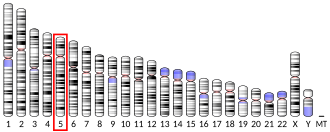



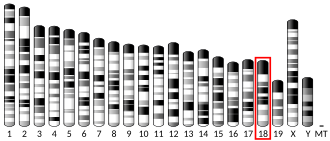


Synphilin-1 is a protein that in humans is encoded by the SNCAIP gene.56 SNCAIP stands for "synuclein, alpha interacting protein".
Synphilin-1 is a cytosolic protein first identified in 1999 as a novel binding partner of α-synuclein, localized within Lewy bodies in Parkinson's disease brain tissue.7 Experimental studies in mammalian cells and yeast demonstrated that co-expression of synphilin-1 with α-synuclein promotes the formation of cytoplasmic inclusions resembling Lewy bodies.7
Structure
The SNCAIP gene encodes synphilin-1, a multi-domain protein with a complex structure integral to neuronal function and implicated in neurodegenerative diseases. Structurally, synphilin-1 is composed of approximately 919 amino acids and is characterized by several functional domains, notably including six ankyrin repeats and a central coiled-coil domain spanning residues 510–557. These domains are typical protein-protein interaction motifs, facilitating synphilin-1's ability to interact with partner proteins such as alpha-synuclein (SNCA). SNCAIP binds to the N-terminal region of SNCA, allowing synphilin-1 to play a role in the formation of cytosolic inclusions mimicking Lewy bodies, which are hallmark features of synucleinopathies. The ankyrin repeats provide scaffolding for additional protein interactions, while the coiled-coil domain is crucial for the association with alpha-synuclein and possibly other synaptic or vesicular components.89
Function
SNCAIP encodes synphilin-1, a cytoplasmic protein that interacts with alpha-synuclein in neuronal tissue and is involved in a variety of physiological processes related to synaptic function and protein homeostasis. Synphilin-1 is developmentally localized to synaptic terminals and participates in the regulation of synaptic vesicle trafficking. It may act as a scaffold protein, contributing to cellular processes like protein degradation through the ubiquitin-proteasome system and autophagy. Experimental evidence suggests that binding of synphilin-1 to alpha-synuclein can modulate synaptic vesicle dynamics, potentially impacting neurotransmitter release and synaptic plasticity. Synphilin-1's cytoprotective effects include inhibiting mitochondrial dysfunction, reducing reactive oxygen species production, and promoting neuronal survival under certain conditions.10111213
Ubiquitination
Synphilin-1 undergoes ubiquitination. Parkin (an E3 ligase) modifies synphilin-1 and, together with α-synuclein, promotes the formation of ubiquitin-positive inclusion bodies.14 Mutations in parkin gene disrupt this activity. Additional E3 ligases, including SIAH1 and SIAH2, also ubiquitinate synphilin-1, influencing whether the protein is directed to proteasomal degradation or accumulates in inclusions.15 Inclusions containing α-synuclein and synphilin-1 share features with aggresomes, which may act to sequester misfolded proteins and limit cellular toxicity.16
Clinical significance
Clinically, synphilin-1 is heavily implicated in neurodegenerative diseases, particularly Parkinson's disease (PD). It serves as a major component of Lewy bodies—the pathological protein aggregates characteristic of PD—and contributes to the formation of these cytoplasmic inclusions. While wild-type synphilin-1 may help sequester potentially toxic protein aggregates, certain isoforms and mutants, such as synphilin-1A, are highly aggregation-prone and associated with neuronal toxicity and degeneration. Genetic variation and altered methylation of the SNCAIP gene are linked with increased vulnerability to PD and related synucleinopathies. Thus, synphilin-1 exerts complex effects on neuronal health, acting as both a potential protector and a contributor to disease pathology depending on its expression, isoform, and interaction context.17181319
Beyond Parkinson's disease, synphilin-1 has recently been implicated in glioblastoma. Transcriptomic and single-cell RNA sequencing analyses identified SNCAIP among histone lactylation related genes upregulated in glioblastoma, with elevated expression correlating with poorer patient survival.20 This has raised interest in synphilin-1 as a potential biomarker in cancer biology.
Interactions
SNCAIP has been shown to interact with:
References
References
- GRCh38: Ensembl release 89: ENSG00000064692 – Ensembl, May 2017
- GRCm38: Ensembl release 89: ENSMUSG00000024534 – Ensembl, May 2017
- "Human PubMed Reference:". National Center for Biotechnology Information, U.S. National Library of Medicine.
- "Mouse PubMed Reference:". National Center for Biotechnology Information, U.S. National Library of Medicine.
- Engelender S, Kaminsky Z, Guo X, Sharp AH, Amaravi RK, Kleiderlein JJ, et al. (May 1999). "Synphilin-1 associates with alpha-synuclein and promotes the formation of cytosolic inclusions". Nat Genet. 22 (1): 110–114. doi:10.1038/8820. PMID 10319874. S2CID 2611127.
- "Entrez Gene: SNCAIP synuclein, alpha interacting protein (synphilin)".
- Engelender S, Kaminsky Z, Guo X, Sharp AH, Amaravi RK, Kleiderlein JJ, et al. (May 1999). "Synphilin-1 associates with alpha-synuclein and promotes the formation of cytosolic inclusions". Nature Genetics. 22 (1): 110–114. doi:10.1038/8820. PMID 10319874.
- Siddiqui IJ, Pervaiz N, Abbasi AA (April 2016). "The Parkinson Disease gene SNCA: Evolutionary and structural insights with pathological implication". Scientific Reports. 6 24475. Bibcode:2016NatSR...624475S. doi:10.1038/srep24475. PMC 4832246. PMID 27080380.
- "SNCAP_HUMAN". UniProt. Q9Y6H5.
- Ribeiro CS, Carneiro K, Ross CA, Menezes JR, Engelender S (Jun 2002). "Synphilin-1 is developmentally localized to synaptic terminals, and its association with synaptic vesicles is modulated by alpha-synuclein". Journal of Biological Chemistry. 277 (26): 23927–23933. doi:10.1074/jbc.M201115200. PMID 11956199.
- Krüger R (Oct 2004). "The role of synphilin-1 in synaptic function and protein degradation". Cell Tissue Res. 318 (1): 195–199. doi:10.1007/s00441-004-0953-z. PMID 15322916. S2CID 12186058.
- Mirghani M. Synphilin-1 and its Effects on Pathogenesis of Parkinson's Synphilin-1 and its Effects on Pathogenesis of Parkinson's Disease (B.S. thesis). University of Connecticut.
- Shishido T, Nagano Y, Araki M, Kurashige T, Obayashi H, Nakamura T, et al. (January 2019). "Synphilin-1 has neuroprotective effects on MPP+-induced Parkinson's disease model cells by inhibiting ROS production and apoptosis". Neuroscience Letters. 690: 145–150. doi:10.1016/j.neulet.2018.10.020. PMID 30316984.
- Chung KK, Zhang Y, Lim KL, Tanaka Y, Huang H, Gao J, et al. (October 2001). "Parkin ubiquitinates the alpha-synuclein-interacting protein, synphilin-1: implications for Lewy-body formation in Parkinson disease". Nature Medicine. 7 (10): 1144–1150. doi:10.1038/nm1001-1144. PMID 11590439.
- Liani E, Eyal A, Avraham E, Shemer R, Szargel R, Berg D, et al. (April 2004). "Ubiquitylation of synphilin-1 and alpha-synuclein by SIAH and its presence in cellular inclusions and Lewy bodies imply a role in Parkinson's disease". Proceedings of the National Academy of Sciences of the United States of America. 101 (15): 5500–5505. Bibcode:2004PNAS..101.5500L. doi:10.1073/pnas.0401081101. PMC 397412. PMID 15064394.
- Tanaka M, Kim YM, Lee G, Junn E, Iwatsubo T, Mouradian MM (February 2004). "Aggresomes formed by alpha-synuclein and synphilin-1 are cytoprotective". The Journal of Biological Chemistry. 279 (6): 4625–4631. doi:10.1074/jbc.M310994200. PMID 14627698.
- Eyal A, Szargel R, Avraham E, Liani E, Haskin J, Rott R, et al. (April 2006). "Synphilin-1A: an aggregation-prone isoform of synphilin-1 that causes neuronal death and is present in aggregates from alpha-synucleinopathy patients". Proceedings of the National Academy of Sciences of the United States of America. 103 (15): 5917–22. Bibcode:2006PNAS..103.5917E. doi:10.1073/pnas.0509707103. PMC 1458673. PMID 16595633.
- Carvajal-Oliveros A, Dominguez-Baleón C, Sánchez-Díaz I, Zambrano-Tipan D, Hernández-Vargas R, Campusano JM, et al. (2023). "Parkinsonian phenotypes induced by Synphilin-1 expression are differentially contributed by serotonergic and dopaminergic circuits and suppressed by nicotine treatment". PLOS ONE. 18 (3) e0282348. Bibcode:2023PLoSO..1882348C. doi:10.1371/journal.pone.0282348. PMC 9977059. PMID 36857384.
- Dashtipour K, Tafreshi A, Adler C, Beach T, Chen X, Serrano G, et al. (June 2017). "Hypermethylation of Synphilin-1, Alpha-Synuclein-Interacting Protein (SNCAIP) Gene in the Cerebral Cortex of Patients with Sporadic Parkinson's Disease". Brain Sciences. 7 (7): 74. doi:10.3390/brainsci7070074. PMC 5532587. PMID 28653979.
- He W, Chen R, Chen G, Zhang L, Qian Y, Zhou J, et al. (2025). "Identification and Validation of Prognostic Genes Related to Histone Lactylation Modification in Glioblastoma: An Integrated Analysis of Transcriptome and Single-cell RNA Sequencing". Journal of Cancer. 16 (7): 2145–2166. doi:10.7150/jca.110646. PMC 12036088. PMID 40302809.
- Neystat M, Rzhetskaya M, Kholodilov N, Burke RE (June 2002). "Analysis of synphilin-1 and synuclein interactions by yeast two-hybrid beta-galactosidase liquid assay". Neurosci. Lett. 325 (2): 119–123. doi:10.1016/s0304-3940(02)00253-7. PMID 12044636. S2CID 11517781.
- Nagano Y, Yamashita H, Nakamura T, Takahashi T, Kondo E, Nakamura S (Dec 2001). "Lack of binding observed between human alpha-synuclein and Bcl-2 protein family". Neurosci. Lett. 316 (2): 103–107. doi:10.1016/s0304-3940(01)02330-8. PMID 11742726. S2CID 54363210.
- Kawamata H, McLean PJ, Sharma N, Hyman BT (May 2001). "Interaction of alpha-synuclein and synphilin-1: effect of Parkinson's disease-associated mutations". J. Neurochem. 77 (3): 929–934. doi:10.1046/j.1471-4159.2001.00301.x. PMID 11331421. S2CID 83885937.
- Chung KK, Zhang Y, Lim KL, Tanaka Y, Huang H, Gao J, et al. (October 2001). "Parkin ubiquitinates the alpha-synuclein-interacting protein, synphilin-1: implications for Lewy-body formation in Parkinson disease". Nat. Med. 7 (10): 1144–1150. doi:10.1038/nm1001-1144. PMID 11590439. S2CID 12487644.
Further reading
Further reading
- Engelender S, Wanner T, Kleiderlein JJ, Wakabayashi K, Tsuji S, Takahashi H, et al. (Sep 2000). "Organization of the human synphilin-1 gene, a candidate for Parkinson's disease". Mamm. Genome. 11 (9): 763–766. doi:10.1007/s003350010123. PMID 10967135. S2CID 22420090.
- Kawamata H, McLean PJ, Sharma N, Hyman BT (May 2001). "Interaction of alpha-synuclein and synphilin-1: effect of Parkinson's disease-associated mutations". J. Neurochem. 77 (3): 929–934. doi:10.1046/j.1471-4159.2001.00301.x. PMID 11331421. S2CID 83885937.
- Chung KK, Zhang Y, Lim KL, Tanaka Y, Huang H, Gao J, et al. (Oct 2001). "Parkin ubiquitinates the alpha-synuclein-interacting protein, synphilin-1: implications for Lewy-body formation in Parkinson disease". Nat. Med. 7 (10): 1144–1150. doi:10.1038/nm1001-1144. PMID 11590439. S2CID 12487644.
- O'Farrell C, Pickford F, Vink L, McGowan E, Cookson MR (Mar 2002). "Sequence conservation between mouse and human synphilin-1". Neurosci. Lett. 322 (1): 9–12. doi:10.1016/S0304-3940(02)00068-X. PMID 11958831. S2CID 9654263.
- Neystat M, Rzhetskaya M, Kholodilov N, Burke RE (Jun 2002). "Analysis of synphilin-1 and synuclein interactions by yeast two-hybrid beta-galactosidase liquid assay". Neurosci. Lett. 325 (2): 119–123. doi:10.1016/S0304-3940(02)00253-7. PMID 12044636. S2CID 11517781.
- Junn E, Lee SS, Suhr UT, Mouradian MM (Dec 2002). "Parkin accumulation in aggresomes due to proteasome impairment". Journal of Biological Chemistry. 277 (49): 47870–47877. doi:10.1074/jbc.M203159200. PMID 12364339.
- Ihara M, Tomimoto H, Kitayama H, Morioka Y, Akiguchi I, Shibasaki H, et al. (Jun 2003). "Association of the cytoskeletal GTP-binding protein Sept4/H5 with cytoplasmic inclusions found in Parkinson's disease and other synucleinopathies". Journal of Biological Chemistry. 278 (26): 24095–24102. doi:10.1074/jbc.M301352200. PMID 12695511.
- Ito T, Niwa J, Hishikawa N, Ishigaki S, Doyu M, Sobue G (Aug 2003). "Dorfin localizes to Lewy bodies and ubiquitylates synphilin-1". Journal of Biological Chemistry. 278 (31): 29106–29114. doi:10.1074/jbc.M302763200. PMID 12750386.
- Marx FP, Holzmann C, Strauss KM, Li L, Eberhardt O, Gerhardt E, et al. (Jun 2003). "Identification and functional characterization of a novel R621C mutation in the synphilin-1 gene in Parkinson's disease". Hum. Mol. Genet. 12 (11): 1223–1231. doi:10.1093/hmg/ddg134. PMID 12761037.
- Scherzer CR, Jensen RV, Gullans SR, Feany MB (Oct 2003). "Gene expression changes presage neurodegeneration in a Drosophila model of Parkinson's disease". Hum. Mol. Genet. 12 (19): 2457–2466. doi:10.1093/hmg/ddg265. PMID 12915459.
- Nagano Y, Yamashita H, Takahashi T, Kishida S, Nakamura T, Iseki E, et al. (Dec 2003). "Siah-1 facilitates ubiquitination and degradation of synphilin-1". Journal of Biological Chemistry. 278 (51): 51504–51514. doi:10.1074/jbc.M306347200. PMID 14506261.
- Tanaka M, Kim YM, Lee G, Junn E, Iwatsubo T, Mouradian MM (Feb 2004). "Aggresomes formed by alpha-synuclein and synphilin-1 are cytoprotective". Journal of Biological Chemistry. 279 (6): 4625–4631. doi:10.1074/jbc.M310994200. PMID 14627698.
- Lee G, Tanaka M, Park K, Lee SS, Kim YM, Junn E, et al. (Feb 2004). "Casein kinase II-mediated phosphorylation regulates alpha-synuclein/synphilin-1 interaction and inclusion body formation". Journal of Biological Chemistry. 279 (8): 6834–6839. doi:10.1074/jbc.M312760200. PMID 14645218.
- Chung KK, Thomas B, Li X, Pletnikova O, Troncoso JC, Marsh L, et al. (May 2004). "S-nitrosylation of parkin regulates ubiquitination and compromises parkin's protective function". Science. 304 (5675): 1328–1331. Bibcode:2004Sci...304.1328C. doi:10.1126/science.1093891. PMID 15105460. S2CID 86854030.