| Smile | ||||
|---|---|---|---|---|
 One of the covers prepared by Capitol's art department; illustration by Frank Holmes | ||||
| Studio album (unfinished) by | ||||
| Recorded |
| |||
| Studio |
| |||
| Genre | ||||
| Producer | Brian Wilson | |||
| The Beach Boys recording chronology | ||||
| ||||
Smile (stylized as SMiLE)1 is an unfinished album by the American rock band the Beach Boys, conceived as the follow-up to their 1966 album Pet Sounds. The project—a concept album involving themes of Americana, humor, youth, innocence, and the natural world—was planned as a twelve-track LP assembled from modular fragments, the same editing process used on their single "Good Vibrations". After a year of recording, the album was shelved and a downscaled version, Smiley Smile, was released in September 1967. The original project came to be regarded as the most legendary unreleased album in popular music history.23
The album was produced and primarily composed by Brian Wilson with guest lyricist and assistant arranger Van Dyke Parks, together envisioning the project as a Rhapsody in Blue–influenced riposte to contemporary rock trends and the British Invasion. Wilson touted Smile as a "teenage symphony to God", intended to surpass Pet Sounds and inaugurate the band's Brother Records imprint. Consuming over 50 hours of tape across more than 80 recording sessions, its content ranged from musical and spoken word to sound effects and role-playing. Its influences spanned mysticism, classical music, ragtime, pre–rock and roll pop, jazz, doo-wop, musique concrète, and cartoons. Planned elements included word paintings, tape manipulation, acoustic experiments, comedic interludes, and the band's most challenging and complex vocals to this point. The projected lead singles were "Heroes and Villains", about early California history, and "Vega-Tables", a promotion of organic food.
Numerous issues, including legal entanglements with Capitol Records, Wilson's uncompromising perfectionism and mental instabilities, as well as Parks' withdrawal from the project in early 1967, delayed the album. Most tracks were produced between August and December 1966, but few were finished, and its structure was never finalized. Fearing the public's reaction, Wilson blocked its release. A mythology bolstered by journalists present at the sessions soon surrounded the project. Long the subject of debate and speculation over its tracks and sequencing, Wilson's unfulfilled ambitions inspired many musicians and groups, especially those in indie rock, post-punk, electronic, and chamber pop genres.
Smile was reported to be half-finished before pared-down versions of six tracks were issued on Smiley Smile; further material was reworked into new songs such as "Cool, Cool Water". From 1968 to 1971, three additional tracks—"Our Prayer", "Cabinessence" and "Surf's Up"—were completed by the band. Since the 1980s, extensive session recordings have circulated widely on bootlegs, allowing fans to assemble hypothetical versions of a finished album, adding to its legacy as an interactive project. In 2004, Wilson, Parks, and Darian Sahanaja rearranged Smile for live performances, billed as Brian Wilson Presents Smile, which Wilson later adapted into a solo album. He considered this version to be substantially different from his original vision.4 The 2011 compilation The Smile Sessions included the first official approximation of the Beach Boys' completed album and received universal acclaim.
Background
By the end of 1965, having withdrawn from concert tours, Wilson had distanced himself from his bandmates5 and networked further within the Los Angeles music scene6 while increasingly using drugs such as marijuana, LSD (or "acid"), and Desbutal.7nb 1 He forged a close relationship with Loren Schwartz, an aspiring talent agent,8 and sought to make the Beach Boys' eleventh studio album, Pet Sounds, a clear departure from previous releases.9nb 2 He opted not to work with his usual lyricist, bandmate Mike Love, and instead collaborated mainly with jingle writer Tony Asher,9 at Schwartz's recommendation.11 In December of that year, Byrds member David Crosby introduced Wilson to Van Dyke Parks,12 a songwriter, arranger, session musician, and former child actor who had relocated to Los Angeles in the early 1960s13 to play in local folk revival scenes.14

On February 17, 1966, Wilson began recording "Good Vibrations", first intended for Pet Sounds but later excluded due to his dissatisfaction with the initial recording, experimenting with several arrangements until April.15 On May 4, during the fourth session for "Good Vibrations", he began recording the track in sections rather than as one continuous performance, intending to splice the segments together later.16nb 3 Through 1966, Parks briefly signed with MGM Records, who released his first two singles, and played on albums by the Byrds and other acts, after which his activity centered on select Warner Bros. pop groups.18
Through Parks19 or Bruce Johnston,20 Wilson was introduced to former Beatles press officer Derek Taylor, soon recruited as the Beach Boys' publicist21 and initiator of a promotional campaign that branded Wilson as a pop "genius".22 Pet Sounds was released on May 16 and immediately became a landmark album for its sophisticated orchestral arrangements and its role in positioning the Beach Boys among top rock innovators.2 In the U.S., the album confused their fans and sold worse than previous Beach Boys releases, whereas the British embraced it warmly.23 This UK success encouraged Wilson to take greater creative risks and convinced Capitol Records to support his next ambitious project.24
Collaboration and surrounding milieu
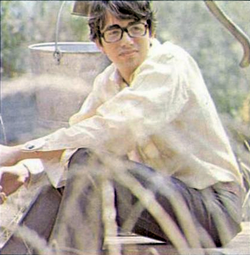
In mid-July 1966, Wilson reconnected with Parks at a house party hosted by Byrds producer and Johnston collaborator Terry Melcher.25nb 4 Impressed by his articulate manner, Wilson, seeking a new lyricist, later offered him a collaboration on the Beach Boys' next album.26nb 5 Between July and September,29 the pair composed numerous songs at Wilson's Beverly Hills home.30 Originally titled Dumb Angel, the project was retitled to Smile by September,31 and writing sessions continued throughout October and November.32 They usually worked late at night to suit Wilson's schedule; Parks remained on call for writing sessions and, as the project intensified, he and his wife Durrie often slept at Wilson's house.33
Like Asher, Parks had limited experience in lyric writing, and Wilson was largely unaware of his collaborator's musical background.34nb 6 Wilson recalled that their writing sessions typically began with a rhythm pattern from Parks, which he would then develop into a melody before Parks immediately drafted lyrics.37 Wilson rarely altered a word.38 According to Durrie, "It was fairly evenly balanced. Brian was very deferential to Van Dyke. He never gave up his own point of view and neither did Van Dyke, and I think that's why the collaboration was so strong."39 Wilson credited him with inspiring "me to come up with new licks and new melodic ideas".37 Parks occasionally performed on Smile recordings but stated that he did not originate any musical material and played only when directed.40nb 7
All of a sudden it wasn't just Brian and me in a room; it was Brian and me and David Anderle and Michael Vosse and Loren Schwartz and Terry Sachen and all kinds of self-interested people pulling him in various directions.
Their collaboration was increasingly influenced by Wilson's expanding social circle,41 a group he regularly solicited for feedback.42nb 8 Biographer Steven Gaines characterized Wilson's circle as a mix of both exploitative individuals and those who were "talented" and "industrious".43 This included MGM talent scout David Anderle44 and his client, singer Danny Hutton, who had performed with Parks; Hutton later introduced Parks to Anderle, who soon became his manager.45nb 9 Michael Vosse, a magazine reporter48 and college friend of Anderle, was introduced to Wilson by Parks49 and tasked by Taylor to interview him for the forthcoming release of "Good Vibrations". The day after their meeting, Wilson called Vosse and offered him a job recording natural sounds.48 Many of these individuals, later dubbed "the Vosse Posse" by Beach Boys fans,50 became regulars at Wilson's home and during studio sessions.51 Turtles singer Mark Volman, who was also introduced to Wilson by Hutton,52 later remarked that his association had felt akin to being a "groupie for Brian".53

Journalists were similarly integrated into this milieu.54 Paul Jay Robbins, from the Los Angeles Free Press and a New Left political activist involved in the 1966 Sunset Strip curfew riots, met Parks at Byrds concerts, which led to his inclusion in Wilson's circle.49 Paul Williams, the 18-year-old founder and editor of Crawdaddy!,55 expressed admiration for Pet Sounds and "Good Vibrations", and subsequently visited Wilson at his home at Christmas 1966 before returning to New York.56 Jules Siegel, from The Saturday Evening Post,55 was introduced to Wilson by Anderle57 and accompanied him at his home and in the studio for two months.58 Richard Goldstein, the first rock critic from The Village Voice, and Lawrence Dietz, from New York magazine,59 was also among those involved.55
Anderle said, "Smile was going to be a monument. That's the way we talked about it, as a monument."60 Journalist Nick Kent, writing in 1975, believed that the reliability of figures such as Anderle, Siegel, and Vosse had been compromised by claims "so lavish [that] one can be forgiven, if only momentarily, for believing that Brian Wilson had, at that time orbited out to the furthermost reaches of the celestial stratosphere for the duration of this starcrossed project."61 Gaines, in 1986, acknowledged that the "events surrounding the album" varied so greatly by individual perspective that the facts remain uncertain,62 while Williams stated that he, Wilson, Anderle, Parks, Taylor, and other journalists were "very stoned", which may have affected their perception of events.63
Inspiration and scope
Wilson originally planned several projects—including a sound effects collage, a comedy album, and a "health food" album64—but Capitol's lack of support for these ideas spurred the Beach Boys to form their own label, Brother Records.65nb 10 Anderle stated that it was "important" to recognize that the Smile recordings defied any attempt at consolidation, as Wilson's ideas ranged from concepts for an elemental-themed suite to "humor albums", originally separate from Smile, which was intended as "the culmination of all of [his] intellectual occupations".69 Hutton disputed the notion that Wilson had a fully formed album in mind, stating, "I think he created all this music at a certain period, and if it had been all packaged at the time, it would have been called SMiLE ... But I never heard him say, 'My next album is going to be called SMiLE''."70 Journalist Tom Nolan, present at the sessions, later reported that Wilson's expansive ideas included an album constructed from "sound effects" with "chords spliced together through a whole LP". Nolan further observed that when Wilson briefly turned his attention to films, it appeared he could "capture more" in his art, explaining, "If you couldn't get a sound from a carrot, you could show a carrot. He would really liked to have made music that was a carrot."64
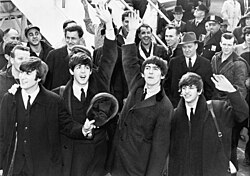
Smile was conceived to be explicitly American in style and subject matter, a deliberate riposte to the British influences that dominated contemporary rock music.72nb 11 Wilson said that he had aimed to "Americanize" both early and mid-America, much as George Gershwin "Americanized" jazz and classical music.4 According to Parks, Gershwin's 1924 composition Rhapsody in Blue encapsulated a "musical kaleidoscope" of America, a quality that both he and Wilson sought to emulate.74 He explained that they "wanted to investigate [...] American images" and slang, deliberately taking a "gauche route" to counter the era's pervasive British fixation.75 Many artists had adopted British inflections to mimic the Beatles' style; in Parks' description, Wilson faced no other alternative but to combat these developments, as he was effectively "the last man standing".71
Numerous authors state that Wilson intended Smile as a response to the Beatles' August 1966 release Revolver.7677nb 12 Parks recalled Wilson afforded little attention to the Beatles' concurrent output and "was more taken by [their surrounding] mania".82 In a 2004 interview, Wilson mentioned that while the 1965 album Rubber Soul had inspired his artistic ambitions with Pet Sounds, Smile was meant to be "something more advanced" than pop music and incomparable to the Beatles.29

The project was also inspired by Wilson's growing interest in subjects such as astrology, numerology and the occult.83nb 13 His library reportedly included works spanning poetry, prose, and cultural criticism—such as Arthur Koestler's The Act of Creation (1964), which he frequently cited—alongside texts on non-Christian belief systems such as Hinduism (from the Bhagavad Gita), Confucianism (via the I Ching), Buddhism, and Subud.85nb 14 These works promoted practices like meditation and vegetarianism, in which Wilson took interest.87 Wilson, in 2005, described his engagement with metaphysics as "crucial" and The Act of Creation as pivotal: "It turned me on to very special things [...] people attach their egos to their sense of humor before anything else."88 Vosse recalled Wilson stating that "laughter was one of the highest forms of divinity" and that he had intended to create "a humor album";8990 Vosse later surmised that Smile would have manifested as a "sophisticated" Southern California-inspired gospel album, reflecting Wilson's "own form of revival music."89
Psychedelic music will cover the face of the world and color the whole popular music scene. Anybody happening is psychedelic.
Jules Siegel recalled Wilson, during one evening in October 1966, announcing to friends his intent to create a "teenage symphony to God",92 also describing a shift toward a "white spiritual sound" he believed would define music's future.93 Wilson cited the Beatles' latest work as part of a broader "religious" movement in music, stating, "That's where I'm going. It's going to scare a lot of people."93 That November, Nolan reported Wilson's artistic shift stemmed from a prior psychedelic experience, though Wilson later stated he would not take LSD again.94 Asked about music's trajectory, Wilson predicted "White spirituals [...] Songs of faith."95nb 15
Wilson said that the album's original working title, Dumb Angel, was discarded after the group opted for a "more cheery" alternative.99 His brother Carl explained in early 1967 that the final title, Smile, had reflected the band's focus on spirituality and "spreading goodwill, good thoughts and happiness".100nb 16
Themes and lyrics
Wilson said that after the emotionally intense and personal nature of Pet Sounds, he sought a less direct approach to lyrics through his collaboration with Parks.27 He maintained a hands-off role in the album's thematic direction: "Van Dyke had a lot of knowledge about America. ... We wanted to get back to basics and try something simple. We wanted to capture something as basic as the mood of water and fire."29nb 17 Parks' lyrics employed wordplay, allusions, and quotations;102 he stated a focus on the "power of words" over wordplay103 and word choices open for multiple interpretations.104 Although Smile is identified as a concept album, the surviving recordings lack a structured narrative and instead weave disparate themes.24 Parks rejected the "concept album" framing and stated the project aimed to employ "American vernacular" amid prevailing "soundalike Beatle-esque music around."105
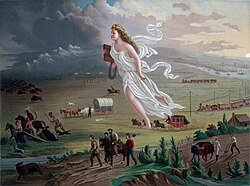
Parks characterized his lyrical approach to Smile as accommodating Wilson's fragmentary musical ideas, which he described as "short spasms of enthusiasm" and disconnected sections that collectively embodied a "cartoon consciousness".107 He pursued impressionistic vignettes depicting a range of archetypal scenarios and symbols tied to American history,108 spanning railroads and automobiles to Western colonialism's impact on Native American communities.72 According to Parks, it was "important to capture the westward movement, the conquering of this continent and beyond [...] with some anecdotes and snapshots".109 Scholar Darren Reid surmised that the album's historical Americana was a deliberate counterpoint to the Beach Boys' earlier hedonistic themes, arguing that its mood incorporated humor, sarcasm, and introspection rather than overt happiness, with the titular "smile" suggesting irony.110
There is a wealth of material that diverges from this purported Americana focus, according to musicologist Marshall Heiser.11124nb 18 This included themes of physical fitness, childhood, and the natural environment.112 Themes of spirituality and childhood permeate songs like "Wonderful", "Child Is Father of the Man", and "Surf's Up",112 though only "Wonderful" explicitly references God.113 Parks acknowledged spirituality's "inescapable" role in Smile but avoided overt religious lyrics to avoid appearing "uppity".114 He reflected that the album grappled with questions of belief familiar to Wilson's and his own religious upbringings: "What should we keep from [...] the hard-wiring we had with religion? [...] There's a lot of thinking about belief."115 In 2011 interviews, Wilson described Smile as embodying themes of childhood, freedom, and resistance to adult conformity, saying its message was "Adults keep out. This is about the spirit of youth."111116 When a journalist characterized the album as "impressionistic psychedelic folk rock" that captures childhood's "psychedelic magic", Wilson endorsed the description.117
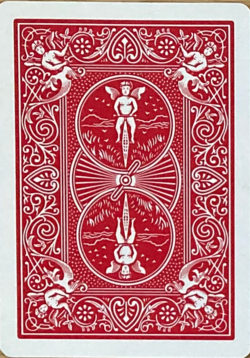
A recurring melodic and rhythmic motif, sometimes called the "Bicycle Rider" theme, was configured into several tracks.119 The lyric references 19th-century "Rider Back" playing cards by the United States Playing Card Company, which depicted angelic cupids on bicycles, and were commonly used in American social settings, including saloon bars.118 Parks commented, "A lot of people misinterpreted that, but that's OK; it's OK not to be told what to think, if you're an audience."103nb 19
Music and production
Modular approach and stylistic range
Smile has been described by various commentators as a work of art pop,124125 psychedelic rock,126127 avant-pop,128129 progressive pop,130 experimental rock,131 folk rock,117132 musique concrète,13313424 and Americana music.135 The sessions generated over 50 hours of recordings, spanning music, spoken word, sound effects, and role-play. Many segments functioned as word paintings, evoking imagery of physical entities or settings.13624 Ethnomusicologist David Toop likened Wilson's style to "cartoon music and Disney influence mutating into avant-garde pop",137 while Heiser argued the album defies singular categorization, instead comprising a "complex, nebulous macrocosm" of disparate elements. These included Renaissance-style chromatic vocal arrangements (similar to a Carlo Gesualdo vocal motet), aquatic chants ("swim swim fishy"), Wild West film score pastiches, cartoonish caveman gutturals, a feigned "group orgasm", and surreal skits ranging from a man trapped inside a microphone to a group of French horns mimicking speech and laughter.13824
We did things in sections. There might just be a few bars of music, or a verse, or a particular groove, or vamp [...] They would all fit. You could put them one in front of the other, or arrange it in any way you wanted. [...] It was sort of like making films I think.
Unlike the 1960s norm of single-take recordings,139 Wilson had employed tape splicing techniques as early as 1964 to refine vocal performances, a method that evolved into his modular recording process for "Good Vibrations" and Smile.140nb 20 This approach, akin to film editing's "dangling causes" (unresolved elements bridging sequential scenes), allowed flexible rearrangement during production.142 The album's material underwent daily revisions and rearrangements; Anderle recalled instances where sections from "Cabin Essence" were repurposed into tracks like "Vega-Tables", leading him to "beg Brian not to change a piece of music because it was too fantastic".54
The work drew from pop culture elements that many 1960s rock musicians had viewed as antiquated, including doo-wop, barbershop, ragtime, exotica, cowboy film motifs, and pre-rock 'n' roll pop.144 According to Parks, Smile was intended as a distinctly American testament of belief, a purpose he felt was best achieved by deliberately opposing prevailing countercultural trends.145 He acknowledged that he and Wilson had incorporated elements of musique concrète; tape jumpcuts were used as deliberate compositional tools,133 and the abrupt effect it created effectively broke what Heiser terms "the audio 'fourth wall'".13424nb 21 The material also incorporated jazz, classical tone poems, yodeling, cartoon sound effects,146 Sacred Harp singing, Shaker hymns, Native American chants, and Hawaiian mele.141 Wilson later stated his intent to avoid conventional rock instrumentation in favor of original approaches,29 and, in a late 1966 NME article, was quoted in reference to the forthcoming album, "I'd call it contemporary American music, not rock 'n' roll. Rock 'n' roll is such a worn out phrase. It's just contemporary American."147 He additionally reconfigured older songs—"Gee", "I Wanna Be Around", "The Old Master Painter", and "You Are My Sunshine".148
Wilson, in 2004, felt that Smile transcended pop conventions, crediting Bach's use of simple forms to build intricate compositions as an inspiration.29 Citing Smile as an example of "a large-scale choral work on sacred or historical themes", musicologist Daniel Harrison categorized the collection of songs as an oratorio, with only portions aligning with a pop LP.149 Toop identified a range of "contradictory templates" embedded within its "music legacy" as well as parallels between Miles Davis and Gil Evans' collaborations and the atmosphere of tracks like "Look" and "Child Is Father of the Man", while comparing the album's acoustic experimentation to Charles Ives' avant-garde techniques, Les Baxter's thematic LPs, and Richard Maxfield's electronic experiments.141nb 22 Toop further suggested that Smile's structure could be interpreted as a series of tone poems indirectly related to the principles of Third Stream, a notion reminiscent of Charles Mingus's term "jazzical".141
While tracks such as "Heroes and Villains" and "Surf's Up" approached traditional verse-chorus frameworks, others were shorter vignettes,74 and due to the fragmented, incomplete nature of the recordings, the boundaries between individual songs remain ambiguously defined.24 The mid-1960s tape-editing process required physically cutting and splicing reels, a method that proved unsustainable for compiling a full-length album.15024 Mark Linett, who engineered Wilson's recordings after the 1980s, argued Wilson's modular approach exceeded the limitations of pre-digital technology, given the "infinite" permutations for assembling fragments.151 Brother Records archive manager Alan Boyd concurred, calling it "probably an unbearably arduous, difficult and tedious task".152
Orchestrations and musical architecture
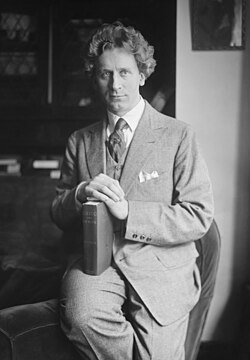
Matching the harmonic sophistication present in Pet Sounds,153 Smile extended Wilson's orchestral approach with larger focus on traditional American instruments like banjo, steel guitar, and tack piano154 in addition to textures such as a piano with muted strings, tic-tac bass, bass harmonica, and bouzouki.141 Al Jardine described the music as increasingly textural and vocally dynamic, with "esoteric chord changes" and discrete movements requiring distinct sessions: "Each movement had its own texture."155 While Pet Sounds introduced rhythmic experimentation distinct from the Beach Boys' earlier work, Smile amplified this complexity.15624 Harpsichords and tack piano, typically played in unison, are prominent alongside mallets and unconventional percussion.13824 Parks recalled being impressed in the studio by Wilson's use of "tuneful percussion", which he associated with early 20th-century orchestrations such as Percy Grainger's "Country Gardens".91nb 23
The album's vocal arrangements employed varied pitch centers, antiphonal exchanges, rhythmic shifts, cyclical repetitions, contrasts between legato and staccato phrasing, and other effects uncommon in mid-1960s rock.13824 Musician Brian Torff identified choral-style arrangements and a rhapsodic Broadway influence,159 while Toop characterized some vocals as regressing into "baby talk".141 According to Williams, the songwriters had favored phonetic texture over literal meaning,160 an approach Freaky Trigger likened to experimental artists like Sun Ra and John Cage. The journal's contributor framed this as an avant-garde reworking of doo-wop, a style formative among the group's influences.161
Contrasting the musical architecture of Smile with Pet Sounds, musicologist Philip Lambert writes that the latter achieved unity through subtle harmonic and melodic parallels between tracks, while Smile relied on overt thematic variations interwoven into a continuous narrative.163 It also integrated recurring harmonic elements such as the "bicycle rider" motif, recurring in evolving forms to establish cohesion, a four-note motif resembling the "How Dry I Am" melody (scale degrees 5–1–2–3,) and shared chord progressions across songs.164nb 24 In discussing its "musical language", he referred to Gershwin's Rhapsody in Blue as a structural model, particularly its thematic development and use of variation; Wilson adopted variation as a central structural device for Smile, expanding from earlier Beach Boys songs like "Fun, Fun, Fun" (1964), which modified verses through layered vocals and arrangements.163 Williams writes that the motif eroded traditional song distinctions, eschewing the narrative coherence typical of rock opera,119 a term Wilson later adopted for the work.167
Tracks
Listed on Wilson's late-1966 note
By November 1966, Wilson had declared Smile would feature "Good Vibrations", "Heroes and Villains", and ten other tracks, incorporating both musical and spoken humor. He clarified it was not a comedy album, with spoken elements limited to brief interjections between verses rather than standalone tracks.168 On December 15, he submitted a handwritten provisional track list to Capitol to address delays in the album's release.169nb 25 The label produced sleeves listing "Good Vibrations", "Heroes and Villains", and ten other tracks with the notation "see label for correct playing order", while preliminary mixes were created for multiple songs.169171
"Heroes and Villains" marked Wilson's first collaboration with Parks. Wilson envisioned the track as a three‐minute musical comedy intended to surpass "Good Vibrations"172 and produced versions lasting six to eight minutes.173 He selected the title and linked the melody to the Old West, which reminded Parks of Marty Robbins' "El Paso" (1959). Parks promptly devised the opening line: "I've been in this town so long that back in the city I've been taken for lost and gone and unknown for a long, long time."174 This collaboration spurred additional Old West–themed songs, including "Barnyard" and "I'm in Great Shape".175 On November 4, 1966, Wilson recorded a piano demonstration of "Heroes and Villains" incorporating sections of "I'm in Great Shape" and "Barnyard", although the December note listed "I'm in Great Shape" as a separate track.176 Vosse recalled that "Barnyard" had evolved from an impromptu piano reinterpretation of "You Are My Sunshine" that sparked Wilson's concept for a rustic barnyard aesthetic.89 Wilson recorded a short medley, sometimes called "My Only Sunshine", that bridged "The Old Master Painter" with "You Are My Sunshine",177 with Dennis Wilson singing lead on the latter.147nb 26 In 1978, Wilson told biographer Byron Preiss about an uncompleted "Barnyard Suite" of four brief pieces.103
"Surf's Up" was Wilson and Parks' second collaboration,180 composed primarily in one night while under the influence of Desbutal.154 Wilson referenced the song's atypical minor-seventh opening chord progression and its title, unrelated to surfing, stating: "from there it just started building and rambling".114 Vosse, writing in 1969, described it as the intended climactic finale of Smile, preceded by a "choral amen" segment.89 "Child Is Father of the Man" blends keyboards, trumpet, vocal rounds, and reverberant guitar drones.148 Parks stated the title, borrowed from William Wordsworth's "My Heart Leaps Up", reflected Wilson's aspiration to redefine his identity beyond youth.181nb 27
"Cabin Essence" addresses railroad themes;183 biographer Jon Stebbins characterized the track as containing a waltz-like chorus with percussive effects resembling rail spikes and "some of the most haunting, manic, evil-sounding music the Beach Boys ever made".184 "Do You Like Worms?" explores themes of American recolonization, though its extant lyrics do not reference worms185nb 28
Marilyn recalled that Wilson composed "Wind Chimes" after observing wind chimes they had purchased and hung outside their home.188nb 29 "Wonderful" similarly derived from Wilson's nickname for Marilyn.113 Parks described the music as distinct from their other work, leading him to conceive a love song with "boy/girl" lyrics.189 Three incomplete arrangements were recorded between August and December 1966.190 Wilson, in 1967, described "Vega-Tables" as promoting healthy eating with humor to avoid being "pompous about it".177 The track marked Parks' final co-writing contribution to the album.191nb 30

"The Elements" was conceived as a four-part suite structured around the classical elements: Fire, Water, Air, and Earth.193 Anderle recounted Wilson's immersion in natural environments to inspire the work, including trips to Big Sur, mountains, beaches, and water sources.194 To capture water sounds for the project, Wilson tasked collaborators with using a Nagra tape recorder. Vosse recalled, "I'd come by to see him every day, and he'd listen to my tapes and talk about them. [...] And I had no idea what he was listening for!"195 The "Fire" segment (also known as "Mrs. O'Leary's Cow" and "The Elements – Part 1"193) involved unusual studio conditions where participants wore toy fire helmets and burned wood for ambiance, with crackling sounds mixed into the track.196193
Anderle stated that while Wilson outlined concepts for fire, water, and air, the group lacked a cohesive structure beyond viewing it as operatic.194 Parks recalled the elemental theme emerged later in production.197 Early album artwork grouped "Vega-Tables" under "The Elements", though Wilson's note listed them separately alongside "Wind Chimes".198 In 1978, Wilson stated that "Air" remained an unfinished piano piece.199
Remaining tracks
"Our Prayer", a wordless hymn intended as the album's opener,200 was distinguished by Lambert as "every technique of chromatic harmony [Wilson] had ever heard or imagined."201 Session tapes capture Wilson designating the album's introduction, dismissing Jardine's suggestion to treat it as a standalone track.202 It remains the only track with confirmed placement.171
"I Wanna Be Around", a cover of the Sadie Vimmerstedt and Johnny Mercer standard, was recorded post-"Fire" sessions alongside the intended segue piece "Friday Night".193 During the session, Wilson directed musicians to simulate construction sounds (sawing, drilling) using tools, resulting in a recording known as "Workshop", "Woodshop", or "The Woodshop Song".203nb 31 Wilson's conceptualization of the track and its noises ("Workshop") symbolized a "rebuilding after the fire", according to Priore, suggesting that the track might have been placed in sequence after "Fire".198
"I Ran" (alternately titled "Look") shares melodic elements with "Good Vibrations"204 and features upright bass, vibraphones, brass, and keyboards.205 Vocals recorded in October 1966 were lost.186nb 32 "He Gives Speeches" was a minor fragment that, according to Lambert, served as a thematic variation on Wilson's recent material, designed to interlink tracks through "cross-references" for the developing concept album.165nb 33 "You're Welcome" is a reverb-drenched vocal chant.207nb 34 "Love to Say Dada", according to Preiss, formed part of the water-themed section of "The Elements" and was "briefly considered" to be paired with "Surf's Up".208nb 35
The instrumental "Holidays" was sometimes mislabeled on bootlegs as "Tones" or "Tune X".209nb 36 In early 1967, Carl and Dennis Wilson recorded individually written pieces: Dennis' "I Don't Know" on January 12 and Carl's "Tune X" (later "Tones") on March 3 and 31.212 Badman speculated these recordings may have been intended either to transform Smile into a group effort rather than a Brian solo project or simply to allow Carl and Dennis to test their production skills.213
"Psycodelic Sounds" and other recordings
Brian was consumed with humor at the time and the importance of humor. He was fascinated with the idea of getting humor onto a disc and how to get that disc out to the people.
Compiled under the title "Psycodelic Sounds" [sic],50 Wilson conducted numerous sessions focused on capturing "humorous" situations.186 This resulted in hours of recordings created with his friends while they chanted, played games, staged mock arguments, or engaged in casual conversation, described by biographer Peter Ames Carlin as "just like the old days with his Wollensak recorder, except much, much weirder."214 His bandmates were absent from these sessions.50nb 37
A collection of tapes with titles such as "Basketball", "Chewing Terry's", "Kid at Fairfax", "Tea Pot", and "Water Hose" were recorded on October 4, 1966.216 Recordings from the "Psycodelic Sounds" experiments included sound effects such as exaggerated breathing, moans, and laughter,157 and pronounced echo effects.217 An audio vérité segment titled "Bob Gordon's Real Trip" initially presents a routine conversation with a Chicago taxi driver, which abruptly transitions into surreal audio manipulation as the driver's voice becomes heavily drenched in spring reverb.157
One 24-minute exercise, recorded on October 18, featured Wilson, his sister-in-law Diane Rovell, Parks, Anderle, Vosse, Siegel, and a woman named Dawn. Siegel initiates the party game Lifeboat, where participants roleplay shipwreck survivors debating whom to sacrifice.186 Tensions escalate, culminating in Wilson lamenting, "I feel so depressed. [...] I'm too down to smile."202 Another session (November 4, 1966) included Wilson, Parks, Hutton, Vosse, and a participant named Bob218 ordering from a psychedelic ice cream van playing a piano-simulated music box version of "Good Vibrations".214 Wilson initiated a comedic routine about falling into a piano and microphone, followed by group chants of phrases like "Where's my beets and carrots?" and "I've got a big bag of vegetables" over bongo rhythms.218 Parks later reflected on withdrawing from such interactions, perceiving them as "destructive".214 On November 16, Wilson staged arguments between Vosse and studio drummer Hal Blaine, a recording reportedly intended for potential inclusion in the "Vegetables" track.219
Early in 1967, Wilson recorded a series of novelty songs with photographer Jasper Daily: "Teeter Totter Love", "Crack the Whip", and "When I Get Mad I Just Play My Drums".220nb 38 The AFM contracts for these tracks list "Brother Records" as the employer.222 These recordings were intended to fulfill Wilson's separate "humor album" concept, according to Gaines.65
Artwork and packaging

Capitol assigned Smile the catalog number DT2580 and produced at least two slightly varied album jackets.223 The album was to include cover artwork and a booklet of pen-and-ink drawings by graphic artist Frank Holmes, a friend of Parks.99 Holmes met with Wilson and Parks around June 1966, basing his work on lyric sheets provided by them, and completed his contributions by October.135nb 39 Parks felt that Holmes' illustrations profoundly influenced the project, serving as the album's "third equation" and framing its creative direction in cartoon terms.170
Holmes based the cover on an abandoned jewelry store near his Pasadena home.224 regarding the storefront as "something that would be pulling you into the world of Smile".135 The cover features a husband and wife rendered in an early-Americana, 19th-century style.135 According to Vosse, the smile shop idea had derived from Wilson's "humor album" concept, and "everybody who knew anything about graphics, and about art, thought that the cover was not terribly well done [...] but Brian knew better".90 Parks felt that Holmes, expected to create a "light-hearted" design with no specific instructions, ultimately provided an effective visual framework for the project and viewed his work as a fundamental aspect of its identity: "I think of Smile in visual terms".170
Wilson approved the design and submitted it to Capitol.135 In September 1966, Capitol began production on a normal cover (not gatefold as has sometimes been claimed) with a 12‑page booklet featuring color photographs from a November 7 Beach Boys photoshoot in Boston by Guy Webster, alongside Holmes' illustrations.99 In early 1967, the cover was modified to include repeated instances of "Good Vibrations", absent from Holmes' original design.169 The back cover displayed a monochrome photograph of the band without Brian, framed by astrological symbols.213223 Capitol produced 466,000 copies of the record sleeve and 419,200 copies of the booklet,213 which were ultimately stored in a Pennsylvania warehouse until the 1990s.225
Initial recording sessions and promotion

On May 11, 1966, Wilson recorded a demo instrumental take of "Heroes and Villains" at Gold Star Studios.16 He returned on August 3 to record "Wind Chimes", marking the unofficial start of the album sessions.226nb 40 Over 80 sessions occurred in the subsequent ten months.22724 "Good Vibrations" was completed on September 2199 and recording had begun for "Look", "Wonderful", "Holidays", "He Gives Speeches", and "Our Prayer" by the end of September.228 Work on "Cabin Essence", "Do You Like Worms?", "Vega-Tables", "Barnyard", "I'm in Great Shape", and "Child Is Father of the Man" followed in October.228
"Good Vibrations" was issued as a single on October 15, becoming the group's third U.S. number-one hit by topping the Billboard Hot 100 in December and marking their first number one in Britain.229 Initially slated for a December release,203 Smile became one of the most-discussed albums in the rock press;171 Taylor continued to write articles for music publications, sometimes anonymously, in an effort to further speculation.230 Nolan, writing in Los Angeles Times West Magazine, called Wilson "the seeming leader of a potentially-revolutionary movement in pop music".95 Wilson informed Melody Maker that Smile would "be as much an improvement over [Pet] Sounds" as that album had been over Summer Days (And Summer Nights!!) (1965).231 Dennis remarked in Hit Parader, "In my opinion, it makes Pet Sounds stink. That's how good it is."232233
In November, the sessions saw the first recordings of "Surf's Up", "My Only Sunshine", and "The Elements", while December sessions introduced "You're Welcome" and "Love to Say Dada" (then titled "Da-Da").228 In December, Capitol promoted the album with a Billboard ad proclaiming, "Good Vibrations. Number One in England. Coming soon with the 'Good Vibrations' sound. Smile. The Beach Boys."232 This was followed by a TeenSet color ad declaring "Look! Listen! Vibrate! SMiLE!"232 The ad promised "Good Vibrations" alongside "other new and fantastic Beach Boys songs", as well as "an exciting full-color sketch-book look inside the world of Brian Wilson!"234 Record stores featured cardboard displays of the cover, and Capitol circulated a promotional ad for employees that used "Good Vibrations" as a backdrop for a voice-over stating, "With a happy album cover, the really happy sounds inside, and a happy in-store display piece, you can't miss! We're sure to sell a million units... in January!"232
The Beach Boys' album Smile and single "Heroes And Villains" will make them the greatest group in the world. We predict they'll take over where The Beatles left off.
In the UK, a headline claimed that the Beach Boys' British distributor EMI Records were giving the band the "biggest campaign since the Beatles".235 On December 10, NME published a reader's poll that ranked Wilson fourth among "World Music Personalities", about 1,000 votes ahead of Bob Dylan and 500 behind John Lennon.236 The Beach Boys were also voted the top "vocal group", ahead of the Beatles, the Walker Brothers, the Rolling Stones, and the Four Tops.237nb 41 On December 17, KRLA Beat published a nonsense article by Wilson titled "Vibrations – Brian Wilson Style", filled with in-jokes about his associates.135nb 42
Collapse
Criticism from Wilson's bandmates (1966–1967)
Corporate pressures, technical difficulties, internal conflicts, legal stalling, and Wilson's deteriorating mental health led to the shelving of Smile.241 After months of work, Wilson determined that its esoteric nature would not appeal to the public and opted to produce simpler music.242243 According to Carl, Brian felt unable to complete the album and feared a negative public response.244 In Brian's words, the band was "too selfishly artistic" and had not sufficiently considered the public.245
Writers often theorize that the album was cancelled because Wilson's bandmates had failed to appreciate its music. However, Stebbins contends that this view is "overly simplistic and mostly wrong", with not enough consideration for Wilson's psychological decline.246 Carl, Dennis, and Al Jardine contributed instrumentally to several tracking sessions, with Carl participating more extensively than any other member aside from Brian,246 although Stebbins notes, "Even Carl was unhappy with the project".247 Derek Taylor recalled that despite Wilson's erratic mood swings, his bandmates were generally supportive;248 he also felt that Wilson was insecure and highly sensitive to criticism, frequently seeking others' opinions on his work.249 Journalist Tracy Thomas, who attended sessions around January 1967, reported in the NME that Brian's "dedication to perfection does not always endear him to his fellow Beach Boys, nor their wives, nor their next door neighbours, with whom they were to have dinner [...] But when the finished product is 'Good Vibrations' or Pet Sounds or Smile they hold back their complaints."250
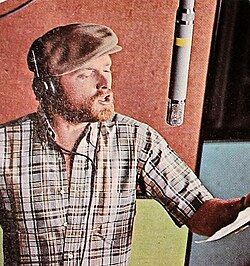
It is often suggested that Mike Love was chiefly responsible for the project's collapse. Love dismissed these accusations as hyperbolic, contending that his vocal opposition to Wilson's drug suppliers instigated claims that he, along with other band members and Wilson's family, sabotaged the project.251 Wilson's remarks on the matter have been inconsistent, as he has both affirmed and denied that his confidence in the project was undermined by Love.252
Addressing the claim that he had hastened the project's collapse by criticizing the work, Love acknowledged that Wilson, under the influence of psychoactive drugs, might have become overly sensitive to "body language" and attitudes. However, Love rejected the notion that he should "be held responsible" for his cousin's drug-induced paranoia and impaired mental condition,252 a subject that was little understood at the time.253 In author Clinton Heylin's estimation, some reports suggest that Wilson became dissatisfied with Parks' lyrics, although Love "certainly" contributed to Wilson's change of opinion.254 Mark Volman recalled, "I liked Mike a lot ... he had a good sense of humor about it all, even though he'd say one thing to Brian, and then kind of turn around and go, 'This is nuts. This is crazy stuff.' And he had an opinion on everything that Brian was doing, and it wasn't good."255
Parks sometimes stated that he was dismissed from the project at Love's behest,254 but in a 2004 interview declared, "It's not because of Mike Love that I walked away. It was because of my own irrelevance that I walked away. There were too many things conspiring against the record [...] I felt like an intruder".256nb 43 He elaborated that this feeling emerged after receiving threats of physical violence from an unnamed party envious of his role as Wilson's songwriting partner.259nb 44 On another occasion, he stated that he had preferred to withdraw from what he viewed as unrelated family feuds262 and thought at the time that Smile could have been completed without his involvement.263
Drug use, Wilson's mental state and perfectionism (1966–1967)
[Brian would go] after take after – a monotony of repeated takes – to get a performance that fell by the wayside because of maybe one eighth note [...] He was his own worst critic, and everybody suffered in the process.
Wilson's uncompromising perfectionism, which may have been intensified by his drug use, was a major issue that contributed to the project's collapse.264 At one Smile session, Wilson's repeated calls for retakes elicited a horn player to sarcastically remark, "Perfect – just one more".265 At the end of another session, which had extended until dawn, an engineer asked Wilson's wife if she believed he would be satisfied with the final take, to which she replied, "No, when he gets home he won't be satisfied. He's never satisfied."94266 Wilson was later diagnosed with bipolar and schizoaffective disorders, although most associates observed no signs of mental illness during the early Smile sessions.267
To prepare for the album's writing and recording, he had purchased about two thousand dollars' worth of marijuana and hashish (equivalent to $20,000 in 2025)64 and built a $30,000 hotboxing tent ($298,000) in his former dining room. He installed a sandbox under the grand piano in his den and, after developing an interest in health and fitness, replaced his living room furniture with gym mats.268nb 45 Musician and television producer David Oppenheim, who briefly visited in late 1966, described Wilson's home as "a playpen of irresponsible people" and "a strange, insulated household, insulated from the world by money".270nb 46 The sandbox remained in Wilson's home until April 1967.273
The music was cool but it's always tinged with the reality of making it. Brian degraded us, made us lay down for hours and make barnyard noises, demoralized us, freaked out. I can't tell you a lot of it, it's really fucked up. He thought it was hilarious, he was stoned and laughing.
Carl recalled that completing the album would have required considerable "willingness and perseverance to corral all of us", as everyone "was so loaded on pot and hash all of the time that it's no wonder the project didn't get done."244 Love acknowledged his own marijuana and alcohol use during the sessions but maintained that his work, along with Dennis and Carl's, remained unaffected.274 Dennis, who also used LSD,274 remembered that the group grew "very paranoid" about losing their audience, adding that while drugs significantly influenced their evolution, they also fostered a fear that the public "would no longer understand us, musically."275 Brian told an interviewer in 1976: "We were too fucking high, you know, to complete the stuff. We were stoned! You know, stoned on hash 'n' shit!"27651 Jardine, who did not use drugs, compared his position to "being trapped in an insane asylum", citing an incident during a "Heroes and Villains" session when Brian instructed the band to crawl around the studio and mimic pig-snorting noises.277278
Parks later said that he was uninterested in both using psychedelics himself and "anything that would incapacitate" Wilson.29 Wilson used Desbutal, a combination of methedrine and a barbiturate, more frequently than LSD.279nb 47 Siegel later attributed Wilson's paranoid delusions, unusual behavior, and diminished artistic confidence to his Desbutal abuse, explaining that Wilson had suffered from "classic amphetamine psychosis" and that, while some aspects of his paranoia had a basis in reality, the amphetamine-induced euphoria and subsequent "crash" distorted his assessment of himself and his work.279 Conversely, Hutton felt that the use of amphetamines had merely "helped him work longer hours".256
Upon study of the session tapes, Mark Linett reported that Wilson consistently had a cohesive rapport with musicians and developed studio arrangements swiftly. Oppenheim had been similarly impressed by Wilson's rapid workflow; however, Heiser writes that this flow ultimately extended to a "compulsive desire to have his every whim fulfilled, even outside of the studio, regardless of the time of day or the impracticality of his ideas."281 Taylor recalled struggling with such "temporary whims".282 Vosse maintained that despite the abundant marijuana available, Wilson "wasn't stoned all the time [...] really, Brian had a job to do, and he was a hard workin' guy."224 He dismissed drug use as "the biggest red herring in [his] story".271 Parks argued that the "athletic" productivity and discipline demonstrated during the project belied any hindrance ascribed to Wilson's marijuana use.283
First signs of issues and resistance (November–December 1966)
Wilson began having increasing doubts about the project during late 1966.193284 One evening, he declared to his associates that, based on his reading of the I Ching, the project was fated to collapse to enable everyone involved to pursue their own individual creative paths, recalled by Vosse as an abrupt shift in Wilson's attitude.285 His erratic direction and apparent detachment increasingly fostered resentment among the band members, unaware of his underlying struggles. According to Johnston, "We hated him then because we didn't really know what was happening to him."286nb 48
As far as lyrics are concerned you can put me down as saying I'm a stickler for words. More seriously you might say that we like to communicate. This incomprehensible freak-out scene is not for me.
From October 25 to November 14, his bandmates toured Europe—including their first UK dates—then undertook their fourth annual U.S. Thanksgiving tour from November 16 to 24.287 Vosse later wrote that Smile had been "a totally conceived entity" until the bandmates returned, after which the project "started going nuts".89 In Gaines' description, the bandmates, unaware of Wilson's "strange behavior", were "infuriated" to find Anderle leading a pack of outsiders who "had infiltrated and taken over the Beach Boys" while encouraging Wilson's eccentric conduct.288 Anderle commented, "I stand guilty on those counts [...] I was an interloper and I was definitely fueling his creativity. No holds barred. No rules."288289
Wilson had been accustomed to "everybody doing exactly what I told them to do" in the studio.290 His friends, family, and colleagues often date the unraveling of the project around the time he recorded "Fire" on November 28.193 Parks did not attend that session, later stating he avoided it "like the plague" because of what he saw as "regressive behavior" from Wilson.291 Within days, a building across the street burned down, and Wilson grew fearful that the music might have caused the fire through "witchcraft", prompting him to discard the track. He later attributed his decision to his use of marijuana and hashish193 and paused his drug use for two weeks.292 By then, tensions had emerged during the album recording, contrasting sharply with the project's early optimism.293 Anderle recalled that the collapse of "The Elements" coincided with mounting studio resistance—issues with engineers, securing studio time, and assigning parts "to one of the fellas or to a group of the fellas"—that became one of the greatest factors in the project's downfall. He said that Wilson regularly anticipated conflict before entering the studio.294
Vosse, in 1969, recalled that during group vocal sessions, older members of the Wilson family actively undermined Brian's relationships with Parks, Anderle, and himself—motivated by suspicions of an imminent band breakup and disapproval of their appearances. He said that band publisher Murry, father of the Wilson brothers, had regarded "Good Vibrations" as a "horrible mistake" that would alienate the band's audience, igniting a "big argument" over preserving their established image or forging a new one.89 As internal schisms grew, Parks became the "most convenient" scapegoat due to his occasional disputes with Brian, according to Vosse.89 In Parks' recollection, "the whole house of cards began tumbling down" when Wilson summoned him to the studio to resolve a disagreement over the "Cabin Essence" lyric "over and over the crow cries uncover the cornfield".295nb 49
Love, in a 1993 interview, stated that he had been deeply concerned about Wilson's treatment of "himself", "others", and "the reputation of the band", as well as the potential destruction of their "livelihoods".286 In 2015, he explained that while he had no issue with "crazy stupid sounds" or Wilson's strange requests, he wanted to produce "a commercially successful pop record", leading him to question the lyrics.252nb 50 He had openly critiqued Wilson's work in the past, yet during the Smile sessions, "he was acting so strange, I couldn't have any conversation with him."301 The oft-attributed302 remark "don't fuck with the formula" was denied by Love, who later maintained that the Beach Boys "have no formula."303nb 51 According to Carl Wilson, Love's main objection was that the lyrics were overly abstract;54 however, Parks countered that his issue was with the music.260nb 52
Delays, Capitol lawsuit, and departures (December 1966 – April 1967)

Wilson's paranoid delusions and increasingly erratic behavior intensified throughout late 1966 and early 1967.308309 One incident involved Anderle secretly painting Wilson's portrait; upon viewing it, Wilson believed it had literally captured his soul,310 irreparably altering their relationship.64 Murry hired a private investigator to surveil Brian after reading Tom Nolan's 1966 article in which he acknowledged using LSD311 and consequently escalated his paranoia into reciprocal surveillance between him and his father, described by Taylor as a cycle of "complete insanity".273 His inability to promptly follow up on "Good Vibrations" also became an escalating issue.312 On December 15, he informed Capitol A&R director Karl Engemann that the album and its lead single "Heroes and Villains" would likely be delivered "some time prior to January 15".169 Consequently, Capitol postponed their release until March 1967.169 Possibly pressured by Capitol's demand for a ready single, Wilson resumed work on "Heroes and Villains" on December 19, 1966, halting progress on other tracks until April 1967.313
[...] it was just all hell breaking loose. It was tapes being lost, ideas being junked – Brian thinking, "I'm no good," then, "I'm too good" – then, "I can't sing!" I can't get those voices anymore. There was even a time back then when there hardly seemed to be a Beach Boys at all.
While 1966 sessions had been methodically documented, Wilson often took unlabeled test acetates home, leaving them scattered without systematic archiving. By early 1967, session logs indicate increasingly lost studio tapes.314 In January, Carl received a draft notice from the U.S. Army while Brian missed his deadline and reduced his work on the album.213 "Good Vibrations" dropped from the top 20 chart positions after seven weeks in the top 10.315 Parks was offered a solo deal by Warner Bros. Records,213 and, upon signing it, became increasingly unavailable to Wilson, who grew uncertain about the album's direction.89 Anderle, in 1968, remembered that as "everything started to collapse", including the collaboration with Parks, Wilson "abandoned the studio" and subsequently retreated into "the business aspects of Brother Records", which lent more "excuses" to avoid recording.316 Wilson suspected that Capitol was withholding payments and ordered band manager Nick Grillo to audit the label's records, which confirmed irregularities.203
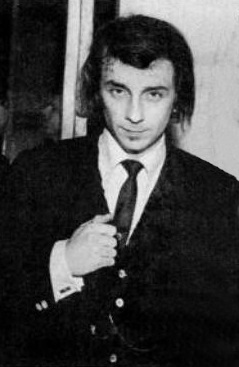
In another incident, after attending a screening for Seconds, Wilson had thought the film contained coded messages from Phil Spector and director John Frankenheimer as part of a supposed Jewish conspiracy against him.317nb 53 He later described himself as "fucked up" and "jealous" of Spector and the Beatles,318 stating he began Smile intending to "beat the Beatles".319 Taylor recounted Wilson's "mad possessive battle" with the Beatles and Rolling Stones, saying Wilson demanded unwavering loyalty and often challenged him to compare his work favorably against theirs.282320nb 54 Throughout early 1967, the music industry and pop fans were aware that the Beatles were working on a significant new work as their follow-up to Revolver, with the band having been ensconced in their London studios since the previous November.322 He first heard their February 1967 single "Strawberry Fields Forever" while under the influence of Seconal271 and driving with Vosse, who recalled Wilson remarking that the Beatles had achieved "what [he] wanted to do with Smile" before both laughed.323nb 55
On February 28, the band filed a lawsuit against Capitol for $250,000 in unpaid royalties (equivalent to $2.46 million in 2025) and sought to terminate their contract before its November 1969 expiration.325 Subsequently, he announced that "Vega-Tables" would be the album's lead single,326 but Parks opposed this decision, considering it one of their least representative songs.327 Parks struggled to accommodate his contributions to Wilson's increasingly "abstract" music and "the people around him and the crowded house it became [...] My ideas were less and less relevant, it seemed to me, or useful for his purposes."328 According to Anderle, tensions between the songwriters escalated post-February over creative differences; Wilson argued that Parks' lyrics were "too sophisticated, and in some areas Brian's music was not sophisticated enough [for Van Dyke]."194nb 56
On March 2, Wilson and Parks dissolved their partnership, an event sometimes seen as marking the end of the Smile era.331nb 57 Wilson, reliant on Parks' input, faced challenges assembling the fragmented recordings333 and struggled to integrate his own lyrics into Parks' existing work, halting the recording sessions.334 Amid ongoing litigation, the Smile tapes were relocated to engineer Armin Steiner's Sound Recorders studio,335 and Anderle's efforts to secure a distributor for Brother Records proved unsuccessful, with A&M Records rejecting the collection of songs produced for Jasper Daily.65nb 58 In March, Wilson canceled three sessions, including one due to perceived "bad vibrations", at a total cost of $3,000 (equivalent to $29,000 in 2025).337 A March 18 KMEM radio survey in San Bernardino reported Wilson "informed the Capitol bosses that he doesn't intend to 'hold back' on these projects",338 while KFXM reported delays to the single's release due to legal disputes on March 30.339 Parks briefly rejoined the project during a March 31 session.340
In mid-1967, Wilson and his wife moved from Beverly Hills to a Bel Air mansion; according to Badman, this was to distance themselves from his entourage.337 Marilyn added security measures, including a brick wall and electronic gate,234 while Wilson began building a home studio.337 During an April "Vega-Tables" session, Paul McCartney, who had been staying with Taylor in Los Angeles, previewed his song "She's Leaving Home" for Wilson.257 Shortly after, Wilson learned of rumors that Taylor had shared Smile tapes with the Beatles. Parks recounted Wilson's attitude changing "completely", stating he felt "raped" and grew increasingly suspicious of his team's loyalties.341nb 59 By April, much of Wilson's inner circle had departed.309nb 60 Quoted in that month's issue of Tiger Beat, he said, "I feel like I've lost my talent. I'm working harder and getting less satisfaction than ever before."344 Anderle at that time felt that Parks' departure was "central" to the project's collapse.345 He also resigned within weeks,64 later reflecting that while Wilson "on many occasions" had considered disbanding the Beach Boys, severing ties with non-family collaborators proved simpler.346 During Anderle's final business meeting with Wilson, Wilson remained in his bedroom, refusing to engage.64
Hiatus, Inside Pop premiere, and "scrapped" announcement (April – May 1967)
Parks' final involvement in the Smile recordings occurred during an April 14 "Vega-Tables" session, after which Wilson paused studio work for four weeks.340 CBS premiered the documentary Inside Pop: The Rock Revolution, produced by Oppenheim and co-hosted by Leonard Bernstein, on April 25.347 The film was initially planned to center on Wilson but broadened its focus as the Beach Boys' popularity declined in early 1967.348 Wilson's contribution comprised footage of him performing "Surf's Up" at the piano, devoid of interviews or mentions of Smile.349 He was disturbed by the praises he received via Oppenheim's voice-over, which accelerated the album's dissolution, according to Kent.350
Carl, who three weeks earlier had been indicted on draft evasion charges, was arrested by FBI agents before a Long Island concert on April 26; he posted bail and performed with the group that evening.351 Desperate for a new product from the band, on April 28, the group's British distributor EMI released "Then I Kissed Her" as a single without their approval.352 On April 29, Taylor announced in Disc & Music Echo, "All the 12 songs for the new Beach Boys album are completed and [...] there are plans to release the album on a rush-schedule any moment."352 That same day, a Taylor-penned press release, published in Record Mirror and NME, revealed that "Heroes and Villains" was delayed due to "technical difficulties" and that the lead single would be "Vegetables" backed with "Wonderful".352 A session scheduled for May 1 was cancelled.353
From May 2 to 20, Wilson's bandmates embarked on another European concert tour.354 Williams reported in the May issue of Crawdaddy! that the next Beach Boys LP would include "Heroes and Villains" ("weighing in at over four minutes"), "The Elements" ("a composition in four movements"), "The Child Is the Father of the Man" [sic], "and something about going in the yard to eat worms." He wrote, "Lyrics are mostly by Van Dyke Parks, and it is possible that the LP will be finished one of these days. Smile."355 On May 6, a week after stating that Smile was to be released "any moment", Taylor announced in Disc & Music Echo that the album had been "scrapped" by Wilson;356 however, it is likely that the report was spurious and that Wilson was unaware of Taylor's proclamation.357
On May 14, the bandmates held a press conference at the Amsterdam Hilton with the Dutch music press. Hitweek later reported that communication breakdowns had led them to believe Smile was slated for release by mid-May. Wilson cancelled a May 15 session for "Love to Say Dada", again due to "bad vibes".358 The final session for the track, and possibly the Smile album, was held on May 18, with a follow-up session scheduled for May 19 subsequently cancelled.359 From June 3 to 7, the band resumed sessions at professional studios before retreating to the home studio.360 In a June issue of Hit Parader, Dennis reported that the group had been recording Smile, by then "50% done".361
Smiley Smile, abandonment, and Wilson's decline
The gap between conception and realization was too great, and nothing satisfied Brian by the time he'd worked it out and gotten it on tape. And eventually the moment passed [...] like many other fine artists before him, Brian was unable to realize his original concept of Smile when he wanted to, and after a while he no longer wanted to. He no longer had the same vision.
Wilson later reflected that he had run out of ideas "in a conventional sense" and felt "about ready to die" during this period.243 He explained, "Time can be spent in the studio to the point where you get so next to it, you don't know where you are with it, you decide to just chuck it for a while."362 Declaring most Smile recordings abandoned to his bandmates,363 he later acknowledged that withholding "Surf's Up" "nearly broke up" the band.243 Between June and July, the Beach Boys embarked on a new album project at Wilson's makeshift home studio, repurposing simplified versions of selected Smile tracks.364
Smiley Smile is sometimes considered the fulfillment of Wilson's "humor" concept album.186 This belief was shared by Anderle, who surmised, "I think that what Brian tried to do with Smiley Smile is he tried to salvage as much of Smile as he could and at the same time immediately go into his humor album."316 Stylistically akin to Beach Boys' Party!,365 Carl compared the result to "a bunt instead of a grand slam".366 The album incorporated four modules from Smile sessions, two each from "Heroes and Villains" and "Vegetables".24 The cover art adapted Holmes' smile shop illustration, now depicted within an overgrown jungle.367 Parks was not involved with this project,368 and despite later reports that the band had considered Smile "too weird", there was no attempt to make the content on Smiley Smile appear less bizarre for their established fanbase.369nb 61

During 1967, Wilson's public image had declined into that of an "eccentric" figure amid the release of numerous revolutionary rock albums targeting an increasingly anxious and maturing youth market.357 It is sometimes suggested that he abandoned Smile because of the widespread recognition afforded to the Beatles' Sgt. Pepper's Lonely Hearts Club Band (released in the U.S. on June 2). Biographer David Leaf contends that while the Beatles' album may have been a contributing factor, it was unlikely the sole reason, as Wilson proceeded to release "Heroes and Villains" weeks later;370 Williams reported that Wilson had significantly reconfigured the song after hearing the Beatles' LP,355 and Jardine later suggested that Wilson had restrained himself with the final edit, resulting in "a pale facsimile" of his original vision.371
On July 18, Capitol announced a settlement with the band alongside Wilson's launch of Brother Records, whose product was to be distributed by Capitol.372 Days later, Engemann circulated a July 25 memo373 describing Smiley Smile as a stopgap for Smile and outlining discussions with Wilson about a pared-down 10-track Smile album excluding "Heroes and Villains" and "Vegetables".372374 The proposal never materialized; instead, the band toured Hawaii in August with plans to release a live album titled Lei'd in Hawaii.375 On September 18, Smiley Smile—the first Beach Boys album crediting production to the group itself—was released to tepid critical and commercial reception.366
After leaving the project in early 1967, Parks joined a creative circle within Warner Bros. that included producer Lenny Waronker.376nb 62 Later that year, the company released Parks' debut album Song Cycle, whose legacy was effectively eclipsed by comparisons to Smile.378nb 63 Despite poor sales, Parks remained at Warner as an arranger,379 and the professional and business trajectories of Wilson, Parks, Waronker, and Warner Bros. remained closely intertwined in subsequent years.380 In late 1967, Wilson and Parks wrote "Sunflower Maiden", a song earmarked for Hutton's new group Redwood (later Three Dog Night), though it remains lost.381
Wilson gradually withdrew from production and songwriting responsibilities, turning to excessive consumption of food, alcohol, and drugs.382 Reflecting in 2004, he stated that revisiting the Smile music later evoked "the bad feelings of the drugs" associated with its creation.383nb 64 In the decades after its shelving, he associated the project with personal failure and trauma.29 He dismissed the recordings as "contrived with no soul",386 "corny drug influenced music",387 and inferior imitations of Phil Spector's work.388 When questioned about Smile, he typically refused to engage or abruptly exited conversations,29 a reluctance that persisted until the early 2000s.152
For so long, this project brought me nothing but humiliation. It was the first question people always asked—"How come Smile never came out?"
Parks, in a 1998 interview, minimized his connection to Smile, calling it "just a few months of work I did as a contract employee many years ago", and stating that it held greater significance for fans than himself.389 According to Carlin, Parks grew frustrated that his career remained overshadowed by an unfinished 1967 project, and that later Beach Boys albums did not honor his contributions on songs, including "Wind Chimes" and "Wonderful",211 with an official co-writing credit.389nb 65
Further recording and abandoned Warner Bros. release
Material from Smile continued to appear sporadically on subsequent Beach Boys releases, often as filler tracks to compensate for Wilson's reduced creative output.390 The first examples emerged on the two albums following Smiley Smile: "Mama Says" from Wild Honey (1967) derived from a segment of "Vega-Tables", while "Little Bird" from Friends (1968) incorporated the refrain of "Child Is Father of the Man". Neither "Mama Says" nor "Little Bird" were from the original Smile recording sessions; both tracks were newly recorded for their respective albums.391
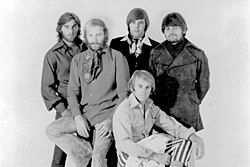
The Beach Boys' 1969 album 20/20 included reworked Smile tracks: "Cabin Essence" (retitled "Cabinessence") and "Prayer" (retitled "Our Prayer"), both featuring vocals newly recorded by Carl, Dennis, and Bruce Johnston in November 1968. "Workshop" was incorporated into the album's version of "Do It Again".392 Carlin states that Brian opposed the inclusion of "Our Prayer" and "Cabinessence" and declined to participate in their overdub sessions.390
Following 20/20, the group signed with Reprise Records, a subsidiary of Warner, through a deal brokered by Parks, then a Warner multimedia executive.393 Their contract included a $50,000 advance contingent on delivering a completed Smile album by 1973, a stipulation made without Brian's consultation.394 The band's 1970 Reprise debut Sunflower featured "Cool, Cool Water", a track derived from "Love to Say Dada" and included at Waronker's insistence.395

For their second Reprise album, initially titled Landlocked, the group included "Surf's Up" with Wilson's approval. Between mid-June and early July 1971, Carl and band manager Jack Rieley retrieved Smile multi-tracks from the Capitol archives to locate and reconstruct the song's masters, with Brian joining them on at least two occasions.396 Recording sessions at Brian's home studio followed, during which he initially declined involvement but later contributed to the "Child Is Father of the Man" coda.397 The album was retitled Surf's Up and released in August 1971.398
At a February 28, 1972, London press conference, Carl announced plans to release Smile, stating he had worked on the album in June 1971 and that safety copies of its tapes had been created.399 He asserted the tapes were fully assembled with new vocal overdubs added where necessary.394 A Melody Maker article listed tracks proposed for Carl's Smile iteration, several grouped under the "Heroes and Villains" subtitle: "Child Is Father of the Man" "Surf's Up", "Sunshine", [sic] "Cabinessence" (incorporating "Iron Horse" [sic]), "Mrs. O'Leary's Cow", "I Love to Say Dada" (incorporating "Cool, Cool Water"), and original versions of "Vega-Tables", "Wind Chimes", and "Wonderful".394 These announcements may have aimed to mislead Reprise into extending the deadline for the band's next album.400
Asked about Smile at a later date, Carl responded: "We've all had intentions of finishing the album, but something persists that keeps that from happening, and I don't know what that is."401 In April 1973, Beach Boys assistant manager Steve Love sent a memo warning the group that Warner Bros. would deduct $50,000 from their next advance if Smile was not delivered by May 1 per their contract.402 The deadline passed without submission, resulting in the withheld payment (equivalent to $363,000 in 2025).403 Later that year, Brian told Melody Maker there was insufficient material to compile Smile and that it would remain unreleased.404 Around this time, he and his group American Spring added new vocals and instrumentation to a remix of Dean Torrence's 1967 version of "Vegetables", credited to "Laughing Gravy" on Jan and Dean's compilation Gotta Take That One Last Ride.405 Three years later, Wilson stated that he felt an obligation to release Smile, estimating it might emerge "probably in a couple years".406 By 1980, he stated an intent to complete Smile in three movements, according to Gaines.407
Bootlegs, official releases, and fan efforts
Earliest bootlegs, personalized mixes, and fan network
Most original Smile recordings remained exclusive to bootlegs until 2011.408 These unofficial releases typically featured hypothetical versions of the album, with compilers providing liner notes that rationalized their track sequencing, and relying on the list of song titles printed on the unused 1966 album sleeves as a key reference point.409 Bootlegs circulating as Smile emerged in the late 1970s, combining tracks from Smiley Smile, 20/20, and Surf's Up. Compilers relied solely on the jacket's song titles, often unaware most released tracks had originated after the 1966 sessions.410

During the 1970s and early 1980s, Beach Boys fan groups were organized by at least a dozen individuals, including David Leaf, Don Cunningham, Marty Tabor, and Domenic Priore.412nb 66 These groups primarily communicated through newsletters that shared information and connected enthusiasts compiling details about the band's music.412 Membership growth was partly spurred by an advertisement for the official fan club, Beach Boys Freaks United, featured on the back cover of their 1976 album 15 Big Ones.413 Priore later described the club's newsletter as minimal but noted its "Trading Post" section served as a vital pre-Internet networking tool.412nb 67
There's been too much press on it. It's like talking about bringing out the '67 Rolls Royce and they finally show it in [modern day]. You go, "Oh, no."
In Leaf's 1978 biography of the band, he proposed releasing Smile through a series of records titled The Smile Sessions, akin to Elvis Presley's The Sun Sessions (1976).400 Johnston criticized the proposed Smile Sessions release as commercially unviable, stating it would only satisfy listeners with a niche interest akin to "Zubin Mehta analyzing a young composer's work."400nb 68
First public availability, further release rumors, and arrests
Scholar Andrew Flory writes the origins of genuine Smile material reaching bootleggers remain unclear,417 though unverified claims suggest Dennis copied tapes for friends that were later recopied.246 Despite contemporaneous rumors of leaked tapes and acetates, only limited authentic material circulated before the early 1980s.417nb 69 In 1983, a 48-minute cassette tape circulated among fans and was later pressed as an unauthorized LP known as the "Brother Records" Smile.419 The compilation featured Smile-related tracks and outtakes, including the misattributed 1959 Miles Davis recording "Here Come de Honey Man" (erroneously titled "Holidays").420nb 70 The LP sleeve lacked authorship credits but listed addresses for Cunningham's Add Some Music, Tabor's Celebrate, Beach Boys Freaks United, and the Australian fan publication California Music.421
In April 1985, the documentary The Beach Boys: An American Band premiered with previously unreleased material, including an excerpt of "Fire."422 That year, a "Second Edition" of the Brother Records LP surfaced, omitting the original addresses and rearranging the track order.423 It featured alternate mixes, implying newly accessed Smile recordings.423 The enhanced audio quality further suggested that cassette copies had been made from the band's master tapes by an insider.418 In 1987, Waronker encouraged Wilson to write a Smile-style song for his solo debut album, leading to the "Rio Grande" suite co-composed with multi-instrumentalist Andy Paley.424
During the production of Wilson's solo album, his engineer Mark Linett had mixed Smile tracks for a planned release.425 By 1988, Wilson confirmed Smile was being prepared for release426 but cited business-related delays.427 He expressed concerns about its commercial appeal, given it consisted mostly of instrumental tracks, and proposed having bandmates record overdubbed vocals.427 Wilson abandoned these plans after a cassette compiled for Capitol executives leaked to the public.418 A collaborator on Wilson's solo album had obtained first-generation copies of Smile recordings, which were shared with a DJ and subsequently circulated widely, leading to a proliferation of Smile bootleg albums.418 By the mid-1980s, CDs had become the primary bootleg format, and after the Linett tape leak, dozens of distinct Smile CD releases were distributed via mail order, independent stores, and head shops.428 Many purchasers transitioned from Beatles bootleg markets.429 Among the most prominent releases was a November 1989430 Japanese CD that opened with a 15-minute version of "Good Vibrations".418

The wider circulation of Smile bootlegs demonstrated the album's near-complete state, contradicting Wilson's public statements.225 In the late 1980s, Domenic Priore collaborated with musicians Darian Sahanaja and Nick Walusko on The Dumb Angel Gazette, a punk-style fanzine and the most comprehensive attempt at documenting the album.431 The second issue, Look! Listen! Vibrate! Smile!, presented a 300-page history of the album through press clippings, reprinted articles, primary sources, and original analysis,432 selling about 40,000 copies.433 Contributors included Leaf, Paley, journalist Greg Shaw, and musician Probyn Gregory.434
I seriously doubt that any of you reading this don't have a homemade cassette recorder. If you do, then try this suggestion on a blank homemade cassette: COMPILE A SMILE ALBUM BY YOURSELF AT HOME!!!
In the 1990s, two types of Smile bootlegs emerged: compilations attempting to reconstruct the album in a finished form and collections of session recordings.428 Among the best-known releases were those by underground labels Vigotone and Sea of Tunes, which issued Smile sets combining elements of both formats, generating broader interest in the recordings beyond the Beach Boys' fanbase.435 Vigotone's 1993 version was the most widely circulated Smile bootleg during the decade.436
Capitol included alternate versions of "Good Vibrations" and "Heroes and Villains" as bonus tracks on the 1990 CD reissue of Smiley Smile and Wild Honey418 and, responding to the 1992 emergence of a three-disc vinyl bootleg that included some previously uncirculated tracks,437 released over 40 minutes of original Smile recordings on the 1993 box set Good Vibrations.438418nb 71 This compilation marked the first official release of a compiled Smile album, sequenced by Leaf, Paley, and Linett.439 However, the tracks were presented largely in raw form and without approximating the intended final product.24 Leaf's liner notes encouraged listeners to assemble their own versions using the included materials, prompting many fans to do so.440
In 1995, Wilson reunited with Parks for the collaborative album Orange Crate Art, which provoked speculation of a potential Smile release.441 That year, Wilson performed "Wonderful" in its original Smile arrangement for the Don Was-directed documentary I Just Wasn't Made for These Times, with the rendition included on the accompanying soundtrack album.374 Capitol also announced a three-CD box set titled The Smile Era, scheduled for release in late 1995.442 It failed to materialize, partly due to the complexity involved with compiling and sequencing the material.443 Was had proposed releasing Smile as an interactive CD-ROM, akin to Todd Rundgren's No World Order (1993), that would have contained session content for listeners to assemble themselves, an idea Wilson reportedly supported.444 According to Mike Love, after finishing the Beach Boys' 1996 album Stars and Stripes Vol. 1, discussions to complete Smile were vetoed by Carl over concerns it might jeopardize Brian's mental health.445 Capitol's hesitation was further influenced by the 18-month delay experienced during the release of The Pet Sounds Sessions (1997), discouraging similar efforts for Smile.418 During promotion for his 1998 album Imagination, Wilson dismissed Smile, saying, "I thought too much. Smile was just a bunch of weird stuff that didn't even amount to anything."446
In the late 1990s, Sea of Tunes issued eight CDs containing seven hours of Smile recordings as part of their "Unsurpassed Masters" series.436 By the end of the decade, Smile had become one of the most well-documented projects among bootleggers.447 Authorities later arrested individuals involved with Sea of Tunes, seizing nearly 10,000 discs.448 Vigotone, following their 1998 bootleg Heroes and Vibrations, planned a multi-disc Smile set but ceased operations after a 2001 law enforcement raid.418
2004 rerecording, The Smile Sessions, and deepfake mixes
Wilson completed a reimagined version of Smile in 2004 with support from the longstanding fan network that had developed since the 1970s.449 In 1999, Sahanaja, Walusko, and Gregory—who had together formed the pop group Wondermints450—were recruited into Wilson's supporting band.451 In 2001, he performed "Heroes and Villains" publicly for the first time in decades.452 Following this performance, Sahanaja proposed incorporating Smile material into rehearsals, leading to plans for dedicated concerts.453 Sahanaja assumed the role of "musical secretary",454 while Parks contributed new lyrics.455 Together with Wilson, they structured the work into three movements.391 Sahanaja recalled that Wilson and Parks approached the project as if "finishing" Smile.456

Brian Wilson Presents Smile (BWPS) premiered in February 2004 at the Royal Festival Hall in London, followed by a studio album version recorded six weeks later and released in September. Leaf's accompanying documentary, Beautiful Dreamer: Brian Wilson and the Story of Smile, premiered on Showtime in October.457 The project was realized without participation from Wilson's former Beach Boys bandmates or original recordings.24 The album peaked at number 13 on the Billboard 200, the highest chart position of any album by the Beach Boys or Wilson since 1976.458 He subsequently embarked on a global tour spanning the U.S., Europe, and Japan.459
The Smile Sessions, following in October 2011, marked the first official release dedicated to the Beach Boys' Smile.460 It compiled session highlights, outtakes, and a reconstructed version of the album modeled after Wilson's 2004 version.460 Contributors included longtime Beach Boys fan community members such as Priore and Reum, who provided essays and consultation.461 The set received widespread critical acclaim, earned a ranking on Rolling Stone's 2012 "500 Greatest Albums of All Time" list, and won Best Historical Album at the 55th Grammy Awards.462
In 2011, Smile topped Uncut's list of the greatest bootleg recordings of all time.463 By 2023, fanmade Smile assemblies had incorporated the use of audio deepfake techniques to present a completed album.464465
Musical impact and influence
Following its shelving, Smile gradually attained a cult following within the American underground music scene despite its incomplete state. In Courrier's words, the project "became oddly influential. While functioning mostly as a rumor, when some bootlegged tracks confirmed its existence, Smile became a catalyst for records that followed in its wake."466nb 72 It served as a foundational influence on indie rock,468 art-driven post-punk, acts such as Pere Ubu, XTC, R.E.M., and the Pixies, and bands tagged as "chamber pop".469nb 73 In Priore's estimation, the "alternate-rock" generation began embracing Smile after the early 1990s, adding that his book about the album had elicited interest from musicians including XTC, Apples in Stereo, and George Harrison.470 In Scotland, musicians including David Scott of the Pearlfishers and Duglas T. Stewart of BMX Bandits organized a Smile-themed concert before assembling the 2000 tribute album Caroline Now!, both with Wilson's endorsement.471 Journalist Rob Chapman wrote in 2002 that he had "yet to meet an ambient or electronica artist who doesn't have a soundfile full of Smile bytes".472
The potential of what Smile would have been was the primary thing that inspired us. When we started hearing Smile bootlegs, it was mind-blowing. It was what we had hoped it would be, but a lot of those songs weren't finished, so there was still this mystery of not hearing the melodies and lyrics. We wondered, "What are these songs and how do they fit together? Is this a verse?"
The Elephant 6 Recording Company, a collective of bands that includes Apples in Stereo, the Olivia Tremor Control, Neutral Milk Hotel, Beulah, Elf Power, and of Montreal, was founded through a mutual admiration of 1960s pop music, especially Smile, which they regarded as the epoch's "Holy Grail".473 Will Cullen Hart appreciated "the idea of the sections, each of them being a colorful world within itself. [Wilson's] stuff could be so cinematic and then he could just drop down to a toy piano going plink, plink, plink and then, when you least expect it, it can fly back into a million gorgeous voices."474 According to Kevin Barnes, of Montreal's album Coquelicot Asleep in the Poppies: A Variety of Whimsical Verse (2001) was inspired in part by the "screwball" quality of Smile.475
Released exclusively in Japan, the 1998 tribute album Smiling Pets featured cover versions of Pet Sounds and Smile tracks by artists such as the Olivia Tremor Control, Jim O'Rourke, and Sonic Youth's Thurston Moore.448 Trey Spruance, who had contributed a rendition of "Good Vibrations", said that Smile "definitely" influenced the Mr. Bungle album California (1999), "especially when it comes to the Faustian scale of it."476 The cover artwork for Velvet Crush's Teenage Symphonies to God (1994) was based on the Smile cover.477 Weird Al Yankovic created a parody song, "Pancreas", for his 2006 album Straight Outta Lynwood.478
Kevin Shields of My Bloody Valentine said that his band's 2013 album MBV was inspired by the modular approach of Smile.479 Priore believed that Smile influence was apparent on albums such as XTC's Oranges & Lemons (1989), the High Llamas' Gideon Gaye (1994) and Hawaii (1996), the Flaming Lips' The Soft Bulletin (1999), Mercury Rev's All Is Dream (2001), the Apples in Stereo's Her Wallpaper Reverie (1999), Heavy Blinkers' 2000 eponymous LP, and the Thrills' So Much for the City (2003).477
Critical perspectives and legacy
Innovations and retrospective appraisals
Wilson applied editing techniques on Smile that were not standard practice until the advent of digital audio workstations.480142nb 74 Similar structural ambitions would later emerge in extended rock suites like Queen's "Bohemian Rhapsody" (1975) and 10cc's "Une nuit a Paris" (1975).481 Prior to late-1960s works reflecting LSD's destabilizing effects in rock music, artists had largely avoided addressing the darker aspects of psychedelia; music critic Alexis Petridis cited Smile as an early exploration of these themes through tracks such as "Fire".144 Carter identifies the album's formal complexity, varied instrumentation, and lyrical themes as anticipating progressive rock developments of the late 1960s and early 1970s; thematically, its shift from urban materialism toward natural imagery prefigured the Americana genre later exemplified by the Band's Music from Big Pink (1968).482 Williams characterized Wilson as one of the earliest pioneers of sampling,483 while Priore likened his manipulation of sound effects to techniques later employed by Pink Floyd on The Dark Side of the Moon (1973).91 The album cover—considered to be among the most "legendary" in rock music, according to Priore484—would have been one of the earliest instances of a popular music group featuring original commissioned artwork.468
If music students in a hundred years' time want a master class in the development of compositional technique in twentieth century popular music then they should listen to the Smile tapes. [...] [they stand] totally apart from what anybody else was producing during the mid-'60s.
In his 2014-published 33⅓ book about the album, Luis Sanchez regarded Smile as a "radical" extension of Pet Sounds' "glow and sui generis vision", marked by "a kind of directness that is unlike anything else in popular music".485 Ed Masley of AZ Central believed that while the album diverged sonically from contemporaneous psychedelic works, it "clearly" reflected an adventurous ethos "that would have been unthinkable just two years earlier."152 Stylus magazine contributor Ed Howard suggested that its "arty experimentation", "exotic, often surprising arrangements", and "twisting wordplay" had "arguably" exceeded the innovative scope of the Beatles' concurrent output.486 A contributor for Freaky Trigger, in 1999, characterized Smile as "astoundingly original" and a reflection of an unrealized trajectory in rock history, though not "the best album ever."487
Philip Lambert, who authored book-length analyses on the music of Wilson and Charles Ives,488 described Smile as "a landmark artwork that could have captured the spirit of a generation"; had Wilson realized his ambitions, he would have effectively created "a whole new genre of popular music".489 NewMusicBox, while dedicated to contemporary non-commercial music, covered Smile in 2011 despite its standing as "an album recorded more than 45 years ago by one of the biggest (and most financially lucrative) musical acts of all time". Reviewer Frank Oteri wrote that Wilson's mid-1960s experimentation was consonant with broader genre-blurring trends, but less radical than contemporaneous efforts. He concluded that the album's legacy remained overshadowed by the Beach Boys' enduring image as a "light-hearted party band" associated with earlier hits, limiting its recognition alongside innovators like Ives or John Coltrane, though it "would have, could have, and should have" surpassed the Beatles' Sgt. Pepper as the era's defining artistic breakthrough.468
Mythology and speculation
Following its non-release, Smile became the subject of widespread speculation225490 and gained status as the most "legendary" unreleased album in popular music.23 Numerous journalists and associates present at the sessions contributed chiefly to this stature,425 especially Siegel, whose October 1967 memoir "Goodbye Surfing, Hello God!", published in Cheetah, initiated the mythos surrounding the album491492 Originally commissioned by The Saturday Evening Post at Siegel's persistence,57 the magazine had rejected the article due to his enthusiastic praise of Wilson's work493494 at a time when rock music was rarely granted serious evaluation.58 Siegel remembered, "They didn't really want it and when they got it they couldn't believe that I took Brian so seriously."57nb 75 Flory attributed the memoir with providing rock audiences a framework to perceive Wilson as "hip" and venerating Smile as an artifact of that ethos, heightening public interest.497

A published conversation between Anderle and Williams, serialized in Crawdaddy in 1968, served as another early source of information.425 Accounts from Anderle and others, occasionally anonymous, were further disseminated in a 1971 Rolling Stone feature by Nolan and Leaf's 1978 biography The Beach Boys and the California Myth.498 Nolan's article reported that Brian was "really turned off" by his surrounding commentary, including the Siegel piece, according to Carl.64nb 76 Music critics had increasingly engaged with its mythology by the 1970s. Dave Marsh, in 1983, criticized this phenomenon as "an exercise in myth-mongering almost unparalleled in show business", arguing that Wilson's artistic reputation had been inflated through inaccessible work.499 Smile ultimately became one of the most extensively analyzed and debated unreleased works in music history.171 Journalist Bill Holdship reported in 1995 that some Los Angeles residents he had encountered were "as obsessed with Smile the same way people are obsessed with the Kennedy assassination."286 Chapman wrote the album transformed into "the ultimate metaphor for pop's golden age; that moment when everything seemed possible, when heaven seemed reachable".472
Anderle, in a follow-up dialogue with Williams in 1997, acknowledged his role in shaping the album's legend, stating, "I guess we all do that. We all extend the story, don't we? We all extend the moment. It's satisfying. But what a burden for Brian [...]"500 He accused Siegel in particular of making himself "feel like he was more important" by calling Wilson a "genius".50057nb 77 Countering these statements, Siegel later described Anderle as a "manipulator" projecting his own tendencies, adding, "Brian was a genius and, if anything, I underestimated him. [...] I wasn't aware of him as a myth. I just wrote down what I saw and heard."57 After revisiting the recordings for the first time in 16 years, Williams reassessed his stance,437 arguing that separating the album from its "myth", which he and Anderle "certainly helped create", revealed "the work of someone very stoned".501nb 78
By the late 1990s, online fan communities had produced numerous essays analyzing the work,448 followed by dedicated book-length studies in subsequent years.502 Its mythos inspired the novels Glimpses (1993) by Lewis Shiner474 and Summer Fun (2021) by Jeanne Thornton.503 The 2007 comedy film Walk Hard: The Dewey Cox Story contained a segment inspired by the production of Smile, in which the protagonist is consumed with recording his "masterpiece" (titled "Black Sheep") before suffering a mental breakdown.504 Parks was commissioned to write the parody song.505 Sanchez felt the myth, sustained by "writers and cultists [...] rehashing hyperbole and rumor", had since lost its power to "lure and convince", though it overshadowed and "nearly consumed the artist and the music it was about."506 While acknowledging Wilson's musical achievements, Love wrote in his 2016 memoir, "it speaks to the self-absorption of Brian's hagiographers and sycophants who view Smile only as a musical event. [...] I cannot separate the music from the man, and I cannot separate the man from the physical and emotional turmoil that befell him."507nb 79
Hypothetical release scenario

Many commentators have suggested that the album's release could have redefined the Beach Boys' artistic trajectory and reinforced their status as rock innovators.509nb 80 Author Allan Moore proposed that the album might have transformed the concept album format through recurring musical motifs, "a form frankly far more sophisticated than any of its contemporaries."511 Spencer Owen suggested in Pitchfork that Smile might have shifted popular music's historical trajectory and reduced the Beatles' dominant cultural stature.512 Brian Boyd of The Irish Times rued that while Wilson's rivalry with the Beatles had contributed to the project's collapse, its release might have delayed the Beatles' dissolution due to mutual artistic competition.513
Given the runtime constraints of vinyl discs, much of the Smile material would likely have been excluded. According to Mark Linett, while double albums by artists like Frank Zappa and Bob Dylan emerged contemporaneously, no plans existed for a multi-disc Smile release in 1966 or 1967.443 Mojo's Jim Irvin challenged assumptions of the album's hypothetical perfection, positing it might have been received as an extended, disjointed work akin to a "forty-minute 'Heroes and Villains' with some stuff about vegetables in the middle", potentially facing a reception similar to Parks' Song Cycle.514
Asked in a 1987 interview whether Smile would have topped his rivals' subsequent release, Wilson replied: "No. It wouldn't have come close. Sgt. Pepper would have kicked our ass."319 Later, he claimed that his work would have been "too advanced" for 1967 audiences.152 Writing in his book about Sgt. Pepper, Clinton Heylin criticized Parks' lyrics as "little more than columns of non sequiturs from a man who once swallowed a thesaurus" and decreed that much of the surviving Smile recordings "confirm that Wilson was nowhere near completing an album to rival Revolver let alone its psychedelic successor."515 In the opinion of Kicks co-editor Billy Miller, "nobody would have got too jazzed over electricity being invented for the second time" had Smile followed the release of Sgt. Pepper, "And it's a damn shame, too".516
Reviewing the available bootlegs and officially released tracks for AllMusic, Richie Unterberger said that "numerous exquisitely beautiful passages, great ensemble singing, and brilliant orchestral pop instrumentation" were in circulation, yet "the fact is that Wilson somehow lacked the discipline needed to combine them into a pop masterpiece that was both brilliant and commercial."517 Former Record Collector editor Peter Doggett states that Smile would most likely have had the same reception as that afforded Song Cycle – namely, critical acclaim but a commercial disaster.518 He suggested that while the release "would surely have set the Beatles back for months while they considered a suitable reply", it lacked the mainstream appeal of contemporaneous acts like the Doors, Love, or Jefferson Airplane, potentially leaving Wilson disillusioned and the Beach Boys without unreleased material to bolster later albums.519
Non-definitive structure and fan interactivity
[T]he main reason SMiLE is so unique [is that it was] the first album that forced fans to interact with it directly. We had to make our own edits and running orders on cassettes. They enjoyed debates on how it was supposed to be heard and what tracks were really intended to be included in the mythic "Elements" suite that supposedly would have climaxed the album.
The definitive structure and content of Smile remain unresolved, with debate persisting over its classification as a conventional album.24 Further complicating efforts to reconstruct a completed album is the permanent loss of many session tapes and trial mixes that would have illuminated Wilson's original creative intent.314nb 81 Anderle felt that the album should be viewed as a creative period, encompassing Pet Sounds and "Good Vibrations", rather than a standalone work.69 Heiser favored "sonic menagerie", a term coined by Smile Sessions co-producer Dennis Wolfe in the compilation's liner notes.24 In a 2004 dialogue with Wilson, Parks speculated their work on Smile could have unintentionally pioneered the concept of an interactive album.24
Following BWPS, critics widely treated the original project as conclusively finished.522 Toop characterized attempts to finalize the album as "misguided", describing Smile instead as a "labyrinth" existing within a conceptual "memory house" where Wilson invited collaborators to manifest its components.141 Freaky Trigger similarly argued that the work lacks a definitive track sequence or completion due to its modular, organic structure, which inherently resists definitive framing.523 Further to its fragmented legacy and film-like editing process, Toop likened the editorial challenges to unfinished cinematic endeavors by Orson Welles, Erich von Stroheim, and Sergei Eisenstein.141nb 82 Howard similarly suggested the material functions most effectively as an archival document of the recording process, akin to a film reel presenting multiple iterations without a singular authoritative version.171
Track table
Adapted from The Smile Sessions liner notes524 and Andrew Doe's Bellagio 10542 online compendium.228
| Track | Recording span | |||||||||||||||||||
|---|---|---|---|---|---|---|---|---|---|---|---|---|---|---|---|---|---|---|---|---|
| 1966 | 1967 | 1968 | 1971 | |||||||||||||||||
February |
March |
April |
May |
June |
July |
August |
September |
October |
November |
December |
January |
February |
March |
April |
May
| |||||
| ‡ "Good Vibrations" | ||||||||||||||||||||
| ‡ "Heroes and Villains" | ||||||||||||||||||||
| # "Wind Chimes" | ||||||||||||||||||||
| † "Look (Song for Children)" | ||||||||||||||||||||
| # "Wonderful" | ||||||||||||||||||||
| # "He Gives Speeches" | ||||||||||||||||||||
| † "Holidays" | ||||||||||||||||||||
| ‡ "Our Prayer" | ||||||||||||||||||||
| ‡ "Cabin Essence" | ||||||||||||||||||||
| # "Child Is Father of the Man" | ||||||||||||||||||||
| # "I'm in Great Shape" | ||||||||||||||||||||
| # "Vega-Tables" | ||||||||||||||||||||
| # "Do You Like Worms?" | ||||||||||||||||||||
| # "Barnyard" | ||||||||||||||||||||
| ‡ "Surf's Up" | ||||||||||||||||||||
| # "My Only Sunshine" | ||||||||||||||||||||
| † "The Elements: Fire" | ||||||||||||||||||||
| † "I Wanna Be Around" | ||||||||||||||||||||
| ‡ "You're Welcome" | ||||||||||||||||||||
| # "Love to Say Dada" | ||||||||||||||||||||
| † "I Don't Know" | ||||||||||||||||||||
| # "Gee" | ||||||||||||||||||||
| † "Tones" / "Tune X" | ||||||||||||||||||||
Key
| Recording | |
| Demo or studio experiment | |
| † | Survives only as an instrumental |
| # | Recorded with vocals |
| ‡ | Finished |
Reconstruction track listings
All tracks written by Brian Wilson and Van Dyke Parks, except where noted.
| No. | Title | Length |
|---|---|---|
| 17. | "Good Vibrations" (Brian Wilson, Mike Love) | 3:38 |
| 18. | "Our Prayer" (Wilson) | 1:07 |
| 19. | "Heroes and Villains" | 2:56 |
| 20. | "Heroes and Villains (Sections)" | 6:40 |
| 21. | "Wonderful" | 2:02 |
| 22. | "Cabinessence" | 3:33 |
| 23. | "Wind Chimes" | 2:32 |
| 24. | "Heroes and Villains (Intro)" | 0:35 |
| 25. | "Do You Like Worms" | 4:00 |
| 26. | "Vegetables" | 3:29 |
| 27. | "I Love to Say Da Da" | 1:34 |
| 28. | "Surf's Up" | 3:38 |
| Total length: | 35:44 | |
| No. | Title | Length |
|---|---|---|
| 1. | "Our Prayer" / "Gee" (Wilson, William Davis, Morris Levy) | 2:09 |
| 2. | "Heroes and Villains" | 4:53 |
| 3. | "Roll Plymouth Rock" | 3:48 |
| 4. | "Barnyard" | 0:58 |
| 5. | "Old Master Painter" / "You Are My Sunshine" (Haven Gillespie, Beasley Smith) | 1:04 |
| 6. | "Cabin Essence" | 3:27 |
| 7. | "Wonderful" | 2:07 |
| 8. | "Song for Children" | 2:16 |
| 9. | "Child Is Father of the Man" | 2:18 |
| 10. | "Surf's Up" | 4:07 |
| 11. | "I'm in Great Shape" / "I Wanna Be Around" / "Workshop" (Wilson, Parks, Johnny Mercer, Sadie Vimmerstedt) | 1:56 |
| 12. | "Vega-Tables" | 2:19 |
| 13. | "On a Holiday" | 2:36 |
| 14. | "Wind Chimes" | 2:54 |
| 15. | "Mrs. O'Leary's Cow" (Wilson) | 2:27 |
| 16. | "In Blue Hawaii" | 3:00 |
| 17. | "Good Vibrations" (Wilson, Tony Asher, Love) | 4:36 |
| Total length: | 46:49 | |
| No. | Title | Length |
|---|---|---|
| 1. | "Our Prayer" (Wilson) | 1:05 |
| 2. | "Gee" (Davis, Levy) | 0:51 |
| 3. | "Heroes and Villains" | 4:52 |
| 4. | "Do You Like Worms (Roll Plymouth Rock)" | 3:35 |
| 5. | "I'm in Great Shape" | 0:28 |
| 6. | "Barnyard" | 0:48 |
| 7. | "My Only Sunshine" ("The Old Master Painter" / "You Are My Sunshine"; Gillespie, Davis, Mitchell) | 1:55 |
| 8. | "Cabin Essence" | 3:30 |
| 9. | "Wonderful" | 2:04 |
| 10. | "Look (Song for Children)" (Wilson) | 2:31 |
| 11. | "Child Is Father of the Man" | 2:10 |
| 12. | "Surf's Up" | 4:12 |
| 13. | "I Wanna Be Around / Workshop" (Mercer, Wilson) | 1:23 |
| 14. | "Vega-Tables" | 3:49 |
| 15. | "Holidays" (Wilson) | 2:32 |
| 16. | "Wind Chimes" (Wilson) | 3:06 |
| 17. | "The Elements: Fire (Mrs. O'Leary's Cow)" (Wilson) | 2:35 |
| 18. | "Love to Say Dada" (Wilson) | 2:32 |
| 19. | "Good Vibrations" (Wilson, Love) | 4:15 |
| Total length: | 48:03 | |
Personnel
Notes
Notes
- According to his then-wife Marilyn, Wilson's new friends "had the gift of gab [...] All of a sudden [Brian] was in Hollywood—these people talk a language that was fascinating to him. Anybody that was different and talked cosmic or whatever [...] he liked it."6
- Schwarts supervised Wilson's first LSD trip and introduced him to college-favored literature, including The Little Prince, poetry by Kahlil Gibran, works by Hermann Hesse, and texts by Krishna.8 On his first LSD experience, Wilson described the event as "very religious" and claimed to have perceived God.10
- Later that year, Wilson expressed a desire to craft songs with multiple layers, favoring longer singles that could incorporate distinct movements, "in the same way as a classical concerto", though in a condensed format.17
- Badman cites February as the meeting date.13
- Wilson did not initially inform his bandmates of his decision to collaborate with Parks,27 and Parks agreed to join the project despite concerns raised by reports of Asher's split from Wilson and the band.28
- Parks had attended some "Good Vibrations" recording sessions, and believed that his suggestions regarding the song's cello, initially recorded in June,35 convinced Wilson of their shared creative understanding.36
- Journalist Geoffrey Himes reported that although Parks did not write any music, he did collaborate with Wilson on the arrangements.29 Parks recalled in 2004, "I don't think I had a role in the studio. I can clearly remember, without doubt, the fact that I never made up a note. [...] I played what I was told.."40
- Wilson installed headphones at each seat around his dining room table for listening sessions, which sometimes continued in his bedroom, where guests listened alongside him as he monitored their responses.42
- Anderle first met Wilson in 1965 through a family member46 and had been a key member of the Community for Fact and Freedom (CAFF), an organization formed by Byrds manager Jim Dickson with its headquarters in Derek Taylor's office.47 Similarly, Hutton and Wilson first met in late 1964 and became better acquainted after Anderle reintroduced them in late 1965.46
- Initiated in August 1966 under Anderle,66 the label was announced later that year as a platform for introducing "entirely new concepts to the recording industry" while granting the Beach Boys full creative and promotional control over their work.67 He described the label as a means for releasing projects considered "special" for Wilson, recalling that distribution by Capitol was not an initial concern.68
- The Beach Boys' evolution from traditional rock conventions to progressive experimentation, spearheaded by Wilson, had pioneered a trajectory for rock groups later emulated by numerous bands associated with the 1964 British Invasion, and his success as a producer and composer had positioned the Beach Boys as the Beatles' foremost rivals in both artistic innovation and commercial reach by 1965.73
- According to biographer Robert Rodriguez, Wilson felt that Revolver had topped his achievements on Pet Sounds.78 He writes the Beach Boys crafted Smile as a response,76 a sentiment echoed by David Howard.77 Mark Prendergast writes that Wilson devoted much of 1966 to "Good Vibrations" to "keep up" with the Beatles.79 Journalist Andrew Sacher, after examining many books, documentaries, and articles about the subject, states that Wilson himself "never seems to mention Revolver", possibly because his "main goal in late 1966 was topping his own Pet Sounds".80 In a 1969 interview, Mike Love said that the record did not affect Wilson's music, remarking that "Brian was in his own world, believe me."81
- After a friend introduced him to Pickwick Bookshop in Hollywood, Wilson became an avid reader, later stating in 1976 that overexposure to disparate authors left him with "too many paths to choose from".84 According to Nolan, one anonymous observer remembered that whenever someone introduced a new idea to Wilson, whether astrology or Russia-China relations, it would invariably "find its way into the music".64
- Anderle, recounting Wilson's fixation on humor and spirituality, said his "innate sense of spiritualism" had led him to explore numerology, astrology, and the I Ching.86
- Parks, in the 1970s, said that Wilson had envisioned Smile as experimenting with "the mind-expanding possibilities of music and the mind-expanding properties of drugs".96 In 2004 interviews, Wilson rejected claims that Smile was influenced by LSD,97 Zen, or religion.4 Anderle also rejected drugs as an influence on Wilson's artistic pursuits.98
- Carlin speculated the Dumb Angel name derived from hallucinations Wilson experienced while composing under Desbutals late at night.101 Wilson's 2016 memoir, I Am Brian Wilson: A Memoir, states that the lowercase "i" in the cover art's SMiLE spelling referenced the loss of ego, one of the album's concepts.1
- Parks suggested in interviews that he and Wilson had shared an understanding of the album's Americana theme, but in a 2005 response to a New York Review of Books article, he wrote, "Manifest Destiny, Plymouth Rock, etc. were the last things on his mind when he asked me to take a free hand in the lyrics and the album's thematic direction".75
- Heiser speculated that the ambiguity may have further complicated attempts to assemble a final track assembly.111
- Philip Lambert characterized Smile as an American historical narrative framed through a time-traveling cyclist's "journey from Plymouth Rock to Hawaii",120 while biographer Keith Badman interpreted Wilson's intent as an exploration of youthful innocence within an Americana context.121 Historian Dale Carter summarized Smile as engaging with history, culture, and societal themes while exploring faith through national allegiance, ideology, religion, and spirituality.122 He argued that the album expanded the introspective focus of Pet Sounds into an examination of American identity.123 Williams wryly suggested the album might chronicle "the story of the unnatural love affair between one man's voice and a harpsichord".119
- David Toop contested "modular" in favor of "cellular" to describe the album's interlocking yet discrete musical units.141
- Heiser additionally likened the modular approach to the nonlinear logic of childhood play and an engagement with avant-garde technique.13424
- The "contradictory templates" Toop cited were Frank Sinatra, the Lettermen, the Four Freshmen, Martin Denny, Patti Page, Chuck Berry, Spike Jones, Nelson Riddle, Jackie Gleason, Phil Spector, Bob Dylan, the Penguins, and the Mills Brothers.141
- Examples of Wilson's "uninhibited inventiveness", according to Heiser, include the "Doing, doing" backing vocals evoking banjos in the "Home on the Range" section of "Cabin Essence", French horns mimicking laughter in the first movement of "Surf's Up", and the sound of celery crunching rhythmically in "Vega-Tables".157 Author Domenic Priore described a "flair for exotica" in tracks like "Holidays", "Wind Chimes", "Love to Say Dada", and "Child Is Father of the Man",158 while Heiser likened the album's consistently "playful" and "colorful" moods to the music of Sesame Street.13824
- The "How Dry I Am" motif appears in tracks such as "He Gives Speeches", "Look", and the "Cantina" section of "Heroes and Villains", transposed to different keys, altered rhythmically, and paired with reverse-order countermelodies (3–2–1–5).165 "Wind Chimes" embellishes the same scale steps with decorative melodic figures.166
- The list had "Do You Like Worms?", "Wind Chimes", "Heroes and Villains", "Surf's Up", "Good Vibrations", "Cabin Essence", "Wonderful", "I'm in Great Shape", "Child Is Father of the Man", "The Elements", and "The Old Master Painter.170
- In January 1967, its closing section was adapted for "Heroes and Villains", excluding the "when skies are gray" vocal line.178 In 2005, Brian attributed the brief runtime of "The Old Master Painter" to his incomplete recollection of the song.179
- Parks later said that other unrecorded lyrics had been written for the song.32 He revised the song with new text in 2003.148
- Its keyboard melody was repurposed for "Heroes and Villains" after January 1967,186 and the track was retitled "Roll Plymouth Rock" in 2003.187
- In July 1967, its bass line was adapted for "Can't Wait Too Long".99
- A module titled "Do a Lot" or "Sleep a Lot", associated with "Vega-Tables" and initially recorded during "Heroes and Villains" sessions, later evolved into the standalone "Mama Says" in 1967.19224
- "Workshop" was later reworked into the album mix of "Do It Again" (1968).203
- Parks later revised it as "Song for Children" in 2003.148
- It was reworked into "She's Goin' Bald" by July 1967.206
- It served as the B-side to the 1967 "Heroes and Villains" single.207
- Alternatively titled "All Day", it evolved into "Cool, Cool Water" in mid-1967 and was retitled "In Blue Hawaii" in 2003 with new lyrics by Parks.13624
- Its marimba finale was repurposed for the Smiley Smile version of "Wind Chimes".210 Retitled "On a Holiday" in 2003, it received new lyrics.211
- Wilson had previously incorporated lighthearted spoken-word interludes and comedic tracks such as "'Cassius' Love vs. 'Sonny' Wilson" (1964) and "I'm Bugged at My Ol' Man" (1965) on earlier Beach Boys albums, typically as filler material.215215
- Mike Love called "Teeter Totter Love" "simple but poignant."221
- The pieces he created were titled "My Vega-tables" / "The Elements" (based on "Vega-Tables"); "Do You Like Worms"; "Two-step to lamps light" / "Surf's Up"; "Diamond necklace play the pawn" (based on "Surf's Up"); "Lost and found you still remain there" (based on "Cabin Essence"); "The rain of bullets eventually brought her down" (based on "Heroes and Villains"); and "Uncover the cornfield" / "Home on the Range" (based on "Cabin Essence").213
- Badman writes that the sessions were formally inaugurated on September 8 with "Holidays".99
- Billboard suggested this result was influenced by the success of "Good Vibrations" and the band's recent UK tour, noting that while the Beatles lacked a recent single and tour that year, "The sensational success of the Beach Boys [...] is being taken as a portent that the popularity of the top British groups of the last three years is past its peak."238 Ringo Starr commented, "We haven't been doing much and it was run just at a time when the Beach Boys had something good out. We're all four fans of the Beach Boys. Maybe we voted for them."239 Music historian Luis Sanchez writes that Wilson seemed "poised" to join the Beatles and Dylan among pop luminaries, yet over time, the public anticipation for Smile shifted from high expectations to "doubt" and "bemusement".240
- The article discussed the "energy" between himself ("Gemini"), Anderle ("the Jolly Jewish Carrot"), and Vosse ("Michael Spinach", "the Green Glob", or "Sidney"), as well as Guy Webster, Hal Blaine, and possibly Siegel (referred to as "celery"). In one excerpt, Wilson wrote, "Grasping firmly onto the carrot, Brian ate it quickly, and, lo and behold! – it gave him some very out-of-sight vision, of a very out-of-sight world. "135
- In a 1974 interview, he said that he both "resigned" and "was fired" after Love and "the least known members" had decided that his lyrics were "indecipherable and unnecessary".257 Two years later, when interviewed for the 1976 television special The Beach Boys: It's OK!, he indicated that he had suggested discarding his lyrics after Love inquired about a particular line.258
- In a 2013 interview, Parks said that he "walked away from the job" to escape Wilson's "buffoonery" and Love's "jealousy".260 While lamenting his bandmates' drug use during the album's recording in a 2014 interview, Love commented, "I had literally nothing to do on anything on the Smile album, so naturally I was a little upset."261
- Marilyn vetoed his suggestion to sell organic vegetables from a drive-through window at the rear of their home.190 Mike Love recalled that "it was strange" when Wilson had eight tons of sand poured into his living room in order to simulate composing at a beach, given that "Brian didn't like the beach."269
- Vosse, speaking in 2004, maintained that the tent had generated enthusiasm rather than signaling widespread disapproval of Wilson's conduct.271 He recalled that Wilson's eccentricities were comparable to those of many in show business, and behaviors later deemed alarming were not initially concerning.272 Anderle reflected that Wilson was not uniquely strange, and that they all engaged in unusual conduct.270
- Parks said that he never observed Wilson using psychedelics,280 stating in 2004 that "Brian was strongly against acid at that time".97 Anderle similarly reported never witnessing Wilson take psychedelics,98 while Vosse suggested that Wilson "may have taken LSD once".224
- Johnston interpreted Wilson's actions as schadenfreude against the bandmates278 and felt Wilson, having endured belittling treatment from his father, "craved" approval, a need his associates exploited by "pump[ing] [his] ego to the ceiling".286
- Love was confused by this line, suspecting the song referenced drugs, and dismissed Parks' contributions as "acid alliteration".296 Parks offered no explanation and Love sang the lyric as written.297 Reflecting on the exchange, Love said he was not necessarily opposed to the words, nor did he sense any offense from Parks.298 Jardine recalled in a 2000 interview that Love often questioned Parks about a lyric's meaning, to which Parks would reply, "I don't know, I was high", prompting Love to remark, "That's disgusting. That doesn't make any sense."277 Brian supported in a 2011 interview that while it was his own choice to shelve the album, Love had told him, "I'm disgusted with this, this is nothing like [...] any kind of Beach Boys type song."299
- Love later compared Parks' lyrics to the poetry of Lewis Caroll, "clever and subtle" but "inscrutable" for rock music, which conflicted with his own prioritization of broadly accessible songwriting aimed at mass audiences.300
- The remark originates from a 1971 Rolling Stone magazine article, "The Beach Boys: A California Saga", written by Nolan.304 The relevant text stated, "Mike Love was the tough one for David. [...] David really holds Mike Love responsible for the collapse. Mike wanted the bread, 'and don't fuck with the formula.'"64 Over the ensuing decades, the quote has been repeated in myriad books, articles, websites, and blogs.304 In Leaf's 1978 biography, Anderle is quoted saying that the line had been "taken slightly out of context", and clarified that Love had actually agreed with Anderle on "a business level. [...] Artistically, it was another matter."289 In a 1998 deposition related to the memoir Wouldn't It Be Nice: My Own Story, Wilson testified that Love had never spoken the line to him.305
- Jardine, who praised Parks' lyrics and reported an initial struggle to accommodate the band's changing musical direction, contended that Love was "a formula hound" in that he typically dismissed songs that lacked clear, distinct hooks.277 In a 1968 interview, Anderle intimated that Wilson's bandmates feared that straying too far from their established sound would erode "what the Beach Boys are", preferring to maintain "a simple dumb thing" and "stay pretty much within the form of what [they] had created [...] whatever that is, California rock or whatever."306 Taylor stated in 1975 that the group's collective "stubbornness" was a "key factor" in the project's collapse through their "determination to [...] get back to the old accepted, dumb formulas".307
- Gaines writes that Anderle, himself Jewish, "was so insulted he couldn't speak. [...] It took him several days to forgive Brian."317
- Taylor described examples where Wilson would preview a new original song and remark, "Better than the Stones, yeah?" Wilson would then contrast his work with a track such as the Beatles' "Paperback Writer" and ask, "Is that really any good?" Taylor recalled repeatedly affirming the Beatles' work, though Wilson "was never satisfied".320 Anderle corroborated Wilson's insecurity over perceived competition: "Brian always felt that [...] the Beatles were number two [with Derek] [...] He had a very strong feeling about that."321
- It is sometimes suggested that Wilson was profoundly affected by "Strawberry Fields Forever". Responding to a fan's question on his website in 2014, Wilson rejected that hearing the song had "weakened" him.324 Vosse stated that he "never gave much import" to Wilson's remark, though "he sounded very serious" at the moment he spoke it.271 Historian Darren Reid surmised that Wilson believed releasing the first significant 1967 album would establish an industry benchmark, setting "the standard against which all other albums released after that time would have to be judged."110
- Vosse recalled that Parks resented working in a subordinate role, "And every once in a while, [Brian] would say no just to let Van Dyke know he could say no: and that's what really made Van Dyke mad."89 Siegel said that Parks was "tired of being constantly dominated by Brian."329330
- Heylin states that the studio logs appear to indicate March 2 as the date that Smile was "abandoned".332
- Vosse recalled that when Wilson presented "Crack the Whip" to A&M head Chuck Kaye, Kaye appeared visibly alarmed: "You could see the panic on [Kaye's] face when he heard how awful it was. This look of, 'What the fuck do I do?'"336
- Parks remembered the rumor being that two members of the Beatles had visited Steiner's studio to listen to unmixed Smile master tapes.342
- Vosse attributed Siegel's expulsion to Wilson's unfounded suspicion that Siegel's girlfriend disrupted his work via ESP.232 Siegel acknowledged, "Wilson didn't trust [anyone] anymore, [but] with some of them he had good reason."343 Vosse was fired in March after band members objected to funding his role as Wilson's exclusive aide.310
- Heiser suggests that Wilson had likely relied on humorous moods as a strategy to alleviate concerns among both fans and the band about deviating from their sound.215
- Parks commented, "[Waronker] invited me over to Warners, not for who I was but for what I'd learned from Brian Wilson. [...] I'd learned a lot from Brian—among other things, a balance between rationality and instinct and play.377
- Randy Newman biographer Kevin Courrier wrote that the "failed aspiration of Smile served as a guiding spirit" for Song Cycle and Newman's 1968 debut album, both produced by Parks and Waronker.379 Author Richard Henderson, in his book covering Song Cycle, traced the album's use of novel timbres created through "laminates of different instruments playing unison lines" to Wilson's influence.378
- Tom Nolan, having asked Jules Siegel circa 1969 why Wilson had been unable and willing to complete the album, later quoted Siegel's response, "I think he was afraid that if he put it out, somebody would kill him."384 Johnston attributed Wilson's post-Smile decline to multiple factors: the commercial disappointment of Pet Sounds in the U.S., his fraught relationship with his father, substance abuse, and the psychological toll of expectation.286 Love accused "Anderle and the other hipsters" of complicity in Wilson's psychological decline, arguing that, in their public statements, they ignored their role in enabling his instability by providing him with drugs and convincing him "that the Messiah was coming".385
- Carlin suggested Parks harbored conflicted feelings: guilt over abandoning Wilson during the project's collapse, coupled with resentment toward Wilson's subsequent withdrawal from music.389 When interviewing Parks, Parks' stance was undercut by his wife's observation that he kept framed Smile artwork in his workspace.389
- Other notable fans were Alice Lillie, Paula Perrin, Peter Reum, and Mike Grant.412
- Surveys in Tabor's late-1970s Friends of the Beach Boys showed strong reader interest in the band's psychedelic era and the release of Smile alongside other rare tracks.414
- In a 1978 interview, Johnston discussed manager James William Guercio's decision to open the band's' 1979 album L.A. (Light Album) with "Rock Plymouth Rock/Roll" [sic] while expressing his own desire to compile Smile material with Brian's involvement.416 Johnston said: "I wanted to make up a collage [of the Smile recordings], but I want Brian to be the one to put the collage together. I can tell he still feels funny about that stuff. You know, there's a lot of Smile stuff intact [...]".416 By 1981, Johnston revealed intentions to release a six-minute Smile compilation without Wilson's knowledge.415
- While writing his 1978 authorized band biography, Byron Preiss had received a tape of Smile recordings that was later shared with a limited audience in subsequent years.418
- Other contents included "Wonderful" and "Wind Chimes" from Smiley Smile, the "Water Chant" segment of "Cool, Cool Water" from Sunflower (incorrectly titled "I Love to Say Da Da"), various versions of "Can't Wait Too Long", an alternate mix of "Good Vibrations", "George Fell into His French Horn", "Mrs. O'Leary's Cow", and the Laughing Gravy rendition of "Vega-Tables".420
- The Good Vibrations box set included the official debut of "Do You Like Worms?", "I Love to Say Da Da", Smile versions of "Wonderful", "Wind Chimes" and "Vegetables", session excerpts of "Surf's Up" and "Cabinessence", and mislabeled "Heroes and Villains" outtakes.24
- In his belief, the work transformed into a benchmark for subsequent albums, including the Beatles' Sgt. Pepper, Love's Forever Changes (1967), the Byrds' The Notorious Byrd Brothers (1968), Hendrix's Electric Ladyland (1968), Al Kooper's You Never Know Who Your Friends Are (1968), Spirit's Twelve Dreams of Dr. Sardonicus (1970), Shuggie Otis' Inspiration Information (1974), and Fleetwood Mac's Tusk (1979).466 Lindsey Buckingham, during the making of Tusk, had access to unreleased Smile recordings, which he employed as a reference for songs such as "That's All for Everyone".467
- The iTunes release of BWPS was designated "indie rock".468
- Linett said that Wilson had effectively "invented the method of modular recording that we take for granted today."140
- Siegel's article originated numerous popular anecdotes, including Wilson's Seconds incident, his cancelling of a $3,000 recording session due to "bad vibrations", and his suspicions that an associate was practicing witchcraft, which Siegel later revealed had been his girlfriend.495 Siegel, recalling parallels he had felt between Wilson and Bach, later stated that he was encouraged by Oppenheim to incorporate such a comparison into the article: "He said, 'Write it.' I couldn't do it. I would have been ridiculed if I had written that."496
- Siegel stated that Brian had disliked the coverage dedicated to his erratic behavior.496
- Siegel's 1967 coverage had included a tongue-in-cheek reference to Wilson's "genius" branding by considering whether he was "a genius, Genius, or GENIUS".497
- Williams characterized the recordings as containing moments of "great sensitivity and deep feeling", albeit largely "a sort of three-ring circus of flashy musical ideas and avant-garde entertainment" that lacked the sincerity of Pet Sounds.501
- In 1993, he stated he believed Smile "would have been a great record", but in its unfinished state, is "nothing, it's just fragments".286 According to Heiser, "Love's ongoing hostility towards Van Dyke Parks is clearly evident by the fact he fails to make any reference to him by name in his [liner] notes [for The Smile Sessions]".508
- David Howard, in his 2004 book Sonic Alchemy, stated that a completed version would likely be recognized as a landmark pop statement rather than "an infamous, unfortunate footnote."510 Ed Howard posited in 2003 that the work had potential to expand creative boundaries for the group and popular music, calling its obscurity "the saddest fact in all of music."486
- While Priore argued that Smile was largely complete by 1967, Ed Howard countered that the album was "nowhere near finished", arguing that any reconstruction would rely on speculation, as Wilson himself lacked a consistent vision for the project.171 Academic Larry Starr opined that the pursuit of a definitive Smile version decades after Wilson halted the project was "always chemerical".521
- When compiling The Smile Sessions, Alan Boyd made use of film editing software Final Cut Pro.142
References
References
- Wilson & Greenman 2016, p. 186.
- Bogdanov, Woodstra & Erlewine 2002, p. 72.
- Jones 2008, p. 63.
- Ronnie (October 16, 2004). "Interview with Brian Wilson". Ear Candy Mag.
- Gaines 1986, pp. 147, 158.
- Gaines 1986, p. 124.
- Sanchez 2014, p. 92.
- Gaines 1986, pp. 124–125, 133–134.
- Gaines 1986, pp. 144–145.
- Badman 2004, pp. 87, 136.
- Carter 2016, p. 180.
- Carter 2016, p. 175.
- Badman 2004, p. 114.
- Henderson 2010, p. 38.
- Badman 2004, pp. 118–120, 126, 131.
- Badman 2004, pp. 131–132.
- Granata 2003, p. 58.
- Henderson 2010, pp. 38, 43, 52, 55–60.
- Dombal, Ryan (April 22, 2011). "5–10–15–20: Van Dyke Parks The veteran songwriter and arranger on the Beach Boys, Bob Dylan, and more". Pitchfork.
- Leaf 1978, p. 88.
- Badman 2004, p. 120.
- Badman 2004, pp. 120, 142.
- Badman 2004, pp. 134, 139.
- Heiser, Marshall (November 2012). "SMiLE: Brian Wilson's Musical Mosaic". The Journal on the Art of Record Production (7). ISSN 1754-9892. Archived from the original on April 15, 2015. Retrieved July 24, 2017.
- Carlin 2006, p. 92.
- Badman 2004, pp. 114, 131.
- Leaf 2025, p. 32.
- Gaines 1986, p. 160.
- Himes, Geoffrey (October 1, 2004). "Brian Wilson Remembers How To Smile". Paste Magazine. Archived from the original on January 8, 2009. Retrieved May 28, 2014.
- Badman 2004, p. 133.
- Matijas-Mecca 2017, p. 50.
- Badman 2004, p. 166.
- Leaf 2025, pp. 41, 57.
- Carter 2016, p. 179.
- Badman 2004, p. 137.
- Priore 2005, pp. 10, 42.
- Leaf 2025, p. 40.
- Leaf 2025, p. 46.
- Leaf 2025, p. 41.
- Leaf 2025, p. 47.
- Priore 2005, p. 117.
- Leaf 2025, p. 42.
- Gaines 1986, p. 158.
- Gaines 1986, pp. 155–156, 158.
- Carter 2016, pp. 172–174.
- Carter 2016, p. 174.
- Gaines 1986, p. 155.
- Carlin 2006, p. 101.
- Carter 2016, pp. 173–176.
- Heiser 2021, p. 175.
- White 1996, p. 268.
- The Smile Sessions (deluxe box set booklet). The Beach Boys. Capitol Records. 2011.
{{cite AV media notes}}: CS1 maint: others in cite AV media (notes) (link) - Ronnie. "Interview with Mark Volman of the Turtles". Ear Candy. Retrieved September 2, 2022.
- Badman 2004, p. 149.
- Sanchez 2014, p. 94.
- Williams 2010, p. 84.
- Siegel, Jules (June 18, 1998). "David Anderle's falsehoods". waste.org. Retrieved November 21, 2020.
- Ellsworth, Adam (January 26, 2013). "Arts Remembrance: Be the Rock Star — A Tribute to Jules Siegel". The Arts Fuse. Retrieved May 29, 2019.
- Love 2016, p. 243.
- Hoskyns 2009, p. 130.
- Kent 1995, p. 264.
- Gaines 1986, p. 162.
- Williams 2010, p. 96.
- Nolan, Tom (October 28, 1971). "The Beach Boys: A California Saga". Rolling Stone. No. 94. Archived from the original on September 25, 2018. Retrieved August 25, 2017.
- Gaines 1986, p. 164.
- Matijas-Mecca 2017, p. 60.
- Priore 2005, p. 108.
- Leaf 1978, p. 98.
- Leaf 1978, pp. 96–97.
- Leaf 2025, p. 36.
- Priore 2005, p. 94.
- Schinder 2007, p. 117.
- Starr 2007, pp. 236, 251–254.
- Carlin 2006, p. 98.
- Parks, Van Dyke (January 12, 2006). "IN RESPONSE TO: A Lost Pop Symphony from the September 22, 2005 issue". The New York Review of Books. nybooks.com.
- Rodriguez 2020, pp. 221–222.
- Howard 2004, p. 76.
- Rodriguez 2012, p. 184.
- Prendergast 2003, p. 180.
- Sacher, Andrew (November 24, 2021). "Beatles vs Beach Boys: a brief history of the greatest rivalry in pop innovation". Brooklyn Vegan.
- Gilliland, John (1969). "Show 37 – The Rubberization of Soul: The great pop music renaissance. [Part 3]" (audio). Pop Chronicles. University of North Texas Libraries.
- Leaf 2025, p. 35.
- Priore 2005, p. 173.
- Rensin, David (December 1976). "A Conversation With Brian Wilson". Oui.
- Carter 2016, p. 178.
- Leaf 1978, p. 97.
- Carter 2016, pp. 178–179.
- Brown, Ethan (August 4, 2005). "Influences: Brian Wilson, The lost Beach Boy's favorite things—Phil Spector, Arthur Koestler, and Celine Dion's legs". New York. Retrieved May 24, 2019.
- Vosse, Michael (April 14, 1969). "Our Exagmination Round His Factification For Incamination of Work in Progress: Michael Vosse Talks About Smile". Fusion. Vol. 8.
- Kent 2009, p. 36.
- Priore 2005, p. 79.
- Sanchez 2014, p. 101.
- Gaines 1986, pp. 168–169.
- Nolan, Tom (November 27, 1966). "The Frenzied Frontier of Pop Music". Los Angeles Times West Magazine.
- Sanchez 2014, pp. 93–94.
- Tobler 1978, p. 37.
- Simmons, Sylvie (March 2004). "Brian Wilson: Smile? Don't mind if I do...". Mojo.
- Leaf 1978, p. 116.
- Badman 2004, p. 147.
- Grant, Mike (February 1967). "'Our influences are of a religious nature': the Beach Boys on Smile". Rave.
- Carlin 2006, p. 91.
- Carter 2016, p. 182.
- Priore 2005, p. 68.
- Leaf 2025, p. 45.
- Sandall, Robert (September 23, 2004). "SMiLE: How We Created Pop's Lost Legend". The Daily Telegraph.
- Carter 2021, pp. 45–46.
- Carter 2021, p. 39.
- Carter 2021, pp. 39, 62.
- Carter 2021, p. 62.
- Reid, Darren R. (2013). "Deconstructing America: The Beach Boys, Brian Wilson, and the Making of SMiLE". Open Access History and American Studies.
- Heiser 2021, p. 164.
- Zahl, David (November 16, 2011). "That Time The Beach Boys Made a Teenage Symphony to God". Mockingbird.
- Dillon 2012, p. 151.
- Priore 2005, p. 89.
- Priore 2005, p. 73.
- Myers, Marc (October 7, 2011). "Still Picking Up Good Vibrations". The Wall Street Journal.
- Myers, Matt (October 7, 2011). "Interview: Brian Wilson on SMiLE". Jazzwax. Archived from the original on July 2, 2014. Retrieved July 5, 2014.
- Carter 2021, p. 43.
- Williams 2010, pp. 94–98.
- Lambert 2008, p. 115.
- Badman 2004, p. 131.
- Carter 2016, pp. 169, 182.
- Carter 2016, p. 184.
- Richardson, Mark (November 2, 2011). "The Smile Sessions review". Pitchfork. Retrieved July 16, 2013.
- Lynskey, Dorian (May 16, 2016). "Brian Wilson Entrances Bristol on Eve of 'Pet Sounds' 50th Anniversary". Rolling Stone.
- Essner, Dean (September 27, 2014). "Brian Wilson's SMiLE vs. The Beach Boys' The Smile Sessions". PopMatters.
- Hall 2014, p. 63.
- Sellars 2015, p. 106.
- Fusilli, Jim (June 19, 1998). "Beach Boy Bounces Back". The Wall Street Journal.
- Dansby, Andrew (November 11, 2011). "Beach Boys makes its fans SMiLE again". Chron.
- Lowe 2007, p. 219.
- Sommer, Tim (July 21, 2015). "Beyond the Life of Brian: The Myth of the 'Lesser' Beach Boys". The New York Observer.
- Priore 2005, p. 70.
- Heiser 2021, p. 167.
- Priore 2005, p. 102.
- Heiser 2021, p. 166.
- Toop 1995, p. 114.
- Heiser 2021, p. 165.
- Schinder 2007, p. 116.
- Bell, Matt (October 2004). "The Resurrection of Brian Wilson's Smile". Sound on Sound. Retrieved July 16, 2013.
- Toop, David (November 2011). "The SMiLE Sessions". The Wire. No. 333. pp. 30–31.
- Britt, Thomas. "The Beach Boys: The SMiLE Sessions". PopMatters.
- Heiser 2021, pp. 3, 166.
- Petridis, Alexis (October 27, 2011). "The Beach Boys: The Smile Sessions – review". The Guardian. London. Retrieved June 28, 2013.
- Sanchez 2014, p. 88.
- Murphy, Sean (August 28, 2012). "The Once and Future King: 'SMiLE' and Brian Wilson's Very American Dream". Popmatters. Retrieved July 17, 2014.
- Priore 2005, p. 69.
- Priore 2005, p. 72.
- Leaf 2025, p. 296.
- Heiser 2021, pp. 171–172.
- "The Beach Boys - SMiLE Sessions Webisode #9 - Chaos & Complexity" (Video). YouTube. The Beach Boys. November 29, 2011.
- Masley, Ed (October 28, 2011). "Nearly 45 years later, Beach Boys' 'Smile' complete". Arizona: AZ Central. Retrieved November 19, 2014.
- Lambert 2016, pp. 82–85.
- Carlin 2006, p. 97.
- Sharp, Ken (April 2, 2013). "Al Jardine of the Beach Boys: Everything You Ever Wanted To Know About SMiLE (Interview)". Rock Cellar Magazine. Archived from the original on July 14, 2014. Retrieved July 2, 2014.
- Heiser 2021, pp. 162, 166.
- Heiser 2021, p. 176.
- Priore 2005, p. 23.
- Leopold, Todd (January 17, 2012). "The creative struggle of Brian Wilson". CNN.
- Williams 2010, p. 94.
- Michael (June 7, 1999). "Let's Just Say That Sometimes?>!". Freaky Trigger. Retrieved July 1, 2014.
- Trynka & Bacon 1996, p. 128.
- Lambert 2007, p. 262.
- Lambert 2007, pp. 262–263.
- Lambert 2007, pp. 269–270.
- Lambert 2007, p. 270.
- Carter 2021, p. 153.
- Priore 1995, p. 30.
- Badman 2004, p. 167.
- Priore 2005, p. 100.
- Howard, Ed (July 28, 2003). "Smile: The Definitive Lost Album". Stylus. stylusmagazine.com. Archived from the original on May 10, 2012.
- Badman 2004, pp. 131–132, 153.
- Carlin 2006, p. 120.
- Carlin 2006, p. 93.
- Priore 2005, pp. 65, 68.
- Badman 2004, pp. 156, 167.
- Badman 2004, p. 160.
- Badman 2004, p. 161.
- Priore 2005, p. 10.
- Priore 2005, p. 42.
- Priore 2005, p. 74.
- "The 50 Greatest Beach Boys Songs". Mojo Magazine. June 2012.
- Badman 2004, p. 168.
- Stebbins 2011, p. 90.
- Priore 2005, p. 65.
- Badman 2004, p. 151.
- Priore 2005, p. 66.
- Preiss 1979, p. .
- Priore 2005, p. 71.
- Badman 2004, p. 150.
- Priore 2005, p. 109.
- Heiser 2021, pp. 177–178.
- Badman 2004, p. 163.
- Williams & Anderle 1995, p. 230.
- Carlin 2006, p. 250.
- Gaines 1986, p. 173.
- Priore 2005, p. 82.
- Priore 2005, p. 86.
- Preiss 1979, p. 62.
- Lambert 2007, p. 47.
- Lambert 2016, p. 90.
- Carlin 2006, p. 112.
- Badman 2004, p. 165.
- Lambert 2007, pp. 267–268.
- Badman 2004, p. 144.
- Badman 2004, p. 145.
- Doggett 1997, p. 72.
- Lambert 2007, p. 280.
- Priore 1995, p. 154.
- Priore 2005, pp. 169–170.
- Priore 2005, p. 170.
- Badman 2004, pp. 173, 178, 180–181.
- Badman 2004, p. 173.
- Carlin 2006, p. 111.
- Heiser 2021, p. 174.
- Badman 2004, pp. 156, 158.
- Badman 2004, p. 158.
- Badman 2004, p. 156.
- Badman 2004, p. 162.
- Badman 2004, pp. 175–177.
- Preiss 1979, p. 63.
- Matijas-Mecca 2017, p. 180.
- White 1996, p. 269.
- Carlin 2006, p. 100.
- Schinder 2007, p. 118.
- Badman 2004, p. 142.
- Heiser 2021, p. 159.
-
- Doe, Andrew G. "Tours & Sessions: 1966". Bellagio 10452. Retrieved June 2, 2023.
- Doe, Andrew G. "Tours & Sessions: 1967". Bellagio 10452. Retrieved June 2, 2023.
- Badman 2004, pp. 155–156.
- Carlin 2006, p. 105.
- Priore 2005, p. 39.
- Priore 2005, p. 96.
- Stebbins 2000, p. 85.
- White 1996, p. 270.
- Sanchez 2014, p. 86.
- Carlin 2006, p. 106.
- Sanchez 2014, pp. 86–87.
- "It's Beach Boys Over Beatles: Reader Poll". Billboard. Vol. 78, no. 50. December 10, 1966. p. 10. ISSN 0006-2510.
- "The History of Rock 1966". Uncut. 2015. pp. 79, 141–142. ASIN B01AD99JMW.
- Sanchez 2014, p. 4.
- Matijas-Mecca 2017, pp. xiv, 60–63, 77–78.
- Priore 1995, p. 197.
- Highwater, Jamake (1968). Rock and Other Four Letter Words: Music of the Electric Generation. Bantam Books. ISBN 0-552-04334-6.
- Himes, Geoffrey (September 1983). "The Beach Boys High Times and Ebb Tides Carl Wilson Recalls 20 Years With and Without Brian". Musician (59).
- Heylin 2007, pp. 186–187.
- Stebbins 2011, p. .
- Stebbins 2000, p. 58.
- Kent 2009, p. 29.
- Kent 1995, pp. 263, 267.
- Thomas, Tracy (January 28, 1967). "Beach Boy a Day: Brian — Loved or Loathed Genius". NME.
- Love 2016, pp. 160–162, 166.
- Hedegaard, Erik (February 17, 2016). "The Ballad of Mike Love". Rolling Stone.
- Fine, Jason (June 21, 2012). "The Beach Boys' Last Wave". Rolling Stone. Retrieved June 8, 2014.
- Heylin 2007, p. 180.
- Leaf 2025, p. 74.
- Leaf 2025, p. 79.
- Badman 2004, p. 181.
- Weis, Gary (Director) (1976). The Beach Boys: It's OK! (Documentary).
- Leaf 2025, p. 86.
- Parkes, Taylor (May 22, 2013). "The Clang Of The Yankee Reaper: Van Dyke Parks Interviewed". The Quietus.
- Leaf 2025, p. 87.
- Carlin 2006, p. 167.
- Gaines 1986, p. 175.
- Heylin 2007, pp. 182–183.
- Heylin 2007, p. 183.
- Heylin 2007, p. 51.
- Carlin 2006, pp. 103, 280.
- Gaines 1986, p. 159.
- Love 2016, p. 245.
- Gaines 1986, p. 171.
- Leaf, David (Director) (2004). Beautiful Dreamer: Brian Wilson and the Story of Smile (Documentary).
- Carlin 2006, p. 103.
- Kent 2009, p. 41.
- Love 2016, p. 248.
- Griffiths, David (December 21, 1968). "Dennis Wilson: "I Live With 17 Girls"". Record Mirror.
- Love 2016, p. 163.
- Sharp, Ken (July 28, 2000). "Alan Jardine: A Beach Boy still riding the waves". Goldmine. Archived from the original on January 9, 2013.
- Heiser 2021, p. 186.
- Heylin 2007, p. 182.
- Gaines 1986, p. 163.
- Heiser 2021, p. 181.
- Kent 2009, p. 32.
- Leaf 2025, p. 55.
- Carlin 2006, pp. 108–109.
- Priore 2005, pp. 98–99.
- Holdship, Bill (August 1995). "Lost in Music: Brian Wilson". MOJO. No. 2.
- Badman 2004, pp. 153, 159, 162.
- Gaines 1986, p. 174.
- Leaf 1978, p. 110.
- Heiser 2021, p. 183.
- Gaines 1986, p. 172.
- Love 2016, p. 268.
- Badman 2004, pp. 163, 173, 180.
- Williams & Anderle 1995, p. .
- Carlin 2006, p. 116.
- Love 2016, pp. 131, 151.
- Love 2016, pp. 162, 166.
- Carlin 2006, p. 313.
- Wilson, John (October 21, 2011). "Brian Wilson interview". Tintin; Brian Wilson interview. bbc.co.uk. Retrieved July 28, 2013.
- Love 2016, p. 249.
- Love 2016, p. 251.
- Matijas-Mecca 2017, pp. xx–xxi.
- Love 2016, pp. 164–165.
- Love 2016, p. 164.
- Love 2016, pp. 163–164.
- Williams & Anderle 1995, p. 224.
- Priore 2005, p. 95.
- Carlin 2006, p. 117.
- Badman 2004, pp. 153, 163, 173, 180.
- Carlin 2006, p. 119.
- Leaf 2025, p. 255.
- Priore 1995, p. 255.
- Badman 2004, pp. 167, 180.
- Heiser 2021, p. 182.
- Heylin 2007, p. 95.
- Williams & Anderle 1995, p. 232.
- Gaines 1986, pp. 167–168.
- Love 2016, p. 107.
- Pond, Steve (November 5 – December 10, 1987). "Brian Wilson". Rolling Stone. p. 176.
- Kent 1995, p. 263.
- Williams & Anderle 1995, p. 233.
- Frith, Simon (1981). "1967: The Year It All Came Together". The History of Rock.
- Kiehl, Stephen (September 30, 2021) [September 26, 2004]. "Lost and Found Sounds (page 2)". The Baltimore Sun. Retrieved April 23, 2018.
- "Brian Answer's Fans' Questions in Live Q&A". January 29, 2014. Archived from the original on February 24, 2021. Retrieved June 27, 2014.
- Badman 2004, pp. 170, 178, 243.
- Badman 2004, pp. 173, 178.
- Priore 2005, p. 113.
- Leaf 2025, p. 81.
- Kent 1995, p. 266.
- Kent 2009, p. 40.
- Badman 2004, p. 178.
- Heylin 2007, p. 186.
- Kent 2009, pp. 38, 42.
- Williams & Anderle 1995, p. .
- Priore 2005, p. 114.
- Carlin 2006, p. 102.
- Badman 2004, p. 180.
- Priore 2005, p. 106.
- Priore 2005, p. 107.
- Badman 2004, pp. 180–181, 183.
- Priore 2005, pp. 116–117.
- Zolten, Jerry (2009). "The Beatles as Recording Artists". In Womack, Kenneth (ed.). The Cambridge Companion to the Beatles. Cambridge, UK: Cambridge University Press. p. 43. ISBN 978-0-521-68976-2.
- Heylin 2007, p. 181.
- Priore 2005, p. 112.
- Priore 1995, p. 231.
- Williams & Anderle 1995, p. 235.
- Sanchez 2014, pp. 95–97.
- Leaf 1978, p. 108.
- Sanchez 2014, p. 97.
- Kent 2009, p. 37.
- Love 2016, p. 253.
- Badman 2004, p. 182.
- Badman 2004, pp. 181, 183.
- Badman 2004, p. 183.
- Williams 1997, pp. 17–23.
- Badman 2004, p. 185.
- Matijas-Mecca 2017, p. 78.
- Badman 2004, p. 187.
- Badman 2004, pp. 187–188.
- Badman 2004, p. 189.
- Delehant, Jim (June 1967). "Dennis Wilson: We Just Want To Be A Good Group". Hit Parader.
- Leo, Malcolm (Director) (1985). The Beach Boys: An American Band (Documentary).
- Badman 2004, pp. 183–188.
- Badman 2004, pp. 188–189, 200.
- Harrison 1997, p. 46.
- Badman 2004, p. 200.
- Carlin 2006, p. 124.
- Priore 2005, p. 148.
- Dillon 2012, p. 150.
- Leaf 1978, p. 113.
- Leaf, David (1990). Smiley Smile/Wild Honey (CD Liner). The Beach Boys. Capitol Records.
- Badman 2004, p. 195.
- Matijas-Mecca 2017, p. 82.
- Priore 1995, p. 160.
- Matijas-Mecca 2017, pp. 80, 82.
- Henderson 2010, pp. 53–56.
- Hoskyns 2009, p. 208.
- Henderson 2010, p. 71.
- Courrier 2005, pp. 78–81.
- White 1996, p. 262.
- Priore 2005, p. 129.
- Matijas-Mecca 2017, pp. xxii, 113.
- Trakin, Rob (October 2004). "SMiLE When Your Heart Is Breaking: Brian Wilson". Hits.
- Leaf 2025, p. 257.
- Love 2016, pp. 269–273.
- Toop 1999, p. 136.
- Kamer, Gijsbert (July 9, 2004). "Altijd bang" (in Dutch).
- Kent 2009, p. 43.
- Carlin 2006, p. 303.
- Carlin 2006, p. 148.
- Badman 2004, p. 188.
- Badman 2004, pp. 221, 231.
- Badman 2004, p. 258.
- Priore 2005, p. 143.
- Badman 2004, p. 266.
- Badman 2004, p. 293.
- Badman 2004, pp. 293, 296.
- Badman 2004, p. 296.
- Badman 2004, p. 305.
- Leaf 1978, p. 119.
- Priore 2005, p. 144.
- Badman 2004, p. 327.
- Badman 2004, p. 329.
- Williams, Richard (1974). "Brian Wilson". In Coleman, Ray (ed.). Today's Sound: A Melody Maker Book. Hamlyn. p. 46. ISBN 9780600361428.
- Priore 2005, pp. 119–120.
- Felton, David (November 4, 1976). "The Healing of Brother Brian: The Rolling Stone Interview With the Beach Boys". Rolling Stone. Retrieved July 16, 2013.
- Gaines, Steven; Hajdu, David (2009). Heroes and Villains: Essays on Music, Movies, Comics, and Culture. Da Capo Press. p. 101. ISBN 9780786751044.
- Flory 2016, p. 216.
- Flory 2016, pp. 225, 227, 236.
- Flory 2016, pp. 225, 227.
- Neeley, M. (May 26, 2023). "Subtle Vibrations: Assorted Beach Boys Cover Oddities". Aquarium Drunkard.
- Flory 2016, p. 221.
- Flory 2016, p. 220.
- Flory 2016, pp. 221, 223.
- Elliott, Brad (November 1981). "Keepin' the Summer Alive - 20 Years of The Beach Boys on Vinyl". Goldmine.
- Leaf, David (November 1978). "Pet Sounds". Pet Sounds.
- Flory 2016, p. 226.
- Cavanaugh, David (May 1, 2015). "Uncut's 50 best bootlegs - 1 The Beach Boys Smile". Uncut. Retrieved November 15, 2020.
- Flory 2016, p. 227.
- Flory 2016, pp. 227–228.
- Flory 2016, p. 228.
- Badman 2004, p. 374.
- Flory 2016, p. 229.
- Carlin 2006, p. 260.
- Staton, Scott (September 22, 2005). "A Lost Pop Symphony". The New York Review of Books. Archived from the original on December 24, 2015. Retrieved September 12, 2013.
- Gluck, Jeremy (February 18, 2011). "What A Nice Way To Turn 17: Brian Wilson by Jeremy Gluck – "Y'know what I mean..." Archived from the original on November 9, 2011. Retrieved August 13, 2013.
- McCulley, Jerry (August 12, 1988). "Trouble in Mind" (PDF). BAM. Archived from the original on June 30, 1998.
- Flory 2016, pp. 229–230.
- Priore 2005, p. 154.
- Heylin 2007, p. 283.
- Flory 2016, pp. 221, 223–224.
- Flory 2016, p. 224.
- Leaf 2025.
- Priore 2005, p. 153.
- Flory 2016, p. 230.
- Flory 2016, p. 231.
- Heylin 2007, p. 284.
- Flory 2016, pp. 216–217.
- Williams 2010, pp. 84–85.
- Starr 2016, p. 258.
- Carlin 2006, pp. 150, 283.
- Hoskyns, Barney (September 1, 1995). "Brian Wilson – genius of pop. It's a bit of a cliché. But what does it mean? Barney Hoskyns on all the lonely madmen ... and woman". The Independent. UK. Retrieved July 1, 2014.
A three-CD box set of Smile tracks and fragments, The Smile Era, is due for release this autumn.
- Peters, Tony (October 12, 2011). "Show #118 – Mark Linett – part 1 – Beach Boys SMiLE". Icon Fetch. phoenixnewtimes.com. Retrieved July 31, 2013.
- Strauss, Neil (August 24, 1995). "Resembling a Career From Pieces of the Past" (PDF). The New York Times. Archived from the original on June 30, 1998.
- Love 2016, p. 384.
- Carlin 2006, p. 290.
- Flory 2016, pp. 231–232.
- Wilonsky, Robert (December 23, 1999). "The Forever Frown". Phoenix New Times Music. Archived from the original on January 11, 2014. Retrieved July 29, 2013.
- Flory 2016, p. .
- Priore 2005, p. 156.
- Flory 2016, pp. 223, 232.
- Carlin 2006, p. 302.
- Priore 2005, pp. 161–163.
- Carlin 2006, p. 304.
- Priore 2005, p. 167.
- Priore 2005, p. 169.
- Priore 2005, p. 177.
- Priore 2005, p. 176.
- Priore 2005, p. 178.
- Flory 2016, p. 233.
- Flory 2016, pp. 232–233.
- Flory 2016, pp. 215, 233.
- "The Beach Boys' 'Smile' named as the greatest ever bootleg by Uncut". NME. October 21, 2011. Archived from the original on February 29, 2012. Retrieved December 12, 2014.
- Goldenburg, Joel (October 22, 2023). "The AI Music phenomenon has at least one standout creator". The Suburban. Retrieved April 25, 2025.
- Kemp, Sam (April 24, 2023). "Beach Boys fan completes abandoned 'Smile' album using AI". Far Out Magazine. Retrieved May 24, 2026.
- Courrier 2005, p. 78.
- Priore 2005, p. 151.
- Oteri, Frank J. (December 8, 2011). "Sounds Heard: The Beach Boys—The Smile Sessions". New Music Box. Retrieved July 2, 2014.
- Wilson, Carl (June 9, 2015). "The Beach Boys' Brian Wilson: America's Mozart?". BBC.
- Priore 2005, pp. 153, 155.
- Leaf 2025, p. 281.
- Chapman, Rob (February 2002). "The Legend of Smile". Mojo. Archived from the original on March 14, 2012.
- Dillon 2012, p. 136.
- Jamow, Jesse (June 20, 2012). "How to Steal a SMiLE : An Alternate History of The Beach Boys' Lost Classic". Relix. Archived from the original on December 21, 2015.
- Labate, Steve (November 13, 2008). "The complete Paste interview". Paste.
- "TREY SPRUANCE 'CALIFORNIA' 20TH ANNIVERSARY INTERVIEW". Faith No More Followers. July 17, 2019. Retrieved June 25, 2020.
- Priore 2005, p. 155.
- Moss, Corey (September 26, 2006). "Track By Track: In Weird Al's Lynwood, Green Day's 'Idiot' Is Canadian". MTV. Viacom. Archived from the original on April 3, 2010. Retrieved July 4, 2010.
- "Kevin Shields: The new My Bloody Valentine album was influenced by The Beach Boys | News". NME. IPC Media. June 2, 2012. Retrieved February 2, 2012.
- Heiser 2021, p. 189.
- Heiser 2021, pp. 189–190.
- Carter 2021, p. 152.
- Williams 2010, p. 86.
- Priore 2005, p. 101.
- Sanchez 2014, pp. 83, 117.
- "The Stylus Magazine Non-Definitive Guide: The Lost Album". Stylus Magazine. September 2, 2003. Archived from the original on December 1, 2007.
- Ewing, Tom (June 5, 1999). "Dumb Angles: The Myth and Promise of Smile". Freaky Trigger. Retrieved July 1, 2014.
- Salazar, Amanda (March 18, 2022). "Baruch music professor of nearly 35 years dies at 63". Retrieved April 14, 2022.
- Lambert 2007, pp. 263, 288.
- Harrison 1997, p. 55.
- Carlin 2006, pp. 103–105.
- Sanchez 2014, pp. 99, 102.
- Sanchez 2014, pp. 86, 94, 99–103.
- Priore 2005, pp. 91, 98.
- Dillon 2012, p. 269.
- Beard, David (February 2005). "Jules Siegel: Goodbye Yesterday ... Hello Smile". Endless Summer Quarterly. Vol. 18, no. 68. pp. 26–27.
- Flory 2016, p. 219.
- Love 2016, pp. 264–265.
- Marsh 1983, p. 31.
- Williams 1997, p. .
- Heylin 2007, pp. 284–285.
- Granata 2003, p. 206.
- Spencer, Ryan (July 27, 2021). "Jeanne Thornton by Ryan Spencer". BOMB Magazine. Retrieved January 20, 2026.
- Kane, Tyler (November 1, 2011). "The Beach Boys: The SMiLE Sessions". PopMatters.
- Roberts, Randal (April 14, 2020). "Van Dyke Parks' existential awakening: 'This is a time for reimagining'". Los Angeles Times.
- Sanchez 2014, p. 91.
- Love 2016, p. 273.
- Heiser 2021, p. 184.
- Schinder 2007, p. 119.
- Howard 2004, p. 77.
- Moore 2016, p. .
- Owen, Spencer (March 29, 2001). "Smiley Smile/Wild Honey review". Pitchfork. Retrieved July 30, 2013.
- Boyd, Brian (June 4, 2016). "The Beatles, Bob Dylan and The Beach Boys: 12 months that changed music". The Irish Times. Retrieved August 7, 2020.
- Irvin, Jim (April 2004). "Brian Wilson at the Royal Festival Hall, London". Mojo.
- Heylin 2007, pp. 52, 284.
- Priore 2005, p. 118.
- Unterberger, Richie. "SMiLE [Not Released]". AllMusic. Retrieved August 29, 2015.
- Doggett 2015, p. 373.
- Doggett 1997, pp. 67, 69.
- Segretto 2022, p. 117.
- Starr 2016, p. 261.
- Flory 2016, p. 232.
- Fred (June 6, 1999). "SMiLE!". Freaky Trigger. Retrieved July 1, 2014.
- Slowinski, Craig (2011). The Smile Sessions (booklet). The Beach Boys. Capitol Records.
Bibliography
Bibliography
- Badman, Keith (2004). The Beach Boys: The Definitive Diary of America's Greatest Band, on Stage and in the Studio. Backbeat Books. ISBN 978-0-87930-818-6.
- Bogdanov, Vladimir; Woodstra, Chris; Erlewine, Stephen Thomas, eds. (2002). All Music Guide to Rock: The Definitive Guide to Rock, Pop, and Soul. Backbeat Books. ISBN 978-0-87930-653-3.
- Carlin, Peter Ames (2006). Catch a Wave: The Rise, Fall, and Redemption of the Beach Boys' Brian Wilson. Rodale. ISBN 978-1-59486-320-2.
- Carter, Dale (2016). "Into the Mystic? The Undergrounding of Brian Wilson, 1964–1967". In Lambert, Philip (ed.). Good Vibrations: Brian Wilson and the Beach Boys in Critical Perspective. University of Michigan Press. ISBN 978-0-472-11995-0.
- Carter, Dale (2021). Reading Smile: History, Myth and American Identity in Brian Wilson and Van Dyke Parks' Long-Lost Album. Abingdon, Oxon: Routledge. ISBN 9780367622862.
- Courrier, Kevin (2005). Randy Newman's American Dreams. ECW Press. ISBN 978-1-55022-690-4.
- Dillon, Mark (2012). Fifty Sides of the Beach Boys. Toronto, Ont.: ECW Press. ISBN 978-1-77041-071-8.
- Doggett, Peter (1997). "Smile: The Great Lost Album". In Abbott, Kingsley (ed.). Back to the Beach: A Brian Wilson and the Beach Boys Reader. Helter Skelter. ISBN 978-1-900924-02-3.
- Doggett, Peter (2015). Electric Shock: From the Gramophone to the iPhone: 125 Years of Pop Music. London: The Bodley Head. ISBN 978-1-84792-218-2.
- Flory, Andrew (2016). "Fandom and Ontology in Smile". In Lambert, Philip (ed.). Good Vibrations: Brian Wilson and the Beach Boys in Critical Perspective. University of Michigan Press. ISBN 978-0-472-11995-0.
- Gaines, Steven (1986). Heroes and Villains: The True Story of The Beach Boys. New York: Da Capo Press. ISBN 0-306-80647-9.
- Granata, Charles L. (2003). Wouldn't it Be Nice: Brian Wilson and the Making of the Beach Boys' Pet Sounds. Chicago Review Press. ISBN 978-1-55652-507-0.
- Hall, Mitchell K. (May 9, 2014). The Emergence of Rock and Roll: Music and the Rise of American Youth Culture. Taylor & Francis. ISBN 978-1-135-05357-4.
- Harrison, Daniel (1997). "After Sundown: The Beach Boys' Experimental Music" (PDF). In Covach, John; Boone, Graeme M. (eds.). Understanding Rock: Essays in Musical Analysis. Oxford University Press. pp. 33–57. ISBN 978-0-19-988012-6.
- Heiser, Marshall (2021). Popular Music, Power and Play: Reframing Creative Practice. Bloomsbury Academic. ISBN 9781501385421.
- Henderson, Richard (2010). Van Dyke Parks' Song Cycle. Continuum. ISBN 978-0-8264-2917-9.
- Hepworth, David (2016). Never a Dull Moment: 1971 The Year That Rock Exploded. Henry Holt and Company. ISBN 978-1-62779-400-8.
- Heylin, Clinton (2007). The Act You've Known for All These Years: A Year in the Life of Sgt. Pepper and Friend (1st ed.). Canongate. ISBN 978-1-84195-918-4.
- Hoskyns, Barney (2009). Waiting for the Sun: A Rock 'n' Roll History of Los Angeles. Backbeat Books. ISBN 978-0-87930-943-5.
- Howard, David N. (2004). Sonic Alchemy: Visionary Music Producers and Their Maverick Recordings. Hal Leonard Corporation. ISBN 978-0-634-05560-7.
- Jones, Carys Wyn (2008). The Rock Canon: Canonical Values in the Reception of Rock Albums. Ashgate Publishing, Ltd. ISBN 978-0-7546-6244-0.
- Kent, Nick (1995) [1975]. "The Last Beach Movie: Brian Wilson 1942–". In Priore, Domenic (ed.). Look, Listen, Vibrate, Smile!. Last Gasp. pp. 262–267. ISBN 0-86719-417-0.
- Kent, Nick (2009). "The Last Beach Movie Revisited: The Life of Brian Wilson". The Dark Stuff: Selected Writings on Rock Music. Da Capo Press. ISBN 978-0-7867-3074-2.
- Lambert, Philip (2007). Inside the Music of Brian Wilson: the Songs, Sounds, and Influences of the Beach Boys' Founding Genius. Continuum. ISBN 978-0-8264-1876-0.
- Lambert, Philip (March 2008). "Brian Wilson's Pet Sounds". Twentieth-Century Music. 5 (1). Cambridge University Press: 109–133. doi:10.1017/S1478572208000625. S2CID 162871617.
- Lambert, Philip, ed. (2016). Good Vibrations: Brian Wilson and the Beach Boys in Critical Perspective. University of Michigan Press. doi:10.3998/mpub.9275965. ISBN 978-0-472-11995-0.
- Leaf, David (1978). The Beach Boys and the California Myth. Grosset & Dunlap. ISBN 978-0-448-14626-3.
- Leaf, David (2025). SMiLE: The Rise, Fall, and Resurrection of Brian Wilson. Omnibus Press. ISBN 978-1-915841-31-5.
- Love, Mike (2016). Good Vibrations: My Life as a Beach Boy. Penguin Publishing Group. ISBN 978-0-698-40886-9.
- Lowe, Kelly Fisher (2007). The Words and Music of Frank Zappa. U of Nebraska Press. ISBN 978-0-8032-6005-4.
- Marsh, Dave (1983). "The Beach Boys". In Marsh, Dave; Swenson, John (eds.). The New Rolling Stone Record Guide. New York, NY: Random House/Rolling Stone Press. pp. 29–31. ISBN 0-394-72107-1.
- Matijas-Mecca, Christian (2017). The Words and Music of Brian Wilson. ABC-CLIO. ISBN 978-1-4408-3899-6.
- Moore, Allan F. (2016). Song Means: Analysing and Interpreting Recorded Popular Song. Routledge. ISBN 978-1-317-05265-4.
- Preiss, Byron (1979). The Beach Boys. Ballantine Books. ISBN 978-0-345-27398-7.
- Prendergast, Mark (2003). The Ambient Century: From Mahler to Moby – The Evolution of Sound in the Electronic Age. New York, NY: Bloomsbury. ISBN 1-58234-323-3.
- Priore, Domenic, ed. (1995). Look, Listen, Vibrate, Smile!. Last Gasp. ISBN 0-86719-417-0.
- Priore, Domenic (2005). Smile: The Story of Brian Wilson's Lost Masterpiece. London: Sanctuary. ISBN 1-86074-627-6.
- Rodriguez, Robert (2012). Revolver: How the Beatles Reimagined Rock 'n' Roll. Milwaukee, WI: Backbeat Books. ISBN 978-1-61713-009-0.
- Rodriguez, Robert (2020). "Getting Back". In Womack, Kenneth (ed.). The Beatles in Context. New York, NY: Cambridge University Press. pp. 217–229. ISBN 978-1-108-40952-0.
- Sanchez, Luis (2014). The Beach Boys' Smile. Bloomsbury Publishing. ISBN 978-1-62356-956-3.
- Schinder, Scott (2007). "The Beach Boys". In Schinder, Scott; Schwartz, Andy (eds.). Icons of Rock: An Encyclopedia of the Legends Who Changed Music Forever. Westport, Connecticut: Greenwood Press. ISBN 978-0-313-33845-8.
- Sellars, Jeff, ed. (2015). God Only Knows: Faith, Hope, Love, and The Beach Boys. Wipf and Stock Publishers. ISBN 978-1-4982-0767-6.
- Segretto, Mike (2022). 33 1/3 Revolutions Per Minute: A Critical Trip Through the Rock LP Era, 1955–1999. Rowman & Littlefield. ISBN 9781493064601.
- Starr, Larry (2007) [first published in 2006]. American Popular Music: From Minstrelsy to MP3 (2nd ed.). New York: Oxford University Press. ISBN 9780195300536.
- Starr, Larry (2016). "A Listener's Smile". In Lambert, Philip (ed.). Good Vibrations: Brian Wilson and the Beach Boys in Critical Perspective. University of Michigan Press. ISBN 978-0-472-11995-0.
- Stebbins, Jon (2000). Dennis Wilson: The Real Beach Boy. ECW Press. ISBN 978-1-55022-404-7.
- Stebbins, Jon (2011). The Beach Boys FAQ: All That's Left to Know About America's Band. Backbeat Books. ISBN 978-1-4584-2914-8.
- Tobler, John (1978). The Beach Boys. Chartwell Books. ISBN 0890091749.
- Toop, David (1995). Ocean of Sound: Aether Talk, Ambient Sound and Imaginary Worlds (Reprinted ed.). London: Serpent's Tail. ISBN 978-1-85242-382-7.
- Toop, David (1999). Exotica: Fabricated Soundscapes in a Real World: Fabricated Soundscapes in the Real World (1. publ. ed.). London: Serpent's Tail. ISBN 978-1-85242-595-1.
- Trynka, Paul; Bacon, Tony (1996). Rock Hardware. Balafon Books. ISBN 978-0-87930-428-7.
- White, Timothy (1996). The Nearest Faraway Place: Brian Wilson, the Beach Boys, and the Southern Californian Experience. Macmillan. ISBN 0-333-64937-0.
- Williams, Paul; Anderle, David (1995) [1968]. "A Celebration of Wild Honey". In Priore, Domenic (ed.). Look, Listen, Vibrate, Smile!. Last Gasp. pp. 220–241. ISBN 0-86719-417-0.
- Williams, Paul, ed. (1997). "Smile Is Done (conversation with David Anderle, part IV, 3/97". Brian Wilson & The Beach Boys How Deep Is The Ocean?. Omnibus Press. ISBN 0-7119-6197-2.
- Williams, Paul (2010). Back to the Miracle Factory. Tom Doherty Associates. ISBN 978-1-4299-8243-6.
- Wilson, Brian; Greenman, Ben (2016). I Am Brian Wilson: A Memoir. Da Capo Press. ISBN 978-0-306-82307-7.
Further reading
Further reading
Contemporary articles
- Moses, Anne (August 5, 1966). "? Time with Beach Boy Brian Wilson". NME.
- Jones, Peter (August 13, 1966). "Brian Tells About His Music, & Why The Beach Boys Stopped Surfing ...". Record Mirror.
- Thomas, Tracy (November 18, 1966). "The Beach Boys: Meanwhile ... What's BRIAN Doing Back at Base?". NME.
- Eden (January 14, 1967). "Carl Wilson: 'Weird Sounds Don't Blow My Mind'". KRLA Beat.
- Delehant, Jim (February 1967). "Brian Wilson Tells Why He Likes The Beach Boys". Hit Parader.
- Meier, Kurt von (August 1968). "One Part Mystical-Musical-Genius + Four Parts Electronic-Barbershop-Harmony = Brian Wilson & the Beach Boys". Eye.
- Prather, Coy (October 30, 1971). "The Legend of "Smile"".
{{cite magazine}}: Cite magazine requires|magazine=(help)
Web articles
- Alpert, Neal (2002). "That Music Was Actually Created". Gadfly. Gadfly Online. Retrieved July 16, 2013.
- Dalton, David (2002). "Epiphany at Zuma Beach or Brian Wilson Hallucinates Me". Gadfly.
- Kozinn, Allan (July 22, 2013). "Smile and Other Difficulties". The New York Times. Archived from the original on July 25, 2013. Retrieved August 2, 2013.
- Myers, Marc (October 7, 2011). "Still Picking Up Good Vibrations". The Wall Street Journal. Archived from the original on April 14, 2015.
- Parks, Van Dyke (December 2011). "'Twas Brillig: Van Dyke Parks answers the general inquisition (viz "author" Mike Eder et al) on the Beach Boys' reunion and Smile". Bananastan. Archived from the original on May 13, 2013.
- Roberts, Randall (November 6, 2011). "Smile Sessions reveals creation". The Los Angeles Times. Archived from the original on November 11, 2011. Retrieved July 2, 2014.
- Roedel, J. (October 12, 2011). "The AD Interview :: Darian Sahanaja (Behind The Smile Sessions)". Aquarium Drunkard. Retrieved July 24, 2013.
- Smith, Caspar Llewellyn (March 14, 2011). "Why I frown upon the Beach Boys releasing Smile". The Guardian.
Journals
- Carter, Dale (2015). "Uncovering the Cornfield: Revisions of History in Smile's "Cabin Essence"". Popular Music and Society. 38 (5): 565–585. doi:10.1080/03007766.2014.970858. S2CID 144493004.
- Carter, Dale (2017). "My Regeneration: "Heroes and Villains" and the Salvation of Brian Wilson Presents Smile" (PDF). Rock Music Studies. 4 (3): 171–188. doi:10.1080/19401159.2017.1336377. S2CID 192834600.
- Starr, Larry (1994). "The Shadow of a Smile: The Beach Boys Album That Refused to Die". Journal of Popular Music Studies. 6: 38–59. doi:10.1111/j.1533-1598.1994.tb00088.x.
Books
- Carter, Dale (2017). ""All That Road Going": Brian Wilson, Van Dyke Parks, and The Beach Boys' Smile". In Slethaug, Gordon E. (ed.). Music and the Road: Essays on the Interplay of Music and the Popular Culture of the American Road. Bloomsbury Academic. ISBN 978-1-5013-3526-6.
- Farquharson, Alex (2005). Brian Wilson: An Art Book. London: Four Corners. ISBN 0-9545025-1-5.
External links
External links
- The Beach Boys An Introduction to SMiLE Sessions on YouTube
- Tobelman, Bill. "The Zen Interpretation of Brian Wilson & Van Dyke Parks' SMiLE".
- Shenk, Lou. "Smile Primer". alphastudio.com. Archived from the original on December 12, 2011. Retrieved July 28, 2013.
- Prokopy, David E. (1996). "The Prokopy Notes". The Smile Shop. thesmileshop.net. Retrieved July 28, 2013.
- Smile Backing Vocals Montage on YouTube
- Black Sheep on YouTube