Simona Izzo | |
|---|---|
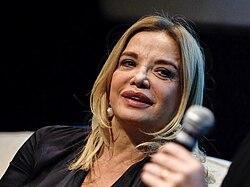 Izzo in 2012 | |
| Born | Simonetta Izzo (1953-04-22) 22 April 1953 Rome, Italy |
| Occupations |
|
| Years active | 1973–present |
| Spouses | |
| Children | Francesco Venditti |
| Parents |
|
| Relatives |
|
Simonetta "Simona" Izzo (born 22 April 1953) is an Italian actress, voice actress, film director and screenwriter.1
Biography
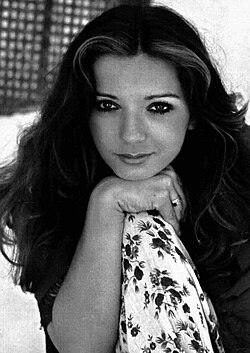
Born in Rome, the daughter of voice actor Renato Izzo, Simona Izzo began working as a dubber at a young age.2 In 1990, she won the Nastro d'Argento for Best Dubbing for her work on the Italian version of Scenes from the Class Struggle in Beverly Hills, where she dubbed Jacqueline Bisset.3 After appearing as an actress in a number of TV series and films and collaborating to a number of screenplays written by her husband, Ricky Tognazzi, her directorial debut, Sentimental Maniacs earned her the David di Donatello for Best New Director.23
Personal life
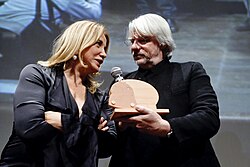
From her marriage to singer-songwriter Antonello Venditti (1975–1978),4 Simona Izzo has a son, Francesco. Since 1995, she has been married to director Ricky Tognazzi. She is an atheist.5
Selected television
Co-hosted for RAI, and ultimately, Eurovision, the 1982 Italian heat of Jeux sans frontières on Tuesday 25 May at La Maddalena, Italy.
Selected filmography
- Screenwriter
- Little Misunderstandings (1989)
- Ultra (1991)
- The Escort (1993)
- Strangled Lives (1996)
- Canone inverso (2000)
- The Good Pope: Pope John XXIII (2003)
- Screenwriter and director
- Sentimental Maniacs (1994)
- Bedrooms (1997)
References
References
- "Simona Izzo's dubbing contributions". Antoniogenna.net. Retrieved 24 April 2019.
- Roberto Poppi (2002). I registi: dal 1930 ai giorni nostri. Gremese Editore, 2002. ISBN 8884401712.
- Enrico Lancia (1998). I premi del cinema. Gremese Editore, 1998. ISBN 8877422211.
- "Antonello Venditti, chi è l'ex moglie famosa (infuriata) e la dedica 'immortale' a Monica Leofreddi". 17 November 2024.
- Giordano, Lucio (18 June 2021). "Non ci credo, anche se ancora oggi mi chiedo se Dio esiste o no". Dipiù (in Italian). No. 24. Cairo Editore. pp. 96–99.