| Sigmoidotropis | |
|---|---|
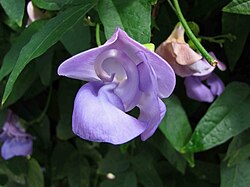
| |
| Sigmoidotropis speciosa | |
Scientific classification 
| |
| Kingdom: | Plantae |
| Clade: | Embryophytes |
| Clade: | Tracheophytes |
| Clade: | Spermatophytes |
| Clade: | Angiosperms |
| Clade: | Eudicots |
| Clade: | Rosids |
| Order: | Fabales |
| Family: | Fabaceae |
| Subfamily: | Faboideae |
| Subtribe: | Phaseolinae |
| Genus: | Sigmoidotropis (Piper) A. Delgado (2011) |
| Type species | |
| Sigmoidotropis speciosa (Kunth) A. Delgado
| |
| Species1 | |
| |
| Synonyms | |
| |
Sigmoidotropis is a genus of flowering plants in the legume family, Fabaceae. It includes eight species native to the tropical Americas, ranging from northern Mexico and the Caribbean islands to southern Brazil.1 It belongs to the subfamily Faboideae. Species in this genus were formerly considered to belong to the genus Vigna.2
References
References
- Sigmoidotropis (Piper) A.Delgado. Plants of the World Online. Retrieved 20 September 2023.
- Delgado-Salinas A, Thulin M, Pasquet R, Weeden N, Lavin M (2011). "Vigna (Leguminosae) sensu lato: the names and identities of the American segregate genera". Am J Bot. 98 (10): 1694–715. doi:10.3732/ajb.1100069. PMID 21980163.