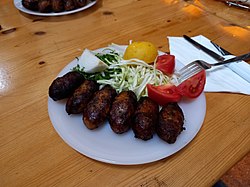
 Cypriot dish: Sheftalia | |
| Course | Main course |
|---|---|
| Place of origin | Cyprus |
| Serving temperature | Hot |
| Main ingredients | Beef, lamb, or pork |
Sheftalia (locally [ʃeftaˈʎa]; Greek: σεφταλιά; Turkish: Şeftali Kebabı) is a traditional sausage that originated in Cyprus. It is made from caul fat, or omentum, the membrane that surrounds the stomach of pig or lamb, to wrap the ingredients rather than sausage casing.123 It can be regarded as a type of crépinette.
Sheftalia is often regarded as one of the main staples in Cypriot cuisine.
The word sheftalia apparently originates from the Turkish word "Şeftali", meaning peach. This is likely due to the pinkish hue of the cooked meat. Another theory suggests the name came from a Turkish Cypriot street vendor called "Şef Ali" (Chef Ali), who sold a kebab called "Şef Ali kebabı,"(Chef Ali's Kebab), which eventually became "Şeftali kebabı" and then Sheftalia.4
References
References
- Ferrier, Morwenna (12 September 2018). "Insane about the membrane: caul fat is pretty, delicious and popular". The Guardian. Retrieved 23 November 2022.
- "Cypriot sausages (sheftalia)". Food. SBS. 21 January 2013. Retrieved 23 November 2022.
- Fletcher, Nichola; Bretherton, Caroline (April 2012). Sausage. Dorling Kindersley Limited. p. 117. ISBN 9781409375456. Archived from the original on 2023-07-07. Retrieved 2023-03-19.
- "Sheftalia: Preparing the Famous Cypriot Dish". CYPRUS FAQ. Retrieved 2025-08-07.
External links
External links
- Hellicar, Martin (29 July 1998). "The Great Sheftalia Scandal of 98". Hellenic Resources Network.
- sheftalia sti kypro (in Greek)