| Leil Selichot | |
|---|---|
| Official name | ליל הסליחות |
| Type | Jewish |
| 2025 date | Evening, 13 September1 |
| 2026 date | Evening, 5 September1 |
| 2027 date | Evening, 25 September1 |
| 2028 date | Evening, 16 September1 |


Selichot (Hebrew: סְלִיחוֹת, romanized: səliḥoṯ, singular: סליחה, səliḥā) are Jewish penitential poems and prayers, especially those said in the period leading up to the High Holidays, and on fast days. The Thirteen Attributes of Mercy are a central theme throughout these prayers.
Selichot of the High Holidays

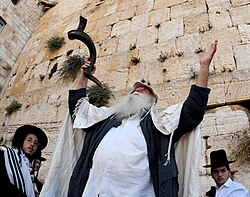
In the Sephardic tradition, recital of Selichot in preparation for the High Holidays begins on the second day of the Hebrew month of Elul. In the Ashkenazi tradition, in years where the first day of Rosh Hashanah begins on a Thursday or Saturday, selichot are recited from the Saturday night before Rosh Hashanah. If, however, the first day of Rosh Hashanah falls on a Monday or Tuesday, selichot are recited from the Saturday night more than a week before Rosh Hashanah to ensure that it is recited at least four times. This may be because originally the pious would fast for ten days during the season of repentance, and four days before Rosh Hashanah were added to compensate for the four of the Ten Days of Repentance on which fasting is forbidden – the two days of Rosh Hashanah, Shabbat Shuvah, and the day preceding Yom Kippur—and, while the fasts are observed by very few today, the Selichot that accompanied them have been retained. Alternatively, the Rosh Hashanah liturgy includes the Biblical phrase "you shall observe a burnt offering", and like an offering which needs to be scrutinised for defects for four days, so too four days of self-searching are needed before the day of judgment.2
In the Italian rite, selichot always begin on a Monday or Thursday shortly before Rosh Hashanah. If Rosh Hashanah falls on Monday, they begin the previous Monday. If Rosh Hashanah falls on a Tuesday, they begin on the Monday eight days before. If Rosh Hashana falls on Thursday, they begin the previous Thursday. If Rosh Hashanah falls on Shabbat, they begin the Monday of that week.3
Selichot refers to both the piyyutim that compose the service as well as to the service itself. In most Sephardic communities, selichot services are identical each day. However, some North African communities recited different selichot on Mondays, Thursdays and Shabbat, following the order in Siftei Renanot, while keeping the "standard" order on days without Torah Reading.4 In the Eastern Ashkenazic tradition, although the text and length of specific prayers varies from day to day, the overall format remains the same and is prefaced by Ashrei (Psalms 145) and the Half-Kaddish. In the Western Ashkenazic tradition, there is similarly an overall format, but it begins with Adon Olam or Lecha Hashem Ha'Tzedaka, and the Half-Kaddish follows the first set of the thirteen attributes.5
Selichot are usually recited between midnight and dawn. Some recite it at night after the Maariv prayer, or in the morning before Shacharit, due to the convenience of synagogue attendance when a prayer is already taking place there.
The most popular night of Selichot in the Ashkenazi tradition is the first night, when many women and girls as well as men and boys attend the late-night service on Saturday night. In some communities, the hazzan wears a kittel and sings elaborate melodies. In some congregations, it is not unusual for a choir to participate in this first night's service.6 In the Eastern Ashkenazic tradition, this night also has more Selichot than any other night prior to Rosh Hashanah eve. The other nights are sometimes more sparsely attended and those services are often led by a layperson, rather than a trained musician, and with melodies that are less elaborate than the first night.
In addition to the Selichot of the High Holiday period, the recitation of Selichot on Yom Kippur itself is the centerpiece and most important part of the liturgy,7 recited in all of the prayers of the day. Beginning in the late 19th Century,8 many communities in Eastern Europe stopped reciting Selichot except at Maariv and Neilah.9 Western Ashkenazic communities, as well as a small number of Eastern Ashkenazic communities, maintain the recitation of Selichot in all of the prayers of Yom Kippur. Italian rite communities recite Selichot on Yom Kippur in all of the prayers except Musaf. Sephardic communities also recite Selichot at all of the prayers of Yom Kippur, although they recite them after the Chazzan's repetition rather than as a part of it.
Categories of Selichot
Categories of Selichot in the Ashkenazic tradition may include:
- Selichah (סליחה 'forgiveness') – This is the default Selichah and comprises the vast majority of the Selichot service. These can be subdivided into categories of Sheinya (with two line stanzas), Shelishiya (with three line stanzas) and Shalmonit (with four line stanzas).
- Pizmon (פזמון 'chorus') – These central Selichot vary according to the day and contain a chorus which is repeated after each stanza.
- Akeidah (עקידה 'binding', a word which specifically refers to the Binding of Isaac) – This Selichah contains the theme of the Akeidah as a merit for God answering our prayers. In the Ashkenazic selichot rites, these poems are recited on the eve of Rosh Hashanah, during the Ten Days of Repentance, and on Yom Kippur itself (but not during the first days of selichot prior to the eve of Rosh Hashanah). Depending on the specific rite, these poems are recited immediately before or immediately after the Pizmon.
- Chatanu (חטאנו 'we have sinned') – Starting on the evening before Rosh Hashanah [and in the Western rites, even on the first days] and continuing through Yom Kippur, this Selichah is said after the final recitation of the Thirteen Attributes and before the Vidui confessional. It contains as its refrain, "חטאנו צורנו סלח לנו יוצרנו" ('We have sinned, our Rock; forgive us, our Creator'). Perhaps the most famous Chatanu Selichah is the martyrology from the Midrash Eleh Ezkerah recited in the Eastern Ashkenazic rite during Musaf on Yom Kippur or at other times in other rites. The recitation of this refrain has been partially or entirely abandoned in many communities.
- Techinah (תחינה 'petition') – It is recited during Tachnun at the very end of the Selichot service. In the Ashkenazic selichot rites, these poems are recited on the eve of Rosh Hashanah and during the Ten Days of Repentance (but generally not during the first days of selichot prior to the eve of Rosh Hashanah).
Selichot of Fast Days
On minor fast days (including the Fast of Behav), most communities recite Selichot at some point during the Shacharit service (as opposed to before Shacharit). In contemporary practice, most communities recite these Selichot after the conclusion of the Shacharit Amidah.1011 In some communities (especially Western Ashkenazic communities, but also some Eastern Ashkenazic communities), the older practice is maintained to insert the recitation of the Selichot of minor fast days in the middle of the blessing for forgiveness (סלח לנו כי חטאנו) in the repetition of the Shacharit Amidah. The content of many of these prayers is related to the specific fast day.
In Ashkenazic communities, Selichot are recited on the Fast of Gedaliah only before the prayer service like the selichot of the High Holidays; in many Sephardic communities, additional selichot are recited after the Amidah just like any other fast day. Selichot are not recited in any community today on the major fast day of Tisha B'Av, although they were recited by the Geonim of Babylonia.12

Selichot on other occasions
In addition to High Holidays and Fast Days, there were communities that recited Selichot on Hoshana Rabbah.13
Additionally, in the early modern period, there were "shomerim la-boker societies" which recited Selichot on every day of the year that Tachanun is recited.14
Selichot rites
Until approximately the 15th century, there was no set order for selichot, and the chazzan in each community would pick which piyyutim to recite each day.15 Beginning in the 15th century, each region of the Ashkenazic world developed its own order. There are at least thirteen Ashkenazic printed rites for selichot:16
The following eight are variations of the Western Ashkenazic rite:
- Frankfurt and its surroundings17
- Alsace18
- Italian Ashkenazim19
- Nuremberg and Fürth20
- Switzerland and Swabia21
- Worms22
- Cologne23
- Floß24
The following five are variations of the Eastern Ashkenazic rite:
- Poland (Polin)25
- Bohemia, Moravia, Silesia, and Hungary26
- Lithuania and Samogitia (Lita and Zamut)27
- Poznań and Grodno28
- Old Synagogue in Prague29
Among 21st century Ashkenazi Jewish communities, the Polin and Lita variations are dominant, although Bohemia is the most common in England. Some associate Lita with Nusach Ashkenaz and Polin with Nusach Sefard, likely because in early 20th Century most Jews in Poland had adopted Nusach Sefard, whereas most Jews in Lithuania maintained Nusach Ashkenaz. However, the differences between Polin and Lita Selichot have origins over a hundred years before the advent of Nusach Sefard, and the minhagim were geographic rather than ideological. Chabad recites Selichot according to Nusach Lita because they are from Lithuania, and there are Polish mitnagdim who recite Selichot according to Nusach Polin.
The poems recited in the major variations, with their assigned numbers, for the days proceeding Rosh Hashanah and the Ten Days of Repentance (but not including the Selichot for the prayers of Yom Kippur itself) as well as for the threefold Fast of Behav, are as follows (page numbers in superscript to the right):
| Title | Title (translated) | Frankfurt3031 | Bohemia, Moravia, Silesia, Hungary32 |
Lita33 | Polin34 | ||||
|---|---|---|---|---|---|---|---|---|---|
| Day | No. | Day | No. | Day | No. | Day | No. | ||
| אָב לְרַחֵם וְרַב סְלוֹחַ חוֹלַלְתָּנוּ | Father, You created us with compassion and pardon | 5 of TDR | 10430: 338 | Erev RH | 3733: 100 | ||||
| אָבְדוּ חַכְמֵי גָזִית | The sages of the council have perished | 4 of TDR | 9330: 322 | ||||||
| אֲבוֹתַי כְּרַבְתָּ רִיבָם | You contended for my forefathers. | 6 | 3130: 70 | ||||||
| אָבְלָה נַפְשִׁי | My soul mourns | FG | 6130: 278 | FG | 4432: 64 | FG | 4833: 130 | FG | 4434: 301 |
| אָדוֹן, בִּינָה הַגִיגֵנוּ | Master, understand our thoughts | 1 | 630: 18 | 2 of TDR | 6733: 165 | ||||
| אָדוֹן, בִּינָה הַגִיגֵנוּ | My soul mourns | BHB1 | |||||||
| אָדוֹן, בְּפָקְדְךָ אֱנוֹשׁ לַבְּקָרִים | Master, You visit man in the mornings | Erev RH | 3830: 84 | Erev RH | 2932: 40 | Erev RH | 3433: 95 | Erev RH | 2934: 234 |
| אָדוֹן, בְּפָקְדְךָ אֱנוֹשׁ לַבְּקָרִים | Master, You visit man in the mornings | Erev YK | 11330: 353 | Erev YK | 8832: 106 | Erev YK | 9833: 218 | Erev YK | 8634: 476 |
| אָדוֹן, בְּשָׁפְטְךָ אֱנוֹשׁ רִמָּה | Master, when you judge, man is nothing like a worm | Erev RH | 3930: 85 | Erev RH | 2832: 39 | Erev RH | 3533: 97 | Erev RH | 3034: 237 |
| אָדוֹן, בְּשָׁפְטְךָ אֱנוֹשׁ רִמָּה | Master, when you judge, man is nothing like a worm | Erev YK | 11430: 353 | ||||||
| אָדוֹן, דִּין אִם יְדֻקְדַּק | Erev RH | 4830: 99 | Erev RH | 3432: 44 | Erev RH | 2834: 232 | |||
| אָדוֹן, דִּין אִם יְדֻקְדַּק | Erev YK | 12230: 353 | Erev YK | 8932: 106 | Erev YK | 9933: 218 | Erev YK | 8534: 474 | |
| אָדוֹן, מוֹעֵד כְּתִקַּח | Erev RH | 403530: 86 | Erev RH | 2532: 35 | Erev RH | 2533: 67 | Erev RH | 2734: 230 | |
| אָדוֹן, מוֹעֵד כְּתִקַּח | Erev YK | 11230: 353 | |||||||
| אָדוֹן, מִשְׁפָּט בְּקִרְבָּךְ | 7 | 3630: 81 | |||||||
| אָדָם אֵיךְ יִזְכֶּה | Erev RH | 3332: 43 | Erev RH | 3234: 241 | |||||
| אֲדֹנֵי הָאֲדֹנִים הַשְׁקִיפָה מִמְּעוֹנִים | Erev RH | 4533: 122 | |||||||
| אֲדֹנָי שְׁמָעָה אֲדֹנָי סְלָחָה | 4 | 2030: 49 | |||||||
| אַהֲבַת עִזּוּז וְתוֹקֶף חִבָּה | Erev YK | 12630: 353 | 5 of TDR | 8632: 104 | |||||
| אֹהֶל שִׁכֵּן אִם רִקֵּן | 4 of TDR | 9630: 327 | |||||||
| אוֹדֶה עֲלֵי פִשְׁעִי | 4 of TDR | 9830: 329 | |||||||
| אֱוִילֵי הַמַּתְעֶה מַרְגִּיז וּמַחֲטִיא | Erev RH | 3232: 42 | |||||||
| אֱוִילֵי מִדֶּרֶךְ פִּשְׁעָם | 5 of TDR | 10830: 344 | |||||||
| אִוִּיתִיךָ קִוִּיתִיךָ מֵאֶרֶץ מֶרְחַקִּים | 4 | 1830: 46 | 2 | 732: 18 | 2 | 633: 33 | 5 | 1434: 155 | |
| אוֹמֶץ יוֹסִיף טְהוֹר יָדַיִם | 5 of TDR | 8332: 101 | 5 of TDR | 9133: 208 | |||||
| אוֹרַח צְדָקָה | FG | 6430: 282 | |||||||
| אוֹרְךָ וַאֲמִתְּךָ שְׁלַח | Erev RH | 4730: 97 | 2 of TDR | 5532: 74 | FG | 5033: 133 | FG | 4634: 306 | |
| אוֹרְךָ וַאֲמִתְּךָ שְׁלַח | Erev YK | 12130: 353 | |||||||
| אָז בְּהַר מוֹר | 5 of TDR | 10630: 341 | Erev RH | 3932: 50 | 5 of TDR | 9233: 211 | FG | 4934: 314 | |
| אָז טֶרֶם נִמְתְּחוּ נִבְלֵי שְׁכָבִים | 5 of TDR | 10030: 332 | FG | 4232: 62 | FG | 4633: 126 | FG | 4234: 294 | |
| אָז קַשְׁתִּי וְחַרְבִּי | 4 | 2130: 50 | |||||||
| אֱזוֹן תַּחַן | 5 | 2430: 57 | 5 of TDR | 8432: 103 | 5 of TDR | 8933: 204 | 5 of TDR | 8134: 453 | |
| אֱזוֹן תַּחַן | BHB3 | BHB3 | BHB3 | BHB3 | |||||
| אָזְנְךָ הַטֵּה וְהַקְשֵׁב | 5 of TDR | 8032: 98 | |||||||
| אֶזְעַק אֶל אֶלֹהִים קוֹלִי | 3 of TDR | 6432: 84 | Erev RH | 3633: 98 | 2 of TDR | 5534: 342 | |||
| אֶזְרָחִי הֵעִיר מִמִזְרָח | 3 of TDR | 7433: 178 | |||||||
| אֶזְרָחִי מֵעֵבֶר הַנָּהָר | FG | 6630: 285 | 4 of TDR | 7632: 95 | 2 of TDR | 6533: 163 | 3 of TDR | 6634: 385 | |
| אַיֵּה כָּל נִפְלְאוֹתֶיךָ הַגְּדוֹלוֹת וְהַנּוֹרָאוֹת | 3 | 1430: 40 | 4 | 1232: 22 | 4 | 1233: 42 | 4 | 1234: 138 | |
| אַיֵּה כָּל נִפְלְאוֹתֶיךָ הַגְּדוֹלוֹת וְהַנּוֹרָאוֹת | BHB2 | ||||||||
| אַיֵּה קִנְאָתְךָ וּגְבוּרֹתֶךָ | 2 | 632: 17 | 6 | 1833: 54 | 5 | 1534: 157 | |||
| אֲיַחֵד צוּרִי בְּרוֹב הוֹדָאוֹת | FG | 5633: 145 | |||||||
| אֵיךְ אוּכַל לָבֹא עָדֶיךָ | 4 of TDR | 9130: 318 | 2 of TDR | 6433: 160 | 3 of TDR | 6434: 379 | |||
| אֵיךְ נִפְתַּח פֶּה לְפָנֶיךָ | 1 | 13630: 7 | 1 | 132: 6 | 1 | 133: 8 | 1 | 134: 63 | |
| אֵיךְ נִפְתַּח פֶּה לְפָנֶיךָ | FG | 6030: 278 | |||||||
| אֵיכָכָה אֶפְצֶה פֶּה | 5 of TDR | 10330: 336 | Erev RH | 2433: 65 | Erev RH | 2434: 215 | |||
| אֵין כְּמִדַּת בָּשָׂר מִדָּתֶךָ | 3 | 1230: 36 | 5 | 1532: 25 | 3 | 833: 35 | 2 | 634: 100 | |
| אֵין כְּמִדַּת בָּשָׂר מִדָּתֶךָ | BHB3 | ||||||||
| אֵין מִי יִקְרָא בְצֶדֶק | 5 | 2230: 53 | 1 | 232: 8 | 1 | 233: 11 | 1 | 234: 69 | |
| אֵין מִי יִקְרָא בְצֶדֶק | BHB1 | ||||||||
| אֵין תְּלוּיָה לְרֹאשׁ | 7 | 2132: 30 | |||||||
| אֵיתָן לִמַּד דַּעַת | 2 of TDR | 7630: 299 | 3 of TDR | 6732: 86 | 4 of TDR | 8333: 195 | 2 of TDR | 5834: 352 | |
| אַךְ בְּךָ לַדָּל מָעוֹז | Erev RH | 4330: 91 | Erev RH | 3132: 41 | Erev RH | 3134: 239 | |||
| אַךְ בְּךָ לַדָּל מָעוֹז | Erev YK | 11730: 353 | |||||||
| אַךְ בְּךָ מִקְוֵה יִשְׂרָאֵל | 4 of TDR | 9230: 320 | 2 of TDR | 6133: 153 | 3 of TDR | 6134: 369 | |||
| אַךְ בְּךָ מִקְוֵה יִשְׂרָאֵל | BHB2 | ||||||||
| אַךְ בְּמֵתַח דִּין | Erev RH | 4130: 88 | Erev RH | 3032: 41 | Erev RH | 3334: 244 | |||
| אַךְ בְּמֵתַח דִּין | Erev YK | 11530: 353 | |||||||
| אֶל אֱלוֹהַּ דָּלְפָה עֵינִי | Erev RH | 2732: 37 | Erev RH | 2833: 72 | Erev RH | 2634: 223 | |||
| אֶל אֱלֹקִים אֶצְעֲקָה בְּמִלּוּלִי | Erev YK | 12830: 356 | |||||||
| אֵל אֱמוּנָה עֶזְרָה הָבָה | Erev RH | 2933: 77 | Erev RH | 3434: 246 | |||||
| אַל בְּאַפְּךָ פֶּן תַּמְעִיט | Erev RH | 4430: 92 | |||||||
| אַל בְּאַפְּךָ פֶּן תַּמְעִיט | Erev YK | 11830: 353 | |||||||
| אֶל הַר הַמּוֹר | 3 of TDR | 8630: 312 | 2 of TDR | 5832: 77 | 5 of TDR | 8334: 458 | |||
| אַל יִמְעַט לְפָנֶיךָ | 7 | 2232: 31 | |||||||
| אֵל נָא רְפָא נָא | 5 | 2630: 60 | |||||||
| אֵל נָא רְפָא נָא | BHB3 | BHB123 | BHB123 | ||||||
| אַל נָא תְּיַסֵּר בָּאֵי עָדֶיךָ | Erev RH | 4230: 90 | |||||||
| אַל נָא תְּיַסֵּר בָּאֵי עָדֶיךָ | Erev YK | 11630: 353 | |||||||
| אַל תָּבוֹא בְּמִשְׁפָּט עִמָּנוּ | Erev RH | 3734: 260 | |||||||
| אֵלֶה אֶזְכְּרָה | Erev RH | 5530: 113 | |||||||
| אֵלֶיךָ ה' אֶקְרָא אָיוֹם | 6 | 2730: 61 | 4 of TDR | 6934: 401 | |||||
| אֵלֶיךָ ה' שִׁוַּעְתִּי | 2 of TDR | 7530: 298 | 4 of TDR | 7232: 90 | 3 of TDR | 6234: 374 | |||
| אֵלֶיךָ הָאֵל | 3 of TDR | 7033: 168 | |||||||
| אֵלֶיךָ לֵב וָנֶפֶשׁ | 2 of TDR | 7030: 290 | 3 of TDR | 6032: 80 | 2 of TDR | 6033: 152 | 2 of TDR | 5234: 334 | |
| אֵלֶיךָ נְשׂוּאוֹת עֵינֵינוּ | 4 | 1730: 45 | 3 | 934: 120 | |||||
| אֵלֶיךָ נְשׂוּאוֹת עֵינֵינוּ | BHB3 | ||||||||
| אֵלֶיךָ צוּרִי כַּפַּיִם שִׁטַחתִּי | Erev RH | 4133: 108 | |||||||
| אֵלְכָה וְאָשׁוּבָה | 3 of TDR | 6332: 83 | 2 of TDR | 5434: 338 | |||||
| אֱלֹקַי בּוֹשְׁתִּי | 2 of TDR | 5232: 71 | |||||||
| אֱלֹקִים אֲדֹנָי חֵילִי | 4 of TDR | 7332: 91 | 5 of TDR | 9033: 206 | |||||
| אֱלֹקִים אֵין בִּלְתֶּךָ | Erev RH | 4630: 95 | FG | 4632: 66 | 2 of TDR | 6333: 158 | 3 of TDR | 6334: 376 | |
| אֱלֹקִים אֵין בִּלְתֶּךָ | Erev YK | 12030: 353 | |||||||
| אֱלֹקִים אַל דֳּמִי לְדָמִי | Erev RH | 5030: 102 | |||||||
| אֱלֹקִים אַל דֳּמִי לְדָמִי | Erev YK | 12430: 353 | |||||||
| אֱלֹקִים אַל דֳּמִי, אֵל נִקְשָׁר בִּשְׁמִי | 5 of TDR | 10530: 339 | |||||||
| אֱלֹקִים בְּיִשְׂרָאֵל גָּדוֹל נוֹדָעְתָּ | 7 | 3330: 75 | 5 | 1533: 48 | 5 of TDR | 7834: 441 | |||
| אֱלֹקִים בְּיִשְׂרָאֵל גָּדוֹל נוֹדָעְתָּ | BHB1 | BHB1 | BHB1 | ||||||
| אֱלֹקִים יִרְאֶה לּוֹ שֶׂה | Erev RH | 3033: 80 | |||||||
| אִם אָמְרִי אֶשְׁכְּחָה | 3 of TDR | 8130: 304 | 5 | 1632: 25 | |||||
| אִם אָפֵס רֹבַע הַקֵּן | FG | 4932: 69 | FG | 5233: 137 | 4 of TDR | 7434: 420 | |||
| אִם עֲוֹנֵינוּ עָנוּ בָנוּ | 6 | 3030: 67 | 7 | 2233: 60 | |||||
| אִם עֲוֹנֵינוּ עָנוּ בָנוּ | BHB2 | ||||||||
| אִם עֲוֹנֵינוּ רַבּוּ לְהַגְדִּיל | 2 | 930: 32 | 1 | 332: 9 | 2 | 533: 31 | 2 | 534: 98 | |
| אָמוֹן פִּתְחֵי תְשׁוּבָה | 5 of TDR | 9633: 216 | |||||||
| אֱמוּנִים בְּנֵי מַאֲמִינִים | Erev RH | 5230: 106 | |||||||
| אָמְנָם אֲנַחְנוּ חָטָאנוּ וְהֶעֱוִינוּ | 4 of TDR | 7933: 184 | |||||||
| אִמַּנְתָּ מֵאָז | FG | 6230: 279 | FG | 4532: 65 | FG | 4933: 131 | FG | 4534: 303 | |
| אָמַרְנוּ נִגְזַרְנוּ לָנוּ | 3 of TDR | 8430: 309 | 4 of TDR | 7432: 93 | 2 of TDR | 5634: 344 | |||
| אֱמֶת אַתָּה הוּא רִאשׁוֹן | Erev RH | 3133: 83 | |||||||
| אָנָּא הַבֵּט | Erev RH | 5830: 119 | |||||||
| אָנָּא הַבֵּט | Erev YK | 13030: 360 | |||||||
| אָנָּא עוֹרְרָה אַהֲבָתְךָ | Erev RH | 2632: 36 | Erev RH | 2733: 70 | Erev RH | 2534: 218 | |||
| אֱנוֹשׁ, בַּמֶּה יִצְדַּק | 5 of TDR | 10130: 333 | 3 of TDR | 6232: 82 | |||||
| אֱנוֹשׁ, עַד דַּכָּא תָּשֵׁב | 3 of TDR | 8230: 305 | 3 of TDR | 6132: 80 | |||||
| אֲנַחְנוּ הַחֹמֶר וְאַתָּה יוֹצְרֵנוּ | 2 of TDR | 5432: 73 | 7 | 2034: 193 | |||||
| אֲנִי בְּרֹב חַסְדְּךָ | 2 of TDR | 7130: 291 | 5 of TDR | 7734: 437 | |||||
| אֲנִי יוֹם אִירָא אֵלֶיךָ אֶקְרָא | 2 | 830: 30 | 6 | 1832: 27 | 3 | 933: 37 | 4 | 1134: 135 | |
| אֲנִי עַבְדְּךָ בֶּן אֲמָתֶךָ | Erev RH | 5330: 108 | |||||||
| אֲנִי קְרָאתִיךָ | 4 | 1133: 41 | 2 of TDR | 5334: 336 | |||||
| אֶנְקַת מְסַלְדֶיךָ | Erev RH | 4333: 122 | |||||||
| אַנְשֵׁי אֲמָנָה אָבָדוּ | 1 | 230: 11 | BHB2 | BHB2 | BHB2 | ||||
| אַנְשֵׁי אֲמָנָה עָבָרוּ | 1 | 330: 13 | |||||||
| אָפֵס הוֹד כְּבוֹדָהּ | 5 of TDR | 10230: 335 | 7 | 2133: 59 | |||||
| אֲפָפוּנִי מַיִם עַד נֶפֶשׁ | BHB3 | BHB3 | BHB3 | ||||||
| אֶקְרָא אֶל אֱלֹקִים קוֹלִי | 3 of TDR | 8530: 311 | |||||||
| אֶקְרָא בְשִׁמְךָ לְהַחֲזִיק בָּךְ | 3 | 932: 19 | 6 | 1733: 52 | |||||
| אַרְבָּעָה אבוֹת נְזִיקִין הֵן | 4 of TDR | 8033: 186 | |||||||
| אָרִיד בְּשִׂיחִי | 3 | 1630: 43 | 4 of TDR | 8533: 198 | |||||
| אַרְיֵה בַיַּעַר דָּמִיתִי | 3 of TDR | 8330: 308 | 4 | 1332: 23 | 2 of TDR | 6233: 156 | 7 | 2134: 196 | |
| אָרְכוּ הַיָּמִים | 5 | 2330: 55 | 6 | 1834: 175 | |||||
| אַרְכָן וְקַצְרָן | 6 | 2830: 63 | |||||||
| אֲשַׁם בַּעֲלֵי אַשְׁמָה | 2 of TDR | 5332: 72 | |||||||
| אֶשְׁמְרָה אֵלֶיךָ עֻזִּי | 3 of TDR | 8830: 314 | |||||||
| אֶשְׁפּוֹךְ שִׂיחִי לְפָנֶיךָ צוּרִי | Erev RH | 4930: 100 | |||||||
| אֶשְׁפּוֹךְ שִׂיחִי לְפָנֶיךָ צוּרִי | Erev YK | 12330: 353 | |||||||
| אֵשֶׁת נְעוּרִים הָאֲהוּבָה | 4 of TDR | 6932: 88 | 4 of TDR | 7833: 184 | |||||
| אֶת ה' בְּהִמָּצְאוֹ | 2 of TDR | 7230: 293 | FG | 4332: 63 | FG | 4733: 128 | FG | 4334: 298 | |
| אֶת הַקּוֹל קוֹל יַעֲקֹב נוֹהֵם | Erev RH | 5130: 105 | |||||||
| אֶת הַקּוֹל קוֹל יַעֲקֹב נוֹהֵם | Erev YK | 12530: 353 | |||||||
| אֶת פְּנֵי מֵבִין יוֹדְעֵי דִּין דָּל | 7 | 3230: 73 | |||||||
| אֶת צוֹם הַשְּׁבִיעִי | FG | 6330: 280 | |||||||
| אַתָּה אֱלֹקַי מַלְכִּי מִקֶּדֶם | 4 of TDR | 7032: 88 | |||||||
| אַתָּה הָרוֹאֶה בְּעֶלְבּוֹן נֶעֱלָבִים | 5 of TDR | 7932: 97 | |||||||
| אַתָּה חֶלְקִי וְצוּר לְבָבִי | 4 of TDR | 9530: 325 | 5 of TDR | 8232: 100 | 4 of TDR | 8133: 189 | 5 of TDR | 7934: 444 | |
| אַתָּה מִקֶּדֶם אֱלֹהֵינוּ | 3 | 1330: 38 | 4 of TDR | 7034: 406 | |||||
| בְּאַשְׁמֹרֶת הַבֹּקֶר קְרָאתִיךָ אֵל מְהֻלָּל | 3 of TDR | 8730: 313 | 4 | 1432: 24 | 2 of TDR | 6633: 164 | 4 | 1334: 139 | |
| בֵּין כֶּסֶה לֶעָשׂוֹר | 2 of TDR | 5732: 76 | 4 of TDR | 8433: 197 | 2 of TDR | 5734: 349 | |||
| בְּמוֹצָאֵי מְנוּחָה קִדַּמְנוּךָ תְּחִלָּה | 1 | 530: 17 | 1 | 532: 10 | 1 | 433: 16 | 1 | 434: 78 | |
| בְּתוּלַת בַּת יְהוּדָה | 6 | 1932: 28 | 7 | 2033: 57 | |||||
| גָּדוֹל עֲוֹנִי וְלַחֲטוֹא הוֹסַפְתִּי | 2 of TDR | 7830: 302 | |||||||
| גָּדוֹל עֲוֹנִי וְלַחֲטוֹא הוֹסַפְתִּי | BHB2 | ||||||||
| גְרוֹנִי נִחַר זוֹעֵק חָמָס | FG | 5933: 150 | |||||||
| ה' אֱלֹהֵי הַצְבָאוֹת | Erev RH | 3730: 83 | Erev RH | 2432: 33 | Erev RH | 2333: 62 | Erev RH | 2334: 211 | |
| ה' אֱלֹקֵי הַצְבָאוֹת נוֹרָא בָעֶלְיוֹנִים | Erev YK | 11130: 352 | |||||||
| ה' אֱלֹקֵי יִשְׂרָאֵל | 7 | 3430: 76 | 4 of TDR | 7132: 89 | 5 of TDR | 8833: 203 | |||
| ה' אֱלֹקַי רַבַּת צְרָרוּנִי | Erev RH | 4530: 93 | |||||||
| ה' אֱלֹקַי רַבַּת צְרָרוּנִי | Erev YK | 11930: 353 | |||||||
| ה' ה' אֵל רַחוּם | 5 | 2530: 58 | 5 of TDR | 8532: 103 | 5 of TDR | 9333: 213 | 5 of TDR | 8234: 456 | |
| ה' ה' אֵל רַחוּם | BHB3 | BHB3 | BHB3 | BHB3 | |||||
| ה' שׁוֹמְרִי לְבֵיתְךָ נָאֲוָה | 5 of TDR | 11030: 350 | |||||||
| הוֹרֵיתָ דֶרֶךְ תְּשׁוּבָה | FG | 6730: 287 | FG | 4832: 67 | FG | 5333: 139 | FG | 4834: 311 | |
| וּבְכֵן יְהִי רָצוֹן מִלְּפָנֶיךָ | Erev RH | 5730: 118 | |||||||
| זְכוֹר בְּרִית אַבְרָהָם | Erev RH | 5630: 117 | Erev RH | 4032: 51 | Erev RH | 4233: 111 | Erev RH | 4034: 267 | |
| זְכוֹר בְּרִית אַבְרָהָם | Erev YK | 12930: 360 | |||||||
| זְכוֹר בְּרִית אַבְרָהָם | FG | 5433: 140 | FG | 5034: 318 | |||||
| זְכוֹר בְּרִית אַבְרָהָם | 5 of TDR | 9533: 216 | |||||||
| חוֹקֵר הַכֹּל וְסוֹקֵר | 6 | 2032: 29 | 4 | 1333: 44 | |||||
| חָטָאנוּ צוּרֵנוּ | 5 of TDR | 9433: 214 | |||||||
| חַיִּים אֲרוּכִים | Erev RH | 3233: 86 | Erev RH | 3534: 250 | |||||
| חָנֵּנוּ ה' חָנֵּנוּ | 7 | 2332: 33 | 6 | 1934: 180 | |||||
| יוֹשֵׁב בְּגָבְהֵי מְרוֹמִים | 2 | 1130: 34 | 3 of TDR | 7633: 181 | |||||
| יוֹשֵׁב בְּסֵתֶר עֶלְיוֹן | 4 of TDR | 7532: 94 | 6 | 1933: 55 | 7 | 2234: 198 | |||
| יַחְבִּיאֵנוּ צֵל יָדוֹ | 5 | 1732: 26 | 3 of TDR | 6534: 382 | |||||
| יַעֲזוֹב רָשָׁע נְתִיבוֹ | FG | 5733: 147 | |||||||
| יָקרוּ רֵעֶיךָ רַב מְחוֹלֵל | FG | 5533: 142 | |||||||
| יְרוּשָׁלַיִם אֶת ה' | 3 of TDR | 7333: 173 | |||||||
| יֵרָצֶה צוֹם עַמְּךָ | Erev YK | 12730: 355 | Erev YK | 9032: 106 | Erev YK | 10033: 220 | Erev YK | 8734: 479 | |
| יַשְׁמִיעֵנוּ סָלַחְתִּי | 3 of TDR | 6632: 85 | 5 | 1633: 50 | 4 of TDR | 7334: 417 | |||
| יִשְׂרָאֵל נוֹשַׁע בַּה' תְּשׁוּעַת עוֹלָמִים | 3 | 1530: 42 | 2 | 832: 18 | 2 | 733: 34 | 3 | 1034: 122 | |
| יִשְׂרָאֵל נוֹשַׁע בַּה' תְּשׁוּעַת עוֹלָמִים | BHB1 | BHB2 | BHB1 | BHB2 | |||||
| יִשְׂרָאֵל עַמְּךָ תְּחִנָּה עוֹרְכִים | 2 | 730: 29 | 5 | 1433: 46 | 3 | 834: 118 | |||
| יִשְׂרָאֵל עַמְּךָ תְּחִנָּה עוֹרְכִים | BHB1 | BHB1 | BHB1 | BHB1 | |||||
| כִּי הִנֵּה כַּחוֹמֶר | 5 of TDR | 10730: 343 | |||||||
| כִּסֵּא כוֹנֵן בְּחַסְדֶּךָ | FG | 6830: 288 | |||||||
| לְךָ אֲדֹנָי הַצְּדָקָה תִּלְבֹּשֶׁת | 7 | 3530: 79 | |||||||
| מַלְאֲכֵי רַחֲמִים מְשָׁרְתֵי עֶלְיוֹן | 2 | 1030: 33 | 3 | 1033: 39 | 2 | 734: 104 | |||
| מַלְאֲכֵי רַחֲמִים מְשָׁרְתֵי עֶלְיוֹן | BHB1 | BHB2 | BHB1 | ||||||
| מֶלֶךְ אֶחָד יִהְיֶה | Erev RH | 3632: 45 | Erev RH | 3333: 92 | |||||
| מֶלֶךְ מְלָכִים | 2 of TDR | 7930: 303 | 4 of TDR | 7732: 96 | 4 of TDR | 8633: 200 | 4 of TDR | 7534: 428 | |
| מְפַלְטִי אֵלִי צוּרִי | Erev RH | 3933: 104 | Erev RH | 3934: 263 | |||||
| מִקְוֵה יִשְׂרָאֵל מוֹשִׁיעוֹ | 2 of TDR | 7330: 294 | 5 of TDR | 8732: 105 | 5 of TDR | 9733: 218 | 5 of TDR | 8434: 467 | |
| מְרֻבִּים צָרְכֵי עַמְּךָ | Erev RH | 2633: 68 | |||||||
| עַם ה' חִזְקוּ וְנִתְחַזְּקָה | 3 of TDR | 8030: 304 | 5 of TDR | 7832: 96 | 5 of TDR | 8733: 201 | 5 of TDR | 7634: 435 | |
| רוֹעֶה יִשְׂרָאֵל הַאֲזִינָה | 2 of TDR | 7730: 301 | |||||||
| רוֹעֶה יִשְׂרָאֵל הַאֲזִינָה | BHB2 | ||||||||
| שֶׁבֶת הַכִּסֵּא | 3 of TDR | 8930: 316 | 3 of TDR | 6832: 87 | 2 of TDR | 6833: 167 | 3 of TDR | 6734: 392 | |
| שׁוֹמַמְתִּי בְּרוֹב יְגוֹנִי | FG | 6530: 284 | Erev RH | 3532: 44 | 3 of TDR | 7233: 171 | 4 of TDR | 7134: 411 | |
| שׁוֹפֵט כָּל הָאָרֶץ | Erev RH | 5430: 112 | Erev RH | 3832: 49 | Erev RH | 4033: 107 | Erev RH | 3834: 261 | |
| שׁוֹשַׁנַּת וֶרֶד | 4 of TDR | 6834: 399 | |||||||
| שַׁחַר קַמְתִּי | 4 of TDR | 9730: 328 | 3 | 1132: 21 | 3 of TDR | 7533: 179 | 5 | 1634: 160 | |
| שִׁחַרְנוּךָ בִּקַּשְׁנוּךָ | 4 of TDR | 9030: 317 | 2 of TDR | 5132: 71 | 3 of TDR | 6933: 167 | 3 of TDR | 6034: 367 | |
| שָׁלוֹם תִּשְׁפּוֹת לָנוּ | 4 of TDR | 8233: 192 | |||||||
| שְׁלֹשׁ עֶשְׂרֵה מִדּוֹת הָאֲמוּרוֹת בַּחֲנִינָה | Erev RH | 3732: 47 | Erev RH | 3833: 101 | Erev RH | 3634: 256 | |||
| שַׁעֲרֵי שָׁמַיִם | 4 of TDR | 9930: 331 | 2 of TDR | 5932: 79 | 3 of TDR | 7733: 182 | 2 of TDR | 5934: 359 | |
| תָּא שְׁמַע מָרָא דְעָלְמָא | 5 of TDR | 10930: 346 | |||||||
| תָּבֹא לְפָנֶיךָ שַׁוְעַת חִנּוּן | 1 | 430: 14 | 1 | 432: 9 | 1 | 333: 14 | 1 | 334: 75 | |
| תָּבֹא לְפָנֶיךָ שַׁוְעַת חִנּוּן | BHB1 | ||||||||
| תּוֹחֶלֶת יִשְׂרָאֵל | 2 of TDR | 7430: 296 | 2 of TDR | 5632: 75 | 5 of TDR | 8034: 448 | |||
| תּוֹרָה הַקְּדוֹשָׁה | FG | 6930: 289 | FG | 5032: 69 | FG | 5833: 148 | FG | 5134: 325 | |
| תַּחֲרוּת רֹגֶז הָנִיחַ | 3 of TDR | 6532: 84 | 4 of TDR | 7234: 414 | |||||
| תַּעֲנִית צִבּוּר קָבְעוּ | 6 | 2930: 65 | BHB2 | BHB2 | BHB2 | ||||
| תַּעֲרוֹג אֵלֶיךָ כְּאַיָּל | 4 | 1930: 47 | 3 | 1032: 20 | 3 of TDR | 7133: 169 | 6 | 1734: 172 | |
| תְּפִלָּה תִקַּח | Erev RH | 5930: 120 | Erev RH | 4132: 59 | Erev RH | 4433: 123 | Erev RH | 4134: 278 | |
| תָּשׁוּב תְּרַחֲמֵנוּ | 4 of TDR | 9430: 324 | FG | 4732: 67 | FG | 5133: 135 | FG | 4734: 309 | |
| תְּשׁוּבָה חַשׁוּבָה קְדוּמָה | 5 of TDR | 8132: 99 | |||||||
References
References
- "Dates for Leil Selichot". Hebcal.com by Danny Sadinoff and Michael J. Radwin (CC-BY-3.0). Retrieved 26 August 2018.
- Rabbi Raymond Apple. "Soul Searching in the Selichot". oztorah.com.
- Machzor Shadal, Livorno 1856, Volume 2, Folio 1a.
- "סליחות – ג'רבא ולוב- שפתי רננות -". Archived from the original on 25 August 2017. Retrieved 3 February 2016.
- היידנהיים, וולף; Cohen, Shalom ben Jacob (1 January 1833). "סדר סליחות מכול השנה כמנהג אשכנז". ג. להרברגר – via Google Books.
- What Are Selichot?
- See Jacob ben Asher, Tur OC 620.
- Daniel Goldschimdt, Yom Kippur Machzor, page 13 if the introduction.
- A practice very strongly criticized by Rabbi Yechiel Michel Epstein in Aruch Hashulchan OC 620:1.
- Rabbi Naftali Silberberg. "What are "Selichot" and when are they recited?". AskMoses.com. Archived from the original on 19 March 2012. Retrieved 28 August 2011.
- "Selichot, Basic Questions & Answers". ou.org.
- Daniel Goldschmidt, Kinot, pages 7–8 of the introduction.
- See Machzor Kol Bo.
- See the order of one such group here. See also the Shlomo Zalman Geiger, Divre Kehilot, who describes such a group that had once existed in Frankfurt.
- Daniel Goldschimidt, Selichot according to the Lithuanian rite, Jerusalem 1970, page 6 of the introduction.
- Goldschmidt, Daniel (1970). Machzor leyamim hanoraim – Yom kippur (in Hebrew). Jerusalem: Koren. p. xiii.
- First printed Augsburg 1536. This edition follows the Italian Ashkenazic rite, but at the end (beginning on page 106a at the bottom), it prints the Selichot in the Frankfurt rite that are not in the Italian Ashkenazic rite. The last three pages contain an index of the order of the Selichot according to both of these rites. For a later, complete printing of this rite see here.
- For the first edition Frankfurt 1725 see here. For a later edition, see here.
- First printing approximately 1475. Goldschmidt mistakenly identifies the first edition as Venice 1600(!), and error of approximately 125 years, with a few editions such as Augsburg 1536 (see the above footnote about this edition regarding the Frankfurt rite) and Venice 1548 in between.
- The first edition Wilhermsdorf 1714 does not appear to be scanned. For a scan of the Fürth 1756 edition see here.
- For the first edition Wilhermsdorf 1737.
- Printed twice: The first edition (1714) lists the differences between this rite and the Frankfurt rite above, and contains those piyyutim which do not appear in the Frankfurt rite. The second edition (1737) prints the full Selichot in order.
- Only one known copy of this printing survives, and it is found in the Bodleian Library. The National Library of Israel has a photocopy of the original, and it has been scanned and is available on Wikicommons
- Printed once in Sulzbach 1843.
- First edition Lublin 1603. For a later edition in clearer font, see here.
- First edition Prague 1529. For a later edition in clearer font, see here.
- First edition Amsterdam 1651 (with no scan available). See here for a scan of a later edition the selichot according to this rite.
- First edition Prague 1608 (with no scan available). See here for a scan of a later edition the selichot according to this rite.
- First edition Prague 1605.
- Machzor – Chelek rishon keminhag kk. ashkenazim (in Hebrew). Homburg. 1737.
- Seder selichot mikol hashana keminhag ashkenaz (in Hebrew). Rödelheim: Lehrberger. 1833.
- Selichot leyamim noraim keminhag Ungarn, Mehren, Behmen, Shlezien vekhol Gelilot (in Hebrew). Vienna: Schlesinger. 1929.
- Seder selichot keminhag Lita, Reysin veZamut (in Hebrew). Vilna: Romm. 1879.
- Seder selichot meforeshot Be'er Ya'akov keminhag Polin (in Hebrew). Jerusalem: Feldheim. 1995.
- Different word order: אָדוֹן, כְּתִקַּח מוֹעֵד
- Only in few congregations