Robin Weiss | |
|---|---|
 | |
| Born | (1940-02-20)20 February 1940 London, England |
| Died | 27 February 2026(2026-02-27) (aged 86) |
| Employer | University College London |
| Known for | Scientific discoveries related to HIV retrovirus |
| Title | Emeritus Professor of Viral Oncology; Fellow of the Royal Society |
| Children | Helen Weiss, Rachel Weiss (businesswoman) |
| Awards | MW Beijerinck Prize for Virology; Ernst Chain Prize |
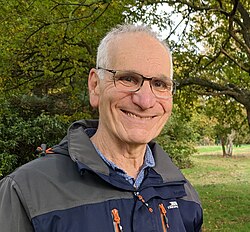
Robert Anthony "Robin" Weiss (20 February 1940 – 27 February 2026) was a British molecular biologist,1 and an influential scientist in virology and cancer biology.2 His research was focused on retroviruses and he was noted for important discoveries related to HIV. He was a Fellow of the Royal Society and an Honorary Fellow of the Royal College of Physicians.3 In 2001 he was awarded the M. W. Beijerinck Prize for Virology for his work on retroviruses.4 In 2007 he was awarded the Ernst Chain Prize for pioneering "our understanding of HIV and AIDS".5 He was Emeritus Professor of Viral Oncology at University College London6 and a member of the Nuffield Council on Bioethics.7 He was also editor-in-chief of the British Journal of Cancer until 2005.8
Early life and education
Weiss was born in London, England on 20 February 1940.910 He identified as ethnically Jewish and agnostic. His parents were Hans Weiss, a businessman, and his wife Stefanie Löwinsohn, secular German-Jewish refugees who had arrived in the UK in 1935.11
Weiss was educated at Abbotsholme School, Staffordshire and read Zoology at University College London (UCL). He remained at UCL for his PhD under the supervision of Michael Abercrombie FRS.12
Career
Weiss worked at the Imperial Cancer Research Fund (now Cancer Research UK), researching leukaemia and sarcoma viruses. He became director at The Institute of Cancer Research (ICR), London in 1980 until 1989, after which he continued as director of research for a further nine years.13 While at ICR, Weiss "made discoveries that reshaped our understanding of retroviruses, HIV and virus-associated cancers".2
In 1999 he was appointed Professor of Viral Oncology at University College London.6 Until 2005, Weiss was editor-in-chief of the British Journal of Cancer. His successor, A. L. Harris, states that Weiss showed "clear vision in developing the British Journal of Cancer into [a] multidisciplinary journal with a focus on research that aims to deliver benefits to cancer patients".8
Research
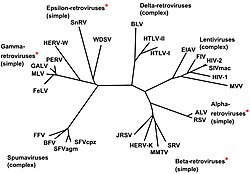
Weiss's research was focused on retroviruses, initially as a means of understanding T-cell leukemia and other cancers, which may be caused by retroviruses. A break-through discovery in 1971 was that the retroviral genome in chickens follows the rules of Mendelian inheritance.15
Later his work moved on to HIV, also a retrovirus, and made several new important discoveries, most notably identifying CD4 on lymphocytes as the binding receptor for HIV.15 Weiss collaborated on research with the Gates Foundation on the development of a HIV vaccine. He contributed to the development of an assay for HIV antibodies which enabled diagnostic tests and screening for blood donors.11 He also investigated viral threats such SARS and the role of viruses in xenotransplantation.2
Personal life and death
Weiss was married in 1964 to Margaret D'Costa, originally from Singapore. They had two daughters, Helen and Rachel. Helen Weiss is an epidemiologist and Rachel Weiss is the founder of the Menopause Café movement.11
Weiss died from cancer on 27 February 2026, at the age of 86.21016
Awards and recognition
In 1977, Weiss was elected a member of the European Molecular Biology Organization.3 He was elected a Fellow of the Royal Society in 1997 and Fellow of the Academy of Medical Sciences in 1998. In 1999 he became an Honorary Fellow of the Royal College of Physicians.173
In November 2001, the Royal Netherlands Academy of Arts and Sciences awarded Weiss the M. W. Beijerinck Prize for Virology, noting especially his work on retroviruses.4 In the same year, he delivered the Leeuwenhoek Lecture.18
In 2007, Imperial College London awarded Weiss the Ernst Chain Prize, noting that he "has pioneered our understanding of HIV and AIDS, particularly on the identification of CD4 as the HIV receptor and on the analysis of neutralizing antibodies to the virus".5
Weiss was elected as Honorary Member of the Microbiology Society in 2009.19 He was a member of the European Academy of Microbiology (EAM).20 He was elected to the American Philosophical Society in 2018.21
Publications
Weiss, RA (2015). 70th Anniversary Collection of the Microbiology Society: Journal of General Virology. Journal of General Virology. Volume 96, Issue 12.22
Weiss, RA (2015). What's the host and what's the microbe? The Marjory Stephenson Prize Lecture 2015. Journal of General Virology. Volume 96, Issue 9.23
Koh, WWL; Forsman, A; Hué, S; van der Velden, GJ; Yirrell, DL; McKnight, Á; Weiss, RA; Aasa-Chapman, MMI (2010). Novel subtype C human immunodeficiency virus type 1 envelopes cloned directly from plasma: coreceptor usage and neutralization phenotypes. Journal of General Virology. Volume 91, Issue 9.24
Wright, E; Temperton, NJ; Marston, DA; McElhinney, LM; Fooks, AR; Weiss, RA (2008). Investigating antibody neutralization of lyssaviruses using lentiviral pseudotypes: a cross-species comparison. Journal of General Virology. Volume 89, Issue 9.25
Bartosch, B; Weiss, RA; Takeuchi, Y (2002). PCR-based cloning and immunocytological titration of infectious porcine endogenous retrovirus subgroup A and B. Journal of General Virology. Volume 83, Issue 9.26
Schulz, TF; Hoad, JG; Whitby, D; Tizard, EJ; Dillon, MJ; Weiss, RA (1992). A measles virus isolate from a child with Kawasaki disease: sequence comparison with contemporaneous isolates from ‘classical’ cases. Journal of General Virology. Volume 73, Issue 6.27
McClure, MO; Sommerfelt, MA; Marsh, M; Weiss, RA (1990). The pH independence of mammalian retrovirus infection. Journal of General Virology. Volume 71, Issue 4.28
References
References
- Lee, H (2000). The Medical Millennium: 1000 Pioneers Who Have Contributed to the Development of Medicine Over the Last 1000 Years. Informa Health Care. pp. 107. ISBN 978-1-85070-466-9.
- Godfrey, Isy (5 March 2026). "Remembering Professor Robin Weiss: a pioneer of viral oncology and former ICR Director". www.icr.ac.uk. The Institute of Cancer Research. Retrieved 6 March 2026.
- "Biodata: Dr Robin Weiss". National University of Singapore. Archived from the original on 20 January 2009.
- "Beijerinck Prize for Virology awarded to Robin Weiss". Royal Netherlands Academy of Arts and Sciences. November 2001. Archived from the original on 6 September 2008.
- "Blocking the docking of HIV". Imperial College London.
- "Robin A. Weiss – NAS". www.nasonline.org/. Retrieved 30 June 2025.
- "Nuffield Council on Bioethics, Council Members". Retrieved 21 April 2017.
- Harris, A. L. (2005). "Editorial". British Journal of Cancer. 92 (1): 1–2. doi:10.1038/sj.bjc.6602356. PMC 2361724.
- "Birthdays", The Guardian, p. 39, 20 February 2014
- "Robin Weiss, virologist whose research on HIV was a crucial step in the race to design a vaccine". The Telegraph. 10 April 2026. Retrieved 10 April 2026.
- "If microbes avoid racial and gender bias, so should microbiologists". microbiologysociety.org. Retrieved 10 March 2026.
- Robin Weiss obituary, Jonathan Weber, published in The Guardian, 7 April 2026
- "Leaving a legacy to the ICR". The Institute of Cancer Research. Archived from the original on 11 March 2014. Retrieved 11 March 2014.
- Weiss, Robin A. (3 October 2006). "The discovery of endogenous retroviruses". Retrovirology. 3 (1): 67. doi:10.1186/1742-4690-3-67. ISSN 1742-4690.
- Arlene Judith Klotzko. "Robin Weiss: Relentless retrovirus researcher". The Scientist 2002, 16(21):60.
- "Professor Robin Weiss obituary: leading virologist for cancer and HIV". The Times. 3 May 2026. Retrieved 3 May 2026.
- "Deceased Fellows". Academy of Medical Sciences. Retrieved 9 May 2026.
- "Recent Leeuwenhoek Lectures". The Royal Society. Retrieved 9 March 2011.
- "Honorary Membership". Microbiology Society.
- "Members of the European Academy of Microbiology (EAM)".
- "Election of New Members at the 2018 Spring Meeting | American Philosophical Society".
- Weiss, Robin A. (2015). "70th Anniversary Collection of the Microbiology Society: Journal of General Virology". Journal of General Virology. 96 (12): 3457–3459. doi:10.1099/jgv.0.000286. ISSN 1465-2099.
- Weiss, Robin A. (2015). "What's the host and what's the microbe? The Marjory Stephenson Prize Lecture 2015". Journal of General Virology. 96 (9): 2501–2510. doi:10.1099/jgv.0.000220. ISSN 1465-2099.
- Koh, Willie W. L.; Forsman, Anna; Hué, Stéphane; van der Velden, Gisela J.; Yirrell, David L.; McKnight, Áine; Weiss, Robin A.; Aasa-Chapman, Marlén M. I. (2010). "Novel subtype C human immunodeficiency virus type 1 envelopes cloned directly from plasma: coreceptor usage and neutralization phenotypes". Journal of General Virology. 91 (9): 2374–2380. doi:10.1099/vir.0.022228-0. ISSN 1465-2099.
- Wright, Edward; Temperton, Nigel J.; Marston, Denise A.; McElhinney, Lorraine M.; Fooks, Anthony R.; Weiss, Robin A. (2008). "Investigating antibody neutralization of lyssaviruses using lentiviral pseudotypes: a cross-species comparison". Journal of General Virology. 89 (9): 2204–2213. doi:10.1099/vir.0.2008/000349-0. ISSN 1465-2099. PMC 2886951. PMID 18753230.
- Bartosch, Birke; Weiss, Robin A.; Takeuchi, Yasuhiro (2002). "PCR-based cloning and immunocytological titration of infectious porcine endogenous retrovirus subgroup A and B". Journal of General Virology. 83 (9): 2231–2240. doi:10.1099/0022-1317-83-9-2231. ISSN 1465-2099.
- Schulz, Thomas F.; Hoad, Julian G.; Whitby, Denise; Tizard, E. Jane; Dillon, Michael J.; Weiss, Robin A. (1992). "A measles virus isolate from a child with Kawasaki disease: sequence comparison with contemporaneous isolates from 'classical' cases". Journal of General Virology. 73 (6): 1581–1586. doi:10.1099/0022-1317-73-6-1581. ISSN 1465-2099.
- McClure, Myra O.; Sommerfelt, Maja A.; Marsh, Mark; Weiss, Robin A. (1990). "The pH independence of mammalian retrovirus infection". Journal of General Virology. 71 (4): 767–773. doi:10.1099/0022-1317-71-4-767. ISSN 1465-2099.