Regional Cooperation for Development | |||||||
|---|---|---|---|---|---|---|---|
| 1964–1979a | |||||||
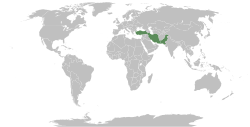 Member states of the RCD | |||||||
| Headquarters | Tehran | ||||||
| Official languages | English | ||||||
| Member states |  Iran Iran Pakistan Pakistan Turkey Turkey | ||||||
| History | |||||||
• Established | 21 July 1964 | ||||||
• Disestablished | 11 February 1979a | ||||||
| |||||||

The Regional Cooperation for Development (RCD) or Organization for Regional Cooperation and Development (ORCD)1 was a multi-governmental organization originally established on July 21, 1964 by Iran, Pakistan and Turkey, regional members of the Central Treaty Organization (CENTO), to promote regional economic cooperation and socioeconomic development.23 Its headquarters were in Tehran, the capital of Iran.4 Under this organization, Pakistan, with aid from Iran, was able to build the 813 km long N-25 highway, also known as the RCD highway.2 Several other developments also took place in the member countries who were able to get and provide financial aid to each other.2
In 1979, the RCD was dissolved following the Iranian Revolution.5 It was replaced by the Economic Cooperation Organization (ECO) in 1985. In 1992, seven new members were added to the ECO: Afghanistan, Azerbaijan, Kazakhstan, Kyrgyzstan, Uzbekistan, Tajikistan and Turkmenistan.6
Joint stamp issues
From 1965 to 1979, the three nations jointly issued stamps. These depicted famous leaders of each country, such as the Shah of Iran, Mustafa Kemal Atatürk, and Mohammad Ali Jinnah; arts, buildings, World Heritage Sites including Mohenjo-Daro and landscapes including Lake Saiful Muluk, Kaghan Valley, Pakistan.7
References
References
- Joseph A. Kechichian (30 December 2012). "Central Treaty Organization". Encyclopaedia Iranica v3. pp. 259–260. Retrieved February 18, 2017.
- Ahmad, Syed Salahuddin (1969). "Regional Cooperation for Development". Pakistan Horizon. 22 (1): 22–28. ISSN 0030-980X.
- Javed, Dr. Tauseef (3 December 2023). "Pakistan's Geoeconomic Footprint in the ECO Region". Centre for Strategic and Contemporary Research. Retrieved 12 April 2026.
- Yeşilbursa, Behçet Kemal (22 July 2009). "The Formation of RCD: Regional Cooperation for Development". Middle Eastern Studies. 45 (4): 637–660. doi:10.1080/00263200903009759. S2CID 145131642.
- Qureshi, Rahim Hayat (2021-11-27). "ECO, Into the Future Together". Tehran Times. Retrieved 2026-04-12.
- "Economic Cooperation Organization (ECO) Initiative". Asia Regional Integration Center. Retrieved 2026-04-12.
- "Regional Cooperation for Development (RCD)". My Philatelic World blog. February 2010. Archived from the original on February 18, 2017. Retrieved February 18, 2017.