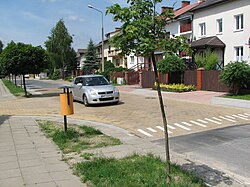
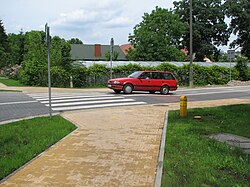
A raised intersection is a structural traffic calming measure1 that involves raising the roadway to approximately the same level as the sidewalk (8–10 cm [3.1–3.9 in]). The purpose is to calm traffic, and remind drivers to be mindful of cyclists and pedestrians. The color of the raised intersection is often different from the rest of the street to make it easier to see.
The entrance to the plateau is a specially designed ramp that resembles a speed bump (slope of 1:10 to 1:5) so that the intersection is only comfortable to drive through if the vehicle maintains a limited speed (for example from 30 to 50 km/h [19 to 31 mph]). The length of the plateau varies, but is often over 5 m (16 ft) to prevent vehicles with low ground clearance from coming into contact with the ground.
An evaluation in Denmark showed that raised intersections reduced the number of accidents by around 25 percent.23
References
References
- "Statens vegvesen - Fartsdempende tiltak - Håndbok V128" (PDF).
- "Opphøyd kryss virker i Danmark – trolig også i Norge" (in Norwegian). 2021-06-04.
- Publisert 25.05.2021 (2021-05-18). "Opphøyd kryss virker i Danmark – trolig også i Norge" (in Norwegian).
{{cite web}}: CS1 maint: numeric names: authors list (link)