| Pseudophoenix | |
|---|---|
| |
| Pseudophoenix sargentii | |
Scientific classification 
| |
| Kingdom: | Plantae |
| Clade: | Embryophytes |
| Clade: | Tracheophytes |
| Clade: | Spermatophytes |
| Clade: | Angiosperms |
| Clade: | Monocots |
| Clade: | Commelinids |
| Order: | Arecales |
| Family: | Arecaceae |
| Subfamily: | Ceroxyloideae |
| Tribe: | Cyclospatheae O.F.Cook |
| Genus: | Pseudophoenix H.Wendl. ex Sarg. |
| Species | |
| Synonyms1 | |
| |
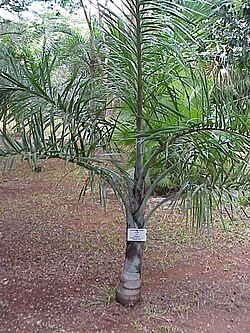
Pseudophoenix is a genus of palms which is native to the wider Caribbean. Three species of the four species are endemic to Hispaniola, while the fourth, P. sargentii, is widely distributed in the northern Caribbean (Greater Antilles, Windward Islands, Bahamas), Florida, and the Yucatán Peninsula (Belize and southeastern Mexico).12345
Trees in this genus are medium to large palms with single, unclustered trunks. They lack spines and have pinnately compound leaves. Flowers are green and bisexual; the ripe fruit are red.6
Species
| Image | Name | Distribution |
|---|---|---|
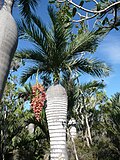 |
Pseudophoenix ekmanii | Barahona Peninsula and Isla Beata in the Dominican Republic |
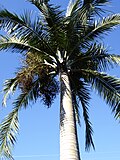 |
Pseudophoenix lediniana | Tiburon Peninsula in southwestern Haiti. |
 |
Pseudophoenix sargentii | Northern Caribbean, eastern Mexico, and extreme southeast Atlantic Florida. |
 |
Pseudophoenix vinifera | Hispaniola. |
References
References
- Kew World Checklist of Selected Plant Families
- Govaerts, R. & Dransfield, J. (2005). World Checklist of Palms: 1-223. The Board of Trustees of the Royal Botanic Gardens, Kew.
- Flora of North America, Pseudophoenix sargentii subsp. sargentii
- Acevedo-Rodríguez, P. & Strong, M.T. (2005). Monocotyledons and Gymnosperms of Puerto Rico and the Virgin Islands. Contributions from the United States National Herbarium 52: 1-415.
- Carnevali, G., J. L. Tapia-Muñoz, R. Duno de Stefano & I. M. Ramírez Morillo. 2010. Flora Ilustrada de la Peninsula Yucatán: Listado Florístico 1–326
- Acevedo-Rodríguez, Pedro; Mark T. Strong (2005). "Monocots and Gymnosperms of Puerto Rico and the Virgin Islands". Contributions of the United States National Herbarium. 52: 1–405.