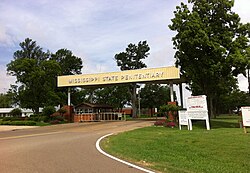
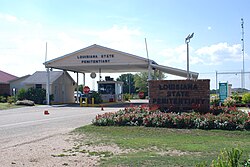
A prison farm (also known as a penal farm) is a large correctional facility where penal labor convicts work — legally or illegally — on a farm (in the wide sense of a productive unit), usually for manual labor, largely in the open air, such as in agriculture, logging, quarrying, and mining. In the United States, such forced labor is made legal by the thirteenth amendment to the Constitution; however, some other parts of the world have made penal labor illegal. The concepts of prison farm and labor camp overlap, with the idea that the prisoners are forced to work. The historical equivalent on a very large scale was called a penal colony.
The agricultural goods produced by prison farms are generally used primarily to feed the prisoners themselves and other wards of the state (residents of orphanages, asylums, etc.), and secondarily, to be sold for whatever profit the state may be able to obtain.1
In addition to being forced to labor directly for the government on a prison farm or in a penal colony, inmates may be forced to do farm work for private enterprises by being farmed out through the practice of convict leasing to work on private agricultural lands or related industries (fishing, lumbering, etc.). The party purchasing their labor from the government generally does so at a steep discount from the market labor cost.2
Louisiana State Penitentiary is the largest prison farm covering 18,000 acres (7,300 hectares); it is bordered on three sides by the Mississippi River.3
Canada had six federal prison farms, which were closed in 2010. In 2019, two of the farms have been gradually reopened.4
Convict leasing
Convict leasing was a system of penal labor that was primarily practiced in the Southern United States, widely involved the use of African-American men, and was prominently used after the American Civil War. In this system, southern states leased prisoners to large plantations and private mines or railways. This system led to the states earning a profit, while the prisoners earned no pay and faced dangerous working conditions.5
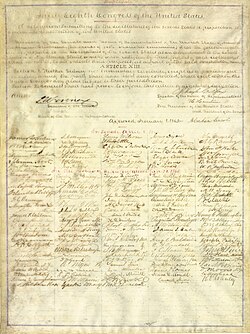
The 13th Amendment to the United States Constitution prohibited the use of slavery and involuntary servitude but explicitly exempts those who have been convicted of a crime. In response to this, the southern state legislatures implemented "Black Codes", which were laws that explicitly applied to African-Americans and subjected them to criminal prosecution for minor offenses like breaking curfew, loitering, and not carrying proof of employment. These new laws led to more prisoners for the penal system that could all be leased by the state so that it can use their labor for profit. Widespread convict leasing ended by World War II, but the loopholes in the 13th Amendment still permit the use of prisoners to work without pay.5
Other work programs
Convicts may also be leased for non-agricultural work, either directly to state entities, or to private industry. For example, prisoners may make license plates under contract to the state department of motor vehicles, work in textile or other state-run factories, or may perform data processing for outside firms. Other types of work include food service or groundskeeping.6 These laborers are typically considered to be a part of prison industries and not prison farms.
In the United States (partial list)
| State | Facility | Type of work |
|---|---|---|
| Alabama | Draper Correctional Facility | Farming 7 |
| Alabama | G.K. Fountain Correctional Facility | Cattle and Agricultural Operations, and Vegetable Gardens 8 |
| Alabama | Limestone Correctional Facility | Cattle and Farming 9 |
| Alaska | Point MacKenzie Correctional Farm | Hogs, Cattle, Turkeys, and Chickens, Produce Operations, and Hydroponics Program 10 |
| Arkansas | Cummins Unit | Horse and Agricultural Operations 11 |
| Arkansas | East Arkansas Regional Unit | Farming 12 |
| Arkansas | Grimes Unit | Agricultural Gardening Program 13 |
| Arkansas | North Central Unit | Garden and Forage Production 14 |
| Arkansas | Ouachita River Unit | Livestock and Forage Production, Gravel Harvesting 15 |
| Arkansas | Pine Bluff Unit | Horse operation 16 |
| Arkansas | Tucker Unit | Agricultural Operations 17 |
| Arkansas | Wrightsville Unit | Horse Operations, Agricultural Operations 18 |
| California | California State Prison, Corcoran | Dairy/Milk Processing 19 |
| California | Central California Women's Facility | Farming 20 |
| California | Valley State Prison | Farming 21 |
| California | Wasco State Prison | Farming 22 |
| Colorado | Buena Vista Correctional Complex | Fish Hatchery 23 |
| Colorado | Four Mile Correctional Center | Dairy, Wild Horse Inmate Program 24 |
| Colorado | Rifle Correctional Center | Timber 25 |
| Colorado | Skyline Correctional Center | Fish Hatchery, Farming, Vineyard, Goat and Water Buffalo Dairy, Mountain Sheep 26 |
| Florida | Apalachee Correctional Institution, West Unit / P.R.I.D.E. | Beef Cattle, Lumber, Agricultural 27 |
| Florida | Charlotte Correctional Institution / P.R.I.D.E. | Citrus 28 |
| Florida | Union Correctional Institution / P.R.I.D.E. | Beef Cattle, Lumber 29 |
| Georgia | Arrendale State Prison | Cattle and Swine, Hay Farming 30 |
| Georgia | Dooly State Prison | Farm Services 31 |
| Georgia | Montgomery State Prison | Poultry and Egg Production 32 |
| Georgia | Rogers State Prison | Dairy, Beef Cattle, Swine, Farming 33 |
| Georgia | Washington State Prison | Farming 34 |
| Hawaii | Halawa Correctional Facility / Hawaii Correctional Industries | Farming 35 |
| Hawaii | Waiawa Correctional Facility | Farming 36 |
| Louisiana | Louisiana State Penitentiary (Angola) | Farming |
| Mississippi | Mississippi State Penitentiary(Parchman) / Mississippi Prison Agricultural Enterprises | Farming3738 |
| Mississippi | South Mississippi Correctional Institution / Mississippi Prison Agricultural Enterprises | Farming3938 |
| North Carolina | Roanoke River Correctional Institution (formerly Caledonia Correctional Institution/Caledonia State Prison Farm) | Farming and Cannery 4041 |
| North Carolina | Dan River Prison Work Farm | Farming 42 |
| North Carolina | Tyrrell Prison Work Farm | Farming 43 |
| Texas | George Beto Unit (Beto Unit) | Farming, Cow/Calf Operations, Poultry Laying Operations, Pork Processing, and Swine Farrowing etc.44 |
| Texas | Dolph Briscoe Unit | Farming 45 |
| Texas | James "Jay" H. Byrd Unit (Byrd Unit) | Hay Production 46 |
| Texas | Clemens Unit | Beef Cattle, Farming, Swine Finishing 47 |
| Texas | William P. Clements Unit (Clements Unit) | Beef Processing 48 |
| Texas | H. H. Coffield Unit (Coffield Unit) | Farming, Cow/Calf Operations, Poultry Laying Operations, Pork Processing, Swine Farrowing etc.49 |
| Texas | Christina Melton Crain Unit (Crain Unit) | Farming, Swine Finishing50 |
| Texas | Price Daniel Unit | Farming 51 |
| Texas | Memorial Unit (formerly Darrington Unit) | Farming, Cow/Calf Operations, Egg Operations, and Swine Finishing Operations 52 |
| Texas | J. Dale Wainwright Unit (formerly Eastham Unit) | Cow/Calf Operations, Egg Operations, Farming, and Swine Operations 53 |
| Texas | O.B. Ellis Unit (Ellis Unit) | Cotton Gin, Cow/Calf Operations, Farming, and Swine Operations 54 |
| Texas | W. J. "Jim" Estelle Unit (Estelle Unit) | Cotton Gin, Cow/Calf Operations, Farming, and Swine Operations 55 |
| Texas | Jim Ferguson Unit (Ferguson Unit) | Farming, Bull Management, and Swine Operations 56 |
| Texas | Glen Ray Goodman Transfer Facility | Hay Production 57 |
| Texas | Thomas Goree Unit (Goree Unit) | Horse Breeding 58 |
| Texas | Joe F. Gurney Transfer Facility (Gurney Unit) | Farming, Cow/Calf Operations, Poultry Laying Operations, Pork Processing, and Swine Farrowing etc.59 |
| Texas | Hilltop Unit | Farming, Swine Finishing 60 |
| Texas | William P. Hobby Unit (Hobby Unit) | Farming and Peach Orchard 61 |
| Texas | Reverend C.A. Holliday Transfer Facility (Holliday Unit) | Farming, Egg Operations, Swine Operations, Horse Breeding Operations, and Veterinary Services 62 |
| Texas | Alfred D. Hughes Unit (Hughes Unit) | Farming, Swine Finishing 63 |
| Texas | Beauford H. Jester I Unit (Jester I Unit) | Swine Finishing, Mechanical Shop, and Combine Shed 64 |
| Texas | Beauford H. Jester III Unit (Jester III Unit) | Swine Finishing, Mechanical Shop, and Combine Shed 65 |
| Texas | Clyde M. Johnston Unit | Hay Production 66 |
| Texas | O.L. Luther Unit | Cow/Calf Operations, Farming, Swine Operations, and Buffalo Ranch 67 |
| Texas | Mark W. Michael Unit (Michael Unit) | Farming, Cow/Calf Operations, Poultry Laying Operations, Pork Processing, and Swine Farrowing etc.68 |
| Texas | Mountain View Unit | Farming, Swine Finishing 69 |
| Texas | Dr. Lane Murray Unit (Murray Unit) | Farming, Swine Finishing 70 |
| Texas | Nathaniel J. Neal Unit | Beef Processing 71 |
| Texas | Wallace Pack Unit (Pack Unit) | Cow/Calf Operations, Farming, Swine Operations, and Buffalo Ranch 72 |
| Texas | Allan B. Polunsky Unit (Polunsky unit) | Tree Farm 73 |
| Texas | Louis C. Powledge Unit (Powledge Unit) | Farming, Cow/Calf Operations, Poultry Laying Operations, Pork Processing, and Swine Farrowing etc.74 |
| Texas | W. F. Ramsey Unit (Ramsey Unit) | Farming, Cow/Calf Operations, Cotton Gin, Farm Shop, Vegetable Cannery, Grain Storage, Swine Operations, and Alfalfa Dehydrator 75 |
| Texas | Retrieve (later Wayne Scott) Unit (Scott Unit) | Cow/Calf Operations, Egg Operations, Swine Operations, Farming, Farm Shop, and Grain Storage 76 |
| Texas | A.M. "Mac" Stringfellow Unit (Stringfellow Unit) | Farming, Cow/Calf Operations, Cotton Gin, Farm Shop, Vegetable Cannery, Grain Storage, Swine Operations, and Alfalfa Dehydrator 77 |
| Texas | Barry B. Telford Unit (Telford Unit) | Cow/Calf Operations and Farming 78 |
| Texas | C.T. Terrell Unit (Terrell Unit) | Farming, Cow/Calf Operations, Cotton Gin, Farm Shop, Vegetable Cannery, Grain Storage, Swine Operations, and Alfalfa Dehydrator 79 |
| Texas | Carol S. Vance Unit (Vance Unit) | Swine Finishing, Mechanical Shop, and Combine Shed 80 |
| Texas | Daniel Webster Wallace Unit | Hay Production 81 |
| Texas | John M. Wynne Unit (Wynne Unit) | Farming, Egg Operations, Swine Operations, Horse Breeding Operations, and Veterinary Services 82 |
Canadian Prison Farm System
Canada has a long history of prison farms dating back to the first penitentiary in the 1890s, but in 2010, the federal Conservative government shut down its six federal prison farms.83 At this point, the prison farm program was under CORCAN, Correctional Service Canada's job and rehabilitation program,4 and the government argued that the skills that prison farms had been giving people in prison were outdated, and that prison labor should focus on work related to more modern skills.483 They also argued that the farms were losing money, which would later be debated.483
The debate as to whether or not the farms should reopen continued, particularly through a group called Save our Prison Farms (SOPF) who, according to their website, advocated for saving the prison farms because of 1) public safety, 2) health and rehabilitation, 3) saving taxpayers money, 4) sustainable local farm and food systems, and 5) a model of Canadian values and heritage.84
In 2018, however, the federal Liberal government announced the re-opening of the Penitentiary Farm Program with a budget of $4.3 million for the two farms in Kingston, Ontario to return.85 The prison farms at Joyceville Institution and Collins Bay Institution are now open and working.
Legal framework
The 13th Amendment to the United States Constitution, which ended slavery, specifically carved out the concept of penal servitude (i.e., forced and unpaid labor as a punishment for a crime). This exemption only affected those who have been convicted of crimes, not those who were still awaiting trial.
Britain had a long history of penal servitude even before passage of the Penal Servitude Act 1853 (16 & 17 Vict. c. 99), and routinely used convict labor to settle its conquests, either through penal colonies or by selling convicts to settlers to serve for a term of years as indentured servants.
Scope
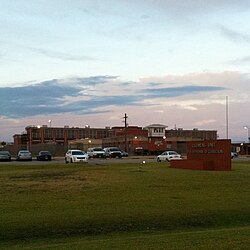

This type of penal institution has mainly been implanted in rural regions of vast countries. For example, the following passage describes the prison system of the U.S. state of North Carolina in the early twentieth century:
"The state prison is at Raleigh, although most of the convicts are distributed upon farms owned and operated by the state. The lease system does not prevail, but the farming out of convict labor is permitted by the constitution; such labor is used chiefly for the building of railways, the convicts so employed being at all times cared for and guarded by state officials. A reformatory for white youth between the ages of seven and sixteen, under the name of the Stonewall Jackson Manual Training and Industrial School, was opened at Concord in 1909, and in March 1909 the Foulk Reformatory and Manual Training School for negro youth was provided for. Charitable and penal institutions are under the supervision of a Board of Public Charities, appointed by the governor for a period of six years, the terms of the different members expiring in different years. Private institutions for the care of the insane, idiots, feeble-minded, and inebriates may be established, but must be licensed and regulated by the state board and become legally a part of the system of public charities."
In 21st-century Illinois, several prisons continue to run farms to produce food for wards of the state, including the prisoners themselves. The 1911 Britannica also reported that the state of Rhode Island had a farm of 667 acres (2.70 km2) in the southern part of Cranston City housing (and presumably taking labor from):
"the state prison, the Providence county jail, the state workhouse and the house of correction, the state almshouse, the state hospital for the insane, the Sockanosset school for boys, and the Oaklawn school for girls, the last two being departments of the state reform school."86
In fiction
Films and television shows featuring prison farms and forced prison labor:
- I Am a Fugitive from a Chain Gang is a movie released in 1932, which depicted the degrading and inhumane treatment on chain gangs in the post–World War I era.
- Hell's Highway (1932)
- Prison Farm (1938)
- Gone with the Wind (1939) scenes of Scarlett O'Hara's leased convicts at work in her lumber mills
- Sullivan's Travels (1941)
- City Without Men (1943)
- Chain Gang (1950) starred Douglas Kennedy (actor) as a reporter working as a guard to expose corruption and brutality.87
- Cool Hand Luke (1967)
- Sounder (1972)
- Papillon (1973)
- Scarecrow (1973)
- Nightmare in Badham County (1976)
- Buckstone County Prison (1978)
- They Went That-A-Way & That-A-Way (1978)
- Brubaker (1980)
- MacGyver (1988), "Jack of Spies", Season 3. Mac is incarcerated in a prison farm that uses the inmates to work in an underground gold mine.
- Life (1999)
- O Brother, Where Art Thou? (2000)
- Civil Brand (2002)
- In "Les Misérables" by Victor Hugo, which has had several movie adaptations, the character Jean Valjean is part of a chain gang ("le bagne", which is usually translated as "the galleys" or "the prison hulks") as part of his punishment for stealing bread.
See also
See also
References
References
- Lunau, Kate. "Canada to shut down all prison farms". Maclean's, April 13, 2009.
- "D.A. McCall, Secretary of the Mississippi Baptist Convention Board, Baptizes Convicts on a Prison Farm near Parchman on 18 August 1946". Crime and Punishment: Essential Primary Sources, 2006.
- Glenday, Craig (2013). 2014 Guinness World Records Limited. Guinness World Records Limited. p. 132. ISBN 978-1-908843-15-9.
- Pfeffer, Amanda (2019-08-15). "Ontario prison farms making a comeback". CBC. Retrieved 2023-12-05.
- "Convict Leasing". Equal Justice Initiative. 2013-11-01. Retrieved 2022-04-14.
- "BOP: Work Programs". www.bop.gov. Retrieved 2022-02-15.
- "Draper Correctional Facility. (2013). Retrieved June 9, 2015". Doc.state.al.us. Retrieved 2018-03-20.
- "Fountain Correctional Facility. (2013). Retrieved June 9, 2015". Doc.state.al.us. Retrieved 2018-03-20.
- "Limestone Correctional Facility. (2013). Retrieved June 9, 2015". Doc.state.al.us. Retrieved 2018-03-20.
- "Point Mackenzie Correctional Farm History. (n.d.). Retrieved June 9, 2015". Correct.state.ak.us. Retrieved 2018-03-20.
- Cummins Unit. (2011). Retrieved June 9,2015 Archived 2016-03-18 at the Wayback Machine
- East Arkansas Regional Unit. (2011). Retrieved June 9,2015 Archived 2011-06-28 at the Wayback Machine
- Grimes Unit. (2011). Retrieved June 9,2015
- North Central Unit. (2011). Retrieved June 9,2015
- Ouachita River Unit. (2011). Retrieved June 9,2015 Archived 2015-09-18 at the Wayback Machine
- Pine Bluff Unit. (2011). Retrieved June 9,2015
- Tucker Unit. (2011). Retrieved June 9,2015
- Wrightsville Unit. (2011). Retrieved June 9,2015
- "California State Prison, Corcoran (CSP-COR). (2014). Retrieved June 9, 2015". Archived from the original on April 30, 2015. Retrieved June 9, 2015.
- "Central California Women's Facility (CCWF). (2014). Retrieved June 9, 2015". Archived from the original on April 23, 2015. Retrieved June 9, 2015.
- "Valley State Prison (VSP). (2014). Retrieved June 9, 2015". Cdcr.ca.gov. Retrieved 2018-03-20.
- "Wasco State Prison-Reception Center (WSP). (2014). Retrieved June 9, 2015". Cdcr.ca.gov. 2017-04-04. Retrieved 2018-03-20.
- BVCC - Buena Vista Correctional Complex | Department of Corrections. (n.d.). Retrieved June 9, 2015 Archived June 10, 2015, at the Wayback Machine
- FMCC - Four Mile Correctional Center | Department of Corrections. (n.d.). Retrieved June 9, 2015 Archived August 4, 2014, at the Wayback Machine
- RCC - Rifle Correctional Center | Department of Corrections. (n.d.). Retrieved June 9, 2015 Archived June 10, 2015, at the Wayback Machine
- SCC - Skyline Correctional Center | Department of Corrections. (n.d.). Retrieved June 9, 2015 Archived August 4, 2014, at the Wayback Machine
- "Apalachee Correctional Institution, West. (n.d.). Retrieved June 9, 2015". Dc.state.fl.us. Retrieved 2018-03-20.
- "Charlotte Correctional Institution. (n.d.). retrieved June 9, 2015". Dc.state.fl.us. Retrieved 2018-03-20.
- "Union Correctional Institution. (n.d.). retrieved June 9, 2015". Dc.state.fl.us. Retrieved 2018-03-20.
- "Arrendale State Prison. (n.d.). retrieved June 9, 2015". Dcor.state.ga.us. 2000-01-01. Retrieved 2018-03-20.
- "Dooly State Prison. (n.d.). retrieved June 9, 2015". Dcor.state.ga.us. 2000-01-01. Retrieved 2018-03-20.
- "Montgomery State Prison. (n.d.). retrieved June 9, 2015". Dcor.state.ga.us. 2000-01-01. Retrieved 2018-03-20.
- "Rogers State Prison. (n.d.). retrieved June 9, 2015". Dcor.state.ga.us. 2000-01-01. Retrieved 2018-03-20.
- "Washington State Prison. (n.d.). retrieved June 9, 2015". Dcor.state.ga.us. 2000-01-01. Retrieved 2018-03-20.
- "Halawa Correctional Facility. (2015). retrieved June 9, 2015". Dps.hawaii.gov. 2018-03-08. Retrieved 2018-03-20.
- "Waiawa Correctional Facility. (2015). retrieved June 9, 2015". Dps.hawaii.gov. 2018-03-08. Retrieved 2018-03-20.
- "The Mission of the Mississippi State Penitentiary". Mississippi Department of Corrections. Retrieved 19 May 2019.
- "Agricultural Enterprises". Mississippi Department of Corrections. Retrieved 19 May 2019.
- "South Mississippi Correctional Institution". Mississippi Department of Corrections. Retrieved 19 May 2019.
- "Caledonia Correctional Institution". North Carolina Department of Public Safety. Retrieved 19 May 2019.
- Hart, John (4 April 2017). "Caledonia: Where prisoners have grown their food for 125 years". FarmProgress. Informa Markets. Retrieved 19 May 2019.
- "Dan River Prison Work Farm -- Farming operations". North Carolina Department of Correction Division of Prisons. North Carolina Department of Public Safety. Retrieved 19 May 2019.
- "Tyrrell Prison Work Farm". North Carolina Department of Public Safety. Retrieved 19 May 2019.
- "Beto (B)". Texas Department of Criminal Justice. Retrieved 19 May 2019.
- "Briscoe (DB)". Texas Department of Criminal Justice. Retrieved 19 May 2019.
- "Byrd (DU)". Texas Department of Criminal Justice. Retrieved 19 May 2019.
- "Clemens (CN)". Texas Department of Criminal Justice. Retrieved 19 May 2019.
- "Clements (BC)". Texas Department of Criminal Justice. Retrieved 19 May 2019.
- "Coffield (CO)". Texas Department of Criminal Justice. Retrieved 19 May 2019.
- "Crain (GV)". Texas Department of Criminal Justice. Retrieved 19 May 2019.
- "Daniel (DL)". Texas Department of Criminal Justice. Retrieved 19 May 2019.
- "Darrington (DA)". Texas Department of Criminal Justice. Retrieved 19 May 2019.
- "Eastham (EA)". Texas Department of Criminal Justice. Retrieved 19 May 2019.
- "Ellis (E)". Texas Department of Criminal Justice. Retrieved 19 May 2019.
- "Estelle (E2)". Texas Department of Criminal Justice. Retrieved 19 May 2019.
- "Ferguson (FE)". Texas Department of Criminal Justice. Retrieved 19 May 2019.
- "Goodman (GG)". Texas Department of Criminal Justice. Retrieved 19 May 2019.
- "Goree (GR)". Texas Department of Criminal Justice. Retrieved 19 May 2019.
- "Gurney (ND)". Texas Department of Criminal Justice. Retrieved 19 May 2019.
- "Hilltop (HT)". Texas Department of Criminal Justice. Retrieved 19 May 2019.
- "Hobby (HB)". Texas Department of Criminal Justice. Retrieved 19 May 2019.
- "Holliday (NF)". Texas Department of Criminal Justice. Retrieved 19 May 2019.
- "Hughes (AH)". Texas Department of Criminal Justice. Retrieved 19 May 2019.
- "Jester I (J1)". Texas Department of Criminal Justice. Retrieved 19 May 2019.
- "Jester III (J3)". Texas Department of Criminal Justice. Retrieved 19 May 2019.
- "Johnston (JT)". Texas Department of Criminal Justice. Retrieved 19 May 2019.
- "Luther (P2)". Texas Department of Criminal Justice. Retrieved 19 May 2019.
- "Michael (MI)". Texas Department of Criminal Justice. Retrieved 19 May 2019.
- "Mountain View (MV)". Texas Department of Criminal Justice. Retrieved 19 May 2019.
- "Murray (LM)". Texas Department of Criminal Justice. Retrieved 19 May 2019.
- "Neal (KN)". Texas Department of Criminal Justice. Retrieved 19 May 2019.
- "Pack (P1)". Texas Department of Criminal Justice. Retrieved 19 May 2019.
- "Polunsky (TL)". Texas Department of Criminal Justice. Retrieved 19 May 2019.
- "Powledge (B2)". Texas Department of Criminal Justice. Retrieved 19 May 2019.
- "Ramsey (R1)". Texas Department of Criminal Justice. Retrieved 19 May 2019.
- "Scott (RV)". Texas Department of Criminal Justice. Retrieved 19 May 2019.
- "Stringfellow (R2)". Texas Department of Criminal Justice. Retrieved 19 May 2019.
- "Telford (TO)". Texas Department of Criminal Justice. Retrieved 19 May 2019.
- "Terrell (R3)". Texas Department of Criminal Justice. Retrieved 19 May 2019.
- "Vance (J2)". Texas Department of Criminal Justice. Retrieved 19 May 2019.
- "Wallace (WL)". Texas Department of Criminal Justice. Retrieved 19 May 2019.
- "Wynne (WY)". Texas Department of Criminal Justice. Retrieved 19 May 2019.
- Goodman, Philip; Dawe, Meghan (28 August 2015). "Prisoners, Cows and Abattoirs: The Closing of Canada's Prison Farms as a Political Penal Drama". The British Journal of Criminology. 56 (4): 793–812 – via Oxford Academic.
- "Why save the prison farms?". Save Our Prison Farms. Archived from the original on 1 August 2010.
- Canada, Correctional Service (2019-08-15). "Penitentiary farms officially relaunched". www.canada.ca. Retrieved 2024-12-16.
- Chisholm, Hugh, ed. (1911). . Encyclopædia Britannica. Vol. 7 (11th ed.). Cambridge University Press. p. 378.
- "Chain Gang (1950)", Turner Classic Movies.
- "Iwahig Prison and Penal Farm". Philippine Bureau of Corrections. Archived from the original on Dec 1, 2017. Retrieved 21 Nov 2017.
- Chisholm, Hugh, ed. (1911). . Encyclopædia Britannica. Vol. 22 (11th ed.). Cambridge University Press. p. 369.
Further reading
Further reading
- Thomas, Nicki (Producer: Scott Croteau) "Prison farms facing execution." Capital News Online. Carleton University School of Journalism and Communication. March 5, 2010.
- David M. Oshinsky, "Worse Than Slavery: Parchman Farm and the Ordeal of Jim Crow Justice," On the origins of the penal farm in Mississippi and the preceding convict lease system.
- Sample, Albert. Racehoss: Big Emma's Boy. Austin: Eakin Press, 1984.