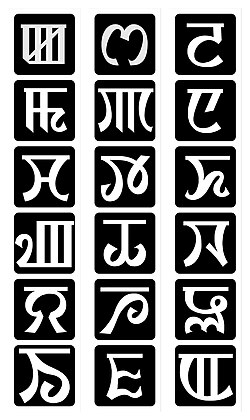
The philosophy of Meitei script (ꯃꯩꯇꯩ ꯃꯌꯦꯛ ꯋꯥꯡꯎꯂꯣꯟ / ꯋꯥꯡꯎꯂꯣꯜ; Meitei Mayek Wangulon / Wangulol1) is a part of Meitei philosophy and the philosophy of Sanamahism.2 It links the letters, alphabets, and numerals of the Meitei script with mythology, folklore, religion, and philosophy. The script is used not only for writing but also to explain the creation of the universe and human beings.3451
Creation
According to Meitei belief, the Universal Lord, also called the God Father Creator, existed in an indeterminate primordial state. He began to think about creating the universe. As a result, space, stars, the sun, earth, fire, water, and air came into existence.3451
Seven-day week and creation of man
The creation of humans is linked with the seven-day week, with each day associated with the creation of specific parts of the human body and related Meitei alphabets.3451
Langmaiching (Sunday)
Langmaiching is the first day of the week, now called Nongmaijing. It represents the beginning of human creation.3451
The name Langmaiching comes from:
- Lang – becoming a human body from the immaterial spirit of the God Father.
- Mai – human face or Laipak.
- Ching – attraction toward a centre.3451
On this day, the God Father Creator incarnates as the number 1 (꯱), attracting fire, water, air, earth, and space to begin the creation of man, particularly the Laipak (forehead), which becomes the permanent seat of the God Father Creator as long as the human lives.3451
The Loi peoples of Kangleipak still use the original term Langmaiching. The general term changed to Nongmaijing during the 18th century cultural evolution.3451
Ningthoukapa (Monday)
Ningthoukapa is the second day of the week, corresponding to Monday.3451
On this day, the first three Meitei alphabets (ꯀ, ꯁ, ꯂ) appeared, representing the completion of the head.3451
Meaning of Ningthoukapa:
The God Father Creator permanently takes His seat in the Laipak (forehead).3451
Leipakpokpa (Tuesday)
The third day of the week is Leipakpokpa, meaning “birth of the human trunk” (Leipak for Earth, Pokpa for giving birth).3451
The second set of three alphabets (ꯃ, ꯄ, ꯅ) appeared to help the creation of the human trunk.3451
Legend says that Sanamahi Lainingthou first created animals but failed to create man. The God Father Creator advised him to create man in the image seen in the pupils of His eyes.3451
Imsakeisa (Wednesday)
Imsakeisa is the fourth day, representing the construction of the human body trunk, which becomes a temple for the God Father Creator.3451
Three alphabets (ꯆ, ꯇ, ꯈ) symbolize mouth, sperm, and chin, relating to the human body's structure and functions.3451
Meanings are Im for house, sa for built, kei for barn, sa for storage, showing the human body as a temple.3451
Sakonsen (Thursday)
Sakonsen represents the internal organs and the heart, where the God Father Creator resides.3451
Alphabets ꯉ, ꯊ, ꯋ correspond to tongue and gullet, chest organs, and the heart.3451
Meanings are Sa for human body, kon for embracing, sen for keeping under care, showing the Creator's love and protection.3451
Eelai (Friday)
Eelai represents the outward form and shape of the human body.3451
Alphabets ꯌ, ꯍ, ꯎ relate to the spine, the living body, and the God Father Creator.3451
Meanings are Ee for blood, Lai for God, showing that the Creator began creation on Earth as a drop of blood.3451
Thangcha (Saturday)
Thangcha is the last day, completing the creation of the male human being.3451
Alphabets ꯏ, ꯐ, ꯑ correspond to blood, semen, and unlimited space, representing human procreation.3451
Meanings are Thang for "to drive down", cha for descendants, showing the continuation of mankind.3451
Importance
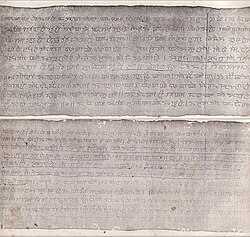
The Meitei Mayek script is more than a writing system. The Wakoklon Heelel Thilel Salai Ama-IIon Pukok states:
"Khunung Eeyekki Khonthok
Asipusu khunthoklon Haikatane Lepna
In English, it is translated as:
"The social sound of the writing alphabets is also to be known as the procreation of mankind."45
The letters and numbers of the Meitei script show cosmic creation, human body structure, and spiritual presence, having the deep connection between language, philosophy, and religion in Meitei culture.3451
Alphabets and body parts

| Image(s) | Letter(s) | Representation(s) | Name(s)/Pronunciation(s) | Romanization | Meaning(s)a6789 | Latin equivalent letters/sounds | IPA10 |
|---|---|---|---|---|---|---|---|
 |
ꯀ | 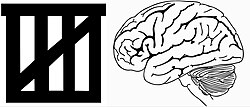 |
ꯀꯣꯛ | kok | head or brain | K | /k/ |
 |
ꯁ |  |
ꯁꯝ | sam/sham | hair | S | /s/ |
 |
ꯂ |  |
ꯂꯥꯏ | lai | forehead | L | /l/ |
 |
ꯃ |  |
ꯃꯤꯠ | mit/meet | eye | M | /m/ |
 |
ꯄ |  |
ꯄꯥ | pā/paa | eyelash | P | /p/ |
 |
ꯅ |  |
ꯅꯥ | nā/naa | ear | N | /n/ |
 |
ꯆ |  |
ꯆꯤꯜ | chil/cheel | lips | Ch | /t͡ʃ/ |
 |
ꯇ |  |
ꯇꯤꯜ | til/teel | saliva | T | /t/ |
 |
ꯈ | ꯈꯧ | khou | throat, palate, neck | Kh | /kʰ/ | |
 |
ꯉ | ꯉꯧ | ngou | pharynx, larynx | Ng | /ŋ/ | |
 |
ꯊ |  |
ꯊꯧ | thou | breast, chest, ribs | Th | /tʰ/ |
 |
ꯋ |  |
ꯋꯥꯏ | wai | navel, heart | W | /w/ |
 |
ꯌ |  |
ꯌꯥꯡ | yang | backbone, vertebral column, spine | Y | /j/ |
 |
ꯍ |  |
ꯍꯨꯛ | huk/hook | joint, articulation | H | /h/ |
 |
ꯎ |  |
ꯎꯟ | un/oon | skin, hair follicle | U | /u(ː)/ |
 |
ꯏ |  |
ꯏ | ee/i | blood | I or E | /i(ː)/ |
 |
ꯐ |  |
ꯐꯝ | pham/fam | "anus" or "buttocks" or "seat" or "uterus" or "womb" | F or Ph | /pʰ/ |
 |
ꯑ | 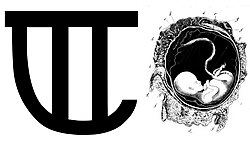 |
ꯑꯇꯤꯡꯉꯥ / ꯑꯇꯤꯌꯥ | atinga/atiya | "sky" or "immortality" or "heaven" or "eternity" or "divinity" or "celestial being" or "birth" | A | /ɐ/ |
See also
See also
Gallery


Bibliography
Bibliography
References
References
- "Meetei Mayek 18 Subagee Kanglon Amasung Wangulon". Internet Archive; Digital Library of India (in Manipuri).
- Kirti Singh, Moirangthem. Recent Researches in Oriental Indological Studies: Including Meiteilogy. India: Parimal Publications, 1998. p. 103
- Thokchao Pangkanpa, Thokchom (1958). Wakoklon Thilel Sallai Amailon Pukok (in Manipuri). Manipur University Library. India: Digital Library of India; Internet Archive.
- "Discovery of Kangleipak 11". e-pao.net. Retrieved 2026-02-06.
- "Discovery of Kangleipak 12". e-pao.net. Retrieved 2026-02-06.
- Arambarn Parratt, Saroj Nalini, ed. (2009), "Meetei Mayek or Meetei script chart", The Court Chronicle of the Kings of Manipur, Foundation Books, pp. 145–148, ISBN 978-81-7596-854-7, retrieved 2025-06-26
- "Transliteration from Hindi Script to Meetei Mayek: ( A Rule Based Approach )". www.semanticscholar.org. Retrieved 2025-06-26.
- "Meetei Mayek: The Script". tabish.freeshell.org. Retrieved 2025-06-26.
- ""Meitei Mayek Alphabets"". researchgate.
- "Manipuri (Meeteilon / Meithei)". Omniglot.
- Some of the meanings rendered by some letters (characters) are different according to different sources. So, if found different, they're added together in the same section.