Peter Manuel | |
|---|---|
 1958 mugshot of Manuel | |
| Born | Peter Thomas Anthony Manuel (1927-03-13)13 March 1927 New York City, New York, U.S. |
| Died | 11 July 1958(1958-07-11) (aged 31) HMP Barlinnie, Glasgow, Scotland |
Cause of death | Execution by hanging |
| Other names | The Beast of Birkenshaw The Bedroom Killer |
Criminal status | Executed |
| Motive |
|
| Convictions | Capital murder (x6) Murder (x1) Theft by housebreaking (x3) Car theft (x1) |
Criminal penalty | Death |
| Details | |
| Victims | 7 (convicted); 9 (alleged); 12 (claimed) |
Span of crimes | 2 January 1956 – 1 January 1958 |
| Country | Scotland: 7 (convicted); 1 (alleged) England: 1 (alleged) |
Date apprehended | 14 January 1958 |
Peter Thomas Anthony Manuel (13 March 1927 – 11 July 1958) was a Scottish serial killer known as the Beast of Birkenshaw and the Bedroom Killer who committed the murders of seven people across Lanarkshire, Scotland, between 1956 and 1958.1 He is also suspecting of murdering two further victims—one in East Kilbride, Scotland and one in Edmundbyers, England—in 1956 and 1957 respectively.23
Tried at the Glasgow High Court for the eight murders committed in Scotland, Manuel was convicted of seven of these crimes on 26 May 1958, with charges pertaining to his first alleged victim dismissed due to insufficient evidence. He did appeal his conviction, but his conviction was upheld on 24 June. He was hanged at HM Prison Barlinnie on 11 July.4
Manuel became known as the "Beast of Birkenshaw" due to the name of the North Lanarkshire village where he lived at the time of his arrest and the proximity of his home to each of his known Scottish crime scenes; he became known as the "Bedroom Killer" because six of the seven victims he was convicted of killing were murdered in the bedrooms of their own homes.5
Early life
Peter Manuel was born in the Misericordia Hospital in the Bronx, New York City, on 15 March 1927, the second of three children born to Samuel and Bridget (née Greenan) Manuel. He had one older brother, James (b. 1923), and one younger sister, Theresa (b. 1934).6 The family were Scottish, and followed the Roman Catholic faith.7
Manuel's parents were both working class;8 they had relocated from Scotland to the United States in the early 1920s in search of better employment—initially settling in New York, where Manuel's father worked in a department store. Shortly after Manuel's birth, the family relocated from New York to Detroit, Michigan, where Manuel's father found employment in a car factory and his mother employment as a domestic servant, although largely due to the Great Depression, the family relocated back to the United Kingdom in 1932.9 Initially, the family resided in Motherwell,10 although due to Samuel becoming unemployed in the mid-1930s, the family relocated to Coventry in the West Midlands of England.11
Reportedly, Manuel was something of a misfit as a child, and his American accent and short stature occasionally made him a target for bullies. Although intelligent and an accomplished artist who aspired to become a painter as a child,12 Manuel began committing crimes at an early age.13 The first crime Manuel is known to have committed occurred shortly after his eleventh birthday, when he stole the offertory from a local chapel. In October 1938, he appeared before a juvenile court for stealing from a shop.14 Five weeks later, Manuel committed his first known act of burglary, for which he was sent to an approved school.15
Adolescence
Between the ages of twelve and eighteen, Manuel was frequently arrested for criminal offences—almost always burglary, robbery or theft—for which he was incarcerated at approved schools, borstals and, ultimately, prison,16 although he is not known to have exhibited any physical or sexual violence in these offences until he was aged fifteen.14 As a result, Manuel spent the majority of his teenage years in both English and, later, Scottish detainment facilities—his family having relocated back to Scotland from Coventry in 1941 shortly after a German airstrike upon the city destroyed their home.n 1 The family ultimately settled in the village of Birkenshaw, North Lanarkshire.17
Manuel was unable to rejoin his family in Scotland as at the time of their relocation, he had been incarcerated for breaking into the house of a lone woman, whom he bludgeoned about the head with a hammer before stealing her purse.4 At the time of this offence, Manuel had absconded from borstal. Upon recapture, Manuel was detained at HM Prison Leeds. He was later transferred to an approved school in Yorkshire, from which he absconded in December 1942. Before his re-apprehension, he committed his first known sexual assault.18 In this instance, Manuel bludgeoned a housewife about the head with a blunt instrument before dragging her into woodland and attempting to rape her.7
Following a brief period of employment at a fairground stall in Blackpool after his 1945 release from borstal, Manuel opted to relocate to Birkenshaw to live with his parents in early 1946.19
Relocation to Lanarkshire
Within weeks of returning to Scotland in February 1946, Manuel was again arrested for breaking into a bungalow in the Sandyhills district of Glasgow. He would later be sentenced to one year's imprisonment after being convicted of fifteen separate charges of theft by housebreaking although while on bail for these offences, he raped a pregnant woman in the presence of her three-year-old daughter and, in separate instances, sexually assaulted two young women.2021

Shortly after being convicted of multiple charges of housebreaking, Manuel was separately prosecuted for the rape he had committed while on bail. His trial was held at the Glasgow High Court. Manuel conducted his own defence at trial, but was sentenced to serve eight years' imprisonment on 25 June 1946.10 He served this sentence at HM Prison Peterhead, but was released in the autumn of 1952 and moved back into his parents' home.4 He was again arrested and imprisoned for housebreaking in April 1953, but was released in February 1954.22 Although Manuel obtained employment with British Railways shortly after his release from prison, he soon resumed committing acts of housebreaking.23
While incarcerated within various English and Scottish detainment facilities, Manuel had become adept at several manual trades including woodwork and joinery; he would occasionally find legitimate employment in professions requiring these honed skills, although he would invariably revert to criminal activities within weeks or months of his release from any detainment.24 Although a pathological liar and something of a loner,11 Manuel did establish several contacts within Glasgow's criminal underworld following his family's return to Scotland—some of whom he colluded with to commit burglaries.25
Engagement
In the autumn of 1954, Manuel began dating a young bus conductress named Anna O'Hara, whom he met on the bus he took to work. Within months, and with the approval of O'Hara's parents, the two became engaged, with a wedding date set for 30 July 1955. Shortly before the wedding, O'Hara terminated their engagement upon being informed of Manuel's extensive history of criminal behaviour.4
On the evening of what would have been Manuel's wedding day, he drank himself into a state of intoxication before attempting to rape a 29-year-old woman in a rural field close to his parents' home at knife point. Fearing for her life, the woman did not resist the assault and attempted rape—at one point lying still with a knife to her throat after Manuel forced her into woodland in response to a police search of the area in response to a resident's report of a woman's screams.26
The victim of this assault repeatedly conversed with Manuel throughout her ordeal, and eventually persuaded him to release her after falsely promising not to inform authorities. Days later, he was arrested and charged with rape. A psychological evaluation revealed him to be sane and fit to plead to the charge.27 He was brought to trial at the County Buildings in Airdrie in October that year.19 Manuel insisted on conducting his own defense, and successfully convinced the jury he and his victim had been lovers and that the charges had been brought out of spite following a heated argument.28 As such, the jury returned a verdict of not proven.29
Murders
Peter Manuel was convicted and executed for the murders of seven people, although he is strongly suspected of committing at least nine murders. Each of the murders for which he was executed were committed within a twenty-four mile (39 km) radius of the Scottish Lowlands and each within a travelling radius of his parents' home.30 He is also suspected of committing one further murder within this geographical radius in January 1956, and a ninth murder in County Durham, England, in December 1957.31

Anne Kneilands
On the afternoon of 4 January 1956, a labourer discovered the bludgeoned and barefoot body of a blonde teenage girl lying face-down in a hollow known locally as Capelrig Copse in the Calderwood district of East Kilbride.32 The location was close to a golf course.33 Investigators discovered one of the victim's shoes embedded in the slope of a nearby ditch; the other was located on the other side of the ditch approximately seventy feet from her body. Footprints within the ditch where her shoes were located and across nearby fields—plus mud and human tissue located on barbed wire fences and a nearby gate—indicated the victim had been chased for at least 400 yards by her murderer before being caught by her assailant. Fragments of her skull were located on the ground close to her body, indicating she had been felled by several blows to the head with a blunt instrument.34
A post-mortem concluded the decedent had died at least thirty-six hours prior to the discovery of her body, and that she had died of extensive head injuries,35 with one particularly severe skull fracture having proved fatal.36 Although her underwear was in disarray, she had not been raped, although semen was discovered upon her clothing, indicating her murderer had ejaculated as he inflicted the injuries to her body.37
The victim was quickly identified as Anne Kneilands,38 a 17-year-old machinist who was last seen alive by her siblings at 6:40 p.m. on 2 January walking from her home in the direction of a nearby farm where she intended to catch a bus to meet a young soldier she had begun dating several days previously with plans to attend a bank holiday Hogmanay dance. Her boyfriend later informed police he had failed to keep their appointment,39 indicating Kneilands had been attacked as she returned home. Although door-to-door inquiries yielded no solid leads,40 a local man walking his dogs close to the golf course reported hearing a female "squeal cry" shortly after 8:30 p.m. on the date of the murder, indicating Kneilands had likely died at this time.41
At the time of this murder, Manuel was employed with the Scottish Gas Board, and had been performing maintenance work with colleagues at a nearby roadside. Manuel's foreman and colleagues had noted scratches on his face on 3 January, which he had alternately claimed to have sustained either via his employment, or in a fight on New Year's Eve. Furthermore, police questioning of Manuel's employer revealed the scratches on Manuel's face were only evident after 2 January.42

Questioning and release
Manuel was questioned by detectives on 12 January; he repeated his claim to have sustained the scratches to his face in a fight on New Year's Eve, adding that he had not left his home on the evening of 2 January. Several items of his clothing were confiscated for forensic examination, although these garments failed to yield any physical evidence connecting him to the murder. Nonetheless, a Detective Chief Inspector William Muncie did note a maroon jacket and a pair of grey flannel trousers Manuel was known to frequently wear were not present in the household. Questioned as to the whereabouts of these items, Manuel claimed to have given the items away.43
Manuel's parents were also questioned as the their son's whereabouts on 2 January; his father insisted he had been at home at the time of the murder, whereas his mother claimed she could not recall his whereabouts.44
Marion Watt, Vivienne Watt, and Margaret Brown
Manuel is not known to have killed again until the early hours of 17 September 1956, when he shot to death 45-year-old Marion Hunter Watt, her 16-year-old daughter Vivienne Isabella, and her 42-year-old sister Margaret Hunter Brown in the Watt household in the South Lanarkshire town of Burnside.45 Each woman had been murdered with a Webley .38 caliber revolver he had recently illegally purchased for £5 (the equivalent of approximately £110 as of 2026).30
Upon breaking into the house, Manuel first observed the two adult women sleeping in the master bedroom before crossing the hallway and entering Vivienne's bedroom. According to Manuel, Vivienne "woke up and sat up" as he entered her bedroom; she was briefly knocked unconscious before her hands were bound behind her back. He then returned to the master bedroom and shot the two adult women to death at point-blank range before returning to Vivienne's bedroom and fatally shooting her close to her left eye.46 Vivienne was still alive when the family housekeeper, Helen Collison, arrived at the household at 8:45 a.m. and discovered the crime scene, but died of her wounds seconds after Collison entered her bedroom and rushed to her aid.47 None of the victims had been sexually assaulted, and a medical examiner would also determine Vivienne had been a virgin.48
"I broke into the house by breaking a glass panel in the front door. I then went in and opened a bedroom door; there were two people in the bed. I then went into the other room; there was a girl there—she woke up and sat up. I hit her on the chin and knocked her out ... I tied her hands, then went back to the other room [and] shot the two people there. Then I heard someone making a noise in the other room ... the girl had got loose. We struggled, then I threw her on the bed and shot her."
Later the same day, Manuel travelled to Glasgow and dropped the gun used in these murders from a suspension bridge into the River Clyde.49
Police were unable to determine an actual motive for the murders, as no money or personal possessions had been stolen from the household,50 although—as in the case of the two recent local housebreakings—several cans of food had been opened and the contents scattered over the floors of the bungalow.51
Police suspects
Suspicion for the murders quickly fell upon Peter Manuel, who by 1956 was well known to local police for his criminal activities, having amassed an extensive criminal record for offences including housebreaking, various forms of larceny, and unlawful wounding. By the early hours of 18 September, Detective Chief Superintendent James Hendry had obtained a warrant to search his parents' household. No physical evidence was found to link Manuel to the murders or the recent local housebreakings. As such, police were unable to arrest him for the crimes.50
At the time of the murders of his family, William Watt had been eight days into a solo fishing trip in the coastal village of Ardrishaig, some 93 miles (150 km) from Burnside, residing in the Cairnbaan Hotel in Lochgilphead on the far side of Loch Fyne.51 He was remanded in custody at HM Prison Barlinnie on suspicion of murdering his family on 27 September,52 being suspected of staging a break-in to his own house in order to commit the crimes, with his fishing trip a pre-planned alibi.n 2 Although the proprietress of the Cairnbaan Hotel informed police Watt had been at the premises at midnight on the 16th and had been served breakfast the following morning, a senior crew member aboard the Renfrew Ferry claimed to have seen him aboard the ferry during the night of the murders (although the direction of the ferry's travel would not have been the most direct route from Ardrishaig to Burnside), and a motorist claimed to have passed a man matching his description close to Loch Lomond. Both witnesses picked Watt out of an identity parade prior to his arrest.44
Developments and release
Six months prior to the murders, Manuel had been bailed upon a charge of attempting to rob a colliery office in the town of Blantyre.54 On 2 October, he was tried before a judge at Hamilton Sheriff Court and sentenced to eighteen months' imprisonment; he was also detained at HM Prison Barlinnie. Six days later, Manuel contacted Watt, claiming to know the identity of the perpetrator of the crimes and offering to help exonerate him.55 He also wrote a letter to Watt's solicitor, Lawrence Dowdall, the dame day, requesting he represent him in an appeal against his own burglary conviction and offering to help provide evidence "to our mutual advantage" to disprove the case against Watt if he agreed to do so.29
On 10 October, Dowdall interviewed Manuel, who provided details of the Watt murders, including the layout of the household, which he claimed had been given to him by the murderer, whom he refused to name. Dowdall—convinced Manuel was the actual perpetrator—divulged his suspicions to the authorities. Detectives did subsequently attempt to interview Manuel, but he refused to cooperate with their inquiries.52
Watt was released from custody in December 1956 after police were unable to find any firm evidence linking him to the crimes.44 Manuel was released from prison on 30 November 1957.56
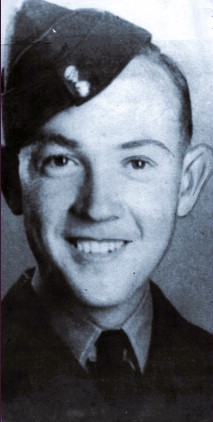
Sydney Dunn
On 6 December 1957, Manuel travelled from Birkenshaw to North East England to attend a job interview at a Newcastle upon Tyne engineering firm.57 Prior to returning to Lanarkshire, he is believed to have shot and killed a 36-year-old taxi driver named Sydney John Dunn, who was last seen alive by a colleague at Newcastle railway station at 4:30 a.m. on 8 December, driving from the station with a fare.58
Dunn's body was discovered upon a rural moorland road close to the village of Edmundbyers in County Durham fourteen hours later.59 He had been shot once in the back of the head at point-blank range with a .38 caliber revolver before his body was dragged approximately 140 yards from his taxi, which had been driven into a gully after the vehicle's headlights and interior lights had been smashed. Dunn's throat had also been cut and his personal possessions were strewn about the crime scene.60 Extensive bloodstains found upon and around the vehicle's steering wheel strongly suggested Dunn's throat had been cut after his head had fallen onto the steering wheel after his murderer had shot him in the head and prior to his body being dragged from the vehicle.6162
By the time of the discovery of Dunn's body, Manuel had returned from England to Lanarkshire, although he had still been in North East England at the estimated time the murder had occurred.2n 3
Isabelle Cooke
On 28 December 1957, Manuel travelled by bus from Birkenshaw to the Mount Vernon district of Glasgow. Having crossed a railway bridge in the direction of Shettleston, he encountered a 17-year-old girl named Isabelle Wallace Cooke, who had left her home to go to a dance at Uddingston Grammar School,64 having dressed for the occasion in a new fur stole and earrings shaped like the Eiffel Tower. She was carrying her dancing shoes, handbag, and a fan.65
According to Manuel's subsequent confession, he "grabbed [Cooke] and dragged her into a field on the same side as Rylands Riding School" before forcing her to accompany him further away from the road. After throwing Cooke's handbag into a pond, he attempted to force the girl to accompany him further across the field, although Cooke—by this stage hysterical—began to scream, whereupon Manuel "tore off her clothes, tied something around her neck and choked her" as he raped her.66n 4 He then carried her body into a freshly-ploughed field upon Burntbroom Farm and buried her in a shallow grave with a shovel he retrieved from close to the railway bridge.30
Cooke was reported missing by her parents the following morning. Her clothes, shoes and personal possessions were discovered scattered in various locations, including a flooded colliery shaft and the Rotten Calder.68 Many of these items were recovered over the following days, although her body remained undiscovered.69
As with Dunn's murder twenty days earlier, Cooke's disappearance was not initially connected to Manuel; however, her disappearance was tentatively linked to the murder of Anne Kneilands.69
Peter, Doris, and Michael Smart
In the predawn hours of 1 January 1958, Manuel broke into a bungalow on Sheepburn Road, Uddingston.70 Discovering a middle-aged couple named Peter and Doris Smart asleep in their bed, he shot both to death with a pistol he had recently purchased from a criminal acquaintance before entering the bedroom of their 12-year-old son, Michael,71 and fatally shooting the boy once in the head. He then stole all the money he could find in the household, including several brand new £5 banknotes from Peter Smart's wallet. Hours later, Manuel travelled to Glasgow to dispose of the gun in the River Clyde at Glasgow Green.72
Police would later discover that Manuel had repeatedly stealthily entered the Smart household in the days following the murders, stealing personal possessions, eating leftovers from the family Hogmanay meal, watching television and even feeding the family cat before opening several tins of salmon, which he left to spoil in the family kitchenette.73 Several days later, a neighbour noticed the garage doors to the property were open and the family's Austin A35 missing from the property.73n 5
The bodies of the Smarts would remain undiscovered until 6 January, when two work colleagues of Peter Smart reported to police he had failed to arrive at work and they been unable to contact him.75 Police broke into the bungalow and discovered the bodies at 11 a.m. after learning the family car had recently been found abandoned on a Glasgow street.76 Ballistic analysis would determine that all three decedents had been shot in the head with a Beretta pistol.77
Investigative developments
Although neighbours of the Smarts informed police they had assumed nothing was untoward in the Smart household as they had observed curtains opened and closed and lights switched on and off in the days prior to the discovery of their bodies, the level of decomposition of the bodies, plus unopened mail postmarked between 31 December and 3 January indicated the family had died on New Year's Day.78 Via tracing the family's movements on 31 December, investigators discovered that Peter Smart had withdrawn £35 in £5 notes from his bank on the afternoon prior to his murder. Staff at the bank were able to provide investigators with the consecutive serial numbers of these notes.79
Shortly after the discovery of the bodies of the Smart family, police received an anonymous tip that although Manuel—who lived within walking distance of the Smarts—had been without cash on New Year's Eve, he had been spending extravagantly in the following days. Routine checks in several east-end Glasgow pubs Manuel was known to frequent revealed he had spent a lot of money in the previous week, with patrons and staff alike remarking to investigators how lavishly Manuel had spent money, including one instance in which he spent over £8 17s on drinks and cigarettes (the equivalent of approximately £170 as of 2026) for a gathering of in-laws and friends in which he had paid from a roll of newly-issued banknotes.8081 The serial numbers upon several of the £5 banknotes he had used to pay for drinks were recovered and proved to be a precise match with those issued to Peter Smart on New Year's Eve.82
Arrest
By 13 January 1958,74 investigators had gathered enough physical and circumstantial evidence to arrest Manuel for the murder of the Smarts and to additionally charge him with breaking and entering into the Uddingston home of a family named McMunn in the early hours of 4 January.11n 6 He was arrested at 6:45 a.m. the following day.82
As an officer named Andrew Stuart recited the arrest warrant to Manuel's father, Manuel became verbally abusive.82 Informed he was to be taken to Bellshill police station for further questioning, Manuel replied: "You haven't found anything yet. You can't take me!" Shortly thereafter, he voluntarily left his home in the company of the officers to face formal questioning at Lanarkshire police headquarters. As a search of the property revealed a Kodak camera and an expensive pair of wool-lined gloves known to have been recently stolen from a house in Mount Vernon in Manuel's parents' bedroom,42 his father was also arrested and charged with receiving stolen goods after claiming he had recently bought the goods at a market.52
In custody, Manuel denied having committed the murders at the Smart residence. He admitted having acquired a considerable sum of money on New Year's Day, but insisted he had obtained this money legitimately at a Glasgow betting shop, with the £5 notes he had been spending having been given to him by the betting shop owner, Samuel McKay. McKay denied these claims and also informed police he had seen Manuel with a Beretta pistol the previous month. At 11:10 that evening, Manuel was formally charged both with murdering the Smart family and with breaking into the McMunn residence.83
Confession
At 12:30 p.m. the following day, Manuel requested to speak with a senior investigating officer; his request was granted and two senior officers spoke with him that afternoon.42 Manuel insisted to both officers that his father held no knowledge of any of his criminal activities, and offered to confess to the murders of the Smart family and reveal the location he had buried Isabelle Cooke in exchange for his father's release,15 stating: "Bring my father and mother here. I will speak to them with you present, and once I have told them myself, and made a clean breast of it ... I will take you to where the Cooke girl is buried." He was then led to a superintendent's office, where he wrote a letter addressed to Inspector Robert McNeill, in which he outlined his intention to "clear up" crimes he had committed in return for his father's release from custody, adding "the crimes I refer to are crimes of homicide" before specifically naming each victim he had murdered in Lanarkshire over the previous two years. Although informed his offer would need to be approved by higher authorities, Manuel immediately began providing verbal confessions to each of his crimes.84
In a meeting with both his parents and detectives later that afternoon, Manuel first asked why his father had claimed to investigators he had bought the stolen gloves and camera recovered from their household himself before confessing to the eight murders he had committed in Lanarkshire over the previous two years.85 He was detained in custody pending preliminary hearings.82
Further discoveries
In the early hours of the following day, Manuel led investigators to the location where he had buried the body of Isabelle Cooke, remarking to investigators after arriving at the location: "This is the place. In fact, I think I'm standing on her now."8687 He was then driven back to police headquarters, where he compiled a five-page written confession to each of the murders he had committed in Lanarkshire.88n 7
Over the following days, Manuel led detectives to the precise locations in the River Clyde where he had thrown the guns used to murder the Watt and Smart families,89 and to a piece of iron he had thrown into the Rotten Calder after the murder of Anne Kneilands.90 Both firearms and the section of iron were retrieved by underwater units.83 Ballistic testing of the Beretta later confirmed the firearm had been used to murder the Smart family.88
Formal murder charges
On 19 January, Manuel was additionally charged with the murder of Isabelle Cooke.67 By 16 February, he had been formally charged with nine murders—eight committed within Lanarkshire, and one in Northern England.91
Trial

Manuel was brought to trial for eight murders, three charges of theft by housebreaking, and one charge of car theft,92 at the Glasgow High Court on 12 May 1958.93 He was tried before Mr. Justice Cameron.94 The chief prosecutor was Maurice Gillies Q.C.;95 Manuel was defended by Harald Leslie Q.C. and William Robertson Grieve Q.C.96 He pleaded not guilty to all charges.97
Th first two days of the trial were devoted to the prosecution outlining each of the murders, the physical and circumstantial evidence linking Manuel to the crimes, and his criminal past. On the third day, William Watt's solicitor, Lawrence Dowdall, outlined his conversations with Manuel inside HM Prison Barlinnie, his detailed knowledge of the murders committed at the Watt residence, and of his conviction Manuel had been the perpetrator of the murders.98
William Watt testified on behalf of the prosecution with regard to the murders of his family on 15 May, outlining his subsequent arrest and release from custody having been discounted as a suspect. Although subjected to extensive cross-examination by William Grieve, Watt denied any culpability in the crimes.99
On 21 May, prior to the formal introduction of Manuel's confessions into evidence, his defence counsel sought to have his confessions ruled inadmissible as evidence; the judge rejected this motion.100 The following day, having withdrawn his confessions and claiming they had been extracted under extreme duress,52 Manuel sacked his lawyers and insisted on conducting his own defence.101 He presented a series of alibis as to his whereabouts on the dates of each of the murders and alleged that police were attempting to frame him for the crimes. He alleged that William Watt—whom he subjected to cross-examination on 23 May—had murdered his wife, daughter and sister-in-law,102 and that Peter Smart had first killed his wife and son before shooting himself. Manuel also claimed that Peter Smart had been a friend of his and had given him a set of keys to his house.103
On 26 May, Manuel's mother, Bridget, testified on his behalf. She testified that upon meeting her son and husband the day after their arrest, Manuel had read from a written statement in which he referenced "clearing up unsolved crimes in Lanarkshire", adding police had stated "You know what you have to do, Peter" prior to his reading the statement. Although Bridget Manuel conceded to a question from her son that this statement from police had "prompted" his recital, she also conceded upon cross-examination he had not recited any details of murders for which he was also being tried.104
Conviction
Manuel's trial lasted fourteen days, and saw 169 witnesses called to testify. On 26 May, both the prosecution and Peter Manuel delivered their closing arguments before the jury retired to consider their verdict. Manuel spoke for two-and-a-half hours in his closing argument, alleging his confessions had been extracted by police via threats which had made him fear for both his own safety and that of his family, and reiterating his earlier claims that he had alibis for each of the dates of the murders.2
The jury deliberated for less than two-and-a-half hours before announcing, at 4:45 p.m., that they had reached their verdicts: Manuel was found guilty of six charges of capital murder and—in relation to Isabelle Cooke—one charge of non-capital murder. He was then sentenced to death, with an initial execution date set for 19 June.105
Manuel was acquitted of the murder of Anne Kneilands,106 which the judge had instructed the jury prior to their deliberations to dismiss due to the lack of hard evidence linking him to the crime, in addition to the fact Manuel had since withdrawn his confession to Kneilands' murder.52107n 8
Execution
Manuel did appeal his conviction, although his appeal was rejected by the Scottish Criminal Appeal Court on 24 June 1958.108 His execution date was rescheduled for 11 July.97
The last family member to visit Manuel prior to his execution was his older brother, James, who later remarked his brother had observed confession and Holy Communion the evening prior to his execution,21 had "shaved, washed and combed his hair" prior to his visit and that, in reference to his impending execution, his brother had told him, "I'm not afraid" before he had replied, "Goodbye, Peter. Bless you."109
Manuel was hanged on the gallows at HMP Barlinnie at 8:01 a.m on 11 July 1958. His executioner was Harry Allen,110 and his last meal consisted of fish, chips, tomatoes and a cup of tea.111
Minutes prior to his execution, Manuel drank a customary glass of brandy before calmly informing the warden he was ready to die and to "get [his execution] over with".21 His last spoken words are reported to have been: "Turn up the radio, and I'll go quietly."112113
Aftermath
Peter Manuel was the third-to-last criminal to be executed in Scotland prior to the abolition of capital punishment in the United Kingdom in 1965.n 9
Manuel never confessed to, and was never tried for, the murder of Sydney Dunn as the crime had occurred in a different legal jurisdiction;70 however, had the Scottish Criminal Appeal Court upheld Manuel's appeal, officers from Durham Constabulary had been waiting to arrest and formally charge him with this murder.2
Seventeen days after Manuel was hanged, a coroner's jury in Newcastle concluded he had murdered Dunn after two fellow taxi drivers, Thomas Greener and Albert Younger, both positively identified Manuel as the man they had seen enter Dunn's taxi shortly before his murder. In addition, a distinctive button and yellow fibres found in Dunn's taxi proved a precise forensic match to a brown suit Manuel had worn when he had travelled to England to attend a job interview on December 6, 1957. When recovered, the jacket had been missing one button. Furthermore, traces of grass and vegetation found in the turn-ups of a pair of trousers owned by Manuel precisely matched the moorland vegetation at the crime scene.61
In the weeks prior to his execution, Manuel confessed to having committed three further murders.115 One of these victims, Ellen Carlin (28), had been strangled with a ligature in Pimlico, London, on 6 September 1954;116 the other victims he named as 48-year-old Ellen Petrie and 55-year-old Anne Steele. Petrie had been fatally stabbed in the leg close to a baker's shop in West George Lane, Glasgow, on 15 June 1956;117 Steele—a 55-year-old spinster—had been discovered bludgeoned to death in her flat in Aberfoyle Street, Glasgow, on 11 January 1956.31
In each instance, investigators question the sincerity of Manuel's claims. Moreover, in one instance, he had been incarcerated at the estimated time of the murder; in the case of Ellen Carlin, investigators strongly believe the victim had been murdered by an American serviceman, seen with Carlin before her murder.118119
Manuel had been arrested only eight days after the City of Glasgow CID took over the case, leading to calls for the creation of a national police force. A single Scottish police force was eventually created in 2013.
Media
Literature
- Hall, Angus (1976). Crimes of Horror. London: Hamlyn Publishing. pp. 45–53. ISBN 978-1-850-51170-0.
- Jessel, David; Wilson, Colin (1990). "Murder Casebook, Investigations into the Ultimate Crime – Glasgow's Multiple Killer". Murder Casebook (26). Marshall Cavendish. ISBN 978-0-748-51426-7.
- MacLeod, Hector; MacLeod, Malcolm (2009). Peter Manuel, Serial Killer. Edinburgh: Mainstream Publishing Company, Ltd. ISBN 978-1-845-96397-2.
- Nicol, Allan M. (2008). Manuel: Scotland's First Serial Killer. Edinburgh: Black & White Publishing. ISBN 978-1-845-02241-9.
- Williams, Paul (1994). "Eight Times a Murderer". Real-Life Crimes (80). London, England: Eaglemoss Publications Ltd.: 1760–1768. ISBN 978-1-858-75014-9.
- Wilson, John Gray (1959). The Trial of Peter Manuel: The Man who Talked Too Much. London: Secker & Warburg. ISBN 978-3-540-90347-5.
{{cite book}}: ISBN / Date incompatibility (help)
Television
- Peter Manuel: The End of Evil?. Directed by Paul Tucker, this 46-minute documentary was first broadcast in September 2008.120
- Inside the Mind of a Psychopath. Commissioned by BBC Scotland. This 55-minute documentary was first broadcast in February 2009 and features a recorded interview with Manuel.121122
- In Plain Sight. Commissioned by ITV. This three-part true crime drama miniseries focusing on the life and crimes of Peter Manuel was first broadcast in December 2016. Martin Compston is cast as Manuel.123
- Murder Maps S04E01 "The Beast of Birkenshaw" (2019), produced by 3DD Productions and presented by Nicholas Day.124
See also
See also
- Capital punishment in the United Kingdom
- Control (psychology) – How a person regulates themselves or wishes to regulate their environment
- HM Prison Barlinnie
- List of serial killers by number of victims
- List of serial killers in the United Kingdom
- Murder (Abolition of Death Penalty) Act 1965 – Act of the Parliament of the United Kingdom
- Narcissistic personality – Personality disorderPages displaying short descriptions of redirect targets
- Psychopathy – Personality construct
- Thrill killing – Murder motivated by sheer excitement
Notes
Notes
- On at least eleven occasions while detained in borstals or approved schools, Manuel absconded from the facilities, although he was invariably re-apprehended.10
- Police were unable to determine any conclusive motive which might have led Watt to murder his family, although they did discover he had a conducted at least one affair throughout the course of his marriage.53
- Some doubts remain as to Manuel's culpability in Dunn's murder. The rural location of the murder has led some to speculate the perpetrator had been a local person. Two witnesses who spoke to the individual whom Dunn accepted as a fare shortly before his murder picked out Manuel at an identity parade, although one of these individuals initially said that the murderer had a local accent; however, when it was suggested to this individual that the killer may have arrived in Newcastle upon an Irish boat train, he changed his account and claimed that the man had an Irish accent. In the years following his family's return to Scotland, Manuel had acquired a Scottish accent.63
- Investigators would later determine Manuel had strangled Cooke with a length of blue ribbon she had worn.67
- On 3 January, Manuel is known to have given a lift to a police officer in the Smarts' vehicle. This officer had been investigating the disappearance of Isabelle Cooke. Upon learning this fact, Manuel informed the officer that he felt that the police were not searching in the correct areas for Cooke.74
- Manuel fled from the McMunn residence after the father of the household, John McMunn, duped him into believing he had a firearm as Manuel entered their bedroom by saying to his wife, "Who is it? Where's the gun?" to which his wife replied, "Here it is."59
- In each of these cases, Manuel provided corroborating details either previously withheld from the public, or which only the perpetrator could have known.
- Contemporary Scottish law required corroborative evidence to substantiate Manuel's confession to Kneiland's murder. No such evidence existed to support his confession.31
- The two criminals executed in Scotland prior to the abolition of capital punishment were Anthony Miller, who was executed at HMP Barlinnie in December 1960, and Henry John Burnett, who was executed at HM Prison Aberdeen in August 1963.114
References
References
- Ross, Peter (1 March 2017). "The Long Drop by Denise Mina Review: Meet Scotland's Worst Serial Killer". The Guardian. Retrieved 1 May 2026.
- Williams 1994, p. 1768.
- Jessel & Wilson 1990, p. 934.
- Blundell 1996, p. 131.
- Hall 1976, p. 45.
- "Peter Manuel in the 1930 United States Federal Census". 1 January 1931. Retrieved 1 May 2026 – via ancestryinstitution-com.
- Jessel & Wilson 1990, p. 908.
- Knox 1968, p. 138.
- Gordon 2018, p. 235.
- Wilson 1959, p. 229.
- Blundell 1996, p. 132.
- "Murder for Fun". The Post-Standard. 19 June 1958. p. 19. Retrieved 14 May 2026.
- Ruark, Roberta C. (18 June 1958). "Death Sentence Needed Seen Proven Again". Eau Claire Daily Telegram . p. 6. Retrieved 8 May 2026.
- Jessel & Wilson 1990, pp. 908–909.
- Lane & Gregg 1992, p. 274.
- Wilson 1959, pp. 236–239.
- "Killing Spree Claimed Eight Lives". BBC News. 16 February 2009. Retrieved 9 May 2026.
- Williams 1994, p. 1763.
- Griffifths, Eleanor (7 June 2021). "Who was Peter Manuel? The Real Story of In Plain Sight's Notorious Serial Killer". Radio Times. Retrieved 18 May 2026.
- Jessel & Wilson 1990, p. 909.
- Hall 1976, p. 52.
- Wilson 1959, p. 100.
- "Peter Manuel: 'The Beast of Birkenshaw', Glasgow's Worst Serial Killer". Crime & Investigation. Retrieved 11 May 2026.
- "Ex-New Yorker is Hanged in Scotland". The Scurry County Times. Associated Press. 11 July 1958. p. 10. Retrieved 3 May 2026.
- Williams 1994, p. 1760.
- Jessel & Wilson 1990, pp. 928–929.
- Jessel & Wilson 1990, p. 914.
- Ruark, Roberta C. (20 June 1958). "British Pin-up Boy". Keokuk Daily Gate City. p. 9. Retrieved 24 May 2026.
- Blundell 1996, pp. 131–132.
- Whittington-Egan & Whittington-Egan (1992), p. 118.
- Whittington-Egan & Whittington-Egan (1992), p. 119.
- MacLeod & MacLeod (2009), Ch. 8.
- "The Country is Shocked". The Sunday Post. 23 September 1956. p. 15. Retrieved 17 May 2026 – via British Newspaper Archive.
- Jessel & Wilson 1990, pp. 904–905.
- Wilson 1959, p. 14.
- Wilson 1959, p. 107.
- Williams 1994, p. 1764.
- Lucas 1974, p. 102.
- "Unsolved Murders: Anne Kneilands". 1 January 2008. Retrieved 3 May 2026 – via unsolved-murders.co.uk.
- Jessel & Wilson 1990, p. 906.
- Jessel & Wilson 1990, p. 905.
- "The Glasgow Police Museum: The Manuel Murders of 1956-1958". 1 June 2005. Retrieved 17 May 2026 – via policemuseum.org.uk.
- Jessel & Wilson 1990, pp. 907.
- Wynn (1996), p. 227.
- Dobbs 2020, p. 1956.
- Boar & Blundell (1991), p. 179.
- Jessel & Wilson 1990, pp. 911–912.
- Wilson 1959, p. 20.
- Lane (1991), p. 293.
- Hall (1976), p. 47.
- Williams (1994), p. 1762.
- Fido 1995, p. 68.
- Williams (1994), p. 1761.
- Jessel & Wilson 1990, p. 910.
- Ramsland 2011, p. 186.
- Gribble 1977, p. 104.
- Fotheringham, Ann (17 May 2026). "Peter Manuel Trial in Glasgow 'Changed Way Newspapers Covered Murders'". Glasgow Times. Retrieved 20 May 2026.
- Jessel & Wilson 1990, p. 921.
- Hall 1976, p. 49.
- "Woodchopper Goes on Trial for Murder of Nine Persons". The Holland Sentinel. United Press International. 12 May 1958. p. 7. Retrieved 8 May 2026.
- White, Andrea (21 July 2011). "'...and Sydney Dunn I Slew'". The Northern Echo. Archived from the original on 18 September 2023. Retrieved 1 May 2026.
- Wynn (1996), p. 229.
- Nicol (2008), Ch. 22.
- Whitehead, Joanna (7 June 2021). "Peter Manuel: The True Story of the Scottish Serial Killer from In Plain Sight, and How Many Victims he Killed". The i Paper. Retrieved 4 May 2026.
- Jessel & Wilson 1990, p. 919.
- Lustgarten 1968, p. 141.
- "British Police Reopen Five Unsolved Murders". Sarasota Herald-Tribune. United Press International. 20 January 1958. p. 9. Retrieved 7 May 2026.
- Lane & Gregg 1992, pp. 274–275.
- Williams 1994, p. 1765.
- Boar & Blundell (1991), p. 180.
- "FreeBMD: Births: Dec. 1945". FreeBMD. 19 September 2001. Retrieved 25 May 2025.
- Lane (1991), p. 294.
- Jessel & Wilson 1990, p. 920.
- Swarbrick, Susan (3 December 2016). "Peter Manuel: The Serial Killer who Struck Fear Into the Heart of Close-Knit Lanarkshire Communities". The Herald. Retrieved 8 May 2026.
- Wynn (1996), p. 228.
- Williams 1994, p. 1766.
- Wilson 1959, p. 211.
- McKay, Ron (7 June 2021) [27 June 2016]. "The Beast of Birkenshaw: Peter Manuel and The Story of Scotland's Worst Serial Killer". Glasgow Live. Retrieved 12 May 2026.
- Jessel & Wilson 1990, pp. 919–920.
- Wilson 1959, p. 98.
- Lucas 1974, p. 113.
- Jessel & Wilson 1990, p. 922.
- Williams 1994, p. 1767.
- Jessel & Wilson 1990, p. 925.
- Lustgarten 1968, p. 149.
- Lane & Gregg 1992, p. 276.
- "'He Led Us To Her Grave'". The Daily Record. 22 May 1958. p. 10. Retrieved 9 May 2026 – via newspapers.com.
- Jessel & Wilson 1990, p. 926.
- Knox 1968, p. 166.
- Wilson 1959, p. 120.
- "Man Charged With Nine Murders". The Victoria Advocate. Associated Press. 17 February 1958. p. 5. Retrieved 10 May 2026.
- "Woodcutter Goes on Trial for Eight Killings in Scotland". Racine Journal Times. Associated Press. 12 May 1958. p. 7. Retrieved 9 May 2026.
- Wilson 1959, p. 201.
- "Peter Manuel: Scotland's Worst Ever Serial Killer". Retrieved 3 May 2026 – via capitalpunishmentuk.org.
- "'He Led Us to Her Grave...'". The Daily Record. 22 May 1958. p. 10. Retrieved 13 May 2026 – via newspapers.com.
- Gribble 1977, p. 110.
- Jessel & Wilson 1990, p. 930.
- Jessel & Wilson 1990, pp. 930–931.
- Jessel & Wilson 1990, p. 931.
- Wynn (1996), pp. 228–229.
- Wynn (1996), pp. 227–229.
- Knox 1968, p. 169.
- Nicol (2008), Ch. 46-47.
- "Accused Murderer Questions Mother". Medicine Hat News. Reuters. 26 May 1958. p. 2. Retrieved 10 May 2026.
- "Murderer Hanged". Joplin News Herald. Associated Press. 11 July 1958. p. 2. Retrieved 8 May 2026.
- Wilson 1959, p. 50.
- "Jury in Scotland Gives Man Death for Seven Murders". The Oklahoman. United Press International. 30 May 1958. p. 67. Retrieved 3 May 2026.
- "Manuel's Appeal is Rejected on All Grounds". The Aberdeen Evening Express. 25 June 1958. p. 1. Retrieved 24 May 2026 – via British Newspaper Archive.
- "Killer of Seven Hanged". The Kingston Gleaner. Reuters. 12 July 1958. p. 1. Retrieved 2 May 2026.
- Fielding 2008, p. 290.
- Warren, Jane (6 December 2016). "Smirking Serial Killer- and the Detective who Sent Him to the Gallows". Daily Express. Retrieved 21 May 2026.
- Jessel & Wilson 1990, p. 935.
- Gordon 2018, p. 240.
- Urquhart, Francesca (24 July 2013). "Body of Last Scot Hanged for Murder May be Exhumed". The Scotsman. Archived from the original on 24 July 2013.
- Lane & Gregg 1992, p. 275.
- "Unsolved Murders: Ellen Carlin". 1 January 2008. Retrieved 7 May 2026 – via unsolved-murders.co.uk.
- Wilson & Pitman (1984), p. 374.
- Nicol (2008), Ch. 55.
- O'Neill, Ciaran (11 February 2021). "New Twist in the Tragic Story of a Derry Woman Murdered in London 67 Years Ago". Derry Now. Retrieved 7 May 2026.
- "Peter Manuel: The End of Evil?". IMDb. Retrieved 7 May 2026.
- "New Evidence in 'Psychopath' Case". BBC News Online. 16 February 2009. Retrieved 7 May 2026.
- "Serial Killer's Voice to be Heard". BBC Radio Scotland. 16 February 2009. Retrieved 1 May 2026.
- "Overview: In Plain Sight". TV Guide. 7 December 2016. Retrieved 6 May 2026.
- "The Beast of Birkenshaw". IMDb. Retrieved 6 May 2026.
Works cited and further reading
- Bingham, John; Muncie, William (1973). The Hunting Down of Peter Manuel, Glasgow Multiple Murderer. New York: Macmillan Publishers. ISBN 978-0-333-13664-5.
- Blundell, Nigel (1996). The Encyclopedia of Serial Killers. London: Promotional Reprint Company Ltd. ISBN 1-856-48328-2.
- Boar, Roger; Blundell, Nigel (1991). Crooks, Crime and Corruption. Dorchester, Dorset: Dorset Press. ISBN 978-0-880-29615-1.
- Cawthorne, Nigel (1999). The World's Greatest Serial Killers. London: Chancellor Press. ISBN 978-0-753-70089-1.
- Dobbs, Gary (2020). A Date with the Hangman: A History of Capital Punishment in Britain. Philadelphia: Pen & Sword Books Ltd. ISBN 978-1-526-76740-0.
- Fido, Martin (1995). Twentieth-century Murder: A Year-by-year Account of the World's Most Pitiless Crimes. London: Bracken Books. ISBN 978-1-858-91390-2.
- Fielding, Steven (2008). The Executioner's Bible. London: John Blake Publishing. ISBN 978-1-843-58696-8.
- Gordon, R. Michael (2018). Murder Files from Scotland Yard and the Black Museum. North Carolina: Exposit Publishing. ISBN 978-1-476-67254-0.
- Gribble, Leonard R. (1977). Compelled to Kill. London: Long Publishing. ISBN 978-0-091-29010-8.
- Knox, William (1968). Court of Murder: Famous Trials at Glasgow High Court. London: John Long Ltd. ISBN 978-0-090-86150-7.
- Lane, Brian (1991). The Murder Guide to Great Britain. London: Robinson Publishing Ltd. ISBN 1-854-87083-1.
- Lane, Brian (1995). Chronicle of 20th Century Murder. Wiltshire: Select Editions. ISBN 978-0-425-14649-1.
- Lane, Brian; Gregg, Wilfred (1992). The Encyclopedia of Serial Killers. London: Headline Publishing Group. ISBN 978-0-747-23731-0.
- Lucas, Norman (1974). The Sex Killers. London: W. H. Allen & Co. ISBN 978-0-491-01481-6.
- Lustgarten, Edgar (1968). The Business of Murder. London: George G. Harrap and Co. ISBN 978-0-245-58691-0.
- MacKay, Donald M. (2015). Scotland's Hanged: 1946-1963. Glasgow: Glasgow Cross Press. ISBN 978-0-747-23731-0.
- Nash, Jay Robert (2004). The Great Pictorial History of World Crime. London: Rowan & Littlefield. ISBN 978-1-461-71215-2.
- Ramsland, Katherine (2011). The Mind of a Murderer: Privileged Access to the Demons That Drive Extreme Violence. New York: ABC-CLIO. ISBN 978-0-313-38673-2.
- Skelton, Douglas (2009). Glasgow's Black Heart: A City's Life of Crime. Edinburgh: Mainstream Publishing Company Limited. ISBN 978-1-845-96980-6.
- Whittington-Egan, Richard; Whittington-Egan, Molly (1992). The Murder Almanac. Glasgow: Neil Wilson Publishing. pp. 118–120. ISBN 1-897784-04-X.
- Wilson, Colin; Pitman, Patricia (1984). Encyclopedia of Murder. London: Pan Books. ISBN 978-0-330-28300-7.
- Wynn, Douglas (1996). On Trial for Murder. London: Pan Books. ISBN 978-0-330-33947-6.
External links
External links
- Contemporary news article detailing the trial of Peter Manuel
- 21 March 1959 Winnipeg Tribune news article pertaining to Peter Manuel
- Call to Examine '50s Killer Case: A 2008 BBC News article detailing evidence suppressed at Manuel's trial
- New Evidence in 'Psychopath' Case: A 2009 news article detailing a BBC Scotland investigation into Manuel's crimes
- British Executions case file pertaining to Peter Manuel
- Glasgow Police Museum online entry pertaining to Peter Manuel
- Peter Manuel: Crime Files at crimeandinvestigation.co.uk