| Partyball | ||||
|---|---|---|---|---|
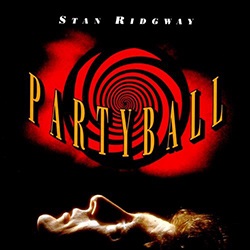 | ||||
| Studio album by | ||||
| Released | May 1991 | |||
| Studios |
| |||
| Genre | Rock | |||
| Length | 47:19 | |||
| Label | Geffen | |||
| Producer | Stan Ridgway | |||
| Stan Ridgway chronology | ||||
| ||||
| Singles from Partyball | ||||
| ||||
Partyball is the third album by Stan Ridgway, released in 1991.1
Critical reception
| Review scores | |
|---|---|
| Source | Rating |
| AllMusic |   2 2 |
| The Encyclopedia of Popular Music | 3 |
Trouser Press wrote that the album "serves up odes to trigger-happy cops, hopeless love, Harry Truman and the atom bomb, otherworldly chain gangs and plague-ridden dystopias, interrupted by odd instrumental interludes that continue Ridgway’s fascination with soundtrack music for invisible movies."4 The Los Angeles Times called the songs "mainly about the fearsome distortions that come from dominance, power and an unwillingness to acknowledge weakness and vulnerability as our common human lot."5
Track listing
All tracks composed by Stan Ridgway
- "Watch Your Step/Jack Talked (Like a Man on Fire)" - 4:19
- "I Wanna Be a Boss" - 4:52
- "Mouthful of Sand/The Roadblock" - 5:31
- "Snaketrain" - 3:53
- "Right Through You" - 3:45
- "The Gumbo Man" - 3:34
- "Harry Truman" - 3:51
- "Venus Is Hell/Overlords" - 5:39
- "O.K?/Uba's House of Fashions" - 4:36
- "Bad News at the Dynamite Ranch/Beyond Tomorrow" - 7:19
Personnel
Adapted from the Partyball liner notes.6
- Stan Ridgway – vocals, backing vocals (1, 9, 10), keyboards (2–6, 8), acoustic guitar (2, 6, 7), guitars (3–5, 8), harmonica (3)
- Bernard Sauser-Hall – keyboards (1, 7, 9, 10), organ (6)
- Pietra Wexstun – keyboards (1, 7, 9, 10), backing vocals (1, 2, 5, 9, 10)
- Jeff Boynton – acoustic piano (5)
- Mark Schulz – guitars (1, 9, 10), electric guitar (2, 7)
- Don Teschner – lap steel guitar (4)
- Joe Ramirez – bass (1, 6, 7, 9), backing vocals (1, 9)
- David Sutton – bass (2), fretless bass (5)
- Joseph Berardi – drums (1, 2, 6, 7, 9, 10), timpani (1), percussion (6, 8, 10)
- Jim Hill – additional drum programming, anvil (8)
- Elmo Smith – saxophone (3, 8)
- Beth Anderson – backing vocals (2)
- John Batdorf – backing vocals (2)
- Larry Grennan – backing vocals (2, 10)
- Evon Williams – backing vocals (2)
Production
- Stan Ridgway – producer
- Jim Hill – engineer, recording, mixing (1.1, 2–9.2, 10.1)
- Joe Chiccharelli – mixing (1.2, 9.2, 10.2)
- Andrew Ballard – second engineer
- Bill Cooper – second engineer
- Mike Green – second engineer
- Alan Yoshida – mastering at The Mastering Lab (Hollywood, California)
- Beth Escott – art direction, design
- Kevin Reagan – Geffen art direction
- Rocky Schenck – photography
Chart positions
Singles
| Year | Title | Peak Chart positions |
|---|---|---|
| US Mod7 | ||
| 1991 | "I Wanna Be a Boss" | 13 |
References
References
- "Stan Ridgway | Biography & History". AllMusic.
- Thomas Erlewine, Stephen. "allmusic ((( Partyball > Review )))". AllMusic. Retrieved December 7, 2009.
- Larkin, Colin (2006). The Encyclopedia of Popular Music. Vol. 7. MUZE. p. 21.
- "Stan Ridgway". Trouser Press. Retrieved December 29, 2020.
- "POP MUSIC REVIEWS : Thought-Provoking Set From Stan Ridgway". Los Angeles Times. October 28, 1991.
- Partyball (booklet). Stan Ridgway. Los Angeles, California: Geffen Records. 1991.
{{cite AV media notes}}: CS1 maint: others in cite AV media (notes) (link) - "Stan Ridgway Chart History". Billboard. Retrieved December 3, 2009.