| Orstenotubulus Temporal range:
| |
|---|---|
| |
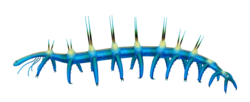
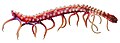
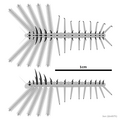
| Reconstruction of Orstenotubulus | |
Scientific classification 
| |
| Kingdom: | Animalia |
| Clade: | Panarthropoda |
| Phylum: | †Lobopodia |
| Genus: | †Orstenotubulus |
| Species: | †O. evamuellerae
|
| Binomial name | |
| †Orstenotubulus evamuellerae Maas et al 2007 1
| |
Orstenotubulus is a genus of minute lobopodian known from three-dimensionally preserved remains found in the Upper Cambrian (Furongian) Orsten deposits of southern Sweden.12
Morphology
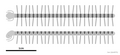
Orstenotubulus was tiny, estimated to only be 4–5 millimetres (5⁄32–3⁄16 in) long, with elongated, thin body about 0.12–0.205 millimetres (1⁄200–1⁄125 in) wide with pairs of upward-pointing spines running down the entire top of the body. Each pair of spines was associated with a pair of relatively elongate legs, with the whole body suggested to have 9-10 spine-leg pairs. The body was weakly annulated. It had tiny retractable spines ventral to the leg surface.1
Ecology
Orstenotubulus is thought to have lived by walking on the seafloor, with its spines likely serving to protect it against predators.1
Taxonomy
A 2015 study found that it was within the "hallucishaniid" grouping of lobopodians, related to lobopodians like the also spined Hallucigenia and Collinsovermis.3
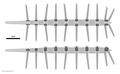
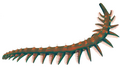
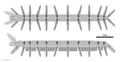
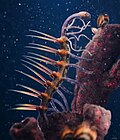
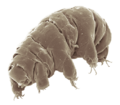
Phylogeny of Panarthropoda and lobopodians after Knecht et al. 2025:4
| |||||||||||||||||||||||||||||||||||||||||||||||||||||||||||||||||||||||||||||||||||||||||||||||||||||||||||||||||||||||||||||||||||||||||||||||||





References
References
- Maas, A.; Mayer, G.; Kristensen, R. M.; Waloszek, D. (2007). "A Cambrian micro-lobopodian and the evolution of arthropod locomotion and reproduction". Chinese Science Bulletin. 52 (24): 3385. Bibcode:2007ChSBu..52.3385M. doi:10.1007/s11434-007-0515-3. S2CID 83993887.
- Maas A, Waloszek D. 2001. Cambrian derivatives of the early arthropod stem lineage, pentastomids, tardigrades and lobopodians – an ‘Orsten’ perspective. Zoologischer Anzeiger 240: 451–459.
- Smith, Martin R.; Caron, Jean-Bernard (July 2015). "Hallucigenia's head and the pharyngeal armature of early ecdysozoans". Nature. 523 (7558): 75–78. doi:10.1038/nature14573. ISSN 0028-0836.
- Knecht, Richard J.; McCall, Christian R. A.; Tsai, Cheng-Chia; Rabideau Childers, Richard A.; Yu, Nanfang (23 July 2025). "Palaeocampa anthrax, an armored freshwater lobopodian with chemical defenses from the Carboniferous". Communications Biology. 8 (1) 1080. doi:10.1038/s42003-025-08483-0. PMC 12287526. PMID 40702124.