| Muda | |
|---|---|
| Native to | China |
Native speakers | 2,000 (2007)1 |
| Language codes | |
| ISO 639-3 | ymd |
| Glottolog | muda1235 |
| ELP | Muda |
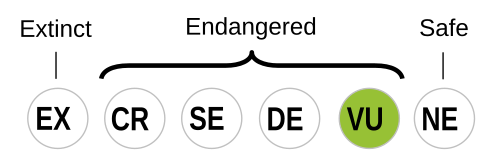 Muda is classified as Vulnerable by the UNESCO Atlas of the World's Languages in Danger | |
Muda (木达 or 母打) is a Loloish language of China.
There are over 2,000 Muda speakers in Nanlianshan Village Community 南联山村委会2 (formerly Nanlianshan District, 南联山乡, now part of Gasa Township 嘎洒镇), Jinghong City, Yunnan, China (Xu 1991).3
Classification
Xu (1991) classifies Muda as a Ha-Ya language (see Hani languages).
Hsiu (2018)4 classifies Muda as an Akha language containing a Bisoid substratum, with the substrate language being an early split from Bisoid. Muda has Cl- consonant clusters like various Bisoid languages, Siloid languages, and Jinuo, while words of Bisoid origin include 'leg', 'house', and 'smoke'.
Phonology
Muda has the complex consonant onsets /pl, pʰl, bl, ml, pj, pʰj, bj, mj/ (Xu 1991:34).
Vocabulary
The following vocabulary of Muda is from Xu (1991).
| English gloss | Chinese gloss | Muda | Page |
|---|---|---|---|
| White | 白 | pʰlu⁵⁵ | 35 |
| Full | 满 | blaŋ³³ | 35 |
| Pus | 脓 | ()blaŋ⁵⁵ | 36 |
| Arrow | 箭 | ()mla³¹ | 36 |
| Broom | 扫帚 | ()pʰjɔ⁵⁵ | 36 |
| Bee | 蜜蜂 | bja³¹ | 36 |
| Lose, to | 遗失 | ()bjo̱³³ | 36 |
| Fly, to | 飞 | jɔ³³ | 36 |
| Monkey | 猴子 | ()mjo̱³¹ | 36 |
| Many | 多 | mja³¹ | 36 |
| Foot | 脚 | kʰɯ⁵⁵ | 37 |
| Six | 六 | ko̱³¹ | 37 |
| Gallbladder | 胆 | ()kʰɯ⁵⁵ | 37 |
| Star | 星星 | ()gɯ⁵⁵ | 37 |
| Copper | 铜 | gɯ³¹ | 37 |
| Tendon | 筋 | ()gu³¹ | 37 |
| Manure | 粪 | cçʰe³¹ | 38 |
| Root (classifier) | 根(量词) | cçʰaŋ³¹ | 38 |
| Wide | 宽 | ()ɟje⁵⁵ | 38 |
| Drop, to | 掉 | ɟja³³ | 38 |
| Day (time) | 天(日子) | naŋ³³ | 38 |
| Soft | 软 | nø̱³¹ | 38 |
| Cook, to | 煮 | tɕa̱³¹ | 38 |
| Sour | 酸 | tɕʰɛ⁵⁵ | 38 |
| Narrow | 窄 | tɕu̱³¹ | 38 |
| Lick, to | 舔 | tɕʰy⁵⁵ | 38 |
| Stick (classifier) | 条 | tɕa̱³³ | 38 |
| Cry, weep | 哭 | ɴo⁵⁵ | 39 |
| Steal, to | 偷 | qʰø³¹ | 39 |
| Bitter | 苦 | qʰa³¹ | 39 |
| Smoke (fog) | 烟(雾) | ()qʰø³¹ | 39 |
| Nine | 九 | ɢø³¹ | 39 |
| Curved | 弯 | ɢaŋ³¹ | 39 |
| Play, to | 玩耍 | ()ɢa³³ | 39 |
| Enter, to | 进 | aŋ⁵⁵ | 40 |
| Horse | 马 | maŋ³¹ | 40 |
| Open (door) | 开(门) | pʰaŋ³³ | 40 |
| Sell, to | 卖 | aŋ³¹ | 40 |
| Throat | 喉咙 | kʰaŋ³¹() | 40 |
| Dark | 暗 | jaŋ⁵⁵ | 40 |
| Pus | 脓 | ()blaŋ⁵⁵ | 40 |
| Full | 满 | blaŋ³³ | 40 |
| Money | 钱 | ()kʰaŋ⁵⁵ | 40 |
| Bear | 狗熊 | ()xum⁵⁵ | 40 |
| Otter | 水獭 | ()ɕum⁵⁵ | 40 |
| Iron | 铁 | ɕʰum⁵⁵ | 41 |
| Pile (of soil) | 堆(土) | blum⁵⁵ | 41 |
| House | 房屋 | ʑum⁵⁵ | 41 |
| Roast, to | 烤 | lum⁵⁵ | 41 |
| Round | 圆 | laŋ³³ | 41 |
| Surround, to | 包围 | ()laŋ⁵⁵ | 41 |
| Pond | 池塘 | laŋ³³() | 41 |
| Axe | 斧子 | ()dzɿ³³ | 41 |
| Woman | 女人 | ()mi³¹ | 41 |
| Louse | 虱子 | ɕɛ⁵⁵() | 41 |
| Goose | 鹅 | gɛ̱³³() | 41 |
| Push, to | 推 | dɛ³¹ | 41 |
| Edge | 边上 | ()dzɛ⁵⁵() | 41 |
| Eagle | 老鹰 | ()dzɛ⁵⁵ | 41 |
| Saddle | 鞍子 | ()qɔ̱³³ | 41 |
| Shallow | 浅 | tɛ̱³³ | 41 |
| Change, to | 改 | pʰa³³ | 41 |
| Winnow (rice), to | 簸(米) | ja⁵⁵ | 41 |
| See, to | 看见 | ()mɔ⁵⁵ | 41 |
| Mosquito | 蚊子 | ()gɔ³¹ | 41 |
| Change, to | 变 | pʰa⁵⁵ | 41 |
| Stick (classifier) | 条 | tɕa̱³³ | 41 |
| Leg | 腿 | bɔ⁵⁵() | 41 |
| Store, to | 铺 | qʰɔ³¹ | 41 |
References
References
- Muda at Ethnologue (18th ed., 2015) (subscription required)
- 景洪市嘎洒镇南联山村委会
- Xu Shixuan [徐世璇] (1991). 缅彝语几种音类的演变. Minzu Yuwen.
- Hsiu, Andrew. 2018. Classifications of some lesser-known Lolo-Burmese languages.
- Xu Shixuan [徐世璇] (1991). "Several types of sound changes in Lolo-Burmese languages [缅彝语几种音类的演变]." In Minzu Yuwen 1991(3), 34-41.
- http://asiaharvest.org/wp-content/themes/asia/docs/people-groups/China/chinaPeoples/M/Muda.pdf