Michael Durham was a Scottish courtier and physician to James V of Scotland. His family was from Grange at Monifieth near Dundee.
Death of a king

Durham took his first degree at the University of St Andrews. He was given a salary of £100 Scots as the royal physician or "doctour in medicyne".1 He attended James V at Falkland Palace during his final illness in December 1542.2 He was a witness to the king's will, a legal instrument made at Falkland appointing tutors for Mary, Queen of Scots.3 The document was declared invalid.4
Regent Arran paid Durham's expenses of £200 Scots for his medical work, and gave him a gown furred with Scottish "martrick" or marten fur from the royal wardrobe.56 At first, according to John Knox, the counsel of Durham and other Protestants was welcomed at the Regent's court. Soon, however, these courtiers were removed.7
René-Aubert Vertot, an 18th-century editor of the letters of Antoine de Noailles, mentions that suspicion fell on Durham for poisoning James V.8 There were rumours that the king's demise was hastened by poison or the wrong medicine. Modern historians believe James died of natural causes.9 A rumour of poisoning was current days after the death, reaching English authorities.10 John Lesley wrote that James V was "vexit by some unkindly medicine".11 A translator of Lesley's Latin History wrote that the common people thought "the king sooner died through medicine, than otherwise he would have done".12 Raphael Holinshed and David Calderwood wrote of reports that James V was "disquieted by some unkindlie medicine".1314
War
Michael Durham and his brother Henry Durham were Protestants who sided with England during the war now known as the Rough Wooing. Henry Durham was involved in an attack on the Franciscan and Dominican Friaries in Dundee in August 1543, during a short period when Regent Arran adopted a Protestant outlook. These months are known as Arran's "Godly Fit".151617
In August 1546, Regent Arran had Michael Durham imprisoned for a time in Edinburgh Castle.18 Durham then went to London. The Scottish diplomat Adam Otterburn was surprised that he had been released and allowed to travel.19
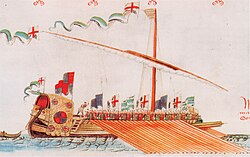
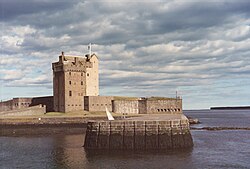
After the battle of Pinkie in September 1547, Michael Durham accompanied the English commander Andrew Dudley from Leith to Broughty Castle. They sailed in the Galley Suttill or Subtle with Richard Brooke and fired three shots at the castle. Henry Durham, who was a retainer of Lord Gray, and Captain of Broughty, surrendered the castle to Dudley.2021 The galley was used because it could be rowed near the shore to fire its ordnance.22
Ralph Sadler gave Doctor Durham a reward of £10.23 Henry and Michael Durham, as "assured Scots", were given an English pension of £50 and trading privileges.24 The head of the family, William Durham of Grange, was later given a pardon or remission for helping the English at Broughty Castle and the nearby fort at "Brakehill".25
London
Michael Durham returned to London. He received a pension from the English exchequer, granted by Edward VI of England.26 He became a friend of the French ambassador Antoine de Noailles, aiding him with intelligence and in diplomatic matters.27 Durham carried or forwarded some of Noailles's letters to Henri Cleutin in Scotland.28 Noailles tried to rehabilitate Durham with Mary of Guise, the widow of James V who ruled Scotland from 1554 to 1560.29
An "assize" concerning Doctor Durham was held in Edinburgh in October 1555.30 In March 1557, the English diplomat Nicholas Wotton described Durham as a spy for France and Mary of Guise, receiving a pension from her of 300 crowns.31
References
References
- Accounts of the Treasurer of Scotland, 8, p. 106.
- Andrea Thomas, Princelie Majestie (John Donald, 2005), p. 40.
- Margaret Sanderson, Cardinal of Scotland, David Beaton (Edinburgh, 1986), p. 157.
- H. F. Morland Simpson, 'Cardinal Beaton and the Will of James V', The English Historical Review, 21:81 (January 1906), pp. 112–118: HMC 1th Report Part VI Hamilton (London, 1887), pp. 219–220 no. 158
- James Balfour Paul, Accounts of the Treasurer, 8 (Edinburgh, 1908), pp. xxxi, 148.
- John G. Harrison, Wardrobe Inventories of James V: British Library MS Royal 18 C (Historic Scotland: Edinburgh, 2008), p. 49
- Works of John Knox: History of the Reformation (Edinburgh, 1846), p. 106.
- Vertot, Ambassades des Noailles, 3, (Leyde, 1763), p. 300 fn
- Jamie Cameron, James V: The Personal Rule (Tuckwell, 1998), p. 325.
- Joseph Bain, Hamilton Papers, 1 (Edinburgh, 1890), p. 342 no. 261
- Thomas Thomson, History of Scotland by John Leslie (Edinburgh, 1830), p. 166.
- E. Cody & W. Murison, Historie of Scotland, 2 (Edinburgh: STS, 1895), p. 259, modernised here
- Andrew Lang, 3, Scottish Historical Review (Glasgow, 1906), pp. 380–82: Thomas Napier Thomson, History of the Kirk, 1 (Edinburgh, 1842), p. 152
- Chronicles of England, Scotland and Ireland, 5 (London, 1808), p. 528
- Marcus H. Merriman, 'The Assured Scots: Scottish Collaborators with England during the Rough Wooing', Scottish Historical Review, 47:143 (1) (April 1968), p. 22.
- Timothy Slonosky, Civic Reformation and Religious Change in Sixteenth-century Scottish Towns (Edinburgh University Press, 2024), pp. 129–130: Alexander Maxwell, Old Dundee (Edinburgh, 1891), p. 395.
- David McRoberts, "Material destruction caused by the Scottish Reformation", Innes Review, 10:1 (June 1959), pp. 130–132.
- James Balfour Paul, Accounts of the Treasurer of Scotland, 8 (Edinburgh, 1907), pp. 106, 148, 479
- Annie Cameron, Scottish Correspondence of Mary of Lorraine (Edinburgh: SHS, 1927), p. 184.
- Francis Mudie, David Walker, Iain MacIvor, Broughty Castle and the Defence of the Tay (Abertay Historical Society, 2010), p. 18: Marcus Merriman, The Rough Wooings (East Linton, Tuckwell, 2000), p. 250.
- Timothy Slonosky, Civic Reformation and Religious Change in Sixteenth-century Scottish Towns (Edinburgh University Press, 2024), p. 154: Alexander Maxwell, Old Dundee (Edinburgh, 1891), pp. 92, 98.
- David Caldwell, Vicky Oleksy, Bess Rhodes, The Battle of Pinkie, 1547 (Oxbow, 2023), pp. 51, 226, 243.
- Sadler State Papers, 1, p. 361.
- John Roche Dasent, Acts of the Privy Council, vol. 2 (London, 1890), 157–159, 242: Arthur Clifford, Sadler State Papers, vol. 1 (Edinburgh, 1809), p. 361: Joseph Bain, Calendar State Papers Scotland, vol. 1 (Edinburgh, 1898), pp. 21 no. 46, 102 no. 207: Walter G. Richardson, The Report of the Royal Commission of 1552 (West Virginia University Library, 1974), pp. 32, 89.
- James Beveridge, Register of the Privy Seal, 4 (Edinburgh: HMSO, 1952), p. 14 no. 87.
- W. C. Richardson, The Report of the royal commission of 1552 (Morgantown, 1974), p. 89.
- E. Harris Harbison, Rival Ambassadors at the Court of Queen Mary (Princeton, 1940), pp. 119–124.
- Vertot, Ambassades des Noailles, 4, p. 22.
- Vertot, Ambassades des Noailles, 3, pp. 269, 300 fn.
- James Balfour Paul, Accounts of the Treasurer of Scotland, 10 (Edinburgh, 1913), p. 298.
- William B. Turnbull, Calendar State Papers Foreign Mary (London, 1861), p. 290 no. 579: Patrick Fraser Tytler, History of Scotland, 6 (Edinburgh, 1840), p. 443