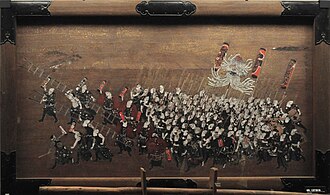
A matoi (纏/まとい) was a flag used in Edo period Japan by hikeshi firemen to notify people of a fire near or within a building.1 It was taken up on a roof near the burning building by the matoi holder (纏持, matoimochi) and waved to draw the attention of other groups of firefighters, who would then hurry to the site of the fire to assist.23 Each different group of firemen in the Edo period had their own matoi to identify themselves.3
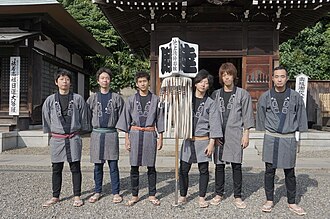
In modern Japan, the matoi is only used for ceremonial purposes,1 for example on New Year's firefighter event, Dezomeshiki. The Fire Museum (消防博物館 東京消防庁消防防災資料センター) of the Tokyo Fire Department has a large collection of replica matoi.4
References
References
- "纒(まとい) - 一社江戸消防記念会". www.edosyoubou.jp. EDO Firemanship Preservation Association. Retrieved 2024-02-21.
- "粋でいなせな木遣りで"火消し"を伝える-日本火消し保存会-English". www.nihonhikeshihozonkai.org. Retrieved 2024-02-21.
- toshidama (2013-07-22). "Matoi – Fire Standards of Edo". Toshidama Japanese Prints. Retrieved 2024-02-21.
- "Results | Artifact Database | Fire Museum". Fire Museum - Artifact Database. Retrieved 2024-02-25.