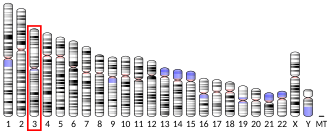
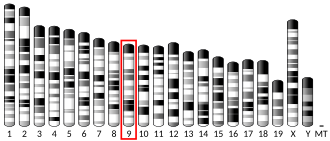
Microtubule-associated protein 4 is a protein that in humans is encoded by the MAP4 gene.5
The protein encoded by this gene is a major non-neuronal microtubule-associated protein. This protein contains a domain similar to the microtubule-binding domains of neuronal microtubule-associated protein (MAP2) and microtubule-associated protein tau (MAPT/TAU). This protein promotes microtubule assembly, and has been shown to counteract destabilization of interphase microtubule catastrophe promotion. Cyclin B was found to interact with this protein, which targets cell division cycle 2 (CDC2) kinase to microtubules. The phosphorylation of this protein affects microtubule properties and cell cycle progression. Multiple alternatively spliced transcript variants encoding distinct isoforms have been observed, the full-length nature of three of which are supported.6
uMAP4, the ubiquitous isoform of MAP4, functions in the architecture and positioning of the mitotic spindle in human cells.7 oMAP4 is predominantly expressed in brain and muscle and has been shown to organise microtubules into antiparallel bundles.8 mMAP4 is a muscle-specific isoform.89
References
References
- GRCh38: Ensembl release 89: ENSG00000047849 – Ensembl, May 2017
- GRCm38: Ensembl release 89: ENSMUSG00000032479 – Ensembl, May 2017
- "Human PubMed Reference:". National Center for Biotechnology Information, U.S. National Library of Medicine.
- "Mouse PubMed Reference:". National Center for Biotechnology Information, U.S. National Library of Medicine.
- Chapin SJ, Bulinski JC (Jul 1991). "Non-neuronal 210 x 10(3) Mr microtubule-associated protein (MAP4) contains a domain homologous to the microtubule-binding domains of neuronal MAP2 and tau". J Cell Sci. 98. ( Pt 1): 27–36. doi:10.1242/jcs.98.1.27. PMID 1905296.
- "Entrez Gene: MAP4 microtubule-associated protein 4".
- Samora CP, Mogessie B, Conway L, Ross JL, Straube A, McAinsh AD (7 August 2011). "MAP4 and CLASP1 operate as a safety mechanism to maintain a stable spindle position in mitosis". Nature Cell Biology. 13 (9): 1040–1050. doi:10.1038/ncb2297. PMID 21822276. S2CID 8869880.
- Mogessie B, Roth D, Rahil Z, Straube A (21 April 2015). "A novel isoform of MAP4 organises the paraxial microtubule array required for muscle cell differentiation". eLife. 4 e05697. doi:10.7554/eLife.05697. PMC 4423121. PMID 25898002.
- Casey LM, Lyon HD, Olmsted JB (April 2003). "Muscle-specific microtubule-associated protein 4 is expressed early in myogenesis and is not sufficient to induce microtubule reorganization". Cell Motility and the Cytoskeleton. 54 (4): 317–36. doi:10.1002/cm.10105. PMID 12601693.
Further reading
Further reading
- Chapin SJ, Bulinski JC (1993). "Microtubule stabilization by assembly-promoting microtubule-associated proteins: a repeat performance". Cell Motil. Cytoskeleton. 23 (4): 236–43. doi:10.1002/cm.970230403. PMID 1477887.
- West RR, Tenbarge KM, Olmsted JB (1991). "A model for microtubule-associated protein 4 structure. Domains defined by comparisons of human, mouse, and bovine sequences". J. Biol. Chem. 266 (32): 21886–96. doi:10.1016/S0021-9258(18)54720-7. PMID 1718985.
- Chapin SJ, Lue CM, Yu MT, Bulinski JC (1995). "Differential expression of alternatively spliced forms of MAP4: a repertoire of structurally different microtubule-binding domains". Biochemistry. 34 (7): 2289–301. doi:10.1021/bi00007a025. PMID 7857940.
- Ookata K, Hisanaga S, Bulinski JC, et al. (1995). "Cyclin B interaction with microtubule-associated protein 4 (MAP4) targets p34cdc2 kinase to microtubules and is a potential regulator of M-phase microtubule dynamics". J. Cell Biol. 128 (5): 849–62. doi:10.1083/jcb.128.5.849. PMC 2120387. PMID 7876309.
- Chapin SJ, Bulinski JC (1994). "Cellular microtubules heterogeneous in their content of microtubule-associated protein 4 (MAP4)". Cell Motil. Cytoskeleton. 27 (2): 133–49. doi:10.1002/cm.970270205. PMID 7909279.
- Andersson B, Wentland MA, Ricafrente JY, et al. (1996). "A "double adaptor" method for improved shotgun library construction". Anal. Biochem. 236 (1): 107–13. doi:10.1006/abio.1996.0138. PMID 8619474.
- Illenberger S, Drewes G, Trinczek B, et al. (1996). "Phosphorylation of microtubule-associated proteins MAP2 and MAP4 by the protein kinase p110mark. Phosphorylation sites and regulation of microtubule dynamics". J. Biol. Chem. 271 (18): 10834–43. doi:10.1074/jbc.271.18.10834. PMID 8631898.
- Yu W, Andersson B, Worley KC, et al. (1997). "Large-scale concatenation cDNA sequencing". Genome Res. 7 (4): 353–8. doi:10.1101/gr.7.4.353. PMC 139146. PMID 9110174.
- Bulinski JC, McGraw TE, Gruber D, et al. (1998). "Overexpression of MAP4 inhibits organelle motility and trafficking in vivo". J. Cell Sci. 110. ( Pt 24) (24): 3055–64. doi:10.1242/jcs.110.24.3055. PMID 9365275.
- Ookata K, Hisanaga S, Sugita M, et al. (1998). "MAP4 is the in vivo substrate for CDC2 kinase in HeLa cells: identification of an M-phase specific and a cell cycle-independent phosphorylation site in MAP4". Biochemistry. 36 (50): 15873–83. doi:10.1021/bi971251w. PMID 9398320.
- Nguyen HL, Gruber D, Bulinski JC (1999). "Microtubule-associated protein 4 (MAP4) regulates assembly, protomer-polymer partitioning and synthesis of tubulin in cultured cells". J. Cell Sci. 112. ( Pt 12) (12): 1813–24. doi:10.1242/jcs.112.12.1813. PMID 10341201.
- Ebneth A, Drewes G, Mandelkow EM, Mandelkow E (2000). "Phosphorylation of MAP2c and MAP4 by MARK kinases leads to the destabilization of microtubules in cells". Cell Motil. Cytoskeleton. 44 (3): 209–24. doi:10.1002/(SICI)1097-0169(199911)44:3<209::AID-CM6>3.0.CO;2-4. PMID 10542369.
- Kitazawa H, Iida J, Uchida A, et al. (2000). "Ser787 in the proline-rich region of human MAP4 is a critical phosphorylation site that reduces its activity to promote tubulin polymerization". Cell Struct. Funct. 25 (1): 33–9. doi:10.1247/csf.25.33. PMID 10791892.
- Chang W, Gruber D, Chari S, et al. (2002). "Phosphorylation of MAP4 affects microtubule properties and cell cycle progression". J. Cell Sci. 114 (Pt 15): 2879–87. doi:10.1242/jcs.114.15.2879. PMID 11683421.
- Iida J, Itoh TJ, Hotani H, et al. (2002). "The projection domain of MAP4 suppresses the microtubule-bundling activity of the microtubule-binding domain". J. Mol. Biol. 320 (1): 97–106. doi:10.1016/S0022-2836(02)00402-3. PMID 12079337.
- Holmfeldt P, Brattsand G, Gullberg M (2002). "MAP4 counteracts microtubule catastrophe promotion but not tubulin-sequestering activity in intact cells". Curr. Biol. 12 (12): 1034–9. Bibcode:2002CBio...12.1034H. doi:10.1016/S0960-9822(02)00897-7. PMID 12123579. S2CID 8816838.
- Strausberg RL, Feingold EA, Grouse LH, et al. (2003). "Generation and initial analysis of more than 15,000 full-length human and mouse cDNA sequences". Proc. Natl. Acad. Sci. U.S.A. 99 (26): 16899–903. Bibcode:2002PNAS...9916899M. doi:10.1073/pnas.242603899. PMC 139241. PMID 12477932.
- Tokuraku K, Matsushima K, Matui T, et al. (2003). "The number of repeat sequences in microtubule-associated protein 4 affects the microtubule surface properties". J. Biol. Chem. 278 (32): 29609–18. doi:10.1074/jbc.M302186200. PMID 12773533.
- Mangan ME, Olmsted J (1996). "The gene for microtubule-associated protein 4 (Mtap4) maps to the distal region of mouse chromosome 9". Mamm. Genome. 7 (12): 918–19. doi:10.1007/s003359900270. PMID 8995766. S2CID 43334937.