
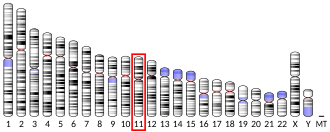



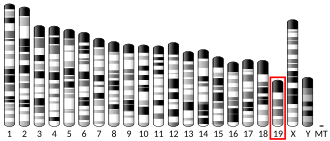


Leupaxin is a protein that in humans is encoded by the LPXN gene.56
The product encoded by this gene is preferentially expressed in hematopoietic cells and is most homologous to the focal adhesion protein, paxillin. It may function in cell type-specific signaling by associating with PYK2, a member of focal adhesion kinase family. As a substrate for a tyrosine kinase in lymphoid cells, this protein may also function in, and be regulated by tyrosine kinase activity.6
References
References
- GRCh38: Ensembl release 89: ENSG00000110031 – Ensembl, May 2017
- GRCm38: Ensembl release 89: ENSMUSG00000024696 – Ensembl, May 2017
- "Human PubMed Reference:". National Center for Biotechnology Information, U.S. National Library of Medicine.
- "Mouse PubMed Reference:". National Center for Biotechnology Information, U.S. National Library of Medicine.
- Lipsky BP, Beals CR, Staunton DE (Jun 1998). "Leupaxin is a novel LIM domain protein that forms a complex with PYK2". J Biol Chem. 273 (19): 11709–13. doi:10.1074/jbc.273.19.11709. PMID 9565592.
- "Entrez Gene: LPXN leupaxin".
Further reading
Further reading
- Chew V, Lam KP (2007). "Leupaxin negatively regulates B cell receptor signaling". J. Biol. Chem. 282 (37): 27181–91. doi:10.1074/jbc.M704625200. PMID 17640867.
- Sahu SN, Nunez S, Bai G, Gupta A (2007). "Interaction of Pyk2 and PTP-PEST with leupaxin in prostate cancer cells". Am. J. Physiol., Cell Physiol. 292 (6): C2288–96. doi:10.1152/ajpcell.00503.2006. PMID 17329398.
- Rual JF, Venkatesan K, Hao T, et al. (2005). "Towards a proteome-scale map of the human protein-protein interaction network". Nature. 437 (7062): 1173–8. Bibcode:2005Natur.437.1173R. doi:10.1038/nature04209. PMID 16189514. S2CID 4427026.
- Tao WA, Wollscheid B, O'Brien R, et al. (2005). "Quantitative phosphoproteome analysis using a dendrimer conjugation chemistry and tandem mass spectrometry". Nat. Methods. 2 (8): 591–8. doi:10.1038/nmeth776. PMID 16094384. S2CID 20475874.
- Watanabe N, Amano N, Ishizuka H, Mashima K (2005). "Leupaxin binds to PEST domain tyrosine phosphatase PEP". Mol. Cell. Biochem. 269 (1–2): 13–7. doi:10.1007/s11010-005-2149-6. PMID 15786712. S2CID 21854825.
- Rush J, Moritz A, Lee KA, et al. (2005). "Immunoaffinity profiling of tyrosine phosphorylation in cancer cells". Nat. Biotechnol. 23 (1): 94–101. doi:10.1038/nbt1046. PMID 15592455. S2CID 7200157.
- Gerhard DS, Wagner L, Feingold EA, et al. (2004). "The status, quality, and expansion of the NIH full-length cDNA project: the Mammalian Gene Collection (MGC)". Genome Res. 14 (10B): 2121–7. doi:10.1101/gr.2596504. PMC 528928. PMID 15489334.
- Brill LM, Salomon AR, Ficarro SB, et al. (2004). "Robust phosphoproteomic profiling of tyrosine phosphorylation sites from human T cells using immobilized metal affinity chromatography and tandem mass spectrometry". Anal. Chem. 76 (10): 2763–72. doi:10.1021/ac035352d. PMID 15144186.
- Gupta A, Lee BS, Khadeer MA, et al. (2003). "Leupaxin is a critical adaptor protein in the adhesion zone of the osteoclast". J. Bone Miner. Res. 18 (4): 669–85. doi:10.1359/jbmr.2003.18.4.669. PMID 12674328. S2CID 24743841.
- Strausberg RL, Feingold EA, Grouse LH, et al. (2003). "Generation and initial analysis of more than 15,000 full-length human and mouse cDNA sequences". Proc. Natl. Acad. Sci. U.S.A. 99 (26): 16899–903. Bibcode:2002PNAS...9916899M. doi:10.1073/pnas.242603899. PMC 139241. PMID 12477932.
- Liu S, Thomas SM, Woodside DG, et al. (2000). "Binding of paxillin to alpha4 integrins modifies integrin-dependent biological responses". Nature. 402 (6762): 676–81. doi:10.1038/45264. PMID 10604475. S2CID 2770368.
- Suzuki Y, Yoshitomo-Nakagawa K, Maruyama K, et al. (1997). "Construction and characterization of a full length-enriched and a 5'-end-enriched cDNA library". Gene. 200 (1–2): 149–56. doi:10.1016/S0378-1119(97)00411-3. PMID 9373149.
- Maruyama K, Sugano S (1994). "Oligo-capping: a simple method to replace the cap structure of eukaryotic mRNAs with oligoribonucleotides". Gene. 138 (1–2): 171–4. doi:10.1016/0378-1119(94)90802-8. PMID 8125298.