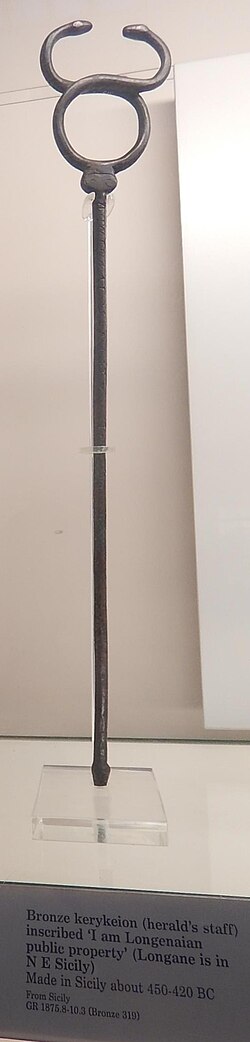
The Longanus (also Longanos or Loitanus) was a river in north-eastern Sicily on the Mylaean plain. As recorded by Polybius, it was where the Mamertines were drastically defeated by Hiero II of Syracuse in around 269 BC.1 The small settlement of Longane was near it. The river was considered so important that it was represented as a God in coins.2 Some archeologists identify it with the river that rises in the valley of Fondachelli-Fantina town called Patrì or Fantina.3

References
References
- Polybius. "History, 1.9.7". Perseus. Retrieved 2 July 2020.
- "Ancient Greek Coins - Longane - Longanos Litra - Lot No. 2123". Timelineauctions.com. Retrieved 6 December 2021.
- Palazzo, Anna Lisa. "A.L. Palazzo, Some Observations on the Road Network through the Peloritani Region, North, East Sicily, BAR Int. Ser. 2695 (1), 2015". Academia.edu. Retrieved 6 December 2021.