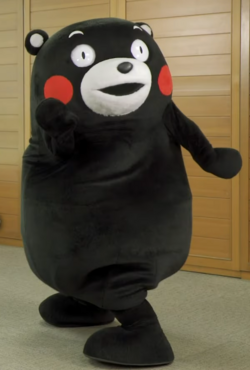
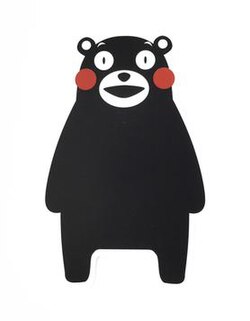
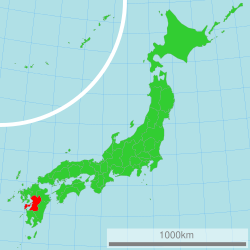
Kumamon (くまモン) is a mascot created by the government of Kumamoto Prefecture, Japan. It was created in 2010 for a campaign created to draw tourists to the region after the Kyushu Shinkansen line opened.1 Kumamon subsequently became nationally popular, and in late 2011, was voted top in a nationwide survey of mascots, collectively known as yuru-chara, garnering over 280,000 votes.23 Following his success in the contest, Kumamoto earned ¥11.8 billion (US$120 million, £79 million, €93 million) in merchandising revenue for the first half of 2012, after having only earned ¥2.5 billion (US$26 million, £17 million, €20 million) throughout all of 2011.45 Kumamon enjoys tremendous popularity throughout the world.6
Economic impact
In just two years, Kumamon has generated US$1.2 billion in economic benefits for his region, including tourism and product sales, as well as US$90 million worth of publicity, according to a recent Bank of Japan study.7 Sales of Kumamon items have reached ¥29.3 billion in 2012, up from ¥2.5 billion in 2011.8
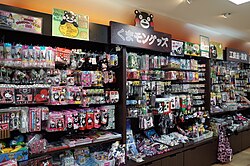
The Bank of Japan also estimated that Kumamon generated ¥123.2 billion in revenue during a two-year period starting from 2011.6
Success
A large part of Kumamon's success can be attributed to its cuteness.8 The unusual marketing strategy of free licensing has also contributed to Kumamon's commercial success;8 Kumamoto Prefecture grants usage rights for free to any individual group as long as the products promote goods and services from the prefecture.68 In 2018, this license was extended to foreign businesses, with aims to both boost worldwide recognition and increase tourism to the prefecture. Governor Ikuo Kabashima has said that he "want[s] to spread the Kumamon brand to the world."9
Cultural impact
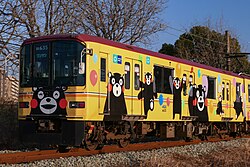
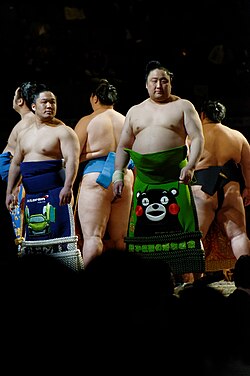
This mascot appears in a minor cameo in the 2014 video game Yo-Kai Watch 2, and made an appearance in Yo-kai Watch: The Movie, following the main characters (Whisper, Nate, and Jibanyan) around. Kumamon has gained popularity as an internet meme when images of the character, usually around a large bonfire, were captioned with text reading "Why? For the glory of Satan, of course!".10
Since 3 September 2018, Kumamon began regularly in-character videos uploading to its YouTube account.1112
References
References
- "Top Ten Japanese Character Mascots". Finding Fukuoka. 2012-01-13. Retrieved 2013-02-16.
- "Japan's #1 Mascots: Kumamon, Bary-san, and Nishiko-kun". Japan Probe. 2011-11-28. Archived from the original on 2013-06-21. Retrieved 2013-02-16.
- "Kumamoto Mascot "Kuma-mon" Won First Prize | Tenkai-japan:Cool Japan Guide-Travel, Shopping, Fashion, J-pop". Tenkai-japan. Retrieved 2013-02-16.
- Brasor, Philip (2013-01-13). "Mascots bear cash for local authorities". The Japan Times. Retrieved 2013-02-16.
- Wakabayashi, Daisuke (2012-12-25). "Isn't That Cute? In Japan, Cuddly Characters Compete - WSJ.com". Online.wsj.com. Retrieved 2013-02-16.
- Brasor, Philip (2014-04-15). "Can a solo career help a mascot stand out?". The Japan Times. Retrieved 2014-04-20.
- "Cuddly bear Kumamon becomes a marketing superstar in Japan". South China Morning Post. February 24, 2014. Retrieved 2017-07-27.
- Fuji, Moeko (Jun 28, 2013). "The Branding of Kumamon: The Bear That Stole Japan's Heart". The Wall Street Journal. Retrieved 6 May 2015.
- "Kumamoto Prefecture decides to allow foreign firms to use its Kumamon bear brand". The Japan Times. 4 January 2018. Archived from the original on 2018-01-04. Retrieved 2022-07-30.
- Ashcraft, Brian (1 March 2016). "Osaka Overrun For The Glory Of Satan, Of Course!". Kotaku Australia. Surrey Hills, Australia: Pedestrian Group. Archived from the original on March 2, 2016. Retrieved 7 January 2021.
- "1-й эпизод Kumamon TV" (in Japanese). YouTube. 3 September 2018. Retrieved 17 March 2021.
- "Iconic Japanese mascot Kumamon to become YouTuber". The Japan Times. 22 August 2018. Retrieved 17 March 2021.