| Indothemis carnatica | |
|---|---|

| |
| Male | |

| |
| Female | |
Scientific classification 
| |
| Kingdom: | Animalia |
| Phylum: | Arthropoda |
| Clade: | Pancrustacea |
| Class: | Insecta |
| Order: | Odonata |
| Infraorder: | Anisoptera |
| Superfamily: | Libelluloidea |
| Family: | Libellulidae |
| Genus: | Indothemis |
| Species: | I. carnatica
|
| Binomial name | |
| Indothemis carnatica (Fabricius, 1798)
| |
| Synonyms | |
| |
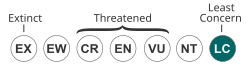
Indothemis carnatica,3 the black marsh skimmer,4 or light-tipped demon,5 is a species of dragonfly in the family Libellulidae. It is found in India, Sri Lanka and Thailand.16457
Description and habitat
It is a small dark violaceous or blackish-brown dragonfly with yellow markings obscurely showing through. Its thorax is blackish-brown, obscured with pruinescence and appears uniformly dark violaceous in full adults. Young males and females are yellowish. Abdomen is dark violaceous with yellow markings obscurely showing through. Its anal appendages are pale yellow tipped with black.2
Female differs very widely from the male in colour and markings. Its thorax is golden-yellow on dorsum, pale greenish-yellow laterally. There is a diffuse brown antehumeral stripe. Abdomen is golden-yellow on dorsum, fading to greenish-yellow laterally, marked with black and reddish-brown. There is a narrow sub-dorsal stripe extending in a very broken manner from segment 2 to the end of abdomen. There is a mid-dorsal stripe black on carina, brown at its borders extending from segment 2 to 9, broadening on the terminal segments and becoming confluent with the sub-dorsal stripe. Segment 10 is yellow, with base and apical border narrowly black. Anal appendages are pale yellow tipped with black.2
It breeds in weeded ponds and lakes.28
References
References
- Dow, R.A. (2019). "Indothemis carnatica". IUCN Red List of Threatened Species. 2019 e.T163674A123027708. doi:10.2305/IUCN.UK.2019-2.RLTS.T163674A123027708.en. Retrieved 19 November 2021.
- C FC Lt. Fraser (1936). The Fauna of British India, including Ceylon and Burma, Odonata Vol. III. Red Lion Court, Fleet Street, London: Taylor and Francis. pp. 340-341.
- Paulson, D.; Schorr, M.; Abbott, J.; Bota-Sierra, C.; Deliry, C.; Dijkstra, K.-D.; Lozano, F. "World Odonata List". OdonataCentral. University of Alabama.
- "Indothemis carnatica Fabricius, 1798". India Biodiversity Portal. Retrieved 2017-02-13.
- "Indothemis carnatica Fabricius, 1798". Odonata of India, v. 1.00. Indian Foundation for Butterflies. Retrieved 2017-02-14.
- Odonata: Catalogue of the Odonata of the World. Tol J. van, 2008-08-01
- K.A., Subramanian; K.G., Emiliyamma; R., Babu; C., Radhakrishnan; S.S., Talmale (2018). Atlas of Odonata (Insecta) of the Western Ghats, India. Zoological Survey of India. pp. 330–331. ISBN 978-81-8171-495-4.
- C FC Lt. Fraser (1924). A Survey of the Odonate (Dragonfly) Fauna of Western India and Descriptions of Thirty New Species (PDF). p. 436.
External links
External links
- Animal diversity web
- Query Results Archived 2015-02-21 at the Wayback Machine