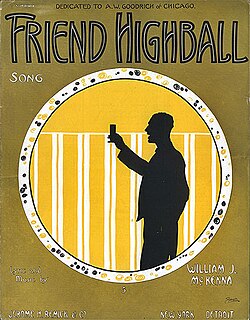
A highball is a mixed alcoholic drink composed of an alcoholic base spirit and a larger proportion (2-to-1 or 3-to-1) of a non-alcoholic mixer, often a carbonated beverage. Examples include the Seven and Seven, Scotch and soda, gin and tonic, screwdriver (a.k.a. vodka and orange juice), fernet con coca, and rum and Coke (a.k.a. Cuba libre with the addition of lime juice). A highball is typically served over ice in a large straight-sided highball glass or Collins glass.
Highballs are popular in Japan, where the term haibōru (ハイボール) is synonymous with a whisky and soda (rather than an umbrella term for assorted mixers). Various mixers can be specified by suffixing with -hai (〜ハイ), as in oolong highball (ウーロンハイ, ūron-hai) or Shōchū highball (チューハイ,chūhai) .
Etymology
The name may have come from early railroad signals with raised globes meaning "clear track ahead", i.e., "you're good to go".12
History
Initially, the most common highball was made with Scotch whisky and carbonated water,3 known simply as a Scotch and soda.
References
References
- Bianculli, Anthony J. (2001). Trains and Technology: The American Railroad in the Nineteenth Century. Vol. 4: Bridge and Tunnels Signals. University of Delaware Press. p. 134. ISBN 0-87413-803-5.
- "In Railroading, A 'Highball' Means You're Good To Go". NPR. 2004-10-03. Retrieved 2020-06-18.
- "The 'Scotch Highball'" (PDF). The New York Times. March 25, 1904. p. 8.