| Hatuqay Adyghe dialect | |
|---|---|
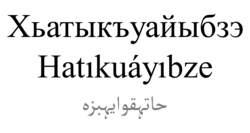
| Хьатыкъой, Хьатыкъуай Хьатыкъойыбзэ, Хьатыкъуайыбзэ | |
 | |
| Native to | Circassia (modern-day Russia) |
| Region | Turkey |
| Ethnicity | Circassians |
Northwest Caucasian
| |
| Official status | |
Official language in |
|
| Language codes | |
| ISO 639-3 | – |
The Hatuqay dialecta is a dialect of Adyghe, spoken by the Hatuqay branch of the Circassian people.12 Linguistically, it is classified as one of the Steppe or Kuban river dialects, a subgroup of that also includes the Chemguy, Abzakh and Bzhedug dialects, although it also shares many grammatical and phonological features with the coastal dialect of Shapsug.12 Although a dialect of West Circassian (Adyghe), it is considered the closest among the Western dialects to East Circassian (Kabardian).3
Hatuqay was historically spoken in Circassia, in the Hatuqay Principality. As a result of the Circassian genocide, there are no remaining speakers of the Hatuqay dialect in the Caucasus region; thus Hatuqay is spoken only in the diaspora, in Turkey.2 Consequently, Circassian dialectology studies rarely mention or analyze Hatuqay.14
Phonology
Sounds
| А а [aː] |
Б б [b] |
В в [v] |
Г г [ɣ] or [ɡ] |
Гу гу [ɡʷ] |
Гъ гъ [ʁ] |
Гъу гъу [ʁʷ] |
Д д [d] |
| Дж дж [d͡ʒ] |
Дз дз [d͡z] |
Дзу дзу [d͡zʷ] |
Е е [ja/aj] |
Ё ё [jo] |
Ж ж [ʒ] |
Жъ жъ [ʐ] |
Жъу жъу [ʐʷ] |
| Жь жь [ʑ] |
З з [z] |
И и [jə/əj] |
Й й [j] |
К к [k] |
Кʰ кʰ [kʰ] |
Ку ку [kʷ] |
Къ къ [q] |
| Къʰ къʰ [qʰ] |
Къу къу [qʷ] |
Кхъ кхъ [qχ] |
Кӏ кӏ [t͡ʃʼ/kʼ] |
Кӏу кӏу [kʷʼ] |
Л л [ɮ] or [l] |
Лъ лъ [ɬ] |
Лӏ лӏ [ɬʼ] |
| М м [m] |
Н н [n] |
О о [aw/wa] |
П п [p] |
Пʰ пʰ [pʰ] |
Пӏ пӏ [pʼ] |
Пӏу пӏу [pʷʼ] |
Р р [r] |
| С с [s] |
СӀ сӀ [sʼ] (Archaic) |
Т т (Т: т:) [t] |
Тʰ тʰ [tʰ] |
Тӏ тӏ [tʼ] |
Тӏу тӏу [tʷʼ] |
У у [w/əw] |
Ф ф [f] |
| Х х [x] |
Хъ хъ [χ] |
Хъу хъу [χʷ] |
Хь хь [ħ] |
Хӏ хӏ [h] |
Ц ц [t͡s] |
Цʰ цʰ [t͡sʰ] |
Цӏ цӏ [t͡sʼ] |
| Ч ч [t͡ʃ] |
Чʰ чʰ [t͡ʃʰ] |
ЧI чI [t͡ʂʼ] |
Чъ чъ [t͡ʂ] |
Чъʰ чъʰ [t͡ʂʰ] |
Чъу чъу [t͡ʃʷ] |
Ш ш [ʃ] |
Шʰ шʰ [ʃʰ] |
| Шъ шъ [ʂ] |
Шъу шъу [ʂʷ] or [ɕʷ] |
Шӏ шӏ [ʃʼ] |
Шӏу шӏу [ʃʷʼ] |
Щ щ [ɕ] |
Ъ ъ [ˠ] |
Ы ы [ə] |
Ь ь [ʲ] |
| Э э [a] |
Ю ю [ju] |
Я я [jaː] |
ӏ [ʔ] |
ӏу [ʔʷ] |
Sound shifts
Proto-Circassian is reconstructed as having a four-way laryngeal contrast in its stop series: voiced, voiceless unaspirated, voiceless aspirated, and ejective. While most modern Circassian varieties have neutralized the distinction between voiceless unaspirated and voiceless aspirated stops, the Hatuqay dialect generally maintains the original four-way contrast.2 Hatuqay occupies a "middle ground" compared to other dialects: while Shapsug and Chemguy preserve a three-way posterior coronal contrast, and Besleney and Turkish Kabardian neutralize them to a single place, Hatuqay possesses two coronal places of articulation posterior to /s/. The specific realization of these two places varies by speaker, manifesting as contrasts such as /ʃ/ vs. /ɕ/, /ʃ/ vs. /ʂ/, or /ɕ/ vs. /ʂ/.2
Standart цу ([tsʷ]) becomes чъу ([tɕʷ]) in Hatuqay:
| English | Adyghe (West Circassian) | Kabardian (East Circassian) | |
|---|---|---|---|
| Literary Standard (West) | Hatuqay | Literary Standard (East) | |
| Shoe | цуакъэ | чъуакъэ | вакъэ |
| Ox | цу | чъу | вы |
The Hatuqay dialect displays specific sound shifts compared to the literary standard:1
| English | Adyghe (West Circassian) | Kabardian (East Circassian) | |
|---|---|---|---|
| Hatuqay | Literary Standard (West) | Literary Standard (East) | |
| Word | гущаIэ | гущыIэ | псалъэ |
| Where | тэдэ | тыдэ | дэнэ |
| Swing | хъаерэн | хъэрен | хъыринэ |
| Small | жъий / жъый | жъый | жьей |
| Young brother (Used in slang to address a young man) |
чынахьыкӏ | шынахьыкӏ | - |
Hatuqay is known for vowel insertions in names:5
| Name | Standard Pronunciation | Hatuqay Pronunciation |
|---|---|---|
| Nasran (A Nart hero) | Нэсрэн | Нэсырэн |
| Ibrahim (Abraham) | Ибрахьим | Ибырахьим |
Aspirated consonants
The aspirated consonants originally existed in the Proto-Circassian language, which maintained a strict distinction between aspirated and tense variants of voiceless consonants. While these sounds were lost or shifted in most modern dialects, they successfully survived in the Shapsug, Bzhedug, and Hatuqay dialects.
In these dialects, there exists a series of aspirated consonants (/pʰ/ /tʰ/ /ʃʰ/ /t͡sʰ/ /t͡ʃʰ/ /t͡ʂʰ/ /t͡ɕʷʰ/ /kʲʰ/ /kʷʰ/ /qʰ/ /qʷʰ/) that became plain consonants in other dialects:67
| Word | Adyghe (West Circassian) | Kabardian (East Circassian) | |
|---|---|---|---|
| Shapsug, Bzhedug & Hatuqay | Chemguy & Literary Standard and Abzakh | ||
| sharp | пʰапцӏэ [ⓘ] | папцӏэ [paːpt͡sʼa] | папцӏэ [paːpsʼa / paːpt͡sʼa] |
| arrogant | пʰагэ [ⓘ] | пагэ [paːɣa] | пагэ [paːɣa] |
| nose | пʰэ [ⓘ] | пэ [pa] | пэ [pa] |
| Word | Adyghe (West Circassian) | Kabardian (East Circassian) | |
|---|---|---|---|
| Shapsug, Bzhedug & Hatuqay | Chemguy & Literary Standard and Abzakh | ||
| respect | пхъатʰэ [ⓘ] | пхъатэ [pχaːta] | - |
| to give | етʰын [jatʰən] | етын [jatən] | етын [jatən] |
| to take | штʰэн [ʃtʰan] | штэн [ʃtan] | щтэн [ɕtan] |
| on | тʰет [tʰajt] | тет [tajt] | тет [tat] |
| smooth | цӏашъутʰэ [t͡sʼaːʂʷtʰa] | цӏашъутэ [t͡sʼaːʃʷta] | цӏафтэ [t͡sʼaːfta] |
| to afraid | щтʰэн [ɕtʰan] | щтэн [ɕtan] | щтэн [ɕtan] |
| pillow | шъхьантʰэ [ⓘ] | шъхьантэ [ʂħaːnta] | щхьатэ [ɕħaːta] |
| Word | Adyghe (West Circassian) | Kabardian (East Circassian) | |
|---|---|---|---|
| Shapsug, Bzhedug & Hatuqay | Chemguy & Literary Standard and Abzakh | ||
| wool | цʰы [ⓘ] | цы [t͡sə] | цы [t͡sə] |
| eyelash | нэбзыцʰ [nabzət͡sʰ] | нэбзыц [nabzət͡s] | - |
| Word | Adyghe (West Circassian) | Kabardian (East Circassian) | |
|---|---|---|---|
| Shapsug, Bzhedug & Hatuqay | Chemguy & Literary Standard and Abzakh | ||
| milk | шʰэ [ⓘ] | щэ [ɕa] | шэ [ʃa] |
| lame | лъашʰэ [ⓘ] | лъащэ [ɬaːɕa] | лъашэ [ɬaːʃa] |
| salt | шʰыгъу [ⓘ] | щыгъу [ɕəʁʷ] | шыгъу [ʃəʁʷ] |
| cloud | пшʰэ [pʃʰa] | пщэ [pɕa] | пшэ [pʃa] |
| pus | шʰыны [ⓘ] | щыны [ɕənə] | шын [ʃən] |
| accordion | пшʰынэ [ⓘ] | пщынэ [pɕəna] | пшынэ [pʃəna] |
| fat | пшʰэры [ⓘ] | пщэры [pɕarə] | пшэр [pʃar] |
| wax | шʰэфы [ⓘ] | шэфы [ʃafə] | шэху [ʃaxʷə] |
| horse | шʰы [ʃʰə] | шы [ʃə] | шы [ʃə] |
| sand | пшʰахъо [ⓘ] | пшахъо [pʃaːχʷa] | пшахъуэ [pʃaːχʷa] |
| story | пшʰысэ [ⓘ] | пшысэ [pʃəsa] | пшысэ [pʃəsa] |
| Word | Adyghe (West Circassian) | Kabardian (East Circassian) | ||
|---|---|---|---|---|
| Shapsug | Bzhedug & Hatuqay | Chemguy & Literary Standard and Abzakh | ||
| spleen | кьʰэ [kʲʰa] | чʰэ [t͡ʃʰa] | чэ [t͡ʃa] | чэ [t͡ʃa] |
| brushwood twig |
кьʰы [kʲʰə] | чʰы [t͡ʃʰə] | чы [t͡ʃə] | чы [t͡ʃə] |
| to cough | пскьʰэн [pskʲʰan] | псчʰэн [pst͡ʃʰan] | псчэн [pst͡ʃan] | псчэн [pst͡ʃan] |
| Word | Adyghe (West Circassian) | Kabardian (East Circassian) | |
|---|---|---|---|
| Shapsug, Bzhedug & Hatuqay | Chemguy & Literary Standard and Abzakh | ||
| middle | кʰу [ⓘ] | ку [kʷə] | ку [kʷə] |
| thigh | кʰо [ⓘ] | ко [kʷa] | куэ [kʷa] |
- Shapsug, Bzhedug & Hatuqay къʰ [qʰ] ↔ къ [q] in other Adyghe dialects. Note: In many Shapsug dialects (such as Kfar Kama), this became the fricative хъ [χ], while in Natukhai and Hatuqay it became the affricate кхъ [q͡χ].
| Word | Adyghe (West Circassian) | Kabardian (East Circassian) | |||
|---|---|---|---|---|---|
| Shapsug & Bzhedug | Other Shapsug dialects (like Kfar Kama) |
Natukhaj & Hatuqay | Chemguy & Literary Standard and Abzakh | ||
| grave | къʰэ [ⓘ] | хъэ [χa] | кхъэ [q͡χa] | къэ [qa] | кхъэ [q͡χa] |
- Shapsug, Bzhedug & Hatuqay къуʰ [qʷʰ] ↔ къу [qʷ] in other Adyghe dialects. Note: In Shapsug dialects, this became хъу [χʷ], while in Natukhai and Hatuqay it became кхъу [q͡χʷ].
| Word | Adyghe (West Circassian) | Kabardian (East Circassian) | |||
|---|---|---|---|---|---|
| Shapsug & Bzhedug | Other Shapsug dialects (like Kfar Kama) |
Natukhaj & Hatuqay | Chemguy & Literary Standard and Abzakh | ||
| pig | къʰо [ⓘ] | хъо [χʷa] | кхъо [q͡χʷa] | къо [qʷa] | кхъуэ [q͡χʷa] |
| cheese | къʰуае [qʷʰaːja] | хъуае [χʷaːja] | кхъуае [q͡χʷaːja] | къуае [qʷaːja] | кхъуей [q͡χʷaj] |
| ship | къʰохь [qʷʰaħ] | хъохь [χʷaħ] | - | къухьэ [qʷəħa] | кхъухь [q͡χʷəħ] |
| to fart | къэкъʰун [qaqʷʰəʃʷən] | къэхъушъун [qʷaχʷəʃʷən] | - | къэкъушъун [qʷaqʷəʃʷən] | къэцыфын [qat͡səfən] |
| peer | къʰужъы [qʷʰəʐə] | къужъы [qʷəʐə] | - | къужъы [qʷəʐə] | кхъужьы [q͡χʷəʑə] |
| Word | Adyghe (West Circassian) | Kabardian (East Circassian) | |
|---|---|---|---|
| Shapsug, Bzhedug & Hatuqay | Chemguy & Literary Standard | ||
| jungle/bushy area | чъʰуны [t͡ɕʷʰənə] | цуны [t͡ʃʷənə] | фын [fən] |
In Proto-Circassian, there was a clear distinction between aspirated and tense variants of voiceless consonants. The tense variants survived in western dialects like Shapsug, Hatuqay, Bzhedug, and Chemguy (Temirgoy). In linguistics literature, these tense consonants are often represented with a colon (e.g., tː) to denote gemination/tenseness, and in some Cyrillic orthographies, they are represented with double letters (e.g., пп, тт, цц) or with a colon (e.g., п:, т:, ц:).
In the eastern dialects (Besleney and Kabardian), the tense variants shifted and became voiced.
- pː ⟨п: / пп⟩ → b ⟨б⟩
- tː ⟨т: / тт⟩ → d ⟨д⟩
- t͡sː ⟨ц: / цц⟩ → d͡z ⟨дз⟩
- t͡ɕːʷ ⟨цу: / цуцу⟩ → v ⟨в⟩
- kːʲ ⟨кь: / кькь⟩ → ɡʲ ⟨гь⟩ / d͡ʒ ⟨дж⟩
- kːʷ ⟨ку: / куку⟩ → ɡʷ ⟨гу⟩
- t͡ʃː ⟨ч: / чч⟩ → d͡ʒ ⟨дж⟩ / ʒ ⟨ж⟩
- t͡ʂː ⟨чъ: / чъчъ⟩ → d͡ʐ ⟨джъ⟩ / ʒ ⟨ж⟩
| Word | Proto-Circassian | Adyghe (West Circassian) | Kabardian (East Circassian) | ||
|---|---|---|---|---|---|
| Shapsug | Bzhedug, Hatuqay, Chemguy & Literary Standard | Besleney | Standard Kabardian | ||
| Shift: tː → d | |||||
| we | т:э [tːa] | т:э [tːa] | т:э [tːa] | дэ [da] | дэ [da] |
| leader | тхьэмат:э [tħamaːtːa] | тхьэмат:э [tħamaːtːa] | тхьэмат:э [tħamaːtːa] | тхьэмадэ [tħamaːda] | тхьэмадэ [tħamaːda] |
| Shift: t͡sː → d͡z | |||||
| fish | пц:эжъые [pt͡sːaʐəja] | пц:эжъые [pt͡sːaʐəja] | пц:эжъые [pt͡sːaʐəja] | бдзэжьей [bd͡zaʑej] | бдзэжьей [bd͡zaʑej] |
| mouse | ц:ыгъо [t͡sːəʁʷa] | ц:ыгъо [t͡sːəʁʷa] | ц:ыгъо [t͡sːəʁʷa] | дзыгъуэ [d͡zəʁʷa] | дзыгъуэ [d͡zəʁʷa] |
| Shift: kːʲ → ɡʲ / d͡ʒ | |||||
| glass | апкь: [aːpkːʲ] | апкь: [aːpkːʲ] | апч: [aːpt͡ʃː] | абгь [ʔaːbɡʲ] | абдж [ʔaːbd͡ʒ] |
| chicken | кь:эт [kːʲat] | кь:эт [kːʲat] | ч:эты [t͡ʃːatə] | гьэд [ɡʲad] | джэд [d͡ʒad] |
| Shift: t͡ʃː → d͡ʒ / ʒ | |||||
| night | ч:эщ [t͡ʃːaɕ] | ч:эщы [t͡ʃːaɕə] | ч:эщы [t͡ʃːaɕə] | джэщ [d͡ʒaɕ] | жэщ [ʒaɕ] |
| village | ч:ылэ [t͡ʃːəɮa] | ч:ылэ [t͡ʃːəɮa] | ч:ылэ [t͡ʃːəɮa] | джылэ [d͡ʒəɮa] | жылэ [ʒəɮa] |
| cow | ч:эм [t͡ʃːam] | ч:эмы [t͡ʃːamə] | ч:эмы [t͡ʃːamə] | джэм [d͡ʒam] | жэм [ʒam] |
| Shift: t͡ʂː → d͡ʐ / ʒ | |||||
| tree | чъ:ыг [t͡ʂːəɣ] | чъ:ыгы [t͡ʂːəɣə] | чъ:ыгы [t͡ʂːəɣə] | джъыг [d͡ʐəɣ] | жыг [ʒəɣ] |
| Shift: kːʷ → ɡʷ | |||||
| short | кӏьак:о [kʲʼaːkːʷa] | кӏьак:о [kʲʼaːkːʷa] | кӏак:о [t͡ʃʼaːkːʷa] | кӏьагуэ [kʲʼaːɡʷa] | кӏагуэ [t͡ʃʼaːɡʷa] |
| wheat | к:оц [kːʷat͡s] | к:оцы [kːʷat͡sə] | к:оцы [kːʷat͡sə] | гуэдз [ɡʷad͡z] | гуэдз [ɡʷad͡z] |
Affrication of Fricatives
In the Bzhedugh, Hatuqay and Shapsug dialects, a specific consonant hardening process known as affrication occurs. During this process, softer "sh" sounds (palato-alveolar fricatives) harden into "ch" sounds (affricates) whenever they directly follow the sibilant consonants ⟨с⟩ [s] or ⟨шъу⟩ [ʃʷ].
To understand this, it helps to think of a similar unwritten sound change in English involving the letters dr and tr. Even though it isn't spelled this way, drink, drop, and dragon are naturally pronounced with a "j-r" sound instead of a hard "d-r". Similarly, tree, true, and trust are pronounced with a "ch-r" sound instead of a "t-r". In these Adyghe dialects, the combination of these specific consonants naturally hardens in speech in the exact same way.
Importantly, this sound change is not written, but is pronounced. Standard Adyghe spelling keeps the original letters, but speakers of these dialects will automatically pronounce the hardened versions.
Specifically, the following base letter changes take place:
- ⟨ш⟩ and ⟨щ⟩ harden into ⟨ч⟩.
- ⟨шъ⟩ hardens into ⟨чъ⟩.
- ⟨шӏ⟩ hardens into ⟨чӏ⟩.
- ⟨шъу⟩ hardens into ⟨чъу⟩.
- ⟨шӏу⟩ hardens into ⟨чӏу⟩.
Pronunciation Rules In grammar, this process is almost exclusively triggered when attaching the first-person singular prefix с- (I/me) or the second-person plural prefix шъу- (you all) to a word.
Here are all the possible combinations where this sound change occurs:
| Trigger | Base Consonant | Cyrillic Change | IPA Transformation |
|---|---|---|---|
| с- (I) | ш | сш → сч | [sʃ] → [st͡ʃ] |
| щ | сщ → сч | [sɕ] → [st͡ʃ] | |
| шъ | сшъ → счъ | [sʂ] → [st͡ʂ] | |
| шӏ | сшӏ → счӏ | [sʃʼ] → [sʈ͡ʂʼ] | |
| шъу | сшъу → счъу | [sʃʷ] → [st͡ʂʷ] | |
| шӏу | сшӏу → счӏу | [sʃʷʼ] → [sʈ͡ʂʷʼ] | |
| шъу- (You pl.) | ш | шъуш → шъуч | [ʃʷʃ] → [ʃʷt͡ʃ] |
| щ | шъущ → шъуч | [ʃʷɕ] → [ʃʷt͡ʃ] | |
| шъ | шъушъ → шъучъ | [ʃʷʂ] → [ʃʷt͡ʂ] | |
| шӏ | шъушӏ → шъучӏ | [ʃʷʃʼ] → [ʃʷʈ͡ʂʼ] | |
| шъу | шъушъу → шъучъу | [ʃʷʃʷ] → [ʃʷt͡ʂʷ] | |
| шӏу | шъушӏу → шъучӏу | [ʃʷʃʷʼ] → [ʃʷʈ͡ʂʷʼ] |
When the change occurs The change only happens when the triggering prefix directly touches the affected consonant.
| Example | Explanation |
|---|---|
| сшӏагъ → счӏагъ | The sound changes because the prefix с- comes directly before шӏ. |
| сшӏэрэп → счӏэрэп | The sound changes because the prefix с- comes directly before шӏ. |
| шъушӏагъ → шъучӏагъ | The sound changes because the prefix шъу- comes directly before шӏ. |
When the change does NOT occur If there is a vowel in between the letters, or if a different consonant prefix is used, the sound does not harden.
| Example | Explanation |
|---|---|
| сэшӏэ | No change. There is a vowel (э) separating the с and шӏ, preventing the sounds from interacting. |
| пшӏагъ | No change. The prefix is п-, which does not trigger the hardening. |
| ушӏагъ | No change. The prefix is у-, which does not trigger the hardening. |
| тшӏагъ | No change. The prefix is т-, which does not trigger the hardening. |
Comprehensive Examples Below are extensive examples comparing the standard orthography with the spoken affrication in the Bzhedugh, Hatuqay and Shapsug dialects, demonstrating both the 1st Person Singular (с-) and 2nd Person Plural (шъу-) grammatical forms.
| Meaning | Pronoun | Letter Change | Standard Adyghe (Base Form) |
Bzhedugh, Hatuqay & Shapsug (Affricated Pronunciation) |
|---|---|---|---|---|
| I sealed it | I | сшъ → счъ | сшъыбыгъ | → счъыбыгъ |
| You (pl.) sealed it | You (pl.) | шъушъ → шъучъ | шъушъыбыгъ | → шъучъыбыгъ |
| I took (him/her to) I brought (him/her here; married) |
I | сщ → сч | сщагъ къэсщагъ |
→ счагъ къэсчагъ |
| You (pl.) took (him/her to) You (pl.) brought (him/her here) |
You (pl.) | шъущ → шъуч | шъущагъ къэшъущагъ |
→ шъучагъ къэшъучагъ |
| I bought I bought (dir.) |
I | сщ → сч | сщэфыгъ къэсщэфыгъ |
→ счэфыгъ къэсчэфыгъ |
| You (pl.) bought You (pl.) bought (dir.) |
You (pl.) | шъущ → шъуч | шъущэфыгъ къэшъущэфыгъ |
→ шъучэфыгъ къэшъучэфыгъ |
| I forgot I forgot (dir.) |
I | сщ → сч | сщыгъупшыгъ къэсщыгъупшыгъ |
→ счыгъупшыгъ къэсчыгъупшыгъ |
| You (pl.) forgot You (pl.) forgot (dir.) |
You (pl.) | шъущ → шъуч | шъущыгъупшыгъ къэшъущыгъупшыгъ |
→ шъучыгъупшыгъ къэшъучыгъупшыгъ |
| I don't know I don't know (dir.) |
I | сшӏ → счӏ | сшӏэрэп къэсшӏэрэп |
→ счӏэрэп къэсчӏэрэп |
| You (pl.) don't know You (pl.) don't know (dir.) |
You (pl.) | шъушӏ → шъучӏ | шъушӏэрэп къэшъушӏэрэп |
→ шъучӏэрэп къэшъучӏэрэп |
| I knew I knew (dir.) |
I | сшӏ → счӏ | сшӏагъ къэсшӏагъ |
→ счӏагъ къэсчӏагъ |
| You (pl.) knew You (pl.) knew (dir.) |
You (pl.) | шъушӏ → шъучӏ | шъушӏагъ къэшъушӏагъ |
→ шъучӏагъ къэшъучӏагъ |
| I thought I thought (dir.) |
I | сшӏ → счӏ | сшӏошӏыгъ къэсшӏошӏыгъ |
→ счӏошӏыгъ къэсчӏошӏыгъ |
| You (pl.) thought You (pl.) thought (dir.) |
You (pl.) | шъушӏ → шъучӏ | шъушӏошӏыгъ къэшъушӏошӏыгъ |
→ шъучӏошӏыгъ къэшъучӏошӏыгъ |
| It fits me It fits me (dir.) |
I | сщ → сч | сщэфэ къэсщэфэ |
→ счэфэ къэсчэфэ |
| It fits you (pl.) It fits you (pl.) (dir.) |
You (pl.) | шъущ → шъуч | шъущэфэ къэшъущэфэ |
→ шъучэфэ къэшъучэфэ |
| I laughed at him/her | I | сщ → сч | сщыгушӏукӏыгъ | → счыгушӏукӏыгъ |
| You (pl.) laughed at him/her | You (pl.) | шъущ → шъуч | шъущыгушӏукӏыгъ | → шъучыгушӏукӏыгъ |
Grammar
Instrumental case
The Hatuqay dialect exhibits distinct phonetic shifts when compared to the West Circassian literary standard (based largely on the Chemguy dialect). In the instrumental case the noun has the suffix -джэ (unlike other dialects that has the suffix -кӏэ):18
| English | Adyghe (West Circassian) | Kabardian (East Circassian) | |||
|---|---|---|---|---|---|
| Hatuqay | Literary Standard (West) | Shapsug | Literary Standard (East) | Besleney | |
| In Circassian | Адыгабзэджэ | АдыгабзэкIэ | Адыгабзэгьэ | АдыгэбзэкIэ | Адыгэбзэгьэ |
| With the book | тхылъымджэ | тхылъымкIэ | тхылъымгьэ | тхылъымкIэ | тхылъымгьэ |
| With feet | лъакъомджэ | лъакъомкIэ | лъакъомгьэ | лъакъуэмкӀэ | лъакъуэмгьэ |
| According to me | сэрыджэ | сэрыкIэ | сэрыгьэ | сэркӀэ | сэргьэ |
Future tense
A primary morphological distinction of Hatuqay is the future tense suffix. While the West Literary and Abzakh dialects use the suffix -щт, the Hatuqay dialect uses -т. This feature is shared with the Bzhedug dialect and some subgroups of Shapsug:189
| English | Adyghe (West Circassian) | ||
|---|---|---|---|
| Hatuqay & Bzhedug | Shapsug (Variant) | Literary Standard | |
| I will go | сыкӏот | сыкӏот | сыкIощт |
| You will go | укӏот | укӏот | укIощт |
| He/She will go | кIот | рэкӏот | кIощт |
| We will go | тыкӏот | тыкӏот | тыкIощт |
| You (pl.) will go | шъукӏот | шъукӏот | шъукIощт |
| They will go | кIотых | рэкӏотых | кIощтых |
Interrogative words
The word "what" in Standard Adyghe is сыд while in Hatuqay it is шъыд and from it derives different terms.
| Word | Adyghe (West Circassian) | |
|---|---|---|
| Hatuqay | Literary Standard | |
| what | шъыд | сыд |
| why | шъыда | сыда |
| why | да | сыда |
| why "for what" |
шъыд пае | сыд пае |
| when | шъыдигъо | сыдигъо |
| so | шъыдэу | сыдэу |
| with what | шъыдджэ | сыдкӏэ |
| how | шъыдэущтэу | сыдэущтэу |
| how much | шъыд фэдиз | сыд фэдиз |
| always | шъыдигъуи | сыдигъуи |
Hatuqay has other words for "what":
- шъыд
- дыра
Third-person plural possessive prefix
In the West Literary standard, the third-person plural possessive prefix is а-. However, the Hatuqay dialect uses я-, a feature it shares with the Shapsug dialect and the Kabardian (East Circassian) language:1
| English | Adyghe (West Circassian) | Kabardian (East Circassian) | |
|---|---|---|---|
| Hatuqay | Literary Standard | Literary Standard | |
| The strongest of them | янахь лъэшыр | анахь лъэшыр | я нэхъ лъэщыр |
| The most beautiful of them | янахь дахэр | анахь дахэр | я нэхъ дахэр |
Preverbs
The preverb къы- functions freely across all dialects, sub-dialects, and the Adyghe literary language: къы-одэӏу —- "he/she listens to you." However, in standart Adyghe, when this preverb meets a personal marker, the vowel component of the preverb къы- drops out (elision) in rapid speech. However, in the Hatuqay dialect, the vowel is typically retained. For example:9
| English | Adyghe (West Circassian) | |
|---|---|---|
| Hatuqay | Literary Standard | |
| He/She looked at you | къы-о-плъыгъ | къ-о-плъыгъ |
| He/She is waiting for you | къы-у-а-жэ | къ-о-жэ |
In several instances, dialects and sub-dialects present different phonetic variants of the same preverbs:9
| English | Adyghe (West Circassian) | |
|---|---|---|
| Hatuqay | Literary Standard | |
| To step on someone/something | джъэхэ-хьан | жэхэ-хьан |
| To look at someone/something | джъэхэ-плъэн | жэхэ-плъэн |
Presumptive and Obligatory Moods
In the standart dialect, both presumptive mood expressing probability ("likely," "probably") and the obligatory mood expressing necessity ("must," "necessary") are the same. However, in Hatuqay, they are distinguished:9
| Form | Adyghe (West Circassian) | |
|---|---|---|
| Hatuqay | Literary Standard | |
| Presumptive (Probability) |
кIуагъэн фае "Probably went" |
кIогъэн фае "Probably went" |
| фэгъэсагъэн фае "Probably accustomed" |
жъогъэн фае "Probably plowed" | |
| Obligatory (Necessity) |
кIогъэн (кIуэгъэн) фае "Must go" |
кIогъэн фае "Must go" |
| фэгъэсэгъэн фае "Necessary to accustom" |
жъогъэн фае "Need to plow" | |
The morphological formants of the Hatuqay dialect largely coincide with those of the Bzhedug dialect. This is particularly evident in preverbs like къа-, фа-, and ха-, which utilize a different vowel sound than their Chemguy counterparts:9
| English | Adyghe (West Circassian) | |
|---|---|---|
| Hatuqay | Literary Standard | |
| Comes here | къа-кIо | къэ-кIо |
| Goes there | фа-кIо | фэ-кIо |
A specific phonetic difference observed in Hatuqay is the inversion of the vowels ы and э in reflexive and spatial preverbs:9
| English | Adyghe (West Circassian) | |
|---|---|---|
| Hatuqay | Literary Standard | |
| To tie something to oneself | зыхэ-шIэн | зэхэ-шIэн |
| To feel / To sense something | зэхэ-шIэн | зыхэ-шIэн |
Present participles
In standard Adyghe, present participles (often functioning equivalently to gerunds) decline using standard nominal case suffixes. However, the Shapsug, Bzhedugh, and Hatuqay dialects feature a distinct phonological elision in the absolutive case, where the final absolutive suffix -р (-r) is not pronounced.89
Consequently, absolutive present participles in these dialects end simply in -рэ instead of the standard -рэр. For example, the standard Adyghe phrase кӏалэу кӏорэр ("the boy who is going") is realized in these dialects as кӏалэу кӏорэ.
| Case | Standard Adyghe | Shapsug, Bzhedugh & Hatuqay |
|---|---|---|
| Absolutive | кӏорэр | кӏорэ |
| Ergative / Oblique | кӏорэм | кӏорэм |
| Instrumental | кӏорэмкӏэ | кӏорэмкӏэ |
Demonstratives
Adyghe has three main demonstratives to indicate spatial proximity and visibility, which frequently act as determiners or prefixes attached to nouns, verbs, or adverbs:
- а- – That (invisible or out of the speaker's line of sight)
- мо- – That (visible to the speaker)
- мы- – This (close proximity to the speaker)
In the Shapsug, Bzhedugh, and Hatuqay dialects, the standard visible demonstrative мо- is replaced by a different prefix. Additionally, these dialects use a different locative suffix (-у or -уджэ) compared to the standard Adyghe -кӏэ.
- Shapsug: The visible demonstrative prefix is pronounced as a labial glide [w]. In Cyrillic, this is represented by a vowel shift (e.g., forming оу).
- Bzhedugh & Hatuqay: The visible demonstrative shifted and is pronounced as a glottal fricative [h]. Because the standard Adyghe Cyrillic alphabet lacks an official letter for this specific "h" sound, the digraph хӏ (using the Cyrillic palochka) is used in the orthography to replace the standard мо-.
The following table illustrates the general locative forms derived from these demonstratives. Note that the locative suffix -у remains consistent across the dialects; only the visible demonstrative prefix changes:
| Word | Shapsug | Bzhedugh & Hatuqay | Standard Adyghe | |||
|---|---|---|---|---|---|---|
| IPA | Cyrillic | IPA | Cyrillic | IPA | Cyrillic | |
| here | məw, məwd͡ʒa | мыу, мыуджэ | məw, məwd͡ʒa | мыу, мыуджэ | mət͡ʃʼa | мыкӏэ |
| there (visible) | waw, wawd͡ʒa | оу, оуджэ | how, howd͡ʒa | хӏоу, хӏоуджэ | mot͡ʃʼa | мокӏэ |
| there (invisible) | aːw, aːwd͡ʒa | ау, ауджэ | aːw, aːwd͡ʒa | ау, ауджэ | aːt͡ʃʼa | акӏэ |
| there (emphasis) | d͡ʒaw, d͡ʒawd͡ʒa | джэу, джэуджэ | d͡ʒaw, d͡ʒawd͡ʒa | джэу, джэуджэ | d͡ʒət͡ʃʼa | джэкӏэ |
| where | taw, tawd͡ʒa | тэу, тэуджэ | taw, tawd͡ʒa | тэу, тэуджэ | tət͡ʃʼa | тэкӏэ |
Usage with Nouns
When modifying nouns, these demonstratives precede the noun to indicate its spatial relationship and visibility to the speaker. For example, using the noun кӏалэ (boy) in Bzhedugh and Hatuqay:
- а кӏалэ – that boy (invisible or out of sight)
- хӏо кӏалэ – that boy (visible); that boy over there
- мы кӏалэ – this boy
Usage as Prefixes
To demonstrate how this visible demonstrative functions as a bound prefix, the base хӏо- attaches directly to various roots and suffixes in Bzhedugh and Hatuqay to form demonstrative pronouns, adverbs of time, and manner (acting as the direct equivalent to the standard мо-):
- хӏодэ – there
- хӏоры – that's it; there he is
- хӏоу – there
- хӏоущтэу – like that
- хӏощгъум – then
The following table illustrates these derivations across dialects:
| Meaning | Bzhedugh & Hatuqay | Standard Adyghe | Standard Kabardian | |||
|---|---|---|---|---|---|---|
| Cyrillic | IPA | Cyrillic | IPA | Cyrillic | IPA | |
| that (abs.) | хӏор | hawr | мор | mawr | мор | mawr |
| that (erg.) | хӏой | hawj | мощ | mawɕ | мобы | mawbə |
| using that | хӏощджэ | hawɕd͡ʒa | мощкӏэ | mawɕt͡ʃʼa | - | - |
| like that | хӏоущтэу | hawɕtaw | моущтэу | mawɕtaw | мопхуэдэу | mawpxʷadaw |
| that is it | хӏоры | hawrə | моры | mawrə | мораш | mawraːɕ |
| there | хӏодэ | hawda | модэ | mawda | модэ | mawda |
| there (locative) | хӏоу | haw | моу | maw | - | - |
| the other | хӏодрэ | hawdra | модрэ | mawdra | модрэ | mawdra |
| then | хӏощгъум | hawɕʁʷəm | мощгъум | mawɕʁʷəm | - | - |
| like that (similar) | хӏощфэд | hawɕfad | мощфэд | mawɕfad | мопхуэд | mawpxʷad |
Sentence Comparison
The practical application of the хӏо vs. мо distinction can be seen in conversational contexts. Notice how Hatuqay also utilizes the vocabulary word гущаӏэ instead of the standard гущыӏэ for "speak", and the suffix -джэ where standard Adyghe uses -кӏэ. In addition, the native Къэфкъас is used instead of the Russianized spelling Кавказ used in the Caucasus.
| English Translation | Hatuqay Adyghe | Standard Adyghe |
|---|---|---|
| Did you hear how that boy speaks? The one standing there, that is the dialect I referred to. We don't talk like that; the way that person is speaking is like how they speak in the Caucasus. | хӏо кӏалэр зэрэгущаӏэрэр оӏугъа? хӏодэ ӏутыр, хӏоры диалектэу зыфэсӏуагъагъэр. Тэ хӏоущтэу тыгущаӏэрэп, хӏор зэрэгущаӏэрэр къэфкъасымджэ зэрэгущаӏэхэрэмэ афэд. | мо кӏалэр зэрэгущыӏэрэр оӏугъа? модэ ӏутыр, моры диалектэу зыфэсӏуагъагъэр. Тэ мощтэу тыгущыӏэрэп, мор зэрэгущыӏэрэр кавказымкӏэ зэрэгущыӏэхэрэмэ афэд. |
Location
Adyghe demonstratives mark three degrees of deixis: proximal мы- ("this; here"), medial мо- ("that; there", in view), and distal а- ("that; there", out of view). Standard Adyghe derives adverbs of place from these roots with two series, named here by their distal forms акӏэ and адэ — e.g. proximal мыкӏэ~мыдэ "here", medial мокӏэ~модэ "(over) there", distal акӏэ~адэ "yonder".
Many dialects, among them Shapsug, Bzhedugh and part of Abzakh, lack the акӏэ series altogether; in its place they use four series — адэ, а тӏэкӏум (with the postposition тӏэкӏу(м) "a bit, a spot"), ау and аукӏэ. Two regular correspondences distinguish these western dialects. In the аукӏэ series the final element — Standard -кӏэ /-t͡ʃʼa/ — surfaces as -гьэ /-ɡʲa/ in Shapsug (аугьэ)10 and as -джэ /-d͡ʒa/ in Bzhedugh (ауджэ). Second, the medial root мо- is reduced to о- /wa-/ in both Shapsug and Bzhedugh (модэ, моу → одэ, оу). Bzhedugh and the Hatuqay subdialect behave identically and are shown together.
| Meaning | Series | Variety | |||
|---|---|---|---|---|---|
| Standard Adyghe | Shapsug | Bzhedugh / Hatuqay | Abzakh (some) | ||
| here (мы-/мэ-) |
акӏэ | мыкӏэ /mət͡ʃʼa/ |
— | ||
| адэ | мыдэ /məda/ |
мыдэ /məda/ |
мыдэ /məda/ |
мыдэ /məda/ | |
| а тӏэкӏум | — | мы тӏэкӏум /mə tʼakʷʼəm/ |
мы тӏэкӏум /mə tʼakʷʼəm/ |
мы тӏэкӏум /mə tʼakʷʼəm/ | |
| ау | — | мэу /maw/ |
мэу /maw/ |
мэу /maw/ | |
| аукӏэ | — | мэугьэ /mawɡʲa/ |
мэуджэ /mawd͡ʒa/ |
мэукӏэ /mawt͡ʃʼa/ | |
| there, visible (мо-/о-) |
акӏэ | мокӏэ /mot͡ʃʼa/ |
— | ||
| адэ | модэ /moda/ |
одэ /wada/ |
одэ /wada/ |
модэ /moda/ | |
| а тӏэкӏум | — | о тӏэкӏум /wa tʼakʷʼəm/ |
о тӏэкӏум /wa tʼakʷʼəm/ |
мо тӏэкӏум /mo tʼakʷʼəm/ | |
| ау | — | оу /waw/ |
оу /waw/ |
моу /mow/ | |
| аукӏэ | — | оугьэ /wawɡʲa/ |
оуджэ /wawd͡ʒa/ |
моукӏэ /mowt͡ʃʼa/ | |
| there, out of sight (а-) |
акӏэ | акӏэ /aːt͡ʃʼa/ |
— | ||
| адэ | адэ /aːda/ |
адэ /aːda/ |
адэ /aːda/ |
адэ /aːda/ | |
| а тӏэкӏум | — | а тӏэкӏум /aː tʼakʷʼəm/ |
а тӏэкӏум /aː tʼakʷʼəm/ |
а тӏэкӏум /aː tʼakʷʼəm/ | |
| ау | — | ау /aːw/ |
ау /aːw/ |
ау /aːw/ | |
| аукӏэ | — | аугьэ /aːwɡʲa/ |
ауджэ /aːwd͡ʒa/ |
аукӏэ /aːwt͡ʃʼa/ | |
The interrogative тэ- "where" and the emphatic demonstrative (Standard джэ-, Shapsug гьэ-) take the same series: Standard тэкӏэ and джэкӏэ correspond to Shapsug тэу~тэугьэ and гьэу~гьэугьэ.10
Vocabulary
The Hatuqay dialect shares a lot of its vocabulary with Bzhedug and Chemguy, and also employs some unique words:
| English | Adyghe (West Circassian) | Kabardian (East Circassian) | |
|---|---|---|---|
| Hatuqay | Literary Standard (West) | Literary Standard (East) | |
| To fall | ебэджын | ефэхын | ехуэхын |
| Mat | пIуаблэ | арджан | арджэн |
| Wide | шъуабгъо | шъуамбгъо | фабгъуэ |
| What | шъыд / дыра | сыд | сыт |
| Why | да | сыда | сыт щхьэкӀэ |
| Ball | Iэгуау | пIырагу | топ |
| Princess | гощэ | гуащэ | гуащэ |
| Tea | псыплъыжь "red water" |
щай | шей |
| Coffee | псышӏуцӏэ "black water" |
кофе / къэхьыо | кофе / къэхьэуэ |
| Potato | къантIуф | картоф | кӏэртӏоф |
| Money | нэгъэцӏыу "eye-shiner" |
ахъщ | ахъшэ |
| Grandmother | нэожъ | нэнэжъ | нанэ |
Despite being a Western dialect, it also shares some vocabulary with Kabardian:
| English | Adyghe (West Circassian) | Kabardian (East Circassian) | |
|---|---|---|---|
| Hatuqay | Literary Standard (West) | Literary Standard (East) | |
| Pig | кхъо | къо | кхъуэ |
| Chair | щэнт | пхъэнтӏэкӏу | шэнт |
| Bread | кӏакъу | хьалыгъу | щӏакхъуэ |
| Twin | тIолъфэныкъу | тIуазэ | тӏолъхуэныкъуэ |
Diaspora vs Caucasus differences
Since the Hatuqay dialect is not spoken in the Caucasus and spoken mostly in Turkey, the only variant of the Hatuqay dialect is the diaspora variant. Thus, many diaspora Adyghe features are also seen in Hatuqay. For instance, in some cases, where standart Adyghe uses Russian loanwords, Hatuqay (like other diaspora) has native terms instead:
| English | Adyghe (West Circassian) | |
|---|---|---|
| Hatuqay - Diaspora | Literary Standard | |
| Car | ку | машинэ |
| Ice cream | щатэмыл "ice kaymak" |
морожнэ |
Due to Russian preassure, Russian loanwords in standart Adyghe are left exactly as is and not adapted to the language in terms of spelling or pronouncation. However, in the diaspora, the pronouncations are adapted to fit the Adyghe language:
| English | Adyghe (West Circassian) | |
|---|---|---|
| Hatuqay - Diaspora | Literary Standard | |
| Computer | компутер
(From Turkish "kompüter", but adapted to fit the Adyghe language) |
компьютер
(Left as is, despite there being no letter such as "пь" in Adyghe) |
| Potato | къантIуф
(Pre-exile loanword from Russian "картоф", but adapted to fit the Adyghe language) |
картоф
(Native version erased and replaced by standart Russian term) |
| Medallion | мадалйон
(From Turkish "madalyon", but adapted to fit the Adyghe language) |
медальон
(Left as is, despite there being no letter such as "ль" in Adyghe) |
| Government | хьыкумэт
(From Turkish "hükümet", but adapted to fit the Adyghe language) |
правительств
(Left as is, despite the word being phonetically incompatible and there being no letter such as "ль" or a suffix such as -ство in Adyghe) |
| Exam | ӏимтыхьэн
(From Turkish "imtihan", but adapted to fit the Adyghe language) |
экзамен
(Left as is, with no adaption despite the fact that words rarely start with "э" in Adyghe and must be adapted as "ӏэ".) |
| Electricity lamp | ӏэлэктирик остыгъ
(From Turkish "elektrik", but adapted to fit the Adyghe language) |
электрическэ остыгъ
(Left as is, despite there being no suffix such as -ческэ in Adyghe.) |
| Wagon | уагон
(From Turkish "vagon", but adapted to fit the Adyghe language) |
вагон
(Left as is, with no adaption despite the fact that words rarely start with "в" in Adyghe.) |
In addition to native terms, there are Turkish loanwords that do not exist in literary Adyghe, which are occasionally used alongside native equivalents:
| English | Adyghe (West Circassian) | Turkish | |
|---|---|---|---|
| Hatuqay - Diaspora
(Loanword; diaspora only) |
Native equivalent
(Also used in diaspora) | ||
| Alphabet | алфабэ | тхыпкъылъэ | alfabe |
| But | ӏамэ | ао | ama |
| Construction | иншыхьэт | гъэпсыгъэ | inşaat |
| Goodbye ("We leave you to God") |
Алыхьсмэлэдыкъ | Тхьэм шъукъегъэгъун | Allah'a ısmarladık |
| More | дэхьэ | нахь | daha |
| Province | уилает | къедзыгъо | vilayet |
| School | мэкътэб | еджапӏэ | mektep |
| State | долэт | къэралыгъо | devlet |
| Young man | дэлекъаны | кӏалэ | delikanlı |
| That is (filler) | яни | - | yani |
| I swear (filler) | уэлахьэ-билахьэ | - | vallahi billahi |
Like other diaspora variants of the Adyghe language, internationalisms in the Hatuqay dialect have been borrowed via Turkish, thus differ slightly from literary Adyghe which borrowed them from Russian:
| English | Adyghe (West Circassian) | Turkish | Russian | |
|---|---|---|---|---|
| Hatuqay - Diaspora | Literary Standard | |||
| American | Амэрикэн | Американ | Amerikan | Американец |
| Europe | Аурыпэ | Европэ | Avrupa | Европа |
| Cigarette | джыкъарэ | сигаретэ | sigara | сигарета |
| Lawyer | аукат | адвокат | avukat | адвокат |
| Japan | Жапон | Японие | Japonya | Япония |
| High school | лисэ | лицей | lise | лицей |
| Furniture | мобилие | мебель | mobilya | мебель |
| Bus | отобюс | aвтобус | otobüs | автобус |
| Television | телевизион | телевизор | televizyon | телевизор |
Etymology and classification
Classification
| A Circassian dialects family tree. |
Circassian languages are divided into two groups: "West Circassian", known in English as "Adyghe", and "East Circassian", known in English as "Kabardian".14 The two are closely related and mutually intelligible to some degree. Both Adyghe and Kabardian speakers refer to their language as "Adyghe" and consider the eastern and western language variants to be dialects of one Circassian Adyghe language, rather than two related languages.15
Hatuqay is classified as a dialect of West Circassian, or Adyghe.1617 Within the western group, Hatuqay is classified as one of the "Steppe dialects", a subgroup of that also includes the Chemguy, Abzakh and Bzhedug dialects,1 although it also shares many grammatical and phonological features with the "Coastal Dialects" of Shapsug and Natukhaj.118 Thus, it can be considered an "in-between" dialect. Although a dialect of Western Circassian (Adyghe), it is considered the closest among the Western dialects to East Circassian.3 This may be a diaspora phenomenon that came to be due to frequent interaction with Kabardians in Kayseri, Turkey, as Hatuqays are a minority among the majority Kabardians.
Etymology
The Hatuqay dialect takes its name from the Hatuqay tribe, which is believed to derive from Prince Hatuqo (Adyghe: Хьатыкъо), who, according to traditional Circassian genealogies, was the founder of the Hatuqay Principality, and a prince descended from King Inal.19320
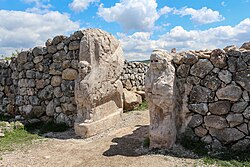
The name has been the subject of a folk etymology, which explains it as referring to the Hittites ('Son of Hittite'). A study about Circassians in Kayseri found that local Circassians frequently claimed descent from the Hittites.21 The etymology of Hattusa, capital of the Hittite Empire, is explained with Circassian хьэтӏу (two dogs) + щхьэ (head), which supposedly refers to the two sphinx statues guarding the gate of Hattusa. Some connected the Circassians with the Hattians rather than Hittites;222324 and some authors explained the etymology of "Hatuqay" as "Hatti-Son".2526 The Adyghe Encyclopedia published in Russia compares Hattian mythology and Nart sagas, including stories found in the Hatuqay Nart corpus.26 The Hittites spoke an Indo-European language, however the possibility of Hattians speaking a Northwest Caucasian language related to Circassian has been considered by linguists, although this is unconfirmed.27282930
History and distribution

Historically, the Hatuqay dialect was spoken in the Hatuqay Principality, which was originally located near the Black Sea coast, as well as the southern banks of the Kuban, a little further down from where the Afips (Афыпс) river flows.319 However, in the late 18th century, Hatuqay Principality was relocated west of the Chemguys, in the territory situated between the Belaya (Шъхьагуащэ) and Pshish (Пщыщ) rivers.3119 The Hatuqay dialect is one of the dialects which play a pivotal role in the preservation of the Nart sagas.31 Many Nart sagas have been recorded in variants of the Hatuqay dialect.32 The Hatuqay dialect was recorded by Ottoman traveller Evliya Çelebi in the 17th century, who visited the Hatuqay region:33
This Circassian language, even now, cannot be written down; it is a language based on listening, produced from the throat, cheeks, and under the tongue, a sound that is like a sparrow's chirp and cannot be committed to paper. This humble servant of God, a traveler of the world and companion to man, the unpretentious Evliya, has traveled for 51 years, setting foot in 18 kingdoms across seven climes, and has written down 147 languages with my gem-scattering pen, including their eloquence, rhetoric, and poems, in order to converse with the people of every region. But I could not write down this Circassian language with its magpie-like sound. By the will of God, we will try to write this language as best as we can. They have a peculiar dialect, for they are not literate. That is why it cannot be committed to paper; it is a bird's language, and that is that.
— Evliya Çelebi, Seyahatname
Following the Circassian genocide and exile, the Hatuqay population was dispersed, the tribe effectively disappeared from the map.34 Currently, there are no remaining speakers of the Hatuqay dialect in the Caucasus region. Almost the entire Hatuqay tribe was exiled;21 the few Hatuqay remaining in the Caucasus have assimilated into the Chemguy dialect.8 The dialect survives in the diaspora, specifically in Turkey. It is spoken in approximately 20 Circassian villages located in the Pınarbaşı district of the Kayseri province (spesifically around Çörümşek valley),112 as well as in Bozüyük and Biga.3521 Consequently, Circassian dialectology studies conducted within the Caucasus rarely mention or analyze Hatuqay.4 Thus, the collection of data from the diaspora in Turkey is considered essential to filling the gaps in the study of this dialect.1 Data on the Hatuqay dialect is largely drawn from acoustic analyses of diaspora communities.2
Among Circassians in Kayseri, mastery of Kabardian is considered a primary social competency, regardless of an individual's tribe. Consequently, some Hatuqays primarily use Kabardian in their daily interactions. Some Hatuqay Circassians in Kayseri do not know Hatuqay at all and speak Kabardian instead of their native Hatuqay dialect.13 In Kayseri, there are also some Circassians of Shapsug and Makhosh origin who now identify as Hatuqay.12
Sample text
Spesific examples to demonstrate changes in the Hatuqay dialect:
| Hatuqay Adyghe
(Turkey) |
Standard Adyghe
(Republic of Adygea) |
English Translation |
|---|---|---|
| Тэдэ укъакӏо мы чъуакъэмджэ? | Тыдэ укъэкӏо мы цуакъэмкӏэ? | Where are you going with these shoes? |
| Счынахьыкӏэ гущаӏэ къысиӏуагъ:
"Мыслъымэнхэу тэ кхъо лыр тышхырэп. Ар мэкътэбым щызэзгъэшIагъ!" |
Сшынахьыкӏэ гущыӏэ къысиӏуагъ:
"Быслъымэнхэу тэ къо лыр тышхырэп. Ар еджапIэм щызэзгъэшIагъ!" |
My younger brother told me a word:
"As Muslims, we do not eat the meat of pigs. I learned that at school!" |
| Нэожъыр псыплъыжь ешъо. | Нэнэжъыр щай ешъо. | Grandmother drinks tea. |
| Сэ Iэгуаум лъакъомджэ сеуагъ. | Сэ пIырагум лъакъомкIэ сеуагъ. | I hit the ball with my foot. |
| Ар шъыд? Ар нэгъэцIыу! | Ар сыд? Ар ахъщ! | What is that? That is money! |
| Аукатыр Аурыпэм отобюсымджэ кIуагъэ. | Адвокатыр Европэм автобусымкIэ кIуагъэ. | The lawyer went to Europe by bus. |
| Тэ къуаджэм къантIуф щытышхыт. | Тэ къуаджэм картоф щытышхыщт. | We will eat potatoes in the village. |
| Сэ щатэмыл сшхынэу псышIуцIэ сешъонэу сыфае. | Сэ морожнэ сшхынэу къэхьыо сешъонэу сыфае. | I want to eat ice cream and drink coffee. |
| Да? Зары сэ сы Адыг! | Сыда? Зары сэ сы Адыг! | Why? Because I'm Circassian! |
Notes
Notes
- Spelled variously as Hatukay, Hatıkuay, Hatkoy, Hatuqway, Hadugoy, Hadgoy, Khatukay, etc; Adyghe: Хьатыкъой(ыбзэ), Хьатыкъуай(ыбзэ)
References
References
- Aydın, Şamil Emre (2015). Çerkes Diyalektleri: Çerkes Diyalektlerinin Karşılaştırmalı Analizi (in Turkish). Adana. ISBN 978-605-65691-1-1.
{{cite book}}: CS1 maint: location missing publisher (link) - Applebaum, Ayla (2013-01-01). "A Comparative Phonetic Study of the Circassian Languages1". Proceedings of the 37th Annual Meeting of the Berkeley Linguistics Society: Special Session on Languages of the Caucasus (2013), Pp. 3-17 Editors: Chundra Cathcart, Shinae Kang, and Clare S. Sandy.
- Amjad Jaimoukha (April 7, 2015). The Circassians: A Handbook. Taylor & Francis. ISBN 978-1138874602.
- Topçu, Murat. Çerkes Dillerine Genel Bakış: Kafkasya ve Türkiye (2006)
- Colarusso, John (2002-11-10). Nart Sagas from the Caucasus: Myths and Legends from the Circassians, Abazas, Abkhaz, and Ubykhs. Princeton University Press. ISBN 978-0-691-02647-3.
- Thordarson, Fridrik, ed. (July 1986). Studia Caucasologica I (PDF). Norwegian University Press.
- Kerasheva, Z. I. (1957). Особенности шапсугского диалекта адыгейского языка [Features of the Shapsug Dialect of the Adyghe Language] (in Russian). Maykop: Адыгейское книжное издательство. pp. 26–27.
- Ситимова, Сарра Саферовна (2004). Бжедугский диалект в адыгейском языковом мире (in Russian). Качество. ISBN 978-5-901701-51-5.
- Саферовна, Ситимова Сара; Нухович, Абрегов Ачердан (2018). "К вопросу о лексике и морфологии хатукайско-адамийского говора адыгейского языка". Вестник Адыгейского Государственного Университета. Серия 2: Филология И Искусствоведение. 2 (217): 103–109. ISSN 2410-3489.
- Kerasheva, Z. I. (1957). Особенности шапсугского диалекта адыгейского языка [Features of the Shapsug Dialect of the Adyghe Language] (in Russian). Maykop: Adyghe Book Publishing House, p. 61.
- Kalkan (Çurmıt), Mustafa (2023). Bir Çerkes halkı: Hatıkuaylar (in Turkish). ISBN 978-975-449-346-7.
- Pashtova, Madina (2021-01-01). "ФОЛЬКЛОР ЧЕРКЕССКОЙ ДИАСПОРЫ: ЛОКАЛИЗАЦИЯ ТРАДИЦИИ, ФУНКЦИОНАЛЬНОСТЬ ТЕКСТОВ". Folklore of the Circassian Diaspora: Localization of Tradition, Functionality of Texts.
- Abazova, Marita Muchamedovna (2014). Recʹ kabardino-čerkesskoj diaspory v Turcii. Nalʹcǐk: Izdat. Otdel KBIGI RAN. ISBN 978-5-91766-082-0.
- Colarusso, John (2014-01-21). The Northwest Caucasian Languages: A Phonological Survey. Routledge. ISBN 978-1-317-91816-5.
- "Kabardian | people | Britannica". Encyclopedia Britannica.
- Aydın, Şamil Emre (2015). Çerkes Diyalektleri: Çerkes Diyalektlerinin Karşılaştırmalı Analizi (in Turkish). Adana. ISBN 978-605-65691-1-1.
{{cite book}}: CS1 maint: location missing publisher (link) - Miyazawa, Eiji (2004). Memory Politics: Circassians of Uzunyayla, Turkey (Thesis).
- Applebaum, Ayla (2013-01-01). "A Comparative Phonetic Study of the Circassian Languages1". Proceedings of the 37th Annual Meeting of the Berkeley Linguistics Society: Special Session on Languages of the Caucasus (2013), Pp. 3-17 Editors: Chundra Cathcart, Shinae Kang, and Clare S. Sandy.
- Хан-Гирей, Султан (1836). Записки о Черкесии (in Russian).
- Б, Ногмов Ш. (2013-03-12). История адыхейского народа (in Russian). ООО ДиректМедиа. ISBN 978-5-4460-0029-6.
- Miyazawa, Eiji (2004). Memory Politics: Circassians of Uzunyayla, Turkey (Thesis).
- Yıldız, Hüseyin; Üniversitesi, Ordu. "TAVKUL, Ufuk (2009), Kafkasya'da Kültürel Etkileşim – Sosyo-linguistik Bir Araştırma, Türk Dil Kurumu Yayınları, Ankara, 144 s., ISBN: 978-975-16-2206-8".
{{cite journal}}: Cite journal requires|journal=(help) - Çurey, Ali (2012). Hatti-Hititler ve Çerkesler (in Turkish). Chiviyazıları Yayınevi.
- Berkok, İsmail (1958). Tarihte Kafkasya (in Turkish). İstanbul Matbaası.
- Kāzemzāde, Hāmed (2018). The Circassian Question: The Formation of Linguistic and Cultural Identity in the Caucasus from the Mind-nineteenth Century to Modern Times (PhD Thesis thesis).
- Кумахов, Мухадин Абубекирович (2006). Адыгская (черкесская) энциклопедия (in Russian). Фонд Им. Б.Х. Акбашева. ISBN 978-5-9900337-1-9.
- Burney, Charles (2004-04-19). Historical Dictionary of the Hittites. Bloomsbury Publishing PLC. ISBN 978-0-8108-6564-8.
- Burney 2004, p. 106-107.
- Ivanov, Vyacheslav V. (1985). "On the Relationship of Hattic to the Northwest Caucasian languages," in B.B. Piotrovskij, Vyacheslav V. Ivanov, and Vladislav G. Ardzinba (eds.), Anatoliya – Ancient Anatolia, Moscow: Nauka. pp 26–59 (in Russian)
- John Colarusso (1997). Peoples of the Caucasus; in Introduction to the Worldmark Encyclopedia of Cultures and Daily Life; Pepper Pike, Ohio: Eastword Publications
- Махмудович, Берсиров Батырбий; Хазретовна, Анчек Сурет (2018). "Некоторые диалектные особенности текстов адыгского героического эпоса "Нарты"". Филологические Науки. Вопросы Теории И Практики (6-2 (84)): 316–320. ISSN 1997-2911.
- ХьэдэгэлIэ, Аскэр (1968). Нартхэр. Адыгэ эпос (in Adyghe). Maykop: Адыгэ научнэ-исследовательскэ институт.
- Evliya Çelebi. Seyahatnâme (PDF) (in Turkish). Archived (PDF) from the original on March 20, 2023. Retrieved March 20, 2023.
- Richmond, Walter (2013-04-09). The Circassian Genocide. Rutgers University Press. ISBN 978-0-8135-6069-4.
- Şıble, Ferhatıko (2022). Batı Çerkesya'nın Türkiye'deki evlatları (in Turkish). APRA. ISBN 978-605-71993-1-7.