Erik Gustaf Edgren | |
|---|---|
 Gustaf Edgren | |
| Born | Erik Gustaf Edgren (1895-04-01)April 1, 1895 |
| Died | June 10, 1954(1954-06-10) (aged 59) |
Resting place | Nya kyrkogården, Kristinehamn, Värmland 59°18′18″N 14°04′52″E / 59.3050°N 14.0811°E / 59.3050; 14.0811 |
| Occupations | |
| Years active | 1921–1951 |
| Spouses |
|
| Children | 3 |
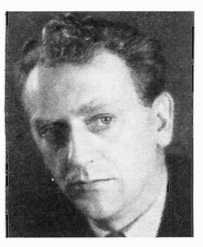
Gustaf Edgren (1 April 1895 – 10 June 1954) was a prominent Swedish film director, screenwriter, and producer who played a significant role in the development of Swedish cinema during the first half of the 20th century. His extensive filmography across multiple roles – totaling over 80 film credits – spans silent films to talkies and comedies to dramas.
Early life and family
Erik Gustaf Edgren was born on 1 April 1895 in Östra Fågelvik, Värmland County, Sweden.1
His parents were Karl August Edgren (1873–1923), a laborer (arbetare), tenant farmer (arrendator), and later a carter (åkare), and Elin Sofia Danielsson (1871–1943). Around 1911 the family relocated to nearby Kristinehamn. His siblings were Nils Gerhard (1901–1978), an editor and writer;a Signe Maria (1905–1984), a seamstress; and Ingrid Hilma Sofia (1911–1997), a dental assistant. Another sibling, Karl August Gunnar (1903–1904), died in infancy.3456789
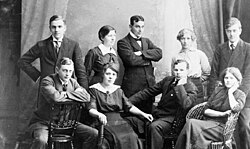
He attended a local trade school (handelsskola), worked at the Uddeholm ironworks,10 and traveled abroad in Germany, England, France, and Italy.1 He led both the Brage Folkdansgille (Brage Folk Dance Club) in Kristinehamn and Kristinehamns Amatörsällskap (the local amateur drama society), and drew on both for the actors and performers in his early films.11 From 1920 to 1922 he worked as a reporter for Nya Wermlands-Tidningen, during which time he began his film career.1012
Edgren's first marriage was to Svea Eleonora Hellberg (1896–1924) of Sundsvall, daughter of Elin Ringqvist (1868-1950) and charcuterie merchant Emil Gunnar Hellberg (1868–1901). The couple announced their engagement in May 1921, when Svea was a shop assistant in Sundsvall and Gustaf was working as an office manager in Kristinehamn.13 They were married in Kristinehamn on 16 February 1924.14 Svea, who had been seriously ill for some time, died there thirty-eight days later, on 26 March 1924, at the age of 27.1516
In a civil ceremony on 29 September 1927, Edgren married actress Linnéa Spångberg (1904–1981) of Ludvika, with whom he remained until his death in 1954.5 Linnéa was the daughter of Anna Lovisa Spångberg (1870–1916), who died when Linnéa was 12, and Anders Gustaf Olsson. She was the half-sister of Riksdag member August Spångberg.17 Gustaf and Linnéa's three children—Britt-Lis, Bengt, and Björn—were all child film actors,18 and Linnéa herself appeared in several of Gustaf's films, most notably as Brita in his 1932 Värmlänningarna.19
Career
Värmlandsfilm
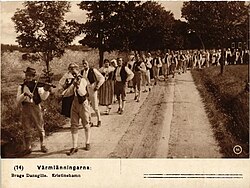
Gustaf Edgren made his film debut in 1921 as a choreographer in the film Värmlänningarna, directed by Erik A. Petschler, in which he also appeared in a minor role. Edgren led his folk dance ensemble in traditional dances during the midsummer celebration scenes. Critics noted that these dance sequences were particularly memorable and received generous screen time.11
In 1922, he made his directorial debut with Fröken på Björneborg, a film for which he was also responsible for the screenplay and production. He made six films in Kristinehamn for his own company Värmlandsfilm before joining Svensk Filmindustri.18
In late 1926, between his Värmlandsfilm productions and his move to Svensk Filmindustri, Edgren directed a touring stage revue, Skärgårdsflirt på vift ("Skärgårdsflirt on the Road"), based on the popular Stockholm revue Skärgårdsflirt that had been a hit at the Mosebacke variety theatre. The tour premiered in Jönköping on New Year's Eve 1926 and starred Fridolf Rhudin, reprising the comic role he had played in the original Stockholm production. Linnéa Spångberg, the future Mrs. Edgren, made her stage debut in the cast.20
Svensk Filmindustri
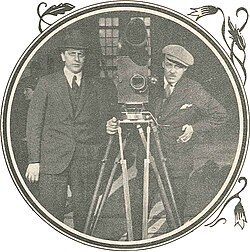
In 1927, Edgren joined Svensk Filmindustri (SF), where he became the company's most profitable director over two decades. A significant part of his early success was his discovery and promotion of comedian Fridolf Rhudin. His films between 1927 and 1934 were particularly successful, with Rhudin featured in six films from The Ghost Baron (1927) to Simon of Backabo (1934).18 Edgren successfully navigated the challenging transition from silent to sound film during this period, when many Swedish filmmakers struggled with the new technology, helping Svensk Filmindustri maintain its commercial viability when the studio had considered halting production entirely in the late 1920s.21 During this critical period for Swedish cinema, as Leif Furhammar notes, the advent of sound film technology "provided the vehicle for the commercial renaissance [of] Swedish film" after a period when "not a single Swedish film was in production" for nine months in 1929.21
Filmography overview
Gustaf Edgren had a special affinity for folklustspel (Swedish rural comedies). This was evident in his debut film and continued with works like the 1932 remake of Värmlänningarna. He also explored political themes, directing Erik Lindorm's political comedy The Red Day (1931) and Karl Fredrik regerar (1934), a film about a farmhand who becomes the Minister of Agriculture.18 Edgren's prolific career spanned multiple facets of Swedish filmmaking: he directed 32 films and wrote 22 screenplays (1922-1951), produced 6 early films (1922-1926), and contributed 2 story/scenario works. His versatility extended to occasional acting (3 films), film editing (2 films), choreography (1 film), production management (2 films), and even songwriting (13 lyrics for Sköna Helena). This comprehensive involvement demonstrates a filmmaker who mastered nearly every aspect of cinema during three critical decades of the medium's development in Sweden.
Notable films
Among Gustaf Edgren's extensive filmography, several works stand out for their historical significance, critical reception, or cultural impact. Among his most notable works as a director are:
Walpurgis Night (1935)
Walpurgis Night (Valborgsmässoafton) is a 1935 Swedish drama featuring performances by Lars Hanson, Karin Kavli, Victor Sjöström, and a young Ingrid Bergman. The film delves into themes of love, societal expectations, abortion, conflicting views of the roles of women, and the complexities of human relationships. The context of the story is concern about the declining birth rate in Sweden during the 1930s.2223
John Ericsson, Victor of Hampton Roads (1937)
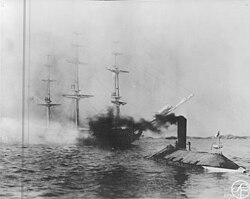
John Ericsson, Victor of Hampton Roads (John Ericsson – segraren vid Hampton Roads) is a 1937 Swedish historical drama depicting the life of Swedish-American inventor John Ericsson. The film centers on Ericsson's development of the ironclad warship USS Monitor and its pivotal role in the 1862 Battle of Hampton Roads during the American Civil War. Victor Sjöström portrayed Ericsson, and the score was composed by Eric Bengtson.24 The film was part of a broader cultural initiative to celebrate Swedish contributions abroad and was especially targeted toward Swedish-American audiences during the 1938 tercentenary celebrations of Swedish immigration to the United States.25 Screenings were held in communities such as South Bend, Indiana, and the film was praised as a tribute to Swedish ingenuity and perseverance.26
Sunshine Follows Rain (1946)
Sunshine Follows Rain (Driver dagg, faller regn) is a 1946 romantic drama based on the novel by Margit Söderholm. Söderholm's novel won a competition in 1943 organized by the magazine Hemmets Journal, publisher Wahlström & Widstrand, and Svensk Filmindustri, with Edgren serving on the jury.27 Edgren was immediately enthusiastic about the story's film potential, but faced resistance from SF's head Carl-Anders Dymling, who was unimpressed with the rural genre.28 The project was delayed for three years before finally being produced through SF's subsidiary Fribergs Filmbyrå rather than the main studio.28
The film portrays a love story set against the backdrop of 19th-century Swedish rural life in Hälsingland, highlighting themes of tradition, love, and societal norms through the romance between farmer's daughter Marit (Mai Zetterling) and outcast fiddler Jon (Alf Kjellin). It became a historic commercial triumph, earning 1.6 million kronor and becoming the first SF sound film to surpass one million kronor in revenue.28 Film researcher Per Olov Qvist estimates the film attracted approximately two million cinema visitors, placing it among the most-watched Swedish films of all time.27 The success proved the commercial viability of Swedish rural stories and helped launch a new wave of folklustspel productions.2918
The Girl from the Marsh Croft (1947)
The Girl from the Marsh Croft (Tösen från Stormyrtorpet) is a 1947 adaptation of Selma Lagerlöf's novella. The film tells the story of a young woman's struggle with societal judgment and personal redemption. It is noted for its faithful representation of Lagerlöf's themes and its exploration of morality and social ostracism in early 20th-century Sweden.30
The Swedish Horseman (1949)
The Swedish Horseman (Svenske ryttaren) is a 1949 historical drama inspired by Leo Perutz's novel The Swedish Rider. The film explores themes of identity, fate, and the supernatural, set against the tumultuous backdrop of 18th-century Europe. It stands out for its atmospheric storytelling and philosophical undertones.31
Beautiful Helen (1951)
Beautiful Helen (Sköna Helena) is a 1951 Swedish musical comedy loosely based on Jacques Offenbach's operetta La Belle Hélène. The film, Edgren's final directorial work, showcases his versatility and flair for integrating music with narrative cinema. It features performances by Max Hansen and Eva Dahlbeck, bringing a comedic and satirical touch to classical themes.32
Awards and affiliations
- Swedish Film Society Medal (Svenska Filmsamfundets medalj)33341
- IFK Kristinehamn Gold Merit Medal (I.F.K:s i Kristinehamn förtjänstmedalj i guld) - IFK stands for "Idrottsföreningen Kamraterna" (Sports Club Comrades), the local sports club in Kristinehamn1
- Värmland Football Federation Silver Merit Badge (Värmlands Fotbollsförbunds förtjänsttecken i silver) - awarded for 10 years of meritorious service1
- Board member of Swedish Youth Ring (Svenska Ungdomsringen), 1921-221
- Member of the Council for the Protection of Kristinehamn's Beauty (Skönhetsrådet i Kristinehamn)1
- Member of Swedish Film Society (Svenska Filmsamfundet)1
Legacy
Gustaf Edgren is remembered as a pioneering figure in Swedish cinema, known for his ability to create popular, folksy entertainment that resonated with broad audiences. Bengt Forslund, in a 2011 biography, noted that while Edgren might not have been an excellent personal acting coach, he had an exceptional talent for choosing the right actors for the right roles. His lifelong goal was to create popular entertainment for a broad audience.35 His prolific career, spanning three decades, significantly contributed to the development of Swedish film during the early to mid-20th century.35
Filmography
As Director
| Year | Original Title | English Translation |
|---|---|---|
| 1922 | Fröken på Björneborg | Miss at Björneborg |
| 1923 | Närkingarna | The People of Närke |
| 1924 | Trollebokungen | The Troll King |
| 1925 | Styrman Karlssons flammor | First Mate Karlsson's Sweethearts |
| 1925 | Skeppargatan 40 | 40 Skipper Street |
| 1926 | Hon, Han och Andersson | She, He, and Andersson / The Rivals |
| 1927 | Spökbaronen | The Ghost Baron |
| 1928 | Svarte Rudolf | Black Rudolf |
| 1929 | Konstgjorda Svensson | The Artificial Svensson |
| 1930 | Kronans kavaljerer | The Cavalry of the Crown |
| 1931 | Trötte Teodor | Tired Theodore |
| 1931 | Röda dagen | The Red Day |
| 1931 | Skepp ohoj! | Ship Ahoy! |
| 1932 | Värmlänningarna | The Värmlanders |
| 1934 | Simon i Backabo | Simon of Backabo |
| 1934 | Karl Fredrik regerar | Karl Fredrik Reigns |
| 1935 | Valborgsmässoafton | Walpurgis Night |
| 1936 | Johan Ulfstjerna | Johan Ulfstjerna |
| 1937 | Ryska snuvan | Russian Flu |
| 1937 | John Ericsson – segraren vid Hampton Roads | John Ericsson – Victor of the Hampton Roads |
| 1938 | Styrman Karlssons flammor | First Mate Karlsson's Sweethearts |
| 1940 | Stora famnen | With Open Arms |
| 1943 | Lille Napoleon | Little Napoleon |
| 1943 | Katrina | Katrina |
| 1944 | Dolly tar chansen | Dolly Takes a Chance |
| 1945 | Hans Majestät får vänta | His Majesty Must Wait |
| 1946 | Driver dagg, faller regn | Sunshine Follows Rain |
| 1946 | Kristin kommenderar | Kristin Commands |
| 1947 | Tösen från Stormyrtorpet | The Girl from the Marsh Croft |
| 1948 | En svensk tiger | A Swedish Tiger |
| 1948 | Flottans kavaljerer | The Navy Cavaliers |
| 1949 | Svenske ryttaren | The Swedish Horseman |
| 1951 | Sköna Helena | Beautiful Helen |
As Screenplay Writer
| Year | Original Title | English Translation |
|---|---|---|
| 1922 | Fröken på Björneborg | Miss at Björneborg |
| 1923 | Närkingarna | The People of Närke |
| 1924 | Trollebokungen | The Troll King |
| 1931 | Röda dagen | The Red Day |
| 1932 | Värmlänningarna | The Värmlanders |
| 1934 | Karl Fredrik regerar | Karl Fredrik Reigns |
| 1935 | Valborgsmässoafton | Walpurgis Night |
| 1936 | Johan Ulfstjerna | Johan Ulfstjerna |
| 1937 | Ryska snuvan | Russian Flu |
| 1937 | John Ericsson – segraren vid Hampton Roads | John Ericsson – Victor of the Hampton Roads |
| 1940 | Stora famnen | With Open Arms |
| 1943 | Lille Napoleon | Little Napoleon |
| 1943 | Katrina | Katrina |
| 1944 | Dolly tar chansen | Dolly Takes a Chance |
| 1945 | Hans Majestät får vänta | His Majesty Must Wait |
| 1946 | Kristin kommenderar | Kristin Commands |
| 1946 | Driver dagg, faller regn | Sunshine Follows Rain |
| 1947 | Tösen från Stormyrtorpet | The Girl from the Marsh Croft |
| 1948 | En svensk tiger | A Swedish Tiger |
| 1948 | Flottans kavaljerer | The Navy Cavaliers |
| 1949 | Svenske ryttaren | The Swedish Horseman |
| 1951 | Sköna Helena | Beautiful Helen |
As Producer
| Year | Original Title | English Translation |
|---|---|---|
| 1922 | Fröken på Björneborg | Miss at Björneborg |
| 1923 | Närkingarna | The People of Närke |
| 1924 | Trollebokungen | The Troll King |
| 1925 | Styrman Karlssons flammor | First Mate Karlsson's Sweethearts |
| 1925 | Skeppargatan 40 | 40 Skipper Street |
| 1926 | Hon, Han och Andersson | The Rivals |
As Scenario/Story Author
| Year | Original Title | Type | English Translation |
|---|---|---|---|
| 1927 | Spökbaronen | Script | The Ghost Baron |
| 1934 | Hans Excellens Pettersson | Story | His Excellency Pettersson |
Other roles
| Year | Role | Film | English translation |
|---|---|---|---|
| 1921 | Choreographer | Värmlänningarna | The Värmlanders |
| 1925 | Film editor | Skeppargatan 40 | 40 Skipper Street |
| 1936 | Film editor | Johan Ulfstjerna | Johan Ulfstjerna |
| 1946 | Production manager | Kristin kommenderar | Kristin Commands |
| 1947 | Production manager | Tösen från Stormyrtorpet | The Girl from the Marsh Croft |
Soundtrack
| No. | Song title (lyrics) Sköna Helena |
|---|---|
| 1 | Ajax-kupletten |
| 2 | Det är en dröm |
| 3 | Femte kolonnens moral |
| 4 | Från himmelens höjd |
| 5 | Hovmästarkupletten |
| 6 | Ja, ni är så skön |
| 7 | Jag är sköna Helenas man |
| 8 | Kärlek måste vi ha |
| 9 | Ljuva frihet |
| 10 | Negerkvartetten |
| 11 | Ping pong-kupletten |
| 12 | Slavinnornas kör |
| 13 | Säg Venus ... |
Cast appearances
| Year | Film | English translation | Notes |
|---|---|---|---|
| 1921 | Värmlänningarna | The Värmlanders | Actor |
| 1931 | Brokiga blad | Colourful Pages | Actor (uncredited) |
| 1931 | Trötte Teodor | Tired Theodore | Actor |
| 1934 | Karl Fredrik regerar | Karl Fredrik Reigns | Actor |
| 1943 | SF-journalen 1943 Solna blir stad | SF Journal 1943: Solna Becomes a City | Appearance |
| 1946 | Den gamla goda tiden | The Good Old Days | Appearance |
Private films
| Year | Original Title | English Translation |
|---|---|---|
| 1928? | Privatfilm Gustaf Edgren Kristinehamn | Private Film Gustaf Edgren Kristinehamn |
| 1933? | Privatfilm Gustaf Edgren Ålsten | Private Film Gustaf Edgren Ålsten |
| ? | Gustaf Edgrens familjefilm | Gustaf Edgren's Family Film |
Notes
Notes
References
References
- Norstedt 1938, pp. 188–189.
- Bonniers litterära magasin 1933.
- Alvin 2025.
- FamilySearch 2025.
- Kristinehamns kyrkogård 2025.
- Nya Kristinehamnsposten 1903.
- Riksarkivet 2025a.
- Riksarkivet 2025b.
- Riksarkivet 2025c.
- Bonniers 1944, p. 307.
- Svenska Filminstitutet 2025a.
- Nya Wermlandstidningen 1926.
- Dagens Nyheter 1921.
- Kristinehamns kyrkoarkiv 1924.
- Dagens Nyheter 1924.
- Sundsvalls Tidning 1924b.
- Spångberg 1966, pp. 2–3.
- Svenska Filminstitutet 2023.
- Svenska Filminstitutet 2025f.
- Dagens Nyheter 1927.
- Furhammar 1998, pp. 176–190.
- Larsson & Marklund 2010, p. 107.
- Santas & Wilson 2018, p. 181.
- Svenska Filminstitutet 2025b.
- Wallengren 2014, p. 127.
- McIlroy 1986, p. 176.
- Nordic Women in Film 2024.
- Svenska Filminstitutet 2025e.
- Qvist & von Bagh 2000, p. 96.
- Wright 1998.
- Qvist & von Bagh 2000, p. 63.
- British Film Institute 2025.
- Svenska Filminstitutet 2025c.
- Svenska Filminstitutet 2025d.
- Forslund 2011.
Bibliography
Bibliography
- "Edgren, Nils (1901–1978), redaktör — Fredrik Ströms arkiv (H 134)" (PDF). Alvin-portal (in Swedish). Uppsala University Library. Retrieved 2026-05-04.
- "Svenska Män och Kvinnor: Biografisk Uppslagsbok 2 C-F" [Swedish Men and Women: Biographical Encyclopedia 2 C-F]. Project Runeberg (in Swedish). Stockholm: Albert Bonniers Förlag. 1944. p. 307. Retrieved 2025-04-29.
- "Recension av '40° Resfeber' av Edgar P. Andersson". Bonniers litterära magasin (in Swedish). II: 78–79. 1933.
- "Sköna Helena". British Film Institute. Retrieved 2025-04-30.
- "Personalnotiser: Förlovningar". Dagens Nyheter (in Swedish). 1921-05-15. p. 7.
- "Dödsannons: Svea Eleonora Edgren". Dagens Nyheter (in Swedish). 1924-03-28. p. 2.
- "Skärgårdsflirt i Jönköping". Dagens Nyheter (in Swedish). 1927-01-02.
- "Varnum Parish, Värmland, Sweden Genealogy". FamilySearch Wiki. The Church of Jesus Christ of Latter-day Saints. Retrieved 2025-05-01.
- Forslund, Bengt (2011). Gustaf Edgren: Mästaren och hans fru i skuggan [Gustaf Edgren: The Master and His Wife in the Shadows] (in Swedish). Stockholm: Atlantis. ISBN 978-9173535151.
- Furhammar, Leif (1998). "Swedish Cinema". In Kindem, Gorham (ed.). The International Movie Industry. Carbondale: Southern Illinois University Press. ISBN 978-0809321964.
- Kristinehamns kyrkogårdsförvaltning. "Gravsatta i grav NKE 113–114, Nya kyrkogården, Kristinehamn (Edgren familjegrav)". Svenskagravar.se (in Swedish). Retrieved 2026-05-04.
- "Kristinehamns kyrkoarkiv, Lysnings- och vigselbok 1921–1934". Riksarkivet (in Swedish). Volym SE/VA/13289/E I/10, sida 32, vigsel nr 8. Karlstad: Värmlandsarkiv. Retrieved 2026-05-02.
{{cite web}}: CS1 maint: others (link) - Larsson, Mariah; Marklund, Anders (2010). Swedish Film: An Introduction and Reader. Nordic Academic Press. ISBN 978-91-85509-36-2.
- McIlroy, Brian (1986). World Cinema: Sweden. Flicks Books. ISBN 9780948911484.
- Nordic Women in Film (2024-09-25). "Margit Söderholm". Nordic Women in Film. Retrieved 2025-07-30.
- "Edgren, Erik Gustaf". Vem är det: Svensk biografisk handbok 1939 [Who is it: Swedish Biographical Handbook 1939] (in Swedish). Stockholm: P.A. Norstedt & Söners Förlag. 1938. pp. 188–189.
- "Födelseannonser: Varnums församling". Nya Kristinehamnsposten (in Swedish). 1903-12-08. p. 2.
- Qvist, Per Olov; von Bagh, Peter (2000). Guide to the Cinema of Sweden and Finland. Greenwood Publishing Group. ISBN 9780313303777.
- "Blombacka". Nya Wermlandstidningen (in Swedish). 1926-05-08. p. 3.
- "Folkräkning 1900: Erik Gustaf Edgren, Krogsvik, Varnum". Riksarkivet (in Swedish). Swedish National Archives. Retrieved 2025-04-29.
- "Folkräkning 1910: Erik Gustaf Edgren, Hedhult, Varnum". Riksarkivet (in Swedish). Swedish National Archives. Retrieved 2025-04-29.
- "Folkräkning 1930: Edgren Danielsson, Elin Sofia, Lugnet B, Kristinehamn". Riksarkivet (in Swedish). Swedish National Archives. Retrieved 2026-05-04.
- Santas, Constantine; Wilson, James M. (2018). The Essential Films of Ingrid Bergman. Rowman & Littlefield. ISBN 978-1-5381-0138-4.
- Spångberg, August (1966). I tidens ström (PDF). Stockholm: Bok o. bild. Archived from the original (PDF) on 18 August 2010.
- "Svea Edgren". Sundsvalls Tidning (in Swedish). 1924-03-29. p. 5.
- Svenska Filminstitutet (2023). "Gustaf Edgren". Svensk Filmdatabas.
- Svenska Filminstitutet (2025a). "Värmlänningarna (1921)". Svensk Filmdatabas. Retrieved 2025-05-01.
- Svenska Filminstitutet (2025b). "John Ericsson – segraren vid Hampton Roads". Svensk Filmdatabas. Retrieved 2025-04-30.
- Svenska Filminstitutet (2025c). "Historik". Svensk Filmdatabas.
- Svenska Filminstitutet (2025d). "Utmärkelser - SFdb". Svensk Filmdatabas. Retrieved 2025-04-29.
- Svenska Filminstitutet (2025e). "Driver dagg faller regn". Filminstitutet. Retrieved 2025-07-30.
- Svenska Filminstitutet (2025f). "Värmlänningarna (1932)". Svensk Filmdatabas.
- Wallengren, Ann-Kristin (2014). Welcome Home Mr Swanson: Swedish Emigrants and Swedishness on Film. Nordic Academic Press. ISBN 978-91-87675-11-9.
- Wright, Rochelle (1998). The Visible Wall: Jews and Other Ethnic Outsiders in Swedish Film. Southern Illinois University Press. ISBN 978-0-8093-2178-0.