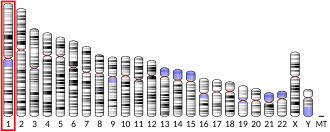





Zinc finger protein Gfi-1 is a transcriptional repressor that in humans is encoded by the GFI1 gene.5 It is important normal hematopoiesis.6
Function
Gfi1 (growth factor independence 1) is a transcriptional repressor that plays a critical role in hematopoiesis and in protecting hematopoietic cells against stress-induced apoptosis. Gfi1 upregulates the expression of the nuclear protein Hemgn, which contributes to its anti-apoptotic activity. This upregulation is mediated through a specific 16-bp promoter region and is dependent on Gfi1’s interaction with the histone demethylase LSD1.7 Gfi1 represses PU.1 transcription factor, and this repression precedes and correlates with the upregulation of Hemgn. The upregulation of Hemgn, in turn, contributes to the anti-apoptotic function of Gfi1, acting in a p53-independent manner.78
Gfi1 promotes cell survival by upregulating Hemgn through the repression of PU.1 thereby inhibiting apoptosis.7 Gfi1 inhibits apoptosis induced by DNA damage, growth factor withdrawal, inhibitory cytokine TGF-β and MYC activation 8
Gfi1 is also expressed in the inner ear, and in the epithelium lining the stomach, intestines, and lung airways, where it is important for cellular differentiation.910
Interactions
GFI1 has been shown to interact with PIAS311 and RUNX1T1.12
References
References
- GRCh38: Ensembl release 89: ENSG00000162676 – Ensembl, May 2017
- GRCm38: Ensembl release 89: ENSMUSG00000029275 – Ensembl, May 2017
- "Human PubMed Reference:". National Center for Biotechnology Information, U.S. National Library of Medicine.
- "Mouse PubMed Reference:". National Center for Biotechnology Information, U.S. National Library of Medicine.
- Bell DW, Taguchi T, Jenkins NA, Gilbert DJ, Copeland NG, Gilks CB, et al. (July 1995). "Chromosomal localization of a gene, GF1, encoding a novel zinc finger protein reveals a new syntenic region between man and rodents". Cytogenetics and Cell Genetics. 70 (3–4): 263–267. doi:10.1159/000134048. PMID 7789186.
- "Entrez Gene: GFI1 growth factor independent 1".
- Binod GC, Hoyt LJ, Dovat S, Dong F (November 2024). "Upregulation of nuclear protein Hemgn by transcriptional repressor Gfi1 through repressing PU.1 contributes to the anti-apoptotic activity of Gfi1". The Journal of Biological Chemistry. 300 (11) 107860. Bibcode:2024JBiCh.300j7860G. doi:10.1016/j.jbc.2024.107860. PMC 11550643. PMID 39374784.
- Binod GC, Du P, Zhang Y, Yang L, Dong F (May 2025). "Bcl-xL is important for the antiapoptotic activity of Gfi1 and is upregulated by Gfi1 through hemgn". Journal of Immunology. 214 (5). Baltimore, Md.: 1046–1058. doi:10.1093/jimmun/vkae066. PMC 12123215. PMID 40262274.
- Phelan JD, Shroyer NF, Cook T, Gebelein B, Grimes HL (July 2010). "Gfi1-cells and circuits: unraveling transcriptional networks of development and disease". Current Opinion in Hematology. 17 (4): 300–307. doi:10.1097/moh.0b013e32833a06f8. PMC 2910316. PMID 20571393.
- Shroyer NF, Wallis D, Venken KJ, Bellen HJ, Zoghbi HY (October 2005). "Gfi1 functions downstream of Math1 to control intestinal secretory cell subtype allocation and differentiation". Genes & Development. 19 (20): 2412–2417. doi:10.1101/gad.1353905. PMC 1257395. PMID 16230531.
- Rödel B, Tavassoli K, Karsunky H, Schmidt T, Bachmann M, Schaper F, et al. (November 2000). "The zinc finger protein Gfi-1 can enhance STAT3 signaling by interacting with the STAT3 inhibitor PIAS3". The EMBO Journal. 19 (21): 5845–5855. doi:10.1093/emboj/19.21.5845. PMC 305799. PMID 11060035.
- McGhee L, Bryan J, Elliott L, Grimes HL, Kazanjian A, Davis JN, et al. (August 2003). "Gfi-1 attaches to the nuclear matrix, associates with ETO (MTG8) and histone deacetylase proteins, and represses transcription using a TSA-sensitive mechanism". Journal of Cellular Biochemistry. 89 (5): 1005–1018. doi:10.1002/jcb.10548. PMID 12874834. S2CID 25450754.
Further reading
Further reading
- Gilks CB, Bear SE, Grimes HL, Tsichlis PN (March 1993). "Progression of interleukin-2 (IL-2)-dependent rat T cell lymphoma lines to IL-2-independent growth following activation of a gene (Gfi-1) encoding a novel zinc finger protein". Molecular and Cellular Biology. 13 (3): 1759–1768. doi:10.1128/MCB.13.3.1759. PMC 359488. PMID 8441411.
- Zweidler-Mckay PA, Grimes HL, Flubacher MM, Tsichlis PN (August 1996). "Gfi-1 encodes a nuclear zinc finger protein that binds DNA and functions as a transcriptional repressor". Molecular and Cellular Biology. 16 (8): 4024–4034. doi:10.1128/MCB.16.8.4024. PMC 231398. PMID 8754800.
- Roberts T, Cowell JK (February 1997). "Cloning of the human Gfi-1 gene and its mapping to chromosome region 1p22". Oncogene. 14 (8): 1003–1005. doi:10.1038/sj.onc.1200910. PMID 9051000.
- Rödel B, Tavassoli K, Karsunky H, Schmidt T, Bachmann M, Schaper F, et al. (November 2000). "The zinc finger protein Gfi-1 can enhance STAT3 signaling by interacting with the STAT3 inhibitor PIAS3". The EMBO Journal. 19 (21): 5845–5855. doi:10.1093/emboj/19.21.5845. PMC 305799. PMID 11060035.
- Osawa M, Yamaguchi T, Nakamura Y, Kaneko S, Onodera M, Sawada K, et al. (October 2002). "Erythroid expansion mediated by the Gfi-1B zinc finger protein: role in normal hematopoiesis". Blood. 100 (8): 2769–2777. doi:10.1182/blood-2002-01-0182. PMID 12351384.
- Person RE, Li FQ, Duan Z, Benson KF, Wechsler J, Papadaki HA, et al. (July 2003). "Mutations in proto-oncogene GFI1 cause human neutropenia and target ELA2". Nature Genetics. 34 (3): 308–312. doi:10.1038/ng1170. PMC 2832179. PMID 12778173.
- McGhee L, Bryan J, Elliott L, Grimes HL, Kazanjian A, Davis JN, et al. (August 2003). "Gfi-1 attaches to the nuclear matrix, associates with ETO (MTG8) and histone deacetylase proteins, and represses transcription using a TSA-sensitive mechanism". Journal of Cellular Biochemistry. 89 (5): 1005–1018. doi:10.1002/jcb.10548. PMID 12874834. S2CID 25450754.
- Doan LL, Porter SD, Duan Z, Flubacher MM, Montoya D, Tsichlis PN, et al. (2004). "Targeted transcriptional repression of Gfi1 by GFI1 and GFI1B in lymphoid cells". Nucleic Acids Research. 32 (8): 2508–2519. doi:10.1093/nar/gkh570. PMC 419458. PMID 15131254.
- Dwivedi PP, Anderson PH, Omdahl JL, Grimes HL, Morris HA, May BK (June 2005). "Identification of growth factor independent-1 (GFI1) as a repressor of 25-hydroxyvitamin D 1-alpha hydroxylase (CYP27B1) gene expression in human prostate cancer cells". Endocrine-Related Cancer. 12 (2): 351–365. doi:10.1677/erc.1.00920. PMID 15947108.
- Duan Z, Zarebski A, Montoya-Durango D, Grimes HL, Horwitz M (December 2005). "Gfi1 Coordinates Epigenetic Repression of p21Cip/WAF1 by Recruitment of Histone Lysine Methyltransferase G9a and Histone Deacetylase 1". Molecular and Cellular Biology. 25 (23): 10338–10351. doi:10.1128/MCB.25.23.10338-10351.2005. PMC 1291230. PMID 16287849.
- Marteijn JA, van der Meer LT, Van Emst L, de Witte T, Jansen JH, van der Reijden BA (January 2007). "Diminished proteasomal degradation results in accumulation of Gfi1 protein in monocytes". Blood. 109 (1): 100–108. doi:10.1182/blood-2006-02-003590. PMID 16888099.
- Dwivedi PP, Anderson PH, Tilley WD, May BK, Morris HA (March 2007). "Role of oncoprotein growth factor independent-1 (GFI1) in repression of 25-hydroxyvitamin D 1alpha-hydroxylase (CYP27B1): a comparative analysis in human prostate cancer and kidney cells". The Journal of Steroid Biochemistry and Molecular Biology. 103 (3–5): 742–746. doi:10.1016/j.jsbmb.2006.12.014. PMID 17207994. S2CID 30600875.
- Nakazawa Y, Suzuki M, Manabe N, Yamada T, Kihara-Negishi F, Sakurai T, et al. (May 2007). "Cooperative interaction between ETS1 and GFI1 transcription factors in the repression of Bax gene expression". Oncogene. 26 (24): 3541–3550. doi:10.1038/sj.onc.1210140. PMID 17213822. S2CID 30476328.
- Khanna-Gupta A, Sun H, Zibello T, Lee HM, Dahl R, Boxer LA, et al. (May 2007). "Growth factor independence-1 (Gfi-1) plays a role in mediating specific granule deficiency (SGD) in a patient lacking a gene-inactivating mutation in the C/EBPϵ gene". Blood. 109 (10): 4181–4190. doi:10.1182/blood-2005-05-022004. PMC 1885490. PMID 17244686.
- Marteijn JA, van der Meer LT, van Emst L, van Reijmersdal S, Wissink W, de Witte T, et al. (November 2007). "Gfi1 ubiquitination and proteasomal degradation is inhibited by the ubiquitin ligase Triad1". Blood. 110 (9): 3128–3135. doi:10.1182/blood-2006-11-058602. PMID 17646546. S2CID 19048016.
External links
External links
- GFI1+protein,+human at the U.S. National Library of Medicine Medical Subject Headings (MeSH)
This article incorporates text from the United States National Library of Medicine, which is in the public domain.