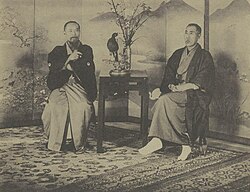

Genrō (元老; lit. 'original elder') was an unofficial designation given to a generation of elder Japanese statesmen and military officers, all born between the 1830s and 1850s, who served as informal extraconstitutional advisors to the emperor during the Meiji, Taishō, and early Shōwa eras of Japanese history.
The institution of genrō originated with the traditional council of elders (Rōjū) common in the Edo period; however, the term genrō appears to have been coined by a newspaper only in 1892. The term is sometimes confused with the Genrōin (Chamber of Elders), a legislative body which existed from 1875–1890; however, the genrō were not related to the establishment of that body or its dissolution.
Experienced leaders of the Meiji Restoration were singled out by the Emperor as genkun (元勲; lit. 'original hero'), and asked to act as Imperial advisors. With the exception of Saionji Kinmochi, all the genrō were from medium or lower ranking samurai families, four each from Satsuma and Chōshū, the two former domains that had been instrumental in the overthrow of the former Tokugawa shogunate in the Boshin War of the Meiji Restoration of 1867–1868. The genrō had the right to select and nominate Prime Ministers to the Emperor for approval.
The first seven genrō were all formerly members of the Sangi (Imperial Council) which was abolished in 1885. They are also sometimes known to historians as the Meiji oligarchy, although not all of the Meiji oligarchs were genrō.
The institution expired in 1940, with the death of the last of the genrō, Saionji Kinmochi.
List of genrō
| Name | Origin | Portrait | Birth | Death |
|---|---|---|---|---|
| Inoue Kaoru | Chōshū |  |
16 January 1836 | 1 September 1915 |
| Itō Hirobumi | Chōshū | 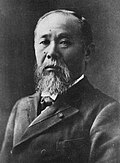 |
16 October 1841 | 26 October 1909 |
| Katsura Tarō | Chōshū | 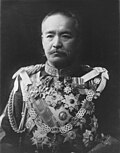 |
4 January 1848 | 10 October 1913 |
| Kuroda Kiyotaka | Satsuma | 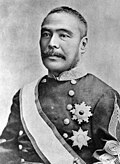 |
16 October 1840 | 23 August 1900 |
| Matsukata Masayoshi | Satsuma |  |
25 February 1835 | 2 July 1924 |
| Ōyama Iwao | Satsuma |  |
12 November 1842 | 10 December 1916 |
| Saigō Tsugumichi | Satsuma |  |
1 June 1843 | 18 July 1902 |
| Saionji Kinmochi | Kuge | 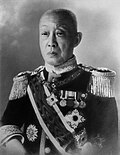 |
23 October 1849 | 24 November 1940 |
| Yamagata Aritomo | Chōshū | 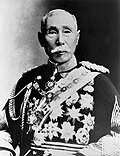 |
14 June 1838 | 1 February 1922 |
References
References
- Gordon, Andrew (2003). A Modern History of Japan: From Tokugawa Times to the Present. Oxford University Press. ISBN 0-19-511061-7.
- Jansen, Marius B. (2000). The Making of Modern Japan. Harvard University Press. ISBN 978-0-674-00334-7. OCLC 44090600.
- Omura, Bunji (2004) [1937]. The Last Genro: Prince Saionji, Japan's "Grand Old Man". Kegan Paul. ISBN 0-7103-0917-1.