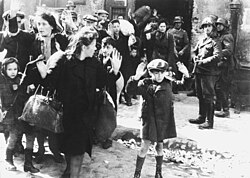
Genocide is the partial or total destruction of a human group, committed intentionally. The popular view conceives of genocide as the large-scale killing of individuals, but in the scholarly and legal fields, genocide occurs when the group itself is targeted. Acts of genocide include killing as well as non-lethal acts such as preventing reproduction among the group, the forcible transfer of children to another group, and cultural genocide.
The term genocide was coined by Polish-Jewish lawyer Raphael Lemkin in the early 1940s. Lemkin lobbied for genocide to be outlawed by international treaty, but the Genocide Convention restricted his initially broad definition to five specific acts "committed with intent to destroy, in whole or in part, a national, ethnical, racial or religious group, as such".3 Its definition remains contested by scholars and institutions across international law, history, sociology and related fields.
Genocide has occurred throughout human history, even during prehistoric times. Most genocides have occurred during wartime, and they are particularly likely in situations of imperial expansion and power consolidation. It is associated with colonialism, especially settler colonialism, as well as with both world wars and repressive governments in the twentieth century. Despite efforts to end genocide, effective interventions have not occurred. The colloquial understanding of genocide is heavily influenced by the Holocaust as its archetype and is conceived as innocent victims being targeted for their ethnic identity alone rather than for any political reason.
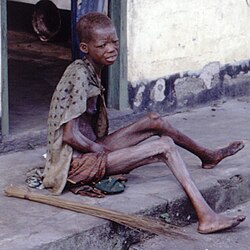
Genocide is widely considered to be the epitome of human evil and is often referred to as the "crime of crimes"; consequently, events are often denounced as genocide. It is most often a state crime, and most perpetrators are psychologically normal. Genocide typically occurs when the perpetrators believe themselves existentially under threat, and is employed as a means to another end—often after other options failed. The most common pattern of genocidal violence involves the killing of adult men and non-lethal violence, such as sexual assault and enslavement, of women and children. Other common means include forced displacement, land theft, and the destruction of cultural heritage. After genocide, denial and impunity for the perpetrators are common.
Origins
Polish-Jewish lawyer Raphael Lemkin coined the term genocide between 1941 and 1943.45 Lemkin's coinage combined the Greek word γένος (genos, 'race, people') with the Latin suffix -caedo ('act of killing').6 As a law student, his interest in the subject was initially sparked by the Armenian genocide.7 He submitted the manuscript for his book Axis Rule in Occupied Europe in early 1942, and it was published in 1944 as the Holocaust was coming to light outside Europe.4 Lemkin's proposal to criminalize genocide was more ambitious than simply outlawing a type of mass slaughter; he thought that the law against genocide could promote more tolerant and pluralistic societies.6 His response to Nazi criminality was sharply different from that of another international law scholar, Hersch Lauterpacht, who argued that it was essential to protect individuals from atrocities, whether or not they were targeted as members of a group.8
According to Lemkin, the central definition of genocide was "the destruction of a nation or of an ethnic group" in which its members were not targeted as individuals, but rather as members of the group. The objectives of genocide "would be the disintegration of the political and social institutions, of culture, language, national feelings, religion, and the economic existence of national groups".9 These were not separate crimes but different aspects of the same genocidal process.10 Lemkin's definition of nation was sufficiently broad to apply to nearly any type of human collectivity, even one based on a trivial characteristic.11 He saw genocide as an inherently colonial process, and in his later writings, he analyzed what he described as the colonial genocides occurring within European colonies, including the Soviet and Nazi empires.6 Furthermore, his definition of genocidal acts, which was to replace the national pattern of the victim with that of the perpetrator, was much broader than the five types that were later enumerated in the Genocide Convention.6 Lemkin considered genocide to have occurred since the beginning of human history and dated the efforts to criminalize it to the Spanish critics of colonial excesses, Francisco de Vitoria and Bartolomé de Las Casas.12 The Polish court that convicted SS official Arthur Greiser in 1946 was the first to mention the term in a verdict, using Lemkin's original definition.13
Crime
Development
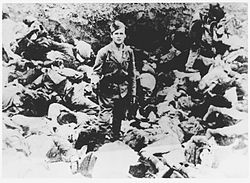
According to the legal instrument used to prosecute defeated German leaders during the Nuremberg trials, atrocity crimes were only prosecutable by international justice if they were committed as part of an illegal war of aggression. The powers prosecuting the trial were unwilling to restrict a government's actions against its own citizens.15
Lemkin brought his proposal to criminalize genocide to the newly established United Nations in 1946.15 Opposition to the convention was greater than Lemkin expected, due to states' concerns that it would lead their own policies—including treatment of indigenous peoples, European colonialism, racial segregation in the United States, and Soviet nationalities policy—to be labeled genocide. Before the convention was passed, the United States, United Kingdom, and the Soviet Union worked to make it unenforceable and applicable to their geopolitical rivals' actions but not their own.16 Few formerly colonized countries were represented, and "most states had no interest in empowering their victims—past, present, and future".17
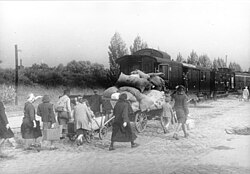
The result narrowed Lemkin's original concept;19 he privately considered it a failure.16 Lemkin's anti-colonial conception of genocide was transformed into one that favored colonial powers.2021 Among the violence freed from the stigma of genocide was the destruction of political groups, which the Soviet Union is particularly blamed for blocking.222319 Although Lemkin credited women's NGOs with securing the passage of the convention, the gendered violence of forced pregnancy, marriage, and divorce was left out.24 Additionally omitted was the forced migration of populations, which had been carried out by the Soviet Union and its allies, condoned by the Western powers, against millions of Germans from central and Eastern Europe.25 Cultural genocide was also taken out, despite Lemkin's argument that it and physical genocide were two mechanisms aiming at the same goal.2619
Genocide Convention
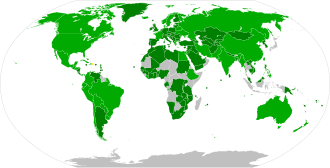
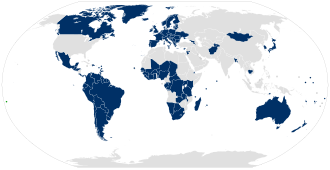
Two years after passing a resolution affirming the criminalization of genocide, the United Nations General Assembly adopted the Genocide Convention on 9 December 1948.27 It came into effect on 12 January 1951 after 20 countries ratified it without reservations.28 The convention defines genocide as:
... any of the following acts committed with intent to destroy, in whole or in part, a national, ethnical, racial or religious group, as such:
- (a) Killing members of the group;
- (b) Causing serious bodily or mental harm to members of the group;
- (c) Deliberately inflicting on the group conditions of life calculated to bring about its physical destruction in whole or in part;
- (d) Imposing measures intended to prevent births within the group;
- (e) Forcibly transferring children of the group to another group.3
A specific intent to destroy is the mens rea requirement of genocide.29 The issue of what it means to destroy a group "as such" and how to prove the required intent has been difficult for courts to resolve. The legal system has also struggled with how much of a group can be targeted before triggering the Genocide Convention.303132 The prevailing approach to intent is the purposive approach, where the perpetrator expressly wants to destroy the group; there has been some support for a knowledge-based approach, where a person acted with the knowledge that their actions would further an overall genocidal goal.333435 Intent is the most difficult aspect for prosecutors to prove;3637 the perpetrators often claim that they merely sought the removal of the group from a given territory, instead of destruction as such,38 or that the genocidal actions were collateral damage of military activity.39
Attempted genocide, conspiracy to commit genocide, incitement to genocide, and complicity in genocide are criminalized.40 The convention does not allow the retroactive prosecution of events that took place before 1951.40 Signatories are also required to prevent genocide and prosecute its perpetrators.41 Many countries have incorporated genocide into their municipal law, varying to a lesser or greater extent from the convention.42 The convention's definition of genocide was adopted verbatim by the ad hoc international criminal tribunals and by the Rome Statute that established the International Criminal Court (ICC).43 The crime of genocide also exists in customary international law and is therefore prohibited for non-signatories.44
Prosecutions
During the Cold War, genocide remained at the level of rhetoric because both superpowers (the United States and the Soviet Union) felt vulnerable to accusations of genocide and were therefore unwilling to press charges against the other party.45 Despite political pressure to charge "Soviet genocide", the United States government refused to ratify the convention, fearing countercharges.46 Authorities have been reluctant to prosecute the perpetrators of many genocides, although non-judicial commissions of inquiry have also been created by some states.47
Article III of the Genocide Convention makes attempted genocide punishable alongside genocide, conspiracy to commit genocide, incitement to commit genocide, and complicity in genocide. Yet—unlike those other offences—attempted genocide has drawn little attention in case law or scholarship.48
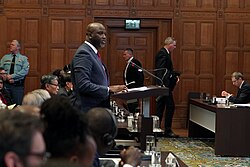
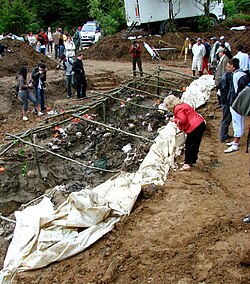
After the failure to prevent the Bosnian and Rwandan genocides in the 1990s, the United Nations established criminal tribunals to try individuals for genocide and other international crimes.4950 Although these tribunals had mixed results, the International Criminal Court was established in 2002 and counts a majority of states as members. Some of the most powerful states in the world, such as the United States, China, India, Russia, and Turkey, have not joined.5150 Other perpetrators have been tried by various countries around the world, either involved in the genocide or not. As with other serious international crimes, no jurisdictional or temporal limitations apply to prosecution.52 The first former head of state to be convicted of genocide was Khieu Samphan in 2018 for the Cambodian genocide.5 Although it is widely recognized that punishment of the perpetrators cannot be an order for their crimes, the trials often serve other purposes, such as attempting to shape public perception of the past.47 There are several cases in which the International Court of Justice has been called upon to adjudicate accusations of genocide against states, including the Bosnian genocide case, the Rohingya genocide case, and the Gaza genocide case.53
Genocide studies
The field of genocide studies emerged in the 1970s and 1980s, as social science began to consider the phenomenon of genocide.5455 Due to the occurrence of the Bosnian genocide, the Rwandan genocide, and the Kosovo crisis, genocide studies exploded in the 1990s.56 In contrast to earlier researchers who took for granted the idea that liberal and democratic societies were less likely to commit genocide, revisionists associated with the International Network of Genocide Scholars emphasized how Western ideas led to genocide.57 The genocides of indigenous peoples as part of European colonialism were initially not recognized as a form of genocide.58 Pioneers of research into settler colonialism, such as Patrick Wolfe, spelled out the genocidal logic of settler projects in places like the Americas and Australia, prompting a rethinking of colonialism.59 Nevertheless, most genocide research focuses on a limited canon of twentieth-century genocides, while many other cases are understudied or forgotten.60 Many genocide scholars are concerned with both the objective study of the topic and obtaining insights that will help prevent future genocides.61
Definitions
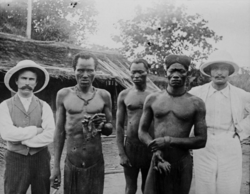
The definition of genocide generates controversy whenever a new case arises and debate erupts as to whether or not it qualifies as a genocide. Sociologist Martin Shaw writes, "Few ideas are as important in public debate, but in few cases are the meaning and scope of a key idea less clearly agreed."6364 Perceptions of genocide vary between seeing it as "an extremely rare and difficult to prove crime", to one that can be found, couched in euphemistic language, in any history book.65
Some scholars and activists use the Genocide Convention definition.20 Others prefer narrower definitions that reduce genocide to mass killing66 or distinguish it from other types of violence by the innocence,1 helplessness, or defencelessness of its victims.67 Most genocides occur during wartime,6869 and distinguishing genocide or genocidal war from non-genocidal warfare can be difficult.69 Likewise, genocide is distinguished from violent and coercive forms of rule that aim to change behavior rather than destroy groups.7071 Isolated or short-lived phenomena that resemble genocide can be termed genocidal violence.72
Cultural genocide or ethnocide refers to actions targeted at the reproduction of a group's language, culture, or way of life.73 Although left out of the Genocide Convention, most genocide scholars believe that both cultural genocide and structural violence should be included in the definition of genocide if committed with the intent to destroy the targeted group.74 Many of the more sociologically oriented definitions of genocide overlap with that of the crime against humanity of extermination, large-scale killing or induced death as part of a systematic attack on a civilian population.75 Although included in Lemkin's original concept and by some scholars, political and social groups were also excluded from the Genocide Convention.7677 As a consequence, perpetrators attempt to evade the stigma of genocide by labeling their targets as a political or military enemy.77
Criticism of the concept of genocide and alternatives
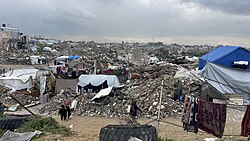
Most civilian killings in the twentieth century were not from genocide.8081 Alternative terms have been coined to describe processes left outside narrower definitions of genocide. Ethnic cleansing—the forced expulsion of a population from a given territory—has achieved widespread currency, although many scholars recognize that it frequently overlaps with genocide, even where Lemkin's definition is not used.82 Other terms ending in -cide have proliferated for the destruction of particular types of groupings: democide (people by a government), eliticide (the elite of a targeted group), ethnocide (ethnic groups), gendercide (gendered groupings), politicide (political groups), classicide (social classes), and urbicide (the destruction of a particular locality).838485
The word genocide inherently carries a value judgement,86 as it is widely considered to be the epitome of human evil.87 Although genocidal violence has at times been celebrated by its perpetrators and observers,88 it has always had critics.89 The idea that genocide sits on top of a hierarchy of atrocity crimes—worse than crimes against humanity or war crimes—is controversial among scholars90 and suggests that the protection of groups is more important than that of individuals9192 and that the intention of states is more important than the suffering of civilian victims of violence.93 A. Dirk Moses and other scholars argue that the prioritization of genocide causes other causes of civilian deaths, such as blockades, bombing, and other "collateral damage", to not be considered in the study and response.9495 Gzoyan, Hochmann, and Meyroyan argue that — although criminalized by the Genocide Convention — "attempted genocide" is a rarely invoked concept that should be revitalized by focusing on smaller-scale, intent-driven group attacks.96
Causes
We have been reproached for making no distinction between the innocent Armenians and the guilty: but that was utterly impossible in view of the fact that those who are innocent today might be guilty tomorrow. The concern for the safety of Turkey simply had to silence all other concerns.
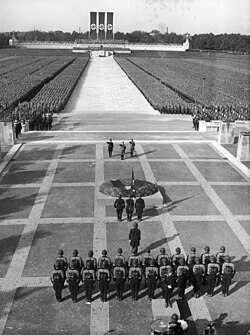
The colloquial understanding of genocide, heavily influenced by the Holocaust as its archetype, is conceived as innocent victims targeted because of irrational hatred rather than for any political reason.1 Genocide is not an end in itself, but a means to another end—often chosen by perpetrators after other options fail.100 War is often described as the single most important enabler of genocide,101 providing the weaponry, ideological justification, polarization between allies and enemies, and cover for carrying out extreme violence.102103 A large proportion of genocides occurred during the course of imperial expansion and power consolidation.104 Theories have explored how culture, regime type, societal divides along lines such as ethnicity, and modernization affect genocide, but there is limited evidence.105 Particular threats to existing elites that have been correlated to genocide include both successful and attempted regime change via assassination, coups, revolutions, and civil wars.106
Most genocides are not planned long in advance, but emerge through a process of gradual radicalization, often escalating to genocide following resistance by those targeted.107108 Genocide perpetrators often fear—usually irrationally—that if they do not commit atrocities, they will suffer a similar fate as they inflict on their victims.109110 Despite perpetrators' utilitarian goals,111 ideological factors are necessary to explain why genocide seems to be a desirable solution to the identified security problem.111109 Noncombatants are harmed because of the collective guilt ascribed to an entire people, defined according to race but targeted because of its supposed security threat.112 The victims are viewed as other and are often deliberately excluded from society before genocide begins through formal measures such as the denial of citizenship.113
Although many scholars have emphasized the role of ideology in genocide, there is little agreement on how ideology contributes to violent outcomes.114 Another debate concerns whether genocide is caused by aberrant political ideology or if there is, in fact, a great deal of continuity between genocidal and ordinary political ideologies.115 Early research focused on radical revolutionary ideologies, such as Nazism, Stalinism, and Maoism, as the cause of genocide. Although such regimes have produced some of the most extreme mass killings, relatively few genocides are associated with them and even those that are were not necessarily committed because of the regime's revolutionary goals.116 Some scholars have emphasized moral disengagement as an ideological cause of atrocities, but contrary to this theory, many perpetrators defend their crimes on moral grounds, citing vengeance, loyalty, and duty.117
A revision of the above theories emphasizes the use of normal moral categories, such as self-defense and the punishment of criminals, to justify genocide.118 As self-defense is the most widely recognized justification for violence, the victims of genocide are usually perceived as a threat by the perpetrator, even though they are unarmed civilians.119 Most genocides are ultimately caused by their perpetrators perceiving an existential threat to their own existence, although this belief is usually exaggerated and can be entirely imagined.120121122 The victims of genocide are demonized as traitors, criminals, and enemies of the people; they are scapegoated for various forms of wrongdoing—real or imagined—that make the genocide seem like a just punishment or revenge.123 Other scholars have cited rational explanations for atrocities,111 such as material self-interest124 in the form of theft and land grabbing.3
Victims
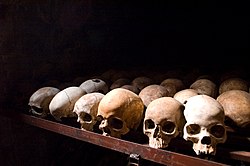
Victims of genocide are targeted not as individuals, but because they comprise members of a national, ethnic, racial, or religious group marked for destruction. They are often portrayed by perpetrators as an existential threat to the nation—scapegoated as fifth columnists, "criminals," or "enemies."77123 Patterns of violence commonly include the selective killing of adult men125126 to eliminate resistance, alongside wide-ranging non-lethal abuses against women and children such as sexual violence, enslavement, and the forcible transfer of children.127125 Many victims also suffer indirect forms of destruction—forced displacement, starvation, deprivation of basic needs, and the razing or theft of homes—along with attacks on culture, identity, language, and heritage. Survivors frequently face lasting trauma, displacement, and the added burden of denial and impunity after the violence ends, even as they seek recognition, justice, and repair. If the victim group of genocide engages in armed resistance, it may be differentially treated by international observers.128129130131 Protracted armed resistance by the intended victims is characteristic of many genocides,132 often used by perpetrators and others to either justify the genocidal actions133 or challenge the charge of genocide.134
Perpetrators
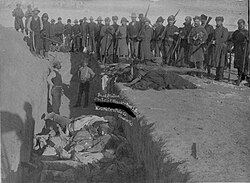
Genocides are usually driven by states136137138 via their agents, such as elites, political parties, bureaucracies, armed forces, and paramilitaries.137139 Existing research blames elites for the decision to commit genocide140 and state structure for the ability to carry it out, including bureaucratic diffusion of responsibility.141 Organizers of genocide usually believe that their actions were justified and regret nothing.142 The military is often the leading perpetrator, as soldiers are already armed, trained to use deadly force, and required to obey orders.143 Another common strategy is for state-sponsored atrocities to be carried out in secrecy by paramilitary groups, offering the benefit of plausible deniability while widening complicity in the atrocities.144145146 Civilians may be the leading agents when the genocide takes place in remote frontier areas.147 The role of society in genocide is not well understood.148
How ordinary people can become involved in extraordinary violence under circumstances of acute conflict remains poorly understood.149150151 The foot soldiers of genocide (as opposed to its organizers) are not demographically or psychologically aberrant.152 People who commit crimes during genocide are rarely true believers in the ideology behind genocide, although they are affected by it to some extent153 alongside other factors such as obedience, diffusion of responsibility, and conformity.154 Other evidence suggests that ideological propaganda is not effective in inducing people to commit genocide155 and that, for some perpetrators, the dehumanization of victims and adoption of nationalist or other ideologies that justify the violence occurs after they begin to perpetrate atrocities,156 often coinciding with escalation.157 Although genocide perpetrators have often been assumed to be male, the role of women in perpetrating genocide—although they were historically excluded from leadership—has also been explored.158 People's behavior changes over the course of events, and someone might choose to kill one genocide victim while saving another.159160161
Methods
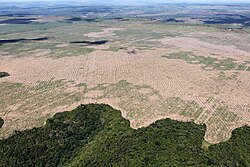
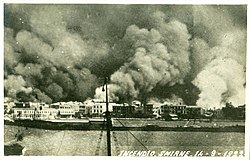
The Genocide Convention recognizes five distinct genocidal acts:
- killing members of the group,
- causing serious bodily or mental harm to members of the group,
- deliberately inflicting on the group conditions of life calculated to bring about its physical destruction in whole or in part,
- imposing measures intended to prevent births within the group, and
- forcibly transferring children of the group to another group.
The UN Commission of Experts that convened on the Bosnian Genocide defined various ethnic cleansing practices — torture, arbitrary arrest, extrajudicial executions, sexual violence, confinement of civilian population, forcible displacement, military attacks or threats of attacks on civilians, and wanton destruction of property— stating that "such acts could also fall within the meaning of the meaning of the Genocide Convention."163164
Men, particularly young adults, are disproportionately targeted for killing before other victims to stem resistance.125126 Although diverse forms of sexual violence—ranging from genocidal rape, forced pregnancy, forced marriage, sexual slavery, mutilation, and forced sterilization—can affect either males or females, women are more likely to face it.127 The combination of the killing of men and sexual violence against women is often intended to disrupt the reproduction of the targeted group.125
The weapons of genocide are varied and flexible, with perpetrators' strategies varying based on the technology available. The invention of deadlier weapons enabled more systematic forms of destruction (for example, using gas chambers in the Holocaust versus relying on harsh desert conditions in the Herero genocide).165 A countervailing tendency is to avoid appearing like the stereotypical genocide by employing more selective violence, such as drone warfare.166
Non-lethal means
Although the popular view conceives of genocide as involving mass killing, according to many definitions, it may occur without victims suffering physical harm.16792 Scholars who focus on the relationship between colonialism and genocide document other means of means of group destruction and devastation: indigenous land theft, forced labor, environmental destruction, apartheid, and other forms of systemic discrimination.168133169 Indirect forms of killing include starvation and the deprivation of other basic needs such as water, clothing, shelter, and medical care.170171
Forced displacement is also a common feature of many genocides, with the victims transported, deported, or expelled.172 People are often killed by the displacement itself, as was the case for many Armenian genocide victims,173 and their homes are razed or stolen.174 Although definitions vary, cultural genocide usually refers to tactics that target a group by means other than attacking its physical, biological existence.168 It encompasses attacks against the victims' language, religion, cultural heritage, political and intellectual leaders, and traditional lifestyle,168174 and is commonly encountered even in cases where it is not the primary means of group destruction.85 Along with the abduction of children from the victimized group, such as residential schools, cultural genocide is particularly common during settler-colonial consolidation.175169176 Perpetrators often deny indigenous groups' existence and identity.133
Reactions
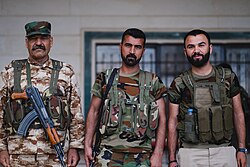
Historically and even after the ratification of the Genocide Convention, genocide was considered a sovereign privilege in which foreign intervention would be inappropriate.179180 More recently, the prevention of genocide has come to be seen as a goal, but this has not translated into effective intervention.179 Although several organizations compile lists of states where genocide is considered likely to occur,181 the accuracy of these predictions is not known, and there is no scholarly consensus over evidence-based genocide prevention strategies.182 Intervention against genocide has often been considered a failure183184 due to most countries' prioritization of business, trade, and diplomatic relationships:185182 as a consequence, "the usual powerful actors continue to use violence against vulnerable populations with impunity".184
The responsibility to protect is a doctrine that emerged around 2000, in the aftermath of several genocides around the world, that seeks to balance state sovereignty with the need for international intervention to prevent genocide.186 However, disagreements in the United Nations Security Council and a lack of political will have hampered its implementation.183 Although military intervention to halt genocide has been credited with reducing violence in some cases, it remains deeply controversial187 and is usually illegal.188 Researcher Gregory H. Stanton found that calling crimes genocide rather than something else, such as ethnic cleansing, increased the chance of effective intervention.189 Almost all genocides are brought to an end either by the military defeat of the perpetrators or the accomplishment of their aims.190
History
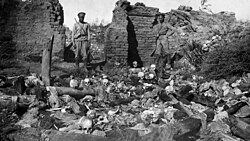
Lemkin applied the concept of genocide to a wide variety of events throughout human history. He and other scholars date the first genocides to prehistoric times.19119212 Before the advent of civilizations consisting of sedentary farmers, humans lived in tribal societies, with intertribal warfare often ending with the obliteration of the defeated tribe, killing of adult males, and integration of women and children into the victorious tribe.193 Ancient sources, like the Hebrew Bible, contain events that have been cited as describing genocide.1941957 The massacre of men and the enslavement or forced assimilation of women and children—often limited to a particular town or city rather than applied to a larger group—is a common feature of ancient warfare as described in written sources.196197 The events that some scholars consider genocide in ancient and medieval times had more pragmatic than ideological motivations.198 As a result, some scholars, such as Mark Levene, argue that genocide is inherently connected to the modern state—thus to the rise of the West in the early modern era and its expansion outside Europe—and earlier conflicts cannot be described as genocide.199200201
Although all imperial rule depends on violence, empires generally seek to preserve and rule the conquered rather than eradicate them.202 Alternatives to genocide might include integration (via enslavement or otherwise) or exile. Although the desire to exploit populations could disincentivize extermination,203 genocide occurred in response to resistance by the conquered.204 Ancient and medieval genocides were often committed by empires.198 Unlike traditional empires, settler colonialism—particularly the settlement of Europeans outside of Europe—is characterized by militarized populations of settlers in remote areas beyond effective state control. Rather than labor or economic surplus, settlers want to acquire land from indigenous people,205 making genocide more likely than with classical colonialism.206 While the lack of law enforcement on the frontier ensured impunity for settler violence, the advance of state authority enabled settlers to consolidate their gains using the legal system.207
The twentieth century has often been referred to as the "century of genocide".7 It was committed on a large scale during both world wars. The prototypical genocide, the Holocaust, involved such large-scale logistics that it reinforced the impression that genocide was the result of civilization drifting off course and required both the "weapons and infrastructure of the modern state and the radical ambitions of the modern man".208 After the horrors of World War II, the United Nations attempted to proscribe genocide via the Genocide Convention.209 Despite the promise of "never again" and the international effort to outlaw genocide, the practice has continued to occur.209210 The Cold War included the perpetration of mass killings by both communist and anti-communist states, although these atrocities usually targeted political and social groups, therefore not meeting the legal definition of genocide.211 The 1990s saw a surge of ethnic violence in the former Yugoslavia and Rwanda that led to a resurgence in interest in genocide.56 In the twenty-first century, new communications technologies have also transformed genocide, with both perpetrators and victims able to communicate instantly across borders and raise transnational support.212213
Effects and aftermath
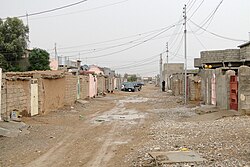
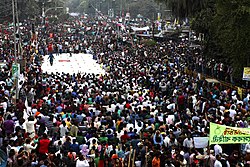
In the aftermath of genocide, many survivors attempt to prosecute perpetrators through the legal system and obtain recognition and reparations.214 Except where the perpetrators were militarily defeated—for example, following the Holocaust and the Rwandan genocide—they usually evade accountability.215216210 Most of the states that have perpetrated genocide and their citizens deny or ignore it,217 reject responsibility for the harms suffered by victims,218 and want to draw a line under the past.219 Even acknowledgements of victims' suffering remain elusive, although such acknowledgements improve relations between perpetrator and victim groups, as well as with third parties.220
Genocide not only affects victim and perpetrator groups, but also those who benefited from or observed it.221 The effects of genocide on societies are under-researched.214 Much of the qualitative research on genocide has focused on the testimonies of victims, survivors, and other eyewitnesses.222 Studies of genocide survivors have examined rates of depression, anxiety, schizophrenia, suicide, post-traumatic stress disorder, and post-traumatic growth. While some have found negative effects, others find no association with genocide survival.223 There are no consistent findings that children of genocide survivors have worse health than comparable individuals.224 Most societies can recover demographically from genocide, but this is dependent on their position early in the demographic transition.225 In the aftermath of genocide, many survivors experience forced displacement from their homes and may face additional challenges due to being labeled as immigration offenders. Success at rebuilding lives in another country is high, despite survivors' limited resources upon arrival.226
Because genocide is often perceived as the "crime of crimes", it grabs attention more effectively than other violations of international law.227 Consequently, victims of atrocities often label their suffering as genocide as an attempt to gain attention to their plight and attract foreign intervention.228 In popular culture, victims of genocide are often endowed with moral superiority while perpetrators are demonized, which can flatten the ethical complexity of real-world conflicts.229 Although remembering genocide is often perceived as a way to develop tolerance and respect for human rights,230 the charge of genocide often leads to increased cohesion among the targeted people—in some cases, it has been incorporated into national identity—and stokes enmity towards the group blamed for the crime, reducing the chance of reconciliation and increasing the risk of future occurrence of genocide.91120 Some genocides are commemorated in memorials or museums.231 Lemkin believed that genocide harmed the entire world because of the loss of cultural outputs from the targeted group.232
References
References
- Moses 2023, p. 19.
- Shaw 2015, Conclusion of Chapter 4.
- Kiernan 2023, p. 6.
- Irvin-Erickson 2023, p. 7.
- Kiernan 2023, p. 2.
- Irvin-Erickson 2023, p. 14.
- Pruitt 2021, p. 2.
- Ochab & Alton 2022, pp. 19–20.
- Bachman 2022, p. 48.
- Shaw 2015, p. 39.
- Irvin-Erickson 2023, p. 15.
- Irvin-Erickson 2023, p. 11.
- Irvin-Erickson 2023, pp. 7–8.
- Yeomans, Rory (4 July 2024). "Croatia Must Stop Downplaying the Genocidal Crimes of the Ustasa". Balkan Insight. Retrieved 15 September 2025.
- Irvin-Erickson 2023, p. 20.
- Irvin-Erickson 2023, pp. 20–21.
- Bachman 2021b, p. 1021.
- Weiss-Wendt 2017, pp. 267–268.
- Curthoys & Docker 2008, pp. 13–14.
- Irvin-Erickson 2023, p. 22.
- Bachman 2021b, p. 1020.
- Weiss-Wendt 2017, p. 4.
- Bachman 2022, p. 53.
- Irvin-Erickson 2023, p. 8.
- Weiss-Wendt 2017, pp. 267–268, 283.
- Bachman 2022, p. 62.
- Weiss-Wendt 2017, p. 3.
- Weiss-Wendt 2017, p. 158.
- Schabas 2010, pp. 136, 138.
- Ozoráková 2022, pp. 292–295.
- Irvin-Erickson 2023, p. 13.
- Schabas 2010, p. 136.
- Lemos, Taylor & Kiernan 2023, p. 35.
- Jones 2023, pp. 49–50.
- Kourtis, Dimitrios A. (February 2025). "A Realistic Genocidal Intent". Genocide and the Right to Exist. pp. 525–594. doi:10.1007/978-94-6265-659-8_10. ISBN 978-94-6265-658-1.
- Kiernan, Madley & Taylor 2023, pp. 4, 9.
- Ochab & Alton 2022, pp. 28, 30.
- Bachman 2022, p. 57.
- Bachman 2022, p. 47.
- Kiernan, Madley & Taylor 2023, p. 2.
- Ochab & Alton 2022, p. 32.
- Schabas 2010, p. 123.
- Ozoráková 2022, p. 281.
- Ochab & Alton 2022, pp. 23, 31–32.
- Weiss-Wendt 2017, p. 9.
- Weiss-Wendt 2017, p. 266.
- Stone 2013, p. 150.
- Gzoyan, Edita; Hochmann, Thomas; Meyroyan, Edgar (25 October 2025). "Beyond the Defective Gas Chamber: Rediscovering the Crime of Attempted Genocide". International Criminal Law Review. 25 (6): 1071–1100. doi:10.1163/15718123-bja10248. ISSN 1567-536X.
- Pruitt 2021, p. 131.
- Irvin-Erickson 2016, p. 231.
- Pruitt 2021, pp. 131, 141, 143.
- Pruitt 2021, pp. 131, 143–145.
- Killander, Magnus (15 August 2025). "Is Israel committing genocide in Gaza? International court will take years to decide, but states have a duty to act now". The Conversation. Retrieved 8 November 2025.
- Kiernan et al. 2023, pp. 13, 17.
- Jones 2023, p. 23.
- Kiernan et al. 2023, pp. 17–18.
- Kiernan et al. 2023, pp. 23–24.
- Kiernan, Madley & Taylor 2023, p. 6–10.
- Kiernan et al. 2023, p. 9.
- Bachman & Ruiz 2024, p. viii.
- Jones 2023, p. 24.
- Moses 2021, pp. 443–444.
- Shaw 2015, p. 38.
- Williams 2020, p. 8.
- Gurmendi Dunkelberg 2025.
- Shaw 2014, p. 4.
- Shaw 2015, Sociologists redefine genocide.
- Mulaj 2021, p. 15.
- Shaw 2014, pp. 6–7.
- Shaw 2014, p. 7.
- Kiernan, Madley & Taylor 2023, pp. 11–12.
- Shaw 2014, p. 5.
- Bachman 2022, pp. 56–57.
- Bachman 2021a, p. 375.
- Kiernan et al. 2023, pp. 3–4.
- Kiernan et al. 2023, p. 3.
- Bachman 2022, pp. 45–46, 48–49, 53.
- Moses 2023, pp. 22–23.
- Rajagopal, Balakrishnan (9 March 2024). "Domicide: The Mass Destruction of Homes Should Be a Crime Against Humanity". MIT Faculty Newsletter. Retrieved 8 November 2025.
- Moses 2023, p. 25.
- Graziosi & Sysyn 2022, p. 15.
- Shaw 2015, Chapter 5.
- Shaw 2015, Chapter 6.
- Lemos, Taylor & Kiernan 2023, p. 33.
- Jones 2023, pp. 42–43.
- Lemos, Taylor & Kiernan 2023, pp. 31–32.
- Lang 2005, pp. 5–17.
- Lemos, Taylor & Kiernan 2023, p. 32.
- Lemos, Taylor & Kiernan 2023, pp. 45–46.
- Mulaj 2021, p. 11.
- Sands 2017, p. 364.
- Jones 2023, p. 11.
- Moses 2023, p. 16.
- Moses 2021, p. 1.
- Bachman 2022, p. 118.
- Gzoyan, Edita; Hochmann, Thomas; Meyroyan, Edgar (25 October 2025). "Beyond the Defective Gas Chamber: Rediscovering the Crime of Attempted Genocide". International Criminal Law Review. 25 (6): 1071–1100. doi:10.1163/15718123-bja10248. ISSN 1567-536X.
- Ihrig 2016, pp. 162–163.
- Moses 2023, p. 32.
- Maynard 2022, p. 97.
- Kathman & Wood 2011, pp. 737–738.
- Moyd 2022, p. 233.
- Moyd 2022, pp. 236–239.
- Pruitt 2021, p. 60.
- Lemos, Taylor & Kiernan 2023, p. 49.
- Pruitt 2021, pp. 56–60.
- Nyseth Nzitatira 2022, pp. 52–53.
- Jones 2023, pp. 48–49.
- Maynard 2022, pp. 102–103.
- Stone 2013, p. 146.
- Moyd 2022, p. 245.
- Maynard 2022, p. 308.
- Moses 2021, p. 329.
- Pruitt 2021, pp. 62–63.
- Maynard 2022, p. 307.
- Maynard 2022, p. 95.
- Maynard 2022, pp. 96–97.
- Maynard 2022, pp. 98–100, 102.
- Maynard 2022, p. 103.
- Maynard 2022, p. 105.
- Stone & Jinks 2022, p. 258.
- Moses 2023, pp. 16–17, 27.
- Nyseth Nzitatira 2022, p. 52.
- Maynard 2022, pp. 108–109.
- Maynard 2022, p. 108.
- Basso 2024, p. 33.
- von Joeden-Forgey 2022, p. 118.
- von Joeden-Forgey 2022, pp. 116–119.
- Semerdjian, Elyse (17 July 2024). "Gazafication and Genocide by Attrition in Artsakh/Nagorno Karabakh and the Occupied Palestinian Territories". Journal of Genocide Research: 1–22. doi:10.1080/14623528.2024.2377871. ISSN 1462-3528.
- Moses 2021, pp. 462–469.
- Theriault, Henry (6 November 2020). "An Open Letter to Members of the International Association of Genocide Scholars". Horizon Weekly. Retrieved 29 January 2026.
As anyone in genocide studies circles knows, the greatest sin for a victim group is to actually resist destruction.
- Theriault, Henry C. "The Drėlingas case, the limits of law, and new avenues for repair of and resistance to genocide." Two Years after Drėlingas Case: Changes and Perspectives for the Future 10-09-2021: Conference Proceedings. ISBN 9786094880469. 2022.
- Pruitt 2021, pp. 9–10.
- Watenpaugh 2022, p. 37.
- Maghakyan, Simon (22 October 2025). "Permanent Security or Regime Security? The Erasure of Nakhichevan's Armenian Past". Journal of Genocide Research: 1–12. doi:10.1080/14623528.2025.2570583. ISSN 1462-3528.
Edward J. Erickson...argues that the Ottoman regime's assessment of Armenians as a military threat means that there was no genocide, effectively asserting that imperfect victimhood voids genocide. Yet, as A. Dirk Moses...writes, "Just because the Ottoman fear of partition was genuine, or based in an accurate determination, does not mean that its solution to prevent it cannot be criminal.
- Campbell, Lucy (26 September 2025). "Hegseth says Wounded Knee massacre soldiers will keep Medals of Honor". The Guardian. Retrieved 8 November 2025.
- Lemos, Taylor & Kiernan 2023, pp. 36–37.
- Weiss-Wendt 2022, p. 189.
- Pruitt 2021, p. 53.
- Pruitt 2021, pp. 54–54.
- Pruitt 2021, pp. 53–54.
- Pruitt 2021, p. 92–93.
- Weiss-Wendt 2022, p. 186.
- Pruitt 2021, p. 90.
- Anderson & Jessee 2020, p. 12.
- Anderton 2023, p. 146.
- Weiss-Wendt 2022, pp. 179–180, 189.
- Häussler, Stucki & Veracini 2022, pp. 215–216.
- Pruitt 2021, pp. 55–56.
- Anderson & Jessee 2020, p. 3.
- Rechtman 2021, p. 174.
- Pruitt 2021, pp. 54–55.
- Williams 2020, pp. 1–2, 211; Anderson & Jessee 2020, pp. 8–9; Rechtman 2021, p. 190; Maynard 2022, p. 319
- Maynard 2022, p. 152.
- McDoom 2020, p. 124.
- Luft 2020, p. 4.
- McDoom 2020, pp. 124–125.
- Luft 2020, p. 5.
- Kiernan et al. 2023, p. 10.
- Anderton 2023, p. 143.
- Rechtman 2021, p. 177.
- Luft 2020, p. 2.
- de Hemptinne, Jérôme (2 May 2025). "The Destruction of Indigenous Communities' Landscapes, an Aggravated Form of Ecocide?". EJIL: Talk!. Retrieved 8 November 2025.
- "Final Report of the Commission of Experts Established Pursuant to United Nations Security Council Resolution 780 (1992)" (PDF). United Nations Security Council. 27 May 1994. p. 33. Paragraph 129
- "Final Report of the Commission of Experts Established Pursuant to United Nations Security Council Resolution 780 (1992)" (PDF). United Nations Security Council. 27 May 1994. p. 33. Archived from the original on 14 May 2011. Retrieved 25 May 2020.
Upon examination of reported information, specific studies and investigations, the Commission confirms its earlier view that 'ethnic cleansing' is a purposeful policy designed by one ethnic or religious group to remove by violent and terror-inspiring means the civilian population of another ethnic or religious group from certain geographic areas. To a large extent, it is carried out in the name of misguided nationalism, historic grievances and a powerful driving sense of revenge. This purpose appears to be the occupation of territory to the exclusion of the purged group or groups. This policy and the practices of warring factions are described separately in the following paragraphs.
Paragraph 130. - Meiches 2024, pp. 136, 142.
- Meiches 2024, pp. 145–146.
- Watenpaugh 2022, p. 18.
- Tiemessen 2023, p. 15.
- Adhikari 2023, p. 43.
- Basso 2024, p. 10.
- Sysyn & Theriault 2017, p. 1.
- Basso 2024, p. 20.
- Basso 2024, p. 21.
- Basso 2024, "Cultural Destruction".
- Häussler, Stucki & Veracini 2022, pp. 213–214.
- Watenpaugh 2022, p. 51.
- Hermann, Rainer (30 August 2014). "Die Angst der Yeziden im Sindschar-Gebirge". Frankfurter Allgemeine Zeitung (in German). Retrieved 18 February 2026.
- Paraszczuk, Joanna (11 June 2015). "Yazidi militias fight IS in Iraq, amid Kurdish rivalries". Radio Free Europe/Radio Liberty. Retrieved 18 February 2026.
- Pruitt 2021, p. 130.
- Irvin-Erickson 2016, pp. 1, 36–37.
- Nyseth Nzitatira 2022, pp. 67–68.
- Nyseth Nzitatira 2022, p. 68.
- Mulaj 2021, p. 16.
- Moyd 2022, p. 250.
- Ochab & Alton 2022, pp. 3, 41.
- Bachman 2022, p. 119.
- Mulaj 2021, p. 17.
- Moses 2023, p. 21.
- Ochab & Alton 2022, p. 43.
- Bellamy & McLoughlin 2022, p. 303.
- Naimark 2017, p. vii.
- Lemos, Taylor & Kiernan 2023, p. 31.
- Häussler, Stucki & Veracini 2022, pp. 203–204.
- Naimark 2017, pp. 7–9.
- Lemos, Taylor & Kiernan 2023, pp. 50–51.
- Lemos, Taylor & Kiernan 2023, pp. 39, 50.
- Jones 2023, The Origins of Genocide.
- Lemos, Taylor & Kiernan 2023, p. 43.
- Weiss-Wendt 2022, p. 170.
- Jones 2023, p. 84.
- Spencer 2025, p. 254.
- Häussler, Stucki & Veracini 2022, p. 219.
- Häussler, Stucki & Veracini 2022, p. 211.
- Häussler, Stucki & Veracini 2022, p. 220.
- Häussler, Stucki & Veracini 2022, pp. 212–213.
- Häussler, Stucki & Veracini 2022, pp. 218–219.
- Adhikari 2023, pp. 45–46.
- Kiernan et al. 2023, p. 7.
- Ochab & Alton 2022, pp. 1–2.
- Spencer 2025, p. 253.
- Naimark 2017, pp. 86, 104, 143.
- Williams 2024, p. 115.
- Shaw 2025.
- Mulaj 2021, p. 2.
- Mulaj 2021, p. 24.
- Vollhardt & Twali 2019, pp. 275–276.
- Vollhardt & Twali 2019, pp. 249, 255, 275.
- Mulaj 2021, pp. 2, 16.
- Vollhardt & Twali 2019, p. 260.
- Vollhardt & Twali 2019, p. 254.
- Spencer 2025, pp. 257–258.
- Anderson & Jessee 2020, p. 7.
- Lindert et al. 2019, p. 2.
- Lindert et al. 2017, p. 246.
- Kugler 2016, pp. 119–120.
- Asquith 2019, pp. 2, 4.
- Moses 2023, p. 22.
- Moses 2023, p. 23.
- Williams & Jessee 2024.
- Barsalou & Baxter 2007.
- Stone 2013, p. 151.
- Pruitt 2021, p. 7.
Bibliography
Books
- Asquith, Linda (2019). Rebuilding Lives After Genocide: Migration, Adaptation and Acculturation. Springer. ISBN 978-3-030-14074-8.
- Bachman, Jeffrey S. (2022). The Politics of Genocide: From the Genocide Convention to the Responsibility to Protect. Rutgers University Press. ISBN 978-1-9788-2147-7.
- Basso, Andrew R. (2024). Destroy Them Gradually: Displacement as Atrocity. Rutgers University Press. ISBN 978-1-9788-3130-8.
- Ihrig, Stefan (2016). Justifying Genocide: Germany and the Armenians from Bismarck to Hitler. Harvard University Press. ISBN 978-0-674-50479-0.
- Irvin-Erickson, Douglas (2016). Raphael Lemkin and the Concept of Genocide. University of Pennsylvania Press. ISBN 978-0-8122-9341-8.
- Jones, Adam (2023). Genocide: A Comprehensive Introduction (4th ed.). Taylor & Francis. ISBN 978-1-000-95870-6.
- Maynard, Jonathan Leader (2022). Ideology and Mass Killing: The Radicalized Security Politics of Genocides and Deadly Atrocities. Oxford University Press. ISBN 978-0-19-108266-5.
- Moses, A. Dirk (2021). The Problems of Genocide: Permanent Security and the Language of Transgression. Cambridge University Press. ISBN 978-1-009-02832-5.
- Naimark, Norman M. (2017). Genocide: A World History. Oxford University Press. ISBN 978-0-19-976527-0.
- Ochab, Ewelina U.; Alton, David (2022). State Responses to Crimes of Genocide: What Went Wrong and How to Change It. Springer International Publishing. ISBN 978-3-030-99162-3.
- Pruitt, William R. (2021). An Introduction to the Criminology of Genocide. Springer Nature. ISBN 978-3-030-65211-1.
- Rechtman, Richard (2021). Living in Death: Genocide and Its Functionaries. Fordham University Press. ISBN 978-0-8232-9788-7.
- Sands, Philippe (2017). East West Street: On the Origins of Genocide and Crimes Against Humanity. Weidenfeld & Nicolson. ISBN 978-1-4746-0191-7.
- Shaw, Martin (2014). Genocide and International Relations: Changing Patterns in the Transitions of the Late Modern World. Cambridge University Press. ISBN 978-0-521-11013-6.
- Shaw, Martin (2015). What is Genocide?. John Wiley & Sons. ISBN 978-0-7456-8710-0.
- Weiss-Wendt, Anton (2017). The Soviet Union and the Gutting of the UN Genocide Convention. University of Wisconsin Press. ISBN 978-0-299-31290-9.
- Williams, Timothy (2020). The Complexity of Evil: Perpetration and Genocide. Rutgers University Press. hdl:20.500.12657/52460. ISBN 978-1-9788-1431-8.
Collections
- Anderson, Kjell; Jessee, Erin (2020). "Introduction". Researching Perpetrators of Genocide. University of Wisconsin Press. ISBN 978-0-299-32970-9.
- Bachman, Jeffrey (2021b). "Genocide and Imperialism". The Palgrave Encyclopedia of Imperialism and Anti-Imperialism. Springer International Publishing. pp. 1012–1022. ISBN 978-3-030-29901-9.
- Bachman, Jeffrey S.; Ruiz, Esther Brito (2024). "Editors' Preface". A Modern History of Forgotten Genocides and Mass Atrocities. Taylor & Francis. ISBN 978-1-040-22493-9.
- Bachman, Jeffrey S., ed. (2024). Genocide Studies: Pathways Ahead. Rutgers University Press. ISBN 978-1-9788-3232-9.
- Williams, Timothy. "Genocide in the Digital Era". In Bachman (2024), pp. 113–132.
- Meiches, Benjamin. "Weapons, Agency, and Genocide". In Bachman (2024), pp. 135–157.
- Bloxham, Donald; Moses, A. Dirk, eds. (2010). The Oxford Handbook of Genocide Studies. Oxford University Press. ISBN 978-0-19-161361-6.
- Schabas, William A. "The Law and Genocide". In Bloxham & Moses (2010), pp. 123–141.
- Bloxham, Donald; Moses, A. Dirk, eds. (2022). Genocide: Key Themes. Oxford University Press. ISBN 978-0-19-286526-7. Retrieved 19 May 2025.
- Nyseth Nzitatira, Hollie. "Predicting genocide". In Bloxham & Moses (2022), pp. 45–74.
- von Joeden-Forgey, Elisa. "Gender and genocide". In Bloxham & Moses (2022), pp. 100–131.
- Weiss-Wendt, Anton. "The state and genocide". In Bloxham & Moses (2022), pp. 161–190.
- Häussler, Matthias; Stucki, Andreas; Veracini, Lorenzo. "Genocide and Empire". In Bloxham & Moses (2022), pp. 191–221.
- Moyd, Michelle. "Genocide and War". In Bloxham & Moses (2022), pp. 222–252.
- Stone, Dan; Jinks, Rebecca. "Genocide and memory". In Bloxham & Moses (2022), pp. 253–276.
- Bellamy, Alex J.; McLoughlin, Stephen. "Genocide and Military Intervention". In Bloxham & Moses (2022).
- Graziosi, Andrea; Sysyn, Frank E. (2022). "Introduction: Genocide and Mass Categorical Violence". In Graziosi, Andrea; Sysyn, Frank E. (eds.). Genocide: The Power and Problems of a Concept. McGill-Queen's University Press. pp. 3–21. ISBN 978-0-2280-0951-1.
- Kiernan, Ben; Lemos, T. M.; Taylor, Tristan S., eds. (2023). The Cambridge World History of Genocide. Vol. I: Genocide in the Ancient, Medieval and Premodern Worlds. Cambridge University Press. ISBN 978-1-108-64034-3.
- Kiernan, Ben. "General Editor's Introduction to the Series: Genocide: Its Causes, Components, Connections and Continuing Challenges". In Kiernan, Lemos & Taylor (2023), pp. 1–30.
- Lemos, T. M.; Taylor, Tristan S.; Kiernan, Ben. "Introduction to Volume I". In Kiernan, Lemos & Taylor (2023), pp. 31–56.
- Kiernan, Ben; Madley, Benjamin; Taylor, Rebe (2023). "Introduction to Volume II". In Blackhawk, Ned; Kiernan, Ben; Madley, Benjamin; Taylor, Rebe (eds.). The Cambridge World History of Genocide. Vol. II: Genocide in the Indigenous, Early Modern and Imperial Worlds, from c.1535 to World War One. Cambridge University Press. pp. 1–20. doi:10.1017/9781108765480. ISBN 978-1-108-76548-0.
- Kiernan, Ben; Lower, Wendy; Naimark, Norman; Straus, Scott (2023). "Introduction to Volume III". The Cambridge World History of Genocide. Vol. III: Genocide in the Contemporary Era, 1914–2020. Cambridge University Press. pp. 1–28. ISBN 978-1-108-76711-8.
- Kugler, Tadeusz (2016). "The Demography of Genocide". Economic Aspects of Genocides, Other Mass Atrocities, and Their Preventions. Oxford University Press. pp. 102–124. ISBN 978-0-19-937829-6.
- Lang, Berel (2005). "The Evil in Genocide". Genocide and Human Rights: A Philosophical Guide. Palgrave Macmillan UK. pp. 5–17. ISBN 978-0-230-55483-2.
- Moses, A. Dirk (2023). "Genocide as a Category Mistake: Permanent Security and Mass Violence Against Civilians". Genocidal Violence: Concepts, Forms, Impact. De Gruyter. pp. 15–38. doi:10.1515/9783110781328-002. ISBN 978-3-11-078132-8.
- Mulaj, Klejda (2021). "Introduction: Postgenocide: Living with Permutations of Genocide Harms". Postgenocide: Interdisciplinary Reflections on the Effects of Genocide. Oxford University Press. ISBN 978-0-19-264825-9.
- Simon, David J.; Kahn, Leora, eds. (2023). Handbook of Genocide Studies. Edward Elgar Publishing. ISBN 978-1-80037-934-3.
- Irvin-Erickson, Douglas. "The history of Raphaël Lemkin and the UN Genocide Convention". In Simon & Kahn (2023), pp. 7–26.
- Adhikari, Mohamed. "Destroying to replace: reflections on motive forces behind civilian-driven violence in settler genocides of Indigenous peoples". In Simon & Kahn (2023), pp. 42–53.
- Anderton, Charles H. "Genocide prevention: perspectives from psychological and social economic choice models". In Simon & Kahn (2023), pp. 142–156.
- Stone, Dan (2008). The Historiography of Genocide. Palgrave Macmillan. ISBN 978-0-230-29778-4.
- Curthoys, Ann; Docker, John. "Defining Genocide". In Stone (2008), pp. 9–41.
- Stone, Dan (2013). "Genocide and Memory". The Holocaust, Fascism and Memory: Essays in the History of Ideas. Palgrave Macmillan UK. pp. 143–156. ISBN 978-1-137-02953-9.
- Tiemessen, Alana (2023). "Cultural Genocide in Law and Politics". Oxford Research Encyclopedia of International Studies. Oxford University Press. ISBN 978-0-19-084662-6.
- Üngör, Uğur Ümit, ed. (2025). Genocide: New Perspectives on its Causes, Courses and Consequences. Taylor & Francis. doi:10.5117/9789089645241. ISBN 978-90-8964-524-1.
- Spencer, Philip. "Epilogue". In Üngör (2025), pp. 253-258.
- Vollhardt, Johanna Ray; Twali, Michelle Sinayobye (2019). "The Aftermath of Genocide: Divergent Social Psychological Processes Among Victim and Perpetrator Groups". Confronting Humanity at its Worst. Oxford University Press. ISBN 978-0-19-068594-2.
Journals
- Bachman, Jeffrey S. (2021a). "Situating Contributions from Underrepresented Groups and Geographies within the Field of Genocide Studies". International Studies Perspectives. 22 (3): 361–382. doi:10.1093/isp/ekaa011.
- Barsalou, Judy; Baxter, Victoria (January 2007). "The Urge to Remember: The Role of Memorials in Social Reconstruction and Transitional Justice" (PDF). Stabilization and Reconstruction. Series 5. Archived from the original (PDF) on 9 February 2015.
- Gurmendi Dunkelberg, Alonso (22 January 2025). "How to Hide a Genocide: Modern/Colonial International Law and the Construction of Impunity". Journal of Genocide Research (Forum: Israel-Palestine: Atrocity Crimes and the Crisis of Holocaust and Genocide Studies): 1–24. doi:10.1080/14623528.2025.2454739.
- Kathman, Jacob D.; Wood, Reed M. (2011). "Managing Threat, Cost, and Incentive to Kill: The Short- and Long-Term Effects of Intervention in Mass Killings". Journal of Conflict Resolution. 55 (5): 735–760. doi:10.1177/0022002711408006.
- Lindert, Jutta; Kawachi, Ichiro; Knobler, Haim Y.; Abramowitz, Moshe Z.; Galea, Sandro; Roberts, Bayard; Mollica, Richard; McKee, Martin (2019). "The long-term health consequences of genocide: developing GESQUQ - a genocide studies checklist". Conflict and Health. 13 (1): 14. doi:10.1186/s13031-019-0198-9. ISSN 1752-1505. PMC 6460659. PMID 31011364.
- Lindert, Jutta; Knobler, Haim Y.; Kawachi, Ichiro; Bain, Paul A.; Abramowitz, Moshe Z.; McKee, Charlotte; Reinharz, Shula; McKee, Martin (2017). "Psychopathology of children of genocide survivors: a systematic review on the impact of genocide on their children's psychopathology from five countries". International Journal of Epidemiology: 246–257.
- Luft, Aliza (2020). "Three Stories and Three Questions about Participation in Genocide". Journal of Perpetrator Research. 3 (1): 196–. doi:10.21039/jpr.3.1.37. ISSN 2514-7897.
- McDoom, Omar Shahabudin (2020). "Radicalization as cause and consequence of violence in genocides and mass killings". Violence. 1 (1): 123–143. doi:10.1177/2633002420904267. ISSN 2633-0024.
- Ozoráková, Lilla (2022). "The Road to Finding a Definition for the Crime of Genocide – the Importance of the Genocide Convention". The Law & Practice of International Courts and Tribunals. 21 (2): 278–301. doi:10.1163/15718034-12341475. ISSN 1569-1853.
- Shaw, Martin (2025). "The Genocide that Changed the World". Journal of Genocide Research: 1–15. doi:10.1080/14623528.2025.2556575. hdl:10230/71505.
- Sysyn, Frank E.; Theriault, Henry C. (2017). "Editors' Introduction: Starvation and Genocide". Genocide Studies International. 11 (1): 1–7. doi:10.3138/gsi.11.1.00.
- Watenpaugh, Keith David (2022). "Kill the Armenian/Indian; Save the Turk/Man: Carceral Humanitarianism, the Transfer of Children and a Comparative History of Indigenous Genocide". Journal of the Society for Armenian Studies. 29 (1): 35–67. doi:10.1163/26670038-12342771.
- Williams, Timothy; Jessee, Erin (2024). "Perpetrators as Victims? Inclusivity and Proximity in Post-Genocide Cambodia and Rwanda". Journal of Genocide Research: 1–24. doi:10.1080/14623528.2024.2411879.