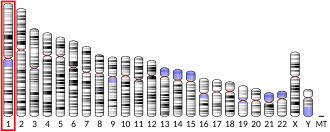
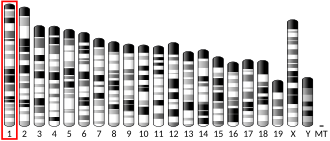
Flavin-containing monooxygenase 2 (FMO2), also known as dimethylaniline monooxygenase [N-oxide-forming] 2, is a mammalian enzyme that in humans is encoded by the FMO2 gene.567 The gene is found in a cluster with the FMO1, FMO3, and FMO4 genes on chromosome 1.7
FMO2 is a member of the family of flavin-containing monooxygenases, NADPH-dependent enzymes that catalyze the oxidation of many drugs and xenobiotics. It catalyzes the N-oxidation of some primary alkylamines through an N-hydroxylamine intermediate.7
In humans, FMO2 is expressed in lung tissue.8 The most common isoform, FMO2*2A, contains a premature stop codon, leading to a truncated protein with no catalytic activity that is probably rapidly degraded.7 The other isoform, FMO2*1, present in sub-Saharan Africans (up to 50%), African-Americans (26%) and Hispanics (2–7%), is functional.89 Its substrates include thioether-containing pesticides, the anti-tuberculosis drug ethionamide, as well as α-naphthylthiourea and other thioureas.9
References
References
- GRCh38: Ensembl release 89: ENSG00000094963 – Ensembl, May 2017
- GRCm38: Ensembl release 89: ENSMUSG00000040170 – Ensembl, May 2017
- "Human PubMed Reference:". National Center for Biotechnology Information, U.S. National Library of Medicine.
- "Mouse PubMed Reference:". National Center for Biotechnology Information, U.S. National Library of Medicine.
- Dolphin CT, Shephard EA, Povey S, Smith RL, Phillips IR (Nov 1992). "Cloning, primary sequence and chromosomal localization of human FMO2, a new member of the flavin-containing mono-oxygenase family". The Biochemical Journal. 287. ( Pt 1) (Pt 1): 261–267. doi:10.1042/bj2870261. PMC 1133153. PMID 1417778.
- Dolphin CT, Beckett DJ, Janmohamed A, Cullingford TE, Smith RL, Shephard EA, et al. (Dec 1998). "The flavin-containing monooxygenase 2 gene (FMO2) of humans, but not of other primates, encodes a truncated, nonfunctional protein". The Journal of Biological Chemistry. 273 (46): 30599–30607. doi:10.1074/jbc.273.46.30599. PMID 9804831.
- "Entrez Gene: FMO2 flavin containing monooxygenase 2 (non-functional)".
- Online Mendelian Inheritance in Man (OMIM): 603955
- Veeramah KR, Thomas MG, Weale ME, Zeitlyn D, Tarekegn A, Bekele E, et al. (October 2008). "The potentially deleterious functional variant flavin-containing monooxygenase 2*1 is at high frequency throughout sub-Saharan Africa". Pharmacogenetics and Genomics. 18 (10): 877–886. doi:10.1097/fpc.0b013e3283097311. PMC 2666332. PMID 18794725.
Further reading
Further reading
- Hines RN, Cashman JR, Philpot RM, Williams DE, Ziegler DM (March 1994). "The mammalian flavin-containing monooxygenases: molecular characterization and regulation of expression". Toxicology and Applied Pharmacology. 125 (1): 1–6. doi:10.1006/taap.1994.1042. PMID 8128486.
- Lomri N, Gu Q, Cashman JR (1992). "Molecular cloning of the flavin-containing monooxygenase (form II) cDNA from adult human liver". Proceedings of the National Academy of Sciences of the United States of America. 89 (5): 1685–1689. Bibcode:1992PNAS...89.1685L. doi:10.1073/pnas.89.5.1685. PMC 48517. PMID 1542660.
- Phillips IR, Dolphin CT, Clair P, Hadley MR, Hutt AJ, McCombie RR, et al. (April 1995). "The molecular biology of the flavin-containing monooxygenases of man". Chemico-Biological Interactions. 96 (1): 17–32. Bibcode:1995CBI....96...17P. doi:10.1016/0009-2797(94)03580-2. PMID 7720101.
- Lawton MP, Cashman JR, Cresteil T, Dolphin CT, Elfarra AA, Hines RN, et al. (January 1994). "A nomenclature for the mammalian flavin-containing monooxygenase gene family based on amino acid sequence identities". Archives of Biochemistry and Biophysics. 308 (1): 254–257. doi:10.1006/abbi.1994.1035. PMID 8311461.
- McCombie RR, Dolphin CT, Povey S, Phillips IR, Shephard EA (June 1996). "Localization of human flavin-containing monooxygenase genes FMO2 and FMO5 to chromosome 1q". Genomics. 34 (3): 426–429. doi:10.1006/geno.1996.0308. PMID 8786146.
- Bonaldo MF, Lennon G, Soares MB (1997). "Normalization and subtraction: two approaches to facilitate gene discovery". Genome Research. 6 (9): 791–806. doi:10.1101/gr.6.9.791. PMID 8889548.
- Whetstine JR, Yueh MF, McCarver DG, Williams DE, Park CS, Kang JH, et al. (November 2000). "Ethnic differences in human flavin-containing monooxygenase 2 (FMO2) polymorphisms: detection of expressed protein in African-Americans". Toxicology and Applied Pharmacology. 168 (3): 216–224. doi:10.1006/taap.2000.9050. PMID 11042094.
- Krueger SK, Martin SR, Yueh MF, Pereira CB, Williams DE (January 2002). "Identification of active flavin-containing monooxygenase isoform 2 in human lung and characterization of expressed protein". Drug Metabolism and Disposition. 30 (1): 34–41. doi:10.1124/dmd.30.1.34. PMID 11744609. S2CID 9151632.
- Furnes B, Feng J, Sommer SS, Schlenk D (2003). "Identification of novel variants of the flavin-containing monooxygenase gene family in African Americans". Drug Metabolism and Disposition. 31 (2): 187–193. doi:10.1124/dmd.31.2.187. PMID 12527699. S2CID 6619389.
- Krueger SK, Siddens LK, Henderson MC, Andreasen EA, Tanguay RL, Pereira CB, et al. (April 2005). "Haplotype and functional analysis of four flavin-containing monooxygenase isoform 2 (FMO2) polymorphisms in Hispanics". Pharmacogenetics and Genomics. 15 (4): 245–256. doi:10.1097/01213011-200504000-00008. PMC 1351039. PMID 15864117.