Cryptic protein, also cryptic family member 1 is a protein that in humans is encoded by the CFC1 gene.5
6
Function
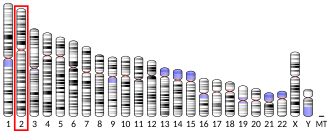
CFC1 is located on chromosome 2 and encodes a member of the epidermal growth factor (EGF)- Cripto, Frl-1, and Cryptic (CFC) family, which are involved in signalling during embryonic development. Proteins in this family share a variant EGF-like motif, a conserved cysteine-rich domain, and a C-terminal hydrophobic region. The protein encoded by this gene is necessary for patterning the left-right embryonic axis. Mutations in this gene are associated with defects in organ development, including autosomal visceral heterotaxy and congenital heart disease. Alternatively spliced transcript variants encoding multiple isoforms have been observed for this gene.
References
References
Further reading
Further reading
- Goldmuntz E, Bamford R, Karkera JD, dela Cruz J, Roessler E, Muenke M (2002). "CFC1 mutations in patients with transposition of the great arteries and double-outlet right ventricle". Am. J. Hum. Genet. 70 (3): 776–80. doi:10.1086/339079. PMC 384955. PMID 11799476.
- Ozcelik C, Bit-Avragim N, Panek A, Gaio U, Geier C, Lange PE, Dietz R, Posch MG, Perrot A, Stiller B (2006). "Mutations in the EGF-CFC gene cryptic are an infrequent cause of congenital heart disease". Pediatr Cardiol. 27 (6): 695–8. doi:10.1007/s00246-006-1082-0. PMID 17072672. S2CID 19526943.
- Selamet Tierney ES, Marans Z, Rutkin MB, Chung WK (2007). "Variants of the CFC1 gene in patients with laterality defects associated with congenital cardiac disease". Cardiol Young. 17 (3): 268–74. doi:10.1017/S1047951107000455. PMID 17445335. S2CID 22139149.
- Davit-Spraul A, Baussan C, Hermeziu B, Bernard O, Jacquemin E (2008). "CFC1 gene involvement in biliary atresia with polysplenia syndrome". J. Pediatr. Gastroenterol. Nutr. 46 (1): 111–2. doi:10.1097/01.mpg.0000304465.60788.f4. PMID 18162845. S2CID 12993312.
- Watanabe K, Nagaoka T, Strizzi L, Mancino M, Gonzales M, Bianco C, Salomon DS (2008). "Characterization of the glycosylphosphatidylinositol-anchor signal sequence of human Cryptic with a hydrophilic extension". Biochim. Biophys. Acta. 1778 (12): 2671–81. doi:10.1016/j.bbamem.2008.09.011. PMC 3385650. PMID 18930707.
- Wang B, Wang J, Liu S, Han X, Xie X, Tao Y, Yan J, Ma X (2011). "CFC1 mutations in Chinese children with congenital heart disease". Int. J. Cardiol. 146 (1): 86–8. doi:10.1016/j.ijcard.2009.07.034. PMID 19853937.
- Wang B, Wang J, Liu S, Han X, Xie X, Tao Y, Yan J, Ma X (2011). "CFC1 mutations in Chinese children with congenital heart disease". Int. J. Cardiol. 146 (1): 86–8. doi:10.1016/j.ijcard.2009.07.034. PMID 19853937.
- Jugessur A, Shi M, Gjessing HK, Lie RT, Wilcox AJ, Weinberg CR, Christensen K, Boyles AL, Daack-Hirsch S, Nguyen TT, Christiansen L, Lidral AC, Murray JC (2010). "Maternal genes and facial clefts in offspring: a comprehensive search for genetic associations in two population-based cleft studies from Scandinavia". PLOS ONE. 5 (7) e11493. Bibcode:2010PLoSO...511493J. doi:10.1371/journal.pone.0011493. PMC 2901336. PMID 20634891.
- Cao R, Long F, Wang L, Xu Y, Guo Y, Li F, Chen S, Sun K, Xu R (2015). "Duplication and deletion of CFC1 associated with heterotaxy syndrome". DNA Cell Biol. 34 (2): 101–6. doi:10.1089/dna.2014.2616. PMC 4308825. PMID 25423076.
This article incorporates text from the United States National Library of Medicine, which is in the public domain.