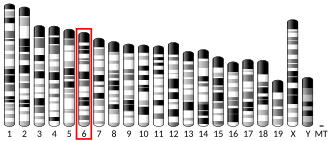
Contactin-4 is a protein that in humans is encoded by the CNTN4 gene.567
The protein encoded by this gene is a member of the immunoglobulin superfamily. It is a glycosylphosphatidylinositol (GPI)-anchored neuronal membrane protein that functions as a cell adhesion molecule. It may play a role in the formation of axon connections in the developing nervous system. Several alternatively spliced transcript variants of this gene have been described, but the full-length nature of some of these variants has not been determined.7
Genomics
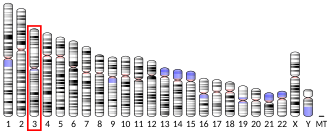
The gene is located on the short arm of chromosome 3 (3p26.3). It is a single copy gene within the Watson (plus) strand, 957,399 bases in length and encodes a protein of 1026 amino acids (molecular weight 113.454 kDa)
Clinical relevance
Abnormal expression of this gene has been implicated in some cases of autism.8 It has also been associated with cerebellar degeneration in spinocerebellar ataxia type 16.
References
References
- GRCh38: Ensembl release 89: ENSG00000144619 – Ensembl, May 2017
- GRCm38: Ensembl release 89: ENSMUSG00000064293 – Ensembl, May 2017
- "Human PubMed Reference:". National Center for Biotechnology Information, U.S. National Library of Medicine.
- "Mouse PubMed Reference:". National Center for Biotechnology Information, U.S. National Library of Medicine.
- Yoshihara Y, Kawasaki M, Tamada A, Nagata S, Kagamiyama H, Mori K (Mar 1996). "Overlapping and differential expression of BIG-2, BIG-1, TAG-1, and F3: four members of an axon-associated cell adhesion molecule subgroup of the immunoglobulin superfamily". J Neurobiol. 28 (1): 51–69. doi:10.1002/neu.480280106. PMID 8586965.
- Zeng L, Zhang C, Xu J, Ye X, Wu Q, Dai J, Ji C, Gu S, Xie Y, Mao Y (Aug 2002). "A novel splice variant of the cell adhesion molecule contactin 4 ( CNTN4) is mainly expressed in human brain". J Hum Genet. 47 (9): 497–9. doi:10.1007/s100380200073. PMID 12202991.
- "Entrez Gene: CNTN4 contactin 4".
- "Gene for brain connections linked with autism". www.newsdaily.com. Archived from the original on 2008-03-19.
External links
External links
Further reading
Further reading
- Walsh FS, Doherty P (1992). "Glycosylphosphatidylinositol anchored recognition molecules that function in axonal fasciculation, growth and guidance in the nervous system". Cell Biol. Int. Rep. 15 (11): 1151–66. doi:10.1016/0309-1651(91)90061-M. PMID 1838307.
- Miura S, Shibata H, Furuya H, et al. (2006). "The contactin 4 gene locus at 3p26 is a candidate gene of SCA16". Neurology. 67 (7): 1236–41. doi:10.1212/01.wnl.0000238510.84932.82. PMID 17030759. S2CID 34201347.
- Liu T, Qian WJ, Gritsenko MA, et al. (2006). "Human plasma N-glycoproteome analysis by immunoaffinity subtraction, hydrazide chemistry, and mass spectrometry". J. Proteome Res. 4 (6): 2070–80. doi:10.1021/pr0502065. PMC 1850943. PMID 16335952.
- Gerhard DS, Wagner L, Feingold EA, et al. (2004). "The status, quality, and expansion of the NIH full-length cDNA project: the Mammalian Gene Collection (MGC)". Genome Res. 14 (10B): 2121–7. doi:10.1101/gr.2596504. PMC 528928. PMID 15489334.
- Fernandez T, Morgan T, Davis N, et al. (2004). "Disruption of contactin 4 (CNTN4) results in developmental delay and other features of 3p deletion syndrome". Am. J. Hum. Genet. 74 (6): 1286–93. doi:10.1086/421474. PMC 1182094. PMID 15106122.
- Ota T, Suzuki Y, Nishikawa T, et al. (2004). "Complete sequencing and characterization of 21,243 full-length human cDNAs". Nat. Genet. 36 (1): 40–5. doi:10.1038/ng1285. PMID 14702039.
- Hansford LM, Smith SA, Haber M, et al. (2004). "Cloning and characterization of the human neural cell adhesion molecule, CNTN4 (alias BIG-2)". Cytogenet. Genome Res. 101 (1): 17–23. doi:10.1159/000073412. PMID 14571131. S2CID 41391308.
- Strausberg RL, Feingold EA, Grouse LH, et al. (2003). "Generation and initial analysis of more than 15,000 full-length human and mouse cDNA sequences". Proc. Natl. Acad. Sci. U.S.A. 99 (26): 16899–903. Bibcode:2002PNAS...9916899M. doi:10.1073/pnas.242603899. PMC 139241. PMID 12477932.
- Kamei Y, Takeda Y, Teramoto K, et al. (2001). "Human NB-2 of the contactin subgroup molecules: chromosomal localization of the gene (CNTN5) and distinct expression pattern from other subgroup members". Genomics. 69 (1): 113–9. doi:10.1006/geno.2000.6310. PMID 11013081.
- Mimmack ML, Saito H, Evans G, et al. (1997). "A novel splice variant of the cell adhesion molecule BIG-2 is expressed in the olfactory and vomeronasal neuroepithelia". Brain Res. Mol. Brain Res. 47 (1–2): 345–50. doi:10.1016/S0169-328X(97)00104-6. PMID 9221934.