| CHAMP1 | |||||||||||||||||||||||||||||||||||||||||||||||||||
|---|---|---|---|---|---|---|---|---|---|---|---|---|---|---|---|---|---|---|---|---|---|---|---|---|---|---|---|---|---|---|---|---|---|---|---|---|---|---|---|---|---|---|---|---|---|---|---|---|---|---|---|
| Identifiers | |||||||||||||||||||||||||||||||||||||||||||||||||||
| Aliases | CHAMP1, C13orf8, CAMP, CHAMP, ZNF828, MRD40, chromosome alignment maintaining phosphoprotein 1 | ||||||||||||||||||||||||||||||||||||||||||||||||||
| External IDs | OMIM: 616327; MGI: 1196398; HomoloGene: 18780; GeneCards: CHAMP1; OMA:CHAMP1 - orthologs | ||||||||||||||||||||||||||||||||||||||||||||||||||
| |||||||||||||||||||||||||||||||||||||||||||||||||||
| |||||||||||||||||||||||||||||||||||||||||||||||||||
| |||||||||||||||||||||||||||||||||||||||||||||||||||
| |||||||||||||||||||||||||||||||||||||||||||||||||||
| |||||||||||||||||||||||||||||||||||||||||||||||||||
| Wikidata | |||||||||||||||||||||||||||||||||||||||||||||||||||
| |||||||||||||||||||||||||||||||||||||||||||||||||||
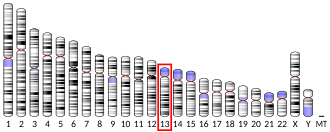



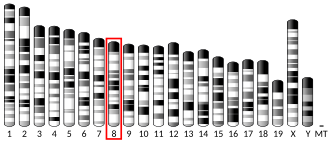

Chromosome alignment-maintaining phosphoprotein 1 (CHAMP1), also known as zinc finger protein 828 (ZNF828), is a protein that in humans is encoded by the CHAMP1 gene.5 In the earlier literature the protein was referred to as CAMP, and the gene carries the aliases C13orf8 (chromosome 13 open reading frame 8) and ZNF828.65 CHAMP1 was first characterized as a regulator of kinetochore–microtubule attachment during mitosis, and is also a component of a heterochromatin-associated complex that promotes homology-directed repair (HDR) of DNA.67
Structure
CHAMP1 is a relatively small gene that encodes an 812–amino acid protein from a single large coding exon (together with two additional non-coding exons).68 The protein contains three characteristic repeat motifs, termed the WK, SPE and FPE motifs, together with multiple C2H2-type zinc-finger domains — two in the N-terminal region and three in the C-terminal region.6 The C-terminal zinc-finger region mediates binding to its partner proteins POGZ and HP1α and, with the N-terminus, is required for localization to chromosomes and the mitotic spindle, while the WK-motif-rich central region binds REV7; the crystal structure of human REV7 in complex with this CHAMP1 fragment has been determined, revealing that the interaction is structurally analogous to the REV7–REV3 complex.96810 The CHAMP1–POGZ complex further associates with chromodomain on Y-like 2 (CDYL2), which acts as an adaptor recruiting the complex to pericentromeric H3K9me3 marks.11
Function
Mitosis and chromosome segregation
CHAMP1 localizes to chromosomes and to the spindle, including kinetochores, and undergoes CDK1-dependent phosphorylation at multiple sites during mitosis. It is required for correct alignment of chromosomes on the metaphase plate; cells depleted of CHAMP1 show severe chromosome misalignment and weakened kinetochore–microtubule attachment.6 Lymphoblastoid cells from an individual carrying a de novo frameshift variant show increased centrosome numbers, multipolar spindle formation and cytokinesis failure, phenotypes reproduced in CHAMP1-depleted cultured cells.12
CHAMP1 also influences cell fate decisions during mitotic arrest. It maintains expression of the anti-apoptotic protein Mcl-1, and its depletion accelerates mitotic cell death in cells treated with antimitotic agents such as vinca alkaloids and taxanes; conversely, CHAMP1 overexpression promotes mitotic slippage. This positions CHAMP1 as a regulator of sensitivity and resistance to antimitotic chemotherapy.13
DNA double-strand break repair
CHAMP1 contributes to the repair of DNA double-strand breaks (DSBs) through the homologous recombination (HR) / homology-directed repair pathway. It binds directly to REV7 (also known as MAD2L2 or FANCV) through REV7's seatbelt domain and lowers the level of the Shieldin complex, competing with the SHLD3 subunit for a limited pool of REV7. This shifts repair away from non-homologous end joining and toward end resection and HR, helping to maintain genomic stability.1415 In human tumors, CHAMP1 overexpression has been reported to promote HR, confer resistance to PARP inhibitors, and correlate with poorer prognosis.14
Heterochromatin assembly and gene regulation
CHAMP1 forms a conserved heterochromatin-associated complex with POGZ and HP1α. The complex binds trimethylated histone H3 lysine 9 (H3K9me3) through the HP1α chromodomain and promotes H3K9me3 deposition and heterochromatin clustering at sites including centromeres and telomeres; the POGZ subunit additionally binds and recruits the H3K9 methyltransferase SETDB1 to these regions. Through this activity the complex contributes to transcriptional silencing and to homology-directed repair within heterochromatin.714 CDYL2 has been identified as an additional component of this pericentromeric network, functioning as an adaptor that links the pericentromeric H3K9me3 mark to CHAMP1 and POGZ; CDYL2 depletion causes loss of CHAMP1 at pericentromeres and leads to mitotic aberrations and genome instability similar to those seen upon CHAMP1 loss.11 Peripheral blood lymphocytes from individuals with CHAMP1 syndrome show defective heterochromatin clustering and reduced HR, suggesting that impaired DNA repair contributes to the disorder.7 Consistent with a role in the nervous system, CHAMP1 is expressed in the developing mouse brain, and CHAMP1-deficient mice show impaired neuronal development and a mild behavioral phenotype.16
Replication fork stabilization
Beyond its roles in constitutive heterochromatin, the CHAMP1 complex responds dynamically to replication stress. Upon stalling of replication forks, the complex is transiently recruited to these sites, where it promotes H3K9me3 deposition and establishes a local repressive chromatin environment. This activity stabilises stalled forks and shields nascent DNA from degradation by the MRE11 nuclease; loss of the complex leads to increased micronuclei formation, chromosome bridges, and heightened sensitivity to replication stress-inducing agents. In tumours that maintain telomere length through the alternative lengthening of telomeres (ALT) pathway — which are characterised by elevated local replication stress at telomeres — CHAMP1 deficiency creates synthetic lethality with inhibition of the FANCM translocase. Independently, the CHAMP1 complex is required for the survival of CCNE1-amplified ovarian cancer cells, which also exhibit elevated replication stress; high CHAMP1 expression correlates with poorer overall survival in this subgroup. These findings position the CHAMP1 complex as a candidate therapeutic vulnerability in cancers with high levels of replication stress.17
Muscle development
CHAMP1 also has a noncanonical role in skeletal muscle development. It acts as a cofactor for the myogenic transcription factor MyoD, directly activating expression of the muscle fusogen Myomaker, which is required for myoblast fusion into multinucleated myofibers. CHAMP1-deficient human myoblasts fail to fuse both in vitro and after transplantation into mice, and cells derived from individuals with CHAMP1 syndrome show intrinsic fusion defects. The C2H2-type zinc-finger motifs are necessary and sufficient for the MyoD interaction and Myomaker activation. While the fusion defect can be fully rescued by restoring Myomaker expression, re-expression of full-length CHAMP1 in cells that retain truncated mutant protein only partially rescues fusion, supporting a dominant-negative effect of truncating variants in the muscle context. Transcriptome analysis also revealed reduced expression of several muscle structural genes in CHAMP1-deficient cells, which may contribute to the muscle weakness and hypotonia observed in affected individuals.18
Clinical significance
Mutations in the CHAMP1 gene cause an autosomal dominant neurodevelopmental disorder characterized by intellectual disability and severe speech impairment (catalogued as autosomal dominant intellectual disability type 40, and sometimes called CHAMP1-related neurodevelopmental disorder or CHAMP1 syndrome).19920 The condition results from a pathogenic variant in one of the two copies of the gene, and the great majority of cases are caused by de novo variants that are not inherited from the parents.1920
Affected individuals typically present with global developmental delay, intellectual disability and markedly impaired speech.192122 Reported behavioral features include traits of autism spectrum disorder and attention deficit hyperactivity disorder, repetitive behaviors and sensory symptoms.2321 Other frequently reported findings include neonatal low muscle tone (hypotonia), feeding difficulties, strabismus and other ophthalmological problems, microcephaly, gastrointestinal symptoms — including recurrent vomiting resembling cyclic vomiting syndrome, GERD, and chronic constipation24 — and, in some individuals, seizures.192122 Diagnosis is confirmed by genetic testing. Management is supportive and tailored to the individual's symptoms, typically involving physical, occupational and speech therapy together with educational support.22
Pathomechanisms
Most pathogenic CHAMP1 variants are premature termination codon (PTC) variants — nonsense, frameshift or splice site changes — and several recurrent variants (for example p.Arg398* and p.Arg497*) have been described.89 Because the coding sequence lies almost entirely within a single exon, PTC-bearing transcripts are predicted to escape nonsense-mediated decay (NMD); consistent with this, truncated CHAMP1 proteins of the expected sizes are detectably expressed in cells from affected individuals rather than being degraded.925 These truncated proteins lack the C-terminal zinc-finger region, are delocalized from chromatin, and fail to bind POGZ and HP1.9
The mechanism by which different CHAMP1 alterations cause disease is an area of active investigation, and a framework relating genotype to phenotype has been proposed in which distinct classes of variant act through distinct mechanisms.26 Whole-gene deletions and larger 13q34 microdeletions — which also encompass adjacent loci such as CDC16 and UPF3B — reduce the amount of functional CHAMP1 protein and are thought to act through haploinsufficiency; these have been associated with comparatively milder phenotypes.26827 For the more common truncating variants, both a dominant-negative mechanism (in which stable truncated protein interferes with the wild-type protein or its partners) and simple haploinsufficiency have been proposed, and the question remains unresolved: clinical comparisons have suggested that truncating ("coding") variants do not behave as simple haploinsufficiency, whereas functional studies of the associated HR defect have instead supported a haploinsufficient mechanism; in the muscle context, however, functional evidence from myoblast fusion assays supports a dominant-negative effect of truncating variants.268252418 A small number of rare missense variants (for example p.Gly23Ser) have been reported in association with a severe epileptic encephalopathy; these do not appear to impair HR repair and have been tentatively proposed to act through a gain-of-function mechanism, although this is based on very few cases.2625
References
References
- GRCh38: Ensembl release 89: ENSG00000198824 – Ensembl, May 2017
- GRCm38: Ensembl release 89: ENSMUSG00000047710 – Ensembl, May 2017
- "Human PubMed Reference:". National Center for Biotechnology Information, U.S. National Library of Medicine.
- "Mouse PubMed Reference:". National Center for Biotechnology Information, U.S. National Library of Medicine.
- "Entrez Gene: CHAMP1 chromosome alignment maintaining phosphoprotein 1".
- Itoh G, Kanno S, Uchida KS, Chiba S, Sugino S, Watanabe K, Mizuno K, Yasui A, Hirota T, Tanaka K (January 2011). "CAMP (C13orf8, ZNF828) is a novel regulator of kinetochore-microtubule attachment". The EMBO Journal. 30 (1): 130–144. doi:10.1038/emboj.2010.276. PMID 21063390.
- Li F, Zhang T, Syed A, Elbakry A, Holmer N, Nguyen H, Mukkavalli S, Greenberg RA, D'Andrea AD (February 2025). "CHAMP1 complex directs heterochromatin assembly and promotes homology-directed DNA repair". Nature Communications. 16 (1) 1714. doi:10.1038/s41467-025-56834-6. PMC 11832927. PMID 39962076.
- Levy T, Pichardo T, Silver H, Lerman B, Zweifach J, Halpern D, Siper PM, Kolevzon A, Buxbaum JD (September 2023). "Prospective phenotyping of CHAMP1 disorder indicates that coding mutations may not act through haploinsufficiency". Human Genetics. 142 (9): 1385–1394. doi:10.1007/s00439-023-02578-6. PMC 10449971. PMID 37454340.
- Isidor B, Küry S, Rosenfeld JA, Besnard T, Schmitt S, Joss S, Davies SJ, Lebel RR, Henderson A, Schaaf CP, Streff HE, Yang Y, Jain V, Chida N, Latypova X, Le Caignec C, Cogné B, Mercier S, Vincent M, Colin E, Bonneau D, Denommé AS, Parent P, Gilbert-Dussardier B, Odent S, Toutain A, Piton A, Dina C, Donnart A, Lindenbaum P, Charpentier E, Redon R, Iemura K, Ikeda M, Tanaka K, Bézieau S (April 2016). "De novo truncating mutations in the kinetochore-microtubules attachment gene CHAMP1 cause syndromic intellectual disability". Human Mutation. 37 (4): 354–358. doi:10.1002/humu.22952. PMID 26751395.
- Hara K, Taharazako S, Ikeda M, Fujita H, Mikami Y, Kikuchi S, Hishiki A, Yokoyama H, Ishikawa Y, Kanno S, Tanaka K, Hashimoto H (October 2017). "Dynamic feature of mitotic arrest deficient 2-like protein 2 (MAD2L2) and structural basis for its interaction with chromosome alignment-maintaining phosphoprotein (CAMP)". Journal of Biological Chemistry. 292 (43): 17658–17667. doi:10.1074/jbc.M117.804237. PMC 5663871. PMID 28893904.
- Siouda M, Dujardin AD, Dekeyzer B, Schaeffer L, Mulligan P (January 2023). "Chromodomain on Y-like 2 (CDYL2) implicated in mitosis and genome stability regulation via interaction with CHAMP1 and POGZ". Cellular and Molecular Life Sciences. 80 (2) 47. doi:10.1007/s00018-022-04659-7. PMID 36708405.
- Okamoto N, Tsuchiya Y, Kuki I, Yamamoto T, Saitsu H, Kitagawa D, Matsumoto N (September 2017). "Disturbed chromosome segregation and multipolar spindle formation in a patient with CHAMP1 mutation". Molecular Genetics & Genomic Medicine. 5 (5): 585–591. doi:10.1002/mgg3.303. PMC 5606869. PMID 28944241.
- Hino M, Iemura K, Ikeda M, Itoh G, Tanaka K (September 2021). "Chromosome alignment-maintaining phosphoprotein CHAMP1 plays a role in cell survival through regulating Mcl-1 expression". Cancer Science. 112 (9): 3711–3721. doi:10.1111/cas.15018. PMC 8409410. PMID 34216537.
- Li F, Sarangi P, Ramalingam Iyer D, Feng H, Moreau L, Nguyen H, Clairmont C, D'Andrea AD (September 2022). "CHAMP1 binds to REV7/FANCV and promotes homologous recombination repair". Cell Reports. 40 (10) 111297. doi:10.1016/j.celrep.2022.111297. PMC 9472291. PMID 36044844.
- Fujita H, Ikeda M, Ui A, Ouchi Y, Mikami Y, Kanno S, Yasui A, Tanaka K (May 2022). "CHAMP1-POGZ counteracts the inhibitory effect of 53BP1 on homologous recombination and affects PARP inhibitor resistance". Oncogene. 41 (19): 2706–2718. doi:10.1038/s41388-022-02299-6. PMID 35437340.
- Nagai M, Iemura K, Kikkawa T, Naher S, Hattori S, Hagihara H, Nagata KI, Anzawa H, Kugisaki R, Wanibuchi H, Abe T, Inoue K, Kinoshita K, Miyakawa T, Osumi N, Tanaka K (August 2022). "Deficiency of CHAMP1, a gene related to intellectual disability, causes impaired neuronal development and a mild behavioural phenotype". Brain Communications. 4 (5) fcac220. doi:10.1093/braincomms/fcac220. PMC 9465530. PMID 36106092.
- Li F, Elbakry A, Zhou FY, Zhang T, Ravindranathan R, Nguyen H, Syed A, Sun L, Mukkavalli S, Greenberg RA, D'Andrea AD (January 2026). "CHAMP1 complex promotes heterochromatin assembly and reduces replication stress". Proceedings of the National Academy of Sciences. 123 (1) e2525144122. doi:10.1073/pnas.2525144122. PMID 41481470.
- Zhang H, Zhou M, Zhang Z, Wang Z, Shi R, Wang Y, Wei X, Shang R, Li J, He C, Xie J, Diao Y, Bi P (January 2026). "CHAMP1 is an essential regulator for human myoblast fusion and muscle development". Nature Communications. 17 (1) 546. doi:10.1038/s41467-025-67584-w. PMID 41540007.
- Hempel M, Cremer K, Ockeloen CW, Lichtenbelt KD, Herkert JC, Denecke J, Haack TB, Zink AM, Becker J, Wohlleber E, Johannsen J, Alhaddad B, Pfundt R, Fuchs S, Wieczorek D, Strom TM, van Gassen KL, Kleefstra T, Kubisch C, Engels H, Lessel D (September 2015). "De novo mutations in CHAMP1 cause intellectual disability with severe speech impairment". American Journal of Human Genetics. 97 (3): 493–500. doi:10.1016/j.ajhg.2015.08.003. PMC 4564986. PMID 26340335.
- Tanaka AJ, Cho MT, Retterer K, Jones JR, Nowak C, Douglas J, Jiang YH, McConkie-Rosell A, Schaefer GB, Kaylor J, Rahman OA, Telegrafi A, Friedman B, Douglas G, Monaghan KG, Chung WK (January 2016). "De novo pathogenic variants in CHAMP1 are associated with global developmental delay, intellectual disability, and dysmorphic facial features". Cold Spring Harbor Molecular Case Studies. 2 (1) a000661. doi:10.1101/mcs.a000661. PMC 4731319. PMID 27148580.
- Garrity M, Kavus H, Rojas-Vasquez M, Valenzuela I, Larson A, Reed S, Bellus G, Mignot C, Munnich A, Isidor B, Chung WK (August 2021). "Neurodevelopmental phenotypes in individuals with pathogenic variants in CHAMP1". Cold Spring Harbor Molecular Case Studies. 7 (4) a006092. doi:10.1101/mcs.a006092. PMC 8327885. PMID 34021018.
- Abi Raad S, Yazbeck Karam V, Chouery E, Mehawej C, Megarbane A (July 2023). "CHAMP1-related disorder: sharing 20 years of thorough clinical follow-up and review of the literature". Genes. 14 (8) 1546. doi:10.3390/genes14081546. PMC 10454041. PMID 37628598.
- Levy T, Lerman B, Halpern D, Frank Y, Layton C, Zweifach J, Siper PM, Buxbaum JD, Kolevzon A (August 2022). "CHAMP1 disorder is associated with a complex neurobehavioral phenotype including autism, ADHD, repetitive behaviors and sensory symptoms". Human Molecular Genetics. 31 (15): 2582–2594. doi:10.1093/hmg/ddac018. PMC 9396938. PMID 35084013.
- Xu Z, Xu Y, Tao X, Chen C, Dong G (October 2025). "Clinical characteristics, molecular mechanisms, and exploration of association with gastrointestinal symptoms in CHAMP1 gene variation-related neurodevelopmental disorders". Frontiers in Neurology. 16 1664776. doi:10.3389/fneur.2025.1664776. PMC 12527885. PMID 41111978.
- Yoshizaki Y, Ouchi Y, Kurniawan D, Yumoto E, Yoneyama Y, Rizqullah FR, Sato H, Sarholz MH, Natsume T, Kanemaki MT, Ikeda M, Ui A, Iemura K, Tanaka K (December 2024). "CHAMP1 premature termination codon mutations found in individuals with intellectual disability cause a homologous recombination defect through haploinsufficiency". Scientific Reports. 14 (1) 31904. doi:10.1038/s41598-024-83435-y. PMID 39738383.
- Amenta S, Marangi G, Orteschi D, Frangella S, Gurrieri F, Paccagnella E, Torella A, Cappuccio G, Musacchia F, Mutarelli M, Carrella D, Vitiello G, Parenti G, Leuzzi V, Selicorni A, Maitz S, Brunetti-Pierri N, Banfi S, Montomoli M, Milani D, Romano C, Tummolo A, De Brasi D, Coppola A, Santoro C, Scala M, Capra V, Nigro V, Zollino M (June 2023). "CHAMP1-related disorders: pathomechanisms triggered by different genomic alterations define distinct nosological categories". European Journal of Human Genetics. 31 (6): 648–653. doi:10.1038/s41431-023-01305-z. PMID 36797464.
- Sagi-Dain L, Goldberg Y, Peleg A, Sukenik-Halevy R, Sofrin-Drucker E, Appelman Z, Sagi Josefsberg BY, Ben-Shachar S, Vinkler C, Basel-Salmon L, Maya I (October 2019). "The rare 13q33–q34 microdeletions: eight new patients and review of the literature". Human Genetics. 138 (10): 1145–1153. doi:10.1007/s00439-019-02048-y. PMID 31352549.
External links
External links
- CHAMP1 UK – Charity for those affected by CHAMP1 disorders.
- CHAMP1 Research Foundation – Non-profit raising funds for research into CHAMP1 disorders.
- CHAMP1 Research Foundation – Europe – European counterpart of the CHAMP1 Research Foundation.
- CHAMP1 Hispano – Support organisation for Spanish-speaking families affected by CHAMP1.
- Human CHAMP1 genome location and CHAMP1 gene details page in the UCSC Genome Browser.
Further reading
Further reading
- Wang MM, Peng J, Zhou Y, He XY, Cao B (October 2020). "Autosomal dominant intellectual disability-40 caused by a de novo mutation of the CHAMP1 gene: a case report". Zhongguo Dang Dai Er Ke Za Zhi. 22 (10): 1081–1084. doi:10.7499/j.issn.1008-8830.2005083. PMC 7572235. PMID 33066807.
- Dong Y, Shi X, Du K, et al. (August 2021). "First Chinese patient with mental retardation-40 due to a de novo CHAMP1 frameshift mutation: case report and literature review". Experimental and Therapeutic Medicine. 22 (2): 907. doi:10.3892/etm.2021.10339. PMC 8243316. PMID 34257719.
- Ben-Haim R, Heyman E, Benyamini L, Shapira D, Lev D, Tzadok M, Lerman-Sagie T, Saitsu H, Matsumoto N, Iwama K, Lazinger M, Bassan H (January 2020). "CHAMP1 mutations cause refractory infantile myoclonic epilepsy". Journal of Pediatric Neurology. 18 (1): 27–32. doi:10.1055/s-0039-1683449.
- Asakura Y, Osaka H, Aoi H, Mizuguchi T, Matsumoto N, Yamagata T (January 2021). "Intellectual disability and microcephaly associated with a novel CHAMP1 mutation". Human Genome Variation. 8 (1): 1–3. doi:10.1038/s41439-021-00165-7. PMC 7817685. PMID 33479227.
- Deciphering Developmental Disorders Study (March 2015). "Large-scale discovery of novel genetic causes of developmental disorders". Nature. 519 (7542): 223–228. Bibcode:2015Natur.519..223T. doi:10.1038/nature14135. PMC 5955210. PMID 25533962.
- Olsen JV, Blagoev B, Gnad F, Macek B, Kumar C, Mortensen P, Mann M (November 2006). "Global, in vivo, and site-specific phosphorylation dynamics in signaling networks". Cell. 127 (3): 635–648. doi:10.1016/j.cell.2006.09.026. PMID 17081983.
- Beausoleil SA, Villén J, Gerber SA, Rush J, Gygi SP (October 2006). "A probability-based approach for high-throughput protein phosphorylation analysis and site localization". Nature Biotechnology. 24 (10): 1285–1292. doi:10.1038/nbt1240. PMID 16964243. S2CID 14294292.
- Nagase T, Nakayama M, Nakajima D, Kikuno R, Ohara O (April 2001). "Prediction of the coding sequences of unidentified human genes. XX. The complete sequences of 100 new cDNA clones from brain which code for large proteins in vitro". DNA Research. 8 (2): 85–95. doi:10.1093/dnares/8.2.85. PMID 11347906.