Cecile Long Steele | |
|---|---|
| Born | Cecile Ann Long 1900 |
| Died | 1940 (aged 39–40) |
| Known for | Pioneering the broiler chicken industry in the United States. |
| Spouse | David Wilmer Steele (m. 1918) |
| Children | 4 |
| Awards | Hall of Fame of Delaware Women (inducted 1983) |
Cecile Long Steele (1900–1940) was an American chicken farmer from Ocean View, Delaware, considered to be the pioneer of the broiler chicken industry in the United States.12 She was the first person in Delaware to raise chickens specifically for meat production, separately from her laying flock that was primarily meant to produce eggs.1 Steele was inducted into the Hall of Fame of Delaware Women in 1983.3
Career
Cecile Steele was the first person in Delaware to raise chickens specifically for meat production, known as broilers.4 Before the 1920s, chickens were generally raised for egg production on small family farms to be consumed by the family or for sale to bring in additional income; meat was only a by-product of this industry when hens became non-productive or cockerels were slaughtered during the spring.56 As a result, chicken meat was an expensive rarity.7
Steele's role as a pioneer arose because of a shipping error by a Dagsboro hatchery in 1923, which meant that 500 chickens were delivered to her after she had ordered just 50 to replenish her flock.189 Steele kept and raised the 450 additional chickens, housing them in a small barn heated by a coal oven.1011 Her husband drove upstate via the newly built DuPont Highway to sell the 387 surviving birds (each of which weighed around two pounds) in a city market, getting 62 cents a pound.5 Many of the birds were also sold in New York City markets where they were slaughtered using kosher techniques for the city's Jewish population (chicken is a traditional Sabbath meal12).13
Using the profits from the initial experiment, Cecile Steele doubled her production to 1000 chickens in 1924.14 Other farmers in Sussex County began to convert their laying houses to broiler houses after seeing the success enjoyed by the Steeles.15 By 1935, the Steeles owned seven farms and were raising 35,000 broiler chickens per year.5
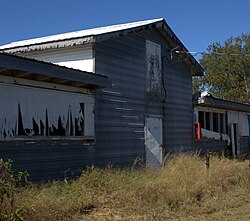
One of the broiler houses from the Steeles' farm, known as the First Broiler House, is listed on the National Register of Historic Places. Having been relocated to Georgetown and restored, it is now owned by the University of Delaware and is preserved at the Delaware Agricultural Museum.13
Personal life
Born Cecile Ann Long to Edward and Manie Long in 1900, Cecile married David Wilmer Steele on Christmas Eve, 1918. Initially working for the United States Coast Guard stationed at Bethany Beach, David Steele quit his job after the farm's commercial success in the 1920s and later became a Republican Delaware State Senator, serving from 1937 until his death.35
On October 7, 1940, Steele and her husband died at sea in a boating accident.16 The couple were entertaining guests on their cruiser, The Lure, when its motor exploded.1416 Cecile died after jumping into the water in an attempt to save her husband, who had been propelled into the water by the explosion. Their deaths were reported on the front page of the Wilmington Morning News.1617
References
References
- Torrella, Kenny (February 10, 2023). "How a shipping error more than a century ago launched the $30 billion chicken industry". Vox. Archived from the original on February 12, 2023. Retrieved April 19, 2026.
- Itza Ortiz, Mateo Fabian (July 8, 2024). "Welfare in commercial poultry farming? past, current and future". cathi.uacj.mx. Retrieved April 19, 2026.
- "Cecile Long Steele from the collection of The Delaware Women's Hall of Fame". Artwork Archive. Retrieved April 19, 2026.
- Torrella, Kenny (February 10, 2023). "How a shipping error 100 years ago launched the $30 billion chicken industry". Vox. Retrieved February 21, 2023.
- "Celia Steele and the Broiler Industry". History of Sussex County. Sussex County, Delaware. Archived from the original on October 14, 2011. Retrieved October 25, 2011.
- Martin, Phil (December 22, 2016). "The 500: How Cecile Steele began a multi-billion dollar industry". Blogger On the Broadkill. Retrieved April 19, 2026.
- "A History of Chickens: Then (1900) Vs Now (2022)"; The Happy Chicken Coop; accessed 2026.04.25.
- Kirkpatrick, Quinn (September 25, 2023). "Delaware celebrates 100 years in the chicken industry". Delaware Public Media. Retrieved April 19, 2026.
- MacArthur, Ron. "Math mistake started poultry industry 100 years ago". Cape Gazette. Retrieved April 19, 2026.
- Rosen, Raquel (September 20, 2023). "How One Woman Helped Transform Chicken into an American Staple—100 Years Ago". Chicken Check In. Retrieved April 19, 2026.
- Murphy, Sara (February 15, 2023). "The Fortuitous Origin Story Of The Chicken Industry". Mashed. Retrieved April 19, 2026.
- "Chicken for Sabbath", Walking in Torah; accessed 2026.04.26.
- Cuker, Benjamin E. (2020). Cuker, Benjamin E. (ed.). "Livestock and Poultry: Other Colonists Who Changed the Food System of the Chesapeake Bay". Diet for a Sustainable Ecosystem: The Science for Recovering the Health of the Chesapeake Bay and its People. Estuaries of the World. Cham: Springer International Publishing: 219–244. doi:10.1007/978-3-030-45481-4_12. ISBN 978-3-030-45481-4. Retrieved April 19, 2026.
- "Cecile and Wilmer Steele: Poultry Industry Founders | Historic Village in Ocean View". hvov.org. Retrieved April 19, 2026.
- Cosenza, G.C., 2007. “A chicken in every pot”: The architectural transformation of chicken houses in Sussex County, Delaware, 1923–present. University of Delaware.
- "Sen D. W. Steele, wife die in blast on boat; three others hurt". The Wilmington Morning News. October 8, 1940. pp. 1–10. Retrieved April 19, 2026.
- "Throng Attends Steele Funeral". The Wilmington Morning News. October 11, 1940. p. 26. Retrieved April 19, 2026.