| Bhesa robusta | |
|---|---|
Scientific classification 
| |
| Kingdom: | Plantae |
| Clade: | Embryophytes |
| Clade: | Tracheophytes |
| Clade: | Spermatophytes |
| Clade: | Angiosperms |
| Clade: | Eudicots |
| Clade: | Rosids |
| Order: | Malpighiales |
| Family: | Centroplacaceae |
| Genus: | Bhesa |
| Species: | B. robusta
|
| Binomial name | |
| Bhesa robusta | |
| Synonyms2 | |
| |
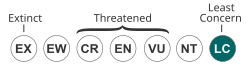
Bhesa robusta is a species of plant in the Centroplacaceae family. It is a tree native to Indochina (Andaman Islands, Cambodia, Laos, Myanmar, Thailand, and Vietnam), southeastern China, Nepal and the eastern Himalayas, Bangladesh, Peninsular Malaysia, Sumatra, and Borneo.2 It is widespread in tropical and subtropical moist lowland forests, typically dipterocarp forests, up to 1,100 metres (3,610 ft) elevation.1
The species was first described as Celastrus robustus by William Roxburgh in 1824. In 1958 Ding Hou placed the species in genus Bhesa as B. robusta.2
References
References
- Oldfield, S. (2023). "Bhesa robusta". IUCN Red List of Threatened Species. 2023 e.T33934A212029313. doi:10.2305/IUCN.UK.2023-1.RLTS.T33934A212029313.en. Retrieved 21 February 2026.
- "Bhesa robusta (Roxb.) Ding Hou". Plants of the World Online. Royal Botanic Gardens, Kew. Retrieved 21 February 2026.