| Attalea phalerata | |
|---|---|

| |
Scientific classification 
| |
| Kingdom: | Plantae |
| Clade: | Embryophytes |
| Clade: | Tracheophytes |
| Clade: | Spermatophytes |
| Clade: | Angiosperms |
| Clade: | Monocots |
| Clade: | Commelinids |
| Order: | Arecales |
| Family: | Arecaceae |
| Genus: | Attalea |
| Species: | A. phalerata
|
| Binomial name | |
| Attalea phalerata | |
| Synonyms | |
| |
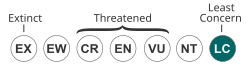
Attalea phalerata is a species of palm tree known by the English common name urucuri palm, the Portuguese common name urucurizeiro, and the Spanish common name shapaja.2 Other common names include motacu3 and bacuri.4 It is native to Brazil, Bolivia, Paraguay, and Peru,12 where it grows along southern and western Amazonia.5 It is the most common palm tree on the Pantanal.6
Description
This palm grows up to 18 metres (59 ft 1 in) tall, the trunk rarely reaching more than 4 metres (13 ft 1 in).78 It has up to 30 feather-like leaves.8 The bright orange fruits are up to 11 centimetres (4.3 in) long.8
Ecology
This palm species is of ecological importance and grows in many types of forest; individuals become fertile at 7–10 years of age (1 m height).7 Flowering occurs throughout the year and fruiting twice per year.7 The seeds are dispersed by tapirs, which swallow the fruits whole,9 and by rheas, agoutis, spiny rats of genus Clyomys, and caracaras. The hyacinth macaw consumes the seeds and may disperse them, as well.4 The sheaths of the palm often accumulate the seeds of other plants, which are sometimes deposited there by Artibeus jamaicensis, a frugivorous bat. The seeds sometimes germinate there and grow as epiphytes on the palm tree.6 This palm tree is commonly pollinated by sap beetles of genus Mystrops and weevils of tribe Madarini.10 The weevil Pachymerus cardo is known to be a seed predator on this species.9 Rhodinus stali, an insect which is a vector of Chagas disease, may infest this tree.3
Uses
The tree has human uses. The leaves are used to thatch rooftops and the fruits are fed to pigs and other livestock.3 It is a source of vegetable oil.11 It is one of the most economically important palm species in Bolivia, where it is known as motacú.712
References
References
- Barker, A. (2021). "Attalea phalerata". IUCN Red List of Threatened Species. 2021 e.T67532499A67532502. doi:10.2305/IUCN.UK.2021-2.RLTS.T67532499A67532502.en. Retrieved 27 January 2026.
- "Attalea phalerata". Germplasm Resources Information Network. Agricultural Research Service, United States Department of Agriculture. Retrieved 25 January 2018.
- Justi, S. A.; Noireau, F.; Cortez, M. R.; Monteiro, F. A. (2010). "Infestation of peridomestic Attalea phalerata palms by Rhodnius stali, a vector of Trypanosoma cruzi in the Alto Beni, Bolivia". Tropical Medicine & International Health. 15 (6): 727–732. doi:10.1111/j.1365-3156.2010.02527.x.
- Galetti, Mauro; Guimarães Jr, Paulo R. (2013). "Seed dispersal of Attalea phalerata (Palmae) by Crested caracaras (Caracara plancus) in the Pantanal and a review of frugivory by raptors". Ararajuba. 12 (21): 133–135.
- Choo, Juanita; Ishak, Heather; Simpson, Beryl; Mueller, Ulrich; Juenger, Tom (2010). "Characterization of 14 microsatellite loci in a tropical palm, Attalea phalerata (Arecaceae)". American Journal of Botany. 97 (11): e105–e106. doi:10.3732/ajb.1000281. PMID 21616808.
- Corrêa, Christiane E.; Fischer, Erich; Santos, Flavio A. M. dos (2012). "Seed banks on Attalea phalerata (Arecaceae) stems in the Pantanal wetland, Brazil" (PDF). Annals of Botany. 109 (4): 729–734. doi:10.1093/aob/mcr317. PMC 3286283. PMID 22210851.
- Barthlott, W. and M. Winiger. Biodiversity: A Challenge for Development Research and Policy. Springer 2001.
- "Attalea phalerata - Palmpedia - Palm Grower's Guide". www.palmpedia.net. Retrieved 2018-10-27.
- Quiroga‐Castro, Verónica D.; Roldán, Alexandra I. (2001). "The fate of Attalea phalerata (Palmae) seeds dispersed to a tapir latrine". Biotropica. 33 (3): 472–477. doi:10.1111/j.1744-7429.2001.tb00200.x. JSTOR 3593191.
- Fava, Wellington Santos; da Silva Covre, Wesley; Sigrist, Maria Rosângela (2011). "Attalea phalerata and Bactris glaucescens (Arecaceae, Arecoideae): Phenology and pollination ecology in the Pantanal, Brazil". Flora – Morphology, Distribution, Functional Ecology of Plants. 206 (6): 575–584. doi:10.1016/j.flora.2011.02.001.
- Mónica, Moraes R.; Borchsenius, Finn; Blicher-Mathiesen, Ulla (1996). "Notes on the biology and uses of the Motacú Palm (Attalea phalerata, Arecaceae) from Bolivia". Economic Botany. 50 (4): 423–428. doi:10.1007/bf02866525. JSTOR 4255886.
- Brokamp, Grischa (2015). Relevance and Sustainability of Wild Plant Collection in NW South America: Insights from the Plant Families Arecaceae and Krameriaceae. Wiesbaden: Springer Spektrum. doi:10.1007/978-3-658-08696-1. ISBN 978-3-658-08695-4. S2CID 30557398.