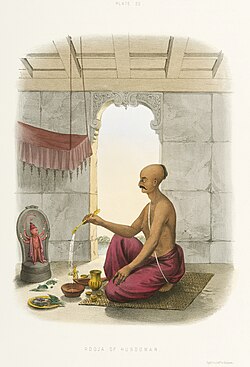
 A Brahmin priest performing daily prayers | |
| Regions with significant populations | |
|---|---|
| Assam, India | |
| Languages | |
| Assamese | |
| Religion | |
 Hinduism Hinduism | |
| Related ethnic groups | |
| Other Brahmin groups: |
Assamese Brahmins are the Brahmin community present in the Assamese society. There they have historically promoted knowledge and religion, including branches such as literature, astronomy, and philosophy.1 The Brahmins migrated to Assam from Videha (Mithila), Kannauj, Bengal (Gauda) and many other places.2
History
The earliest historical evidence of the settlement of Brahmins in Assam comes from various epigraphic sources of the Varman dynasty (350–650).3 Land grants by Kamrupa kings to Brahmins continue in the Kamrup region until the reign of king Vallabhadeva of the 12th century. In 1329, the Rauttakonci copper-plate grant of a local chief named Purusottama Dasa records the gift of the village of Rauttakonci, identified with modern Ratkuchi near Nalbari, to the Brahmin Dharmakara, son of Nilambara.4
Among the earliest surviving references to Brahmins and royal land grants in Central and Upper Assam are copper-plate charters issued by the Kachari and Chutia rulers. A stone inscription found at Lanka, Hojai dated to 1352 AD records Kachari king Mahamanikya giving land to a Brahmin named Din Dwija at a village named Bamdeva.56 The Dhenukhana grant of Chutia king Satyanarayana, dated 1392, and the Ghilamara grant of king Lakshminarayana, dated 1401, belong to the Habung region (present-day Lakhimpur) and record grants in favour of Brahmin beneficiaries. A further charter from Sadiya–Chepakhowa, dated 1428, records a land grant in the Habung area administered by Chutia official Vrihatpatra, the Habungadhipati.78 It is not known for certain whether Brahmins existed in the Habung region before the Chutia reign. A tradition associated with Gharmora Satra further states that a Chutia king brought Sankarshan, a Brahmin from Kannauj whom the king had met while studying at Nabadwip, to Sadiya. The king is said to have established him on the bank of the Gharmora River and endowed the institution with land, dependants and an image of Vishnu.9 Following Suhungmung's annexation of the Chutia kingdom, many Brahmin families from the former Chutia capital Sadiya, together with Kayasthas, Kalitas, Daivajnas and artisan groups, were transferred to the Ahom capital.10
In the late medieval period beginning with the early 16th century, a number of Brahmins from Mithila, Benaras, Kanauj, Bengal and Puri (Srikshetra), were settled in western Assam by the Koch kings for performing Brahminical rites.111213 During the reign of Nara Narayan (1554-1587) of the Koch dynasty, two Brahmins named Siddhantavagisa and Vidyavagisa were brought from Gauda and Siddhantavagisa was responsible for the spread of Hinduism in the Koch kingdom14 Even during the reign of Koch king Prannarayana (1633-1655), Brahmins were brought from Mithilia to serve in the Koch kingdom15 and this process was later continued by the Ahom state especially under the Tungkhungia Ahom kings with Siva Singha donating 19 out of the 48 landgrants by the Ahom kings to Brahmins.16 The migration of Brahmins into Assam took place from Central Himalayas as well.17 Most of these migration took place due to the foreign invasions in North India and on the invitation by the local rulers.18 Traditionally these Brahmins held the highest positions in society.19
Tradition and culture
Lagundeoni/Upanayana
Traditionally, the ceremony of Lagundeoni – one of the samskaras or rites of passage marking acceptance of a student by a guru, is a quite prevalent ritual within the community.20
Death rituals
Brahmins of the Assam valley follow a different death ritual as opposed to the other indigenous communities in Assam. A religious rite, known as Caturthā is performed on the 4th day of a person's demise unlike Tiloni, performed on the 3rd day of person's demise by non–Brahmin indigenous communities.21
Lifestyle
Although in general Brahmins observe all the customary rituals, they appear usually less rigid22 in some of their traditional lifestyle choices, such as they may eat meat, fish, unlike their counterparts in other parts of India like the North and the South.2324
Present
The Brahmins constitute one of the Forward classes of Assam based on the classifications of Government of India, although the recent trend on economic condition has not been very well within the community. Assam's former Chief Minister, Tarun Gogoi announced setting up of development councils for several communities in the state, including Brahmins.25
Notable people
| Name | Portrait | Notability | References |
|---|---|---|---|
| Hem Barua (original name was Hem Chandra Sarma Barua) | Former 3 times Member of Parliament, Lok Sabha from Assam. | ||
| Lakshminath Bezbarua | 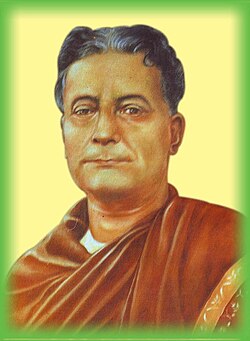 |
||
| Bijoy Chandra Bhagavati |  |
Former Union Minister of State in Second Nehru ministry | |
| Gopinath Bordoloi |  |
1st Chief Minister of Assam & 2nd Prime Minister of Assam | |
| Himanta Biswa Sarma | 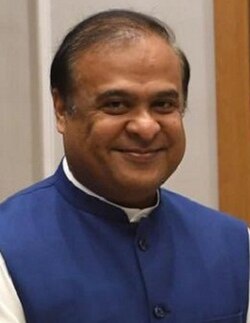 |
Chief Minister of Assam | |
| Jaimini Bhagwati |  |
Indiam High commissioner to United Kingdom | |
| Phani Sarma | |||
| Bijoya Chakravarty |  |
Former Member of Rajya Sabha | |
| Zubeen Garg |  |
26 |
References
References
- (Dikshit & Dikshit 2013, p. 397)
- (Dikshit & Dikshit 2013, p. 390)
- "On the other hand, this story may reflect the historical process of the expansion of agrarian settlements of the brahmanas which has been recognized from the Bhauma-Varman dynasty." ( & Shin 2010:10)
- Neog, Maheswar, ed. (1974). Prachya-Sasanavali প্ৰাচ্য-শাসনাৱলী [Eastern Inscriptions] (in Assamese). Guwahati: Publication Board, Assam. pp. 138–140.
The Rauttakonci plates of King Purusottama-dasa, dated 1251 Saka/1329 A.D., bestowed the village Rauttakonci ... on the brahmana Dharmakara, son of Nilambara.
- Thakuria, Gitanjali (2015). "Survey of the Inscriptions and Their Technicalities". Studies in the Inscriptions of Medieval Assam: Chapter 2. Shodhganga@INFLIBNET (PhD thesis). Gauhati University. No. 267. Retrieved 4 July 2026.
The inscription records that the king Sri (Maha) manikya donated the village of Vamadeva along with the rights of danda to one Dina-brahman, in saka 1274.
- Parashar, Abantika. Gariyakhi (7th edition, May 2023). p. 20.
- Neog, Maheswar (1977). "Light on a Ruling Dynasty of Arunachal Pradesh in the Fourteenth and Fifteenth Centuries". Annals of the Bhandarkar Oriental Research Institute. 58–59: 813–820. JSTOR 41691751.
- Momin, Mignonette (2006). Society and Economy in North-East India. Vol. 2. Shillong: Department of History, North-Eastern Hill University. p. 47.
They had definitely come under Brahminical influence during the late fourteenth and early fifteenth century, as is borne out by the evidence of their landgrants in favour of Brahmana beneficiaries.
- Gogoi, Himadri; Dutta, Tarun (2021). "Gharmora Satra and Its Archive". Turkish Online Journal of Qualitative Inquiry. 12 (8): 8019.
During the 13th century two princes of Chutiya dynasty took education at Navadweep University of Bengal. There they met a Brahmin named Sankarshan of Kannauj (Kanyakubja).
- Baruah, S. L. (1985). A Comprehensive History of Assam. New Delhi: Munshiram Manoharlal Publishers. p. 230.
Further, as a result of the annexation of the Chutia kingdom, many families of Brahmanas, Kayasthas, Kalitas, Daivajnas etc. ... were transferred to the Ahom capital.
- Shin (2010), p. 22: "It is suggested that under the Koch kings, patronage of brahmans began earlier and more vigorously than in the Ahom kingdom. Encouraged both by the Koch kings and the regional bhuiyan landlords, a number of brahmanas from Bihar, Uttar Pradesh and Bengal migrated into western Assam in the sixteen century"
- (Adhikary 2018): Apart from this Maharaja Biswa Singha (Koch dynasty) invited a large number of Brahmins from Kanouj, Benaras and other learning places and provided them rent free lands to perform religious practice. He also appointed Ballabhacharya, the chief priest of Kamakhya Temple to Koch Kingdom."
- (Sheikh 2012, p. 251): "He (Biswa Singha) brought some learned Brahmanas from Mithila, Benaras, Kanauj, and Srikshetra (Puri) to his kingdom in order to perform the Brahminical rituals"
- (Sheikh 2012:251)
- (Shin 2021:32)
- Das (2014), p. 158: "The practice of giving grants to gain religious merit can be seem in full blossom in Ahom times"
- (Witzel 1993:266)
- (Witzel 1993:266)
- (Bose 1989)
- "Assam State Gazetteer Vol. 1, page 317 – Government of Assam". Mr. Amlan Baruah and S.B. Roy Choudhury. 1999. Archived from the original on 8 January 2014. Retrieved 6 September 2017.
- (Sarma 1990, p. 54)
- (Bose 1989, p. 44)
- "Assam Government Withdraws Meat Sale Ban at Cultural Festival After Social Media Outcry". The Wire. Retrieved 9 August 2023.
- Saikia, Yasmin (9 November 2004). Fragmented Memories: Struggling to be Tai-Ahom in India. Duke University Press. p. 289. ISBN 978-0-8223-8616-2.
Assamese Brahmins are not vegetarians, but they are very judgmental about other peoples' food and eating habits. Brahmins else- where in India consider the Assamese Brahmins polluted and impure
- "Gogoi announces development councils for Brahmins, others". India Today. January 2016. Retrieved 9 August 2023.
- Parashar, Utpal (29 July 2019). "'These Brahmins should be killed,' says Assam singer Zubeen Garg; cases filed". Hindustan Times. Archived from the original on 15 January 2022. Retrieved 12 April 2022.
Further reading
Further reading
Published-sources
- Witzel, Michael (1993), "Towards a History of the Brahmins", Journal of the American Oriental Society, 113 (2), American Oriental Society: 264–268, doi:10.2307/603031, JSTOR 603031
- Shin, Jae-Eun (2010). "Yoni, Yoginīs and Mahāvidyās: Feminine Divinities from Early Medieval Kāmarūpa to Medieval Koch Behar, Studies in History". Studies in History. 26 (1): 1–29. doi:10.1177/025764301002600101. S2CID 155252564.
- Adhikary, Madhab. (2018), "Development of Saiva Cult in Koch Kingdom Under Maharaja Biswa Singha (1496-1540).", Uttar Prasanga, 12 (3–4): 25–31
- Das, Sneha (2014). "Engraved Histories: A Study of Legend of Naraka and Political Legitimacy in the Kamarupa Region". Proceedings of the Indian History Congress. 75. Indian History Congress: 153–159. ISSN 2249-1937. JSTOR 44158374.
- Sheikh, Amiruzzaman (2012). "The 16th century Koch kingdom: Evolving patterns of sanskritisation". Proceedings of the Indian History Congress. 73: 249–254. ISSN 2249-1937. JSTOR 44156212.
- Barua, Preeti (2000). Nalinibala Devi. Sahitya Akademi. ISBN 9788126009169.
- Dikshit, K. R.; Dikshit, Jutta K. (2013). North-East India: Land, People and Economy. Springer Science & Business Media. ISBN 9789400770553.
- Bose, Manilal (1989). Social History of Assam: Being a Study of the Origins of Ethnic Identity and Social Tension During the British Period, 1905-1947 – Pre–British History and Society. Concept Publishing Company. ISBN 9788170222248.
- Patra, S. C. (2011). Socio-economic profile of Rural India (series II) – Roots. Concept Publishing Company. ISBN 9788180697241.
- Sarma, Anjali (1990). Among the Luminaries in Assam: A Study of Assamese Biography. Mittal Publications. ISBN 9788170992073.
- Shin, Jae-Eun (2021). "Sword and Words: A Conflict Between Kings and Brahmins in the Bengal Frontier, Kāmatāpur 15th-16th Centuries". Journal of the Directorate of Archaeology and Museums. 3. Government of West Bengal: 21–36.