Applied spectroscopy is the application of various spectroscopic methods for the detection and identification of different elements or compounds to solve problems in fields like forensics, medicine, the oil industry, atmospheric chemistry, and pharmacology.
Spectroscopic methods
Vibrational spectroscopy
FT-IR
A common spectroscopic method for analysis is Fourier transform infrared spectroscopy (FTIR), where chemical bonds can be detected through their characteristic infrared absorption frequencies or wavelengths1. These absorption characteristics make infrared analyzers an invaluable tool in geoscience, environmental science, and atmospheric science. For instance, atmospheric gas monitoring has been facilitated by the development of commercially available gas analyzers which can distinguish between carbon dioxide, methane, carbon monoxide, oxygen, and nitric oxide2. Three types of samples can be analyzed: solution (KBr), powder, or film3. A solid film is one of the easiest and most straight forward sample type to test3.
Raman
The use of Raman spectroscopy is growing for more specialist applications. Raman spectroscopy is another technique that can be used quantitatively and to identify analytes such as inorganic compounds, minerals, synthetic and natural pigments, and carbohydrates4. One advantage Raman has over IR spectroscopy is that water does not absorb strongly in Raman and allows for easier analysis of aqueous samples5.
IR microscopy
There are also derivative methods such as infrared microscopy, which allows very small areas to be analyzed in an optical microscope6.
Ultraviolet-visible spectroscopy

Ultraviolet-visible spectroscopy (UV-vis) is used where the analyte has strong absorption of light in the UV or in the visible region of the electromagnetic spectrum. Such analytes are known as chromophores and include aromatic groups, conjugated system of bonds, carbonyl groups and so on7. UV-vis samples are typically liquids or solutions, and these samples are placed in sample cells called cuvettes8. UV-vis spectroscopy is used in characterization and quantitative applications where the molar absorptivity of a analyte can be determined or the concentration of a sample can be determined9.
Nuclear magnetic resonance spectroscopy
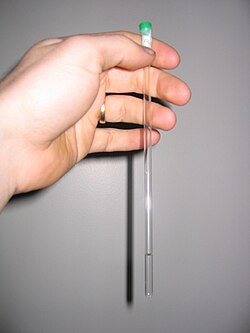
Nuclear magnetic resonance spectroscopy can be used to identify compounds by detecting hydrogen atoms (proton NMR)10 or other atoms such as carbon (carbon-13 NMR)11, in specific environments. Two-dimensional NMR is also widely used to gain additional information that one-dimensional NMR cannot provide12. Common 2-D NMR experiments include COSY, NOESY, TOCSY, and HSQC. NMR can also be used used quantitatively in determining the relative concentration of an analyte in solution or in determining the purity of an analyte10. NMR samples are prepared in NMR tubes, where solutions are made with deuterated lock solvents, such solvents include -DMSO, CDCl and DO13. When preparing NMR samples, the type of experiment is an important factor in sample preparation and setting experimental parameters, e.g. NMR samples need to be more concentrated than NMR because NMR is less sensitive than NMR11.
X-ray spectroscopy
One method of elemental analysis that is important in forensic analysis is energy-dispersive X-ray spectroscopy (EDX) performed in the environmental scanning electron microscope (ESEM)14. The method involves analysis of back-scattered X-rays from the sample as a result of interaction with the electron beam15. Automated EDX is further used in a range of automated mineralogy techniques for identification and textural mapping.
Sample preparation
In many spectroscopic methods, the sample usually needs to be present in solution, which may present problems in analyzing certain samples. During forensic examination, it can be an issue because it necessarily involves sampling solid from the object to be examined.
Medical and pharmaceutical applications
Nuclear magnetic resonance spectroscopy (NMR) has many uses in the medical and pharmaceutical industry. Magnetic resonance imaging (MRI) is a major application of NMR, where MRI is a highly utilized tool by medical professional to investigate and diagnose health ailments of patients16. In the pharmaceutical industry, identification and evaluation of the purity of a product is an important task in the discovery, production, and distribution of pharmaceuticals17. NMR and electron paramagnetic resonance spectroscopy (EPR) are widely helpful in the pharmaceutical industry in improving discovery, development, and production of pharmaceuticals such as small molecules drugs, complex biologics, and Cell and Gene therapies18.
Polymer applications
Analysis of polymers
Spectroscopy has a lot of has many tools that can be used in quantitative and qualitive analysis. Choosing a specific techniques depends on the type of experiment and sample being analyzed. FT-IR has uses in studying polymer processing in extraction, drying, impregnation, dyeing, and blending, under different conditions e.g. using supercritical carbon dioxide with PVME, PS, PEG/PVP, PEO/PMMA, and PET19.
UV-vis spectroscopy
UV-vis can also help determine certain properties of a polymer of interest. For example, UV-Vis spectroscopy can be used as an alternative method to GPC for determining the number average molecular weight, Mn, of a polymer, with an attached chromophore (e.g. fluorene20), synthesized by ATRP. Mn is determined by using absorbance measurements of the chromophore-labeled polymer20 and the Beer-Lambert Law equation:
Where A is absorbance, ε is the molar extinction coefficient, c is the concentration of the sample, and l is the path length of the sample.21
UV-Vis and the Beer-Lamber law equation can also be used to quantify chain transfer agents that are used in RAFT and determine Mn of the polymer of interest22, that is if the chain transfer agent absorbs in the UV-vis region.
Polymer degradation
Many polymer degradation mechanisms can be followed using IR spectroscopy, such as UV degradation and oxidation, among many other failure modes.
UV degradation

Many polymers are attacked by UV radiation at vulnerable points in their chain structures. Thus, polypropylene suffers severe cracking in sunlight unless anti-oxidants are added. The point of attack occurs at the tertiary carbon atom present in every repeat unit, causing oxidation and finally chain breakage. Polyethylene is also susceptible to UV degradation, especially those variants that are branched polymers such as low-density polyethylene. The branch points are tertiary carbon atoms, so polymer degradation starts there and results in chain cleavage, and embrittlement. In the example shown at left, carbonyl groups were readily detected by IR spectroscopy from a cast thin film. The product was a road cone that had cracked in service, and many similar cones also failed because an anti-UV additive had not been used.
Oxidation

Polymers are susceptible to attack by atmospheric oxygen, especially at elevated temperatures encountered during processing to shape. Many process methods such as extrusion and injection moulding involve pumping molten polymer into tools, and the high temperatures needed for melting may result in oxidation unless precautions are taken. For example, a forearm crutch suddenly snapped and the user was severely injured in the resulting fall24. The crutch had fractured across a polypropylene insert within the aluminum tube of the device, and IR spectroscopy of the material showed that it had oxidized, possibly as a result of poor moulding.
Oxidation is usually relatively easy to detect, owing to the strong absorption by the carbonyl group in the spectrum of polyolefins. Polypropylene has a relatively simple spectrum, with few peaks at the carbonyl position (like polyethylene). Oxidation tends to start at tertiary carbon atoms because free radicals here are more stable, so last longer and are attacked by oxygen. The carbonyl group can be further oxidized to break the chain, so weakening the material by lowering the molecular weight, and cracks start to grow in the regions affected.
Ozonolysis


The reaction occurring between double bonds and ozone is known as ozonolysis when one molecule of the gas reacts with the double bond25:

The immediate result is formation of an ozonide, which then decomposes rapidly so that the double bond is cleaved. This is the critical step in chain breakage when polymers are attacked. The strength of polymers depends on the chain molecular weight or degree of polymerization: The higher the chain length the greater the mechanical strength (such as tensile strength). By cleaving the chain, the molecular weight drops rapidly and there comes a point when it has little strength whatsoever, and a crack forms. Further attack occurs in the freshly exposed crack surfaces and the crack grows steadily until it completes a circuit and the product separates or fails. In the case of a seal or a tube26, failure occurs when the wall of the device is penetrated.
The carbonyl end groups that are formed are usually aldehydes or ketones, which can oxidize further to carboxylic acids. The net result is a high concentration of elemental oxygen on the crack surfaces, which can be detected using EDX in the ESEM. For example, two EDX spectra were obtained during an investigation into ozone cracking of diaphragm seals in a semiconductor fabrication factory. The EDX spectrum of the crack surface shows the high-oxygen peak compared with a constant sulfur peak. In contrast, the EDX spectrum of the unaffected elastomer surface spectrum shows a relatively low-oxygen peak compared with the sulfur peak.
See also
See also
References
References
- "Guide to FT-IR Spectroscopy". bruker.com. Retrieved 2026-05-03.
- "GT6000 Mobilis – Portable Gas Analyzer for Stack, Emissions, and Field Testing". Gasmet.com. Retrieved 2026-05-03.
- Workman Jr., Jerry; Springsteen, Art W. (June 3, 1998). Applied Spectroscopy: A Compact Reference for Practitioners. Academic Press. pp. 54–68. ISBN 978-0127640709.
- "18.3: Applications of Raman Spectroscopy". Chemistry LibreTexts. 2022-06-17. Retrieved 2026-05-04.
- "18.2: Instrumentation". Chemistry LibreTexts. 2022-06-17. Retrieved 2026-05-04.
- Workman Jr., Jerry; Springsteen, Art W. (June 3, 1998). Applied Spectroscopy: A Compact Reference for Practitioners. Academic Press. pp. 507–512. ISBN 978-0127640709.
- "14.2: Absorbing Species". Chemistry LibreTexts. 2022-01-17. Retrieved 2026-05-04.
- "13.4: Instrumentation". Chemistry LibreTexts. 2022-01-17. Retrieved 2026-05-04.
- "14.4: Quantitative Applications". Chemistry LibreTexts. 2022-01-17. Retrieved 2026-05-04.
- "19.4: Applications of Proton NMR". Chemistry LibreTexts. 2022-07-26. Retrieved 2026-05-03.
- "19.5: Carbon-13 NMR". Chemistry LibreTexts. 2022-07-26. Retrieved 2026-05-03.
- "19.6: Two-Dimensional Fourier Transform NMR". Chemistry LibreTexts. 2022-07-26. Retrieved 2026-05-03.
- Hornak, Joseph P. (1997). "PRACTICAL CONSIDERATIONS". The Basics of NMR.
- Lewis, Peter Rhys; Reynolds, Ken; Gagg, Colin (2004). Forensic Materials Engineering: Case Studies. CRC Press. pp. 102–104. ISBN 978-0849311826.
- "What is EDS? | Energy Dispersive X-Ray Spectroscopy". www.bruker.com. Retrieved 2026-05-04.
- "NMR and MRI: Applications in Chemistry and Medicine". acs.org. April 8, 2011. Retrieved 2026-04-29.
- "Pharmaceuticals Regulation - an overview | ScienceDirect Topics". www.sciencedirect.com. Retrieved 2026-04-29.
- "NMR and EPR Biopharma Solutions | Pharmaceutical Industry". www.bruker.com. Retrieved 2026-04-29.
- Ozaki, Yukihiro; Sato, Harumi, eds. (2021-12-06). Spectroscopic Techniques for Polymer Characterization: Methods, Instrumentation, Applications (1 ed.). Wiley (published October 22, 2021). pp. 55–68. doi:10.1002/9783527830312. ISBN 978-3-527-34833-6.
- Tillman, Eric S.; Roof, Amanda C.; Palmer, Steven M.; Zarko, Beth Ann; Goodman, Caton C.; Roland, Alissa M. (August 1, 2006). "Synthesis of Chromophore-Labeled Polymers and Their Molecular Weight Determination Using UV–Vis Spectroscopy". Journal of Chemical Education. 83 (8): 1215. doi:10.1021/ed083p1215. ISSN 0021-9584 – via ACS Publications.
- "The Beer-Lambert Law". Chemistry LibreTexts. 2013-10-03. Retrieved 2026-03-12.
- Skrabania, Katja; Miasnikova, Anna; Bivigou-Koumba, Achille Mayelle; Zehm, Daniel; Laschewsky, André (2011). "Examining the UV-vis absorption of RAFT chain transfer agents and their use for polymer analysis". Polymer Chemistry. 2 (9): 2074. doi:10.1039/c1py00173f. ISSN 1759-9954.
- Lewis, Peter Rhys; Reynolds, Ken; Gagg, Colin (2004). Forensic Materials Engineering: Case Studies. CRC Press. pp. 125–126. ISBN 978-0849311826.
- Lewis, Peter Rhys; Reynolds, Ken; Gagg, Colin (2004). Forensic Materials Engineering: Case Studies. CRC Press. pp. 313–315. ISBN 978-0-8493-1182-6.
- "Ozonolysis". Chemistry LibreTexts. 2018-11-05. Retrieved 2026-05-04.
- Lewis, Peter R.; Hainsworth, Sarah (September 2006). "Fuel line failure from stress corrosion cracking". Engineering Failure Analysis. 13 (6): 946–962 – via Elsevier Science Direct.